Africa, a future nuclear insurance “gravy train”
Posted by nuclear-news.net
Date 5 August 2013
by Arclight2011part2
On Nuclear-news.net we have covered many stories concerning Africa and the Nuclear aspirations of this dark continent. I say dark because at night it is the only continent not lit up by street lighting and advertisements.
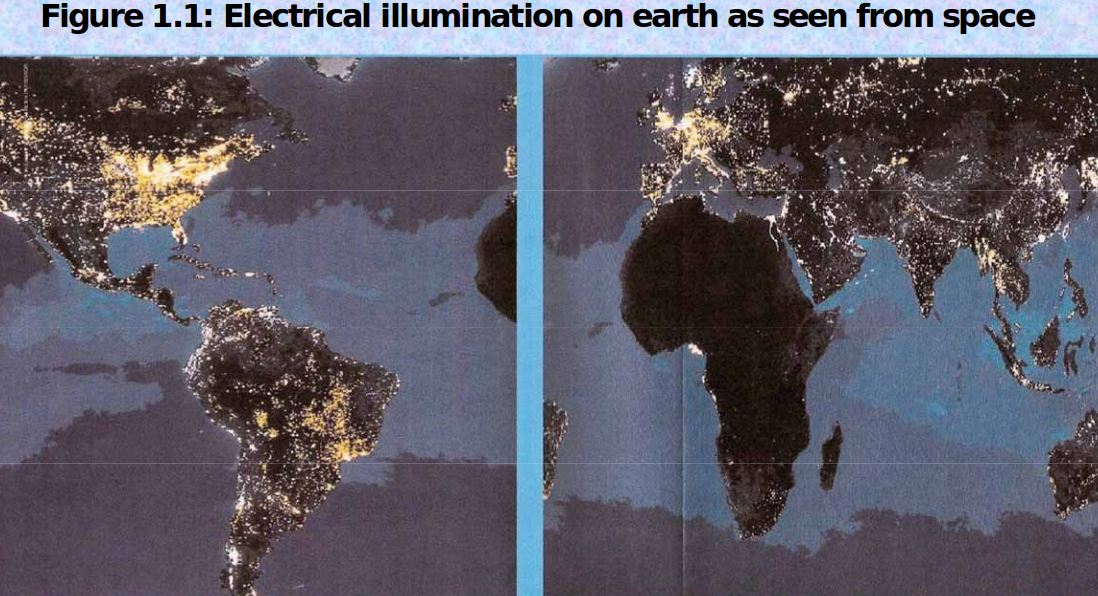
From the corporations point of view this is a new continent to develop using western choices of energy that that includes nuclear power options.
The IAEA is even going to approve a nuclear reactor in Ghana, that is one of the few earthquake zones in NW Africa (information on link)
https://nuclear-news.net/2013/07/04/ghana-lines-up-for-nuclear-cash-hand-outs/
And here is an example of how the Nuclear/mining industries have contaminated large areas of Africa and in these articles ;
But nuclear materials are already proliferate over Africa in the form of food irradiation processes, medical and industrial uses to name but a few. And many wonder of the security implications of this.
Of course the nuclear industry is bigger than just the technology.
There are Insurance, financial services, military and security corporations connected to having nuclear power and a lot of money can be made by these organisations.
https://nuclear-news.net/2013/05/09/the-naked-truth-about-nuclear-accident-insurance/
https://nuclear-news.net/2010/09/30/how-tax-payer-money-funds-the-nuclear-industrys-expansion/
The IAEA has been helping to develop nuclear technology in Africa and sets the ground for these corporations to step in. The IAEA works with the big nuclear powers in a bid to solve the waste crisis with the MOX fuel system.
Selling hundreds of reactors to light up the African night, running off the waste products of the domestic, medical and military uses of nuclear materials from the west. Even as western energy companies such as EDF are being forced to invest in wind and solar energy due to financial and environmental concerns;
https://nuclear-news.net/2013/08/02/nuclear-company-switching-to-renewable-energy-in-usa/
https://nuclear-news.net/2010/12/27/off-grid-small-scale-solar-energy-in-huts-in-africa/
The Insurance companies do well on these deals as there is a cap on the amount that needs to be paid out to victims of the nuclear fuel cycle. To give an example of this payment system at work, the British Nuclear Test Veterans got around £6,000-$12,000 per head for their radiation induced damages (including genetic damage to future off spring) Link to the BNTV report to be found here ;
https://nuclear-news.net/2013/07/22/british-nuclear-test-veterans-silenced/
The affected Japanese from Fukushima expect to receive under £3000 or-$6000 per head in a country that is more expensive to live in than th UK and has higher cost implications for future health problems.
However the children and pregnant women will get under £5000 or $10,000 as they are likely to develop thyroid problems including cancer and have miscarriages etc.
It is interesting to note the similarity in the payments to those victims affected in the UK and Japan. I have seen no quotes for Miyagi prefecture so far though;
https://nuclear-news.net/2013/06/04/compensation-for-fukushima-evacuees-radiation-anxiety/
In fact, the Insurance liability caps system are not welcome everywhere and it is a point of contention that the insurance companies want to limit the costs to them, so that the nuclear financial and insurance “gravy train” is not interrupted.
Here is an example of dissension against the western corporate nuclear insurance/finance industry;
There is also the payments to the victims of the BP Gulf Oil Spill. The interesting thing is that these payments are made with no culpability to the corporations and the payments come with gagging clauses so that the truth never gets out. So, the nuclear industry is good for a sixty year cash injection with the odd meltdown. A small percentage of the whole profits from the insurance payments will be ever claimed, this is supported under international contractual guarantee..
The western nuclear industry will get to sell its bothersome nuclear waste and if they can find a really corrupt government, they may even find a place to bury the remaining highly irradiated waste left over after the end of the present “nuclear fuel cycle” supported by the IAEA.
Once an African country starts a nuclear power plant it will be held hostage by contract for up to 60 years for technological support and western oversight. Also the tax payer will have to pay the Insurance industry and the tax payer will underwrite any costs over the Insurance underwriters limits or caps should any accidents occour.
That is the IAEA`s plan for the new nuclear development in Nigeria for example
Of course, as shown after and since the Fukushima nuclear meltdowns, there will be no transparency in Africa, an example of that here;
And to finish, for your amusement, a video rant from the artist taxi driver on the merits of large mining companies and.. a hollow moon. With some swearing;
No comments yet.
1 This Month

of the week – Shut Down Drone Warfare!


Tell the Ukrainian Government to Drop Prosecution of Peace Activist Yurii Sheliazhenko

Petition to revoke the licensing of the Near Surface Nuclear Disposal Facility (NSDF) at Chalk River. https://www.ourcommons.ca/petitions/en/Petition/Details?Petition=e-7247
To see nuclear-related stories in greater depth and intensity – go to https://nuclearinformation.wordpress.com
-
Archives
- April 2026 (68)
- March 2026 (251)
- February 2026 (268)
- January 2026 (308)
- December 2025 (358)
- November 2025 (359)
- October 2025 (376)
- September 2025 (257)
- August 2025 (319)
- July 2025 (230)
- June 2025 (348)
- May 2025 (261)
-
Categories
- 1
- 1 NUCLEAR ISSUES
- business and costs
- climate change
- culture and arts
- ENERGY
- environment
- health
- history
- indigenous issues
- Legal
- marketing of nuclear
- media
- opposition to nuclear
- PERSONAL STORIES
- politics
- politics international
- Religion and ethics
- safety
- secrets,lies and civil liberties
- spinbuster
- technology
- Uranium
- wastes
- weapons and war
- Women
- 2 WORLD
- ACTION
- AFRICA
- Atrocities
- AUSTRALIA
- Christina's notes
- Christina's themes
- culture and arts
- Events
- Fuk 2022
- Fuk 2023
- Fukushima 2017
- Fukushima 2018
- fukushima 2019
- Fukushima 2020
- Fukushima 2021
- general
- global warming
- Humour (God we need it)
- Nuclear
- RARE EARTHS
- Reference
- resources – print
- Resources -audiovicual
- Weekly Newsletter
- World
- World Nuclear
- YouTube
-
RSS
Entries RSS
Comments RSS
 nuclear-news
Leave a comment