In this video, Arnie Gundersen and Akio Matsumura discuss the continuing crisis at the Fukushima Daiichi site, and come to the conclusion that Tokyo Electric must be removed from the clean-up process. Arnie also discusses his 40 years in the nuclear industry, and how the worst day of that career led him to conclude that a nuclear power plant can have “Forty Good Years and One Bad Day.”
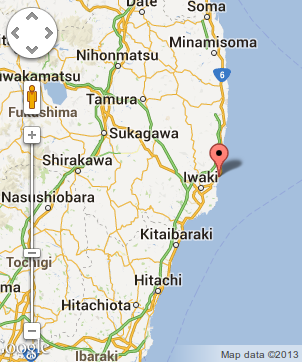
福島県いわき市四倉海岸 2012.10.04 Yotsukura Beach in Fukushima
The Yomiuri Shimbun
July 17, 2013
Children pick up white seashells at Yotsukura Beach in Iwaki, Fukushima Prefecture, on Monday, which was Marine Day. Located about 35 kilometers south of the crippled Fukushima No. 1 nuclear power plant, the beach was opened for the first time since the March 2011 Great East Japan Earthquake, which triggered the nuclear crisis.
The operators of the beach gave away about 150 seashells that had been washed ashore, after polishing and putting stickers on them as a memento of visiting the beach. Before the disaster, the beach was visited by about 100,000 people a year.
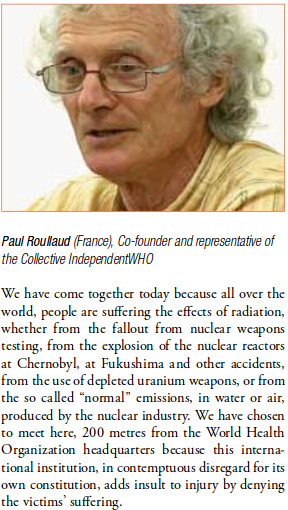
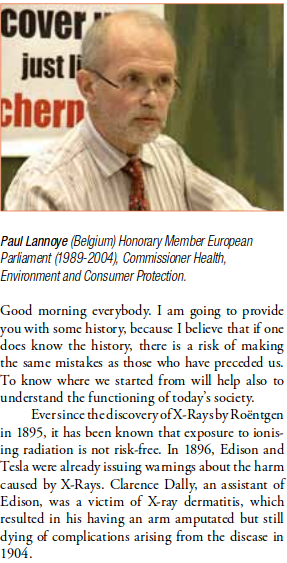
We are pleased to announce the online publication of the English-language version of the “Proceedings of the Scientific and Citizen Forum on Radioprotection: from Chernobyl to Fukushima,” a conference which was organized on 12 and 13 May 2012 in Geneva by the Collective IndependentWHO – Health and Nuclear Energy. A printed version of the Proceedings will be available in mid-July.
The Forum brought together independent scientists and citizens from Belarus, Russia, France, Belgium, the United Kingdom, Switzerland and Japan, as well as politicians and journalists. As participants demonstrated, the scandal of the omerta on the effects of radiation on health continues, more than two years after the beginning of the Fukushima disaster on 11 March 2011.
There are more and more sick people in the affected areas, including children. Citizens, Japanese doctors and independent scientists are obliged to organize in the face of the shortcomings of the authorities and international organizations, including the World Health Organization (WHO), which is still subject to the agreement that it signed with the International Atomic Energy Agency (IAEA) on 28 May 1959.
With the publication of the “Proceedings” we remind all those concerned about the risks of atomic radiation, whether from civilian or military use.
There is no minimum acceptable radiation dose for health, contrary to what is claimed by the Japanese authorities and international organizations following the accident at the Fukushima Dai-Ichi nuclear power plant.
This 160-page report, profusely illustrated with graphics and photos, is an accurate and complete reflection of the presentations and discussions at the Forum. A French-language version was published earlier this year. It is now available in English as a PDF on our website. The print version will be available at mid-July 2013.
The video above is a recent brief talk on the failures in the design of the reactor at Daichi and those of the USA
Below is an article that was released 5 days after the Tsunami struck the nuclear power plant at Fukushima Daichi. The plant had suffered 3 meltdowns by this point with massive releases on radioactivity into the environment.
Fukushima Reactor Flaws Were Predicted – 35 Years Ago
The failings of the Fukushima nuclear reactor were so substantial that three General Electric scientists who helped design the now imperiled reactors resigned from the company.
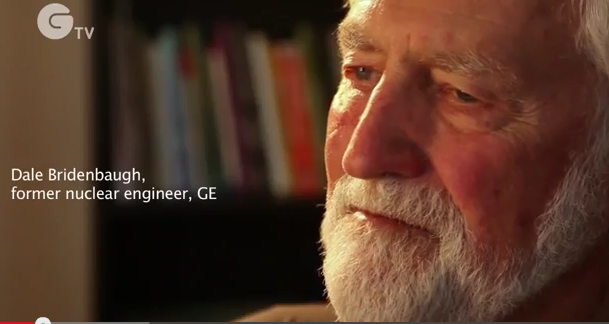
Dale Bridenbaugh helped assess the design of the Mark 1 nuclear reactor upon its creation back in 1975. His findings portray an extreme lack of confidence in the reactor’s ability to contain pressure in case of a meltdown. Bridenbaugh and two engineering colleagues couldn’t handle the pressure themselves, leading them to drop out of the project and resign their positions with the company.
The Fukushima Daiichi nuclear power plant contains six total reactors, five of which are Mark 1s. And the problem the reactors are facing – a loss of power, leading to cooling uranium rods and rising pressure inside the core – is precisely the issue that drove Bridenbaugh’s resignation from General Electric. The reactors “did not take into account the dynamic loads that could be experienced with a loss of coolant,” Bridenbaugh told ABC News.
GE says the problems were rectified in the early 80s, but it may be weeks before the full extent of the quake damage to the reactors is determined.
In a distinct (though not entirely unexpected) change of heart, Bridenbaugh and his colleagues, after leaving GE, went to work for an antinuke campaign.
This month I’ve been focussing on “small scale renewable energy”. And what a pleasure this has been. So many good things going on. Peru is giving free solar panels tothe poorest 2 million poor households. In Fiji, a team of grandmothers, having received training in India, are now the solar power educators for communities. UK launches new solar feed-in tariff that will pay back homeowners as they use their solar energy. Many new developments in more efficient solar panels, and in solar and wind energy storage.
UK. Angst continues about how to pay for new nuclear power – with hidden subsidy to the French supplier, and bribes offered to Somerset towns and villages near planned nuclear plant . Sounds a bit like Japan’s “Nuclear Village” doesn’t it – in which local areas became dependent on government money, for hosting nuclear plants?
USA. They’ve got a nuclear enthusiast too, for Energy Secretary – Ernest Moniz – who’s just announced new funding for nuclear companies General Atomics, GE Hitachi, Gen4 Energy and Westinghouse . However, it’s not well known, but the Dept of Energy has decided on deep burial as the solution for nuclear wastes, not nuclear reprocessing and new nuclear plants.
Financial disaster of U.S.Uranium Enrichment Corporation (USEC) threatens viability of USA nuclear industry
Legal case continues, with US navy personnel suing TEPCO for their radiatio-related illnesses.
France. 30 anti nuclear activists arrested. They broke into France’s oh so secure Tricastin nuclear power plant.
Japan. the Abe government forges on, with drive to restart nuclear reactors. But this is not popular. And – Fukushima continues to leak radioactive water, and measure high levels of radioactivity.
The first part of the program aims to provide solar systems to 500,000 extremely poor households in areas that lack even basic access to the power grid. Unsurprisingly, it is a massive opportunity for domestic solar installers, and Merino has said that bidding for the contract will open later this year to fix the rest of the panels.
The project was first started in Contumaza, a province in the northeastern region of Cajamarca, where 1,601 solar panels were installed. The energy minister has said that when the project is finished, the scheme will allow 95% of Peru to have access to electricity by the end of 2016.
Speaking to the Latin America Herald Tribune, Merino said: “This program is aimed at the poorest people, those who lack access to electric lighting and still use oil lamps, spending their own resources to pay for fuels that harm their health.”
The elderly women underwent training at the Barefoot College in India, an NGO that provides rural communities with training and education. Fiji’s Womens Minister, Dr Jiko Luveni, has told Radio Australia’s Pacific Beat program the training programme was specifically for grandmothers.
“The idea behind it is that these women are already established in the villages,” Dr Luveni said.
“They have their homes and they are not likely to leave the village as soon as they come back with their skill. Dr Luveni says the elderly women are now celebrated as solar experts and are supervising their young trainees as they install the solar equipment.
“After the training, it was these young people who actually installed the equipment in each house,” she said.
“The grandmothers were merely supervising what they did.
She says the initiative is bringing about various other social benefits to the villages.
“In this particular village that I went into, I could see that the moral of the villagers were boosted as they have a product that is an evidence of development in their villages,” Dr Luveni said.
“That village has gone into some income generating activity…They are more development oriented in their thinking.
“That particular village now has established a canteen and he young people are being recruited to help in the assemblage and installation of the solar equipment in those villages. Thereby, gaining an income,” she said.
Title: Fukushima offers real-time ecolab Source: Nature Author: Ewen Callaway Date: 16 July 2013 […] Last week […] biologists studying Fukushima and Chernobyl came together at the annual meeting of the Society for Molecular Biology and Evolution in Chicago […]What Fukushima data do exist are sporadic — and contested. […]
[…] Insects collected in May [2011] showed few problems, but their lab-reared offspring had many abnormalities, such as misshapen wings and aberrant eyespots, and many died as pupae (A. Hiyama et al. Sci. Rep. 2, 570; 2012). Among the September-collected butterflies, more than half of the progeny showed such defects.
[…] “You can come up with alternative explanations, but I think the hypothesis that radiation caused death and abnormalities is the most reasonable,” [Joji Otaki, an ecologist at the University of the Ryukyus in Nishihara, Japan] says.
Tim Mousseau, an evolutionary geneticist at the University of South Carolina in Columbia […] is heading to Fukushima this week to begin his third season of field work […] His team saw die-offs in some insects and declining numbers of some bird populations […]
Sailors were drinking desalinated seawater and bathing in it until the ship’s leadership came over the public address system and told them to stop because it was contaminated, Hair said. They were told the ventilation system was contaminated, and he claims he was pressured into signing a form that said he had been given an iodine pill even though none had been provided. As a low-ranking sailor, he believed he had no choice.
The Navy has acknowledged that the Reagan passed through a plume of radiation
The Defense Department created the Operation Tomodachi Registry to show radiation dose estimates based on shore locations — and to list more than 70,000 DOD-affiliated people in the area March 12-May 11, 2011 and their individual exposure levels. More than two years after the disaster, the registry remains incomplete.
In growing lawsuit, service members fault TEPCO for radiation-related illnesses By Matthew M. Burke Stars and Stripes July 15, 2013 SASEBO NAVAL BASE, Japan — Five months after participating in humanitarian operations for the March 11, 2011, earthquake and tsunami that led to nuclear disaster in Japan, Petty Officer 3rd Class Daniel Hair’s body began to betray him.
He had sharp hip pains, constant scabbing in his nose, back pain, memory loss, severe anxiety and a constant high-pitch ringing in his
ears as his immune system began to attack his body. The diagnosis, he said, was a genetic immune system disease, which on X-rays looked to have made his hip joint jagged and his spine arthritic. He was put on a host of medications and eventually separated from the Navy job heloved.
Hair believes radiation is the cause. He is among 50 sailors and Marines in a growing lawsuit against Tokyo Electric Power Co., alleging that Japan’s nationalized utility mishandled the meltdown at the Fukushima Dai-ichi nuclear plant that spewed radiation into the air and water.
Other servicemembers have been diagnosed with leukemia, testicular cancer and thyroid problems or experienced rectal and gynecologicalbleeding, the lawsuit says. Hair said one of his friends, a fellow USS Ronald Reagan shipmate, was diagnosed with a brain tumor……..
The plaintiffs allege that TEPCO lied about the risk of exposure, luring American forces closer to the affected areas and lulling others
at bases across Japan to disregard safety measures. They are seeking at least $40 million each in compensatory and punitive damages and more than $1 billion for a fund to cover health monitoring and medical expenses. Continue reading →
Susannah Frame,, KING 5 TV: At the beginning, especially WRPS officials [at the Hanford nuclear site] were extremely condescending. They tried bullying me. They tried to tell me that basically I was an idiot, that I didn’t know what I was doing. I’ve never had media professionals deal with me in that way. I’ve been around for a long time. […]
I was really surprised at the way I was treated. They said do you even know how to Google? […]
They really tried to browbeat me into not doing the story at all. They said, ‘We think that you will be publicly humiliated if you go on TV and online and report this because what you are saying is so absurd — You’re saying we ignored a leak?’ How to help Nuclear HotseatStream the full program here
Kyodo News,, July 16, 2013: Human error causes Taiwan’s nuclear plant shutdown […] Chai Fu-feng, a spokesman of Taiwan Power Co. (Taipower), told Kyodo News that the Unit 2 reactor of the Chinshan nuclear power station in New Taipei City was automatically shut down when instruments detected too much water in the reactor pressure vessel. […] a plant worker switched off a draining valve to control the heat in the reactor […] Panicking, he added water to the reactor to keep the water level up, but he added too much water too fast, which eventually caused the reactor to automatically scram, he said. […]
World Nuclear News,, July 16, 2013: […] winds above 117 kilometres per hour threatened transmission systems. […] the height of the storm saw damage to Chinshan 2′s main transformer, which triggered an automatic shutdown. A few hours later seawater overran the cooling water intake bringing in plant debris that clogged the debris screen. Later inspection confirmed lightning damage to the main transformer, as well as storm damage to the switchyard insulator and 350 kV overhead lines. […]
The government is still in negotiations with EDF Energy over a “strike price” that would provide a guaranteed long-term income for new reactors at Hinkley Point.
The government has already committed itself to a £10bn loan to the French-owned company but has repeatedly ruled out any subsidy for the Somerset project that is seen as a test case for any future atomic plants being built here
Hinkley Point C nuclear plant £128m windfall dismissed as ‘social bribe’ Terry Macalisterguardian.co.uk, Thursday 18 July 2013 Government proposals to compensate Somerset towns and villages near planned nuclear plant rejected by campaigners Campaigners have dismissed proposed government £128m windfall for towns local to Hinkley Point nuclear power station, saying it is really worth only £3.3m per year.
Towns and villages around a proposed new nuclear plant at Hinkley Point C in Somerset could be in line to receive a £128m windfall under new proposals outlined by the government.
Campaigners opposed to the project dismissed the funding as a “social bribe” that only amounted to £3.3m annually over 40 years while wind farm developers complained they had to pay five times more in community benefits.
People living around eight potential nuclear sites in England and Wales could be eligible for a package of benefits worth up to £1,000 per megawatt of power once a facility starts, the government said…… Continue reading →
The fall out from Japan’s Fukushima nuclear power plant disaster two years ago appears to have found its way into the food chain, as a series of snaps apparently showing ‘mutant vegetables’ have emerged online.
A Korean website has published pictures of flowers, vegetables and
fruit covered with deformities and lumps. But it is not immediately clear where the produce was farmed from,
whether the images have been doctored and whether the nuclear disaster is in fact to blame…… Continue reading →
The World Health Organisation’s International Agency for Research on Cancer has classified radiofrequency electromagnetic fields as “possibly carcinogenic to humans”.
The Federal Government’s Australian Radiation Protection and Nuclear Safety Agency (ARPANSA) also suggests that baby monitors be kept a metre away from cots, to minimise any electromagnetic emissions.
“Due to the lack of scientific evidence on mobile and cordless phone use by children, ARPANSA recommends that parents encourage their children to limit their exposure,” the agency states in its first “fact sheet” for consumers to reduce exposure from wireless devices including mobile phones.Doctors yesterday agreed with the regulator’s advice, in light of children’s fixation with tablets and smartphones. Continue reading →
More funding for advanced nuclear power reactors R&D, 17 July 13 the Energy Department announced $3.5 million for four advanced nuclear reactor projects that go beyond traditional light water designs. These projects — led by General Atomics, GE Hitachi, Gen4 Energy and Westinghouse -…. “Public-private research in advanced nuclear reactors will help accelerate American leadership in the next generation of nuclear energy technologies and enable low-carbon nuclear power to be a significant contributor to the U.S. energy economy,” said Energy Secretary Ernest Moniz….
The four projects selected for negotiation will receive up to $3.5 million in total, with a 20 percent private cost share:
General Atomics (San Diego, California) – General Atomics will conduct research and development on silicon carbide composite material, which could act as a safe and reliable material for fuel rod cladding in advanced reactor designs. Better understanding of silicon carbide composite material will help incorporate this material into advanced nuclear reactor designs and support future licensing efforts.
GE Hitachi Nuclear Energy (Wilmington, North Carolina) – GE Hitachi’s project will develop high temperature insulation materials and robust analysis tools to help design and manufacture electromagnetic pumps for liquid-metal-cooled nuclear reactors. Electromagnetic pumps have less moving parts than traditional mechanical pumps – improving reliability and safety, while reducing maintenance needs.
Gen4 Energy (Denver, Colorado) – Gen4 Energy will conduct research and development on natural circulation designs for advanced nuclear reactors that utilize a lead bismuth coolant. The project will develop computer models that will help visualize natural circulation flow and integrate it into safe, reliable reactor designs.
Westinghouse Electric Company (Pittsburgh, Pennsylvania) – Westinghouse’s project will conduct analysis on sodium thermal hydraulics to support advanced nuclear reactor design. The project will provide analytical tools to help quantify heat exchanger performance and improve component engineering for sodium-cooled reactor designs. http://www.rdmag.com/news/2013/07/more-funding-advanced-




















 nuclear-news