Support the Fukushima host children program in Hawaii
Published on 19 Jun 2013
Funding target left – 30,000 Dollars (Approx)
On today’s podcast, Maggie and Nat interview our very inspiring friend Yumi Kikuchi. Fairewinds has been working with Yumi for more than a year now. She encouraged us to send material to the Tokyo Peace Film Festival, which she organized, and we sent our film “You are not alone.” Yumi also co-sponsored Arnie’s trip to Japan in 2012, where he gave the presentation “Japan at a Crossroads: Two Futures.”
 Image source ; http://www.harmonicslife.com/
Yumi left Japan with her family after the Fukushima Daiichi accident, and currently lives in Hawaii. She founded the Fukushima Kids Hawaii Project (FKHP), usually shortened to Fukushima Kids, and has just returned to Japan where she will be spreading awareness about the project and fundraising.
Fukushima Kids aims to host children from Fukushima in Hawaii during school vacations, where they can play outdoors safe from high radiation levels. Children are more vulnerable to the effects of radiation than adults, and we are already seeing signs of thyroid cancer and cysts among children in Fukushima. There are about 260,000 kids left living in the Fukushima prefecture, and Yumi is hoping to host 15 kids this first summer.
How can you help?
Spread the word about the project, and about the health crisis in Japan. Those in Hawaii can contact Yumi about hosting children or volunteering. Gathering financial support is most crucial to the project right now, with airfare for the kids being the biggest expense.
To donate via paypal: genm@trust.ocn.ne.jp
To donate by mail in the USA, make check payable to Harmonics Life Center Hawaii, subject line Fukushima Kids, and mail to: Harmonics Life Center c/o Morita 75-286 Hoene Street Kailua Kona, HI 96740
In Japan, you can make a donation by Yubin-Furikae at any post office to the Harmonics Life Center: 00110-1-144224
The week that was, in nuclear news

Christina Macpherson’s websites & blogs
USA. Nuclear industry still reeling from closure of San Onofre nuclear power plant. Now the full shock of the “decommissioning” challenge is being felt. It will take at least 60 years to get rid of that radioactive corpse of San Onofre. Warren Buffett and MidAmerican cancel plans for nuclear power, and shift investment to wind energy. Nuke lobby produces an advertising film – Pandora’s Promise, which, I am happy to say, is getting pretty bad reviews.
UK govt struggling with costs for its new nuclear program: it will link its guaranteed fixed price for electricity to inflation, so that the French supplier EDf will be sure of a profit, but British consumers will face high costs. Meanwhile UK and Russia sign a deal that will enable Rosatom to sell nuclear technology to Britain. Wind power doing very well, with negligible need for backup, over 12 months.
Climate change: 48 USA city mayors pledge action to address climate change. China starts a carbon trading scheme.
Japan. Prime Minister Abe – still junketing around Europe marketing nuclear reactors, but 60% of Japanese oppose export of nuclear reactors. Prime Minister’s wife Akie opposes nuclear power, speaks up for renewable energy.
Uranium industry in serious doldrums. Rio Tinto’s Rossing uranium mine may have to close.
USA’s nuclear power industry in its economic death throes
These are the facts: Renewables have taken the lead in new power generation in America, comprising nearly half of all new generating capacity installed in the United States in 2012. In the first quarter of this year, nearly half the new capacity installed was solar. With its poor economics, enormous complexity, overly-large capital requirements, too-long lead times, and overall risk, US nuclear power is headed for contraction, not resurgence. Ultimately, I think the same will be true globally
 The real reason to fight nuclear power has nothing to do with health risks, Quartz, By Chris Nelder, 17 June 13“……Nuclear’s long goodbye The simple fact is that, at least in the US, the nuclear industry is dying a slow death. The announced closure of four major facilities in 2013 alone amount to 4,246 megawatts of nuclear capacity—enough to power 2.7 million homes for a year—that are being retired.
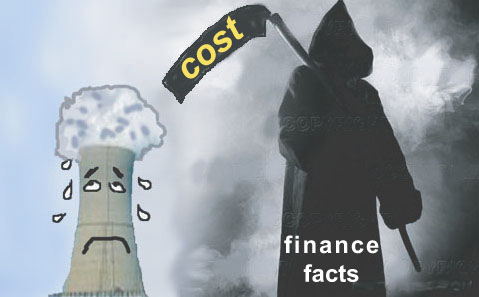
Even while the nuclear industry is able to externalize its costs for insurance (which are federally limited), loan guarantees (which are federally backstopped), decommissioning (which is pushed onto ratepayers) and waste handling (which is pushed onto taxpayers), it still lost. If it had to stand on its own and pay its full insurance costs like every other energy source, we could never build another nuclear plant in America, because no private investors would be willing to take that kind of risk. It’s hard to imagine how the economics could be more tilted in nuclear’s favor (although I’m sure its proponents have ideas on that).
The reason nuclear is dying is economics, not tribalism, as Shellenberger and Nordhaus claim. Continue reading
San Onofre nuclear “decommissioning” will last for decades
So there the disabled behemoth sits, awaiting a decommissioning project that will continue for decades, requiring continued regulatory oversight and inspiring never-ending debates about who should pay and how much.
The Unit 1 reactor, which was shut down in 1992, was supposed to be boxed up and shipped to a repository in South Carolina, but no one could figure out how to transport a 770-ton bundle of radioactive junk across the country. Instead, it remains where it is, encased in concrete, waiting for the transmutation of the elements to complete its ten-thousand-million-year-long conversion from deadly isotopes to stable lead. We won’t be free of it anytime soon.

So long, San Onofre (in like 700 million years) High Country News Judith Lewis Mernit | Jun 17, 2013“……We have come to the end of an era — the nuclear power renaissance I had set out to investigate a decade ago has come to nothing.
Yes, a handful of new reactors have been proposed and a couple are even under construction, interrupting a hiatus that lasted nearly a quarter of a century. And the same band of shiny, PR-minded techno-enviros continue to argue that nuclear power is the only solution to climate change (their latest effort, Robert Stone’s documentary “Pandora’s Promise,” is simply one long advert for dreamy advanced waste-free reactors that don’t yet exist). Continue reading
UK’s new nuclear plan will dramatically increase electricity costs

 Electricity From New UK Nuclear Plant To Be Linked to Inflation WSJ, By SELINA WILLIAMS AND GERALDINE AMIEL, 18 June 13, The U.K. government has agreed that the guaranteed fixed price for electricity from a new nuclear power plant that Electricite de France SA EDF.FR +0.30% (EDF.FR) wants to build would be fully linked to inflation, said people familiar with the matter, a move that would add tens of billions of pounds to the total cost of electricity from the reactors.
The agreement to inflation-link the electricity price EDF would receive–known as the strike price–for 35 years substantially eases the financial risks for the French utility for constructing two nuclear reactors, but there is still no deal on the actual price, the people said.
The whole nuclear plant is estimated to cost around 14 billion pounds ($22 billion) to build.
EDF, the world’s largest nuclear operator, seeks a strike price between GBP95 to GBP100 per megawatt hour of electricity while the government would rather settle around GBP80 to GBP85 per megawatt hour, one of the people said. The current wholesale electricity price is around GBP48/MWh. The talks are expected to continue for several weeks, the person said.
Whether EDF and the U.K. can reach an agreement is seen as a litmus test for nuclear energy and its economic viability in Europe……
The agreement links the strike price, which amounts to an indirect subsidy for nuclear power, to an inflation measure called the consumer price index, one of the people said. This would dramatically increase the costs to taxpayers, said Roland Vetter, head of research at CF Partners, an environment and energy advisory, trading and investment
firm.
“Indexation is important because it will increase the subsidies every year in line with inflation and the public therefore will carry thelong-term inflation risk in their electricity bills,…… http://online.wsj.com/article/SB10001424127887323566804578553030018924570.html?mod=googlenews_wsj
Radioactive waste a danger near underground landfill fire
“Emergency Action”: Lawmaker says nuclear waste is under threat from underground landfill fire near St. Louis http://enenews.com/emergency-action-lawmaker-says-nuclear-waste-is-under-threat-from-underground-landfill-fire-near-st-louis
Title: St. Louis-area lawmaker seeks removal of radioactive waste from Bridgeton landfill
Source: AP
Date: June 17, 2013
St. Louis-area lawmaker seeks removal of radioactive waste from Bridgeton landfill […]
Bridgeton Landfill is part of the larger West Lake Landfill. Another area of West Lake contains nuclear waste from the Cold War era. Democratic State Rep. Bill Otto of St. Charles on Monday called for emergency action to remove the nuclear waste, citing the threat from the underground fire.
The Environmental Protection Agency says the radioactive material is not endangered by the fire and there are no plans to remove it.
See also: TV: Official to reveal “new concerns” about landfill fire nearby nuclear dump — “Will unveil new information about the radioactive waste” — Erin Brockovich’s group meets with residents
5.7 million people employed in renewable energy

2012 was the second highest year ever for renewable energy investments – but being “second” doesn’t reflect installed capacity as prices for renewable energy equipment, particularly related to solar power, have plummeted.
Last year was another record year in terms of installed capacity; with 115 GW of new renewables put in place globally. However, 2012 saw the most significant change so far in the balance of renewable energy investment activity between developed and developing economies. Continue reading
48 USA mayors pledge action to deal with climate chnage
 US cities seek greater climate resilience http://www.smh.com.au/environment/climate-change/us-cities-seek-greater-climate-resilience-20130618-2of9f.html June 18, 2013US mayors pledged Monday to make their communities more resilient to increasingly severe floods, droughts, extreme storms and wildfires, which they said was more efficient and cost-effective than disaster clean-up afterwards.
Four dozen elected officials, from localities as diverse as Washington DC, Des Moines, Iowa and Santa Barbara County, California, released a one-page plan which laid out actions such as using more renewable energy and making buildings and infrastructure more energy-efficient.
The Resilient Communities for America Agreement was launched less than a week after New York Mayor Michael Bloomberg announced a $US20 billion plan to prepare his city for rising sea levels and hotter summers.
The actions by local officials took place as anticipation builds that the White House is planning a series of executive actions in July to address climate.
Federal action can help, but local officials are at the front lines of natural disasters, said Des Moines Mayor Frank Cownie. Iowa’s biggest city saw severe flooding in 2008, a trio of “500-year” floods in 2010, a drought in 2012 and the wettest year in 140 years of record-keeping so far in 2013.
“These extreme events are becoming more and more prevalent, and local government is really where it happens,” Cownie said.
Collapse of nuclear industry due to financial realities
In short: Cost estimates for new nuclear plants are not credible. I have yet to find a single one that stood up to close scrutiny. And as far as I am aware, no nuclear plant has ever been built for close to its original cost estimate.
The real reason to fight nuclear power has nothing to do with health risks, Quartz, By Chris Nelder, 17 June 13 Chris Nelder is an energy analyst, consultant and speaker who has written about energy and investing for more than a decade.
Nuclear proponents are launching a full-court press for fresh investment in the technologyThe release of the new film Pandora’s Promise, another editorial from ardent nuclear champions Michael Shellenberger and Ted Nordhaus of the Breakthrough Institute, and Paul Blustein’s recent piece in Quartz, “Everything you thought you knew about the risks of nuclear energy is wrong,” are part of an effort to put a new shine on a technology that once offered, but failed to deliver, electricity “too cheap to meter.”
Missing from the entire debate about nuclear is the most important fact of all: Nuclear is dying due to poor economics, and the debate is already over as far as the market is concerned.
Shellenberger and Nordhaus have backed up their arguments with junk accounting on nuclear energy’s costs. This is where the discussion must depart from mere boosterism and descend into the deep, dark world of energy economics—a subject that Blustein did not even address. Continue reading
AUDIO: China starts carbon trading scheme
 AUDIO China launches carbon trading scheme in bid to reduce emissions in Shenzhen http://www.abc.net.au/news/2013-06-18/china-launches-its-first-carbon-trading-scheme/4763770 19 June 13 China, the world’s largest carbon emitter, has launched its first carbon trading scheme as it tries to reduce pollution from greenhouse gases. A platform allowing businesses in the southern city of Shenzhen to trade permits to emit carbon was established on Sunday, and trading began on Tuesday.
Under the scheme, companies will be assigned an emissions quota and will be able to profit from selling excess permits to other firms if they emit below their quota.
China plans to open similar schemes in seven areas including the capital Beijing, the major commercial centre of Shanghai, the port city of Tianjin and Guangdong province before 2014, in what analysts say is a step towards a nationwide carbon market.
The pilot programs will cover areas in which tens of millions of people live and cover far more emissions than the entire carbon market in Australia.
They also come as the European carbon trading market has collapsed, while Australia’s could be scrapped depending on the outcome of the September 14 election.Climate Institute deputy CEO Irwin Jackson says the scheme is a significant step forward for China.
Nuclear power problems in South Korea

 South Korea’s Nuclear Blues The Diplomat, By Sebastian Sarmiento-Saher June 19, 2013 “…..Although South Korea’s burgeoning nuclear energy industry looks set to become a world leader, Seoul will first have to address domestic corruption in the atomic sector and international questions regarding its right to reprocess spent fuel at home. Continue reading
Lynas rare earths company drops defamation case against Save Malaysia Stop Lynas.
Lynas drops case against Malaysia greens AAP JUNE 18, 2013 AUSTRALIAN rare earths miner Lynas Corporation has dropped defamation action against a Malaysian green group. In April last year, Lynas initiated legal proceedings against Save Malaysia Stop Lynas.
Two months later, independent media website Free Malaysia Today apologised for running stories sympathetic to the activists, who opposed plans for a processing plant. Lynas Corporation chief executive Eric Noyrez on Tuesday said solicitors had been instructed to discontinue legal action against the activist group.
“There is no value in continuing disputes with members of our local community,” he said in a statement.
“Therefore, Lynas intends to instruct its solicitors to discontinue its defamation claim against the Save Malaysia Stop Lynas group.”…. Lynas shares fell 1.25 cents, or 2.84 per cent, to 42.75 cents following the statement’s release.http://www.heraldsun.com.au/business/breaking-news/lynas-drops-case-against-malaysia-greens/story-fni0xqe4-1226665659143
World Bank is Mapping the Renewable Energy Revolution
 Mapping the Renewable Energy Revolution World Bank, June 17, 2013 STORY HIGHLIGHTS
A new World Bank program is helping developing countries map their renewable energy potential in a new way that produces rich, nationwidedata.
The project goes beyond existing solar and wind maps to provide the granular data governments need to understand the country’s fullresource potential and to pinpoint the best locations for serving thepopulation……..http://www.worldbank.org/en/news/feature/2013/06/17/mapping-the-energy-revolution
Catholic Pope and other religions acting on climate change
Climate change gets religious SMH, 19 June 13 Few religious communities have gone as far in fighting climate change as a church in Queensland which has 24 solar panels bolted to the roof in the shape of a Christian cross. “It’s very effective. It’s inspired some members of our congregation to install panels on their homes,” Reverend David Lowry said of the “solar cross” mounted in 2009 on the Caloundra Uniting Church, which groups three Protestant denominations.
Many religions have been wary of moving to install renewable energy sources on their places of worship, from cathedrals to mosques – or of taking a strong stand on climate change in general – despite teachings that people should be custodians of nature.
But slowly, that may be changing, thanks to new religious leaders including Pope Francis, the head of the Roman Catholic Church.
Problems in nuclear pyroprocessing
 South Korea’s Nuclear Blues The Diplomat, By Sebastian Sarmiento-Saher June 19, 2013“…..Assuming that South Korea does gain approval to conduct pyroprocessing, it may take years to do so in a way that is both technically and economically viable. The Diplomat spoke with Olli Heinonen, a Senior Fellow at Harvard’s Belfer Center for Science and International Affairs, who said that “[t]he product to the ROK pyroprocessing scheme is a uranium/transuranium/zirconium fuel, which is not suitable to fuel ROK’s LWR [Light Water Reactor] or CANDU [Canada Deuterium Uranium] reactors. Thus ROK is developing a prototype Sodium Fast Reactor (SFR), which is planned to be operational around 2028. A commercial scale SFR is envisioned to be available by the mid of the Century.”
In addition to a long wait time, pyroprocessing results in other fissile materials like Neptunium that can be used for nuclear bombs and must be safeguarded. Neptunium must be separated out, but as Dr. Heinonen added, “[i]t is fairly easy and straight forward for the IAEA to monitor and confirm that this does not take place.” This will mean that additional safeguarding efforts would need to be implemented – all of which will ultimately depend on South Korea’s willingness to abide by them.
Finally, how proliferation resistant is pyroprocessing in terms of achieving pure plutonium metal needed for nuclear weapons and timing? Dr. Heinonen gave his take: “The fact that plutonium is not fully separated from other elements gives to the ROK officials basis to argue that this difference makes pyroprocessing more proliferation resistant than traditional reprocessing.”
“In order to have pure plutonium separated, additional process steps are required either at the pyroprocessing plant or at a separate installation, which would be found by the IAEA. If such process steps are made it would take 1-3 weeks to turn the material to plutonium metal. However, before that the process steps need to be developed and constructed, but the bottom line is that by having the envisioned uranium/plutonium metal, a proliferator is substantially closer to pure plutonium metal.” ….. http://thediplomat.com/pacific-money/2013/06/19/south-koreas-nuclear-blues/
1 This Month

of the week – Shut Down Drone Warfare!


Tell the Ukrainian Government to Drop Prosecution of Peace Activist Yurii Sheliazhenko

Petition to revoke the licensing of the Near Surface Nuclear Disposal Facility (NSDF) at Chalk River. https://www.ourcommons.ca/petitions/en/Petition/Details?Petition=e-7247
To see nuclear-related stories in greater depth and intensity – go to https://nuclearinformation.wordpress.com
-
Archives
- April 2026 (68)
- March 2026 (251)
- February 2026 (268)
- January 2026 (308)
- December 2025 (358)
- November 2025 (359)
- October 2025 (376)
- September 2025 (257)
- August 2025 (319)
- July 2025 (230)
- June 2025 (348)
- May 2025 (261)
-
Categories
- 1
- 1 NUCLEAR ISSUES
- business and costs
- climate change
- culture and arts
- ENERGY
- environment
- health
- history
- indigenous issues
- Legal
- marketing of nuclear
- media
- opposition to nuclear
- PERSONAL STORIES
- politics
- politics international
- Religion and ethics
- safety
- secrets,lies and civil liberties
- spinbuster
- technology
- Uranium
- wastes
- weapons and war
- Women
- 2 WORLD
- ACTION
- AFRICA
- Atrocities
- AUSTRALIA
- Christina's notes
- Christina's themes
- culture and arts
- Events
- Fuk 2022
- Fuk 2023
- Fukushima 2017
- Fukushima 2018
- fukushima 2019
- Fukushima 2020
- Fukushima 2021
- general
- global warming
- Humour (God we need it)
- Nuclear
- RARE EARTHS
- Reference
- resources – print
- Resources -audiovicual
- Weekly Newsletter
- World
- World Nuclear
- YouTube
-
RSS
Entries RSS
Comments RSS
 nuclear-news