A Novel Idea: Asking an Afghan About the Future of Uranium
…..Plus, the Taliban know there’s a four-trillion-dollar carrot awaiting those who sign on to a peace agreement. The US Air Force has conducted a complete aerial survey of Afghan resources and released Russian assays measuring the nation’s untapped mineral wealth in gold (in Badakshan), copper (Balkhab), iron (Haji-Gak), cobalt (Aynak), carbonatite (Khanneshin), tin (Dusar-Shaida) and more. Afghanistan could be the Saudi Arabia of rich rocks.
Left out of the published US reports (but something I dug out of old paper CIA files not purged from computers) was the most valuable stash of all: uranium, possibly the world’s largest deposit, which the Soviets secretly mined using only imported Soviet workers until they were chased back to Russia in 1988.
Cobalt mining beats the hell out of the opium trade (which is slipping to Myanmar, anyway). The Karzai government’s hope is to leave a path to wealth as its legacy, but that wealth can’t be dug out until the soil above is free of landmines and maniacs.
Chinese state companies are today lining up in Kabul with shovels and signing bonuses. Maroofi likes Chinese companies – they’re more likely to provide jobs than baksheesh. Unlike Western companies.
Baksheesh. Bribes. Corruption. It was this topic that set Maroofi on a long rip. Yes, Afghans have been showered with billions in bribes, backhanders and corrupt deals, but who’s paying those bribes? Who’s doing the corrupting?
“Karzai told Lockheed [Lockheed Martin, the defence technology company], ‘You give hundreds of millions of dollars in contracts to my family and to my minister’s families because you expect to buy influence. You’re not getting influence, and you’re not getting your money back, either.’”…..
Greg Palast is a New York Times bestselling author and fearless investigative journalist whose reports appear on BBC Newsnight and in The Guardian. Palast eats the rich and spits them out. Catch his reports and films at www.GregPalast.com, where you can also securely send him your documents marked, “confidential”.


Vice
10 May 2013
“Now that the sonovabitch is dead, why is the US still angry with us?”
“Us”, in this conversation, are the Taliban. The SOB in question is Osama bin Laden.
The Taliban’s frustration was relayed to me by Yahya Maroofi, Counsellor to Afghanistan’s President Hamid Karzai – Karzai’s Kissinger, if Kissinger had a soul.
The Silk Road nation of Kazakhstan is an excellent place to encounter the dervishes of the Great Game for control of the camel-and-pipeline routes of the Central Asian steppes. Here we can witness the diplomatic-military idiocies of new empires pathetically attempting to ignore the dried skeletons of the imperial forces that went before them.
Maroofi was spending the day in Kazakhstan’s capital on his way to little-noticed peace negotiations – little noticed because neither Uncle Sam nor Great-Uncle Britain were invited. Attendance is limited to those frontline states that will be left holding the grenade when the US and UK pull out the pin with the removal of their troops in 2014. The lineup includes Kazakhstan, Russia, Kyrgyzstan (birthplace of the Boston Bombers) and the big new swinging dick on the block, Turkey, as well as Iran, the nation most feared and despised by the Taliban. The unannounced guests, of course, are the Taliban themselves.
I am moved to recount a bit of my lengthy talk with the Afghan minister after reading reams of meretricious bunkum about Afghanistan from the pens of US propaganda repeaters pretending to be reporters. My favourite is, “Hope Seen for Afghanistan After Coalition Leaves,” in the New York Times. To give us an expert view, two American reporters spend their 20-column inches taking down the words of General Joseph F Dunford Jr, commander of all “international forces” in Afghanistan.
Dunford just arrived in Afghanistan for the first time about 12 weeks ago. He may not know a Tajik from a camel fart, but he does speak fluent Pashto. (I made that last one up because I’m tired of Europeans making fun of Americans for being ignorant of foreign languages.)
Notably, the Times article about the future of Afghanistan includes not one word from an Afghan.
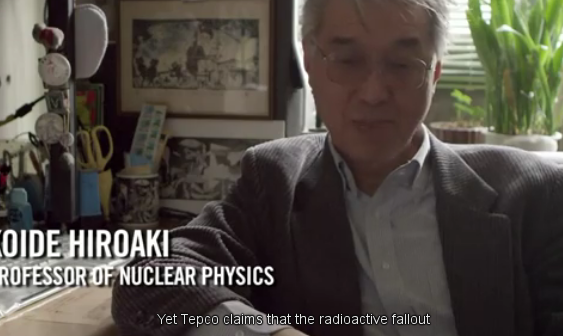
Nuclear-news.net presents the video – Alone in the zone 原発20キロ圏内に生きる男
Published on 10 Mar 2013
福島の警戒区域にただ独り残る松村直登。Surviving solo in the Fukushima evacuation zone.
For English subtitles, click “CC” button at the bottom of the video player.
– 本作のVICE.comでの記事はこちら http://www.vice.com/jp/read/alone-in-…
– Read the article at VICE.com http://www.vice.com/read/radioactive-…
誰もいなくなった警戒区域でただ独り、生きる男。彼には、ひとつの使命があった。
東日本大震災から2年。福島県双葉郡富岡町は今なお立入禁止の警戒区域に指定されている。全町民が避難したなか、この地にたった独り、残ると決意した男が。松村直登、53歳。この地を襲った惨事に苛立ちながらも、彼が居続けるのには訳があった。警戒区域で孤独に暮らしてきた男が語った、愛と憎しみの2年間。
Two years since the Fukushima Daiichi Nuclear Power Plant went into full meltdown, and the resulting 20KM evacuation zone was enforced, one farmer still remains behind braving high levels of radiation and loneliness to tend to abandoned animals. His name is Naoto Matsumura, and he is the last man standing in the ghost town of Tomioka. Another farmer, Kenji Hasegawa’s town of Iidate was also evacuated due to high levels of radiation, he sought refuge in temporary housing. Faced with a post-nuclear world both these men share brutally honest views on the state of their lives, TEPCO, government inaction and some of the hardest situations they have had to face in the midst of overwhelming radioactivity.
A terrible silent tragedy is happening in Fukushima! The lone horseman of Itate speaks out! Repost
“I would like to welcome anybody who is concerned to contact me. I request vets and radiation specialists to come and investigate my horses.”
http://blog.goo.ne.jp/rainbowgarnet1/e/6d51ec6ae9dd6c4314d2175bb18e4005
(Abstract)
(Translated by Mia)
7 May 2013 repost 10 May 2013

Iitate village (In Fukushima Prefecture) is surrounded by beautiful mountains and forests. And the village and setting still looks beautiful, even after being heavily contaminated by the fallout from the Fukushima disaster.
Mr. Tokuei Hosokawa (60 years old), a third-generation livestock dealer working in the family business, is one of a few who has remained at this village since the disaster.
He has kept quiet about the condition of his horses up until now, but as the condition of his horses has been deteriorating, he has decided to warn others that there is something terribly wrong going on, by making people aware of what has been happening to his horses.
He kept a carcass of one of his horse that died a month ago, he said;
“I want to bury it, but I preserved it so that I could show it as proof to Tepco”.

“I hear that lots of cows have been dying of hunger in 20k radius of the crippled plant. My horses have been looked after and fed well but four out of thirty two horses are getting very weak, unable to stand up well, with weakness in their knees.”

One of them, a little white pony, has been in the worst condition with its coat in a very poor condition.
The vet came to look at the little pony and diagnosed that it developed jaundice with a malfunctioning liver.
Also, 14 out of 15 foals died within 1 week to 1 month.
He asked a health care-centre for blood tests for his horses.
And there was no evidence of contagious disease or malnutrition found in the test results.
He was told that the blood test were not enough to find out the reasons behind his horses getting weak. He said;
“I think that it is to with the fallout from the Fukushima disaster. I can’t prove it scientifically, but I know it from my many years of experience in working with my horses. “
While he was running his family farm, he was also involved in various volunteering activities using these horses.
Various shrine ritual events such as “Soma Nomaoi”, the most famous traditional war game using horses.He even appeared on some TV period dramas such as ”水戸黄門”, the Tokugawa Shogun Mito Mitsukuni, a historical drama loved by all generations in Japan.

He was also actively involved with local primary school events and also held horse therapy sessions at an educational facility for the blind.
He evacuated with his family out of the village, but couldn’t bare to leave his horses behind, so he returned on his own to look after them.
He has been helping to save other cows and horses owned by other people in the same situation. So far, he saved 87 horses by himself and found a second home for them in different places in Japan.
He asked Tepco for the compensation of the cost of re-housing and caring for these horses but Tepco has rejected his appeals with the reason that there is no proof he looked after them.
He has been rejecting all personal health checks including the radiation “whole body counter”. For him it doesn’t seem to be an important issue to check his health because he has made the decision to stay, for the rest of his life, with these horses.
And although he feels that he is getting to the end of his tether, he still cannot bring himself to kill them. They have been in his family for generations, so he feels honour bound to return to return the help the horses have provided his family. He feels he should show gratitude and give respect to these wonderful creatures for their many years of work by keeping them company until they die, no matter the personal cost.
A week after this interview, as he had guessed, the little white pony had died (at the end of March 2013.)

During the interview Mr. Hosokawa kept saying;
“Japan is in a mad situation! From now on, even more terrible things will happen!”.
A personal plea by Mr. Hosokawa:
*A personal pleas by Mr. Hosokawa:“I would like to make public about the situation of my horses, my name, address and telephone numbers are below. I would like to welcome anybody who is concerned to contact me. I request vets and radiation specialists to come and investigate my horses.”細川牧場 細川徳栄さん福島県相馬群飯舘村臼石字町123-1090-9742-3141Tokuei HosokawaHosokawa Farm,123-1, Usui Aza-machi,Iitate village,Soma-gun, Fukushima prefectureTel: 090-9742-3141
h/t ;http://fukushimaappeal.blogspot.co.uk/2013/05/a-terrible-silent-tragedy-is-happening.html
Nuclear fears in Europe after dangerous radioactive material is found!
…Shockingly, the men had even stored their sandwiches and drinking water in with the radioactive material.
In Austria the men admitted they had made the journey from Germany to Romania carrying similar radioactive loads dozens of times and had not realised how dangerous it was….
CALLS are growing for more routine radioactive screening at borders after a second lorry containing unshielded radioactive material was stopped on a European road!
Published: Thu, May 9, 2013

The vehicle was contained after it was discovered to be exceeding the legal radioactive emission limits.
Shockingly, the men had even stored their sandwiches and drinking water in with the radioactive material.
In Austria the men admitted they had made the journey from Germany to Romania carrying similar radioactive loads dozens of times and had not realised how dangerous it was.
Now, a lorry from Lithuania on its way to Italy has been found to contain dangerous levels of radioactivity by customs officials.
The lorry was cordoned off, while the surrounding 300 feet around the vehicle was evacuated and the Customs border crossing point was closed.
A specialist team from the Bellinzona fire service and specially trained police officers were called in to investigate further, discovering that the radioactivity was from a package being transported in the lorry which was confiscated and secured.
Davide Bassi, from the Swiss Border Control Office said: “It is not unusual that lorry’s have a low level of radiation, and we do carry out controls to check that this limit is not exceeded.”
They were currently examining the package to find out why it was irradiated and what it contained, he said speaking to the Austrian Times.
Wolfgang Mueller from Greenpeace Germany said: “It is clearly a growing problem and about time that tougher action was made to cut down on the number of dangerous nuclear transports that seem to be taking place on our streets.”
US officials investigate deception at nuclear factory – More Shaw shenanigans !
…The investigation may also find that the manufacturer produced defective or unsafe parts slated for use in two nuclear power plants – Plant Vogtle in Georgia and Plant Summer in South Carolina…
Friday, 10 May 2013 02:21
US federal officials have started an investigation into a factory manufacturing parts for nuclear plants, alleging falsification of records and quality control rules.
The Nuclear Regulatory Commission’s Office of Investigations has started the investigation at Shaw Modular Solutions facility in the US city of Lake Charles, Louisiana.
Some workers at the facility have already admitted that they entered the identification codes for other workers while recording who assembled parts.
The investigation may also find that the manufacturer produced defective or unsafe parts slated for use in two nuclear power plants – Plant Vogtle in Georgia and Plant Summer in South Carolina.
The factory has been hit recently with a number of other charges including whistleblower complaints, a failure to meet production schedules, and difficulty in the quality control process.
Editors note:
Concerning The Shaw Group that is mentioned above, it reminds me of another discussion concerning the connection with the Shaw Group and Texas Brine. The below is a culmination of links and findings concerning this from the Enenews comments section.
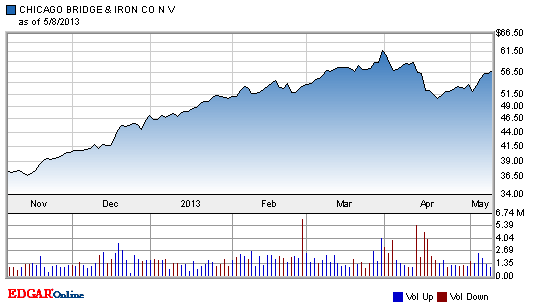
It is also worth noting on the point of companies covering their tracks on the web, that Shaw has now merged with CB and I and the the above Shaw nuclear group is now absent on the web and empty of activity on their Face book pages. Also, both are big players in the military and government spending areas. A perfect match! [Arclight2011]
[Extracts]
heres an odd link from Bayer`s 2010 annual report
it shows texas brine on the list but it shows a “0” as percentage of interest.. the only sale.. everything else they held a +50 percent holding except for a 45 percent stake in one of their dubai companies (dubai hardselling?)
just thought i would post it here in case it was useful
http://www.annualreport2010.bayer.com/en/changes-in-the-scope-of-consolidation.aspx
[….]
From a “chamber of commerce” type of site praising “big oil” in Baytown, Texas.
“Over the last ten years, Bayer Corporation has invested over $1.3 billion, by far the single largest capital investment within Bayer worldwide. Guest facilities (Hexion (Borden), Calpine Construction Finance Corporation (Baytown Energy Center), First Chemical, El Dorado Nitrogen, and Texas Brine) have been invited to join Bayer’s industrial park site to provide strategic raw materials and energy for Bayer’s consumption.”
http://www.baytown.org/business/ecodev
[…]
only texas brine is listed on the 2011 report not the others..?? interesting
I’m puzzled that Bayer would divest itself of Texas Brine at all (even regardless of timing). I keep finding the two names linked as a poster child of “Texas Industries of the Future”. For example:
“The Baytown Industrial Park is the flagship site for Bayer MaterialScience LLC in the
NAFTA region. Bayer MaterialScience is the chemical manufacturing arm of Bayer AG.
The Park sits on 1500 acres in Chambers County near Baytown and is 35% developed.
The site is home to five Bayer sub-groups: polycarbonate, coatings and colorants,
polyurethane, organics, and inorganics.
The site has grown more than 10-fold since 1971, when the first polyurethanes unit
started up. Today, the site is a thriving industrial park site anchored by Bayer
MaterialScience LLC and Bayer Technology Services. The site also hosts LANXESS
Corporation, Borden Chemical, El Dorado Nitrogen, First Chemical Texas, Texas Brine,
and the Calpine Baytown Energy Center.”
[…]
One wonders why they would break up this relationship, which your find suggests they have done.
“…it shows texas brine on the list but it shows a “0” as percentage of interest…”
The 2011 Scope of Consolidation Report shows the same thing: 0% ownership interest for financial reporting purposes. It will always show 0% on Bayer’s financial statements, but it’s just some accounting trickery.
Texas Brine is a Special Purpose Entity subsidiary of Bayer. Bayer, for all practical purposes, totally controls Texas Brine.
No wonder they can afford Shaw.
n the 2009 report there are very few listed companies but in the 2010 texas brine is listed but again it is the only one with a zero share listed
have they been whitewashing the web??
full list of reports here
page 178 of 2009
from this link
http://www.bayer.com/en/annual-reports.aspx
[…]
more shenanigans from the scientific community.. some scientists have principle
and glad to report even some nobel laureates have principles
+1000
Nobel Laureate and 6 More Cancer Scientists Quit Texas Institute Over Grants -Cancer industry “politically driven”
Report: U.S. nuclear site cleanup may be too dangerous due to criticality problems!
A vain tale of hope! before the show stopper!
Video Published on 29 Apr 2013 Duration 8.30 mins

“Plutonium could congregate to trigger nuclear chain reaction” — Problems at Hanford ‘a show-stopper’
Published: May 9th, 2013 at 3:51 pm ET
By ENENews
Title: Hanford Nuclear Cleanup May Be Too Dangerous, Future Of Storage Plant Uncertain
Source: Scientific American
Author: Valerie Brown
Date: May 9, 2013
Hanford Nuclear Cleanup May Be Too Dangerous, Future Of Storage Plant Uncertain
[…] the Waste Treatment and Immobilization Plant here—has hit a major snag in the form of potential chain reactions, hydrogen explosions and leaks from metal corrosion. And the revelation last February that six more of the storage tanks are currently leaking has further ramped up the pressure for resolution.
[…] The waste feed through the system will be in the form of a “non-Newtonian slurry”—a mixture of fluids and solids of many different shapes, sizes and densities. If the solids stop moving, problems ensue.
For one thing, there’s a chance that enough plutonium could congregate to trigger a nuclear chain reaction, or criticality—the self-sustaining cascade of atomic fission that releases massive amounts of energy. […]
The Defense Nuclear Safety Board, which advises the White House, has called these problems “a show-stopper.” […]
Full report here
See also: Coverup? Safety manager at Washington nuclear site: Criticality could be probable — Worried about hydrogen explosion — Up to 13 times more plutonium than thought, like 20+ Nagasaki bombs
ENERGY – Turkey hopes $7.2 bln gas bill cut with nukes
….He said there was always a risk, even if it is one in a million, with such projects but such risks can be minimized…..
….According to the latest nuclear plant agreement, Japan promises to set up Turkish vocational colleges and universities to provide nuclear training. Under the deal with Rosatom, 100 students each year are to be trained in Russia…..

Image source ;https://nuclear-news.net/2013/05/09/japan-bear-warns-on-unfolding-debt-crisis-caused-by-fukushima-nuclear-accident/
Turkey plans to cut $7.2 billion from its annual natural gas bill after the planned nuclear plants are online in the next decade.
“Our power needs will double in the next decade. Now we have been importing 72 percent of our energy needs, but we will not need to import one-third of our current natural gas imports when our nuclear plants are online, saving $7.2 billion annually,” Prime Minister Recep Tayyip Erdogan said.
Turkey’s power consumption has doubled in the last decade, having been increased from 130 billion kWh to 240 billion kWh.
Turkey’s nuclear power strategy constitutes one of the basics of its long-term strategy to decrease its energy dependence. Turkey aims to build a local nuclear industry over the next decade as it seeks to cut reliance on costly imported oil and gas, although Turkey outsourced its first two atomic power plants to foreign firms.
“Maybe we will build our third nuclear plant with our local [human] resources. We have already started to train our engineers and other workforce in this regard,” Erdoğan said during the opening ceremony of an event organized by the Ministry of Industry in Istanbul yesterday.
Turkey made a $22 billion deal with a Japanese-French consortium to build its second nuclear power plant in the Black Sea province of Sinop last week. The construction of the first nuclear plant was handed to a Russian company, Rosatom, which plans to begin operations in Mersin-Akkuyu by 2019.
Navajo Nation battles uranium corporations and the nuclear industry
……Over 93 million gallons of radioactive tailing and acidic tailing solution poured into the Rio Puerco.
More radiation was released into the environment during this disaster than during the well-known Three Mile Island accident four months earlier.
After the 1979 spill, the Navajo Nation asked then governor Bruce King of New Mexico to declare a disaster area so they could receive disaster assistance. King refused. The people of the Navajo Nation had no choice but to resume using the contaminated Rio Puerco….
Decades of dealing with environmental degradation, racism

Image source ; http://www.horsekeeping.com/jewelry/NavajoIndians.htm
Since European settlers first arrived on this continent, they set out to accumulate as much wealth and land as humanly possible. Their reign of terror on the indigenous populations —destructive of land, culture and entire communities—was the basis for immense fortunes that spurred the global economy and advancing capitalism.

This struggle, now over 500 years in the making, is ongoing on many fronts, including the Navajo Nation’s current battle over U.S. companies’ uranium extraction.

In early 2013, uranium companies approached the Navajo Nation in hopes they will allow them to renew mining operations on their land. These companies claim that they have developed newer and safer methods for extracting uranium, after decades of environmental destruction and abuse led the Navajo Nation to officially ban their mining.
This decades-long battle for environmental justice is part and parcel of the struggles for workers’ rights and Native self-determination, and against the forces of militarism and capitalism.
Exploitation of Navajo lands
The Navajo Nation sits on 27,425 square miles in the four corners area of the southwestern United States. The area holds a vast amount of uranium ore and thus has become a center in the struggle over nuclear energy and weaponry.
Since the end of World War II, and the onset of the so-called Cold War, the U.S. government began mining uranium domestically in order to not rely on foreign supplies. Uranium is one of the most common naturally occurring radioactive metals on the planet, and was understood as essential for the development of nuclear weapons and technology.
Due to the unique geology and consistent climate of the Southwest, mining companies saw the Navajo reservation as the most profitable site to open mining operations in the 1940s. In 1948, the United States Atomic Energy Commission declared it would be the sole purchaser of all uranium mined in the country, initiating a mining boom of private companies and contractors who knew they had a guaranteed buyer.
Of the thousands of uranium mines, 92% were located in the Colorado Plateau on which the Navajo Nation is located. Between 1944 and 1986 approximately 4 million tons of uranium ore was mined from Navajo Tribal land.
In the early days of mining, Navajo people flocked to the low-wage work given the scarcity of jobs around the reservation. The Navajo workers dealt with racist bosses and co-workers while going into the most dangerous and undesirable jobs at lesser pay. Nonetheless, after Navajo Code Talkers’ had famously contributed to U.S. forces in World War II, many Navajo workers believed they had a patriotic duty and responsibility to the United States.
Mineworkers were also lied to about the dangers of Radon poisoning.
Radon poisoning
Before the 1950s, there were no real regulations on the disposal of radioactive waste on tribal lands, mine ventilation and what concentrations of Radon were safe. The waste that was produced was dumped back on the land, contaminating water supplies, crops, livestock, and inevitably the human population.
Rates of illness skyrocketed, and the contamination manifested into cancer, mainly lung. It also caused illnesses like tuberculosis, pneumoconiosis, chronic obstructive respiratory disease, and various blood diseases.
1 This Month

of the week – Shut Down Drone Warfare!


Tell the Ukrainian Government to Drop Prosecution of Peace Activist Yurii Sheliazhenko

Petition to revoke the licensing of the Near Surface Nuclear Disposal Facility (NSDF) at Chalk River. https://www.ourcommons.ca/petitions/en/Petition/Details?Petition=e-7247
To see nuclear-related stories in greater depth and intensity – go to https://nuclearinformation.wordpress.com
-
Archives
- April 2026 (68)
- March 2026 (251)
- February 2026 (268)
- January 2026 (308)
- December 2025 (358)
- November 2025 (359)
- October 2025 (376)
- September 2025 (257)
- August 2025 (319)
- July 2025 (230)
- June 2025 (348)
- May 2025 (261)
-
Categories
- 1
- 1 NUCLEAR ISSUES
- business and costs
- climate change
- culture and arts
- ENERGY
- environment
- health
- history
- indigenous issues
- Legal
- marketing of nuclear
- media
- opposition to nuclear
- PERSONAL STORIES
- politics
- politics international
- Religion and ethics
- safety
- secrets,lies and civil liberties
- spinbuster
- technology
- Uranium
- wastes
- weapons and war
- Women
- 2 WORLD
- ACTION
- AFRICA
- Atrocities
- AUSTRALIA
- Christina's notes
- Christina's themes
- culture and arts
- Events
- Fuk 2022
- Fuk 2023
- Fukushima 2017
- Fukushima 2018
- fukushima 2019
- Fukushima 2020
- Fukushima 2021
- general
- global warming
- Humour (God we need it)
- Nuclear
- RARE EARTHS
- Reference
- resources – print
- Resources -audiovicual
- Weekly Newsletter
- World
- World Nuclear
- YouTube
-
RSS
Entries RSS
Comments RSS
 nuclear-news