Canada to ship Uranium to India
April 11, 2013

New Delhi: Around 40 years after India used plutonium from a Canadian heavy water reactor to carry out its first nuclear test in defiance of world opinion,Ottawa is set to resume nuclear commerce with New Delhi.Earlier this week,India and Canada vaulted the final hurdle in dismantling sanctions imposed after the Pokhran I test by signing an Appropriate Arrangement Agreement (AAA) that will allow Canada to ship uranium to India.

The agreement was signed between Canadian Nuclear Safety Commission and India’s Department of Atomic Energy.Canada is home to the second most significant uranium mining industry in the world after Kazakhstan.
France and Russia have supplied some quantities of uranium,but Canada did not,after the nuclear embargo imposed by the developed world on India.
An agreement with Australia has been inked,but a safeguards framework is still being negotiated.Nuclear cooperation with Canada has high symbolic significance for India as it marks a change,as PM Manmohan Singh himself earlier put it,in international realities.
Ottawa has stopped all such cooperation after India used plutonium from the Canadian reactor to built its first atomic bomb.India and Canada had signed a civil nuclear cooperation agreement in 2010 that allowed them to initiate negotiations for supply of uranium,or the AAA.
Canada’s insistence on having a stringent monitoring mechanism for use of its uranium by India led to a stalemate in the talks.Canada,however,seems to have relented when PM Stephen Harper declared during his highly successful visit to India last November that both countries have concluded negotiations.
The AAA still needed to be signed,though.Government sources here said Canada will use nuclear watchdog IAEA’s safeguards already in place to ensure its uranium is not used for advancing India’s nuclear weapon programme.India had maintained all along during the negotiations that its safeguards agreement with IAEA – signed in February 2009 – was enough to take care of Canada’s concerns over nonproliferation and how New Delhi was going to use its uranium meant only for civilian facilities.The US,which yanked India out of nuclear isolation,was the driving force behind the safeguards agreement – approved by the IAEA in August 2008 – that paved the way for a special waiver from Nuclear Suppliers Group (NSG) allowing New Delhi to indulge in nuclear commerce despite not having signed NPT.The Indian government believes Canada,with its large and high-quality reserves of uranium,could become an important supplier for India’s ambitious nuclear power programme that envisages 30,000 MW of nuclear power by 2030.
India’s current nuclear power production stands at a paltry 5,000 MW.According to experts just producing 200 MW of nuclear power can require over 30 tonnes of uranium.SOURCING URANIUM To meet uranium shortfall India has signed civil nuclear cooperation deals with some of the most important uranium producing countries like Canada, Kazakhstan, Australia, Namibia and Mongolia.France and Russia are already supplying uranium to India,but with Australia it is having to negotiate a uranium safeguards agreement.
India wants to increase nuclear power to over 20,000 MW by 2020.This is four times the current production and involves an annual increase in uranium demand by 1,500 tonnes.India currently produces 450 metric tonnes of uranium and its reserves are modest: 61,000 tonnes of recoverable metal.
Copyright 2013 Bennett Coleman & Co. Ltd.
All Rights Reserved
http://www.powerengineeringint.com/news/2013/04/12/canada-to-ship-uranium-to-india.html
Bhutto rejected Indira’s offer of nuclear technology
….The cables also say Indira Gandhi was evasive about nuclear weaponisation. The cables quote her as saying, “If our scientists have the basic know-how, without which they couldn’t have done this, then any government could have directed them to make a bomb if they had so desired.”…

NEW DELHI – US Embassy cables released by WikiLeaks have revealed that late Indian prime minister Indira Gandhi offered to share information on nuclear technology with Pakistan, reported Times of India and PTI on Wednesday.
According to WikiLeaks, Gandhi had written to the then Pakistan prime minister Zulfikar Ali Bhutto in 1974, in the wake of India’s first nuclear test in Pokhran, offering to share information if proper conditions for trust were created. But he rejected the offer, said the cable.
As per US cables, revealed by WikiLeaks, former prime minister Gandhi was quoted as saying, “I have explained in my letter to Prime Minister Bhutto the peaceful nature and the economic purposes of this experiment and have also stated that India is willing to share her nuclear technology with Pakistan in the same way she is willing to share it with other countries, provided proper conditions for understanding and trust are created. I once again repeat this assurance.”
The cables also say Indira Gandhi was evasive about nuclear weaponisation. The cables quote her as saying, “If our scientists have the basic know-how, without which they couldn’t have done this, then any government could have directed them to make a bomb if they had so desired.”
The Indian offer came as Bhutto termed insufficient Gandhi’s assurance that tests were not meant to harm Pakistan. In his response to Gandhi, Bhutto said, many past assurances from India ‘regrettably remain unhonoured’. Testing of nuclear device is no different from detonation of a nuclear weapon, he wrote.
Pakistan tested a nuclear weapon for the first time in May, 1998 — a fortnight after India conducted its second nuclear test.
But Gandhi’s offer to share nuclear technology with Pakistan was not the move of a potential nuclear proliferator. Instead, she probably believed that India, after the test, could seamlessly become part of the international nuclear system, where New Delhi could become a legitimate nuclear supplier. Gandhi’s confidence, as it turned out, was misplaced. India was immediately placed under a tough technology denial regime. In fact, the Nuclear Suppliers Group (NSG) was created as a result of the 1974 test precisely to keep countries like India beyond the pale. It took a hard-fought nuclear deal with the US to open that door for India in 2008.
But on July 22, 1974, Gandhi was looking ahead, and wanted to ensure that the craters formed by nuclear explosions could be used for strategic storage of oil and gas or even shale oil extraction. In her statement to Parliament, she seemed bemused by the international reaction to the first Pokhran test. “It was emphasised that activities in the field of peaceful nuclear explosion are essentially research and development programmes. Against this background, the government of India fails to understand why India is being criticised on the ground that the technology necessary for the peaceful nuclear explosion is no different from that necessary for weapons programme. No technology is evil in itself: it is the use that nations make of technology which determines its character. India does not accept the principle of apartheid in any matter and technology is no exception.”
Referring to Bhutto’s letter, she scoffed at his suggestion that there was radioactivity leakage as a result of the test. “This was impossible as there was no venting of radioactivity to the atmosphere and no formation of a radioactive cloud. Moreover, the wind was blowing in the opposite direction as it normally does at this time of the year and even in theory, any hypothetical radioactivity could never have gone to Pakistan. The wind pattern on May 18, 1974 was from, repeat from, the south-west.”
However, Gandhi remained ambiguous about weaponisation of India’s nuclear capability. In an interview to CBC, Canada, she had ducked the question. “If our scientists have the basic know-how, without which they couldn’t have done this, then any government could have directed them to make a bomb if they had so desired,” she had explained.
http://news-pak.com/2013/04/11/bhutto-rejected-indiras-offer-of-nuclear-technology/#.UWovQ9dx0xC
India’s nuclear power problem
The reactors took longer to build, cost more and performed worse than planned
Recent people’s protest movements at Jaitpur (Maharashtra), Kovvada (Andhra Pradesh), Mithi Virdi (Gujarat) and Haripur (West Bengal) have shown how ‘national’ nuclear power projects are increasingly coming into clash with ‘local’ stakeholders’ livelihoods and land rights. As with power plants, local people are also becoming restive about uranium mining and milling. While the largest vein deposits in Singhbhum and Jaduguda are older projects and had the benefit of common people not knowing their implications, recent projects in Meghalaya, Andhra Pradesh and Karnataka have faced people’s ire resulting in disastrous delays and cost-overruns.
Heavy Water — the third key element of nuclear power — has also had hiccups though Heavy Water reactors had been India’s hot favourite from the very beginning. All this has led to reactors working on low capacity and facing shut downs and Department of Atomic Energy (DAE) staying happy with turnkey projects and imports. Expensive plutonium separation from used fuel rods continues to be justified for its ‘tremendous potential’ for treating hazardous radioactive waste and for unlocking the huge energy reserves of low-grade uranium and thorium resources through breeder reactors to unfold India’s nuclear renaissance.
Nuclear genie continues to be the symbol of progress and power and our scientific and political leadership continues to vouch for its cost-effective and indigenous nature. It reminds one of the ‘Atoms for Peace’ of 1950s and the famous prognoses of Lewis Strauss, President Eisenhower’s Chairman of US Atomic Energy Commission, who once called it source of energy “too cheap to meter.”
The Power of Promise highlights how DAE continues to rely on future projections with zero correlation to its past accomplishments. From its original target of 10,000 MW by year 2000, to its revised target of 20,000 MW by 2020 since 1984, the heated debates on Indo-US nuclear deal were to make Cabinet Minister for Power, Sushilkumar Shinde declare that, against existing 4120 MW for 2008, “the U.S. will help us add 40,000 MW of nuclear power by the year 2020.” Atomic Energy Chairman Anil Kakodkar was to pitch in predicting, how by 2050, the share of nuclear power will constitute 20 to 35 per cent of electricity generation though it now stood at less than 3 per cent.
But it was for Prime Minister Manmohan Singh to top it all. At the International Conference on the Peaceful Uses of Atomic Energy in New Delhi in September 2009 he prophesied: “India would have 470 GW of nuclear power by mid-century” which was one-hundred times that of India’s current total. It is this penchant for making unrealisable projections that triggered Ramana’s research into evaluating DAE’s history.
Take the case of recently-in-news Koodankulam. The deal for two 1000 MW VVER-1000 Soviet reactors was originally signed in November 1988. This was soon after the notorious 1986 Chernobyl accident as also in the face of this reactor’s disastrous track records in Bulgaria and Czech Republic which had destroyed Soviet reputation.
DAE did not take into consideration the fact that Koodankulam lies at the edge of the Gulf of Mannar, one of the world’s richest marine biodiversity areas. The hot water discharged after cooling nuclear reactors is likely to affect adversely this precious biological reserve. Not just Environmental Impact Assessments are flawed but popular protests were met with either neglect or use of force.
DAE’s real institutional power, says Ramana, comes from its ability to addresses States’ basic need for legitimacy by promising “military security and development” at the same time. He shows how the DAE leadership was aware of this unique advantage and as early as in 1955 when Bhabha recruited a young doctorate from University of Paris, Vasudevya, and sent him to Saclay laboratories near Paris to learn about ‘polonium’ — a chemical element used to trigger a nuclear explosive device. Ramana does not dwell on this and refers to George Perkovich’s India’s Nuclear Bomb (2002).
Bhabha also used his old friends from Cambridge. Sir John Cockcroft, an important figure in British atomic research establishment, helped him procure engineering drawings, technical data, and enriched uranium fuel rods for building “a completely indigenous” Apsara reactor so admired by Nehru. Second reactor CIRUS was facilitated in by W. Bennettthen a senior official in Atomic Energy of Canada. Notorious American company Vittro International — which had suffered multiple failures in US — got the contract of India’s first heavy water plant near Nangal (Punjab) along with Di Nora of Italy, English Electric of UK and De Gussa from Germany. And again, “indigenously starting from scratch” is how DAE described it.
But there is more to it than mere cunning and inefficiency. Nuclear Power, Economic Development Discourse and the Environment: The Case of India (Manu Mathai 2013) explains this fatal attraction for nuclear power as integral to modern megamachine societies that see modernity as a linear process premised on powerful patronage of science by State. The National Politics of Nuclear Power (Benjamin Sovacool and Scott Valentine 2012) shows how inability to justify enormous funding for poor performance of nuclear power and inability to justify such investments in the name of nuclear weapons led Indian elite to calibrate songs of “nuclear non-alignment” and “nuclear apartheid” to celebrate liberation and equality. In Nucleus and Nation (Robert Anderson 2010) alludes to corruption and infighting within the scientific community and lack of political vision resulting in loss of talent (e.g. Noble laureate Hargobind Khorana or Meghnath Saha) and opportunities.
This political inaptness made slick scientists promise power generation and weaponisation that no other agency could offer, and the resultant political clout has been used by the DAE to bypass democracy. Besides, the DAE has been building other niches namely, seeking to export of indigenous reactors as also to producing other forms of energy beyond electricity. Recent climate change debates have brought another lease of life projecting nuclear power as less carbon-intensive and therefore environment friendly. The result is that DEA’s budget of Rs. 5,880 crore for 2013-14 is almost thirty-times up from its 1997-98 budget of Rs. 200 crore when India entered the nuclear league.
Narrower perspective
Given his training, Ramana fails to sufficiently underline the politics which is what finally determines all discourse on technology. Understandably, in view of popular imaginations of nuclear revolution being symbolised by mushroom cloud and radiation its enormous civilian spin-offs or political capital is not easy to publicise or internalise in scholarly writings. Ramana here falls prey to conventional superiority of hard sciences and advocacy and underplays its politics as superfluous, if not demeaning.
Other than counting in its tangible spin-offs, a balanced evaluation of nuclear power calls for contextualising it i.e. putting it in comparison with other sectors and with comparable other countries. It must also take into account the intangibles like power and prestige that have turned India from being an outcast to a partner of global nuclear sheriffs. In March 1983 President Reagan had proposed for gigantic Strategic Defence Initiative (SDI) promising to make US impregnable to enemy missiles. Thirty years later, US is yet operationalise even its initial technologies but SDI is credited to having exasperated former Soviet Union leading to its collapse thus making the US the sole surviving superpower of twenty-first century. The impact of India’s projections as market for nuclear reactors worth $150 billion has transformed India’s image far too much to be marginalised as puerile.
The Power of Promise, Examining Nuclear Energy in India: M. V. Ramana; Penguin Books India Pvt. Ltd, 11 Community Centre, Panchsheel Park, New Delhi-110017. Rs. 699.
(Swaran Singh is Professor for Diplomacy & Disarmament, Jawaharlal Nehru University)
http://www.thehindu.com/books/books-reviews/indias-nuclear-power-problem/article4595432.ece
1 Comment »
Leave a reply to NuclearVox Cancel reply
1 This Month
26 April – Chernobyl: Inside the Meltdown airs on National Geographic on Sunday 26th April from 4pm

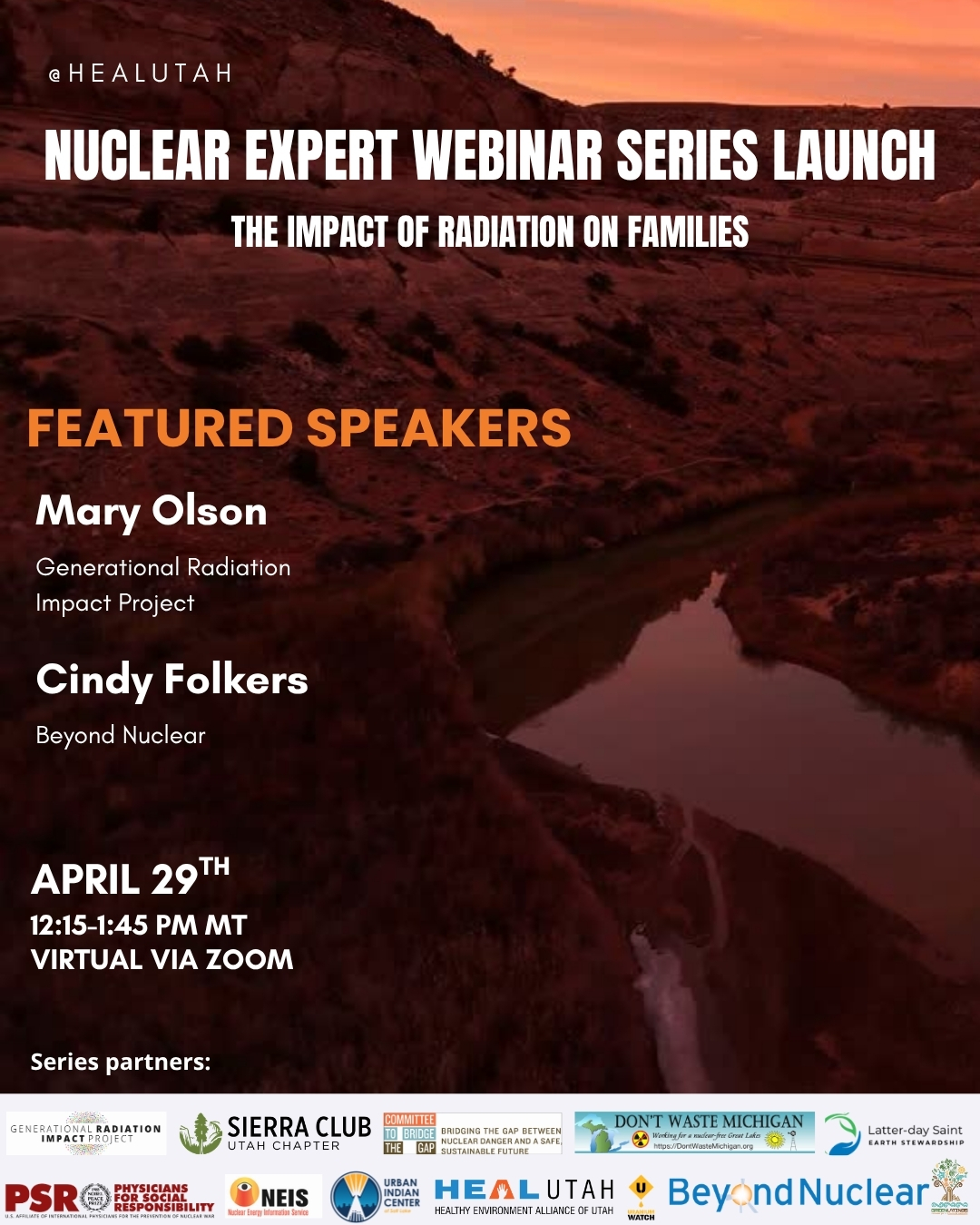
29 April – Nuclear Expert Webinar #1 – Radiation Impacts on Families with Mary Olson and Cindy Folkers
- 12:15 PM MT – 1:45 PM MT
- Location: Virtual – REGISTER TODAY

4 May -West Suburban Peace Coalition to discuss Iran war at May Educational Forum
Monday, May 4, 7:00 – 8:00 PM Central Standard Time
Title: : How Trump’s Narrative Tries to Shape the Reality of the War on Iran.
Contact Walt Zlotow, zlotow@hotmail.com 630 442 3045 for further information
14 May – online event From Bombs to Data Centres: the Face of Nuclear Colonialism

Pine Ridge Uranium is the real threat, not Tehran- Tell Burgum: Stop the Extraction.
Chernobyl: The Lost Tapes – A good documentary on Chernobyl on SBS available On Demand for the next 3 weeks– https://www.sbs.com.au/ondemand/tv-program/chernobyl-the-lost-tapes/2352741955560
To see nuclear-related stories in greater depth and intensity – go to https://nuclearinformation.wordpress.com
-
Archives
- April 2026 (346)
- March 2026 (251)
- February 2026 (268)
- January 2026 (308)
- December 2025 (358)
- November 2025 (359)
- October 2025 (376)
- September 2025 (257)
- August 2025 (319)
- July 2025 (230)
- June 2025 (348)
- May 2025 (261)
-
Categories
- 1
- 1 NUCLEAR ISSUES
- business and costs
- climate change
- culture and arts
- ENERGY
- environment
- health
- history
- indigenous issues
- Legal
- marketing of nuclear
- media
- opposition to nuclear
- PERSONAL STORIES
- politics
- politics international
- Religion and ethics
- safety
- secrets,lies and civil liberties
- spinbuster
- technology
- Uranium
- wastes
- weapons and war
- Women
- 2 WORLD
- ACTION
- AFRICA
- Atrocities
- AUSTRALIA
- Christina's notes
- Christina's themes
- culture and arts
- Events
- Fuk 2022
- Fuk 2023
- Fukushima 2017
- Fukushima 2018
- fukushima 2019
- Fukushima 2020
- Fukushima 2021
- general
- global warming
- Humour (God we need it)
- Nuclear
- RARE EARTHS
- Reference
- resources – print
- Resources -audiovicual
- Weekly Newsletter
- World
- World Nuclear
- YouTube
-
RSS
Entries RSS
Comments RSS
 nuclear-news
Reblogged this on NuclearVox.