Testimony of an Evacuee from Fukushima
Published on Mar 1, 2013
On February 23, an evacuee addresses the reality in Fukushima.
The Fukushima Collective Evacuation Trial Team
http://fukushima-evacuation-e.blogspo…
World Network for Saving Children from Radiation
http://www.save-children-from-radiati…
HIGHLY Radioactive FISH Found & Fukushima Update 2/28/13
Published on Feb 28, 2013
Highest radiation detected in fish at TEPCO port
That’s the highest ever detected in fish and about 5,100 times the government safety limit. So, they are putting NETS around the area and planning on destroying the fish. So the contamination still flows out of the nets into the Pacific Ocean, and What will they do with the radioactive Fish? Hummmmm???
http://www3.nhk.or.jp/daily/english/2…
Fukushima radiation spread to residential areas hours before venting
http://mainichi.jp/english/english/ne…
TEPCO fails to report worker radiation levels
http://www3.nhk.or.jp/daily/english/2…
New Evacuation Guidelines for Future Nuclear Accidents (looks like Japan is going to be firing up those death machines soon ignoring the popular consent of the people)
Hokkaido area to investigate hot springs from the VOLCANIC RESOURCES on Japan in it’s Park area for geothermal energy production. I wonder if the IAEA Okay’d the Volcano for Nuclear Power production in Japan.
LOL Japan trying to boost economy by promoting cool stuff from Japan. OMG
US hopeful and cautious on nuclear Iran
http://www3.nhk.or.jp/daily/english/2…
North Korea honors nuclear scientists but won’t name names.
http://enenews.com/ headlines
Top UK Newspaper Headline: Fukushima cancer risk ‘played down to aid nuclear industry’
TV: Fukushima kids with nose bleeds, diarrhea, mouth blisters, other problems — Symptoms go away after leaving area — Used to be in good health, now picking up every little bug going around (VIDEO)
New WHO study claims even highly exposed Fukushima Daiichi workers will be fine… a few might end up with thyroid disorders — U.N. made similar statements after Chernobyl
Reports: Two dead, one wounded at nuclear plant in France
WHO: Small cancer risk after Fukushima accident say British University Professors
“The additional risk is quite small and will probably be hidden by the noise of other (cancer) risks like people’s lifestyle choices and statistical fluctuations,” said Richard Wakeford of the University of Manchester, one of the authors of the report. “It’s more important not to start smoking than having been in Fukushima.”
“…Wakeford said the increase may be so small it will probably not be observable….”
“…For people beyond the most directly affected areas of Fukushima, Wakeford said the projected cancer risk from the radiation dropped dramatically. “The risks to everyone else were just infinitesimal.”…”
“….David Brenner of Columbia University in New York, an expert on radiation-induced cancers, said that although the risk to individuals is tiny outside the most contaminated areas, some cancers might still result, at least in theory. But they’d be too rare to be detectable in overall cancer rates, he said.
Brenner said the numerical risk estimates in the WHO report were not surprising. He also said they should be considered imprecise because of the difficulty in determining risk from low doses of radiation. He was not connected with the WHO report…..”
“… “On the basis of the radiation doses people have received, there is no reason to think there would be an increase in cancer in the next 50 years,” said Wade Allison, an emeritus professor of physics at Oxford University, who also had no role in developing the new report. “The very small increase in cancers means that it’s even less than the risk of crossing the road,” he said. … ”
“….. Gerry Thomas, a professor of molecular pathology at Imperial College London (UK Thyroid Assoc.), accused the United Nations health agency of hyping the cancer risk.
“It’s understandable that WHO wants to err on the side of caution, but telling the Japanese about a barely significant personal risk may not be helpful,” she said.
Thomas said the WHO report used inflated estimates of radiation doses and didn’t properly take into account Japan’s quick evacuation of people from Fukushima.
“This will fuel fears in Japan that could be more dangerous than the physical effects of radiation,” she said, noting that people living under stress have higher rates of heart problems, suicide and mental illness…. ”
“…..In Japan, Norio Kanno, the chief of Iitate village, in one of the regions hardest hit by the disaster, harshly criticized the WHO report on Japanese public television channel NHK, describing it as “totally hypothetical.”….”
By MARIA CHENG
Japan Today
LONDON —
Two years after Japan’s nuclear plant disaster, an international team of experts said Thursday that residents of areas hit by the highest doses of radiation face an increased cancer risk so small it probably won’t be detectable.
In fact, experts calculated that increase at about 1 extra percentage point added to a Japanese infant’s lifetime cancer risk.
[….]
Many people who remain in Fukushima still fear long-term health risks from the radiation, and some refuse to let their children play outside or eat locally grown food.
Some restrictions have been lifted on a 20-kilometer zone around the nuclear plant. But large sections of land in the area remain off-limits. Many residents aren’t expected to be able to return to their homes for years……__
Online:
WHO report: http://bit.ly/YDCXcb
See more at: http://www.japantoday.com/category/national/view/who-small-cancer-risk-after-fukushima-accident#sthash.HivRqR1a.dpuf
TEPCO Hires UK Propaganda Chief
“…To be sure, the nuclear issue still divides opinion sharply. Judge admits that a repeat of the Chernobyl disaster would close the industry down for 20 years…” 22 July 2009 –Barbara Judge
Published on Feb 11, 2013
https://nuclear-news.net/2013/02/18/tepco-hires-uk-propaganda-chief/
Fukushima: BBC Debunked – Chernobyl: BBC Debunked
“A range of other evidence assessed by the ESC included a report showing there have been 6,000 cases of thyroid cancer reported in children and adolescents as of 2005 – with many more expected over the coming decades.‘”
https://nuclear-news.net/2013/02/15/fukushima-bbc-debunked-chernobyl-bbc-debunked/
And a quick summary of the Q&A panel held after premier screening of ‘After the Apocalypse’. The panel included Baroness Helena Kennedy. Geraldine Thomas (oncology), Steve Wilkinson,
Prof Thomas says that genetic science is not accurate anyway?
Prof Thomas says the doctors in the film are trying to source funding by highlighting deformity etc
Prof Thomas doesn’t comment on the enforced genetic passports?? Everyone else on the panel does.
Prof Thomas says the incidence is of small incremental amounts but doesnt give a percentage..
Any percentage of millions/billions of people are huge numbers of personal distress and loss!!
The director looks harassed.. the film has been taken off You Tube.. Prof Thomas blames alcoholism for the gross defects of bibgul and her mother..
And here is the original list of speakers, no Prof Thomas?
[…]
May 5 ’11 After the Apocalypse Premiere
Good Pitch UK 2009 Alumnus After the Apocalypse,
A film about aftermath of soviet era nuclear experiments, is set to premiere in the UK on May 11th at Princes Charles Cinema.
Screening followed by a Q&A with key Genetic and Ethical specialists – Baroness Helena
Kennedy, the former Head of the Human Genetics Commission; Professor Yuri Dubrova –
Professor of Genetics at the University of Leicester and Steve Wilkinson – Professor of Medical
Ethics at Keele University.
Saturday, October 8, 2011
The Economist: Oxford Professor Says OK to Raise Annual Dose Limit by 1000 Times for the Japanese, But the Reporter Reluctant to Inhale
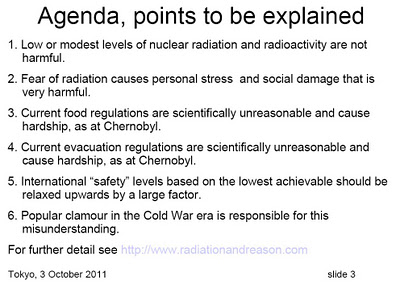
Dr. Wade Allison is professor emeritus of physics (particle physics) at Oxford University. The event that the Economist’s reporter refers to in the article must be the talk given at American Chamber of Commerce in Japan (ACCJ) on October 3, where the professor, along with another researcher, presented the strong case that the radiation exposure below 100 millisieverts per year was not a problem, if one only gets rid of the unreasonable fear of radiation. He also says the current food regulation, evacuation regulation are “unreasonable” and should be relaxed significantly.
Here’s the screen capture of a page from his presentation slides he used in the ACCJ talk:
Time is running out : Demonstration in Shinjuku Tokyo – The citizens of Fukushima speak out!
Published on Feb 28, 2013
On February 23, a Demonstration for the evacuation of Fukushima children took place in Shinjuku Tokyo.
The Fukushima Collective Evacuation Trial Team
http://fukushima-evacuation-e.blogspo…
World Network for Saving Children from Radiation
http://www.save-children-from-radiati…
Japan’s Prime Minister keen to restart nuclear reactors, but safety problems remain
skeptics worry that industry supporters in the government will manage to get around the regulations.
According to a report by the newspaper Asahi Shimbun, none of Japan’s 16 undamaged commercial nuclear plants would pass the new standards.
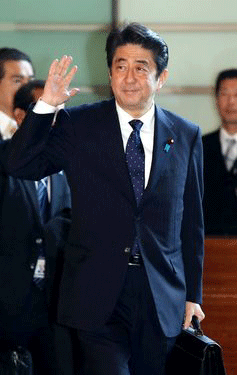 Japan to Begin Restarting Idled Nuclear Plants, Leader Says NYT By MARTIN FACKLER and HIROKO TABUCHI Matthew L. Wald contributed reporting from Washington. February 28, 2013 TOKYO — Japan will begin restarting its idled nuclear plants after new safety guidelines are in place later this year, Prime MinisterShinzo Abe said Thursday, moving to ensure a stable energy supply despite public safety concerns after the Fukushima disaster.
In a speech to Parliament, Mr. Abe pledged to restart nuclear plants that pass the tougher guidelines, which are expected to be adopted by a new independent watchdog agency, the Nuclear Regulation Authority, as early as July. He did not specify when any of the reactors might resume operation, and news reports have suggested that it might take months or even years to make the expensive upgrades needed to meet the new safety standards. Continue reading
Fukushima radiation is transforming Japan’s forest ecosystems
 Japan Scientists: Truly unusual deformities in Fukushima — Forests may be evolving into different ecosystems — “There’s been a sudden, large change” http://enenews.com/japan-scientists-truly-unusual-deformities-in-fukushima-theres-been-a-sudden-large-change-forests-may-be-evolving-into-different-ecosystems
February 27th, 2013
Excerpts from ‘Radiant Wildlands‘ by Winifred Bird and Jane Braxton in the Spring 2013 issue of Earth Island Journal
[…] When Joji Otaki began looking closely at the [pale grass blue butterflies] the size of a silver dollar, however, he was struck by abnormal patterns in the dark dots on their wings. Then he noticed dents in their eyes and strangely shaped wings and legs.
Otaki, a professor at the University of the Ryukyus in Okinawa, was in the Abukuma Mountains west of the disaster site collecting butterflies to study their response to the accident [2 months after 3/11].
[…] the aberrations they found took them by surprise. Abnormalities in the first generation were within normal boundaries. But when Otaki bred these butterflies in his laboratory, mutations in the offspring increased to 18 percent. That suggested inherited genetic damage. Field samples collected in September 2011, representing the fourth or fifth generation of butterflies since the disaster, had even higher abnormality rates. The changes may not all have been caused by radiation; Otaki had previously found evidence that temperature can affect wing markings. But the deformities his team found in antennae, legs, and other body parts are truly unusual, says Hokkaido University entomologist Shin-ichi Akimoto, who is studying the impact of Fukushima fallout on aphids. The abnormalities are troubling not only because insects are commonly assumed to be more resistant to radiation than humans, but also because they suggest the Fukushima nuclear disaster may be changing individual species, even entire forests.
“There is no question that ecosystems as a whole are suffering,” Otaki says. “There has been a sudden, large change.”
[…] As plants and animals continue to live in these irradiated environments, forests themselves may be evolving into different ecosystems. […]See also: Biologist on Mutated Butterflies: Study is overwhelming in its implications for humans — Japan Researcher: Insects were believed to be very resistant to radiation — Irregularly developed eyes, malformed antennae, much smaller wings (PHOTO)
Ocean fish to be studied for Fukushima radiation
 L.A. Times: NOAA to start testing wildlife for Fukushima contamination http://enenews.com/l-a-times-noaa-to-start-testing-wildlife-for-fukushima-radiation
February 26th, 2013
Title: Radioactive tuna from Fukushima? Scientists eat it up
Source: Los Angeles Times
Author: Eryn Brown
Date: February 25, 2013
Title: Radioactive tuna from Fukushima? Scientists eat it up
[…] In coming months, the three researchers and colleagues at the National Oceanic and Atmospheric Administration and other institutions plan to analyze hundreds more bluefin tuna, as well as albacore tuna; mahi mahi; ocean sunfish; opa; mako, blue and salmon sharks; loggerhead turtles; and sooty shearwaters, a type of migratory seabird.
They’ll examine samples collected in New Zealand, Hawaii and Alaska as well as in California. They might look through archived specimens for salmon and whales to test. Other research groups may track the contamination to study marine animals too, [Dan Madigan of Stanford University] said.
If scientists find Fukushima radiation in swordfish, for example, it will be the first evidence that the species migrates across the entire Pacific. […]
“Amazing”
They concluded that their tracking method worked, and that Fukushima provided “an unprecedented opportunity” for scientists to use radioactive tracers to follow animal movement. “This was just nature being amazing,” [Nicholas Fisher of Stony Brook University] said.
He imagines pulling together a map of the Pacific crisscrossed by the paths of radiation-toting animals — “an amazing image of transport … all from a little dot” in Japan, Madigan said.
See also: HuffPost: “Radioactive Fish Found In California” — Is it a good thing?
Medical isotopes from non nuclear sources – no nuclear reactor needed
 Canada to fund non-nuclear sources for medical isotopes By Randall Palmer and David Ljunggren | Reuters –28 Feb 13,
 To that end, the federal government will fund three research institutes developing cyclotron and linear accelerator technologies for production of isotopes on a commercial scale, Natural Resources Minister Joe Oliver said.
Canada’s only current source of the isotopes is a problem-plagued reactor at Atomic Energy of Canada Ltd’s facility at Chalk River, Ontario. The reactor is licensed to run until 2016.
“Our challenge now is to prove that cyclotron and linear accelerator production can be commercially viable. … We envision a future where isotope production will no longer require highly enriched uranium — a weapons-grade material,” he said.
The government will give a total of C$25 million ($24.3 million) to the three facilities for this goal…. http://news.yahoo.com/canada-fund-non-nuclear-sources-medical-isotopes-190403191–sector.html
Vogtle new nuclear plant, delayed, and running over budget
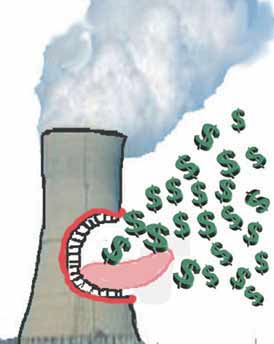 Utility: New nuclear plant in Ga. over budget
http://www.lasvegassun.com/news/2013/feb/28/us-nuclear-plant-georgia/#ixzz2MJuEFTt6
The Associated Press , Feb. 28, 2013 A utility says a
first-of-its-kind nuclear plant under construction in eastern Georgia
will go over budget.
Atlanta-based Southern Co. said Thursday that finishing Plant Vogtle
(VOH’-gohl) will now cost an estimated $6.85 billion, up from $6.11
billion.
The firm also moved back the completion dates for the massive project.
While the two reactors at the plant were supposed to start producing
power in April 2016 and April 2017, those dates have now shifted to
late 2017 and late 2018.
Utility officials say completing the nuclear plant remains cheaper
than the alternatives.
Georgia’s Public Service Commission must ultimately decide whether to
approve the new budget.
Plant Vogtle is one of three U.S. nuclear plants under construction.
The nuclear industry has struggled historically to meet construction
budgets.
Girls most affected by Fukushima radiation – World Health Organisation
Japan to Begin Restarting Idled Nuclear Plants, Leader Says NYT By MARTIN FACKLER and HIROKO TABUCHI Matthew L. Wald contributed reporting from Washington. February 28, 2013 ”……..According to the study, girls exposed as infants to radioactivity in the most contaminated regions of Fukushima Prefecture faced a 70 percent higher risk of developing thyroid cancer than would be expected normally. The report pointed out, however, that the normal risk of thyroid cancer was just 0.75 percent, and that the additional lifetime risk would raise that to 1.25 percent.
 Girls exposed to radioactivity as infants in the most heavily contaminated areas also had a 6 percent higher risk of developing breast cancer, and a 4 percent higher risk of developing cancers that cause tumors. Meanwhile, boys exposed as infants had a 7 percent higher chance of developing leukemia.
The study also said that about a third of the emergency workers who remained to try to stabilize the Fukushima Daiichi plant were estimated to have a slightly increased risk of developing leukemia, thyroid cancer and other types of cancer.
The analysis was based on data available as of September 2011, and takes into account airborne contamination as well as contaminated food, water and other sources of contamination, the WH.O. said. http://www.nytimes.com/2013/03/01/world/asia/japan-to-begin-restarting-idled-nuclear-plants.html?_r=0
High increase in radiation in soil near Fukushima river
 Radiation level offshore Fukushima river increased to be 95 times much as 1 month before http://fukushima-diary.com/2013/02/radiation-level-offshore-fukushima-river-increased-to-be-95-times-much-as-1-month-before/
According to Tepco, the radiation level of sea ground soil jumped up by 950% from November to December in 2012.
The sampling location was 2km offshore of Ukedogawa in Namie machi, where is in 4~5 km north from Fukushima plant.
It was 25Bq/Kg in November, it was 2,370Bq/Kg in December.
Validity of Japan’s official radiation figures is in doubt
Rising doubts about Japan’s official radiation figures, DW 27 Feb 13, As the two-year anniversary of the world’s second-worst nuclear accident nears, citizen groups are questioning the accuracy of the government’s contamination data for the area around the Fukushima Dai-ichi nuclear plant…… ome volunteer groups are conducting out their own monitoring efforts and sharing the data on websites.
“We believe it is dangerous for people still living in highly contaminated areas,” said Hajime Matsukubo, a spokesman for the Tokyo-based Citizens’ Nuclear Information Center (CNIC). He points to independent studies indicating that people in Fukushima and Koriyama – cities well beyond the exclusion zone imposed by the government – are still exposed to high levels of radioactivity. Continue reading
USA sees optimism in talks with Iran
Iran interested by nuclear proposals: US : http://www.smh.com.au/world/iran-interested-by-nuclear-proposals-us-20130228-2f73f.html#ixzz2ME46OsQT WASHINGTON: Iran was “interested” by updated proposals from world powers to break a stalemate over its suspect nuclear program, and must now take concrete steps to move forward, a US official says.
Characterising two-day talks in Kazakhstan as “useful,” State Department acting deputy spokesman Patrick Ventrell said “the onus is absolutely on Iran”.
“We welcome that … Iran was interested in our ideas, is going to come back to the table here, and we’d like to see them take some of the concrete steps they need to come in line with the international community’s concerns,” he said. Continue reading
Conflict of interest, safety fears, in South Korea’s nuclear power plans
“The Republic of Korea is going to be the only country across the globe where regulators and basically developers or promoters might be working all together under the same roof,” said Suh Kune Yull, a nuclear engineering professor at Seoul National University. “A conflict of interest is inevitable.”
Safety concerns cloud South Korea nuclear drive, Japan Times, AFP-JIJI FEB 28, 2013 GORI, SOUTH KOREA – South Korea has big plans to become a major nuclear energy player, but they are unfolding at a time when the global industry is under intense scrutiny after the 2011 Fukushima disaster.And its ambitions have not been helped by a series of domestic scandals and forced reactor shutdowns in 2012 that rattled public confidence and exposed a glaring lack of regulatory transparency.
Around $400 billion is riding on South Korea’s ability to sell its technology to potential clients as it aims to take on the United States, France and Russia and grab a 20 percent share of the nuclear energy market……
A survey commissioned by the Economics Ministry and published in November showed only 35 percent of South Koreans considered nuclear power to be safe — sharply down from 71 percent in January 2010. Continue reading
1 This Month

of the week – Shut Down Drone Warfare!


Tell the Ukrainian Government to Drop Prosecution of Peace Activist Yurii Sheliazhenko

Petition to revoke the licensing of the Near Surface Nuclear Disposal Facility (NSDF) at Chalk River. https://www.ourcommons.ca/petitions/en/Petition/Details?Petition=e-7247
To see nuclear-related stories in greater depth and intensity – go to https://nuclearinformation.wordpress.com
-
Archives
- April 2026 (19)
- March 2026 (251)
- February 2026 (268)
- January 2026 (308)
- December 2025 (358)
- November 2025 (359)
- October 2025 (376)
- September 2025 (257)
- August 2025 (319)
- July 2025 (230)
- June 2025 (348)
- May 2025 (261)
-
Categories
- 1
- 1 NUCLEAR ISSUES
- business and costs
- climate change
- culture and arts
- ENERGY
- environment
- health
- history
- indigenous issues
- Legal
- marketing of nuclear
- media
- opposition to nuclear
- PERSONAL STORIES
- politics
- politics international
- Religion and ethics
- safety
- secrets,lies and civil liberties
- spinbuster
- technology
- Uranium
- wastes
- weapons and war
- Women
- 2 WORLD
- ACTION
- AFRICA
- Atrocities
- AUSTRALIA
- Christina's notes
- Christina's themes
- culture and arts
- Events
- Fuk 2022
- Fuk 2023
- Fukushima 2017
- Fukushima 2018
- fukushima 2019
- Fukushima 2020
- Fukushima 2021
- general
- global warming
- Humour (God we need it)
- Nuclear
- RARE EARTHS
- Reference
- resources – print
- Resources -audiovicual
- Weekly Newsletter
- World
- World Nuclear
- YouTube
-
RSS
Entries RSS
Comments RSS
 nuclear-news