Iran answers IAEA questions if it sees an end to process: Analyst (video)
“Just take a look at the history of IAEA’s dealings with Tehran, they first raised the issue of a laptop that they got from nowhere and focused on it for several years and then totally forgot about it and moved on to a different issue which is the Parchin military site.”
Press TV

Image socioecohistory.wordpress.com
“I have talked to Iranian diplomats and they told me that Iran has constantly expressed its willingness to answer all the questions that have been raised [by IAEA], provided that when the questions are answered, the process comes to an end,” Hamid Reza Emadi said in an interview with Press TV on Friday.
He went on to say that the United States has stopped the IAEA from fulfilling its duties, making the agency unwilling to end its questioning process with regards to Iran.
“The International Atomic Energy Agency, which is clearly working under a US-dictated mandate that has prevented it from performing its professional obligations, wants to maintain the pressure on Tehran. The agency, as the diplomats told me, does not want the case to be closed any time soon and they want to raise more questions, to raise more issues once the existing questions are fully answered by Iran. So this is going to be an endless process,” Emadi pointed out.
The political commentator further noted that the past dealings of the IAEA with the Islamic Republic show that the atomic agency is not willing to reach an agreement on any framework for mutual cooperation.
“Just take a look at the history of IAEA’s dealings with Tehran, they first raised the issue of a laptop that they got from nowhere and focused on it for several years and then totally forgot about it and moved on to a different issue which is the Parchin military site.”
Emadi stated that Iran is ready to give access to Parchin once a structured framework for cooperation is finalized and signed by the two sides.
“But the IAEA, under pressure from the West, does not want anything to be finalized at this point in time and they want to prolong the issue for an unspecified period of time,” he added.
Referring to reports quoting Western diplomats as saying that Iran has put “unacceptable conditions on the table,” Emadi said, “The bottom line is [that] Iran wants to resolve all the so-called outstanding issues once and forever, provided that the agency wants to do the same thing.”
“This is what those Western diplomats, who I believe most probably work for the IAEA, are rejecting as unacceptable conditions,” Emadi concluded.
TNP/HMV/SS
Video on link..
http://www.presstv.ir/detail/2013/01/18/284268/iaea-queries-of-iran-must-end-analyst/
2 Comments »
1 This Month
26 April – Chernobyl: Inside the Meltdown airs on National Geographic on Sunday 26th April from 4pm
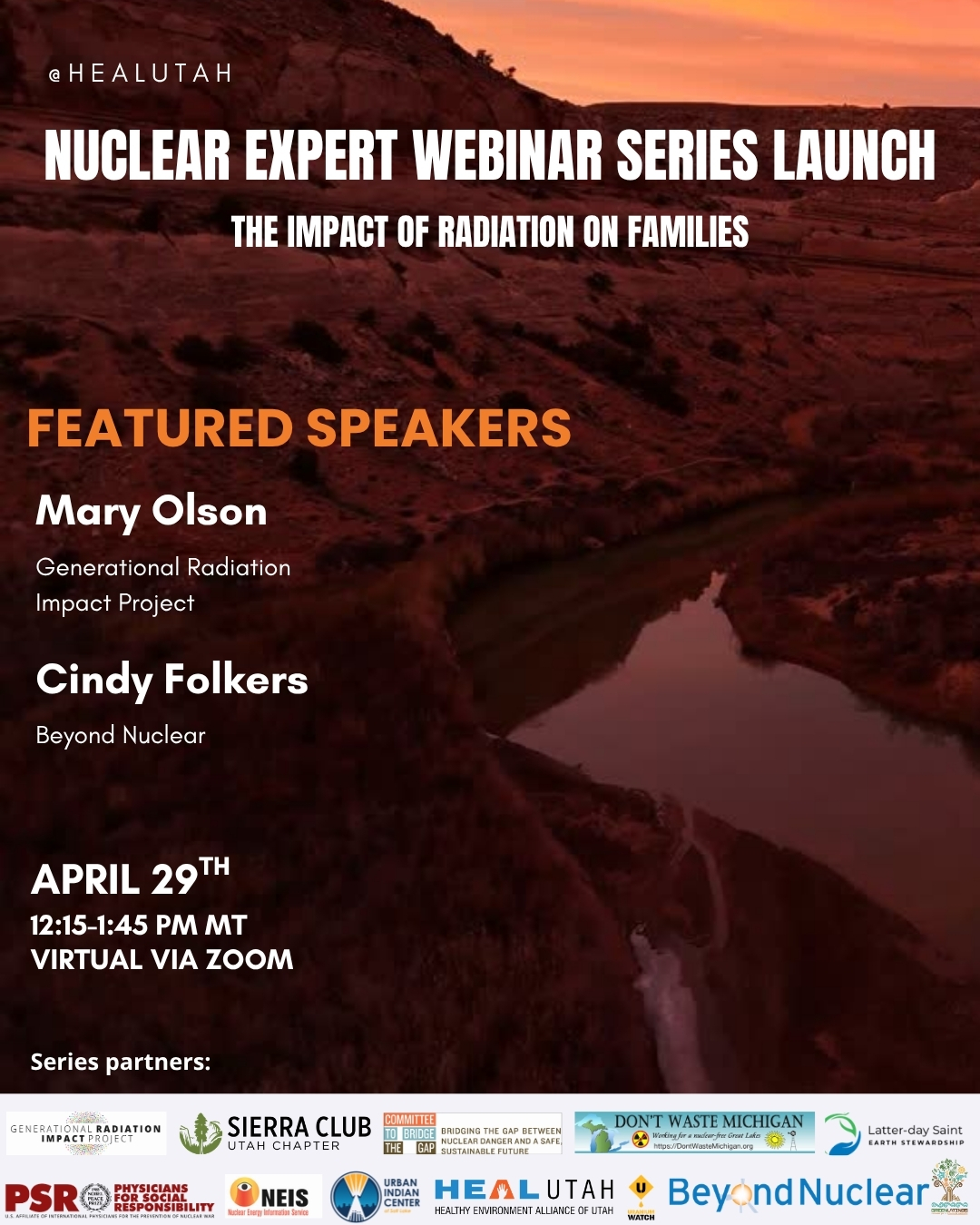
29 April – Nuclear Expert Webinar #1 – Radiation Impacts on Families with Mary Olson and Cindy Folkers
- 12:15 PM MT – 1:45 PM MT
- Location: Virtual – REGISTER TODAY

4 May -West Suburban Peace Coalition to discuss Iran war at May Educational Forum
Monday, May 4, 7:00 – 8:00 PM Central Standard Time
Title: : How Trump’s Narrative Tries to Shape the Reality of the War on Iran.
Contact Walt Zlotow, zlotow@hotmail.com 630 442 3045 for further information
14 May – online event From Bombs to Data Centres: the Face of Nuclear Colonialism

Pine Ridge Uranium is the real threat, not Tehran- Tell Burgum: Stop the Extraction.
Chernobyl: The Lost Tapes – A good documentary on Chernobyl on SBS available On Demand for the next 3 weeks– https://www.sbs.com.au/ondemand/tv-program/chernobyl-the-lost-tapes/2352741955560
To see nuclear-related stories in greater depth and intensity – go to https://nuclearinformation.wordpress.com
-
Archives
- April 2026 (317)
- March 2026 (251)
- February 2026 (268)
- January 2026 (308)
- December 2025 (358)
- November 2025 (359)
- October 2025 (376)
- September 2025 (257)
- August 2025 (319)
- July 2025 (230)
- June 2025 (348)
- May 2025 (261)
-
Categories
- 1
- 1 NUCLEAR ISSUES
- business and costs
- climate change
- culture and arts
- ENERGY
- environment
- health
- history
- indigenous issues
- Legal
- marketing of nuclear
- media
- opposition to nuclear
- PERSONAL STORIES
- politics
- politics international
- Religion and ethics
- safety
- secrets,lies and civil liberties
- spinbuster
- technology
- Uranium
- wastes
- weapons and war
- Women
- 2 WORLD
- ACTION
- AFRICA
- Atrocities
- AUSTRALIA
- Christina's notes
- Christina's themes
- culture and arts
- Events
- Fuk 2022
- Fuk 2023
- Fukushima 2017
- Fukushima 2018
- fukushima 2019
- Fukushima 2020
- Fukushima 2021
- general
- global warming
- Humour (God we need it)
- Nuclear
- RARE EARTHS
- Reference
- resources – print
- Resources -audiovicual
- Weekly Newsletter
- World
- World Nuclear
- YouTube
-
RSS
Entries RSS
Comments RSS
 nuclear-news
[…] Iran answers IAEA questions if it sees an end to process: Analyst (video) […]
from the above 2012: whats the real truth link
“….What factors killed the chance of an agreement this time?
1. The IAEA has once more refused to present documents supporting its allegations about Iran’s nuclear program. Iran needs to be granted access to these documents before clearly answering the questions. The IAEA justifies its refusal on the grounds that the countries that have produced the documents are opposed to their submission to Iran. But that pretext will not discharge the IAEA from its legal obligation to present to the Islamic Republic the so-called evidence of its allegations. The United States and its allies, whose enmity to Iran has already been proven, may claim that submitting these documents would lay bare their intelligence sources to Iran. However, they refuse to explain how they expect a defendant to defend himself without having precise knowledge of the details of accusations brought against him.
2. Another important point is that during this last round of talks in Tehran, the IAEA refused to give assurances that no new issue would be raised if the existing questions were answered. By giving such a guarantee, the IAEA says it would restrict its own rights and tie its own hands. The IAEA is entitled to inspect and keep a tab on the nuclear activities of its member states, but as far as Iran’s case is concerned, the IAEA seems to be seeking pretexts. Over the past years, the IAEA has faced no restrictions in inspecting Iran’s peaceful nuclear activities and its inspectors have conducted 4,000 man-hours of inspections of Iran’s nuclear facilities. The IAEA director general has so far published more than 30 reports outlining Iran’s nuclear program to the IAEA member states.
3. The IAEA is not inclined to return Iran’s nuclear dossier to its normal procedure in the IAEA Board of Governors even after allegations of military diversion in Iran’s atomic program are refuted and the country’s nuclear activities are proven to have been compliant with the nuclear Non-Proliferation Treaty (NPT) and its Safeguards Agreement. As long as the IAEA does not show its commitment to returning Iran’s dossier to its board of governors, Iran’s nuclear issue would be used as a pretext for ratcheting up pressure on the Islamic Republic.
4. But how can Iran-IAEA talks be aligned with the forthcoming talks between the Islamic Republic and six world powers — the US, France, Britain, China, Russia and Germany — known as the P5+1 group? No breakthrough is expected from the next round of Iran-IAEA talks in Tehran unless the US and its allies recognize possible Iran-IAEA agreements, and the countries who have been pressuring the IAEA over the past ten years, provide sufficient guarantee that the implementation of likely accords will not be hindered….”
http://jhaines6.wordpress.com/2013/01/19/presstv-us-trying-to-prevent-iran-iaea-deal/