High rates of birth defects in Iraq, where depleted uranium was used
 in Iraq, and Afghanistan, too, the idea of sicknesses related to depleted uranium does not seem in much doubt, from what we can tell. In Iraq, as we have reported many times, doctors are even advising women in certain areas not to have children because the chances of birth defects are so great
Depleted Uranium Receives More Attention , The Daily Bell
December 21, 2012
Mystery in Iraq – Are US Munitions to Blame for Basra Birth Defects? … The World Health Organization (WHO) is currently assembling a report on DU ammunition. It will reflect the current state of research on the issue, but it will hardly provide any new insights. With the help of the University of Greifswald, a cancer registry has been developed for the Basra region and will serve as the basis for all future study. Still, even as further research is needed, if only for the children’s sake, it will come too late for many. The guns have been silent in Iraq for years, but in Basra and Fallujah the number of birth defects and cancer cases is on the rise. Locals believe that American uranium-tipped munitions are to blame and some researchers think they might be right. – Der Spiegel
Dominant Social Theme: US munitions are harmless except to the bad guys.
Free-Market Analysis: The WHO (see above) is finally getting around to seeing if depleted uranium weapons used by NATO and the US are responsible for the many birth defects in Iraq. From what we can tell, the outcome will be a preordained “no.”
US officials, military or otherwise, have already ruled out the idea that depleted uranium dust could possibly be responsible for these birth defects or for US ailments that are much in dispute – having to do with immune deficiencies, etc.
But in Iraq, and Afghanistan, too, the idea of sicknesses related to depleted uranium do not seem in much doubt, from what we can tell. In Iraq, as we have reported many times, doctors are even advising women in certain areas not to have children because the chances of birth defects are so great. Here’s more from the article:
It sounds at first as if the old man were drunk. Or perhaps as though he had been reading Greek myths. But Askar Bin Said doesn’t read anything, especially not books, and there is no alcohol in Basra. In fact, he says, he saw the creatures he describes with his own eyes: “Some had only one eye in the forehead. Or two heads. One had a tail like a skinned lamb. Another one looked like a perfectly normal child, but with a monkey’s face. Or the girl whose legs had grown together, half fish, half human.”
The babies Askar Bin Said describes were brought to him. He washed them and wrapped them in shrouds, and then he buried them in the dry soil, littered with bits of plastic and can lids, of his own cemetery, which has been in his family for five generations. It’s a cemetery only for children.
Though they are small, the graves are crowded so tightly together that they are almost on top of one another. They look as if someone had overturned toy wheelbarrows full of cement and then scratched the names and dates of death into it before it hardened. In many cases, there isn’t even room for the birth date. But it doesn’t really matter, because in most cases the two dates are the same.
There are several thousand graves in the cemetery, and another five to 10 are added every day. The large number of graves is certainly conspicuous, says Bin Said. But, he adds, there “really isn’t an explanation” for why there are so many dead and deformed newborn babies in Basra.
Others, though, do have an idea why. According to a study published in September in the Bulletin of Environmental Contamination and Toxicology, a professional journal based in the southwestern German city of Heidelberg, there was a sevenfold increase in the number of birth defects in Basra between 1994 and 2003. Of 1,000 live births, 23 had birth defects.
Similarly high values are reported from Fallujah, a city that was fiercely contested in the 2003 war. According to the Heidelberg study, the concentration of lead in the milk teeth of sick children from Basra was almost three times as high as comparable values in areas where there was no fighting.
Never before has such a high rate of neural tube defects (“open back”) been recorded in babies as in Basra, and the rate continues to rise. The number of hydrocephalus (“water on the brain”) cases among newborns is six times as high in Basra as it is in the United States, the study concludes.
1 Comment »
Leave a reply to Iraq war infant birth defects | Dear Kitty. Some blog Cancel reply
1 This Month
26 April – Chernobyl: Inside the Meltdown airs on National Geographic on Sunday 26th April from 4pm

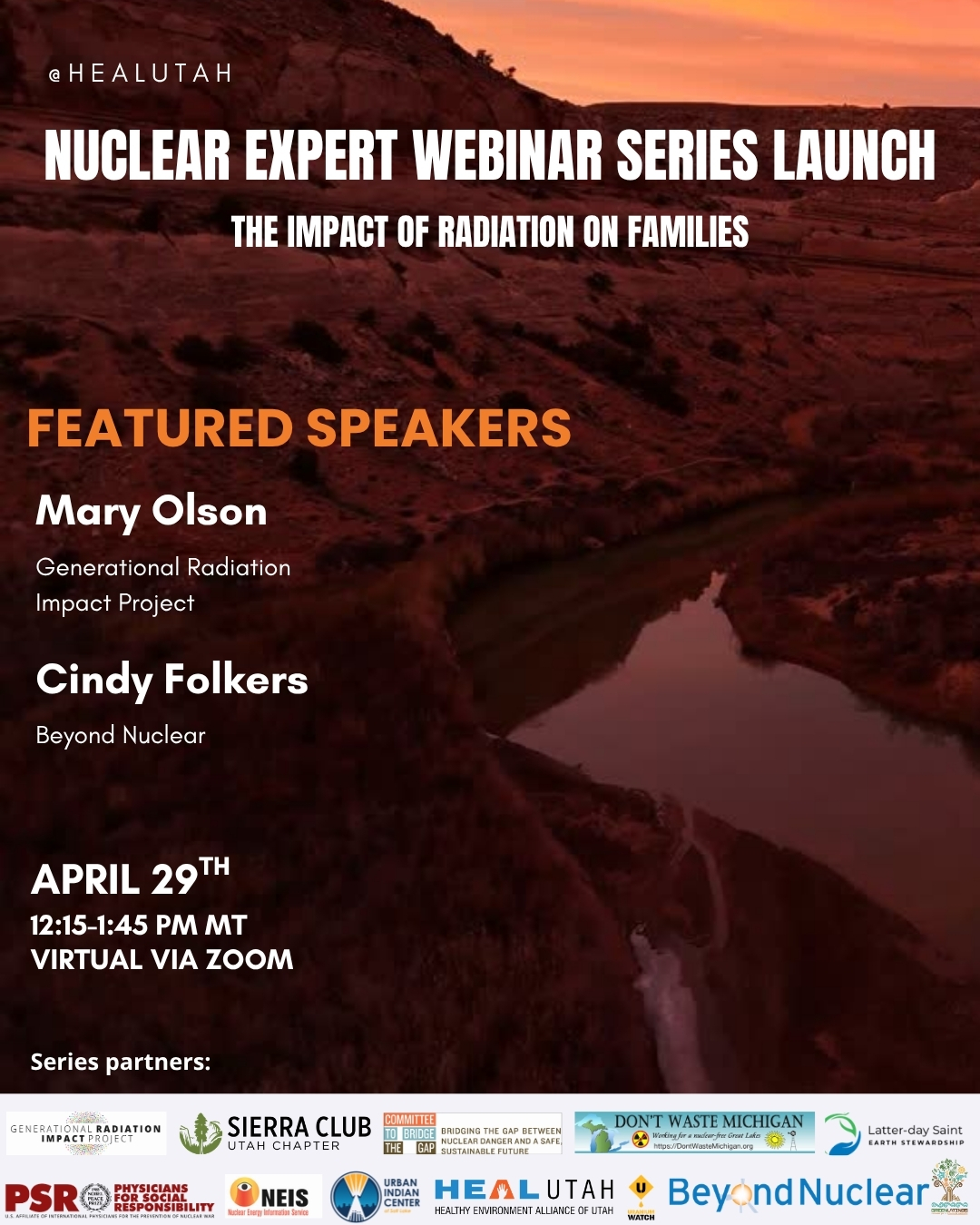
29 April – Nuclear Expert Webinar #1 – Radiation Impacts on Families with Mary Olson and Cindy Folkers
- 12:15 PM MT – 1:45 PM MT
- Location: Virtual – REGISTER TODAY

4 May -West Suburban Peace Coalition to discuss Iran war at May Educational Forum
Monday, May 4, 7:00 – 8:00 PM Central Standard Time
Title: : How Trump’s Narrative Tries to Shape the Reality of the War on Iran.
Contact Walt Zlotow, zlotow@hotmail.com 630 442 3045 for further information
14 May – online event From Bombs to Data Centres: the Face of Nuclear Colonialism

Pine Ridge Uranium is the real threat, not Tehran- Tell Burgum: Stop the Extraction.
Chernobyl: The Lost Tapes – A good documentary on Chernobyl on SBS available On Demand for the next 3 weeks– https://www.sbs.com.au/ondemand/tv-program/chernobyl-the-lost-tapes/2352741955560
To see nuclear-related stories in greater depth and intensity – go to https://nuclearinformation.wordpress.com
-
Archives
- April 2026 (338)
- March 2026 (251)
- February 2026 (268)
- January 2026 (308)
- December 2025 (358)
- November 2025 (359)
- October 2025 (376)
- September 2025 (257)
- August 2025 (319)
- July 2025 (230)
- June 2025 (348)
- May 2025 (261)
-
Categories
- 1
- 1 NUCLEAR ISSUES
- business and costs
- climate change
- culture and arts
- ENERGY
- environment
- health
- history
- indigenous issues
- Legal
- marketing of nuclear
- media
- opposition to nuclear
- PERSONAL STORIES
- politics
- politics international
- Religion and ethics
- safety
- secrets,lies and civil liberties
- spinbuster
- technology
- Uranium
- wastes
- weapons and war
- Women
- 2 WORLD
- ACTION
- AFRICA
- Atrocities
- AUSTRALIA
- Christina's notes
- Christina's themes
- culture and arts
- Events
- Fuk 2022
- Fuk 2023
- Fukushima 2017
- Fukushima 2018
- fukushima 2019
- Fukushima 2020
- Fukushima 2021
- general
- global warming
- Humour (God we need it)
- Nuclear
- RARE EARTHS
- Reference
- resources – print
- Resources -audiovicual
- Weekly Newsletter
- World
- World Nuclear
- YouTube
-
RSS
Entries RSS
Comments RSS
 nuclear-news
[…] High rates of birth defects in Iraq, where depleted uranium was used (nuclear-news.net) […]
Pingback by Iraq war infant birth defects | Dear Kitty. Some blog | December 27, 2012 |