“The BBC Trust’s editorial standards committee (ESC) received a complaint on behalf of more than 50 co-signatories that the show was “extremely selective” in the figures it quoted about the impact of radiation released following the Chernobyl disaster and minimised the “more significant and contentious issue” of the secondary effects of health problems such as thyroid cancer.”
Bang Goes the Theory was ‘extremely selective’ in figures used about deaths resulting from Ukraine accident, trust rules
The BBC Trust ruled Bang Goes the Theory failed audiences by not looking at the wider impact of radiation following the Chernobyl nuclear power station disaster. Photograph: Gleb/Garanich/Reuters
BBC1 science show Bang Goes the Theory misleadingly downplayed the likely impact of the 1986 Chernobyl nuclear disaster by stating it has only claimed about 100 lives, the BBC Trust has ruled.
The trust’s editorial standards committee has ruled that a show broadcast on 3 October last year looking at the issue of nuclear power and the impact of radiation gave a “misleading impression” by failing to include research suggesting there could eventually be up to 16,000 premature deaths from the explosion and fire at the Chernobyl plant in Ukraine.
The trust ruled Bang Goes the Theory failed audiences by not looking at the wider impact of radiation, particularly given its mission to reveal “the truth about the effects of radiation”.
“Viewers would be likely to be left with the impression that a relatively small number of deaths was the only serious adverse health outcome from the radiation fallout from Chernobyl,” said the BBC Trust.
“The committee considered this would be a misleading impression based on the evidence and there had been a breach of accuracy in respect of how the programme reflected the health effects of radiation fallout from Chernobyl.”
Continue reading →
December 12, 2012
Posted by arclight2011 |
Uncategorized |
1 Comment
Tamil Nadu,Business/Economy,Science/Tech, Wed, 12 Dec 2012
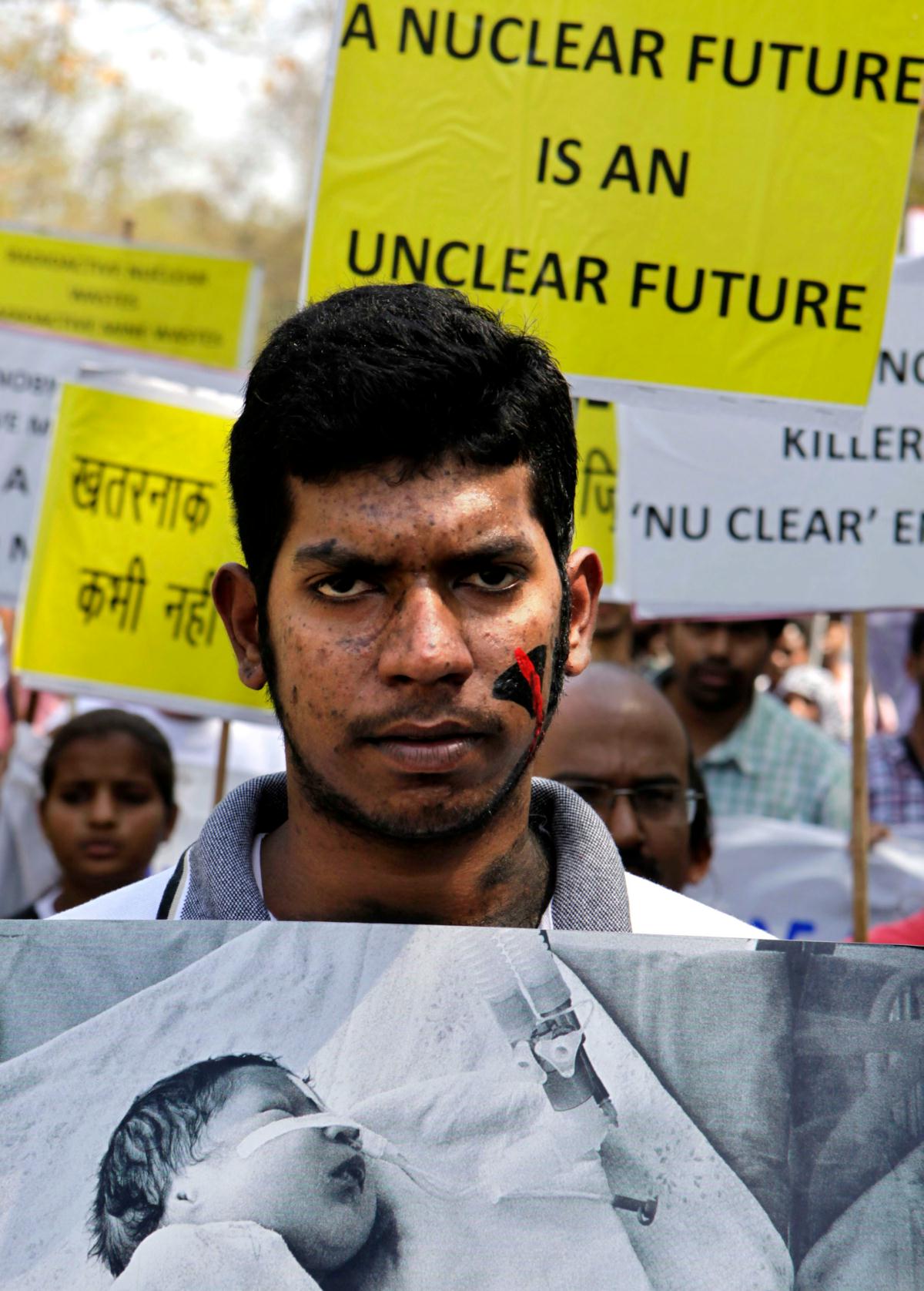
Chennai, Dec 12 (IANS) The People’s Movement Against Nuclear Energy (PMANE) has called for a national debate on India’s ambitious nuclear power programme and making it an issue in the 2014 parliamentary polls.
In a statement issued Tuesday, PMANE urged the central government to share with it documents like the environmental impact assessment (EIA) and site evaluation report (SER), safety analysis report (SAR), emergency preparedness plan (EPP) and performance report of the country’s existing and upcoming atomic power plants.
“Let the whole country discuss these reports and information and engage in a nation-wide debate about the exorbitant cost of nuclear energy, the hidden costs such as food insecurity and diseases, nuclear safety, nuclear waste management, decommissioning technology and costs, and the whole array of related issues,” PMANE said.
According to PMANE, which is spearheading the opposition to the 2X1,000 MW Kudankulam Nuclear Power Project (KNPP), if a majority of people endorsed the government’s nuclear plan then it would immediately withdraw the struggle against KNPP.
The Nuclear Power Corporation of India Ltd (NPCIL) has declined to share a copy of the safety analysis report on KNPP with PMANE despite the Central Information Commission’s (CIC) order.
The country’s atomic power plant operator, NPCIL, is setting up the nuclear power project in Kudankulam in Tamil Nadu’s Tirunelveli district, around 650 km from here, with two Russian-made VVER 1,000-MW each reactors.
The nuclear power project is an outcome of an inter-governmental agreement between India and the erstwhile Soviet Union in 1988. However, the construction began only in 2001.
http://www.newstrackindia.com/newsdetails/2012/12/12/311–Activists-call-for-debate-on-India-s-nuclear-power-programme-.html
December 12, 2012
Posted by arclight2011 |
Uncategorized |
Leave a comment
Blogpost by Pino Lee – December 10, 2012 at 13:30
Today is the International Human Rights Day and what better way to mark it than by launching a court case against injustice in South Korea.

With so many countries moving away from nuclear power in recent decades, and many more rushing to abandon it in the wake of the Fukushima nuclear disaster, South Korea remains one of the last withered feathers in the nuclear industry’s cap. Both the South Korean government and the industry are fighting tooth and nail to keep it that way by silencing criticism.
Since establishing an office in Seoul in April 2011, Greenpeace East Asia has witnessed the South Korean government’s willingness to ignore the lessons of Fukushima and has experienced first hand its efforts to silence those speaking out against its nuclear programme.
Between November 2011 and October 2012 six Greenpeace East Asia and Greenpeace International staff were denied entry to South Korea. They were flown back to where they came from and given no official or personal explanation as to why. Official inquiries and freedom of information requests have been met with a similar stony silence.
The only option left open to us was to challenge the government’s actions in blocking our staff from entering the country in court, which we did today.
Challenging the South Korean government’s unjust actions is important, as Greenpeace is not alone in facing this treatment. Other groups, including South Korea’s People’s Solidarity for Participatory Democracy (PSPD), have been met with similar tactics when they began speaking out.
“Similar to Greenpeace’s anti-nuclear campaign staff, at least 25 peace activists opposing the construction of the Jeju naval base were deported or denied entry since 2011,” said Gayoon Baek, a coordinator of the International Solidarity Committee at PSPD, while standing in solidarity with us at the court today.
Continue reading →
December 12, 2012
Posted by arclight2011 |
Uncategorized |
Leave a comment
http://www.youtube.com/watch?v=Wyu3DsfxHwQ
25 years after the Chernobyl nuclear disaster, residents of the area are still exposed to the radiation. They depend on contaminated food and milk.
And the Japanese are in the same situation. Denial of the effects of ionising radiation and dodgy statistic gathering techniques are challenged by Yves Lenoir from Chernobyl Childrens Belarus. He states that the Japanese should have a second look at the accumulated mass of Russian data that was rejected just after the Fukushima Daichi disaster by the Academy of Sciences USA. The timing was glaringly suspicious in my opinion and fortuitous for the nuclear lobby.
https://nuclear-news.net/2012/12/12/concern-about-the-thyroid-of-children-in-fukushima-sciences-avenir-with-comment-from-yves-lenoir-of-chernobyl-children-belarus/
December 12, 2012
Posted by arclight2011 |
Uncategorized |
Leave a comment
From the comments
Yves Lenoir posted on 11-12-2012 at 18:08
I went to a doctor and an agronomist in 1989 and 1990 in the most contaminated territories of Belarus (Vietko) and Russia (Novozybkov). Doctors talk to doctors. On the thyroid, they showed us statistical tables with about 50% of nodules (generic term for them) and even more Vietko Novozybkov. There were also cases of thyroiditis. We know the rest …
Less than two years after the Fukushima digit rates of thyroid lumps and cysts in children exposed already exceeds 40% is anything but reassuring. It is time for the real health effects of Chernobyl (described in scientific papers published in the former USSR, and no official reports bidonnés the ICRP and UNSCEAR, possibly after bleaching care WHO ) serve as a reference to assess the extent of what the health outcomes of children in Fukushima is heavy.
Yves Lenoir, President Children of Chernobyl Belarus

Translated from french
The first results of a study conducted by the Medical University of the prefecture are worrying. A first case of cancer was identified in September. But confusion still reigns.
Created on 11-12-2012 12:01 – Updated 12-12-2012 at 11:27
Marie Linton, correspondence from Japan
FAULTS. Panic among parents in Fukushima . 40% of the approximately 100,000 children who underwent an ultrasound since October 2011 have thyroid abnormalities (1), this gland hormone secretion which contributes to the growth and energy metabolism. Among them, 501 have nodules (larger than 5 mm) or cysts (over 20 mm) sufficiently disturbing to require additional tests: blood, urine test and possibly needle biopsy (removal of cells in thyroid through a fine needle). But only 109 of these 501 children have actually passed this series of tests has detected one case of cancer of the thyroid in a 16 years last September.
The Fukushima Medical University leads this large epidemiological study among 360,000 children in the prefecture under 18 at the time of the accident nuclear . These are considered to be directly or university in their city centers approved by the university. All must pass a thyroid ultrasound every two years until their twentieth anniversary and every five years. In April 2014, all children will be expected to have had an initial examination.
The people have in mind the precedent of Chernobyl
The first results, including the figure of 40% of thyroid lesions, caused confusion in the prefecture of Fukushima. Anguished parents flock to private clinics to pass examinations, against their offspring.The private hospital in the prefecture-level city Azuma has explored the thyroids of 400 children since last August, part of which had already undergone official testing.
DOUBLE CONFIRMATION. “99% of the time, we come to the same conclusions as the medical university, says Dr. Ikuo Higuchi who performs ultrasounds. But parents want a double confirmation.“The people have in mind the precedent of Chernobyl: 8000 cases of thyroid cancer diagnosed to date in the most contaminated areas (2).
A child during an ultrasound performed by Ikuo Higutchi, Azuma doctor at the hospital in the city of Fukushima. Photo of William Bression for Sciences et Avenir.
Radioactive iodine released during a nuclear disaster tends to bind to the thyroid when it is inhaled or ingested. It radiates so this hormonal gland located at the base of the neck throughout the life of the radioactive elements (iodine 131 has a half-life of 8 days). Children and infants whose growing thyroid is particularly sensitive to this contamination, and therefore more likely to develop cancer.
POINT ZERO. But what does this figure of 40% of anomalies? The number of cases of thyroid cancer will he burn in Fukushima like Chernobyl? Researchers in endocrinology or radiation are still struggling to decide. “Do not draw conclusions from this first examination risky, says Dr. Abraham Behar, president of the Association of French physicians for prevention of nuclear war . It is simply ‘point zero’, which will allow to see how the situation evolves. ‘
MEETING. Touring party in the prefecture to calm the parents, the teacher Shinichi Suzuki, M. “Thyroid” of the MedicalUniversity of Fukushima , says radioactivity can not be disputed at this stage as nodules and cysts appear naturally in the population. “It is impossible to see the effects of radioactivity so early, he provides a briefing prior to Minamisoma, 25 kilometers from the plant accident ed. thyroid cancers are the first to occur.However, even at Chernobyl, he had to wait four or five years to see what kind of cancers occur in children. “
Whether the accident nuclear is concerned, you should compare the rate of nodules and cysts detected in Fukushima children to other unexposed. The children are between 1 and 1.5% when the anomalies detected by palpation (3), much more when they undergo an ultrasound. However, such comparisons are more difficult than it seems.
NAGASAKI. Was believed that such study conducted in Nagasaki, Japan , in 2001, on the thyroids of 250 children, would serve as the master standard. Even if it had been co-authored by Professor Yamashita, Vice President controversial Fukushima Medical University (4). At the time, the ultrasound showed that only 1.6% of children had abnormal thyroid less than Fukushima, so (5).
Continue reading →
December 12, 2012
Posted by arclight2011 |
Uncategorized |
2 Comments
Lahore : Hospital waste being used to make kids feeders, crockery and straws — 2 Factories sealed.
There is only a single video of this news has been reported. But it can be found on many news outlets in Pakistan.
No translation yet as to whether nuclear materials are involved. i will post if any further news comes in.
Here is the video in its original language
http://www.firstpost.com/topic/place/lahore-lahore-hospitals-waste-being-used-to-make-baby-feeders-crockery-and-straws-2-factories-sealed-video-PDdEx7XZgAg-4186-1.html
December 12, 2012
Posted by arclight2011 |
Uncategorized |
Leave a comment






