Harm of Fukushima’s nuclear radiation is being underestimated
Underestimating Japan’s Nuclear Disaster By Richard Wilcox theintelhub.com November 30, 2012 Every day, very sad and disturbing news about the Fukushima nuclear disaster reveals itself. People in Fukushima are suffering the brunt of this nightmare. But it is also a fact of life that Tokyo drinking water is irradiated. It is not by much, but as we will see even a little bit of radiation can cause harm.
The Japanese government has measured cesium in much of the public water supply in the northeastern and Tokyo regions. From January to March 2012, 0.0071 becquerels per kilogram of cesium 134 and 137 was measured in Tokyo; April to June, 0.0049; and from July to September 0.0053 (4; 5; 6). This indicates that although the amount is small, the problem is not improving. There may be ecological and seasonal reasons, along with levels of ongoing emissions from the Fukushima nuclear power plant (FNPP), as to why the level is not steadily decreasing.
It is worth perusing the research results of ACRO, the French radiation monitoring group, which has posted comparative radiation contamination data from Fukushima and other prefectures measured from water, soil, house dust and human urine (7).
“All results of analyzes on children in Tokyo and its suburbs show no contamination, except for a child in the city of Matsudo, Chiba pref.
Not so far from the FNPP, there are still children with contaminated urine, more than a year after the massive discharges into the environment. This is particularly the case in the province of Fukushima, but also in the neighbouring prefectures of Miyagi and Tochigi. These contaminations are low, but persist over time. At Kurihara, Miyagi prefecture, they are all children of farmers who eat farm products. Contamination levels of the urine are similar ranging from 1.68 to 2.5 Bq / liter for…caesium.”
Of course, there may be other dangerous forms of radiation present such as strontium, plutonium and tritium that were not measured by ACRO. People in the northeastern and Tokyo regions are constantly exposed to low-doses of radiation in the water and air (8). Depending on ecological cycles and seasonal factors, radiation may ebb and flow to different degrees according to location, creating “demons in the dust,” the temporary or long-term radioactive hotspots found in gutters or low lying muddy areas.
Between the Devil And The Deep Blue Sea
Information uncertainty has left the majority of people vulnerable to the circumstances they find themselves in, unable to know where to turn to for help and safety. Although many people consume mainstream, corporate owned media “information,” my guess is that most people do not deeply believe what they are hearing. Nonetheless, to the extent that they believe anything, those beliefs may be shaped by the most powerful voices, and corporate news has the money behind it to create effective propaganda…….. http://theintelhub.com/2012/11/30/underestimating-japans-nuclear-disaster/
2 Comments »
Leave a reply to Christina MacPherson Cancel reply
1 This Month
26 April – Chernobyl: Inside the Meltdown airs on National Geographic on Sunday 26th April from 4pm

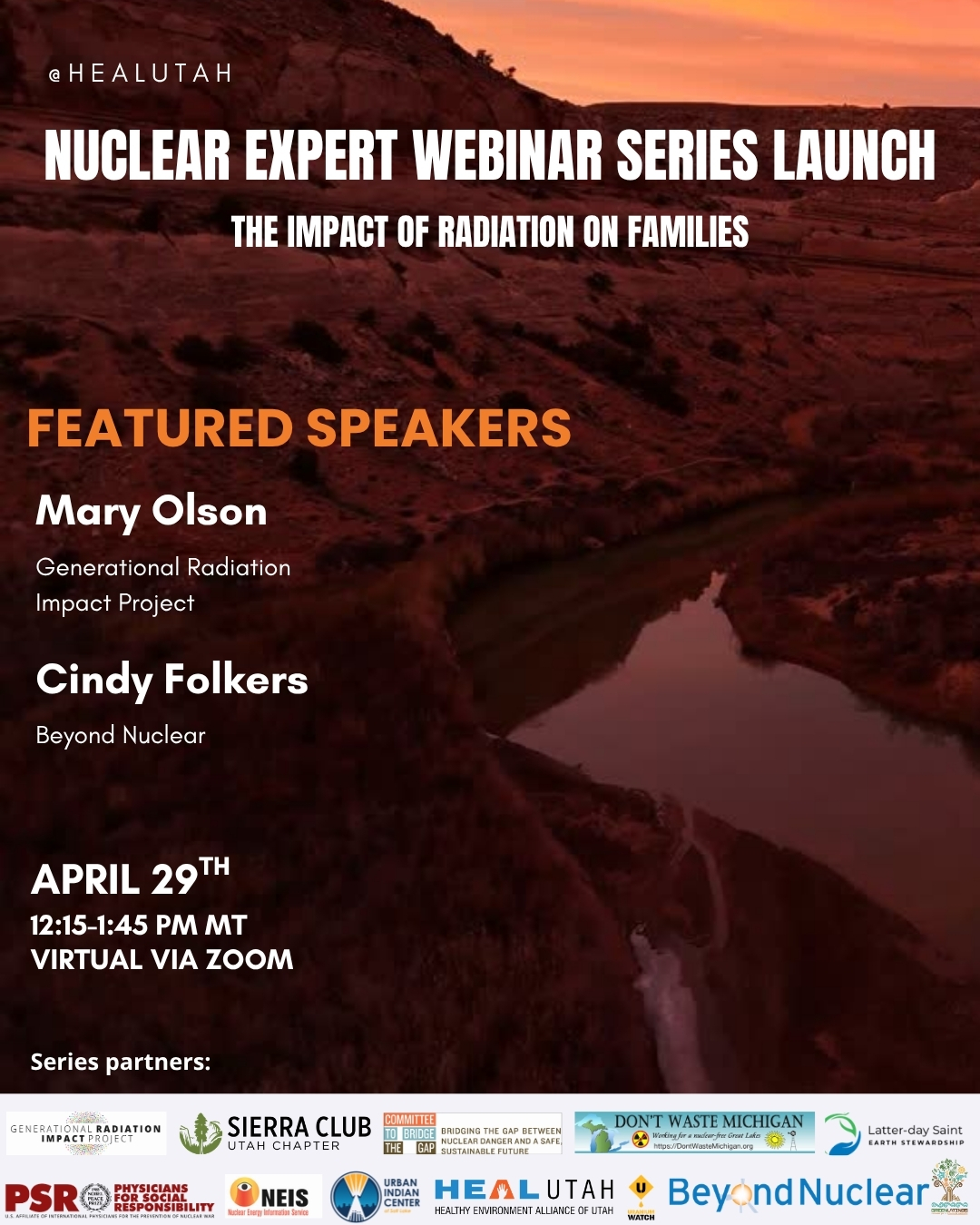
29 April – Nuclear Expert Webinar #1 – Radiation Impacts on Families with Mary Olson and Cindy Folkers
- 12:15 PM MT – 1:45 PM MT
- Location: Virtual – REGISTER TODAY

4 May -West Suburban Peace Coalition to discuss Iran war at May Educational Forum
Monday, May 4, 7:00 – 8:00 PM Central Standard Time
Title: : How Trump’s Narrative Tries to Shape the Reality of the War on Iran.
Contact Walt Zlotow, zlotow@hotmail.com 630 442 3045 for further information
14 May – online event From Bombs to Data Centres: the Face of Nuclear Colonialism

Pine Ridge Uranium is the real threat, not Tehran- Tell Burgum: Stop the Extraction.
Chernobyl: The Lost Tapes – A good documentary on Chernobyl on SBS available On Demand for the next 3 weeks– https://www.sbs.com.au/ondemand/tv-program/chernobyl-the-lost-tapes/2352741955560
To see nuclear-related stories in greater depth and intensity – go to https://nuclearinformation.wordpress.com
-
Archives
- April 2026 (317)
- March 2026 (251)
- February 2026 (268)
- January 2026 (308)
- December 2025 (358)
- November 2025 (359)
- October 2025 (376)
- September 2025 (257)
- August 2025 (319)
- July 2025 (230)
- June 2025 (348)
- May 2025 (261)
-
Categories
- 1
- 1 NUCLEAR ISSUES
- business and costs
- climate change
- culture and arts
- ENERGY
- environment
- health
- history
- indigenous issues
- Legal
- marketing of nuclear
- media
- opposition to nuclear
- PERSONAL STORIES
- politics
- politics international
- Religion and ethics
- safety
- secrets,lies and civil liberties
- spinbuster
- technology
- Uranium
- wastes
- weapons and war
- Women
- 2 WORLD
- ACTION
- AFRICA
- Atrocities
- AUSTRALIA
- Christina's notes
- Christina's themes
- culture and arts
- Events
- Fuk 2022
- Fuk 2023
- Fukushima 2017
- Fukushima 2018
- fukushima 2019
- Fukushima 2020
- Fukushima 2021
- general
- global warming
- Humour (God we need it)
- Nuclear
- RARE EARTHS
- Reference
- resources – print
- Resources -audiovicual
- Weekly Newsletter
- World
- World Nuclear
- YouTube
-
RSS
Entries RSS
Comments RSS
 nuclear-news
Thanks for posting it Christina. – Richard
Why “thanks”? – it is such a great article. It’s a privilege top be able to post just part of this article on the site. I’m happy to see that it has already led quite a few people to go to the original article.
Everyone should read this article. It’s a wake-up call for all clear thinking generalists to realise the need to think broadly around the issues of nuclerar power and Fukushima, and to not blindly accept the pronouncements of narrow experts (who often have a vested interest in the nuclear industry, too).
On Fri, Nov 30, 2012 at 10:59 PM, nuclear-news