Climate future is dangerous for nuclear power
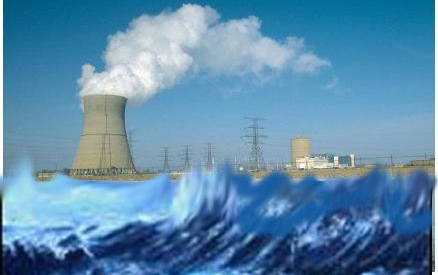 Nuclear Power and Superstorms Don’t Mix, Time, By Lucy Birmingham Nov. 07, 2012 Superstorm Sandy’s unexpected wrath makes a powerful case for revisiting Fukushima and the dangers to nuclear energy from natural disasters. As Sandy made landfall on Atlantic City, Oyster Creek nuclear power plant nearby was fortunately on a scheduled outage. But Indian Point 3 in Buchanan, N.Y., Nine Mile Point 1 in Scriba, N.Y., and Salem Unit 1 in Hancocks Bridge, N.J., all experienced shutdowns because of high water levels or electrical disruption. Last year, the dangerous Fukushima nuclear power plant meltdown was caused by similar conditions after tsunami waves flooded the plant and short-circuited both the regular and back-up electrical systems.
Equally dangerous are drought and record heat conditions the U.S. experienced last summer. In August, one of two reactors at the Millstone nuclear power plant near New London, Conn., not far from where I grew up, was shut down because water in Long Island Sound needed to cool the reactors got too warm. Cool water is necessary to produce electricity.
((MORE: Will We Be Seeing More Superstorms?)
Fukushima has been a worldwide wakeup call, particularly for the United States, the country with the largest number of reactors — 104. The lesson is glaringly obvious: when nature and nuclear energy collide the consequences can be lethal. Unfortunately, Japan is not offering an inspiring example of how to handle this threat. While all but two of the country’s 50 reactors remain offline, government and nuclear industry are proposing plant restarts and construction projects. This muddled move stands against the majority of Japanese citizens who have turned against nuclear power. As we face an increasingly volatile climate, the United States could conceivably lead the way in reducing dependence on nuclear energy.
(MORE: Is Post-Fukushima Japan Safe for Tourists?)
It’s estimated that superstorm Sandy will affect more than one fifth of Americans and cost up to $20 billion in damages. Imagine the addition of a major nuclear accident, potentially more lethal than Three Mile Island. The health, environmental and economic costs would be, simply put, insurmountable. It’s time to face the facts: Mother Nature rules. The best we can do is try to lessen the damage from her wrath. Phasing out nuclear power is the safe answer. : http://ideas.time.com/2012/11/07/nuclear-power-and-superstorms-dont-mix/#ixzz2Bgeqyigt
No comments yet.
1 This Month

of the week – Shut Down Drone Warfare!


Tell the Ukrainian Government to Drop Prosecution of Peace Activist Yurii Sheliazhenko

Petition to revoke the licensing of the Near Surface Nuclear Disposal Facility (NSDF) at Chalk River. https://www.ourcommons.ca/petitions/en/Petition/Details?Petition=e-7247
To see nuclear-related stories in greater depth and intensity – go to https://nuclearinformation.wordpress.com
-
Archives
- April 2026 (103)
- March 2026 (251)
- February 2026 (268)
- January 2026 (308)
- December 2025 (358)
- November 2025 (359)
- October 2025 (376)
- September 2025 (257)
- August 2025 (319)
- July 2025 (230)
- June 2025 (348)
- May 2025 (261)
-
Categories
- 1
- 1 NUCLEAR ISSUES
- business and costs
- climate change
- culture and arts
- ENERGY
- environment
- health
- history
- indigenous issues
- Legal
- marketing of nuclear
- media
- opposition to nuclear
- PERSONAL STORIES
- politics
- politics international
- Religion and ethics
- safety
- secrets,lies and civil liberties
- spinbuster
- technology
- Uranium
- wastes
- weapons and war
- Women
- 2 WORLD
- ACTION
- AFRICA
- Atrocities
- AUSTRALIA
- Christina's notes
- Christina's themes
- culture and arts
- Events
- Fuk 2022
- Fuk 2023
- Fukushima 2017
- Fukushima 2018
- fukushima 2019
- Fukushima 2020
- Fukushima 2021
- general
- global warming
- Humour (God we need it)
- Nuclear
- RARE EARTHS
- Reference
- resources – print
- Resources -audiovicual
- Weekly Newsletter
- World
- World Nuclear
- YouTube
-
RSS
Entries RSS
Comments RSS
 nuclear-news
Leave a comment