Underwater nuclear bomb tests – causing environmental damage?
How safe are underwater nuclear tests? http://www.saudigazette.com.sa/index.cfm?method=home.regcon&contentid=20121105141816 , November 05, 2012 Khadijah Bawazeer I do not have a sure answer for this question. While watching the news about Hurricane Sandy, a friend of mine who is a news-addict suggested that the increasing number of major environmental crises all over the world might be the aftermath of underwater nuclear testing. The argument is plausible because, although this might not be the sole reason, it seems that the more that underwater nuclear testing occurs, the more tsunamis, hurricanes and floods there are all around the world.
Many if not all countries test nuclear energy underground because this type of testing is a lot more convenient. Such experiments can take place deep in the ocean far away from inhabited land. As a result there are few liability issues because the tests are conducted out of sight in international water and it is easy to deny that they ever took place. Also these experiments usually happen in relative secrecy with only specialists aware of them.
Underwater nuclear testing causes an enormous water surge. This can
possibly result in a destructive underwater shockwave that can cause
earthquakes, hurricanes or tsunamis. Needless to say, the resulting
radioactive water can harm any inhabitants in a large area radiating
out from the place where the nuclear test was conducted. Other
features may include disturbed ground, pressure ridges, slumping of
the underwater surface, and possible gas leaks.
Underground testing is allowed, provided that it does not cause
radioactive debris to be present outside the test area. Yet, history
has demonstrated that the dangers of a nuclear experiment and even a
nuclear plant are ever present. The effects of an underground nuclear
test may vary according to different factors including the depth and
yield of the explosion, as well as the nature of the surrounding rock.
This indicates that nuclear power is risky and that it can backfire in
spite of all claims as to its safety. Furthermore, the claim that it
has a relatively low operational maintenance cost is not so accurate
when one considers the amount of money countries have to spend for
initial experimentation and when one considers what it takes to deal
with the aftermath of even one disaster such as Chernobyl or
Fukushima. Therefore, it is safe to say that despite all claims of
safety and validity, any nuclear energy plant has the potential of
causing enormous damage to the country that it is in as well as to
those living beyond the borders of that country.
I am not in favor of underwater and underground nuclear testing
because although it is claimed that when the device being tested is
buried at sufficient depth, the explosion and its effects can be
contained, this is much easier said theoretically than done
practically. The worst part of nuclear explosions is the resulting
radiation which can have a permanent effect on the earth. Things die
and if they live, they are apt to develop cancers. The effect on the
global environment and the possible long-term genetic damage resulting
from underwater experiments has not been sufficiently studied. There
needs to be valid proof of safety before more of these tests are
conducted.
2 Comments »
Leave a reply to Nuclear Vox Cancel reply
1 This Month
26 April – Chernobyl: Inside the Meltdown airs on National Geographic on Sunday 26th April from 4pm
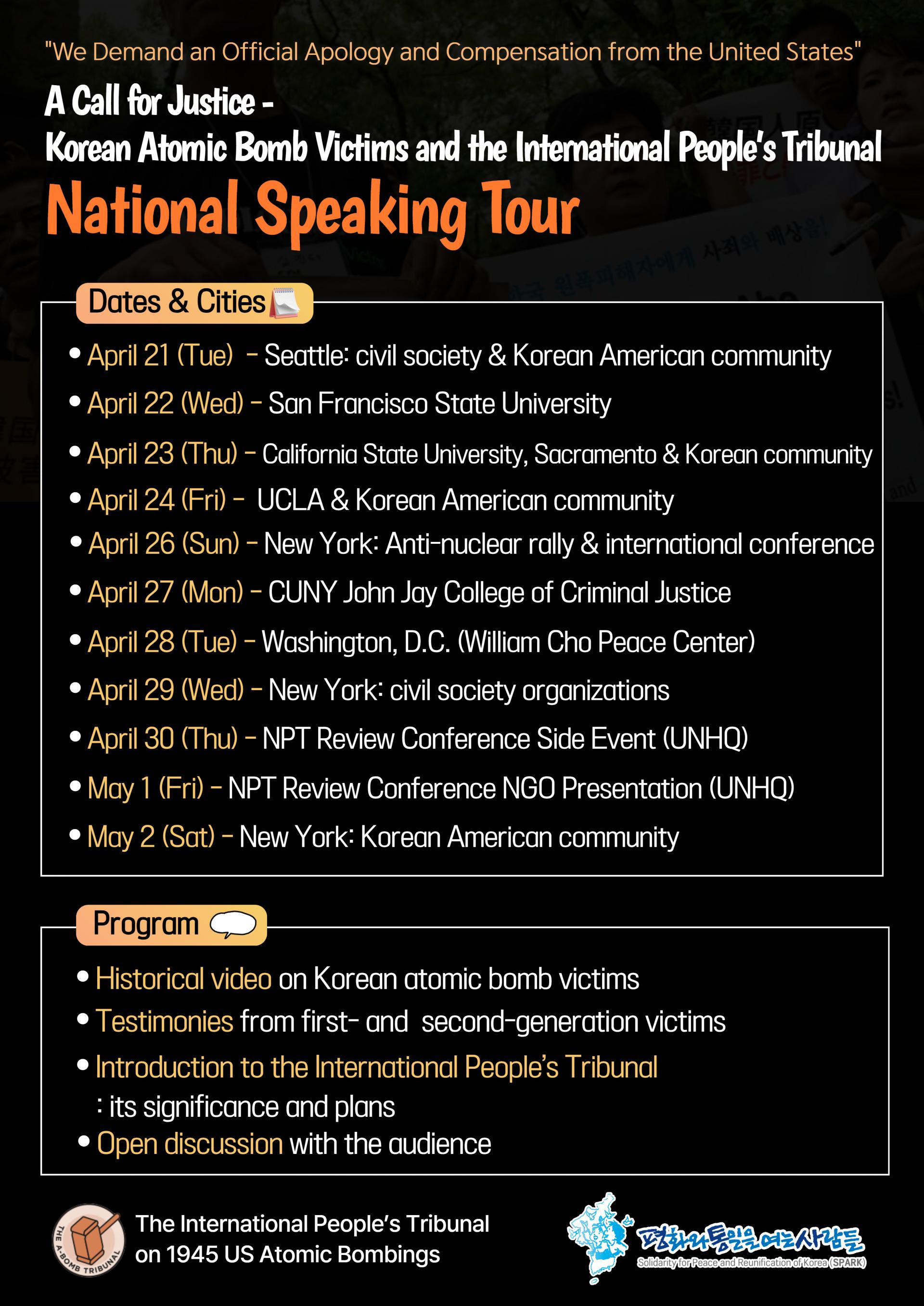
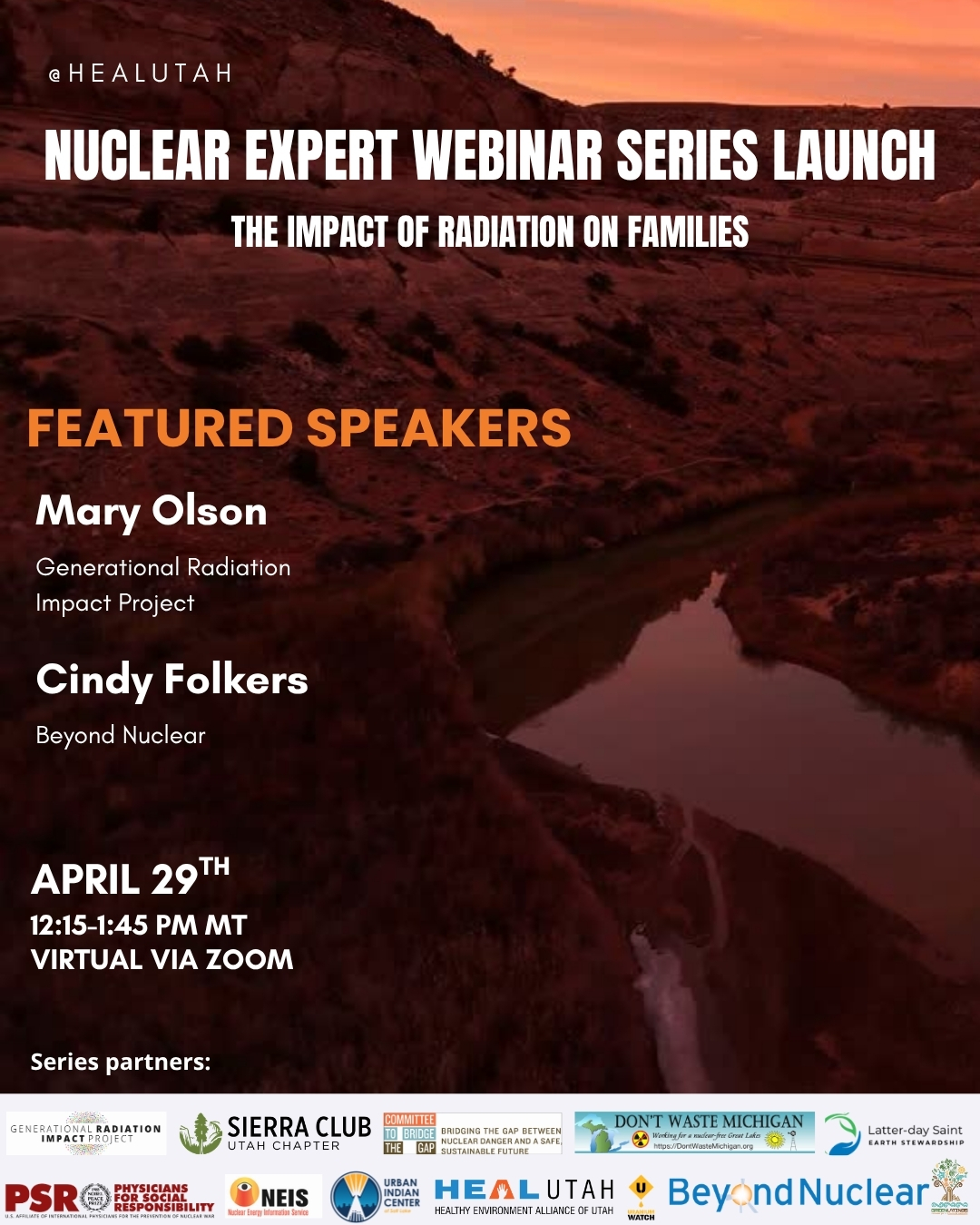
29 April – Nuclear Expert Webinar #1 – Radiation Impacts on Families with Mary Olson and Cindy Folkers
- 12:15 PM MT – 1:45 PM MT
- Location: Virtual – REGISTER TODAY

4 May -West Suburban Peace Coalition to discuss Iran war at May Educational Forum
Monday, May 4, 7:00 – 8:00 PM Central Standard Time
Title: : How Trump’s Narrative Tries to Shape the Reality of the War on Iran.
Contact Walt Zlotow, zlotow@hotmail.com 630 442 3045 for further information
14 May – online event From Bombs to Data Centres: the Face of Nuclear Colonialism

Pine Ridge Uranium is the real threat, not Tehran- Tell Burgum: Stop the Extraction.
Chernobyl: The Lost Tapes – A good documentary on Chernobyl on SBS available On Demand for the next 3 weeks– https://www.sbs.com.au/ondemand/tv-program/chernobyl-the-lost-tapes/2352741955560
To see nuclear-related stories in greater depth and intensity – go to https://nuclearinformation.wordpress.com
-
Archives
- April 2026 (356)
- March 2026 (251)
- February 2026 (268)
- January 2026 (308)
- December 2025 (358)
- November 2025 (359)
- October 2025 (376)
- September 2025 (257)
- August 2025 (319)
- July 2025 (230)
- June 2025 (348)
- May 2025 (261)
-
Categories
- 1
- 1 NUCLEAR ISSUES
- business and costs
- climate change
- culture and arts
- ENERGY
- environment
- health
- history
- indigenous issues
- Legal
- marketing of nuclear
- media
- opposition to nuclear
- PERSONAL STORIES
- politics
- politics international
- Religion and ethics
- safety
- secrets,lies and civil liberties
- spinbuster
- technology
- Uranium
- wastes
- weapons and war
- Women
- 2 WORLD
- ACTION
- AFRICA
- Atrocities
- AUSTRALIA
- Christina's notes
- Christina's themes
- culture and arts
- Events
- Fuk 2022
- Fuk 2023
- Fukushima 2017
- Fukushima 2018
- fukushima 2019
- Fukushima 2020
- Fukushima 2021
- general
- global warming
- Humour (God we need it)
- Nuclear
- RARE EARTHS
- Reference
- resources – print
- Resources -audiovicual
- Weekly Newsletter
- World
- World Nuclear
- YouTube
-
RSS
Entries RSS
Comments RSS
 nuclear-news
Reblogged this on Nuclear Vox.
All nuclear bomb tests are banned and can be detected
The Comprehensive Nuclear-Test-Ban Treaty (CTBT) bans all nuclear bomb testing, including underground and underwater. 183 countries worldwide have subscribed to this norm, which has brought nuclear testing to a near-standstill since 1996, when the Treaty was adopted. We, the CTBT Treaty organization, are establishing a global verification regime that will consist of 337 facilities in its final configuration. 85% are already operational and scan the planet for signs of a nuclear explosion – underground, under water and in the atmosphere.
It would therefore not be easy for any country that chooses to conduct nuclear tests “to deny that they ever took place”. On the contrary; the two nuclear tests that have taken place in the last decade – both small underground nuclear tests carried out by North Korea in 2006 and 2009 – were detected reliably and with precision.
CTBT monitoring data is made available to all CTBT Member States in near-real time, thus making the system transparent and democratic. The monitoring data can also be used to boost tsunami early warning efforts and to track global spread of radioactivity.