IN its quest for Arctic oil, Russia admits its undersea nuclear dump
17,000 containers of radioactive waste, 19 ships containing radioactive waste, 14 nuclear reactors, including five that still contain spent nuclear fuel; 735 other pieces of radiactively contaminated heavy machinery, and the K-27 nuclear submarine with its two reactors loaded with nuclear fuel.
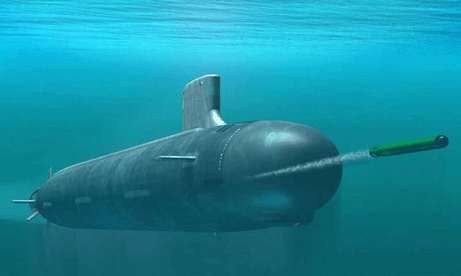 one of the most critical pieces of information missing from the report released to the Norwegian Radiation Protection Authority was the presence of the K-27 nuclear submarine, which was scuttled in 50 kilometers of water with its two reactors filled with spent nuclear fuel in in Stepovogo Bay in the Kara Sea in 1981.
Information that the reactors abord the K-27 could reachieve criticality and explode was released at the Bellona-Rosatom seminar in February.

 Russia Dumped 17 Nuclear Reactors and Tons of Waste in the Arctic by Charles Digges / Bellona.org, Earth First! Newswire, 30 Aug 12, Enormous quantities of decommissioned Russian nuclear reactors and radioactive waste were dumped into the Kara Sea in the Arctic Ocean north of Siberia over a course of decades, according to documents given to Norwegian officials by Russian authorities and published in Norwegian media.
Bellona had received in 2011 a draft of a similar report prepared for Russia’s Gossoviet, the State Council, for presentation at a meeting presided over by then-president Dmitry Medvedev on Russian environmental security.
The Russian state nuclear corporation Rosatom confirmed the figures in February of this year during a seminar it jointly held with Bellona in Moscow. Bellona is alarmed by the extent of the dumped Soviet waste, which is far greater than was previously known – not only to Bellona, but also to the Russian authorities themselves. Continue reading
Youtube: nuclear waste dump for Tochigi, Japan
 NHK – Japan proposes radioactive disposal site in Tochigi http://www.youtube.com/watch?v=5Whe6frtDdo Sep 3, 2012 by NHKReloaded NHK World News —- The Japanese government has proposed a site in Tochigi Prefecture, north of Tokyo, to dispose of radioactive waste from the accident at the Fukushima Daiichi plant. It is the first time the central government has made such a proposal to a prefectural government.
Senior Vice Environment Minister Katsuhiko Yokomitsu made the proposal to Tochigi Governor Tomikazu Fukuda on Monday.
The central government is responsible for disposing of more than 42,000 tons of radioactive ash and mud in 9 prefectures. Levels of Cesium in the waste are above the government standard of 8,000 becquerels per kilogram.
Tochigi Prefecture is already temporarily storing about 9,000 tons of radioactive waste at sewage treatment and other facilities.
The Environment Ministry says a 4-hectare national forest in Tochigi’s Yaita City is large enough for the purpose and far enough from the closest residential area and water source.
The ministry will brief people living near the site on the need and safety of the planned facility.
Temperatures rise as atmospheric greenhouse gases heat up the ocean
if global warming of the past decades was due to El Niño or another mechanism involving heat from the ocean, the ocean would have lost heat. But the heat content has gone up, not down. And it is well understood why: because we created a radiation imbalance by adding greenhouse gases to our atmosphere.
The signal of global warming caused by humans is very clear, despite attempts by certain parties to drown it out with a lot of noise.
 If 2013 breaks heat record, how will deniers respond?, New Scientist, 03 September 2012 by Stefan Rahmstorf With an El Niño on the way, 2013 could be the warmest year on record. But the climate-denial machine will keep on churning
IT HAS been another “normal” global-warming summer in the northern hemisphere. The US sweltered in the hottest July on record, following thehottest spring on record. More than 60 per cent of the contiguous US is suffering from drought, as are parts of eastern Europe and India. In the Arctic, sea ice cover is at a record low and the Greenland ice sheet shows what theUS National Snow and Ice Data Center calls “extraordinary high melting”. Global land temperatures for May and June were the hottest since records began in the 19th century.
Meanwhile, El Niño conditions are forecast to develop in the tropical Pacific Ocean, warming up ocean surface temperatures. Some observers have predicted that this will lead to record-breaking global temperatures next year.
If El Niño does arrive and temperature records are broken, there will inevitably be much discussion of the causes of the warming. So now is a good time to sort signal from noise in the global temperature records. Continue reading
Climate Change Denial and Conspiracy Theories
 Climate change deniers ‘are either extreme free marketeers or conspiracy theorists’ An Australian study says avid climate change deniers tend to be either extreme free marketeers or conspiracy theorists who believe the moon landing was faked or Princess Diana was murdered.Telegraph, By Jonathan Pearlman in Sydney 28 Aug 2012 The study, to be published in the journal Psychological Science, also found that those who reject the scientific consensus on the human contribution to climate change are more likely to to reject other scientific findings such as the linkage between tobacco and lung cancer or between HIV and Aids.
The paper, titled “NASA faked the moon landing – Therefore (Climate) Science is a Hoax: An Anatomy of the Motivated Rejection of Science”, was based on a survey of more than 1000 visitors to blogs dedicated to discussion of climate change.
“We find that endorsement of a laissez-faire conception of free-market economics predicts rejection of climate science,” the paper says. “We additionally show that endorsement of a cluster of conspiracy theories (e.g., that the CIA killed Martin Luther King or that NASA faked the moon landing) predicts rejection of climate science as well as the rejection of other scientific findings.”
The paper says that a staunch belief in free markets was an overwhelmingly strong factor in the rejection of climate science and was a stronger factor than conspiratorial thinking.
It surveyed people on attitudes to a range of conspiracy theories, including that the United States allowed the September 11 attacks to occur and that SARS was produced in a laboratory as a biological weapon.
The lead researcher, Professor Stephan Lewandowsky, from the University of Western Australia, said conspiracy theories are the “antithesis to scientific thinking” and those who believe them are more likely to reject the scientific consensus that humans contribute to climate change.
“Science is about weeding out bad ideas,” he told The Daily Telegraph. “With conspiracy theories, you start out with a theory and stick to it no matter what the evidence. So it is not that surprising that conspiracy theorists would not accept scientific propositions … If the scientific evidence is overwhelming and you don’t like the conclusion, you have to find a way to reject those findings.”…. http://www.telegraph.co.uk/earth/environment/climatechange/9503044/Climate-change-deniers-are-either-extreme-free-marketeers-or-conspiracy-theorists.html
Continuing danger and ever escalating costs at the Chernobyl and Fukushima cleanups
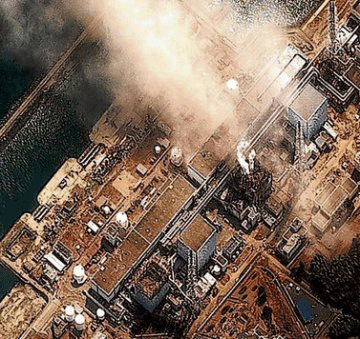 It will be especially dangerous to remove the remaining nuclear fuel because of the high levels of radiation that such substances emit.
conditions [at the Chernobyl plant] are still dangerous for the 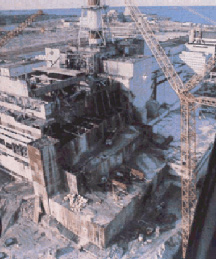 3,500 workers now cleaning up the site. And some 200 tons of nuclear fuel still remain at the bottom of the reactor.
When reactors die, costs keep climbing. Fukushima Diiachi costs to go through the roof.http://nuclearhistory.wordpress.com/2012/09/03/when-reactors-die-costs-keep-climbing-fukushima-diiachi-costs-to-go-through-the-roof/ 4 Sept 12
http://e.nikkei.com/e/fr/tnks/Nni20120815D15HH187.htm Decommissioning Of Fukushima To Be Long, Costly Process FUKUSHIMA (Nikkei)–-The government and Tokyo Electric Power Co. (9501) have made the first revisions to a plan to decommission the crippled Fukushima Daiichi nuclear power plant, but the details remain uncertain.
At the Chernobyl plant, efforts are now in full swing to build a massive shelter to stop the site from releasing radiation into the environment.
Among other matters, the revisions involve adding measures to prevent radioactive water from leaking into the environment. But it is still unclear how much time and money this will actually entail. Continue reading
The true scale of Chernobyl’s radioactive disaster

 Chernobyl, Insight from the Inside by Vladimir M.
  Chernousenko, Scientific Director of the Ukrainian Academy of Sciences Institute of Physics in Kiev’s Task Force for the Rectification of the Consequences of the Chernobyl Accident
Foreward, pp. XVI-XVII, From the Publisher:
The author’s chief motivation for writing this book is that he considers it vitally important that the world should be told the unvarnished truth about the scale and consequences of the disaster, the legacy of which will remain with us for many generations. He presents realistic estimates and new unpublished hard data from various reliable sources about the radiation pollution caused by the accident. The figures prove to be much higher than anyone dared assume up to now. We are confronted with horrendous numbers regarding the radiation pollution of the soil and aquifers in the Soviet Union. On the basis of these data, it is estimated that a territory of a least 100,000 km^2 is so polluted as to be uninhabitable. There are even estimates of an amount three times as high.
The author’s greatest concern is the well-being of the people still living in this huge territory. Many of those who are still living in the polluted areas want to leave, but the problems posed by local administration and bureaucracy do not allow them to do so. For lack of precedence, the effects on their health in the long-term can only be guessed at, at the present time. But those effects are already beginning to become evident. The health statistics included in this book are a matter of serious concern and urgently call for further investigations. Continue reading
Gloom in South Australia over uranium mining future
 Kloppers’ bleak Olympic hopes by: Michael Owen, The Australian September 04, A BLEAK outlook has been presented by BHP Billiton chief executive Marius Kloppers for an expanded Olympic Dam mine ever operating in South Australia.
Mr Kloppers yesterday held talks with Premier Jay Weatherill in Adelaide to explain why the miner’s board last month indefinitely shelved the $28.7 billion project. He emerged from the hour-long meeting to say there was no timeframe for the project and no guarantee it would ever go ahead.
This came more than a week after The Weekend Australian revealed that Mr Kloppers had warned the expansion might never happen because the project was now dependent on the uncertain development of cheaper “leaching” technology to expand the mine’s future production. He had said that unlike “optimistic” scientists, the miner was “insufficiently certain that an eventual project will happen”. Mr Kloppers reiterated that message yesterday after meeting with the Premier. “We have been working and expending a lot of money on trying to make this project a reality,” Mr Kloppers said…… ”I can’t give you any timeframe on how these things could progress.”
Asked if he could give a guarantee the mine would be redeveloped, he said: “No, I cannot.”
Mr Weatherill tried to maintain a positive message, but conceded the current model planned for the expansion “does not work”.. they are not able to advance a time when the technology will be proven, nor are they able to give us certainty about whether the technology will be capable of being proven, and therefore they will not be in a position to give us certainty about when the mine proceeds.”…
Mr Weatherill said that after his meeting yesterday, any future expansion was even further away than he had previously thought……
The opposition said all of the government’s tough-talking about BHP meeting its December deadline to go-ahead with the expansion and the project’s benefits for the state, had proven to be “bluff and bluster”. http://www.theaustralian.com.au/national-affairs/kloppers-bleak-olympic-hopes/story-fn59niix-1226464289847
Cesium 134 and 137 in baby food made in Tolyo
 Cesium from baby food made in Tokyo and Aichi Fukushima Diary by Mochizuki on September 3rd, 2012 · Radiation is starting to be measured from baby food. We are having less and less to feed our babies.
According to the radiation measurement of Yokohama city government, cesium 134/137 are measured from baby food.
The producers are in Tokyo and Aichi. Aichi is the central Japan, 446km from Fukushima plant.
Sample 1
Purchasing date : 8/13/2012
Location : Aichi
Cs-134 : 1.59 Bq/Kg
Cs-137 : 1.83 Bq/Kg
Total : 3.4 Bq/Kg
Sample 2
Purchasing date : 8/27/2012
Location : Tokyo
Cs-134 : ND Bq/Kg
Cs-137 : 1.42 Bq/Kg
Total : 1.4 Bq/Kg
Hear Dr Bob Mtonga on consequences of nuclear weapons, and Africa’s role in banning them
An interview with Dr Bob Mtonga http://www.youtube.com/watch?v=UlR7zq59vS8&feature=youtu.be Sep 3, 2012 by ICANinAction Dr Bob Mtonga, co-president of IPPNW, tells us about the importance of the humanitarian consequences of nuclear weapons and the role of Africa in the process to achieve a ban on these inhumane weapons.
Safety flaws in India’s nuclear power plants
AERB detects flaws at nuclear plants Business Standard, Sanjay Jog / Mumbai Sep 04, 2012, Regulatory inspections of nuclear power plants and research facilities have revealed there have been deviation from technical specifications and other regulatory stipulations, deficiencies and degradations in safety-related systems and procedural inadequacies.
The Atomic Energy Regulatory Board (AERB), which carried out 47 regulatory inspections, comprising 25 scheduled and 22 special inspections in 2011-12, observed there were shortcomings in safetydesign and safety support systems based on operating experience,
including generic deficiencies.
The board has made a strong case for improvement in procedures and design by the respective nuclear power plants. It observed at Narora Atomic Power Station 1 & 2, continuous monitoring of healthiness and availability of seismic trips circuits did not exist. The unavailability of this trip due to loss of power supply or discontinuity in the wiring remain unnoticed till the next surveillance test. The scheme in this regard was under AERB’s review with the designers of Nuclear Power Corporation…….http://www.business-standard.com/india/news/aerb-detects-flaws-at-nuclear-plants/485318/
1 This Month

of the week – Shut Down Drone Warfare!


Tell the Ukrainian Government to Drop Prosecution of Peace Activist Yurii Sheliazhenko

Petition to revoke the licensing of the Near Surface Nuclear Disposal Facility (NSDF) at Chalk River. https://www.ourcommons.ca/petitions/en/Petition/Details?Petition=e-7247
To see nuclear-related stories in greater depth and intensity – go to https://nuclearinformation.wordpress.com
-
Archives
- March 2026 (237)
- February 2026 (268)
- January 2026 (308)
- December 2025 (358)
- November 2025 (359)
- October 2025 (376)
- September 2025 (257)
- August 2025 (319)
- July 2025 (230)
- June 2025 (348)
- May 2025 (261)
- April 2025 (305)
-
Categories
- 1
- 1 NUCLEAR ISSUES
- business and costs
- climate change
- culture and arts
- ENERGY
- environment
- health
- history
- indigenous issues
- Legal
- marketing of nuclear
- media
- opposition to nuclear
- PERSONAL STORIES
- politics
- politics international
- Religion and ethics
- safety
- secrets,lies and civil liberties
- spinbuster
- technology
- Uranium
- wastes
- weapons and war
- Women
- 2 WORLD
- ACTION
- AFRICA
- Atrocities
- AUSTRALIA
- Christina's notes
- Christina's themes
- culture and arts
- Events
- Fuk 2022
- Fuk 2023
- Fukushima 2017
- Fukushima 2018
- fukushima 2019
- Fukushima 2020
- Fukushima 2021
- general
- global warming
- Humour (God we need it)
- Nuclear
- RARE EARTHS
- Reference
- resources – print
- Resources -audiovicual
- Weekly Newsletter
- World
- World Nuclear
- YouTube
-
RSS
Entries RSS
Comments RSS
 nuclear-news