Gloomy outlook for future of nuclear power industry
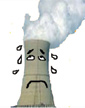 “The situation is much worse for the industry than after Chernobyl,” ….. “New projects have a very dull future, but it will put enormous pressure on extending lifetimes and that raises obvious safety issues.”
“The financial situation has dramatically worsened since Fukushima and there is almost no exception to the rule.”
World Atomic Output Falls by Record in Fukushima’s Aftermath
http://www.businessweek.com/news/2012-07-06/world-atomic-power-output-falls-by-record-in-fukushima-aftermath Bloomberg News, By Kari Lundgren July 06, 2012 World nuclear power production dropped by a record 4.3 percent last year as the global financial crisis and the Fukushima disaster in Japan prompted plant
shutdowns and slowed construction of new sites.
Reactors generated 2,518 terawatt-hours of electricity, down from
2,630 terawatt-hours in 2010, according to the World Nuclear Industry
Status Report 2012 published today. Atomic power accounted for 11
percent of all electricity generation.
The meltdown of Tokyo Electric Power Co. (9501)’s Fukushima Dai- Ichi
plant in March last year drove countries including Germany,
Switzerland and Taiwan to announce their withdrawal from nuclear
power. Global output was further restricted as nations put new- build
plans on hold amid safety concern and economic stagnation, forcing
utilities to study extending the lives of current sites.
“The situation is much worse for the industry than after Chernobyl,” said Mycle Schneider, co-author of the report, referring to the 1986 accident in Ukraine. “New projects have a very dull future, but it will put enormous pressure on extending lifetimes and that raises obvious safety issues.”
Seven reactors began operating in 2011 and 19 were shuttered, the
report shows. France, Germany, Japan, Russia, South Korea and the U.S.
— six of the 31 countries that produce atomic power — generated more
than 70 percent of the total.
Plans Scrapped
At least five nations, including Egypt, Italy and Kuwait, have
suspended plans to build their first reactors, according to the
report. In the U.K., RWE AG (RWE), EON AG (EOAN), and SSE Plc (SSE)
have all abandoned new-build proposals in the past 12 months, while
companies in Japan and Bulgaria have suspended construction. The
Fukushima crisis also led to certification and licensing delays.
Even countries such as the United Arab Emirates, intent on using
nuclear power to meet a third of electricity demand by 2020, can’t get
the financing they need, Schneider said in an interview.
“If banks don’t want to lend the money then where is this supposed to
come from?” he said. “The financial situation has dramatically worsened since Fukushima and there is almost no exception to the rule.”
Electricite de France SA, the world’s biggest operator of nuclear
reactors, has said a decision to extend the lives of two U.K. plants
will hinge on their commercial viability, as well as regulatory safety
reviews. All of Britain’s reactors are due to close by 2035, leaving
it short of more than 10,000 megawatts of baseload generation.
There are 59 nuclear reactors being built globally and at least 18 are
experiencing “multiyear” delays, according to today’s report. Nine
have been listed by the International Atomic Energy Agency as “under
construction” for more than 20 years, the authors said.
To contact the reporter on this story: Kari Lundgren in London at
klundgren2@bloomberg.net
To contact the editor responsible for this story: Will Kennedy at
wkennedy3@bloomberg.net
No comments yet.
1 This Month
23-25 October – on Zoom – World BEYOND War’s annual global conferenc


Shut down the radiation-damaged Heysham nuclear reactors now
To see nuclear-related stories in greater depth and intensity – go to https://nuclearinformation.wordpress.com

Say No to NASA’s Reckless Nuclear Reactor on the Moon
Say No to NASA’s Reckless Nuclear Reactor on the Moon
-
Archives
- October 2026 (170)
- September 2026 (339)
- August 2026 (330)
- July 2026 (355)
- June 2026 (287)
- May 2026 (306)
- April 2026 (356)
- March 2026 (251)
- February 2026 (267)
- January 2026 (308)
- December 2025 (358)
- November 2025 (359)
-
Categories
- 1
- 1 NUCLEAR ISSUES
- business and costs
- climate change
- culture and arts
- ENERGY
- environment
- health
- history
- indigenous issues
- Legal
- marketing of nuclear
- media
- opposition to nuclear
- PERSONAL STORIES
- politics
- politics international
- Religion and ethics
- safety
- secrets,lies and civil liberties
- spinbuster
- technology
- Uranium
- wastes
- weapons and war
- Women
- 2 WORLD
- ACTION
- AFRICA
- Atrocities
- AUSTRALIA
- Christina's notes
- Christina's themes
- culture and arts
- Events
- Fuk 2022
- Fuk 2023
- Fukushima 2017
- Fukushima 2018
- fukushima 2019
- Fukushima 2020
- Fukushima 2021
- general
- global warming
- Humour (God we need it)
- Nuclear
- RARE EARTHS
- Reference
- resources – print
- Resources -audiovicual
- Weekly Newsletter
- World
- World Nuclear
- YouTube
-
RSS
Entries RSS
Comments RSS


Leave a Reply