Up to date analysis of the risks of low level radiation
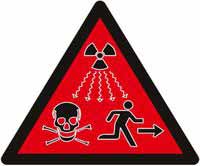 Misleading interpretations of low-dose epidemiologic data result in an underestimate of the full health impacts, because of failure to account for diseases with accelerated onsets,
 Experts write on the risks of low-level radiation Eureka Alert, Los Angeles, CA (May 01, 2012) – Each time a release of radioactivity occurs, questions arise and debates unfold on the health risks at low doses—and still, just over a year after the disaster at the Fukushima Nuclear Power Station, unanswered questions and unsettled debates remain.
Now a special issue of the Bulletin of the Atomic Scientists, published by SAGE, examines what is new about the debate over low-dose radiation risk, specifically focusing on areas of agreement and disagreement, including quantitative estimates of cancer risk as radiation dose increases, or what is known as the linear non-threshold theory (LNT). The issue, which includes essays written by the top experts in their fields, does not claim to put the argument to rest—however, it does provide an indispensible update of the existing literature.
As Jan Beyea, guest editor and nuclear physics and epidemiology expert, says: “The reader will be ready to join the debate armed with a broad-based view of the epidemiologic evidence and its differing interpretations, along with an awareness of the stakeholder and researcher landscape.” Beyea personally contributes to the issue and deconstructs the low-level radiation debate, unpacking all its parts and illuminating what deserves more attention and scrutiny.
There has been, and continues to be, considerable debate among members of the scientific community, political and industry leaders, and the public around the claim that atomic-bomb data is relevant to estimating risks from protracted exposures. This debate has contributed to the delay in updating some US regulatory dose limits that are based on a pre-1990 understanding of radiation risks.
“My article explores the new, large-scale epidemiologic studies that are directly relevant—not to one-time exposures received at Hiroshima and Nagasaki, but to the protracted exposures that are received from continuous decay of radioactive isotopes associated with releases from Fukushima or from the Soviet and US weapons complexes,” says Beyea…….. has any of the epidemiologic evidence has been interpreted properly? Biostatistician Sander Greenland thinks not. Misleading interpretations of low-dose epidemiologic data result in an underestimate of the full health impacts, because of failure to account for diseases with accelerated onsets, he says.
From 1st of May, the articles are free of charge for one month and can be accessed at http://bos.sagepub.com/. Members of the media can sign up for complimentary subscriptions by contacting pr@sagepub.co.uk for details.
For embargoed copies of the articles please contact: mithu.lucraft@sagepub.co.uk
The Bulletin of the Atomic Scientists
The Bulletin is an independent nonprofit 501 (c) (3) organization that publishes analysis and conducts forums about nuclear security, climate stabilization, and safety in the biosciences. Founded by Manhattan Project scientists from the University of Chicago, it links the work of scholars and experts with policymaking entities and citizens around the world. An international network of authors assesses scientific advancements that involve both benefits and risks to humanity, with the goal of influencing public policy to protect the Earth and its inhabitants. The organization’s scientific advisory boards include 19 Nobel laureates, ambassadors, leading scholars, distinguished NGO officials, and public policy experts. The Bulletin is closely followed in Washington and other world capitals and uses its iconic Doomsday Clock to draw international attention to global risks and solutions. http://www.eurekalert.org/pub_releases/2012-05/sp-ewo042712.php
No comments yet.
1 This Month

of the week – Shut Down Drone Warfare!


Tell the Ukrainian Government to Drop Prosecution of Peace Activist Yurii Sheliazhenko

Petition to revoke the licensing of the Near Surface Nuclear Disposal Facility (NSDF) at Chalk River. https://www.ourcommons.ca/petitions/en/Petition/Details?Petition=e-7247
To see nuclear-related stories in greater depth and intensity – go to https://nuclearinformation.wordpress.com
-
Archives
- April 2026 (79)
- March 2026 (251)
- February 2026 (268)
- January 2026 (308)
- December 2025 (358)
- November 2025 (359)
- October 2025 (376)
- September 2025 (257)
- August 2025 (319)
- July 2025 (230)
- June 2025 (348)
- May 2025 (261)
-
Categories
- 1
- 1 NUCLEAR ISSUES
- business and costs
- climate change
- culture and arts
- ENERGY
- environment
- health
- history
- indigenous issues
- Legal
- marketing of nuclear
- media
- opposition to nuclear
- PERSONAL STORIES
- politics
- politics international
- Religion and ethics
- safety
- secrets,lies and civil liberties
- spinbuster
- technology
- Uranium
- wastes
- weapons and war
- Women
- 2 WORLD
- ACTION
- AFRICA
- Atrocities
- AUSTRALIA
- Christina's notes
- Christina's themes
- culture and arts
- Events
- Fuk 2022
- Fuk 2023
- Fukushima 2017
- Fukushima 2018
- fukushima 2019
- Fukushima 2020
- Fukushima 2021
- general
- global warming
- Humour (God we need it)
- Nuclear
- RARE EARTHS
- Reference
- resources – print
- Resources -audiovicual
- Weekly Newsletter
- World
- World Nuclear
- YouTube
-
RSS
Entries RSS
Comments RSS
 nuclear-news
Leave a comment