Pakistan causing an impasse at UN nuclear disarmament talks
The UN chief lamented that the practice of deciding by consensus “is currently used as a de facto veto power to stall every attempt to break the impasse.”
 Pakistan’s stonewalling could sink UN nuclear disarmament talks: Ban Ki-moon National Post, Agence France-Presse Jan 24, 2012 GENEVA — UN Secretary General Ban Ki-moon warned Tuesday that the UN Conference on Disarmament could fail because of a three-year stalemate over Pakistan’s reluctance to discuss nuclear power. Continue reading
Houston, Texas, to be world leader in renewable energy?
How Houston can remain the world’s energy capital: Embrace wind and solar now, Culture Map, 24 Jan 12, BY MICHAEL SKELLY, When I first moved to Texas in the late 1990s,renewable energy was considered a quaint notion which would never amount to much of anything. Around that time in Houston, wind and solar energy weren’t really on anyone’s radar. It seemed like everyone in town was either working for Enron or wanting to work there, and everyone else was focused on a new dot.com. In our generally wide-open city, there was no particular aversion to clean energy, just more of a “huh?” factor.
But over the past decade, Houston has emerged as one of the leading cities for the renewable energy industry. Almost every major wind company in the U.S. has a significant presence in Houston, includingDuke, Shell, BP, NextEra, Pattern, and EDPR (formerly Horizon Wind). These companies account for well over half of the of the wind turbines installed in the United States. ….
As it turns out, Texas now leads the country in wind energy, and is moving along in solar. In 2011, according to the Electric Reliability Council of Texas(ERCOT), 8.5% of the electricity consumed in the state came from wind energy. And as everyone knows, with our hot, muggy summers, we are voracious consumers of electricity, making 8.5% a LOT of electricity.
On a really blustery day, we get almost 30% of our electricity from wind. This is up from right around 0% a dozen years ago. We got here through a combination of a slight push from the state that started with Gov. Bush, federal tax incentives, tremendous wind resources along our coast and in West Texas, and a business friendly environment. Houston companies were a big part of this multi-billion dollar build-out….. http://houston.culturemap.com/newsdetail/01-24-11-how-the-worlds-oil-capital-can-be-a-center-for-renewable-energy/
Solar and wind energy investment by Warren Buffett

 Buffett’s MidAmerican Starts Renewable-Energy Business, Fox Business By Cassandra Sweet January 24, 2012 The MidAmerican Energy unit of Warren Buffett’s Berkshire Hathaway Inc. (BRKA, BRKB) said Tuesday it has started a new company to oversee a growing stable of solar, wind and other renewable-energy projects.
MidAmerican Energy Holdings Co., of Des Moines, said it has placed solar and wind farms, geothermal power plants and its interest in a small hydroelectric project into a new company called MidAmerican Renewables LLC.
MidAmerican’s president and chief executive, Greg Abel, said the company expects U.S. demand for renewable energy to continue growing and that the company wants “to be a leader in this area.”
On Monday, MidAmerican said it plans to buy an 81-megawatt wind farm in Illinois from Invenergy Wind LLC as part of the company’s growing wholesale renewable-energy business. ……. MidAmerican Renewables said it is considering acquiring more renewable-energy projects that would generate electricity for the wholesale power market to meet growing demand for clean energy.
“We’ll be looking for opportunities to grow this business,” said Tina Potthoff, a spokeswoman for MidAmerican. “We think there’s a growing desire by utilities and other companies to green up their business.”
http://www.foxbusiness.com/news/2012/01/24/buffetts-midamerican-starts-renewable-energy-business/#ixzz1kVVVLdW0
Renewable energy development for Karnataka, India
 Renewable energy potential 28GW+ in Karnataka, Construction Week online India, Jan 24, 2012 Karnataka’s renewable energy potential is more than 28 GW, says Pune based World Institute of Sustainable Energy (WISE). Karnataka is one of the pioneers where states in India are concerned to draft an RE Policy for the state for the period of 2009-14.
The policy envisions a generation of 6600 MW of renewable electricity by 2014 and about Rs.23,890 crore of investments during the said period. Studies by the World Institute of Sustainable Energy (WISE), Pune, suggest that Karnataka has much more RE potential
than envisaged, which is more than 24 GW, out of which currently, only 3.45 GW has been tapped so far (as on Nov 2011). This includes 1929 MW of wind, 86 MW of biomass, 782 MW of bagasse cogen, 646 MW of small hydro, and 9 MW of solar. Wind offers the maximum potential with an untapped potential of 11 GW. Obviously the huge untapped potential also creates a huge investment opportunity…..
http://www.constructionweekonline.in/article-7672-renewable_energy_potential_28gw_in_karnataka/
Renewable Energy Event for Africa
On-site renewables to feature prominently at Africa-based power event, 24/01/201 Cogeneration By Diarmaid Williams On-site power will comprise part of the agenda for Renewable Energy World Africa, which will be launched alongside POWER-GEN Africa 2012 in Johannesburg in November.
The three day event will feature presentations and debate about the strategic challenges and technical solutions for expanding renewable energy power generation across sub-Saharan Africa.
The event will also involve discussion of the future of on-site renewable power in Africa and how that form of energy relates to the major industries in the region, and in relation to rural electrification.
Exhibitors will have a dedicated Renewable Energy World Africa pavilion on the show floor which will be a focus of expertise and global technological excellence in the green energy sector.
“Countries in sub-Saharan Africa today face a collective power deficit with the prospect of fast growing future demand. Renewable power generation offers huge potential to help close this gap in a continent with abundant renewable resources and space. With technology advancing quickly and manufacturing costs lowering, renewable power generation will play a big role in a new energy infrastructure in Africa offering solutions in both rural distributed applications and large-scale projects such as hydropower, CSP, wind and biomass,” said Nigel Blackaby, Renewable Energy World Africa Event Director & Director Conference for PennWell’s International Power Group.
This exciting new industry forum will feature leading renewable energy industry professionals from around the world who will share their expertise and experiences to help define Africa’s renewable energy sector of the future.
Renewable Energy World Africa, and POWER-GEN Africa conference & exhibition will take place in Johannesburg, Republic of South Africa on 6-8 November 2012.http://www.cospp.com/articles/2012/01/on-site-renewables-to-feature-prominently-at-african-based-power-event.html
A cheaper alternative to rare earths, for electric cars
Toyota Finds Way To Avoid Using Rare Earth: Report, Planet Ark, 24-Jan-12, JAPAN by Chang-Ran Kim and Risa Maeda Toyota Motor Corp has developed a way to make hybrid and electric vehicles without the use of expensive rare earth metals, in which China has a near-monopoly, Japan’s Kyodo News reported.
Toyota, the world’s top producer of fuel-saving hybrid cars such as the Prius, could bring the technology to market in two years if the price of rare earths does not come down, Kyodo said, citing a source familiar with the matter.
A Toyota spokeswoman said the company continues to research ways to reduce rare earth usage and has no time frame yet for commercialization.
Rare earth metals like neodymium and dysprosium are used in the powerful magnets in motors that power hybrid and electric cars, and demand is expected to surge as more of the environmentally friendly cars hit the market.
China produces more than 95 percent of the world’s rare earth metals. Its efforts to limit exports, citing resource depletion and environmental degradation, have alarmed its customers and trading partners and have sent prices soaring.
Japan accounts for a third of global rare earth demand and is aiming to cut consumption, providing subsidies for recycling and investing in new ways to limit their use. http://www.planetark.org/enviro-news/item/64496
Wrap up of the week’s nuclear news

Christina Macpherson's websites & blogs
Iran. Fears of a USA/Israeli attack on Iran’s nuclear facilities escalate in the context of the USA’s Republican Party’s contest for presidential candidacy. Fears that Iran will cut off oil routes and plunge USA (?and the world) into an economic recession.

Canada’s government kept mum about Fukushima radiation fallout
he’s asking questions about rain which fell on Calgary shortly after the nuclear disaster last March, containing radioactive iodine well above the Health Canada guidelines for drinking water.
“There are certain people who might be concerned — for instance, a pregnant woman,”

 Fukushima fallout hit home Nuclear critic says Health Canada should have issued warning on radioactive raindrops BY MICHAEL PLATT ,CALGARY SUN, 22 Jan 12, There’s no need to panic — probably.
But not knowing whether to shrug or cower over radioactive iodine falling on Calgary as a result of a meltdown in Japan last year has Canada’s top nuclear critic wondering why.
“There’s no need to be concerned, but what you should be concerned about is why the authorities are so quick to dismiss it,” says Dr. Gordon Edwards. Continue reading
The long road to safety- not bombing Iran

 How About Not Bombing Iran? NYT, Bill Keller, January 22, 2012, If you need more convincing of the grave risks of a preemptive bombing attack on Iran, I recommend these freshly published arguments from Colin H. Kahl, who was until recently Deputy Assistant Secretary of Defense for the Middle East in the Obama administration; R. Nicholas Burns, who was Under Secretary of State for Political Affairs in the George W. Bush administration; and my Times colleague Roger Cohen, who sums it up this way:
Here’s the bottom line: an Israeli attack unites Iran in fury, locks in the Islamic Republic for a generation, cements the Syrian regime, radicalizes the Arab world at a moment of delicate transition, ignites Hezbollah on the Lebanese border, boosts Hamas, endangers U.S. troops in the region, sparks terrorism, propels oil skyward, triggers a
possible regional war, offers a lifeline to Iran just as Europe is about to stop buying its oil, adds a Persian to the Arab vendetta against Israel, and may at best set back Iran’s nuclear ambitions a couple of years.
But if not bombing, then what?……
http://keller.blogs.nytimes.com/2012/01/22/how-about-not-bombing-iran/
Netherlands nuclear plan shelved
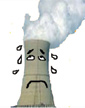
 Utilty Shelves Nuclear Plans In The Netherlands –...– Move highlights tough climate for nuclear energy programs… WSJ, By Maarten van Tartwijk, JANUARY 23, 2012 AMSTERDAM (Dow Jones)–In the latest example of waning appetite for atomic power in Europe, Dutch utility Delta NV said Monday it has shelved its plan to build a second nuclear plant in the
Netherlands….
.. The move comes against a backdrop of waning appetite for new nuclear power programs. Last year’s disaster at the Fukushima plant in Japan has prompted many European governments to review their atomic power policies on renewed safety concerns. Germany even decided to fully exit nuclear power, and offset the lost electricity with a
massive buildup of renewable energy….
The nuclear boondoggle – plans for consumers to pay upfront for nuclear power build
 Regulators: Nuclear plan could cost Iowa residents By MIKE GLOVER, Chicago Tribune, January 23, 2012, DES MOINES, Iowa— A proposal to shift the expense of building a nuclear power plant from the utility to consumers by billing them in advance for construction costs isn’t in the public interest, Iowa regulators said.
The proposal, which didn’t clear the Legislature last year but could be considered again this session, would let MidAmerican Energy begin billing customers for the plant’s $1 billion or more construction long before it begins providing power.
An analysis by the Iowa Utilities Board summarized in a Dec. 23 internal memo and provided Monday to The Associated Press warned that the plan placed all the risk on consumers, who would pay to research the project before MidAmerican even committed to construction.
“The company would be guaranteed a profit on all spending up to this point,” it said. “This could create a stronger incentive to walk away form a plant than complete it.” ….
It also says the proposed changes could affect more than just nuclear power in Iowa.
“While the current bill restricts those changes to nuclear power, staff believes some provisions may go beyond leveling the playing field and could give a nuclear power plant unintended advantages over alternative sources of electric power,” it said.
Sonia Ashe, of the Iowa Public Interest Research Group, said the analysis merely underscores worries that consumers have had all along.
“The notion that Iowa ratepayers should foot the bill and shoulder the risk for new nuclear plants is pure folly,” Ashe said. “Let’s hope the Iowa Utilities Board staff analysis opens lawmakers eyes to the real risks they’d be passing on to their constituents and puts the final nail in the coffin of this nuclear boondoggle.” …. http://www.chicagotribune.com/news/chi-ap-ia-iowanuclear-analy,0,5049950.story
Paradoxical effect of climate change – a cooler Europe?
 Huge Pool Of Arctic Water Could Cool Europe: Study, Planet Ark,: 23-Jan-12, UK, Nina Chestney ,A huge pool of fresh water in the Arctic Ocean is expanding and could lower the temperature of Europe by causing an ocean current to slow down, British scientists said Sunday.
Using satellites to measure sea surface height from 1995 to 2010, scientists from University College London and Britain’s National Oceanography Center found that the western Arctic’s sea surface has risen by about 15 cms since 2002.
The volume of fresh water has increased by at least 8,000 cubic km, or about 10 percent of all the fresh water in the Arctic Ocean. The fresh water comes from melting ice and river run-off.
The rise could be due to strong Arctic winds increasing an ocean current called the Beaufort Gyre, making the sea surface bulge upwards.
The Beaufort Gyre is one of the least understood bodies of water on the planet. It is a slowly swirling body of ice and water north of Alaska, about 10 times bigger than Lake Michigan in the United States.
Some scientists believe the natural rhythms of the gyre could be affected by global warming which could have serious implications for the ocean’s circulation and rising sea levels.
Climate models have suggested that wind blowing on the surface of the sea has formed a raised dome in the middle of the Beaufort Gyre, but there have been few in-depth studies to confirm this.
If the wind changes direction, which happened between the mid-1980s to mid-1990s, the pool of fresh water could spill out into the rest of the Arctic Ocean and even into the north Atlantic Ocean, the study said.
This could cool Europe by slowing down an ocean current coming from the Gulf Stream, which keeps Europe relatively mild compared with countries at similar latitudes.
“Our findings suggest that a reversal of the wind could result in the release of this fresh water to the rest of the Arctic Ocean and even beyond,” said Katharine Giles at UCL’s Center for Polar Observation and Modelling and lead author of the study, published in the journal Nature Geoscience. The team plans to investigate further the relationship between sea-ice cover and wind changes http://planetark.org/enviro-news/item/64485
Double standards of the West in sanctions against Iran
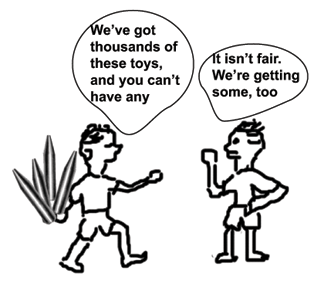 Like sanctions, war will not work either. A war could not deter Iran from pursuing its nuclear program and seeking nuclear weapons.
The flaw in the arguments used by the United States, Israel and the European Union against Iran’s nuclear program is the apparent double standard. How can the US expect to persuade Iran to relinquish its nuclear program when America has acquiesced to India, Pakistan, Israel and North Korea acquiring nuclear weapons? The US has even signed a nuclear partnership pact with India…….
 Accepting the inevitable: A nuclear Iran, DAILY NEWS EGYPT, By Mamdouh G. Salameh January 22, 2012, The only sanctions able to hurt Iran are those that ban its crude oil exports, but getting the international community to agree on such sanctions is virtually impossible.
The international political and economic repercussions of these sanctions would be so huge that they are not worth pondering. Even if, by the very unlikely chance, such sanctions were agreed upon by the United Nations Security Council, Iran’s retaliation would be immediate and destructive.
Iran could easily mine the Strait of Hormuz in the face of the 17 million barrels of oil a day (mbd) exported by the Arab Gulf oil producers. This would push the price of oil to more than $150-$200 a barrel (it is currently about $100 a barrel). The biggest loser, of course, would be the biggest oil consumer — namely the United States, which imports 12-14 million barrels of oil every day. This would spell an economic catastrophe for the United States in particular and the world-at-large. Continue reading
Nuclear power and water rights in Utah
“the Nuclear Regulatory Commission is notorious for cozying up to the nuclear industry and basically never says no,”
“approval of the application doesn’t actually guarantee there will be enough water to operate the plant.”
 Water Rights Approved for Nuclear Plant 01.22.2012 by Whittney Evans, (KCPW News) Utah State Engineer Kent Jones has approved water rights from the Green River for Blue Castle Holdings’ proposed nuclear power plant in Emery County, much to the dismay of environmental groups.
Matt Pacenza, Policy Director of the anti-nuclear group HEAL Utah, says the decision was the only opportunity for a Utah official to reject the plan. He says the company now faces two hurdles, the easier of which will be getting permission from the U.S. Nuclear Regulatory Commission.
“Although the process will take several years and will cost them quite a bit of money, the NRC is notorious for cozying up to the nuclear industry and basically never says no,” he says. “So one imagines that they will fairly easily convince Washington bureaucrats that it’s okay to put a nuclear reactor in Utah.”
Pacenza says the bigger hurdle is finding investors and customers for the power. Rob Mrowka with the Center for Biological Diversity says taking almost 54,000 acre-feet of water a year from the Green River would impact rare fish, among other problems. “…to the point of perhaps driving those already listed for protection to the point of extinction and necessitating the addition of the other three to the endangered species act list of protected species,” says Mrowka.
A call to the state engineer’s office was not returned. In a news release, he said concerns raised about the water rights application were considered, adding that an application must be approved by law if the water is available, it won’t interfere with existing water rights, and it would not be detrimental to the public welfare. And approval of the application doesn’t actually guarantee there will be enough wate rto operate the plant.
http://kcpw.org/blog/local-news/2012-01-22/water-rights-approved-for-nuclear-plant/
World’s groundwater being depleted
since the year 1900 up to the year 2008, something in the order of 4,500 cubic kilometres of depletion; most of that occurring in the last 50 years. That’s how much less water is in the ground today than 108 years ago.
 Audio http://www.abc.net.au/pm/content/2012/s3413882.htm Is the world facing a groundwater crisis? ABC Rural radio Dubravka Voloder reported this story on January 23, 2012 MARK COLVIN: Water is not just a sensitive subject in Australia. In a crowded world of seven billion people, water is an increasing source of friction and the lack of it could have damaging results.
International water researchers say that water shortages could affect world food production in the next few decades unless something’s done about it. The scientists are meeting in Sydney to discuss whether there’ll be a groundwater crisis.
Dubravka Voloder reports. Continue reading
1 This Month

Protect Sazan Island from the Trump family! https://secure.avaaz.org/campaign/en/protect_sazan_island_from_the_trump_family_loc/?bqFCVab&v=174511&cl=22707147157&_checksum=5e9dde668860e8231c33699735e16a1fbf22ab2cb01da50c999fe8732b9775ef&utm_source=email&utm_medium=blast_email&utm_campaign=174511

Cuba Is Not a Failed State – It Is a Besieged State
PETITION: “Global Appeal to Endorse Palestinian Right of Return of Refugees”
To see nuclear-related stories in greater depth and intensity – go to https://nuclearinformation.wordpress.com
-
Archives
- June 2026 (129)
- May 2026 (306)
- April 2026 (356)
- March 2026 (251)
- February 2026 (268)
- January 2026 (308)
- December 2025 (358)
- November 2025 (359)
- October 2025 (376)
- September 2025 (257)
- August 2025 (319)
- July 2025 (230)
-
Categories
- 1
- 1 NUCLEAR ISSUES
- business and costs
- climate change
- culture and arts
- ENERGY
- environment
- health
- history
- indigenous issues
- Legal
- marketing of nuclear
- media
- opposition to nuclear
- PERSONAL STORIES
- politics
- politics international
- Religion and ethics
- safety
- secrets,lies and civil liberties
- spinbuster
- technology
- Uranium
- wastes
- weapons and war
- Women
- 2 WORLD
- ACTION
- AFRICA
- Atrocities
- AUSTRALIA
- Christina's notes
- Christina's themes
- culture and arts
- Events
- Fuk 2022
- Fuk 2023
- Fukushima 2017
- Fukushima 2018
- fukushima 2019
- Fukushima 2020
- Fukushima 2021
- general
- global warming
- Humour (God we need it)
- Nuclear
- RARE EARTHS
- Reference
- resources – print
- Resources -audiovicual
- Weekly Newsletter
- World
- World Nuclear
- YouTube
-
RSS
Entries RSS
Comments RSS
 nuclear-news