Cancer and birth deformities in city near to 456 nuclear bomb tests
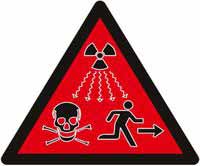
 City that suffered most calls for an end to nuclear testing, Telegraph, By Louise Gray, Environment Correspondent, Semipalatinsk, 29 Aug 2011, The people of Semey will gather for a strange celebration today. Under a huge statue of a mushroom cloud they will commemorate the end of a chilling experiment on their own people and call for a complete ban on nuclear testing.
Between 1949 and 1989 this area of eastern Kazakhstan was used by the former Soviet Union to test 456 nuclear bombs. The local population was not told about the risks to their lives – or indeed the health of their grandchildren.
It is estimated some 1.5 million people were affected by the fallout and decades on doctors blame high rates of cancer and birth deformity on the continuing effects of radiation.
These forgotten victims of the nuclear age will pay tribute not to the mushroom cloud but the woman at the centre of the statue cowering over her child. Even though atmospheric testing has been banned, the world has still failed to end all nuclear testing under the Comprehensive Test Ban Treaty. On the 2nd UN International Day to Stop Nuclear Testing, they are calling for a complete worldwide ban on all nuclear testing.
On a tour of Semey, that was known as Semipalatinsk until independence in 1991, we see how the city is still suffering.
In the state home for the elderly old women recall the “beautiful” mushroom clouds.
Makysh Iskakova was just 19 when she saw a bright ball in the sky “the size of a yurt”, then a smell “like burning hair”. The 78-year-old in dark glasses says she only saw the nuclear bomb three times and then she was blinded for life.
Sitting beside her Nina Kolesnikova, 83, is covered in Soviet medals. She went out in bare feet to see the blast. “I felt the wave of the explosion and fell to the floor.” She says she has been crippled ever since.
In Semey state Children’s Home Dina Batyrova snuffles and squeaks as she tries to breathe. Her head is twice the size of a normal child’s, swollen with water on the brain or hydrocephalus.
Next door other abandoned children with Down’s syndrome or other genetic defects play or sit listlessly in push chairs……
The trouble with the long term effects of nuclear fallout is it is difficult to prove a direct link with illness, says Dr Kazbek Abasalikov, the Director of the Institute of Radiation Medicine in Semey, meaning the affected of Chernobyl, Fukishima and Semey continue to live in fear.
He hopes to publish research within a year in an international peer-reviewed journal that shows once and for all the link between radiation and illness. The institute is also advising the Japanese over Fukishima.
In his opinion there is a link, the question is at what dosage does it become dangerous?
“The disease caused by radiation could skip a generation,” he adds.
Akmaral Musakhanova, Head of Research at the Semey University Medical Centre, is sure there is a link. She shows us monstrous pickled foetuses, including a ‘Cyclops baby’ with one eye and Siamese twins, collected from around Semey since 1953. She says that the rate of deformities is “at least” twice the normal rate.
Dr Marat Sandybaev, head of the local oncology centre, says cancer rates in the area are almost twice the national average.
He said there is “consensus” in the medical community about the link between] radiation and cancer.
“The wind blew soil to different places so they could be found all over the area and the half-life of some these materials is hundreds of years so yes, we could we will still continue to see the effects of the testing,” he says……
The ‘test site’ is an area the size of Belgium known as ‘the Polygon’ where the Soviets carried out both the atmospheric and underground testing.
Officially it is closed off but the danger markings are minimal and there is evidence of local farmers using the area for grazing animals like sheep, goats and horses (Kazakhs eat horse meat)…….
No comments yet.
1 This Month

of the week – Shut Down Drone Warfare!


Tell the Ukrainian Government to Drop Prosecution of Peace Activist Yurii Sheliazhenko

Petition to revoke the licensing of the Near Surface Nuclear Disposal Facility (NSDF) at Chalk River. https://www.ourcommons.ca/petitions/en/Petition/Details?Petition=e-7247
To see nuclear-related stories in greater depth and intensity – go to https://nuclearinformation.wordpress.com
-
Archives
- March 2026 (237)
- February 2026 (268)
- January 2026 (308)
- December 2025 (358)
- November 2025 (359)
- October 2025 (376)
- September 2025 (257)
- August 2025 (319)
- July 2025 (230)
- June 2025 (348)
- May 2025 (261)
- April 2025 (305)
-
Categories
- 1
- 1 NUCLEAR ISSUES
- business and costs
- climate change
- culture and arts
- ENERGY
- environment
- health
- history
- indigenous issues
- Legal
- marketing of nuclear
- media
- opposition to nuclear
- PERSONAL STORIES
- politics
- politics international
- Religion and ethics
- safety
- secrets,lies and civil liberties
- spinbuster
- technology
- Uranium
- wastes
- weapons and war
- Women
- 2 WORLD
- ACTION
- AFRICA
- Atrocities
- AUSTRALIA
- Christina's notes
- Christina's themes
- culture and arts
- Events
- Fuk 2022
- Fuk 2023
- Fukushima 2017
- Fukushima 2018
- fukushima 2019
- Fukushima 2020
- Fukushima 2021
- general
- global warming
- Humour (God we need it)
- Nuclear
- RARE EARTHS
- Reference
- resources – print
- Resources -audiovicual
- Weekly Newsletter
- World
- World Nuclear
- YouTube
-
RSS
Entries RSS
Comments RSS
 nuclear-news
Leave a comment