Atomic bombing did not cause Japan to surrender in 1945
compelling evidence that it was the Soviet entry into the Pacific conflict, not Hiroshima and Nagasaki, that forced Japan’s surrender….
If killing large numbers of civilians does not have a military impact, then what, Wilson asks, is the purpose of keeping nuclear weapons? We know they are dangerous. If they turn out not to be strategically effective, then nuclear weapons are not trump cards, but time bombs beneath our feet..
Why did Japan surrender? Sixty-six years ago, we dropped a nuclear bomb on Hiroshima. Now, some historians say that’s not what ended the war.What ended World War II?, Boston Globe, By Gareth Cook, August 7, 2011 For nearly seven decades, the American public has accepted one version of the events that led to Japan’s surrender.
By the middle of 1945, the war in Europe was over, and it was clear that the Japanese could hold no reasonable hope of victory. After years of grueling battle, fighting island to island across the Pacific, Japan’s Navy and Air Force were all but destroyed. The production of materiel was faltering, completely overmatched by American industry, and the Japanese people were starving. A full-scale invasion of Japan itself would mean hundreds of thousands of dead GIs, and, still, the Japanese leadership refused to surrender.
But in early August 66 years ago, America unveiled a terrifying new weapon, dropping atomic bombs on Hiroshima and Nagasaki. In a matter of days, the Japanese submitted, bringing the fighting, finally, to a close.
On Aug. 6, the United States marks the anniversary of the Hiroshima bombing’s mixed legacy. The leader of our democracy purposefully executed civilians on a mass scale. Yet the bombing also ended the deadliest conflict in human history.
In recent years, however, a new interpretation of events has emerged. Tsuyoshi Hasegawa – a highly respected historian at the University of California, Santa Barbara – has marshaled compelling evidence that it was the Soviet entry into the Pacific conflict, not Hiroshima and Nagasaki, that forced Japan’s surrender. His interpretation could force a new accounting of the moral meaning of the atomic attack. It also raises provocative questions about nuclear deterrence, a foundation stone of military strategy in the postwar period. And it suggests that we could be headed towards an utterly different understanding of how, and why, the Second World War came to its conclusion.
“Hasegawa has changed my mind,” says Richard Rhodes, the Pulitzer Prize-winning author of “The Making of the Atomic Bomb.” “The Japanese decision to surrender was not driven by the two bombings.”…..
2 Comments »
Leave a reply to Comparison « Individual Counts Cancel reply
1 This Month
To see nuclear-related stories in greater depth and intensity – go to https://nuclearinformation.wordpress.com/
12 February – Webinar The Big Push: New Nuclear Projects in Canada
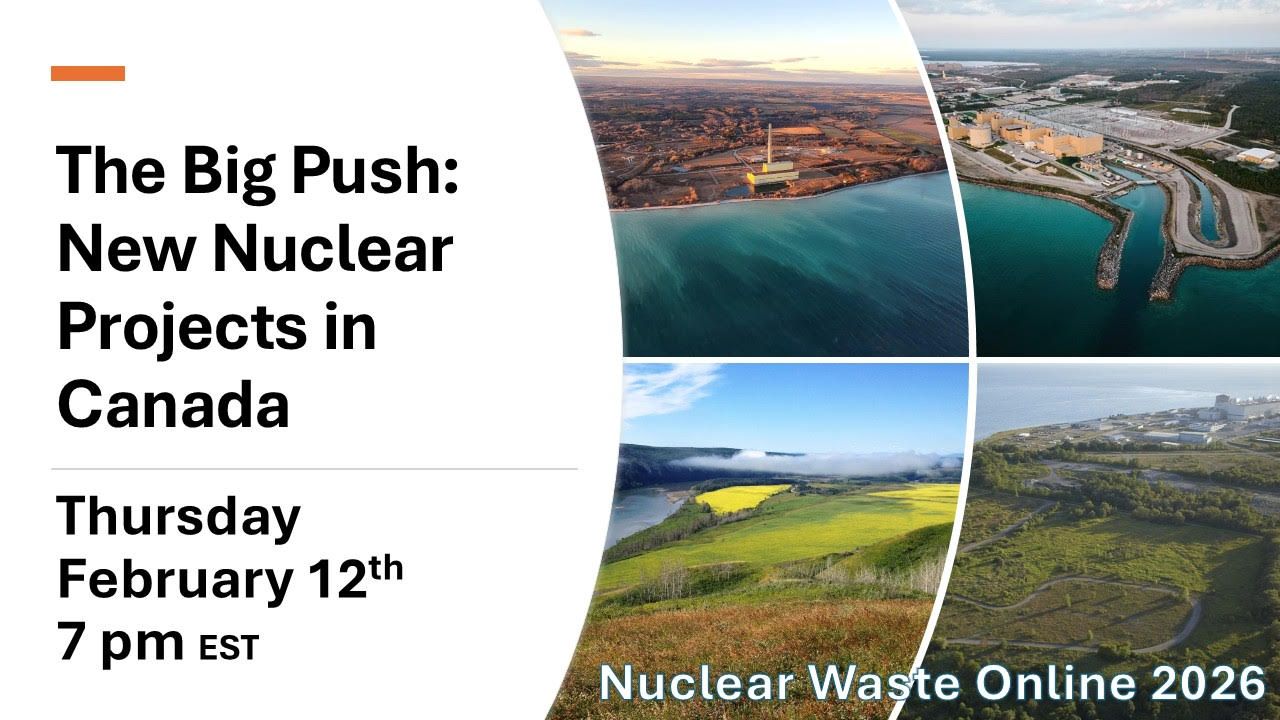
Thursday, February 12, 7 pm Eastern | 2nd of 4 sessions in the 2026 Nuclear Waste Online webinar series
Join a webinar on the push for new nuclear generation in Canada. Go to Northwatch.org to register or use the registration link https://us02web.zoom.us/webinar/register/WN_ZfWOf1GITqSRIZX8CB-A9w
-
Archives
- February 2026 (127)
- January 2026 (308)
- December 2025 (358)
- November 2025 (359)
- October 2025 (376)
- September 2025 (258)
- August 2025 (319)
- July 2025 (230)
- June 2025 (348)
- May 2025 (261)
- April 2025 (305)
- March 2025 (319)
-
Categories
- 1
- 1 NUCLEAR ISSUES
- business and costs
- climate change
- culture and arts
- ENERGY
- environment
- health
- history
- indigenous issues
- Legal
- marketing of nuclear
- media
- opposition to nuclear
- PERSONAL STORIES
- politics
- politics international
- Religion and ethics
- safety
- secrets,lies and civil liberties
- spinbuster
- technology
- Uranium
- wastes
- weapons and war
- Women
- 2 WORLD
- ACTION
- AFRICA
- Atrocities
- AUSTRALIA
- Christina's notes
- Christina's themes
- culture and arts
- Events
- Fuk 2022
- Fuk 2023
- Fukushima 2017
- Fukushima 2018
- fukushima 2019
- Fukushima 2020
- Fukushima 2021
- general
- global warming
- Humour (God we need it)
- Nuclear
- RARE EARTHS
- Reference
- resources – print
- Resources -audiovicual
- Weekly Newsletter
- World
- World Nuclear
- YouTube
-
RSS
Entries RSS
Comments RSS
 nuclear-news
[…] six years ago the world’s two and only atomic attacks devastated Japan and concluded the Second World War. Since that time the Japanese, instead of losing […]
Pingback by Comparison « Individual Counts | August 8, 2011 |
America’s bombings of Japan’s cities – war crimes. on the order of 100,000 killed…women, old men and children…
this crime against humanity. Why it is possible to do it to America why it is impossible to do it to Iran! Before god all are equal. The bomb is necessary to Iran for protection against attack of forces of NATO. And it should make it. Then there will be a peas! there will be no at Iran a bomb – there will be a war! And it will begin the first NATO!