Dirty energy making profits for Duke Energy nuclear company
Duke Energy: still profiting from environmental destruction by mdorozen – Greenpeace USA, May 6, 2011 At Duke Energy’s annual shareholder meeting, the company announced first quarter profits up 15%— profits that don’t reflect the hidden costs of dirty energy: the subsidies, healthcare costs and environmental costs that are passed on to the American public. Profits that Duke built on environmentally destructive practices and at the cost of human lives.
The meeting was marked by significant environmental protests as Duke announced plans for new nuclear plants in Florida and the Carolinas and coal plants in Indiana and North Carolina—in fact, the meeting came on the heels of controversial announcements about the potential merger of Duke Energy and Progress energy, and a weak policy on Mountaintop Coal.
The green coalition press conference and rally, MC’d by Greenpeace’s Charlotte organizer, Monica Embrey, took place on the doorstep of Duke Energy’s annual Shareholders’ Meeting. Speakers from NC WARN and other groups emphasized the risky nature of investing in dirty energy. About fifty environmental demonstrators came out from across the state to express concern about Duke’s merger with Progress Energy, which would make it an even more formidable force for dirty energy interests….. Duke Energy: still profiting from environmental destruction | Greenpeace USA
Japan’s most dangerous nuclear power plant
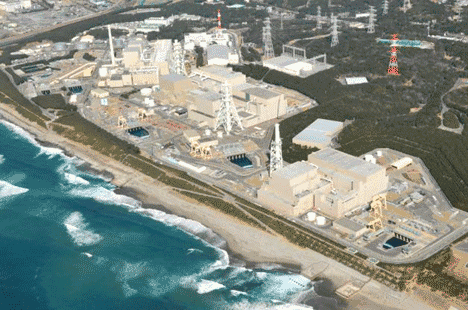 Hamaoka, Japan’s Most Infamous Nuclear Plant? WSJ May 6, 2011, The Hamaoka nuclear power plant may not be as well known around the world as Fukushima Daichi, crippled by the March 11 disasters. But the complex that Prime Minister Naoto Kan ordered closed down Friday is extremely well known in Japan. In fact, it’s infamous.
The plant, operated by Chubu Electric Power Co., is sited on Japan’s east coast, about 200 kilometers southwest of Tokyo, by Omaezaki city in Shizuoka prefecture. Omaezaki is known for its fishing and its green tea. And also for being sited pretty much, some say, on the fault line in the area that would be hit by the next, historically overdue “Tokai earthquake” – a long-feared “Big One” that could wreak havoc in the Kanto region that includes the capital…..Hamaoka, Japan’s Most Infamous Nuclear Plant? – Japan Real Time – WSJ
Entergy Nuclear Company – Nonchalant About Safety
It’s frightening that Entergy has such a cavalier attitude toward the safety of their nuclear power plants. Especially, given the fact that Indian Point and Pilgrim rank as the top two reactors with the highest risk of an earthquake causing core damage. What would it mean to have a Chernobyl or Fukushima scale accident at Indian Point?
 VIDEO Will Entergy learn anything from the Fukushima nuclear disaster in Japan? Greenpeace USA by Jarred Cobb – May 6, 2011 Entergy, the company trying to continue running dangerous old nuclear plants like Vermont Yankee, Indian Point in New York, and Pilgrim in Massachsusetts, is holding their annual shareholder meeting today. We sent them a letter highlighting the risks of these old plants, and questioning if the company has learned anything from the nuclear disaster in Japan. Continue reading
Nuclear radioactivity risks: iodine, cesium, plutonium, strontium
 Health risk from troubled Japan nuclear plant, Reuters, By Mayumi Negishi and Tan Ee Lyn, TOKYO May 6, 2011“……IS SOME RADIATION MORE HARMFUL THAN OTHERS?Yes. Radioactive particles are most harmful when inhaled or ingested, and particles that are easily absorbed and which have longer half-lives can cause more damage to cells and genetic material inside.
When examining radiation from the Fukushima plant, health officials focus especially on Iodine-131. Inside the body of an adult, it has a half-life of 7 days, but it accumulates quickly in the thyroid gland. Children are especially at risk because their thyroids are still developing.Another by-product, Cesium, spreads throughout the body, concentrating in muscle tissue. Cesium-137 has a half-life of 30 years, but inside an adult, the amount will be halved in 90 days.
Strontium and plutonium are rarer by-products of nuclear fission. But if they are ingested, they tend to collect in bones, where they are likely to stay put. Strontium can cause bone cancer. Plutonium is more dangerous when inhaled, increasing the risk of lung cancer……..”Health risk from troubled Japan nuclear plant | Reuters
Nuclear Reactors – Safe as Long as Nothing goes Wrong
nuclear reactors are perfectly safe… so long as nothing goes wrong…..
Sure, other forms of energy also create waste, but isn’t that better than passing on radioactive waste to ourfuture generations. Unless our resolve is positive and focused on the alternatives, nuclear energy will continue to haunt us as a nightmare in the guise of a dream.
We owe it to ourselves and the generations to follow.
Nuclear is Unclear
| Amar Ambani |
| Head – Research (India Private Clients), India Infoline Group |
| May 06, 2011 |
| The Japan nuclear mess is still fresh in memory and the time has come when India rethinks its nuclear energy policy and reassesses the future construction of nuclear power plants. Iam no nuclear expert but one doesn’t need intricate knowledge toacknowledge one undeniable fact – a crack in the nuclear reactors is nothing short of fatal.
What happened recently in Japan, and Chernobyl and Three MileIsland in the past, does it merit further explanation on the havoc nuclearenergy plays if leaked inadvertently. But all we see are vociferous debates theworld over – countless in number and rather hopeless in outcome. For those largely unaware of the Chernobyl reactor damage, as many as 5 lakh workers had to be deputed to control the damage and were affected by radiation. The 30 km zone is still deserted – not a trace of humanity even after 25 long years. Even the capital city of Ukraine, 100 km away from the site, had 2 million affected people. Arecent magazine article reported that in financial terms, the tragedy cost 2.5%of the Soviet GDP and many attribute Chernobyl as the prime reason for theerstwhile USSR’s downfall. There’s a joke that’s doing therounds these days – a joke that’s a harsh reality for the ill-fatedpeople struck by the tragedies – That nuclear reactors are perfectly safe… so long as nothing goes wrong….. Experts worldwide have always been recommending a diverse mix of existing renewable technologies to meet energy needs… clean, safe and renewable energy sources like wind, solar,advanced hydroelectric and certain types of biomass and geothermal energy. How(not whether) they can reliably generate as much energy as conventional fuels without emissions, destructive mining or waste should be the focal point ofdiscussion and research worldwide. Sure, other forms of energy also create waste, but isn’t that better than passing on radioactive waste to ourfuture generations. Unless our resolve is positive and focused on the alternatives, nuclear energy will continue to haunt us as a nightmare in the guise of a dream. |
Justin Bieber will tour Japan, despite radiation fears
Justin Bieber committed to Japanese tour despite crew’s fear of radiation – NYPOST.com, 7 May, PERTH, Australia — Pop sensation Justin Bieber will tour Japan even if his crew refuses to travel for fear of radiation and the singer has to scale down his act, according to a new report.The 17-year-old’s crew has been lobbying the superstar to cancel his upcoming Japanese concerts in the wake of the nuclear crisis triggered by the March 11 earthquake and tsunami.Several artists, including Avril Lavigne and former Guns ‘N Roses guitarist Slash, have scrapped their concerts in the Asian nation this spring…..Justin Bieber committed to Japanese tour despite crew’s fear of radiation – NYPOST.com
Nuclear industry a greenhouse gas emitter
The nuclear industry’s oft-touted claims of a “nuclear renaissance” were never real, …. “Now that claim is absolutely dead unless governments want to foot the entire bill.
“Fukushima will have a bigger impact on the nuclear industry than Chernobyl,” …
The Nuclear Cost Shell Game, By Stephen Leahy, UXBRIDGE, Canada, May 6, 2011 (IPS)“…….The argument that nuclear power is needed to combat climate change is also incorrect. Mining uranium and processing ore into fuel and building nuclear facilities results in considerable carbon emissions. When the full life cycles are compared, the carbon emissions of nuclear on a per-kilowatt-of-power-generated basis exceeds that of wind and is about the same as solar, according to a 2008 study by the Centre for Integrated Sustainability Analysis at the University of Sydney, Australia. Continue reading
Pakistan’s nuclear weapons and the al Qaeda threat
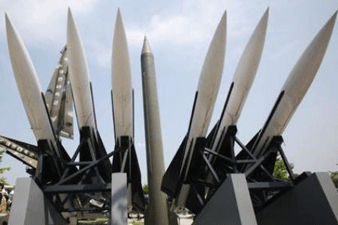 Estimates vary on the size of Pakistan’s and India’s nuclear arsenals, although analysts suggest India has 70-120 nuclear weapons while Pakistan has 60-120. These can be delivered by aircraft, or by missiles, which both countries have been developing and testing.
Factbox: Pakistan’s nuclear capability Reuters 6 May 11, Back in the 1990s, bin Laden said acquiring nuclear weapons was a “religious duty” of Muslim states and the leader of al Qaeda in Afghanistan in 2009 said the group hoped to seize and use Pakistan’s arsenal. Continue reading
Fukushima crisis: – unstable reactor, parents’ protest on new radiation rules
Tepco is still pumping nitrogen into the unstable reactor in an effort to prevent another hydrogen explosion. ….school children could be [now be legally] exposed to 20 times more radiation than the amount previously permissible.
 Japan Nuclear Disaster Update, CleanEnergy Footprints May 5“……though the ensuing nuclear disaster has been superseded by other worldwide news events, Tokyo Electric Power Company (Tepco) and the Japanese government are still struggling to gain control of the severely damaged Fukushima Daiichi nuclear plant.
As was the case in our update from last week, emergency cooling efforts continue at reactor Units 1, 2, 3 and 4. Reactor Unit 1 remains the primary concern as temperatures and pressure continue to rise, Continue reading
Rising sea levels threaten Britain’s nuclear power plants
‘Shrinking Britain’ will force land to be abandoned to the sea, Guardian UK, by Damain Carrington, 6 May 11, Coastal erosion and UK tsunamis are a cause of concern for vulnerable nuclear power stations, says leading geologist……..
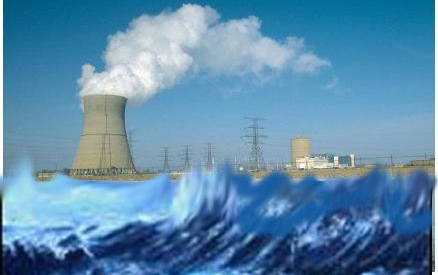
The fact that tsunamis can happen in the UK, and the idea that Britain’s coast is shrinking, is certainly relevant to the debate over nuclear power and the disposal of long-lasting nuclear waste, in my opinion. Take a look at the map of British nuclear power sites: they are all on the coast.
“It is a cause for concern, some nuclear power stations are in vulnerable positions,” said Prof Rob Duck, at Dundee University, whose new book is called This Shrinking Land: Climate Change and Britain’s Coasts…
Shrinking Britain will force land to be abandoned to the sea | Damian Carrington | Environment | guardian.co.uk
USA’s Troubling Nuclear Waste Mess
The findings of the GAO, which serves as the investigative arm of Congress, complicate the Obama administration’s position on Yucca Mountain at a time when lawmakers and regulators are scrutinizing nuclear power and waste policies in the U.S…...
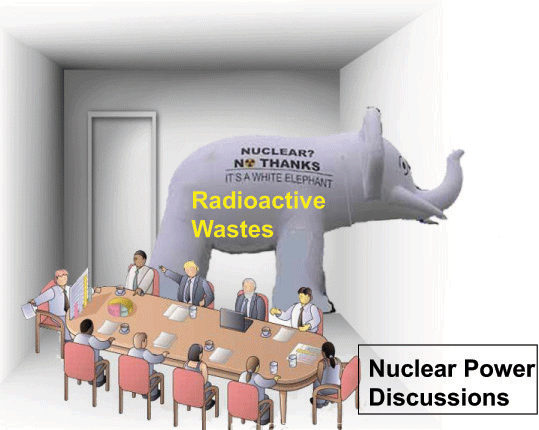
Nuclear waste from power plants is currently stored on-site at dozens of locations across the country. Because the law requires the U.S. government to be responsible for the waste, the government has to compensate the power plants for the cost of storing it.
Scrapping Yucca Mountain exposes U.S. to fines, By Tennille Tracy, May 5, 2011, WASHINGTON -(MarketWatch)– The U.S. government could face fines of $75,000 a day if it fails to find a way to store or handle stockpiles of defense-related nuclear waste by 2035, according to the Government Accountability Office. Continue reading
New plutonium nuclear fuel plant, costly, delayed, and unsafe, too?
 More than a decade later, the mixed oxide fuel [2] (MOX) plant is running into mounting troubles [3], including long delays, soaring costs and the lack of utilities committed to use the new fuel in their reactors
But there’s another aspect of the story that has received little attention…

 Safety Reviewers Raise Questions about Construction of New Nuclear Fuel Plant, ProPublica By Donna Deedy, w ith Michael Grabell, May 5, 2011, . In the late 1990s, U.S. policymakers approved a plan to turn plutonium from nuclear weapons into fuel for commercial reactors. The first-of-its kind plant [1], now being built in South Carolina, was intended to reduce the Cold War stockpile and the threat of nuclear material theft while supplying the country’s energy needs. Continue reading
North Carolina legislature opposing ratepayer money for new nuclear plant
Duke’s Fading Nuclear Dream The Progressive Pulse May 5, 2011 by Lisa Finaldi On April 15th I questioned if Duke’s dreamto build new nuclear power plants and charge ratepayers in advance of a reactor’s operation wasn’t fading. Events of this week indicate the company’s plans may be dimming. Funny it took Duke CEO Jim Rogers this long to realize it. Continue reading
Fukushima nuclear accident could cost tax-payer $trillions
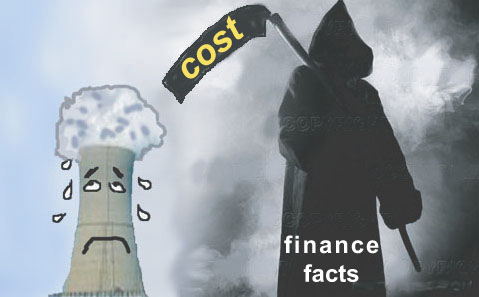 “In America, ….. the necessary insurance for nuclear operators is capped at just $375 million by law,
Ultimate costs from nuclear accidents can be difficult to predict, but many estimates place total damages, including economic loss, in the trillions.……
a severe accident at just one of Southern Company’s existing Plant Vogtle reactors in Georgia could cause up to 39,000 immediate injuries and cost over $70 billion (in 1982 dollar and Census figures).
Japan Nuclear Disaster Update, CleanEnergy Footprints May 5“…….Despite all of the concern over health, radiation and environmental hazards raised by this disaster, Tepco shockingly does not have disaster insurance. Speculations are that the company will be nationalized and that the Japanese government, which likely means taxpayers, will assume the burden of Tepco’s massive liabilities. Continue reading
Russian nuclear powered ice-breaker has radiation leak
Radioactivity leak reported on Russian icebreaker, Moscow – Monsters and Critics May 5, 2011, Moscow – A small amount of radiation escaped from a Russian nuclear-powered icebreaker, officials said Thursday. …Radioactivity leak reported on Russian icebreaker – Monsters and Critics
1 This Month

Protect Sazan Island from the Trump family! https://secure.avaaz.org/campaign/en/protect_sazan_island_from_the_trump_family_loc/?bqFCVab&v=174511&cl=22707147157&_checksum=5e9dde668860e8231c33699735e16a1fbf22ab2cb01da50c999fe8732b9775ef&utm_source=email&utm_medium=blast_email&utm_campaign=174511


Cuba Is Not a Failed State – It Is a Besieged State
PETITION: “Global Appeal to Endorse Palestinian Right of Return of Refugees”
To see nuclear-related stories in greater depth and intensity – go to https://nuclearinformation.wordpress.com
-
Archives
- June 2026 (129)
- May 2026 (306)
- April 2026 (356)
- March 2026 (251)
- February 2026 (268)
- January 2026 (308)
- December 2025 (358)
- November 2025 (359)
- October 2025 (376)
- September 2025 (257)
- August 2025 (319)
- July 2025 (230)
-
Categories
- 1
- 1 NUCLEAR ISSUES
- business and costs
- climate change
- culture and arts
- ENERGY
- environment
- health
- history
- indigenous issues
- Legal
- marketing of nuclear
- media
- opposition to nuclear
- PERSONAL STORIES
- politics
- politics international
- Religion and ethics
- safety
- secrets,lies and civil liberties
- spinbuster
- technology
- Uranium
- wastes
- weapons and war
- Women
- 2 WORLD
- ACTION
- AFRICA
- Atrocities
- AUSTRALIA
- Christina's notes
- Christina's themes
- culture and arts
- Events
- Fuk 2022
- Fuk 2023
- Fukushima 2017
- Fukushima 2018
- fukushima 2019
- Fukushima 2020
- Fukushima 2021
- general
- global warming
- Humour (God we need it)
- Nuclear
- RARE EARTHS
- Reference
- resources – print
- Resources -audiovicual
- Weekly Newsletter
- World
- World Nuclear
- YouTube
-
RSS
Entries RSS
Comments RSS
 nuclear-news