Renewable energy making good business sense for Germany
Merkel’s big bet is that environmental technology will be one of Germany’s most important sources of income. Already, the country’s share in the green-tech world market is 16 percent, which means billions of Euros in business. Renewable energy has generated 300,000 ‘green collar’ new jobs in the past decade, Röttgen says. Big companies like Siemens and Bosch are determined to become “green multinationals.” Thousands of small- and medium-sized technology companies see green technology as an important part of their business and investment strategy.
How Angela Merkel became Germany’s unlikely green energy champion Christian Schwägerl for Yale Environment 360, guardian uk 9 May 2011 Germany is in a good starting position,…. Since the 1990s, the Renewable Energy Sources Act has paved the way for billions of Euros flowing to consumers and investors for green power projects. The law guarantees that each kilowatt hour of green electricity is fed into the grid and bought at a favorable statutory rate by operators. The rate varies between green energy sources, but is considerably higher than normal electricity prices. Continue reading
In spite of Bill Gates, renewable energy has a prosperous future
The report stands in contrast to recent comments made by public figures such as Microsoft CEO Bill Gates who endorsed nuclear power at a conference in New York last week. Gates dismissed renewable technologies as “cute,” but unable to meet energy demands…..Gates is not a disinterested party: He has invested in nuclear power company TerraPower
UN: Renewable energies can meet world’s power needs, Smart Planet By David Worthington | May 9, 2011 The United Nations has found that renewable energy alone can meet global power needs – countering the burgeoning belief that nuclear power is the only viable solution. Continue reading
US Japan nuclear marketing scheme, with secret plans for Mongolian waste dump
 Negotiations on building the facilities were kept secret as it was feared that if the plans came to light at the negotiation stage, then China and Russia — countries through which the fuel could pass — might interfere and protests could erupt from Mongolian residents.
Japan, U.S. negotiating construction of nuclear waste facility in Mongolia, Mainichi Daily News 10 May 11 ULAN BATOR, Mongolia –“…….the marketing of nuclear plants is big business — a single reactor sells for hundreds of billions of yen. The Japanese government regards the overseas sale of nuclear power plants as a pillar of the nations’ growth strategy. It has already tied a deal with Vietnam and is in negotiations with India and Turkey. However, Russia and other countries have gone a step ahead by marketing their reactors and the collection of spent nuclear fuel together as a set, which has put Japan and the U.S. on the back foot. Continue reading
Insurmountable problem of nuclear power’s financial risks
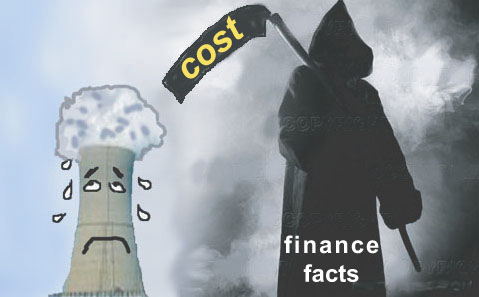 the insurance industry and financial markets still have not altered their long held position that nuclear power poses unacceptable financial risk.
‘ Smart money’ reflects nuclear power risks Burlington Free Press David R. Abbott, 8 may 11, Is nuclear power safe? Not surprisingly, the owner of Vermont Yankee is spending heavily in an effort to convince us that it is. Perhaps, instead, we should follow the smart, disinterested money in attempting to answer that essential question because, in the case of the nuclear power industry, an unacceptable financial risk is, at the same time, an unacceptable safety risk.
The smart money here is represented by the insurance industry and the financial markets. Continue reading
Legal Challenge as Australian Govt Sneaks in Nuclear Waste Dump Plan
The Senate is due tomorrow to debate the National Radioactive Waste Management Bill, which if passed will open the way for the government to build the dump on Muckaty station, 120 kilometres north of Tennant Creek.Ownership of nuclear waste site disputed.
the government’s secret and divisive process to build the dump on Muckaty would be strongly resisted in Tennant Creek as well as nationally and internationally.

Ownership of nuclear waste site disputed, Lindsay Murdoch in Tennant Creek, Sydney Morning Herald, May 9, 2011 DOCUMENTS unearthed in the National Archives challenge the Gillard government’s push to build a nuclear waste dump on disputed Aboriginal land near Tennant Creek, lawyers say. Continue reading
IPCC to discuss big world report on Renewable Energy
 By far the most comprehensive UN assessment of the status and potential for the clean energy sector, the report weighs 164 separate development scenarios……
The report says there is virtually unlimited technical potential for renewables, with much of it coming from solar energy.
Renewables major part of 2050 world energy, Sydney Morning Herald, Marlowe Hood, May 7, 2011 Renewable power from the Sun, wind, water and biomass can and should generate a major portion of the planet’s energy supply by 2050, a leaked draft of a United Nations report says. Continue reading
Wikileaks reveal security worries about Japan’s nuclear plants
 Cables Show Worry Over Japanese Nuclear Plants WSJ.comBy YOREE KOH, MAY 8, 2011 TOKYO—The Fukushima Daiichi nuclear accident exposed flaws in the Japanese government’s measures to guard the country’s reactors against earthquakes and tsunamis. U.S. officials in recent years also have worried that Japanese officials haven’t taken enough precautions to protect the facilities from terrorist attacks, according to diplomatic documents released over the weekend on the WikiLeaks website.
A series of cables released by WikiLeaks shows U.S. officials repeatedly prodded their Japanese counterparts to beef up security—and were regularly rebuffed….A message sent from the U.S. embassy in Tokyo on Feb. 26, 2007, informed the State Department about “U.S. concerns about physical protection of nuclear facilities.”…
U.S. Cables Show Worry Over Japanese Nuclear Plants – WSJ.com
More dangers for UK’s nuclear submarine “Astute”
Jinxed nuclear submarine’s malfunction could have killed its entire crew Herald Scotland | By Rob Edwards 8 May 2011 The Royal Navy’s latest £1.2 billion nuclear submarine, HMS Astute, has been towed back to base after a malfunction which could have killed the entire crew, the Sunday Herald can reveal. Continue reading
Nuclear Regulatory Commission under the thumb of Nuclear Industry
Deference to Industry The N.R.C.’s slowness in addressing serious problems is another 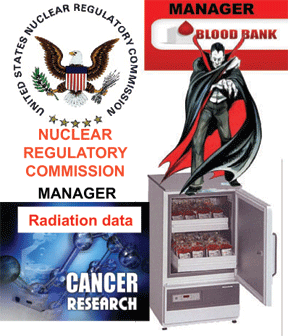 concern……The agency has little choice but to tolerate violations, ……… “Otherwise, nearly all the U.S. reactors would have to shut down,”
Nuclear Agency Is Criticized as Too Close to Its Industry. NYTimes.com, By TOM ZELLER Jr., May 7, 2011 “……..Exelon’s risky decisions occurred under the noses of on-site inspectors from the federal Nuclear Regulatory Commission. No documented inspection of the pipes was made by anyone from the N.R.C. for at least the eight years preceding the leak, and the agency also failed to notice that Exelon kept lowering the acceptable standard, according to a subsequent investigation by the commission’s inspector general.
Exelon’s penalty? A reprimand for two low-level violations — a tepid response all too common at the N.R.C., said George A. Mulley Jr., a former investigator with the inspector general’s office who led the Byron inquiry. “They always say, ‘Oh, but nothing happened,’ ” Mr. Mulley said. “Well, sooner or later, our luck — you know, we’re going to end up rolling craps.” Continue reading
Nuclear industry worldwide enjoys the “mother of all subsidies”
Twenty-five years after the disaster at Chernobyl’s reactor number 4, the global community is struggling to find 2.2 billion dollars to build a permanent shelter to replace the collapsing cement and steel sarcophagus hastily built after the accident.
That 2.2 billion dollars does not include the costs of dismantling the radioactive material nor the costs of building a safe storage facility for the spent and damaged nuclear fuel from the plant. This material will be dangerously radioactive for thousands of years.

The Nuclear Cost Shell Game, By Stephen Leahy, UXBRIDGE, Canada, May 6, 2011 (IPS) – The nuclear energy industry only exists thanks to what insurance experts call the “mother of all subsidies”, and the public is largely unaware that every nuclear power plant in the world has a strict cap on how much the industry might have to pay out in case of an accident.In Canada, this liability cap is an astonishingly low 75 million dollars. In India, it is 110 million dollars and in Britain 220 million dollars. If there is an accident, governments – i.e. the public – are on the hook for all costs exceeding those caps. Continue reading
Close Hamaoka Nuclear Plant – call by Japan’s Prime Minister
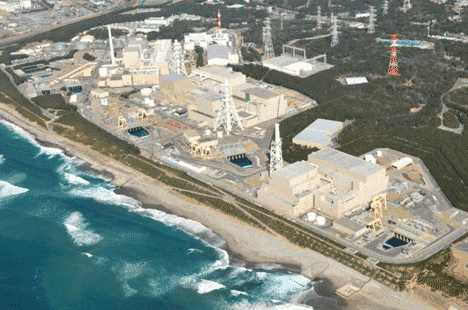 Japan PM Wants Another Nuclear Plant Closed Over Quake Fears, ABC News, By AKIKO FUJITA, TOKYO May 6 2011, Japan urged a power company today to temporarily shut down operations at another nuclear plant that straddles a major fault line for fear it would not survive a major earthquake and tsunami.
Prime Minister Naoto Kan said during a news conference today that he requested the suspension of reactors at the Hamaoka nuclear plant over safety concerns, citing a study that said there was an 87 percent chance of a magnitude 8.0 earthquake striking central Japan within the next 30 years.
The Hamaoka plant is located in Shizuoka, 155 miles west of Tokyo, and sits on an active earthquake fault. Officials estimate the shutdown could last two years…..Japan Wants Another Nuclear Plant Suspended Out of Quake Fears – ABC News
Radiation leak on Russian nuclear powered ice-breaker ship
“Even a small radiation leak inside the reactor structure is a serious event,” said independent military analyst Pavel Felgenhauer.
“If the leak is small, they might be able to repair it. But it is hard to do because the reactor is hot,” Felgenhauer noted.
 Nuclear leak on Russian icebreaker in Arctic sparks rescue mission THE AUSTRALIAN, May 06, 2011 RUSSIA have launched an urgent rescue mission after one of its atomic-powered icebreakers developed a nuclear leak in the frozen seas of the Arctic and was forced to abandon its mission. Continue reading
Toxic radioactive effects of thorium, uranium in rare earths
 Environmental groups have long criticised rare earths mining for spewing toxic chemicals and radioactive thorium and uranium into the air, water and soil, which can cause cancer and birth defects among residents and animals…..
 China pays price for world’s rare earths addiction, By Allison Jackson (AFP) – Google News, 7 May 11, BAOTOU, China — Peasant farmer Wang Tao used to grow corn, potatoes and wheat within a stone’s throw of a dumping ground for rare earths waste until toxic chemicals leaked into the water supply and poisoned his land.Farmers living near the 10-square-kilometre expanse in northern China say they have lost teeth and their hair has turned white while tests show the soil and water contain high levels of cancer-causing radioactive materials. Continue reading
Japan radiation monitoring – new comprehensive open source
 Radiation monitoring in Japan goes crowd, open source, CNET, by Eric Mack, May 6, 2011 A new open and crowdsourced initiative to deploy more geiger counters all over Japan looks to be a go. Safecast, formerly RDTN.org, recently met and exceeded its $33,000 fund-raising goal on Kickstarter, which should help Safecast send between 100 and 600 geiger counters to the catastrophe-struck country.
The data captured from the geiger counters will be fed into Safecast.org, which aggregates radiation readings from government, nonprofit, and other sources, as well as into Pachube, a global open-source network of sensors. Safecast is one of the larger crowdsourced monitoring efforts, not unlike a similar effort in the United States that predated the Japanese disaster.
For the last month, the Safecast crew and volunteers have been collaborating with universities in Japan and driving their geiger counters around the country and taking measurements. Safecast’s early monitoring trips north of Tokyo returned some disturbing findings, including elevated radiation levels in a kindergarten classroom….Radiation monitoring in Japan goes crowd, open source | Crave – CNET
Projections of costs for nuclear plants leave out full fuel cycle and risks
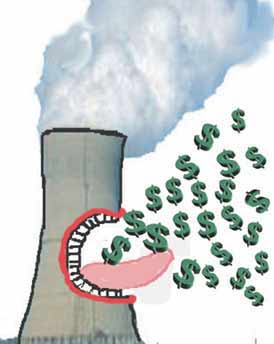 When comparing energy choices, nuclear versus solar for instance, the full life cycle costs are rarely used. Nor are the financial risks taken into account,
The Nuclear Cost Shell Game, By Stephen Leahy, UXBRIDGE, Canada, May 6, 2011 (IPS)“…….Experts estimate the U.S. nuclear industry’s liability cap of 10 billion dollars amounts to “an indirect subsidy of about 33 million dollars per plant per year over the lifetime of a nuclear plant,” according to a study published in Energy Policy in April.
If that 33 million dollars-per-plant-per-year indirect subsidy was instead used for loan guarantees for solar panel manufacturing plants, the U.S. would gain 5.3 trillion dollars worth of additional electricity over a 100-year time span, the study reported.”Wind might be even better than solar under this scenario,” said co- author Joshua Pearce, a mechanical and materials engineer at Queen’s University in Kingston, Ontario.
“We’re wasting money on nuclear energy. It makes no economic sense,” Pearce told IPS. Continue reading
1 This Month

Protect Sazan Island from the Trump family! https://secure.avaaz.org/campaign/en/protect_sazan_island_from_the_trump_family_loc/?bqFCVab&v=174511&cl=22707147157&_checksum=5e9dde668860e8231c33699735e16a1fbf22ab2cb01da50c999fe8732b9775ef&utm_source=email&utm_medium=blast_email&utm_campaign=174511


Cuba Is Not a Failed State – It Is a Besieged State
PETITION: “Global Appeal to Endorse Palestinian Right of Return of Refugees”
To see nuclear-related stories in greater depth and intensity – go to https://nuclearinformation.wordpress.com
-
Archives
- June 2026 (129)
- May 2026 (306)
- April 2026 (356)
- March 2026 (251)
- February 2026 (268)
- January 2026 (308)
- December 2025 (358)
- November 2025 (359)
- October 2025 (376)
- September 2025 (257)
- August 2025 (319)
- July 2025 (230)
-
Categories
- 1
- 1 NUCLEAR ISSUES
- business and costs
- climate change
- culture and arts
- ENERGY
- environment
- health
- history
- indigenous issues
- Legal
- marketing of nuclear
- media
- opposition to nuclear
- PERSONAL STORIES
- politics
- politics international
- Religion and ethics
- safety
- secrets,lies and civil liberties
- spinbuster
- technology
- Uranium
- wastes
- weapons and war
- Women
- 2 WORLD
- ACTION
- AFRICA
- Atrocities
- AUSTRALIA
- Christina's notes
- Christina's themes
- culture and arts
- Events
- Fuk 2022
- Fuk 2023
- Fukushima 2017
- Fukushima 2018
- fukushima 2019
- Fukushima 2020
- Fukushima 2021
- general
- global warming
- Humour (God we need it)
- Nuclear
- RARE EARTHS
- Reference
- resources – print
- Resources -audiovicual
- Weekly Newsletter
- World
- World Nuclear
- YouTube
-
RSS
Entries RSS
Comments RSS
 nuclear-news