Doubts about Fukushima’s full impact cast gloom on nuclear industry
While debates on who or what was at fault will no doubt continue, the nuclear industry has clearly suffered a major blow, with nuclear looking to be unreliable and costly….Nobuo Tanaka, the chief executive of the International Energy Agency, has warned that the role of nuclear power in global energy supply may be less than previously forecast, following the events in Japan. “Building nuclear power or expanding nuclear power may mean more costs or more delay. That means the nuclear option may not play as big a role as we predicted….”
What happened at Fukushima? – environmentalresearchweb, 30 May 11, More information has begun to emerge as to actually what happened at Fukushima, with it now being clear that full fuel melt-down did occur, perhaps even starting before the tsunami hit, although we are still some way off knowing what the longer term impacts will be, and what should done to avoid a recurrence. Indeed a global agency that covers nuclear safety, based on the 72-nation Convention on Nuclear Safety (which was set up after the 1986 Chernobyl meltdown), has decided to delay reporting on its assessment of the accident until August next year, saying that ‘the lessons-learned process cannot be completed until sufficient additional information is known and fully analyzed.’
This makes the UK safety review, to be completed by this coming September, seem a little hasty, but then the government evidently want to get on with processing the nuclear consents programme – the Generic Design Assessment has been delayed until the NII safety review is complete.
However we do have some information. Japan’s Nuclear Safety Agency has claimed that the release of radioactive materials from Fukushima was equal to 10% of those from Chernobyl. That was why they re-set the accident classification at level 7 on the UN’s International Nuclear Events Scale- i.e. involving “major release of radioactive material with widespread health and environmental effects requiring implementation of planned and extended countermeasures”. Safety agency official Hidehiko Nishiyama said, however, that the two events were markedly different. “In Chernobyl, there was acute exposure to a high level of radiation, and 29 people died from it. This is not the case in Fukushima. In Chernobyl, reactors themselves exploded. In Fukushima… the reactors themselves have stayed intact, although we are seeing some leakage.” There are likely to be disagreements about this assessment. For example there were crucial releases into the sea, which may have very significant long-term effects.
There are also likely to be disagreements about who was to blame. UK Nuclear consultant John Large has produced a report for Greenpeace looking at the accident and says that much of blame must fall on the operating company, TEPCO. He say they ‘would be well aware of the ways and times over which an unattended and un-cooled reactor core would run its inevitable course to a fuel melt and, thus, pose a threat to security of the primary and secondary containments. It follows that TEPCO would also have been aware and would have had, surely, plans and procedures, including spare equipment, with which the fuel melt could have been managed within the known timeframes to stability and a safe resolution”…..
While debates on who or what was at fault will no doubt continue, the nuclear industry has clearly suffered a major blow, with nuclear looking to be unreliable and costly. In terms of reliability, the recent accident isn’t the first time the Fukushima plants have been in the news. As US energy expert Paul Gipe has pointed out, several of the reactors were shut down from 2002 to 2005 for safety inspections as a result, evidently, of TEPCO’s falsification of inspection and repair reports.
He notes that the Fukushima plants generated, on average, 30 TWh per year. He says: ‘The key word here is “on average”. Despite nuclear power’s reputation as reliable base load generation, the Fukushima plants were anything but reliable over the four decades that the plants were in operation. Annual generation was surprisingly erratic’….
The clean up could cost $300bn or more. Who will insure nuclear plants now? Who will invest in them?
It’s perhaps not surprising then, that following on from Germany’s decision to speed up is nuclear phase out, Italy has now frozen its plan for new nuclear plants, as has Switzerland. Meanwhile Thailand is contemplating calling off five planned plants, while Malaysia, which was to have its first plant operating by 2020, is set to abandon the plan. A US project in Texas lost financial backing, maybe the first of several as investors look at the liability risks. It does seem that the nuclear renaissance is unravelling.
Last year the IEA forecast that global demand for nuclear energy would rise from 6% of primary energy in 2008 to 8% in 2035. But, as the FT reported, Nobuo Tanaka, the chief executive of the International Energy Agency, has warned that the role of nuclear power in global energy supply may be less than previously forecast, following the events in Japan. “Building nuclear power or expanding nuclear power may mean more costs or more delay. That means the nuclear option may not play as big a role as we predicted….”
What happened at Fukushima? (environmentalresearchweb blog) – environmentalresearchweb
No comments yet.
1 This Month
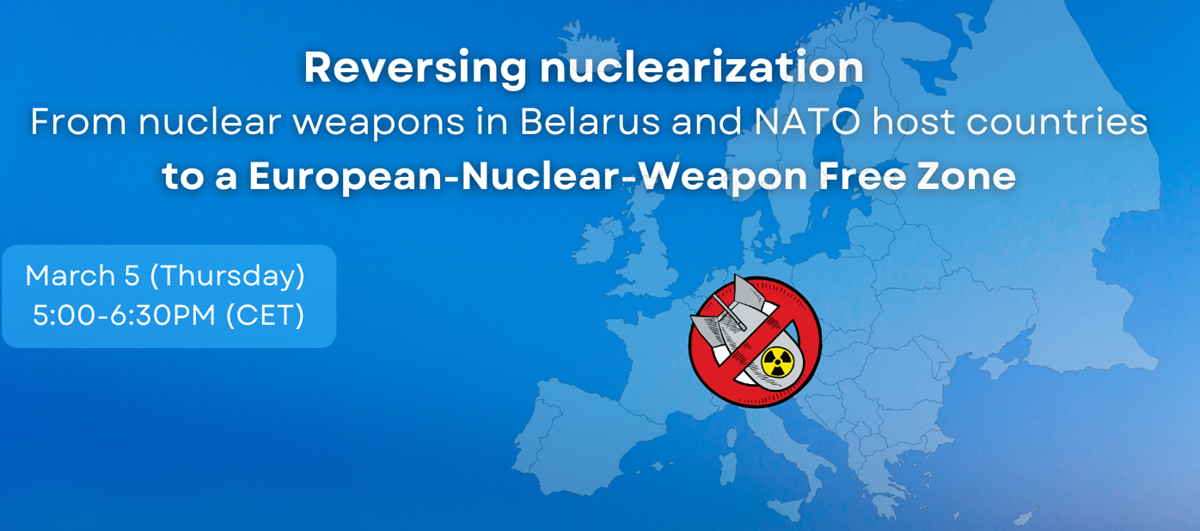
5 March -Online – Reversing nuclearization:
From nuclear weapons in Belarus and NATO host countries to a European-Nuclear-Weapon Free Zone
11am-12:30pm Eastern Time USA / 5pm-6:30pm CET

of the week – Advocating for a
nuclear free beach – https://www.samuellawrencefoundation.org/
The Samuel Lawrence Foundation advocates for a Nuclear Waste Free Beach at San Onofre, join us and take action!

10 March A LIVE WEBINAR THE REAL EFFECTS OF NUCLEAR POWER
What the Industry Isn’t Telling Us
1:00 PM Mountain, 2 pm Central, 3 pm Eastern. Live on the Keepers of the Water Facebook page

18 March Webinar @ 1 PM EST: An Assessment of SMR Projects: The Case of Canada
register for the zoom:
https://us02web.zoom.us/webinar/register/WN_o8BIIOUvQ2ONJR1nta65DQ#/registration

of the week – STOP SMALL MODULAR REACTORS IN CANADA
To see nuclear-related stories in greater depth and intensity – go to https://nuclearinformation.wordpress.com
-
Archives
- March 2026 (27)
- February 2026 (268)
- January 2026 (308)
- December 2025 (358)
- November 2025 (359)
- October 2025 (376)
- September 2025 (258)
- August 2025 (319)
- July 2025 (230)
- June 2025 (348)
- May 2025 (261)
- April 2025 (305)
-
Categories
- 1
- 1 NUCLEAR ISSUES
- business and costs
- climate change
- culture and arts
- ENERGY
- environment
- health
- history
- indigenous issues
- Legal
- marketing of nuclear
- media
- opposition to nuclear
- PERSONAL STORIES
- politics
- politics international
- Religion and ethics
- safety
- secrets,lies and civil liberties
- spinbuster
- technology
- Uranium
- wastes
- weapons and war
- Women
- 2 WORLD
- ACTION
- AFRICA
- Atrocities
- AUSTRALIA
- Christina's notes
- Christina's themes
- culture and arts
- Events
- Fuk 2022
- Fuk 2023
- Fukushima 2017
- Fukushima 2018
- fukushima 2019
- Fukushima 2020
- Fukushima 2021
- general
- global warming
- Humour (God we need it)
- Nuclear
- RARE EARTHS
- Reference
- resources – print
- Resources -audiovicual
- Weekly Newsletter
- World
- World Nuclear
- YouTube
-
RSS
Entries RSS
Comments RSS
 nuclear-news
Leave a comment