Is USA using depleted uranium in weapons in Libya?
Mounting alarm over US use of depleted uranium arms in Libya, Herald Scotland , By Rob Edwards 3 Apr 2011 THE countries involved in air strikes on Colonel Gaddafi’s forces in Libya are coming under pressure to ban the use of toxic depleted uranium (DU) weapons because of the dangers they could pose to civilians……
critics say that the US has sometimes been economical with the truth about the use of DU weapons. “We continue to seek a cast-iron guarantee that depleted uranium has not been used and will not be used in Libya,” said Kate Hudson, the general secretary of the Campaign for Nuclear Disarmament. “The US has a long history of only admitting to deploying this radioactive material months or years after it has been used.” DU is a radioactive and chemically toxic heavy metal which has been used by UK and US military forces in armour-piercing shells fired in the Gulf, Balkans and Iraq wars, and is thought to be in use by around 18 other countries. When DU weapons burn, they release a hazardous dust.
Mounting alarm over US use of depleted uranium arms in Libya – Herald Scotland | News | Home News
Amti uranium concerns in Nanavut
(Canada) Japan’s reactor disaster raises Nunavut nuclear fears ,The Canadian Press Apr. 3, 2011 The hall in the tiny Nunavut community of Baker Lake was packed last Thursday and the debate lasted all night and into the morning.The crowd of about 150 people — nearly 10 per cent of hamlet’s entire population — didn’t stop talking until 1:30 a.m.They were talking about uranium, a familiar subject in the community where French nuclear giant Areva has proposed a $1.5-billion mine for the radioactive metal.But this forum, one of several organized by the territorial government, was different than so many previous community meetings on the topic. About halfway through, an elderly Inuit man stood and asked the question that underlined why.
“His question was, if it’s so safe, why are people in Japan asked to leave their homes and not to come back?” recalled Sandra Inutiq, a member of a Nunavut anti-nuclear group. “If it’s so safe, why are people in Japan so scared?”
Nunavummiut have been asking whether they want uranium mining on their land for years……..Japan’s reactor disaster raises Nunavut nuclear fears – CTV News
Fukushima now causing a rethink in Iran, about nuclear power
The risks of a nuclear meltdown and the release of radioactive material are not limited to Iran. Bushehr is closer in proximity to Kuwait, Bahrain, and Saudi Arabia’s oil rich eastern province than it is to Tehran.
Will Fukushima Force Iran to Reconsider Nuclear Program? The Atlantic, By Karim Sadjadpour, Ali Vaez & Fariborz Ghadar, Apr 1 2011, The country’s rogue energy program isn’t worth the humanitarian danger, the economic cost, or whatever scant power it might provide
While Japan’s unfolding nuclear and humanitarian crisis resurrected longstanding fears in the West about the safety of nuclear power and the potential vulnerabilities of the world’s over 400 operational nuclear power plants, among Iranians it seems to have inaugurated a long overdue debate. Continue reading
Germns protest against nuclear power
Thousands of Germans protest against nuclear power Bloomberg 2 April 11, BERLIN Several thousand Germans demanding an end to the use of nuclear energy have taken part in nationwide demonstrations, including a rally outside of energy company RWE’s headquarters.Police said about 3,000 people protested Saturday outside of RWE’s headquarters in Essen, according to the DAPD news agency.
On Friday, RWE filed a lawsuit demanding two of its nuclear reactors that are to be taken off the grid in the wake of Japan’s Fukushima disaster be allowed to remain operational.
About 7,000 people took part in anti-nuclear protests in Bremen. Other smaller rallies were held elsewhere.Chancellor Angela Merkel hastily announced the shut down of seven of the nation’s nuclear power plants in the wake of the Japan nuclear crisis…..Thousands of Germans protest against nuclear power – BusinessWeek
Workers still trying to stop Fukushima radioactive water leak
Bodies found as nuclear plant leak poisons ocean | The Australian, 4 April 11, “……..Plant workers yesterday attempted to inject water-absorbent polymer into a 20cm crack in a pit beneath the No 2 reactor that has been blamed for radioactive leaks into the ocean. Earlier attempts to fill the crack with concrete failed.”We are hoping the polymers will absorb water and fill in the pipe to prevent water from flowing,” said the deputy director-general of Japan’s Nuclear and Industrial Safety Agency, Hidehiko Nishiyama.TEPCO said radiation readings in the air above the pit had hit 1000 millisieverts per hour – more than four times the allowable annual total for workers at the plant. Continue reading
Decades until Fukushima nuclear plant closed down
 Experts: Scrapping Fukushima plant could take decades, asahi.com(朝日新聞社)2 April 11, – Regaining control of the four stricken reactors at the Fukushima No. 1 nuclear power plant could take months or years, according to nuclear experts. And, even if the reactor cores can be cooled below 100 degrees, known as the “cold shutdown” stage, decommissioning will take several decades……. Continue reading
A floating radioactive waste pool? Hope there’s no more tsunamis!
 Pontoon to hold Japan nuke plant water | Herald Sun April 02, 2011 THE operator of Japan’s disaster-stricken nuclear power plant plans to use a huge steel floating structure to contain radioactive water it releases.The pontoon-type structure which can hold a maximum of 18,000 tonnes of water will be handed over to Tokyo Electric Power Co (TEPCO) by its owner which has been using it as a floating park for anglers, officials said yesterday.Called a “Mega-Float”, it measures 136 metres long, 46 metres wide and three metres high and can hold up to 10,000 tonnes of water without sinking….. Pontoon to hold Japan nuke plant water | Herald Sun
Fukushima a greater disaster than Chernobyl
“Chernobyl was level seven and it had only one reactor and lasted only two weeks. We have now three weeks (at Fukushima) and we have four reactors which we know are in very dangerous situations,”
Fukushima ‘much bigger than Chernobyl’, says Russian nuclear activist | Herald SunApril 02, 2011 JAPAN’S unfolding nuclear disaster is “much bigger than Chernobyl” and could rewrite the international scale used to measure the severity of atomic accidents, a Russian expert says.”Chernobyl was a dirty bomb explosion. The next dirty bomb is Fukushima and it will cost much more in economic and human terms,” Natalia Mironova said. Continue reading
China: solar power on the rise, nuclear power stalled
 China to Cut Nuclear & Increase Solar Power Goals after Japan Crisis – CleanTechnica: 1 April 11, China hasn’t taken long to learn a lesson from the Japan nuclear crisis (perhaps). It is cutting its 2020 target for nuclear power and is filling in with increased solar power targets, according to an official
 from the National Development and Reform Commission (NDRC).
China recently passed up the U.S. as the world’s leading energy consumer. What it does on this front is critical to the long-term livability of our planet (for humans, at least). It is great to see that it is not only cutting back on nuclear expansion (which is a very risky option until someone learns how to deal with nuclear waste that lasts several times longer than humans have existed for), but that it is also increasing its solar power goals to account for this…….China to Cut Nuclear & Increase Solar Power Goals after Japan Crisis – CleanTechnica: Cleantech innovation news and views
As Japan proposes to get bone marrow cells from workers, global nuclear industry prospec ts dim
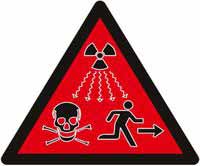
If the past is any guide, the problems at Fukishima will slow or even freeze the construction of plants in many countries.
Walsh: Fukushima will slow or even freeze building of nuclear plants in many countries – In the Arena – CNN.com James Walsh, 2 April 11, TIME magazine reports that Japanese authorities have proposed, as a precautionary measure, the harvesting and banking of the stem cells from the bone marrow of workers at the crippled Fukushima nuclear power plant. Those cells could be transplanted back in workers who were exposed to too much radiation. How much danger are these workers in? Continue reading
Investors see renewable energy looking good, nuclear energy looking crap
Renewable energy prospects rise with nuclear unease | EurActiv: 01 April 2011 Public unease about nuclear power after the Fukushima disaster is prompting renewed scrutiny of renewable power options by governments across the world. Following temporary moratoriums on the nuclear industry imposed in Germany and Switzerland, Japan is planning a review of energy options such as solar power.
China may double its target for photovoltaic activity, while Taiwan is also considering axing nuclear output. Investors are betting on an energy shake up, carrying world benchmark indexes to their highest in 14 months.
The global FTSE Cleantech index has spiked more than 8% since Japan’s earthquake struck on 11 March.The WilderHill New Energy Global Innovation index of alternative energy stocks has gained around 12%…….Whatever their exact outcome, the Fukushima events are likely to shift the energy policy balance toward renewables,” Pricewaterhouse Coopers (PwC) said in a report on 28 March.
Robin Batchelor, a fund manager at BlackRock in charge of $8.2 billion in energy-related funds, said that Fukushima might have brought renewables into focus for fund managers….Renewable energy prospects rise with nuclear unease | EurActiv
The medical story of Chernobyl’s nuclear disaster
 the evidence of 52 scientists and estimated the deaths and illnesses to be 93,000 terminal cancers already and perhaps 140,000 more in time. Using other data, the Russian Academy of Medical Sciences declared in 2006 that 212,000 people had died as a direct consequence of Chernobyl.
Nuclear’s green cheerleaders forget Chernobyl at our peril Pundits who downplay the risks of radiation are ignoring the casualities of the past. Fukushima’s meltdown may be worse John Vidalguardian.co.uk, 1 April 2011 Five years ago I visited the still highly contaminated areas of Ukraine and the Belarus border where much of the radioactive plume from Chernobyl descended on 26 April 1986. I challenge chief scientist John Beddington and environmentalists like George Monbiot or any of the pundits now downplaying the risks of radiation to talk to the doctors, the scientists, the mothers, children and villagers who have been left with the consequences of a major nuclear accident. Continue reading
Investors and power generators turning to non nuclear energy sources
 Meanwhile, power generators are turning elsewhere to meet the nation’s growing energy needs.
According to the Energy Information Administration, the U.S. added 23,144 megawatts of non-nuclear power generating capacity in 2009, the equivalent of about 23 atomic reactors.
Nuclear industry’s other big hurdle: finance NRG put brakes on new plant; industry aims at loan guarantees By Steve Gelsi, MarketWatch, 1 April 11, “……..with the cost of a plant reaching $6 billion or more, and its income stream years away, the payoff for investors is not terribly appealing, Dobson said. Safety concerns and regulatory scrutiny resulting from the Fukushima accident merely add to a murky financing mix, he said. Continue reading
Authorities do not know what are Fukushima’s real radiation dangers
“When you hear ‘no immediate danger’ [from nuclear radiation] then you should run away as far and as fast as you can.”
Nuclear’s green cheerleaders forget Chernobyl at our peril Pundits who downplay the risks of radiation are ignoring the casualities of the past. Fukushima’s meltdown may be worse John Vidal guardian.co.uk, Friday 1 April 2011“…..Every day there are more setbacks to solving the Japanese nuclear crisis and it’s pretty clear that the industry and governments are telling us little; have no idea how long it will take to control; or what the real risk of cumulative contamination may be. Continue reading
Nuked up Republicans lying about Yucca Mountains as safe nuke waste dump
Berkley calls on ‘nuked-up’ Republicans to cease Yucca Mountain probe The Hill By Pete Kasperowicz – 04/01/11 Rep. Shelley Berkley (D-Nev.) on Friday called on House Republicans to stop their investigation into an Obama administration decision to abandon Nevada’s Yucca Mountain as a planned storage site for nuclear waste.
Speaking on the House floor, Berkley said the GOP investigation is a “political stunt” aimed at turning Nevada into a “nuclear garbage dump.”
 “Those pushing this review are lying about the dump’s safety,” Berkley said. “They know Yucca Mountain is smack in the middle of an earthquake zone. There’s volcanic activity. There’s groundwater issues. Have we learned nothing abbot what’s happening now in Japan?”
Berkley added that the investigation is being prompted by the nuclear industry, and is being aided by its “nuked-up buddies” in Congress….. Berkley calls on ‘nuked-up’ Republicans to cease Yucca Mountain probe – The Hill’s E2-Wire
1 This Month

Protect Sazan Island from the Trump family! https://secure.avaaz.org/campaign/en/protect_sazan_island_from_the_trump_family_loc/?bqFCVab&v=174511&cl=22707147157&_checksum=5e9dde668860e8231c33699735e16a1fbf22ab2cb01da50c999fe8732b9775ef&utm_source=email&utm_medium=blast_email&utm_campaign=174511


Cuba Is Not a Failed State – It Is a Besieged State
PETITION: “Global Appeal to Endorse Palestinian Right of Return of Refugees”
To see nuclear-related stories in greater depth and intensity – go to https://nuclearinformation.wordpress.com
-
Archives
- June 2026 (129)
- May 2026 (306)
- April 2026 (356)
- March 2026 (251)
- February 2026 (268)
- January 2026 (308)
- December 2025 (358)
- November 2025 (359)
- October 2025 (376)
- September 2025 (257)
- August 2025 (319)
- July 2025 (230)
-
Categories
- 1
- 1 NUCLEAR ISSUES
- business and costs
- climate change
- culture and arts
- ENERGY
- environment
- health
- history
- indigenous issues
- Legal
- marketing of nuclear
- media
- opposition to nuclear
- PERSONAL STORIES
- politics
- politics international
- Religion and ethics
- safety
- secrets,lies and civil liberties
- spinbuster
- technology
- Uranium
- wastes
- weapons and war
- Women
- 2 WORLD
- ACTION
- AFRICA
- Atrocities
- AUSTRALIA
- Christina's notes
- Christina's themes
- culture and arts
- Events
- Fuk 2022
- Fuk 2023
- Fukushima 2017
- Fukushima 2018
- fukushima 2019
- Fukushima 2020
- Fukushima 2021
- general
- global warming
- Humour (God we need it)
- Nuclear
- RARE EARTHS
- Reference
- resources – print
- Resources -audiovicual
- Weekly Newsletter
- World
- World Nuclear
- YouTube
-
RSS
Entries RSS
Comments RSS
 nuclear-news