Fukushima radiation and the marine food chain
there is a very strong likelihood that caesium, iodine and strontium could accumulate in the food chain from phytoplankton and algae to edible fish.
 The World Today – Scientists monitor fallout from Fukushima 04/04/2011 The World Today , 4 April 11, ELEANOR HALL: Conservation groups and marine scientists say they remain very concerned about the ocean fallout from Japan’s crippled nuclear plant. The Japanese government says it could take months to stop radiation leaking from the plant.
Australian researchers monitoring the disaster say they’re concerned about radioactive elements accumulating in the Pacific Ocean food chain, as Adrienne Francis reports.
The anti-nuclear movement in Japan has been energised by the disaster.
Protester Mayoko Nakahara.
MAYOKO NAKAHARA (translated): I’ve had worries about Japan’s nuclear policies for some time and if we don’t take advantage of this opportunity, who knows when our movement will have this much energy again so I am here now to say you must get rid of nuclear energy…….
ADRIENNE FRANCIS: However, Australian coral reef scientists say the possible marine impacts may be underestimated.
Dr Clive Wilkinson says the interplay between the kuroshio and oyashio currents, off the coast of Japan, is complex.
CLIVE WILKINSON: These two currents often form eddies or gyres and these gyres can persist for weeks at a time. Such that, anything coming out of that reactor will be entrained in these gyres, which means there is a lot of time for it to be taken up by plankton and things that eat plankton such as zooplankton. Then by little fish, bigger fish and eventually up to tuna.
ADRIENNE FRANCIS: Dr Clive Wilkinson leads a group of passionate researchers and concerned government policy makers, called the Global Coral Reef Monitoring Network.
He says there is a very strong likelihood that caesium, iodine and strontium could accumulate in the food chain from phytoplankton and algae to edible fish.
CLIVE WILKINSON: I wouldn’t be particularly concerned about them causing kills. My concern would be as they are magnified up the food chain. So iodine would be eventually washed out of the system because it has only got an eight day half life. But things like caesium, strontium, tellurium, barium – they could be incorporated into the food chain.
The World Today – Scientists monitor fallout from Fukushima 04/04/2011
1 Comment »
Leave a reply to The Food Chain Cancel reply
1 This Month
To see nuclear-related stories in greater depth and intensity – go to https://nuclearinformation.wordpress.com/
12 February – Webinar The Big Push: New Nuclear Projects in Canada
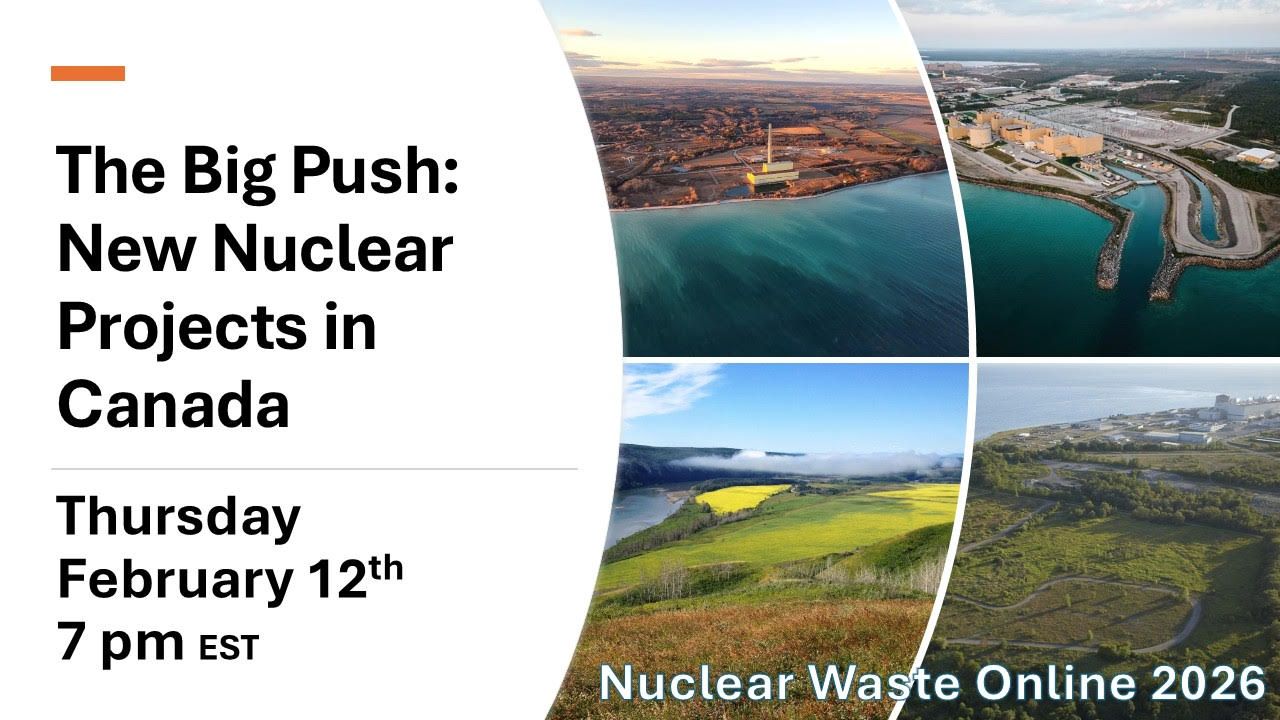
Thursday, February 12, 7 pm Eastern | 2nd of 4 sessions in the 2026 Nuclear Waste Online webinar series
Join a webinar on the push for new nuclear generation in Canada. Go to Northwatch.org to register or use the registration link https://us02web.zoom.us/webinar/register/WN_ZfWOf1GITqSRIZX8CB-A9w
-
Archives
- February 2026 (127)
- January 2026 (308)
- December 2025 (358)
- November 2025 (359)
- October 2025 (376)
- September 2025 (258)
- August 2025 (319)
- July 2025 (230)
- June 2025 (348)
- May 2025 (261)
- April 2025 (305)
- March 2025 (319)
-
Categories
- 1
- 1 NUCLEAR ISSUES
- business and costs
- climate change
- culture and arts
- ENERGY
- environment
- health
- history
- indigenous issues
- Legal
- marketing of nuclear
- media
- opposition to nuclear
- PERSONAL STORIES
- politics
- politics international
- Religion and ethics
- safety
- secrets,lies and civil liberties
- spinbuster
- technology
- Uranium
- wastes
- weapons and war
- Women
- 2 WORLD
- ACTION
- AFRICA
- Atrocities
- AUSTRALIA
- Christina's notes
- Christina's themes
- culture and arts
- Events
- Fuk 2022
- Fuk 2023
- Fukushima 2017
- Fukushima 2018
- fukushima 2019
- Fukushima 2020
- Fukushima 2021
- general
- global warming
- Humour (God we need it)
- Nuclear
- RARE EARTHS
- Reference
- resources – print
- Resources -audiovicual
- Weekly Newsletter
- World
- World Nuclear
- YouTube
-
RSS
Entries RSS
Comments RSS
 nuclear-news
[…] Fukushima radiation and the marine food chain « nuclear-news there is a very strong likelihood that caesium, iodine and strontium could accumulate in the food chain from phytoplankton and algae to edible fish. The World Today – Scientists monitor fallout from Fukushima 04/04/2011 The World Today . […]
Pingback by The Food Chain | April 5, 2011 |