60th anniversary of the first secret nuclear fallout on American citizens
When it was learned years later that no American was given these maps
and forecasts – only Kodak and its industry peers – the reaction of
those who came to realize their bodies too became ‘exposed’ by the
fallout was one of anger and rage……...Downwinder Day is needed because Americans should have been deemedabove corporations, not below them. Their lives should have been given importance above that of a cartridge of film. They should have known, just as Kodak’s officials knew, that the “situation is serious.”
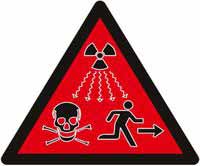
Downwinder Day – 2011 USA – from Andrew Kishner, Paul Langley’s Nuclear History Blog, 27 Jan 2011, Sixty years ago today, the U.S. Atomic Energy Commission conducted itsfirst ‘experimental nuclear detonation’ at the Las Vegas Bombing and Gunnery Range. The date was January 27, 1951. The time was 5:45 am. The bomb test was dubbed ‘Able.’

No one but those with military clearance knew about the test. No one
but those with military clearance knew about the radioactive clouds
that floated above the continental United States. No one was warned
about the dangers of nuclear radiation that would permeate the air and
fall on crops, homes and cisterns.Able was the first air-dropped nuclear bomb on U.S. soil and, as with
airbursts like those that occurred over Hiroshima and Nagasaki, the
greatest ‘fallout’ occurred where there was the greatest
precipitation. Nearly 36 hours after detonation, ‘nuclear clouds’
encountered a snowstorm in Rochester, New York, and began increasing
radiation levels. Kodak’s Geiger Counters recorded readings 25 times
background radiation levels. Determined to get to the bottom of what
was causing the radiation spike, which would have very real threats to
the company’s film supplies, Kodak officials filed a complaint with a
Washington lobby group that cabled the AEC with the following message:“Tests snowfall Rochester Monday by Eastman Kodak Company give 10,000
counts per minute, whereas equal volume snow falling previous Friday
gave only 400 STOP. Situation serious STOP. Will report any further
results obtained STOP. What are you doing? STOP”The following day, the AEC released a statement to the Associated
Press saying that it was “investigating reports that snow that fell in
Rochester was measurably radioactive…” Nothing was said about
conducting an atom bomb test.Sometime later, Kodak was the first to learn the truth – an AEC
Commissioner told a general manager at Kodak that a nuclear test had
taken place in Nevada two days before their elevated readings took
place. Kodak, naturally, feared that the atom bomb test program of
the AEC would, like in a 1945 incident after ‘Trinity,’ cause damage
to their film stock.Kodak threatened to sue the AEC. The AEC capitulated to the legal
threats. Kodak was given ‘Q Clearance’ for maps and forecasts of all
bomb tests.When it was learned years later that no American was given these maps
and forecasts – only Kodak and its industry peers – the reaction of
those who came to realize their bodies too became ‘exposed’ by the
fallout was one of anger and rage.Iowa Senator Tom Harkin, a friendto the ‘downwinder’ cause, bitterly remarked in a 1997 Congressionalsubcommittee hearing: “Where, I ask, were the maps for dairy farmers? Where were the warnings to parents of children in these areas? …Why do you suppose it was that the Government of the United States saw fitto inform Kodak about fallout and to give them advance warnings on where the hot spots would be, but would not do so for the generalpublic, especially in Utah and Idaho and places like that? I am
speculating here.Why would the Government not say: Look, we are going
to have an atomic bomb blast; for the next couple of months, people in
this area, you ought not to drink milk. Why was that not done? I mean,
they told Kodak to protect their films.”Over the 60 years since the detonation of ‘Able,’ American downwinders
have pushed with fortitude and confidence to fix a broken, corrupt
system that will not recognize their worth as human beings.By the late 1970s, when downwinders managed to organize a legal and
grassroots campaign to bolster their cause, the U.S. nuclear
locomotive had left the station. That train, loaded with lies and
money and power and hegemony all provided by the granted wishes of the
nuclear genie, couldn’t be stopped for any legal or moral reason.The Supreme Court, a half-dozen Presidents and a myriad of bemused
Congresspersons have failed to bring justice to the radiation injuries
posed by fallout. That fallout would come from decades of U.S.
nuclear testing in Nevada, hydrogen bomb exploding cataclysms in the
Pacific Proving Grounds and later ‘Plowshare experiments,’ which sent
plumes of radioactive steam and ‘flared’ radioactive gases across
towns and hamlets in Colorado, Alaska and New Mexico.The downwinders couldn’t keep up with the train and their movement has
since been dying. Eleanore Fanire-Lindquist, who was a co-founder of
Mohave Downwinders, tirelessly crusaded in the last years of her life
for the rights of downwinders and on November 11, 2009, succumbed to
her second bout of cancer in her life.Eleanore, along with her colleagues in Utah and Idaho, fought for
years to have a box on the calendar for downwinders.It would be called “Downwinder Day,” and fall on January 27.
We need a Downwinder Day just as veterans and our countrymen need
Memorial Day.Downwinder Day is needed to honor the memories of those whose lives
were cut short by fallout. Downwinder Day is needed to bring compassion to human beings who were
the victims of negligent actions by their own government.Downwinder Day is needed to acknowledge that a chapter of American
history has been swept under the rug of shame and denial and that
chapter needs to be fully and honestly examined.Downwinder Day is needed because Americans should have been deemed
above corporations, not below them. Their lives should have been
given importance above that of a cartridge of film. They should have
known, just as Kodak’s officials knew, that the “situation is
serious.”The question posed by Kodak to the AEC ‘What are you doing?,’ is a
rhetorical question to each and every American regarding their role as
a citizen in a republic that has failed to honor its pledge to grant
each person the rights to life, liberty and pursuit of happiness.
Clearly, any analysis of the downwinders will reveal that their rights
were stripped away and given instead to a photographic film
corporation. On this Downwinder Day, I ask ‘What are you doing’ to
rectify this injustice?-Andrew Kishner, founder, Idealist.ws
www.idealist.ws
Downwinder Day – 2011 USA – from Andrew Kishner « Paul Langley’s Nuclear History Blog
1 Comment »
1 This Month

petition to oppose the rapid increase of space-military industry threatening Jeju Island and the region.
[Petition by April 19th (KST)] Stop the joint military-Hanwha Systems-Jeju Provincial Government Sea Launch!

Chernobyl: The Lost Tapes – A good documentary on Chernobyl on SBS available On Demand for the next 3 weeks– https://www.sbs.com.au/ondemand/tv-program/chernobyl-the-lost-tapes/2352741955560

of the week–London Campaign for Nuclear Disarmament

Tell the Ukrainian Government to Drop Prosecution of Peace Activist Yurii Sheliazhenko
To see nuclear-related stories in greater depth and intensity – go to https://nuclearinformation.wordpress.com
-
Archives
- April 2026 (194)
- March 2026 (251)
- February 2026 (268)
- January 2026 (308)
- December 2025 (358)
- November 2025 (359)
- October 2025 (376)
- September 2025 (257)
- August 2025 (319)
- July 2025 (230)
- June 2025 (348)
- May 2025 (261)
-
Categories
- 1
- 1 NUCLEAR ISSUES
- business and costs
- climate change
- culture and arts
- ENERGY
- environment
- health
- history
- indigenous issues
- Legal
- marketing of nuclear
- media
- opposition to nuclear
- PERSONAL STORIES
- politics
- politics international
- Religion and ethics
- safety
- secrets,lies and civil liberties
- spinbuster
- technology
- Uranium
- wastes
- weapons and war
- Women
- 2 WORLD
- ACTION
- AFRICA
- Atrocities
- AUSTRALIA
- Christina's notes
- Christina's themes
- culture and arts
- Events
- Fuk 2022
- Fuk 2023
- Fukushima 2017
- Fukushima 2018
- fukushima 2019
- Fukushima 2020
- Fukushima 2021
- general
- global warming
- Humour (God we need it)
- Nuclear
- RARE EARTHS
- Reference
- resources – print
- Resources -audiovicual
- Weekly Newsletter
- World
- World Nuclear
- YouTube
-
RSS
Entries RSS
Comments RSS
 nuclear-news
[…] Only three weeks earlier, on July 16, 1945, the world’s first nuclear exposion occurred at the Trinity Site in New Mexico. A great related post about this: http://centerforgloballeadership.wordpress.com/2011/01/31/walking-the-fine-line-in-egypt-a-moral-conflict/ Related to this you can read: https://nuclear-news.net/2011/01/28/60th-anniversary-of-the-first-secret-nuclear-fallout-on-american-… […]
Pingback by atomic bomb effects - atomic bomb dropped on hiroshima, hiroshima peace memorial museum | February 7, 2011 |