NASA’s radiation tests on monkeys not relevant to space research
The monkey experiment — which NASA plans to fund with $1.75 million of taxpayer money – disregards both ethics and common sense.
No need to harm primates in NASA’s radiation tests, By APRIL EVANS HOUSTON CHRONICLE
9 Dec 10, “…….I’m extremely disappointed that during tough program cuts, NASA continues to defend expensive primate research that is unlikely to produce anything of value to human space flight. I worked for nine years at NASA’s Johnson Space Center in human space flight and was a NASA Space Flight Awareness honoree. However, I resigned after NASA was unwilling to listen to my scientific criticism of these experiments.
NASA is planning a misconceived experiment at Harvard’s McLean Hospital and the Brookhaven National Laboratory in which dozens of highly intelligent squirrel monkeys would be irradiated in an effort to simulate the effects of space radiation. Protecting astronauts from space radiation exposure is the most critical issue to advancing human space exploration beyond earth’s orbit. But irradiating monkeys and locking them in laboratory cages and physical restraints for years to observe how their brains and bodies deteriorate is not the solution.
First, space radiation cannot be simulated in a laboratory. International Space Station scientists from every represented space agency reported in 2009 that “[t]he Galactic Cosmic Ray (GCR) environment is the most complex mixture of radiation known. It is doubtful that the GCR will ever be adequately simulated in the laboratory for biological experiments.” This backward approach puts animals in harm’s way, and also puts astronauts at risk by not working to advance radiation shielding technology.
The monkey experiment — which NASA plans to fund with $1.75 million of taxpayer money – disregards both ethics and common sense. In the planned experiment, monkeys would be exposed to a single dose of radiation for less than one day, whereas human astronauts on any mission – especially one to deep space – are exposed to varying levels of radiation over the duration of the mission. Previous research has demonstrated that the effects of a single dose of radiation cannot predict the effects of prolonged exposure.
Further, the proposed project assumes that when we send humans beyond earth’s orbit, we will be using the same radiation shielding we are currently using. The space radiation problem came into the spotlight in 1972 when Apollo 16 and 17 narrowly missed a solar flare that was intense enough to have crippled the vehicle. We should not subject humans to the risks of space radiation using current technology, yet radiation shielding technology has evolved very little over the last 40 years…..

No comments yet.
1 This Month
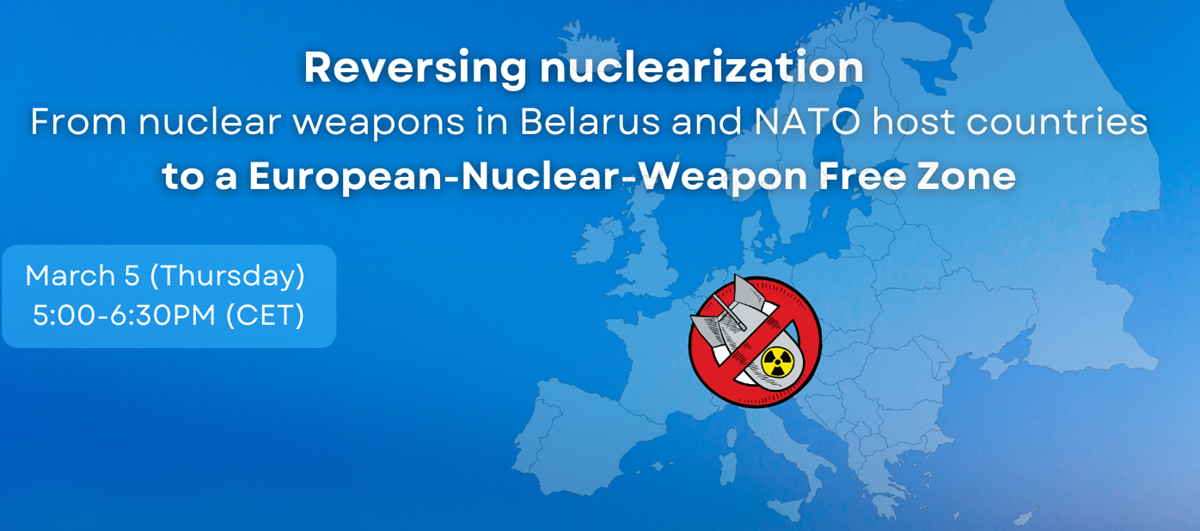
5 March -Online – Reversing nuclearization:
From nuclear weapons in Belarus and NATO host countries to a European-Nuclear-Weapon Free Zone
11am-12:30pm Eastern Time USA / 5pm-6:30pm CET

of the week – Advocating for a
nuclear free beach – https://www.samuellawrencefoundation.org/
The Samuel Lawrence Foundation advocates for a Nuclear Waste Free Beach at San Onofre, join us and take action!

10 March A LIVE WEBINAR THE REAL EFFECTS OF NUCLEAR POWER
What the Industry Isn’t Telling Us
1:00 PM Mountain, 2 pm Central, 3 pm Eastern. Live on the Keepers of the Water Facebook page

18 March Webinar @ 1 PM EST: An Assessment of SMR Projects: The Case of Canada
register for the zoom:
https://us02web.zoom.us/webinar/register/WN_o8BIIOUvQ2ONJR1nta65DQ#/registration

of the week – STOP SMALL MODULAR REACTORS IN CANADA
To see nuclear-related stories in greater depth and intensity – go to https://nuclearinformation.wordpress.com
-
Archives
- March 2026 (38)
- February 2026 (268)
- January 2026 (308)
- December 2025 (358)
- November 2025 (359)
- October 2025 (376)
- September 2025 (258)
- August 2025 (319)
- July 2025 (230)
- June 2025 (348)
- May 2025 (261)
- April 2025 (305)
-
Categories
- 1
- 1 NUCLEAR ISSUES
- business and costs
- climate change
- culture and arts
- ENERGY
- environment
- health
- history
- indigenous issues
- Legal
- marketing of nuclear
- media
- opposition to nuclear
- PERSONAL STORIES
- politics
- politics international
- Religion and ethics
- safety
- secrets,lies and civil liberties
- spinbuster
- technology
- Uranium
- wastes
- weapons and war
- Women
- 2 WORLD
- ACTION
- AFRICA
- Atrocities
- AUSTRALIA
- Christina's notes
- Christina's themes
- culture and arts
- Events
- Fuk 2022
- Fuk 2023
- Fukushima 2017
- Fukushima 2018
- fukushima 2019
- Fukushima 2020
- Fukushima 2021
- general
- global warming
- Humour (God we need it)
- Nuclear
- RARE EARTHS
- Reference
- resources – print
- Resources -audiovicual
- Weekly Newsletter
- World
- World Nuclear
- YouTube
-
RSS
Entries RSS
Comments RSS
 nuclear-news
Leave a comment