How workers’ uranium exposure levels can be fudged
levels of residual radiation at the site AFTER the structure itself was removed and buried in Piketon, Ohio, were used to approximate radiation doses of workers when it was in operation…..“there’s no reason to believe that host decontamination measurements would be meaningful to reconstruct doses 18 years earlier during operations.”
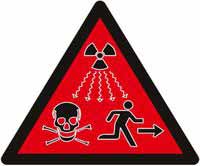
Panel Discussing Raising Huntington Radiation Exposure Levels at Atomic Plant Some Could Jump Ten Fold By Tony Rutherford, Huntingtonnews.net, 21 July 2010, A world recognized expert on nuclear radiation exposure of employees at Atomic Energy Commission (AEC) plants has told a government advisory committee that radiation levels for workers were underestimated at a former uranium processing plant and uranium recycling plant in Huntington, WV.
Among the findings, levels of residual radiation at the site AFTER the structure itself was removed and buried in Piketon, Ohio, were used to approximate radiation doses of workers when it was in operation……….the HPP/RPP processed and/or recycled uranium. Some of the uranium was enriched and came from one or more of the nation’s three gaseous diffusion plants — Oak Ridge, Paducah, and Portsmouth. Due to the interest of national security workers were told a bare minimum of what type of melting, smelting or processing occurred.
………When the DOE acknowledged that workers and contractors had been exposed to cancer causing radiation in 2000, Congress passed a law allowing former workers with cancer (and/or their survivors) to apply for compensation under the Energy Employees Occupational Illness Compensation Program Act (EEOICPA).Former workers at the Huntington location, which is jointly referred to as the Huntington Pilot Plant (HPP) and the Reduction Pilot Plant (RPP), were deemed eligible in the Congressional legislation.
Work records and radiation monitoring of most DOE workers have not been available. Often, claimants must have former workers sign affidavits to prove they worked at a plant during the time(s) it did contract work for the Department of Energy……….. Although NIOSH/CDC completed a profile for the Huntington uranium plant, Dr Mauro uncovered possible underestimates. ……
INCREASING THE PRIOR LEVELS FOR HUNTINGTONExternal, internal and air exposure levels of workers at the former Huntington uranium/nickel recycling/processing plant may be increased from four to tenfold, Dr Mauro told the Advisory Board. Mauro advised that new data had been obtained on exposures of workers at the Huntington, WV uranium and nickel processing plant. The plant still entombed at Piketon, Ohio, operated from 1951 to 1962.
……………RADIATION DOSAGE ESTIMATES WERE POST DECONTAMINATIONMauro stated that the estimates for “residual contamination exposure” when the plant was on cold stand by (from about 1962 to 1978) had used “1980 post decontamination measurement data for dose reconstruction. It doesn’t seem like you would be using post decontamination measurements to reconstruct does pre-decontamination, even though they’re both during the post operation period.”
Thus, the dosages used were after the site had in 1980 been decontaminated of radiation.
Mauro revealed, the dosages were taken after the plant was entombed in Piketon, Ohio, had been used to “estimate exposures from surface contamination during plant operations 18 years earlier. I’m kinda troubled,” he said , adding, “there’s no reason to believe that host decontamination measurements would be meaningful to reconstruct doses 18 years earlier during operations. There’s a disconnect here”
Interestingly, he explained, “I don’t think there was any data on surface contamination levels during operations at this facility [Huntington] ,…..
No comments yet.
1 This Month

of the week – Shut Down Drone Warfare!


Tell the Ukrainian Government to Drop Prosecution of Peace Activist Yurii Sheliazhenko

Petition to revoke the licensing of the Near Surface Nuclear Disposal Facility (NSDF) at Chalk River. https://www.ourcommons.ca/petitions/en/Petition/Details?Petition=e-7247
To see nuclear-related stories in greater depth and intensity – go to https://nuclearinformation.wordpress.com
-
Archives
- April 2026 (79)
- March 2026 (251)
- February 2026 (268)
- January 2026 (308)
- December 2025 (358)
- November 2025 (359)
- October 2025 (376)
- September 2025 (257)
- August 2025 (319)
- July 2025 (230)
- June 2025 (348)
- May 2025 (261)
-
Categories
- 1
- 1 NUCLEAR ISSUES
- business and costs
- climate change
- culture and arts
- ENERGY
- environment
- health
- history
- indigenous issues
- Legal
- marketing of nuclear
- media
- opposition to nuclear
- PERSONAL STORIES
- politics
- politics international
- Religion and ethics
- safety
- secrets,lies and civil liberties
- spinbuster
- technology
- Uranium
- wastes
- weapons and war
- Women
- 2 WORLD
- ACTION
- AFRICA
- Atrocities
- AUSTRALIA
- Christina's notes
- Christina's themes
- culture and arts
- Events
- Fuk 2022
- Fuk 2023
- Fukushima 2017
- Fukushima 2018
- fukushima 2019
- Fukushima 2020
- Fukushima 2021
- general
- global warming
- Humour (God we need it)
- Nuclear
- RARE EARTHS
- Reference
- resources – print
- Resources -audiovicual
- Weekly Newsletter
- World
- World Nuclear
- YouTube
-
RSS
Entries RSS
Comments RSS
 nuclear-news
Leave a comment