Uranium mining devastates indigenous communities
According to the EPA , “Approximately 30 percent of the Navajo population does not have access to a public drinking water system and may be using unregulated water sources with uranium contamination.” Uranium exposure is a known cause of cancers, organ damage, miscarriages and birth defects.
Resisting the Nuclear Boom: A new wave of uranium mining threatens Indigenous communities in the Southwest By Klee Benally and Jessica Lee April 2, 2010

GRAND CANYON, Ariz.—The American Southwest has again become ground zero in the debate about nuclear power.
Since December, miners have resumed crawling deep into the earth on the edge of the Grand Canyon to mine high-grade uranium ore at the Arizona 1 Mine, which had been closed since the late 1980s. Owned by the Canadian Denison Mines Corp., it is the first uranium mine to open in northern Arizona since nuclear power again became a popular idea in Washington within the last decade. The greater Grand Canyon area faces a possible explosion in the number of new uranium mines….
A coalition of environmental groups filed a lawsuit last November to stop the opening of the mine, alleging that the legally required documents were outdated and did not offer protections required by contemporary environmental laws. While the lawsuit is pending, the Bureau of Land Management and Arizona Department of Environmental Quality say the mine is properly authorized.
In response to growing concern about the pending mining boom in northern Arizona, U.S. Secretary of Interior Ken Salazar called for a “two-year time-out” last summer to allow federal agencies to complete a two-year environmental review before authorizing new mining claims within the one million acres on federal lands near the Grand Canyon. Existing claims, such as Denison’s mine, were exempt from the temporary moratorium.
Environmentalists and local Indigenous communities hope that after the review in February 2011, Salazar will make the area unavailable for new mining claims for the a maximum 20-year period allowed by the Interior Department. Meanwhile, the U.S. House of Representatives is considering the Grand Canyon Watersheds Protection Act (H.R. 644), legislation that would permanently protect the one million acres on federal land from new mining claims — creating a five-mile buffer zone of around Grand Canyon National Park…..
A coalition of environmental groups filed a lawsuit last November to stop the opening of the mine, alleging that the legally required documents were outdated and did not offer protections required by contemporary environmental laws. While the lawsuit is pending, the Bureau of Land Management and Arizona Department of Environmental Quality say the mine is properly authorized.
In response to growing concern about the pending mining boom in northern Arizona, U.S. Secretary of Interior Ken Salazar called for a “two-year time-out” last summer to allow federal agencies to complete a two-year environmental review before authorizing new mining claims within the one million acres on federal lands near the Grand Canyon. Existing claims, such as Denison’s mine, were exempt from the temporary moratorium.
Environmentalists and local Indigenous communities hope that after the review in February 2011, Salazar will make the area unavailable for new mining claims for the a maximum 20-year period allowed by the Interior Department. Meanwhile, the U.S. House of Representatives is considering the Grand Canyon Watersheds Protection Act (H.R. 644), legislation that would permanently protect the one million acres on federal land from new mining claims — creating a five-mile buffer zone of around Grand Canyon National Park.
A SACRED CANYON
The Grand Canyon is the ancestral homeland to the Havasupai Nation. The Nation has battled uranium interests for decades and banned mining on their lands as early as 1991. However, their lands are surrounded largely by federal lands under the jurisdiction of the Bureau of Land Management, the National Park Service and the U.S. Forest Service — agencies that all have the power to authorize new mines.
The Colorado River is held sacred by more than 30 Indigenous nations. It emerges in the Rocky Mountains in north-central Colorado and winding 1,450 miles to the Gulf of California, the Colorado River and provides drinking water for up to 27 million people in seven states throughout the Southwest.
Drilling for the radioactive material in previous decades has been found to contaminate underground aquifers that drain into the Colorado River and sacred springs that have sustained Indigenous peoples in the region. Surface water can also flow into drill holes and mine shafts, poisoning underground water sources.
The 600 members of the Havasupai Tribe, who live at the bottom of the Grand Canyon, are concerned that future mining nearby could contaminate water sources and further desecrate sacred sites, including Red Butte, which is located three miles away from the closed Canyon Uranium Mine. Denison indicates that it is also interested in reopening the mine.
Throughout the Diné (Navajo) Nation east of the Grand Canyon, families have been subject to decades of health effects due to past unsafe mining conditions and living near to mines and mills, in some cases even living in houses built from uranium tailings. Nearly four million tons of uranium ore were extracted from some 500 mines on Diné lands.
At Rare Metals mine near Tuba City on the Diné Nation, a layer of soil and rock is the only material covering some 2.3 million tons of hazardous waste. A rock dam surrounds the radioactive waste to control runoff water that flows into nearby Moenkopi Wash.
The U.S. Environmental Protection Agency (EPA) has found well water to be undrinkable in at least 22 Diné communities. According to the EPA , “Approximately 30 percent of the Navajo population does not have access to a public drinking water system and may be using unregulated water sources with uranium contamination.” Uranium exposure is a known cause of cancers, organ damage, miscarriages and birth defects.
Flocks of sheep and other livestock still graze among radioactive tailing piles and ingest radioactive water…………
Although nuclear energy is being touted as a solution to the current U.S. energy crisis and global warming, those more closely affected by uranium mining, transportation, processing and dumping of waste recognize the true environmental costs.
“There are six licensed commercial nuclear reactors in New York,” Hamburg said. “It is critical for people in New York City, as well as nation- and world-wide, to understand how mining uranium, possibly destined for one of these six reactors, devastates indigenous communities throughout the Southwest.”
No comments yet.
1 This Month
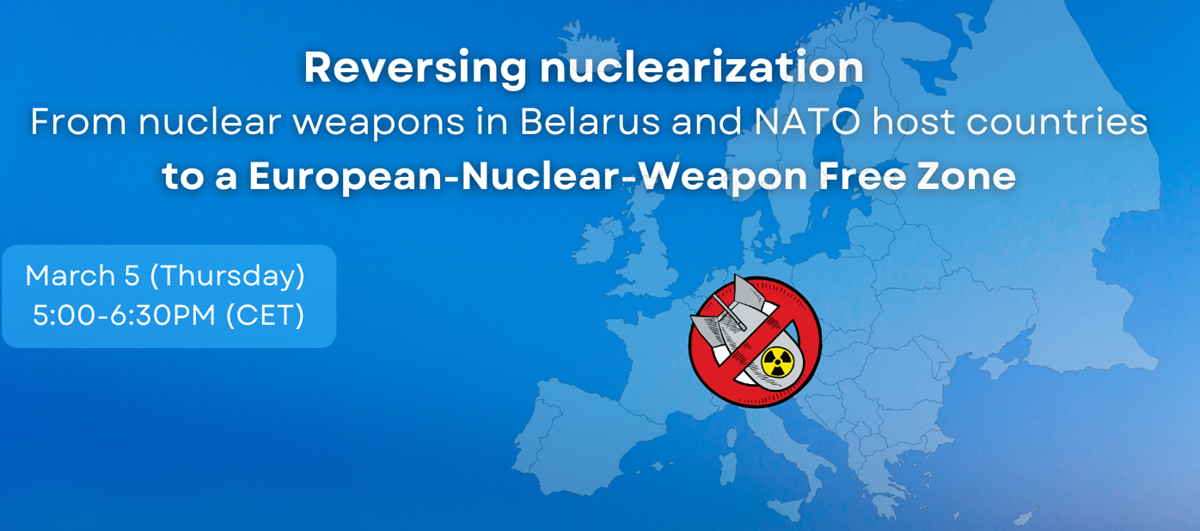
5 March -Online – Reversing nuclearization:
From nuclear weapons in Belarus and NATO host countries to a European-Nuclear-Weapon Free Zone
11am-12:30pm Eastern Time USA / 5pm-6:30pm CET

of the week – Advocating for a
nuclear free beach – https://www.samuellawrencefoundation.org/
The Samuel Lawrence Foundation advocates for a Nuclear Waste Free Beach at San Onofre, join us and take action!

10 March A LIVE WEBINAR THE REAL EFFECTS OF NUCLEAR POWER
What the Industry Isn’t Telling Us
1:00 PM Mountain, 2 pm Central, 3 pm Eastern. Live on the Keepers of the Water Facebook page

18 March Webinar @ 1 PM EST: An Assessment of SMR Projects: The Case of Canada
register for the zoom:
https://us02web.zoom.us/webinar/register/WN_o8BIIOUvQ2ONJR1nta65DQ#/registration

of the week – STOP SMALL MODULAR REACTORS IN CANADA
To see nuclear-related stories in greater depth and intensity – go to https://nuclearinformation.wordpress.com
-
Archives
- March 2026 (51)
- February 2026 (268)
- January 2026 (308)
- December 2025 (358)
- November 2025 (359)
- October 2025 (376)
- September 2025 (258)
- August 2025 (319)
- July 2025 (230)
- June 2025 (348)
- May 2025 (261)
- April 2025 (305)
-
Categories
- 1
- 1 NUCLEAR ISSUES
- business and costs
- climate change
- culture and arts
- ENERGY
- environment
- health
- history
- indigenous issues
- Legal
- marketing of nuclear
- media
- opposition to nuclear
- PERSONAL STORIES
- politics
- politics international
- Religion and ethics
- safety
- secrets,lies and civil liberties
- spinbuster
- technology
- Uranium
- wastes
- weapons and war
- Women
- 2 WORLD
- ACTION
- AFRICA
- Atrocities
- AUSTRALIA
- Christina's notes
- Christina's themes
- culture and arts
- Events
- Fuk 2022
- Fuk 2023
- Fukushima 2017
- Fukushima 2018
- fukushima 2019
- Fukushima 2020
- Fukushima 2021
- general
- global warming
- Humour (God we need it)
- Nuclear
- RARE EARTHS
- Reference
- resources – print
- Resources -audiovicual
- Weekly Newsletter
- World
- World Nuclear
- YouTube
-
RSS
Entries RSS
Comments RSS
 nuclear-news
Leave a comment