The problem of overuse of medical radiation
For patients, navigating the debate can be difficult because doctors, patient advocacy groups and manufacturers often endorse positions that are in their economic self-interest. Radiologists, who often own and use CT machines, for instance, often endorse their use; while gastroenterologists, who often own and use camera scopes, often favor their own methods. Patient groups often get financing from drug and device makers, or physician-specialty groups.
Radiation warnings ignored, GDS Publishing, By Jodie Humphries | 03/29/10 Urgent warnings by government experts about the risks of routinely using powerful CT scans to screen patients for colon cancer were ignored by the Food and Drug Administration, according to agency documents and interviews with agency scientists.
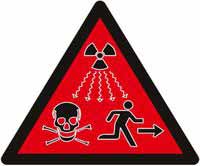
After staying quiet for a year, the scientists say they plan to make their concerns public at a meeting of experts on Tuesday called by the FDA to discuss how to protect patients from unnecessary radiation exposures. The two-day meeting is part of a growing reassessment of the risks of routine radiology.
The average lifetime dose of diagnostic radiation has increased sevenfold since 1980, driven in part by the increasing popularity of CT scans. Such scans can deliver the radiation equivalent of 400 chest X-rays.
An estimated 70 million CT (for computed tomography) scans are performed in the US every year, up from three million in the early 1980s, and as many as 14,000 people may die every year of radiation-induced cancers as a result, researchers estimate.
The use of CT scans to screen healthy patients for cancer is particularly controversial. In colon cancer screening for instance, the American College of Radiology as well as the American Cancer Society have endorsed CT scans, in a procedure often called a virtual colonoscopy,…..
For patients, navigating the debate can be difficult because doctors, patient advocacy groups and manufacturers often endorse positions that are in their economic self-interest. Radiologists, who often own and use CT machines, for instance, often endorse their use; while gastroenterologists, who often own and use camera scopes, often favor their own methods. Patient groups often get financing from drug and device makers, or physician-specialty groups.
1 Comment »
Leave a comment
1 This Month

of the week – Shut Down Drone Warfare!


Tell the Ukrainian Government to Drop Prosecution of Peace Activist Yurii Sheliazhenko

Petition to revoke the licensing of the Near Surface Nuclear Disposal Facility (NSDF) at Chalk River. https://www.ourcommons.ca/petitions/en/Petition/Details?Petition=e-7247
To see nuclear-related stories in greater depth and intensity – go to https://nuclearinformation.wordpress.com
-
Archives
- April 2026 (57)
- March 2026 (251)
- February 2026 (268)
- January 2026 (308)
- December 2025 (358)
- November 2025 (359)
- October 2025 (376)
- September 2025 (257)
- August 2025 (319)
- July 2025 (230)
- June 2025 (348)
- May 2025 (261)
-
Categories
- 1
- 1 NUCLEAR ISSUES
- business and costs
- climate change
- culture and arts
- ENERGY
- environment
- health
- history
- indigenous issues
- Legal
- marketing of nuclear
- media
- opposition to nuclear
- PERSONAL STORIES
- politics
- politics international
- Religion and ethics
- safety
- secrets,lies and civil liberties
- spinbuster
- technology
- Uranium
- wastes
- weapons and war
- Women
- 2 WORLD
- ACTION
- AFRICA
- Atrocities
- AUSTRALIA
- Christina's notes
- Christina's themes
- culture and arts
- Events
- Fuk 2022
- Fuk 2023
- Fukushima 2017
- Fukushima 2018
- fukushima 2019
- Fukushima 2020
- Fukushima 2021
- general
- global warming
- Humour (God we need it)
- Nuclear
- RARE EARTHS
- Reference
- resources – print
- Resources -audiovicual
- Weekly Newsletter
- World
- World Nuclear
- YouTube
-
RSS
Entries RSS
Comments RSS
 nuclear-news
There should be a registry of all Xrays, scans and MRIs. Very few doctors ask the patient how many Xrays they have had. One in utero Xray doubles the chance of leukemia, for instance. I was astounded that a CT scan can deliver a radiation load that is 400 times that of a plain Xray – and I’m a doctor. Recnetly my GP suggested I have a CT scan of my sinuses because of sinusitis. I have had it since I was 11 and there is nothing more that surgeons can do – so why scan? Good article – but will the medical profession read it?