Increased radiation cancer risk for airline crews
if crew members and passengers already face largely unreported radiation risks from long-distance flying, we should have the right to know just how whole-body radiation scanning machines are part of this risk.
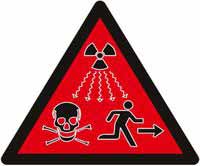
Flying and Excess Radiation, THE HUFFINGTON POST, Robert Alvarez: March 22, 2010 .….The recent reporting of dozens of cases of harm to patients from the misuse of CAT scans should serve as a cautionary warning.
Unfortunately, the doses of radiation experienced in every-day life, especially flying long-distances in jet aircraft, pose risks we should also carefully heed…..With the rise in altitude, atmospheric shielding decreases and radiation doses increase. At 30,000 feet above sea level, radiation doses increase by 90 times. Solar flares can increase doses by a factor of 100 above that. For this reason, flight crews, are considered by the United Nation’s Scientific Committee on the Effects of Atomic Radiation as radiation workers who, because of exposure to cosmic radiation, are the most highly exposed group in the world.
According to UN data, in 2000, air crews made up about 3% of the radiation workers in the world, but received about 24% of the total collective dose for all exposed workers, which include people employed at uranium mines, nuclear weapons sites, and nuclear power plants. The average estimated annual dose to flight personnel, and frequent international flyers such as professional couriers, is about 2.5 times higher than the combined average for all radiation workers.
Aircrew and frequent long-distance passengers are chronically exposed to more biologically damaging forms of radiation, such as neutrons, than the majority of nuclear workers.
Women who are pregnant have a heightened risk of cancer to their embryos. During the early part of the first trimester, when radiation sensitivity is the highest, some women may not know they are pregnant. This is why European airlines ground pregnant aircrew to prevent overexposure.
Over the past decade, at least 11 studies of military and commercial air crews show significant increased risks of dying from cancers considered to be radiogenic……
if crew members and passengers already face largely unreported radiation risks from long-distance flying, we should have the right to know just how whole-body radiation scanning machines are part of this risk.
No comments yet.
1 This Month

of the week – Shut Down Drone Warfare!


Tell the Ukrainian Government to Drop Prosecution of Peace Activist Yurii Sheliazhenko

Petition to revoke the licensing of the Near Surface Nuclear Disposal Facility (NSDF) at Chalk River. https://www.ourcommons.ca/petitions/en/Petition/Details?Petition=e-7247
To see nuclear-related stories in greater depth and intensity – go to https://nuclearinformation.wordpress.com
-
Archives
- April 2026 (57)
- March 2026 (251)
- February 2026 (268)
- January 2026 (308)
- December 2025 (358)
- November 2025 (359)
- October 2025 (376)
- September 2025 (257)
- August 2025 (319)
- July 2025 (230)
- June 2025 (348)
- May 2025 (261)
-
Categories
- 1
- 1 NUCLEAR ISSUES
- business and costs
- climate change
- culture and arts
- ENERGY
- environment
- health
- history
- indigenous issues
- Legal
- marketing of nuclear
- media
- opposition to nuclear
- PERSONAL STORIES
- politics
- politics international
- Religion and ethics
- safety
- secrets,lies and civil liberties
- spinbuster
- technology
- Uranium
- wastes
- weapons and war
- Women
- 2 WORLD
- ACTION
- AFRICA
- Atrocities
- AUSTRALIA
- Christina's notes
- Christina's themes
- culture and arts
- Events
- Fuk 2022
- Fuk 2023
- Fukushima 2017
- Fukushima 2018
- fukushima 2019
- Fukushima 2020
- Fukushima 2021
- general
- global warming
- Humour (God we need it)
- Nuclear
- RARE EARTHS
- Reference
- resources – print
- Resources -audiovicual
- Weekly Newsletter
- World
- World Nuclear
- YouTube
-
RSS
Entries RSS
Comments RSS
 nuclear-news
Leave a comment