Radiation from CT scans – a particular risk to children
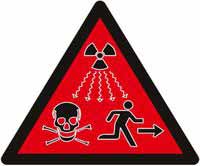 Experts say an alarming number of scans are being given inappropriately, exposing children to potentially harmful radiation that could increase their chances of developing cancer.
Researchers tackle needless child CT scans, By Pauline Tam, The Ottawa CitizenFebruary 9, 2010 (from Canadian Association of Radiologists)
An Ottawa-led research team has developed a new “rule” to help emergency doctors pinpoint which children with concussions and other seemingly minor head traumas may actually have life-threatening brain injuries.
The rule is actually a set of guidelines that advises doctors when to order CT scans, which detect hidden injuries, but deliver big doses of radiation to patients.
The goal is to improve diagnosis of a common childhood injury, while cutting down thousands of needless scans done on the 650,000 children who, every year, show up in Canadian and U.S. emergency rooms with apparently minor head injuries.
Although the use of CT head scans has more than tripled over the past decade, doctors haven’t necessarily become more adept at diagnosing brain injuries.
Experts say an alarming number of scans are being given inappropriately, exposing children to potentially harmful radiation that could increase their chances of developing cancer.
The Canadian Association of Radiologists estimates one in three CT scans produces no useful information and contributes to rising health-care expenses….
CT scans can give doctors precise and detailed views of the brain, allowing them to catch injuries not visible during a physical exam. The tradeoff is the scans expose patients to much higher radiation doses than conventional X-rays; a single CT head scan is equivalent to 100 head X-rays.
Children are highly sensitive to radiation; even minor damage to their cells could eventually cause cancer. Health Canada has estimated that radiation-induced cancers kill 780 to 2,500 Canadians a year…………..
Tips for Parents
– Ask if the treating physician has consulted a radiologist.
– Avoid multiple CT scans by asking for alternative imaging methods such as ultrasounds or MRIs.
– Limit your child’s exposure by asking for the lowest radiation dose necessary, based on the size of the child, and that exposure be limited to the indicated area.
– If the scan is medically necessary, don’t hesitate to accept it. Any risks are outweighed by potential benefits. http://www.ottawacitizen.com/news/Researchers+tackle+needless+child+scans/2539203/story.html
Source: Canadian Association of Radiologists
© Copyright (c) The Ottawa Citizen
No comments yet.
1 This Month

of the week – Shut Down Drone Warfare!


Tell the Ukrainian Government to Drop Prosecution of Peace Activist Yurii Sheliazhenko

Petition to revoke the licensing of the Near Surface Nuclear Disposal Facility (NSDF) at Chalk River. https://www.ourcommons.ca/petitions/en/Petition/Details?Petition=e-7247
To see nuclear-related stories in greater depth and intensity – go to https://nuclearinformation.wordpress.com
-
Archives
- March 2026 (237)
- February 2026 (268)
- January 2026 (308)
- December 2025 (358)
- November 2025 (359)
- October 2025 (376)
- September 2025 (257)
- August 2025 (319)
- July 2025 (230)
- June 2025 (348)
- May 2025 (261)
- April 2025 (305)
-
Categories
- 1
- 1 NUCLEAR ISSUES
- business and costs
- climate change
- culture and arts
- ENERGY
- environment
- health
- history
- indigenous issues
- Legal
- marketing of nuclear
- media
- opposition to nuclear
- PERSONAL STORIES
- politics
- politics international
- Religion and ethics
- safety
- secrets,lies and civil liberties
- spinbuster
- technology
- Uranium
- wastes
- weapons and war
- Women
- 2 WORLD
- ACTION
- AFRICA
- Atrocities
- AUSTRALIA
- Christina's notes
- Christina's themes
- culture and arts
- Events
- Fuk 2022
- Fuk 2023
- Fukushima 2017
- Fukushima 2018
- fukushima 2019
- Fukushima 2020
- Fukushima 2021
- general
- global warming
- Humour (God we need it)
- Nuclear
- RARE EARTHS
- Reference
- resources – print
- Resources -audiovicual
- Weekly Newsletter
- World
- World Nuclear
- YouTube
-
RSS
Entries RSS
Comments RSS
 nuclear-news
Leave a comment