Aging Vermont Yankee nuclear plant – a hazard to public health
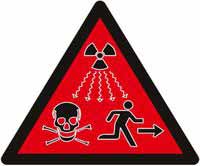 Beyond Nuclear 22 Jan 2010 Entergy Nuclear has betrayed the trust of the lawmakers, regulators, and citizens of Vermont. Simultaneous with its revelation of radioactivity leaks on site, Vermont Yankee spokespeople engaged in a predictable campaign to downplay the health and safety risks of tritium. However, tritium can impact the human body right down to the DNA level, and can cross the placenta from mother to fragile fetus. At such intimate levels, tritium can and does damage human health, leading to cancer, genetic damage, birth defects, and other maladies. The National Academy of Science has reported consistently over the decades that any exposure to radioactivity, no matter how low the dose, still carries a health risk. As reactors age – and Vermont Yankee is nearly 40 years old – its systems, structures and components degrade, worsening tritium leaks from buried piping. Vermont Yankee’s license should not be extended 20 additional years.
Revival of the nuclear industry too costly
(USA) Fortunately, there are viable alternatives to nuclear power, including efficiency, wind, biomass and geothermal, which are not only more environmentally friendly and cheaper, but could be built much more quickly and at much lower risk to investors and taxpayers. And recent changes in the long-term outlook for U.S. natural gas supplies make nuclear power look even more uneconomical.
Nuclear Power: Too Costly to Revive Is nuclear power a solution we can afford? The short answer is no.
GreenTech Media Elliott Negin 01 21 10
“…..Even discounting nuclear power’s security and safety problems, the cost of construction could be the industry’s Achilles’ heel…….the industry has benefited from considerable federal and state government subsidies that mask the true cost of the technology, including staggering capital costs and the risk of catastrophic accidents, by shifting these burdens onto taxpayers and ratepayers. The industry is now seeking to shift even more costs and risks onto the public as part of pending climate and energy legislation. In 2005, Congress authorized $60 billion in loan guarantees for new energy technologies. Of that amount, the Department of Energy (DOE) allocated $18.5 billion for new nuclear plants. But the industry wants more — a lot more. The Nuclear Energy Institute, the industry’s lobbying arm, says it needs a “permanent financing platform” to provide the industry a minimum of $100 billion in additional loan guarantees on top of the billions it already has been allocated. Continue reading
Anti-nuclear movement grows, with Germany’s unsolved nuclear waste problem
The decision by Britain to send waste to Germany has served as a reminder that the Germans have not solved the problem of how and where to store it. This uncertainty, and news of the mine in Saxony, is stoking the embers of the anti-nuclear movement — demonstrations are planned for this weekend — and reviving it as a political force.
German nuclear programme threatened by old mine housing waste TIMESONLINE By BEN EVANS
Associated Press Writer Roger Boyes in Berlin January 22, 2010
A leaky salt mine used as a radioactive dump is jeopardising Germany’s plans to cling on to nuclear power despite fierce political opposition. Continue reading
Highly radioactive nuclear waste begins its secret journey to Japan
 Nuclear waste shipment leaves Britain for Japan Telegraph.co By Julian Ryall in Tokyo 21 Jan 2010 Environmentalists in Japan have expressed concern about the first shipment of highly radioactive waste to leave britain under a controversial repatriation scheme, saying any accident to befall the ship transporting the waste would result in an “environmental disaster”. Continue reading
Fire risks at nuclear plant
NRC cites fire hazards at Alabama nuclear plant WRAL.com 20 Jan 10WASHINGTON — Federal regulators are raising new concerns about the Tennessee Valley Authority’s Brown’s Ferry nuclear plant in north Alabama. In a letter released Thursday, inspectors from the Nuclear Regulatory Commission found that equipment used to automatically shut down the plant’s reactors in an emergency was not properly protected from fire hazards. The NRC described the findings as significant “apparent violations.”..http://www.wral.com/news/state/story/6855064/
Record high levels of Tritium found at Vermont Yankee nuclear plant
 Much Higher Tritium Level Found at Nuclear Plant . Tritium search at Vermont Yankee turns up reading 90 times higher than previous record. ABC News/Money By DAVE GRAM Associated Press Writer
MONTPELIER, Vt. January 20, 2010 (AP) State officials said Wednesday more radioactive tritium had been found at the Vermont Yankee nuclear plant — at levels more than 90 times higher than found in a test well nearly two weeks ago……………..State and Vermont Yankee officials said Wednesday they hoped the finding of much higher tritium concentration in the concrete trench might mean they had found the source of the contamination………..
Meanwhile, legislative leaders and the Douglas administration’s point person on utility regulation said the state Health Department should conduct its own tests for radioactive leaks at Vermont Yankee and not rely on the plant for information about testing around the Vernon reactor. That call came a week after it was revealed that Vermont Yankee, owned by New Orleans-based Entergy Corp., had misled state officials by saying the plant did not have underground piping of the type that could carry radioactive substances like tritium……http://abcnews.go.com/Business/wireStory?id=9617971
Local water supply might be ruined by uranium mining
(USA) Uranium threat to local lakes under study
A $437,000 study being conducted by the city of Virginia Beach, Va. will examine what might happen to the water quality in Lake Gaston and Kerr Lake if a proposed uranium mine in Chatham, Va. were struck by a Probable Maximum Precipitation (PMP) storm. “The state is attempting to get a study going through the National Academy of Science,” said Virginia Beach Director of Public Works Thomas Leahy. “But that study will not look at site specific issues or do any modeling of possible catastrophic events.”…..Leahy said the concern is that such a catastrophic event, should it occur, could raise the water radiation level in the lake significantly enough to force Virginia Beach to stop using it as a water source, a move that could cost the city over $500 million.
1 This Month

of the week – Shut Down Drone Warfare!


Tell the Ukrainian Government to Drop Prosecution of Peace Activist Yurii Sheliazhenko

Petition to revoke the licensing of the Near Surface Nuclear Disposal Facility (NSDF) at Chalk River. https://www.ourcommons.ca/petitions/en/Petition/Details?Petition=e-7247
To see nuclear-related stories in greater depth and intensity – go to https://nuclearinformation.wordpress.com
-
Archives
- March 2026 (230)
- February 2026 (268)
- January 2026 (308)
- December 2025 (358)
- November 2025 (359)
- October 2025 (376)
- September 2025 (257)
- August 2025 (319)
- July 2025 (230)
- June 2025 (348)
- May 2025 (261)
- April 2025 (305)
-
Categories
- 1
- 1 NUCLEAR ISSUES
- business and costs
- climate change
- culture and arts
- ENERGY
- environment
- health
- history
- indigenous issues
- Legal
- marketing of nuclear
- media
- opposition to nuclear
- PERSONAL STORIES
- politics
- politics international
- Religion and ethics
- safety
- secrets,lies and civil liberties
- spinbuster
- technology
- Uranium
- wastes
- weapons and war
- Women
- 2 WORLD
- ACTION
- AFRICA
- Atrocities
- AUSTRALIA
- Christina's notes
- Christina's themes
- culture and arts
- Events
- Fuk 2022
- Fuk 2023
- Fukushima 2017
- Fukushima 2018
- fukushima 2019
- Fukushima 2020
- Fukushima 2021
- general
- global warming
- Humour (God we need it)
- Nuclear
- RARE EARTHS
- Reference
- resources – print
- Resources -audiovicual
- Weekly Newsletter
- World
- World Nuclear
- YouTube
-
RSS
Entries RSS
Comments RSS
 nuclear-news