New nukes just a pipe-dream – old nukes are the problem
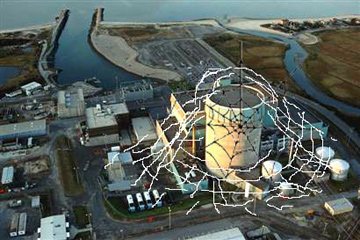
What To Do With Zombie Nuke Plants CBS News November 24, 2009 by Christian Parenti: Thirty Years Affter The Three Mile Island Partial Meltdown, Old Plants Pose The Real Nuclear Power Threat. Oyster Creek Generating Station, .. the oldest in the country, was slated to close in 2009 when its original forty-year license was ending. It had seen four decades of service, using radioactively produced heat to boil water into high-pressure steam that ran continuously through hundreds of miles of increasingly brittle and stressed piping.
Tritium is a form of hydrogen. In August workers found another tritium leak coming from a pipe buried in a concrete wall. Radiation makes metal brittle, so old pipes must be routinely switched out for new ones. The second leak was spilling about 7,200 gallons a day and contained 500 times the acceptable level of radiation for drinking water.That leaking pipe had erroneously–or perhaps fraudulently–been listed in paperwork as replaced. How this error occurred remains unclear. What seems likely is that the plant’s previous owner, GPU Nuclear, was deliberately skimping on maintenance as it approached the end of the plant’s license. Then Oyster Creek was sold to Exelon and won relicensing.
How many other mislabeled, brittle, old components remain in the plant’s guts is impossible to determine without a massive audit and investigation. Unfortunately, stories like this are all too common: crumbling, leaky, accident-prone old nuclear plants, shrouded in secrecy and subject to lax maintenance, are getting relicensed all over the country. ………………new nukes are not the issue. New atomic plants are prohibitively expensive. If enough public subsidies are thrown at the industry, one or two gold-plated, state-of-the-art, extremely expensive nuclear power stations may eventually be built, at most.
The real issue is what happens to old nukes. The atomic power industry has a plan: it wants to make as much money as possible from the existing fleet of 104 old, often decrepit, reactors by getting the government to extend their licenses. The oldest plants, most of which opened in the early 1970s and were designed to operate for only forty years, should be dead by now. Yet, zombielike, they march on, thanks to the indulgence of the NRC. ……………….
Over the past two decades the NRC has also promulgated rules that effectively exclude from consideration many of the grounds on which the public could intervene to oppose relicensing. For example, the public cannot raise the issue of terrorism. Nor can it question maintenance plans, or waste storage plans, or even evacuation procedures. …………………..
This fleet of poorly regulated zombie plants is the real story of nuclear power. Building hundreds of new nukes to save us from climate change is a pipe dream–the time and expense necessary for that would be impossible to overcome in the decade or two remaining. And so the debate about the future of atomic power in the age of climate change functions mostly as a smoke screen behind which these old, leaky, crumbling plants are being pushed to the limit of their endurance. Half the fleet has already been relicensed and many up-rated to run at more than 100 percent of their designed capacity. To avoid dangerous accidents over the next two decades, the industry must be subject to real oversight. For that to happen, the NRC must be reformed.
No comments yet.
1 This Month


18 March Webinar @ 1 PM EST: An Assessment of SMR Projects: The Case of Canada
register for the zoom:
https://us02web.zoom.us/webinar/register/WN_o8BIIOUvQ2ONJR1nta65DQ#/registration


of the week – STOP SMALL MODULAR REACTORS IN CANADA
To see nuclear-related stories in greater depth and intensity – go to https://nuclearinformation.wordpress.com
-
Archives
- March 2026 (141)
- February 2026 (268)
- January 2026 (308)
- December 2025 (358)
- November 2025 (359)
- October 2025 (376)
- September 2025 (258)
- August 2025 (319)
- July 2025 (230)
- June 2025 (348)
- May 2025 (261)
- April 2025 (305)
-
Categories
- 1
- 1 NUCLEAR ISSUES
- business and costs
- climate change
- culture and arts
- ENERGY
- environment
- health
- history
- indigenous issues
- Legal
- marketing of nuclear
- media
- opposition to nuclear
- PERSONAL STORIES
- politics
- politics international
- Religion and ethics
- safety
- secrets,lies and civil liberties
- spinbuster
- technology
- Uranium
- wastes
- weapons and war
- Women
- 2 WORLD
- ACTION
- AFRICA
- Atrocities
- AUSTRALIA
- Christina's notes
- Christina's themes
- culture and arts
- Events
- Fuk 2022
- Fuk 2023
- Fukushima 2017
- Fukushima 2018
- fukushima 2019
- Fukushima 2020
- Fukushima 2021
- general
- global warming
- Humour (God we need it)
- Nuclear
- RARE EARTHS
- Reference
- resources – print
- Resources -audiovicual
- Weekly Newsletter
- World
- World Nuclear
- YouTube
-
RSS
Entries RSS
Comments RSS
 nuclear-news
Leave a comment