The nuclear history of Port Hope – told in “Blind Faith”.

 Blind Faith: The Nuclear History of Port Hope, Ontario January 15, 2015 by Dennis Riches @DennisRiches “……..hibakusha (the Japanese word for radiation victims) become invisible. When a new group of people become victims, such as in Fukushima in 2011, they feel that they have experienced a unique new kind of horror. For them, for their generation, it is new, but for those who know the historical record, it is a familiar replay of an old story. The people of Fukushima should know by now that they are bit players who have been handed down a tattered script from the past.
A case in point is “Blind Faith,” the superb 1981 book by journalist Penny Sanger, about the small irradiated Canadian town of Port Hope on the shores of Lake Ontario. (See the timeline at the end of this article) [2] In the 1970s it faced (and more often failed to face) the toxic legacy of processing first radium, then uranium for nuclear weapons and nuclear power plants.
In a saner world this book would not be out of print and forgotten. It would be a classic text known by everyone who has ever had to share his town with a dangerous corporate citizen. Then there would be no surprises when a nuclear reactor explodes or a cancer cluster appears somewhere new. It wouldn’t be a shock to see the victims themselves fall over each other in a rush to excuse their abuser, beg for a continuation of jobs and tax revenue, and threaten the minority who try to break the conspiracy of silence.
On the back cover of the 1981 paperback edition of “Blind Faith” there was an endorsement by the late great Canadian writer Farley Mowat, who passed away in the spring of 2014:
Penny Sanger has written a fascinating and fearsome account of the emotional turmoil that engulfs a small town when it discovers that its major industry is a threat to the health of its citizens. This is a classic account of how economic power enables industry to ride roughshod over those who must depend on it for their daily bread.
Although I wrote above that “Blind Faith” illustrates universal truths about what happens to communities contaminated with radiation, there are always unique aspects of the situation that come into play. In this case, we see the extreme complacency and obliviousness of Canadian society to the role that the country played in the development of nuclear weapons and nuclear power.
The uranium refinery in Port Hope was a key element in the Manhattan Project. ………
One stand-out account is that of a widow whose husband, a long-time Eldorado worker, had died of lung cancer at age 50. He had worked at Eldorado for over twenty years, during the era when workplace monitoring and standards were non-existent. Her husband was no longer there to say whether he too was “philosophical” about it and “couldn’t be bitter about it” like his wife and his daughter claimed. The widow said that in spite of her husband’s shortened life, they were grateful for the good jobs and university education that the children were able to get. Thanks to Eldorado, they had come up in the world.
Penny Sanger passed no judgment on this thinking, but I find it to be a rather disturbinging example of working man’s Stockholm Syndrome. The victim has internalized the values of the captor, and lost self-esteem and critical thinking skills in the process. The bereaved family shrugs that they “can’t be bitter about it.” They’ve internalized the value that children have to go to university to live worthwhile lives, and it’s alright if parents have to kill themselves to accomplish this goal.
It seemed to never occur to any of the Port Hope boosters that there were dozens of similar towns in rural Ontario that had found ways to survive without hosting toxic industries. I know a family of Polish immigrants who landed in Port Hope in the 1960s, and they managed to get by without working for Cameco. The children had the sense to leave town after high school when they saw their friends going straight to grim lives working with the yellowcake down at the plant. One of them managed somehow to get a couple of university degrees after he left town.
This lack of imagination among the terminally hopeful applies more widely. Not only do company towns fail to imagine less toxic ways to live, but large nations also fail to imagine new paradigms for energy and economic systems……..
“Blind Faith” is available on a website dedicated to the history of Port Hope. Since it is out of print and over thirty years old, I asked the author if she would allow its free distribution as a pdf file. She gave her permission, but of course the common sense rules apply. If you want to sell the book, ask the author for permission. If you redistribute it free, in whole or in part, do so with proper citation.Read it in a web browser:
http://www.porthopehistory.com/blindfaith/blindfaith.htm
Free download (permitted by author):
Penny Sanger, “Blind Faith” (pdf) (McGraw-Hill Ryerson, 1981), 135 pages. http://www.mintpressnews.com/MyMPN/blind-faith-nuclear-history-port-hope-ontario/
‘Earth’s Greatest Enemy’ Delivers A Penetrating Insight Into The Heart Of Our Dystopia
Caitlin Johnstone, Jul 28, 2026, https://www.caitlinjohnst.one/p/earths-greatest-enemy-delivers-a?utm_source=post-email-title&publication_id=82124&post_id=208773412&utm_campaign=email-post-title&isFreemail=true&r=1ise1&triedRedirect=true&utm_medium=email
There’s a powerful new documentary out called Earth’s Greatest Enemy by Abby Martin about the ecocidal abuses of the US war machine, and it addresses the most pressing existential hurdles we face as a species like nothing I’ve seen before.
The film breaks down how the US military has become the single most environmentally destructive institution on our planet by an extremely massive margin, walking the audience through the many ways the Pentagon and its global metastases have been churning out carbon emissions, pouring toxins into the air and water, wiping out precious ecosystems for gratuitous military bases, and pummeling our sea life with sonar and noise pollution, all while gleefully salivating at the prospect of plundering the resources which lay hidden beneath our planet’s rapidly thawing polar ice caps.
Martin skillfully ties the planet-devouring behavior of the US military to the global systems of capitalism and imperialism it was built to uphold. The viewer is left with a crystal clear picture of the ways ecocide, militarism and capitalism are inseparably intertwined, and an understanding that meaningfully opposing any of these malignancies necessarily entails opposing them all. The liberal fiction that one can be pro-environment while also supporting the US military is forcefully exposed for the absurdity that it is.
It’s a jarring film with extremely dark subject matter, but it also manages to be a work of transcendent beauty and optimism. A deep love of humans and all of earth’s creatures shines through in shot after shot, while slick editing and an inspired soundtrack allow the movie to zip along at a lively and entertaining pace. Martin concludes with a galvanizing call to use our outrage to loosen the empire’s already weakening grip on humanity’s collective consciousness, because our entire world depends on it.
Perhaps the most touching aspect of the documentary is the personal element Martin chose to bring in to her overarching narrative. She discusses how she and her husband (antiwar activist Mike Prysner, who co-directed the film) had their lives forever altered when they had kids and experienced a new level of urgency to help give rise to a brighter future. Their family of four becomes a microcosm of humanity’s struggle to liberate itself from the tyranny of the machine to create a better world for our children, and we see Martin’s love for her son and daughter reflected in a great tenderness for the world as a whole.
Anyway, I’ve never felt inclined to write a film review before so I don’t know if I’ve done a good job of encouraging people to watch this thing, but for my own audience I truly cannot recommend Earth’s Greatest Enemy enough. It’s available streaming on Apple TV, Prime Video, and Watermelon Pictures. Screening tour dates and further information can be found on the Earth’s Greatest Enemy website. Be sure to leave a review on Letterboxed or IMDB if you can.
Thirteen films that are essential to understanding the nuclear age
Bulletin, By Alex Wellerstein | July 16, 2026
Nuclear films are both reflections of the zeitgeist in which they are made and shapers of it. They feed off of both popular and expert anxieties, while also helping to solidify the terms on which these anxieties are engaged. While some themes are apparently universal (how many ways are there to blunder into nuclear war), some feel very much of their particular time and place…………………………………………………………………………………………..
This list has a strong Anglophone bias, and with a few notable exceptions approaches the topic from largely American points of view. This is a reflection of its author’s limitations and the film’s relative accessibility to an American. Undoubtedly lists could (and should) be created from different cultural and national perspectives. The list is presented chronologically and can be thought of as an unfolding of the nuclear perspective from the early nuclear age to the present.
Godzilla
1954, Toho. Directed by Ishirō Honda. Released in the USA as Godzilla, King of the Monsters, in 1956. Inspired in part by the 1954 Castle Bravo fallout disaster, which killed a Japanese fisherman and led to a boycott on tuna in Japan, Godzilla (Gojira in the Japanese original) is a more complicated film than just “radioactive monster attacks Tokyo.”…………………………….
On the Beach
United Artists, 1959. Directed by Stanley Kramer. The premise of On the Beach, adapted from the 1957 novel by the British author Nevil Shute, is that a future global nuclear war using cobalt bombs has both eradicated most of human civilization and created a massive, deadly cloud of fallout that is gradually circulating the globe, killing all in its path. Those in the southern hemisphere are momentarily safe, but the cloud is coming……………..
Dr. Strangelove or: How I Learned to Stop Worrying and Love the Bomb
1964, Columbia Pictures. Directed by Stanley Kubrick. Stanley Kubrick’s dark comedy about the risk of unauthorized and accidental nuclear war fundamentally altered the lexicon with which we talk about nuclear weapons…………………… . When Daniel Ellsberg, then still at RAND and having just completed a classified study into the command and control problems central to the plot, saw the film in theatres, he was amazed — it was, he wrote later, “essentially, a documentary.”
Fail Safe
1964, Columbia. Directed by Sidney Lumet. Fail Safe might be remembered as the film of mid-1960s nuclear anxiety had it not come out the same year as Dr. Strangelove and overlapped so significantly with its themes………… its management of tension has led to its retrospective status as a critical success.
The China Syndrome
1979, Columbia Pictures. Directed by James Bridges.The sole film specifically about nuclear power on this list, The China Syndrome is a taut thriller that was elevated into something even more by its historical moment. ………………………..The film would work on its own merits, but the fact that the film premiered less than two weeks before the Three Mile Island accident catapulted it to the position of prophecy—for better and for worse.
Barefoot Gen (Hadashi no Gen)
1983, Kyodo Eiga. Directed by Mori Masaki. Barefoot Gen, first a manga (Japanese comic book) published in 1976, is a fictionalized version of writer and illustrator Keiji Nakazawa’s experiences of being a six-year-old boy growing up in Hiroshima before, during, and after the atomic bombing.
The Day After
1983, ABC. Directed by Nicholas Meyer. This classic made-for-television movie about the run-up to nuclear war and its immediate aftermath ……………… The film is sometimes cited as a factor in Reagan’s willingness to initiate talks with the Soviet Union and initiate “the golden era of arms control.”
Testament
Paramount, 1983. Directed by Lynne Littman. Among the crowded field of “the day after nuclear war” films of the early 1980s, Testament stands out for its relative quiet, reasonableness, and lack of sensationalism. ………………………………..
WarGames
1983, MGM. Directed by John Badham. WarGames is simultaneously a very ridiculous film and a very intelligent one. A teenage computer hacker infiltrates a government mainframe that, unbeknownst to him, is actually an advanced supercomputer at NORAD run by a highly capable-but-flawed artificial intelligence. ………………with nuclear war, “the only winning move is not to play.”
Threads
BBC, 1984. Directed by Mick Jackson. Widely regarded as the darkest and most dismal of the “day after” genre,………………………………………………………..
When the Wind Blows
Recorded Releasing, 1986. Directed by Jimmy T. Murakami. This distinctly British animated film, adapted from a 1982 graphic novel of the same name by Raymond Briggs, follows an aging couple living in rural Sussex before, during, and after a nuclear war. Stereotypically British stiff upper lips, enhanced by blundering ignorance, keeps them in largely non-complaining good humor even as the world collapses around them. ………………………….
Oppenheimer
2023, Universal. Directed by Christopher Nolan. There have been several attempts to represent the complicated life of J. Robert Oppenheimer on film. Nolan’s is the most stylized and artistic, and it’s based on the best source material ………………………
A House of Dynamite
2025, Netflix. Directed by Kathryn Bigelow. This recent nuclear thriller depicts the 20 minutes between the detection of an unattributed missile launch heading towards the United States, and its arrival at its target……………….
Honorable mentions
There are many other films one might want to include in such a list. Those that did not make the cut, but came close to it for me, included the suppressed British nuclear aftermath pseudo-documentary The War Game (1966); the ruminative Soviet post-apocalyptic Dead Man’s Letters [Pisma myortvogo cheloveka] (1986); the impending nuclear attack cult-classic Miracle Mile (1988); the Japanese Hiroshima family retrospective Black Rain [Kuroi ame] (1989); the late-Cold War Tom Clancy submarine defection thriller The Hunt for Red October (1990); the Cuban Missile Crisis dramatization Thirteen Days (2000); and the post-Cold War Tom Clancy nuclear terrorism thriller The Sum of All Fears (2002). https://thebulletin.org/premium/2026-07/thirteen-films-that-are-essential-to-understanding-the-nuclear-age/
Fukushima review – a devastating account of disaster and denial in 2011 nuclear catastrophe
A tense return to the disaster foregrounds the heroism of the ‘Fukushima 50’ while raising questions about corporate secrecy and nuclear safety.
Peter Bradshaw, Wed 18 Feb 2026, https://www.theguardian.com/film/2026/feb/18/fukushima-review-2011-nuclear-disaster-japan
The terrifying story of Japan’s Fukushima nuclear accident of 2011, caused by a cataclysmic earthquake and tsunami, is retold by British film-maker James Jones and Japanese co-director Megumi Inman. The natural disaster left 20,000 dead, and 164,000 people were displaced from the area around the nuclear plant, some with no prospect of return. The earthquake damaged the cooling systems that prevent meltdowns and caused three near-apocalyptic explosions, bringing the nation close to a catastrophe that would have threatened its very existence. Incredibly, the ultimate calamity was finally staved off by nothing more hi-tech than a committed fire brigade spraying thousands of tons of water on the exposed fuel rods.
The film plunges us into the awful story moment-by-moment, accompanied by interviews with the chief players of the time – prominently nuclear plant employee Ikuo Izawa, a shift supervisor and de facto leader of the “Fukushima 50” (actually 69 people) who became legendary in Japan and beyond for their self-sacrificial courage, staying in a nightmarish reactor when everyone else had been evacuated.
Perhaps we could have been given more context and less immediate drama, particularly more background about the plant’s dismal corporate owners, the Tokyo Electric Power Company, or Tepco, which had closed a nuclear plant in 2007 after an earthquake, with a resulting loss of profits. But to skimp on the drama might be obtuse, given the pure hair-raising shock of events. The archive footage of the tsunami spreading across the fields and farmland of Japan is deeply disturbing; “nightmare” is a word casually used, but appropriate here.
The Japanese soul had been uniquely traumatised by the nuclear issue in 1945 and Fukushima was the opening of an old wound; Barack Obama’s offers to help were received warily and the film hints that some of a certain age might have even suspected a kind of opportunistic emergency takeover, like the Douglas MacArthur rule that followed the war. There is something chillingly military in the company’s need for volunteers for a so-called “suicide squad” to vent the reactors to forestall a pressure buildup.
And as far as comparisons with the Chornobyl disaster go, that involved a single reactor; Fukushima had six ready to blow. Before I watched this film, I assumed that Japan’s modern democracy would at least have meant more transparency than the sclerotic and malign Soviet apparatchiks. But maybe not. Tepco has still not released a full history of exactly what went wrong and what discussions took place at the time. And in any case, politicians were themselves dismally eager to cover themselves by tentatively blaming Tepco.
The most robust witness here is the New York Times’s Tokyo bureau chief Martin Fackler, who gives us a crisp account of the official chaos and bungling – and the fact that Tepco had already received a report indicating the Fukushima plant was vulnerable to an earthquake and did nothing. He is interesting on corporate obeisance to the “safety myth”, an industry article of faith which does not result in vigilant and innovative efforts to improve safety, but rather icy disapproval of anyone who questions existing safety provisions. Doing so was disloyalty to the industry and could damage your career.
Perhaps inevitably, the larger questions are left open. Fossil fuels cause slow-motion catastrophe to the planet – in fact, not so slow – while nuclear fuel does not cause climate change, but could cause instant calamity. So is the answer simply what the industry says it is? More and better safety? Or can other renewables fill the gap? Either way, this is a gripping film.
Fukushima is out in the UK and US from 20 February.
This article was amended on 19 February 2026 to clarify that the death toll relates to the natural disaster alone.
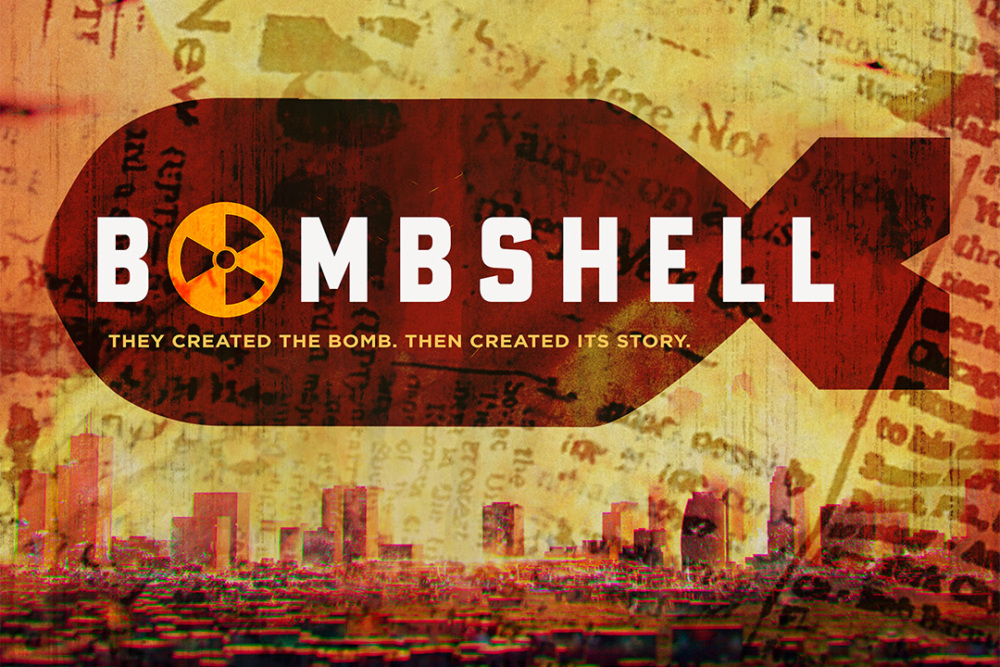
Bombshell: A Story of Truth in the Face of Censorship
Elizabeth Smith, NTI 6th Jan 2026 https://www.nti.org/risky-business/bombshell-a-story-of-truth-in-the-face-of-censorship/
What does it take to reveal truth in the face of censorship? A fascinating new PBS documentary, Bombshell, tells the story of the U.S. government’s efforts to cover up the impact of the 1945 atomic bombings of Hiroshima and Nagasaki, and the journalists who witnessed the devastation and spoke up.
Bombshell provides a detailed account of the U.S. government’s campaign to sanitize the reality of the widespread death and destruction caused by the first use of a nuclear weapon in war, including by constructing a narrative that the bombings allowed for a humane exit from World War II.
Initially, when President Truman announced the Hiroshima bombing to the American people, he reported that the bomb had been dropped on a military target. In fact, the bomb had intentionally targeted the center of the city, not a military base on its outskirts, to maximize the psychological impact on civilians. Tens of thousands of people were killed instantly and by the end of the year, as many more succumbed to radiation poisoning, as many as 140,000 were dead.
In the early months that followed the August bombings of Hiroshima and, three days later, Nagasaki, the U.S. military downplayed the human impact of the bombs with journalists, especially the devastating—and indiscriminate—effects of nuclear radiation.
The racial politics of the time also shaped who was heard, as a small set of journalists attempted to report the truth. In Autumn 1945, when Japanese and Japanese-American journalists like Yoshito Matsushige and Leslie Nakashima tried to describe what they and their families had experienced, U.S. officials labeled their work as propaganda and actively attempted to discredit them. Around the same time, Black intellectuals like Langston Hughes and Zora Neale Hurston were among the first to express outrage at the bombings; they saw Japanese civilians as fellow people of color and sought to humanize their suffering, questioning whether the United States would have committed an atrocity of this scale on a European country. Mainstream news sources sidelined their work.
Eventually, the truth began to take root. Charles Loeb, a well-regarded Black journalist with a medical background, was one of the first American journalists to write about the effects of radiation, drawing on his medical training to understand the abnormalities he had witnessed. Later, The New Yorker asked John Hersey to report on the impact of the bombings. When he decided to shift focus towards the human toll of the bombs, it became clear that one article could not do justice to the lives impacted. The New Yorker ultimately devoted an entire issue to Hersey’s reporting, marking the first coverage of the bombs’ human impacts in mainstream media and resulting in the seminal book titled simply, Hiroshima.
Bombshell lays bare the power of narratives—and counter narratives. It shows, with infuriating and heartbreaking precision, how misinformation about the bombings influenced public opinion.
It also is a testament to the essential role of journalism, the importance of listening to those with different perspectives, and the need to pay attention to those who challenge prevailing narratives. Otherwise, we overlook history’s most crucial lessons.
Toxic radioactive legacy of rare earths processing plan.
Industrial health expert T Jayabalan told FMT that he lived in Bukit Merah for three years during the 1980s, “collecting data” on the residents there. According to him, Lai Kwan and Cheah were only two of the many people he studied before presenting his findings to Malaysian courts. “Birth defects still exist,” he said, “and the number of miscarriages is incredibly high. Even if a foetus survives, it can still be born with leukemia and brain damage.”
“I’ve seen it happen with my own eyes. I’ve seen the suffering of these people. The only good thing about Lynas is that it hasn’t happened yet.”
 (includes VIDEO) Inside the world of a radiation victim, Free Malaysia Today Patrick Lee, November 24, 2011 VIDEO Tan Chui Mui’s short documentary is also about a mother’s undying love. Cheah was born in 1983, a year after Lai Kwan worked as a bricklayer at the Mitsubishi rare earth plant in Bukit Merah, Perak.
Cheah has multiple congenital defects, including a hole in the heart. He is also mentally deficient and virtually blind. And Lai Kwan is beside her son nearly every hour of her life, as portrayed in a short film entitled “Lai Kwan’s Love”…..
she tells the camera that she had no idea that the rare earth plant where she worked was handling toxic materials.
“We were working at the factory’s extension site. We didn’t know what kind of factory it was. We simply worked there….
Lai Kwan said she had not received compensation for her son’s disability, and that two men attempted to pay her into keeping quiet over Cheah.
“They asked me not to say my son’s sickness is related to the rare earth plant. I said I didn’t want the money, whatever the amount was. If I take your money, I said, and your factory continues to operate here, more newborns will get sick. What good is the money then?”
The film is the second in a four-part series called “Survival Guide Untuk Kampong Radioaktif”, a project designed to show viewers the adverse effects of radiation.
The Asian Rare Earth plant in Bukit Merah was closed in 1992 following years of protests from local residents. The area is still going through a massive RM303 million clean-up by Mitsubishi Chemicals.
None of the people in Bukit Merah were compensated, although Mitsubishi Chemicals donated RM500,000 to the community’s schools in an out-of-court settlement.
Locals in the 11,000-large town have blamed the plant for the population’s many birth defects and eight leukemia cases. Seven of the leukemia cases have since died……
Birth defects still exist’
Industrial health expert T Jayabalan told FMT that he lived in Bukit Merah for three years during the 1980s, “collecting data” on the residents there.
According to him, Lai Kwan and Cheah were only two of the many people he studied before presenting his findings to Malaysian courts. “Birth defects still exist,” he said, “and the number of miscarriages is incredibly high. Even if a foetus survives, it can still be born with leukemia and brain damage.”
Jayabalan also said that many people associated with Bukit Merah had since passed away, including “lawyers and plaintiffs” involved with the case.
“They died of cancer. Some of them died very young.”
He said he worried that the controversial Lynas rare earth plant near Kuantan, which is expected to see operations begin early next year, would see a “tenfold” effect.
“The amount of metals to be used is huge compared to Bukit Merah, and it’s going to leak, and these areas (in Kuantan) are prone to flooding,” he said.
“I’ve seen it happen with my own eyes. I’ve seen the suffering of these people. The only good thing about Lynas is that it hasn’t happened yet.”
http://www.freemalaysiatoday.com/2011/11/24/inside-the-world-of-a-radiation-victim/
NUCLEAR HOTSEAT podcast – Nuclear Radiation Cancer Zone: Piketon Ohio’s Portsmouth Gaseous Diffusion Plant
Podcast at https://www.nuclearhotseat.com/podcast/piketon-nuclear-radiation-cancer/

: Dangers Grow in Nuclear Radiation Cancer Zone: Piketon Ohio’s Portsmouth Gaseous Diffusion Plant – Journalist Jason Salley
The Nuclear Hotseat Hot Story with Linda Pentz. Gunter
Reopen Zaporizhzhia nuclear power plant? Ukraine should do renewables instead.
This Week’s Featured Interview:
- Jason Salley is an investigative journalist known for his hard-hitting reporting on environmental contamination and government oversight. With a focus on uncovering the hidden truths of Appalachia, his work has exposed decades of radioactive pollution and corporate negligence at the Portsmouth Gaseous Diffusion Plant in Pike County, Ohio. Salley’s fearless storytelling and relentless pursuit of the facts have made him a powerful voice for the communities impacted by America’s nuclear legacy………………
Libbe HaLevy produces and hosts Nuclear Hotseat, the weekly international news magazine on all things anti-nuclear. She has been a TEDx speaker, an Amazon #1 Bestselling Author, hosted rallies, and led media workshops at anti-nuclear conferences around the country.
Canada supplied uranium for atomic bombs in WWII — 80 years later, the cleanup continues
Gordon Edwards, 6 Apr 25
Atomic Reaction is a documentary feature film dealing with the radioactive history and contamination of the town of Port Hope Ontario, located on the North shore of Lake Ontario just east of Toronto.
Here is a YouTube of the film: https://www.youtube.com/watch?v=8jC1DPOYoQ0
Canada played a key role in chemically refining uranium from Canada and the Congo for use in the first two atomic bombs dropped on the cities of Hiroshima and Nagasaki in 1945. Canada then became the largest supplier and exporter of uranium in the world, in the post-war period, most of it sold for tens of thousands of nuclear warheads during the Cold War, until the sale of Canadian uranium for nuclear weapons was ended by Prime Miniister Pearson in 1965.
In the process, the town of Port Hope (where all this refining took place until 1980) became thoroughly contaminated with radioactive wastes that were carelessly discarded and dispersed all about town – dumped into the harbour and into open ravines about town, used in roadways and mingled with the sandy beach, and used in huge quantities as construction material and as fill for up to a thousand buildings – homes, schools, offices, throughout town – requiring a massive radioactive cleanup costing over two billion dollars, resulting in two surface mounds of about a million tons each which will remain highly radiotoxic for many thousands of years to come. The cleanup is stlll ongoing today.
A similarly sized mound of radioactive waste is currently planned for the cleanup of the Chalk River Laboratories, created near the end of World War 2 as a secret site for producing plutonium for the US bomb program among other things. Canada sold plutonium to the US military for weapons purposes.
For 20 years after the end of World War 2. The Chalk River megadump has been approved by Canada’s Nuclear regulator, but two of three court challenges have been successful in delaying the implementation pending legally required consultations with the Algonquin peoples on whose traditional land the megadump would be located, and pending the careful evaluation of alternative sites or waste management options that will not destroy the habitat of several endangered species.
The future of Europe won’t be shaped by mushroom clouds – why nuclear weapons don’t provide security
International Campaign to Abolish Nuclear Weapons (ICAN), April 2025
In these uncertain times, some argue that nuclear weapons are the answer to Europe’s security. But the future of Europe will not be written in the shadow of mushroom clouds, it will be shaped by those who believe in dialogue, diplomacy, and disarmament. Across the continent, people are pushing back against this dangerous illusion. From parliamentary action to media interventions, referendum campaigns, and grassroots organizing, we are proving that real security comes from diplomacy and disarmament, not nuclear weapons. Join us in building a safer, nuclear – weapons – free future. Find local partners near you: http://icanw.org/partners
Radioactive waste danger at St Louis, USA – new film ‘Atomic Homefront’.
‘Atomic Homefront’: St. Louis Residents Fire Back at EPA Over Local Nuclear Waste http://www.hollywoodreporter.com/news/atomic-homefront-clip-nuclear-waste-st-louis-doc-watch-video-1058118 The film, which premieres at the Doc NYC festival, follows a group of moms-turned-activists as they confront government agencies and corporations over the illegal dumping of radioactive waste in their neighborhood.
A group of concerned St. Louis residents confront representatives from the Army Corps and EPA over the safety of their neighborhood, in light of nuclear waste being dumped in a nearby landfill, in an exclusive clip from the HBO documentary Atomic Homefront.
The film, which is set to premiere at the Doc NYC festival on Wednesday (Nov. 15) before opening in New York on Friday (Nov. 17) and airing on HBO early next year, follows a group of moms-turned-activists in the St. Louis area as they take on the government and corporations over the illegal dumping of nuclear waste in their community in a desperate bid to protect their families from the toxic effects of radioactive waste.
In the clip, the residents of Bridgeton, Missouri, gather at a meeting with representatives from the Army Corps of Engineers and EPA and the residents, many of whom are moms, grow frustrated at the officials’ inability to explain the risk facing their community and suggestion that their neighborhood is a safe living area. The residents are afraid that radioactive particles could become airborne once an uncontrolled, subsurface fire reaches the nuclear waste.
This is what nuclear war in 2024 would look like

ABC RN, Broadcast Thu 16 May 2024, https://www.abc.net.au/listen/programs/latenightlive/this-is-what-nuclear-war-in-2024-would-look-like/103840906
In 1985, President Ronald Reagan and Soviet General Secretary Mikhail Gorbachev cautioned the world “a nuclear war cannot be won and must never be fought”. Decades later, we’re closer to nuclear Armageddon than ever before, and investigative journalist Annie Jacobsen paints a devastating picture of exactly what that would look like.
Guest: Annie Jacobsen – investigative journalist and New York Times bestselling author. She also writes and produces TV, including Tom Clancy’s Jack Ryan. Her latest book is Nuclear War: A Scenario.
Credits
FILM – 3 June. SOS – The San Onofre Syndrome: Nuclear Power’s Legacy
SOS is an empowering story of successful community action to shut down leaking reactors. But then they discover horrific amounts of high-level radioactive waste lethal for millions of years are being placed in thin canisters only 108 ft. from the rising sea. Criminal mismanagement of radioactive waste is a syndrome at all 93 reactors in the U.S. and beyond. Will safer alternatives be taken in time?
Featuring Canada’s Dr. Gordon Edwards.
Watch the film June 3 – 10 here:
https://watch.eventive.org/scnuclearfree/play/65df95a376a72b002f4c49af
Then join the webinar discussion with Gordon and others:
Mon. June 10, 8 p.m. ET
Hosted by SIERRA CLUB’s Nuclear Free Grassroots Network Team
https://sierraclub.zoom.us/webinar/register/WN_nlzk54JWTHyKg8cFlKP5Hw#/registration
1 This Month

To see nuclear-related stories in greater depth and intensity – go to https://nuclearinformation.wordpress.com
-
Archives
- September 2026 (184)
- August 2026 (330)
- July 2026 (355)
- June 2026 (287)
- May 2026 (306)
- April 2026 (356)
- March 2026 (251)
- February 2026 (267)
- January 2026 (308)
- December 2025 (358)
- November 2025 (359)
- October 2025 (375)
-
Categories
- 1
- 1 NUCLEAR ISSUES
- business and costs
- climate change
- culture and arts
- ENERGY
- environment
- health
- history
- indigenous issues
- Legal
- marketing of nuclear
- media
- opposition to nuclear
- PERSONAL STORIES
- politics
- politics international
- Religion and ethics
- safety
- secrets,lies and civil liberties
- spinbuster
- technology
- Uranium
- wastes
- weapons and war
- Women
- 2 WORLD
- ACTION
- AFRICA
- Atrocities
- AUSTRALIA
- Christina's notes
- Christina's themes
- culture and arts
- Events
- Fuk 2022
- Fuk 2023
- Fukushima 2017
- Fukushima 2018
- fukushima 2019
- Fukushima 2020
- Fukushima 2021
- general
- global warming
- Humour (God we need it)
- Nuclear
- RARE EARTHS
- Reference
- resources – print
- Resources -audiovicual
- Weekly Newsletter
- World
- World Nuclear
- YouTube
-
RSS
Entries RSS
Comments RSS
 nuclear-news