Key UK Nuclear Deterrent Link Destroyed Over Yorkshire.
Britain’s sole emergency communications link for sending nuclear
retaliation orders to Trident missile submarines has been destroyed in a
spectacular disaster unwittingly observed by hundreds of Yorkshire
residents and passers-by.
During a trial on Friday, the system was seen and
filmed breaking up over Topcliffe, north of York, in clear view of
travellers on the nearby A1 motorway. The emergency system, called Low
Frequency Fall Back or LFFB and codenamed SUNFLOWER, used a “blimp”
style tethered balloon or aerostat (illustrated) to lift a 1,500 metre long
radio antenna.
Byline Times 8th Sept 2026,
https://bylinetimes.com/2026/09/08/key-uk-nuclear-deterrent-link-destroyed-over-yorkshire/
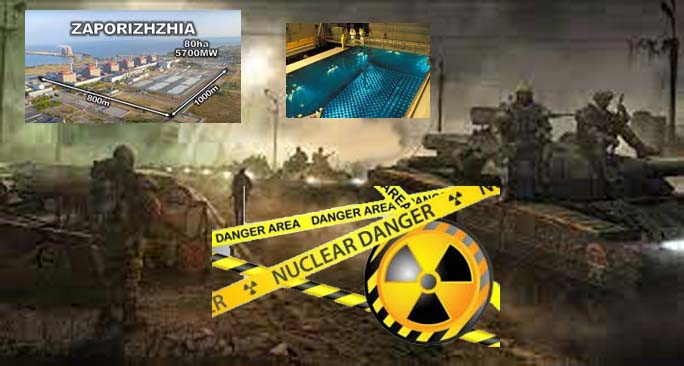
Local ceasefire in place for Zaporizhzhia power line repairs
World Nuclear News 7th Sept 2026
The International Atomic Energy Agency says that a seventh ceasefire is in place to allow demining and repair work to take place to restore external power to the Zaporizhzhia Nuclear Power Plant.
“……………….. The last remaining external power line was disconnected on 20 August “after military activity on the northern side of the Dnipro River”, which has left the plant relying on its fleet of emergency diesel generators to provide the power required for the six-unit plant.
Grossi said: “As the ZNPP’s emergency generators drained the available diesel to little more than a week of supplies, forcing its cooling pumps to be run only intermittently, I continued my persistent efforts to broker a ceasefire so that the Ferosplavna-1 power line could be repaired.”……
Repairs were carried out on a second line in June during another ceasefire, but it remains unavailable because of damage at a substation, he said.
“It goes without saying that nuclear power plant staff must be able to carry out their essential work without being attacked or placed at risk. I solemnly call on all military commanders in the region to stop attacks on nuclear power plants and their staff, and to exercise maximum military restraint. I say this because last month a drone explosion at a bus stop used by plant staff and subcontractors travelling to Zaporizhzhia nuclear power plant caused multiple casualties. The ZNPP informed the IAEA team at the plant that the explosion caused 20 casualties, including one death and three serious injuries………….
The Zaporizhzhia nuclear power plant has been under Russian military control since early March 2022. It is located on the frontline of Russian and Ukrainian forces and has lost offsite power on 26 occasions since the war began, including 10 times since June.
https://www.world-nuclear-news.org/articles/local-ceasefire-in-place-for-zaporizhzhia-power-line-repairs
The UK’s nuclear submarine town at the top of Putin’s target list
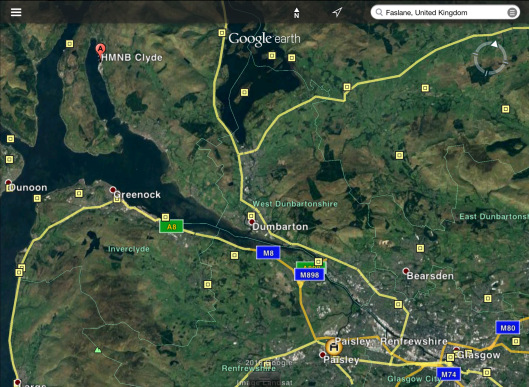
Helensburgh residents living next to the subs find rising tensions
‘worrying’, but hope upgrades at Faslane can bring an economic boost.
Mark Stewart, who lives at the Faslane Peace camp near Helensburgh in
Scotland, said: ‘All the Russia talk makes things feels scarier than it has
for a while. Russia’s veiled threats against the UK feel more tangible in
Helensburgh, the Scottish coastal town nestled close by one of Britain’s
most important military sites. Residents walking along the seafront are
well aware that the UK’s nuclear-armed submarines slide silently up and
down its open waters. HMNB Clyde, better known as Faslane, is home to the
submarines that carry the Trident weapons system, the nation’s nuclear
deterrent.
EDF Extends Reactor Outage Until January After Corrosion Signs
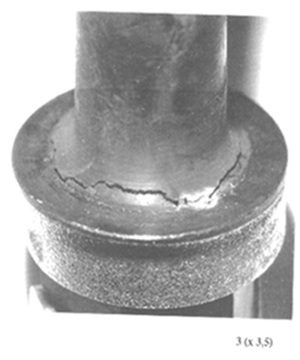
The Gravelines nuclear power station in Dunkirk, France. Electricite de France
SA extended a maintenance outage at one of its 57 nuclear reactors through
January next year, reducing power output during a key part of the heating
season. The prolonged halt at the Gravelines 5 reactor in northern France
will last seven weeks longer than initially planned until Jan. 25. That may
underpin European power prices, which have jumped in recent weeks due to
surging gas prices tied to the Iran war.
Bloomberg 3rd Sept 2026,
https://www.bloomberg.com/news/articles/2026-09-03/edf-extends-reactor-outage-until-january-after-corrosion-signs
IAEA concern over diesel supply for Zaporizhzhia generators
World Nuclear News 1st Sept 2026
The Zaporizhzhia Nuclear Power Plant has been relying on emergency diesel generators for more than 11 days, with the International Atomic Energy Agency raising concerns about fuel supplies if the loss of external power continues.
The plant, which has been under Russian military control since early March 2022, lost connection to its last operating external power line on 20 August.
Since then it has been relying on its fleet of emergency diesel generators to provide the power the plant needs, including for the pumps which cool the six reactors and their used fuel ponds.
The International Atomic Energy Agency (IAEA) team at the plant have been told that a planned delivery of diesel to the site in May had been postponed because of military activity. On Thursday and Friday, the IAEA said its experts observed the transfer of “several dozens of tonnes of diesel fuel from two different off-site locations near the ZNPP to the plant”.
IAEA Director General Rafael Mariano Grossi said: “The availability of diesel fuel is of paramount importance whenever a nuclear power plant loses off-site power, as is the ability to maintain uninterrupted logistical supply chains to and from the site. The current situation once again shows why reliable external power and secure supply routes are indispensable for nuclear safety and security. Without the restoration of off-site power or additional diesel fuel deliveries in the near future, the plant could face a station blackout within approximately ten days.”
According to the official Russian Tass news agency, the plant operators have said there is enough fuel for the diesel generators. “However, due to shelling of the access roads, it is currently impossible to replenish the reserves,” a spokeswoman is quoted as saying. It also quoted the Director General of Russia’s state nuclear corporation Rosatom, Alexei Likhachev, as saying the fuel delivery operation would be organised “under any circumstances”, potentially with an IAEA escort.
The IAEA is seeking to arrange what would be a seventh localised ceasefire to allow repairs to take place to the external power line, which it said lost connection with the plant on 20 August “following military activity on the northern side of the Dnipro River”.
There have also continued to be incidents involving drones at, or near, the plant – with the IAEA saying it had been informed of a drone incident on 25 August near the cooling pond which injured two plant staff, and two more drone incidents the following day, one of which was in the area of the dry used nuclear fuel storage site……………..https://www.world-nuclear-news.org/articles/iaea-concern-over-diesel-supply-for-zaporizhzhia-generators
Reforming nuclear regulation
Innovation News Network, 2nd September 2026
The Office for Nuclear Regulation (ONR) explains how it is responding to government recommendations to reform the UK nuclear regulatory framework, and what this means in practice,……………………
The independent Nuclear Regulatory Taskforce, commissioned by the Prime Minister, published its final report in November 2025, setting out 47 recommendations for reform of the nuclear regulatory framework. The government accepted all 47 in its implementation plan, Building Our Nuclear Nation, published in March 2026. ………………
The Taskforce’s central finding was that the UK’s nuclear regulatory framework had become more process-heavy than the actual risks warranted. Safety cases had grown in volume and complexity, regulatory interactions across multiple bodies were sometimes duplicated rather than coordinated. A tendency towards caution had taken hold.……………….
The Taskforce’s recommendation to establish a commission is the long-term solution to this issue. Until legislation can enact the commission, ONR has been designated as the interim lead regulator for the nuclear fission sector, with formal arrangements in place across what we have described as the ’super six’ regulatory bodies. We convened the inaugural Lead Nuclear Regulator Group meeting in early 2026, agreeing terms of reference and identifying priority projects for coordinated action. We are now focused on demonstrating the practical benefits of this approach through delivery on real projects…………………….
ONR Together will transform how we work, outlining the modernisation of processes, leveraging modern technology, and empowering us to make timely and proportionate decisions…………………
Bringing defence and civil nuclear regulation closer together
The government has committed to merging the Defence Nuclear Safety Regulator into ONR……………….
International harmonisation
We are investing significantly in further strengthening our international collaboration – one of the areas with the greatest potential for practical benefit to the UK’s nuclear programme.
We are already working with the US Nuclear Regulatory Commission and the Canadian Nuclear Safety Commission on collaborative design assessments, including for the BWRX-300 reactor. …………………………….
Building capacity for what lies ahead
All this reform work sits alongside a very significant expansion in the UK’s nuclear programme – Sizewell C, the Wylfa SMR project, Hinkley Point C, The Dreadnought submarine programme, the ongoing decommissioning of legacy nuclear sites……………………………………………………….. https://www.innovationnewsnetwork.com/reforming-nuclear-regulation/73452/
‘Drunk’ pilot crashes ‘stolen’ Cessna plane near nuclear power plant
A pilot has been arrested on suspicion of stealing a light aircraft before
landing it in the middle of a sunflower field near a nuclear power plant.
Authorities in Hungary deployed two supersonic fighter jets after a man
took off in an allegedly stolen Cessna from Kalocsa airfield. He proceeded
to fly the jet into restricted airspace around the Paks nuclear power plant
before conducting ‘manoeuvres’ over the facility, according to local
reports. After being detected by military radar, Gripen fighters were
dispatched to follow the aircraft, which made an emergency landing in a
sunflower field in Tolan county, around 84 miles south of capital Budapest.
Metro 31st Aug 2026, https://metro.co.uk/2026/08/31/drunk-pilot-crashes-stolen-cessna-plane-near-nuclear-power-plant-29499150/
Ukrainian nuclear power plant without external power for over a week
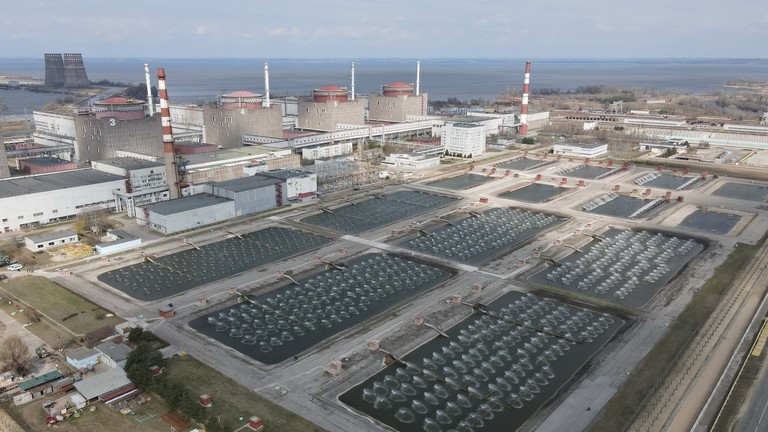
This is the 27th time since Russia invaded Ukraine that the Zaporizhzhia plant has had to rely on emergency diesel supplies.
By Al Jazeera Staff and AP, 29 Aug 2026
The Zaporizhzhia nuclear power station in southeastern Ukraine has been without off-site power for more than a week, the world’s nuclear energy watchdog has warned.
The plant, which Russia has occupied since 2022, is currently relying on emergency diesel generators, the International Atomic Energy Agency (IAEA) said on Saturday.
The plant needs power to keep its six non-operating reactors cool and has only a 10-day diesel supply on site, the IAEA said in a statement.
“The availability of diesel fuel is of paramount importance whenever a nuclear power plant loses off-site power,” IAEA Director General Rafael Grossi said.
The Zaporizhzhia nuclear power plant has not had a delivery from an off-site storage facility in about six months but was supplied with diesel on Thursday and Friday from another off-site location, the IAEA said.
The Vienna-based agency is now trying to negotiate a local ceasefire to allow repairs to electrical lines.
Zaporizhzhia is Europe’s largest nuclear power plant. It has not generated electricity since September 2022, over six months after Russia launched a full-scale invasion of Ukraine in February that year, but the plant’s reactors must be kept cool to prevent a meltdown of the fuel inside.
“This is the 27th blackout at the plant since the start of Russia’s full-scale invasion,” Ukraine’s deputy head of military law enforcement, Gyunduz Mamedov, wrote on X on Saturday.
The IAEA has had a permanent presence at the site since September 2022, after Russia took control of the Ukrainian facility in March that year.
Britain ‘must brace for more Iranian cyber attacks’

Former US security chief expects UK infrastructure to be targeted again, following unprecedented breach of power plant
Rozina Sabur, National Security Editor, Telegraph, 29 August 2026
nfrastructure could face further attacks from Iran, a former US cyber chief has warned.
The Telegraph revealed last week that hackers affiliated with Tehran shut down a British power plant for four days in an unprecedented cyber attack.
And Britain, the US and other Western allies should “expect attacks like this to continue” as Tehran ramps up its cyber warfare, according to Jen Easterly, the former director of the US cybersecurity and infrastructure security agency (CISA).
In an interview with The Telegraph, Ms Easterly said companies that failed to heed alerts from the Five Eyes intelligence network in particular would be seen as “low-hanging fruit”. Five Eyes is an alliance between Australia, Canada, New Zealand, the UK and the US……………………
With Tehran under growing diplomatic and economic pressure amid its confrontation with the US and Israel, the regime has dramatically stepped up its cyber attacks on the West.
Intelligence officials describe Iran as a capable adversary in the online domain, with its cyber apparatus working in concert with its wartime aims.
In the incident revealed by The Telegraph last week, hackers affiliated with the Iranian regime succeeded in closing down an energy facility in the UK…………
The shutdown is understood to have occurred at the same time as a series of attacks on US water infrastructure last month, which affected multiple states……………………………………. https://www.telegraph.co.uk/news/2026/08/29/britain-must-brace-for-more-iranian-cyber-attacks/
Hospitals to stock anti-nuclear pills near AUKUS base
Carla Hildebrandt, August 26, 2026 —https://www.watoday.com.au/national/western-australia/the-plan-to-stock-anti-nuclear-pills-at-hospitals-in-perth-s-southern-aukus-suburbs-20260825-p60re6.html
Hospitals in Perth’s southern suburbs could distribute iodine tablets to the community in the “extremely low” chance of a radiation spill, as WA prepares for the arrival of nuclear-powered submarines under the AUKUS partnership.
It comes as the first US and UK submarine rotations are due to begin next year through Garden Island’s naval base, HMAS Stirling, under Submarine Rotational Force-West (SRF-West).
The plans emerged earlier this year after Legalise Cannabis WA MP Dr Brian Walker questioned the health minister in parliament about the government’s emergency preparedness ahead of the incoming visits.
During question time, Walker asked whether the state government would supply the anti-nuclear pills to locals, “as a treatment against radiation poisoning in the event of a nuclear leak or spill”.
An emergency guide released by the Australian Radiation Protection and Nuclear Safety Agency, which leads the national response to a nuclear emergency, describes taking potassium iodide – or KI pills – as a “short-term” measure that blocks radioactive iodine from being absorbed by the thyroid.
The health minister wrote a response to parliament stating the WA Department of Health “has established plans and exercised processes to pre-position and distribute supplies of stable iodine to local hospitals, as required, based on needs and relevant circumstances”, but did not reveal which hospitals would hold the tablets or how many would be available.
Walker said the state government lacked “a clear emergency plan” for communities like Rockingham, Cockburn and Kwinana.
He pointed to France, where iodine tablets have been distributed to communities near nuclear facilities, but warned the pills were only one part of preparing for a potential emergency,
UK seeks to tighten security of supply chains after Iran-linked cyber attacks
The UK government is seeking to change the law so that it can block
companies from buying products from high-risk suppliers, in a move that
comes shortly after news that a hacking group had shut down a small energy
facility.
Ministers could demand companies in critical sectors such as
energy, healthcare and telecoms take extra security measures such as
implementing a phased removal of certain vendors or be banned from
acquiring technology from them under proposals announced on Monday.
The vulnerability of key UK infrastructure was highlighted by Sunday’s
revelation that hackers thought to be linked to Iran had forced a small gas
plant offline. The National Cyber Security Centre has also warned that
companies must do more to guard against cyber attacks. The government’s
plans were introduced via amendments to the Cyber Security and Resilience
Bill and are subject to parliamentary approval. They will seek to safeguard
the supply chains of companies, which are often used as a “soft
underbelly” by hackers seeking to target larger groups.
FT 24th Aug 2026,
https://www.ft.com/content/3d46e4cb-4dee-4f49-adc1-0bb0f63d4c49
U.S. nuclear campuses could power a renaissance. Except for one problem.
Lack of oversight and safety restrictions could make future nuclear
projects dangerous. Trust is hard to earn and easy to lose — especially
in a field like nuclear energy. The Trump administration is in danger of
learning that the hard way.
In late July, the Energy Department signed
tentative agreements with five states — Utah, Tennessee, Oklahoma,
Louisiana and Idaho — to explore hosting what it calls “Nuclear
Lifecycle Innovation Campuses.” Each campus would place multiple stages
of the nuclear energy process — potentially including uranium enrichment,
fuel fabrication, spent fuel reprocessing, waste disposal, and power
generation, among others — in one location. Normally, these steps are
carried out hundreds of miles apart from one another.
Washington 26th Aug 2026,
https://www.washingtonpost.com/opinions/2026/08/26/trump-cuts-nuclear-safety-could-hurt-new-innovation-campuses/
Iranian hackers shut down UK power plant
Telegraph 22nd Aug 2026
Unprecedented cyber attack believed to be most successful of its kind
Iran shut down a British power plant for four days in an unprecedented cyber attack, The Telegraph can disclose.
It is thought to be the first time that hackers affiliated to the Iranian regime have succeeded in closing down such a facility in the UK, and is believed to be the most successful cyber attack of its kind.
The Telegraph understands that the incident took place at the same time as a series of attacks on US water infrastructure last month, which affected 12 states and caused concern in the White House.
Iran shut down a British power plant for four days in an unprecedented cyber attack, The Telegraph can disclose.
It is thought to be the first time that hackers affiliated to the Iranian regime have succeeded in closing down such a facility in the UK, and is believed to be the most successful cyber attack of its kind.
The Telegraph understands that the incident took place at the same time as a series of attacks on US water infrastructure last month, which affected 12 states and caused concern in the White House.
Advertisement
British officials refused to be drawn on which power plant had been affected, citing security concerns, but it is understood that the facility was disabled for four days while staff fought to bring it back online.
It is understood that the plant affected was relatively small and that the outage had no impact on the UK’s wider power supply or energy generation.
In response, the Government briefed the chief executives of power companies and wrote to businesses with advice, direction and next steps……………………………………………………………………………………………………………… https://www.telegraph.co.uk/news/2026/08/22/iranian-hackers-shut-down-uk-power-plant/
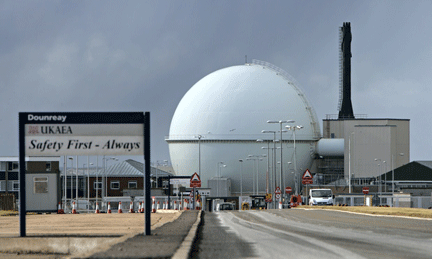
Building on shaky foundations – Whistleblower highlights serious safety and staffing concerns after Dounreay reorganisation
John O’Groat Journal, By David G Scott – david.scott@hnmedia.co.uk, 19 August 2026
Serious concerns have been raised regarding safety governance, staffing levels, and workplace culture at the Dounreay nuclear decommissioning site following a major organisational overhaul.
A former employee at the site warned that recent reorganisations have eroded independent oversight, drained vital institutional knowledge, and created what they describe as “a perfect storm for a disaster.”
At the heart of the concerns is a major site reorganisation known internally as Fit For the Future (FFF). According to the insider, the restructure resulted in the abolition of the dedicated Health and Safety Assurance Department. Historically, this department provided independent checks on project governance, ensured compliance with safety procedures, and tracked lessons learned from previous site incidents.
“The assurance department’s role is to check that people are following procedure, learning from incidents, and maintaining governance,” the source stated. “These were independent people overseeing projects to ensure nobody was cutting corners. Removing that independent oversight leaves the site dangerously exposed.”
Critics within the workforce have alleged that the costly restructuring failed to deliver improvements, claiming that leadership roles were increasingly filled by managers lacking hands-on nuclear safety expertise.
“Egos are driving the leadership team,” the whistleblower claimed. “They have been promoted into positions not because they were competent, but because they were confident. They have people running projects who aren’t experts in the field and won’t listen to the people who are.”
The site has also seen a significant drain of experienced staff through voluntary redundancy schemes including the so-called mutually agreed voluntary exit (MAVE). Decades of operational knowledge built up by long-serving local workers have been lost, leaving remaining teams stretched and reliant on less experienced personnel.
‘I would be perfectly justified in sending you to prison’: Community service for man who ran amok with fire extinguisher at Wick hospital‘I would be perfectly justified in sending you to prison’: Community service for man who ran amok with fire extinguisher at Wick hospital
“I truly believe that a good lot of the people who left under MAVE were people who spoke up about concerns,” said the former employee. “They want people in positions who will just say ‘yes sir, no sir’ – they don’t want to know something is wrong, they want you to cover it up.”
This turnover has driven a decline in the proportion of Suitably Qualified and Experienced Persons (SQEP) holding technical management and safety leadership positions across the site, they suggested. “For positions where years ago you had to have specific degrees and years of hands-on experience, they have watered those standards down across the board,” added the source.
At the same time, accusations have emerged that experienced personnel who voiced concerns about safety protocols or restructuring plans were sidelined or encouraged to leave.
Reports also highlight ongoing workplace bullying alongside a management culture that prioritises public image over addressing root-cause operational issues.
“The bullying that goes on is swept under the carpet. HR know about it, but what they do is move the victim to another area and allow the bully to continue.”
Furthermore, critics argue the scheme represents a false economy, as replacing experienced staff with newer personnel fails to yield genuine savings once additional workforce numbers and extensive training are factored in to fill the capability gap.
Highlighting the practical impact of weakened governance, the source pointed to a recent incident in the site’s laboratories which resulted in staff being exposed to a chemical leak………………………………………….
https://www.johnogroat-journal.co.uk/news/building-on-shaky-foundations-whistleblower-highlights-ser-442770/
DOE Again Denies Access to Defense Nuclear Facilities Safety Board (DNFSB) at Nuclear Weapons Facilities; Contact Your Elected Officials

Once again, the Department of Energy and its semi-autonomous National Nuclear Security Administration has denied the Defense Nuclear Facilities Safety Board access to nuclear weapons facilities, including at Los Alamos National Laboratory (LANL). At a time when LANL is ramping up production of plutonium pits, the triggers for nuclear weapons, the DOE is restricting access to the Board and its resident inspectors preventing them from fulfilling critical oversight and public reporting responsibilities. As a result, the public is no longer informed about potential issues of adequate protection at defense nuclear facilities.
The Board provides oversight of DOE and is independent in the execution of its mission. It is part of the Executive Branch of government.
Further, the five-member Board has been eviserated because neither the recent Democratic nor Republican administrations have filled positions on the Board. Currently there is one Board member, which means the Board cannot issue formal recommendations without a quorum – all to the detriment of the public.
The Board is governed by the Atomic Energy Act which requires that the Energy Secretary “shall fully cooperate with the Board and provide prompt and unfettered access to such facilities, personnel, and information as the Board considers necessary to carry out its responsibilities.”
Based upon a lack of jurisdiction argument, DOE falsely claims that it has the authority to deny the Board access to facilities, personnel and information among other improper denials – again, all to the detriment of the public.
1 This Month

To see nuclear-related stories in greater depth and intensity – go to https://nuclearinformation.wordpress.com
-
Archives
- September 2026 (164)
- August 2026 (330)
- July 2026 (355)
- June 2026 (287)
- May 2026 (306)
- April 2026 (356)
- March 2026 (251)
- February 2026 (267)
- January 2026 (308)
- December 2025 (358)
- November 2025 (359)
- October 2025 (375)
-
Categories
- 1
- 1 NUCLEAR ISSUES
- business and costs
- climate change
- culture and arts
- ENERGY
- environment
- health
- history
- indigenous issues
- Legal
- marketing of nuclear
- media
- opposition to nuclear
- PERSONAL STORIES
- politics
- politics international
- Religion and ethics
- safety
- secrets,lies and civil liberties
- spinbuster
- technology
- Uranium
- wastes
- weapons and war
- Women
- 2 WORLD
- ACTION
- AFRICA
- Atrocities
- AUSTRALIA
- Christina's notes
- Christina's themes
- culture and arts
- Events
- Fuk 2022
- Fuk 2023
- Fukushima 2017
- Fukushima 2018
- fukushima 2019
- Fukushima 2020
- Fukushima 2021
- general
- global warming
- Humour (God we need it)
- Nuclear
- RARE EARTHS
- Reference
- resources – print
- Resources -audiovicual
- Weekly Newsletter
- World
- World Nuclear
- YouTube
-
RSS
Entries RSS
Comments RSS
 nuclear-news