
-
India is negotiating unit cost of power for two EPR reactors to be built at Jaitapur
-
The work has been halted several times following conformity warnings
Radioactive cesium levels in Miyagi forest soil up since 2011
Kyodo
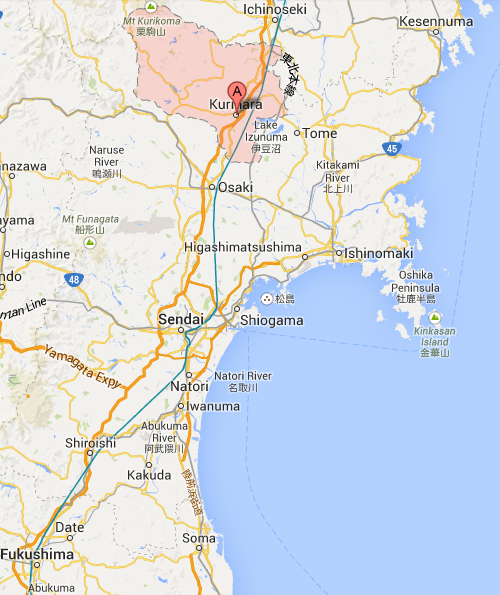
SENDAI – Levels of radioactive cesium in soil and on the ground of two forests in Miyagi Prefecture have risen since the 2011 Fukushima nuclear disaster started, according to results of a recent survey.
In forests about 60 km and 120 km north of the severely damaged Fukushima No. 1 power plant, cesium is believed to be accumulating in the soil as cesium-contaminated leaves fall to the ground and decompose.
The government of Miyagi Prefecture, which measured cesium density in June 2012 and a year later in the two cedar forests, is worried about the impact on forestry and related industries if the trend persists, an official said.
In a forest in the town of Marumori closer to Fukushima, the average cesium level of 10 samples of fallen quills was 26,684 becquerels per kilogram in June 2012, but rose to 42,759 becquerels a year later. And the level in soil up to 10 cm deep increased from 721 becquerels to 3,225 becquerels, according to the study.
In a forest in Ishinomaki, even farther from the damaged nuclear plant, the level climbed about 50 percent to 3,611 becquerels among fallen quills and by 2.5-fold to 620 becquerels in soil.
In these forests where all cedar tree quills are replaced about every five years, the level of cesium among fallen quills could fall over a longer period, but may also remain in the ecosystem by being absorbed from the soil by trees, the official said.
The results differ from a study the Forestry Agency conducted in 2011 and 2012 in three municipalities in Fukushima Prefecture, which found levels of cesium increasing in soil but declining in fallen foliage.
High levels of Radioactive contamination in soil in Miyagi prefecture north of Fukushima
18 December 2013
http://sokuteikak.exblog.jp/21103494/
Radioactive contamination in soil in Izunuma area in Kkurihara-city,
Miyagi prefecture


Cs137:2100 Bq/Kg(検出下限minimum limit of detection 40.7)
Cs134:870 Bq/Kg(検出下限minimum limit of detection 10.4)
Total Cesium - Cs合計:2970 Bq/Kg(検出下限minimum limit of detection  51.1)
測定時間  time length of measurement:3600秒/1時間 3600 seconds/hour  V7容器(85ml)


http://sokuteikak.exblog.jp/21103494/
Japanese Fisheries Agency seeks to banish fears over radioactive fish with a nice tour of a “facility” and with some soothing words
…There are also doubts about the process of supervision. For example, each province has its own inspection programme. For example, each prefecture has its own survey programme, but there was no clarification regarding unified standards and methods to carry out the tests….
Wednesday, December 18, 2013
The Fisheries Agency of Japan invited the media to tour a research facility in Onjuku, Chiba Prefecture, in an effort to address the concerns of Japanese and foreigners around possible radioactive contamination of fish from the country waters.
These fears are a result of the accident suffered by the Fukushima nuclear plant in March 2011, when an earthquake and tsunami rocked Japan.
The visit attracted foreign journalists and embassy officials, and was aimed at showing the monitoring process that is carried out to ensure that the fish is safe for consumption, reported The Japan Times.
The tests not only are applied to the fish that remain in the area, but also to those who travel long distances, to seasonal species that are popular with consumers and especially groundfish, since radioactive materials tend to settle on the ocean floor.
If fish samples exceed the safety limit, the species caught in the same area are not sent to markets.
However, there is a feeling that this initiative is carried out rather late.
“I was surprised to know that this is the first tour. It’s been almost three years from the nuclear accident,” said Andres Sanchez Braun, a reporter at EFE news agency.
Currently, the central government asks the prefectures of Hokkaido, Aomori, Iwate, Miyagi, Fukushima, Ibaraki and Chiba, to test fish caught in the Pacific and each prefecture draws up a monitoring regimen based on guidelines.
A different approach to the very real threat of North Korea
The US needs to go into a straight dialogue with North Korea and Kerry needs to visit and speak to the Communist Parliament as only a minor shift in perception may change events in history
 Hence steps of courage being required at the personal level to change those possible dynamics in history, as history will judge both in retrospect and relentless, on what “we” did to prevent “the North Korean problem” from evolving into a worst case scenario.
 We dream of things that never were and say: “Why not?”
 Paul Wolf, February 8, 2013 Tonight once again, once again the same old discussion. The discussion being heard so many times but so little effective action being taken.
The discussion about the pending and increasing dilemmas as to how to deal with North Korea. North Korea perceived as an increasing threat,
– North Kore a being an increasing threat…..
.North Korea in 2001 still the country remaining communist, closely spied by its Government, cut off from almost all outside contacts and over and over armed…….
It is one of those countries who perceive in their isolation threats from the outside world, – perceive their family neighbour from the south as an enemy, – perceive the US as an enemy. And in all this are preparing for conflict, – being both irrational and pointless……. Continue reading
US Navymen lose federal case on Fukushima radiation
 Judge dismisses sailor radiation case UTS San Diego Door open for follow-on lawsuit; attorney says he will refile with more plaintiffs
By Jeanette Steele.DEC. 17, 2013 A San Diego federal judge has dismissed a lawsuit alleging that U.S. sailors were exposed to dangerous radiation during the humanitarian response to the March 2011 Japanese earthquake and tsunami.
But Judge Janis L. Sammartino left the door open for a follow-on lawsuit, and the attorney representing several sailors from the San Diego-based aircraft carrier Ronald Reagan said he intends to refile. The judge dismissed the case Nov. 26 on jurisdictional grounds, saying that it was beyond her authority to determine whether the Japanese government had perpetrated a fraud on its American counterpart.
The defendant in the December 2012 case was Tokyo Electric Power Co., operator of Japan’s Fukushima Daiichi nuclear plant.
The lawsuit argued that power company officials lied about the amount of leakage from the damaged plant, in concert with the government of Japan. It says the Navy used those reports in its own calculations about the safety of U.S. sailors in the relief effort, called Operation Tomodachi……http://www.utsandiego.com/news/2013/dec/17/reagan-radiation-lawsuit-dismissed-tomodachi
Th world’s worst nuclear pollution – Fukushima radiation
Japan Professor: Damage from Fukushima is unprecedented, a disaster never before experienced in human history; Some say it could affect whole northern hemisphere — Experts: “Very likely the largest nuclear accident which mankind experienced” http://enenews.com/japan-professor-damage-fukushima-unprecedented-disaster-never-before-experienced-human-history-could-affect-northern-hemisphere-experts-ver
The Fukushima Nuclear Disaster : One of the World’s Worst-Ever Cases of Pollution,, Professor Fumikazu Yoshida of Hokkaido University’s Graduate School of Economics, Economic Journal of Hokkaido University, March 2013: The Fukushima nuclear disaster, however, has been responsible for the largest and worst case of pollution to have occurred during the postwar era […] its complexities and scale are greater than anything that has gone before. […] So severe are [the myriad of problems] that we can characterize this disaster as a “second war defeat” since its impact on the nation questions the whole basis of Japan’s postwar society […] [There are] immense dangers that the ‘accident’ still poses […] Rather than simply being a local problem, it has been from the beginning a nationwide and potentially international issue (some say that it has the potential to affect the whole of the northern hemisphere).
If we consider the nature of the devastation and the number of victims […] as well as the extent of affected area […] then we understand that the Fukushima Daiichi Nuclear Power Plant accident has been the cause of injury to human society and the natural environment on a scale that is unprecedentedly wide-spread and lifethreatening in its effects. […] The nuclear disaster at the Fukushima Daiichi nuclear power plant is a “multiple disaster” never before experienced in human history […]
Estimate of Consequences from the Fukushima Disaster, Nordic PSA Conference (nuclear utilities in Finland and Sweden), September 2011: Comparison of results for the Fukushima best estimate and Chernobyl source terms used for the Fukushima site shows that the Fukushima accident, as a whole, is very likely the largest nuclear accident which mankind experienced because estimates of long term fatalities, risks of death and other societal impact based on Chernobyl source terms in Fukushima show lower potential of consequences than Fukushima source terms.
See also: Experts: Fukushima cesium release could be more than triple Chernobyl
Japanese govt to select places for nuclear waste permanent dump
 Japan Takes Nuclear Storage Hunt Into Own Hands http://online.wsj.com/news/articles/SB1000142405270230394950457926348056235159 4 Regional Governments Express No Interest By MARI IWATA Dec. 17, 2013 TOKYO—Japan has decided to take matters into its own hands to find appropriate domestic locations to permanently store highly radioactive nuclear waste, after waiting in vain for more than a decade for an offer from a regional government. “The government will play an active role in choosing a permanent place,” Industry Minister Toshimitsu Motegi told reporters at a regular news conference Tuesday. “We’ll abandon the current system of waiting for volunteers to raise their hands.”
Japan, which currently doesn’t have any final disposal sites for high level radioactive waste, has 17,000 metric tons of domestically spent nuclear fuel that dates back to the 1970s. Continue reading
New book warns on South Asia ‘s nuclear instability
Study warns of nuclear instability in South Asia , THE HINDU, 18 Dec 13 NARAYAN LAKSHMAN A book released this week by a major think-tank in Washington has cautioned that in the fifteen years since India and Pakistan tested nuclear devices in 1998, they have together introduced 17 new nuclear weapon-capable delivery systems and this has produced “conditions that could lead to uncontrolled escalation.”
One of the authors of the study, Michael Krepon of the Stimson Centre, told The Hindu that although Indian and Pakistani leaders said after the 1998 tests that “offsetting nuclear capabilities would be stabilising and that they would facilitate more normal relations… things haven’t worked out that way.”
The book, Deterrence Stability and Escalation Control in South Asia, provides an uncompromising analysis of the dangers that have emerged in the sub-continent from recent developments in the nuclear field, including Pakistan’s introduction of short-range, tactical delivery vehicles, or “theatre nukes” whose utility depends on their proximity to battlefields and “leaves much to chance.”…….http://www.thehindu.com/news/international/south-asia/study-warns-of-nuclear-instability-in-south-asia/article5469010.ece
NEI “dismayed” “feeling spurned” – it really wants a nuclear White House climate order, in order!
12/17/2013
http://generationhub.com/2013/12/17/nei-wants-nuclear-in-white-house-climate-order
 The Nuclear Energy Institute has expressed its dismay with a recent order from the White House that requires all executive branch agencies to obtain 20 percent of their electricity from renewable energy sources by 2020 but neglects to acknowledge the role of nuclear energy in reducing the country’s carbon emissions.
“It is extremely disappointing that the mandate to federal agencies did not include instructions to procure electricity from nuclear power plants as part of the federal government’s initiative to reduce carbon emissions,” NEI President and CEO Marvin Fertel noted in a Dec. 12 letter to President Obama.
Fertel said the nuclear energy industry believes that the Dec. 5 Presidential Memorandum to executive agencies, part of the administration’s climate action plan, should be taken as a broad-based commitment to reduce carbon emissions and not “just a mandate to promote only renewable energy.”
Fertel notes that the administration has already acknowledged the major role that nuclear energy can and must play “in any credible national plan to reduce carbon emissions” and continues to support the development of nuclear technology both domestically and overseas
Halt Flamanville EPR work, says nuclear watchdog
….An EDF spokesman confirmed that the Agency had pointed to over 15 cases of non-conformity in a machine at the heart of the reactor under construction…..
December 18, 2013
Vaiju Naravane
Environmentalists criticised reactor as being too expensive and an impossible and dangerous dream
The controversial French EPR at the Flamanville plant in France has once again run into trouble, with the French nuclear watchdog the Nuclear Safety Authority (Agence de surete nucleaire) calling for a halt in work, according to reports appearing in the French press.
EDF, the French engineer-operator of the plant, has admitted that it has received a warning from the French Ministry of Labour but rejected reports that said construction had been forcibly halted.
The gigantic reactor capable of producing 1650 megawatts of power has had teething problems ever since work first began almost eight years ago. Initially expected to go on stream in 2012, the reactor is now slated to become operational in 2016 with a corresponding rise in cost – from an initial € 3.3 billion to an estimated € 9 billion. Not a single EPR (European Pressurised Reactor) is currently operating. The plant in Olkiouoto in Finland, delayed by several years has yet to be commissioned and the Finnish operator TVO is locked in a bitter arbitration battle to the tune of € 2.7 billion with French nuclear giant Areva, the designer of the troubled reactor.
Escalating cost
India is currently negotiating the unit cost of power for two EPRs to be built at Jaitapur in Maharashtra. The cost of the reactor has jumped from an estimated € 3.3 billion in 2007 to over € 8 billion now. It is likely to cross € 9 billion next year. Environmentalists have criticised the reactor as being too expensive, too gigantic and an impossible and dangerous dream. But French authorities have pegged ahead with the controversial project, work on which has been halted several times following conformity warnings from the French nuclear watchdog and accidents including on-site deaths.
“There is real danger at the heart of the EPR in Flamanville [northern France] which EDF has chosen to ignore, failing to respond to the many summations issued by the Agency . Finally, on 13 December, the Ministry of Works and Labour officially warned the engineer operator to take all necessary steps to remedy a situation dangerous for worker safety. Which means of course that delays and costs will rise even further for this gigantic project,” the influential French website Mediapart reported.
An EDF spokesman confirmed that the Agency had pointed to over 15 cases of non-conformity in a machine at the heart of the reactor under construction.
“We have issued a provisional report and are going to issue a final report on the remedial action taken,” the spokesman said. Earlier, the ASN had halted work when cracks appeared in the reactor’s central dome because of faulty cladding and cementing.
Environmental specialists have questioned India’s decision to firstly purchase the mega reactors and secondly locate them in Jaitapur, considered to lie in a seismic zone. Areva, the reactor’s designer says the reactor has a double dome that ensures absolute safety.
Japan Passes Energy Sector Reform in Wake of Fukushima
….What is certain is that old monopolies will face challenges from new energy providers and pressure to improve their services and prices. Renewable energy providers will have a bigger stake in Japan’s electricity market. On the other hand, we are not yet sure whether the opposition forces will fight to the death to stall the next steps of the reform or not….
By Global Risk Insights | Mon, 16 December 2013
By Roger Yu Du
The Fukushima nuclear crisis certainly had profound implications for Japan. In November 2013, Japan’s lower house and upper house successively passed legislation to start electricity sector reform in 2015. Nuclear energy, which used to account for 30 percent of Japan’s electric power, was discarded after the earthquake and Fukushima incident, leading to energy price hikes (see graph below). The new bill, designed to break up monopolies, curb electricity prices and facilitate the development of renewable energy through a series of liberal reforms, is the child of the Fukushima nuclear crisis.

The reform plan consists of three stages. The bill in question provides the legal background for the first stage of reform – the creation of a national grid company in 2015. This entity, after merging different regional grids, will be authorized to instruct power companies to supply electricity to each other when needed to overcome supply shortages. This reform emphasizes electricity transfer among regions, making sure that power shortages during the Fukushima incident would not happen again.
Related article: Here’s An Official Vote For Nuclear
The second and third stages of reform seek to liberalize the sale of electricity to households and strip the major power firms of power transmission and distribution functions. The new bill’s supplementary provision included a plan to enact bills in 2014 and 2015 to stipulate these steps of reform.
The logic of the reforms is straightforward. The 10 regional electricity companies have monopolized Japan’s regional electricity markets for over half a century: they have total control of power generation, transmission and retail in their own regions. Users cannot choose their electricity supplier from other regions. Now, 98 percent of Japan’s electricity supply comes from those big corporations. Unfortunately, they all face soaring costs for imported fuel, which lead to electricity prices that are twice as high as those in the U.S. By allowing households to choose electricity providers and ensuring renewable energy’s access to the national grid, Japan’s electricity sector is expected to see higher supply with more competition.
“Consumers will have a wider choice over the purchase of electricity from operators and in terms of fees. It will also lead to a reduction in electricity payments,” said Toshimitsu Motegi, minister of the economy, trade and industry.
In any political scenario, the greater the perceived impact, the fiercer the opposition you will face. Japan’s regional electricity companies and the opposition parties tried hard to kill the legislation. In June 2013, Abe’s cabinet submitted a bill to the Diet, deliberation on which was postponed for an unrelated political reason. Similar stories have unfolded multiple times since 1990s, when Japan’s leaders tried to revamp the electricity sector. Luckily, this time, due to the Fukushima crisis, the power companies lost public support. Therefore, the first stage of reform, a unified national grid that guarantees power supply during emergencies, was passed this time without further delays.
However, whether this series of reforms can achieve lower electricity prices for households and corporations remains to be tested. What is certain is that old monopolies will face challenges from new energy providers and pressure to improve their services and prices. Renewable energy providers will have a bigger stake in Japan’s electricity market. On the other hand, we are not yet sure whether the opposition forces will fight to the death to stall the next steps of the reform or not.
By Roger Yu Du
Leading US nuclear fuel company to file for bankruptcy
…Even with five nuclear reactors under construction in the south east United States, the nuclear industry is expected to lose a large share in the energy sector, especially after Japan’s Fukushima disaster which raised concerns over nuclear safety. The demand for uranium is expected to decline, at least until new regulations limiting carbon emissions are put in place….
http://eguidez.com/world-news/%E2%80%8Bleading-us-nuclear-fuel-company-to-file-for-bankruptcy/
December 17, 2013
According to the plan the company will repay convertible bonds in October 2014 with $530 million raised from new equity and debt. The majority of creditors have approved, says Reuters.
During the restructuring process USEC intends to run business operations and to fulfill all obligations to suppliers, partners, clients and employees.
USEC, which had a market value of about $43 million as of Friday’s close, has total debts of $640.4 million in cash and equivalents of $128.4 million as of September 30, according to Reuters data.
USEC operates the only US uranium enrichment plant in Paducah, Kentucky. The enterprise belongs to the US Ministry of Energy while USEC rents it. However in May, 2013 the company said it was forced to cease uranium enrichment because the Ministry of Energy considered the plant commercially unpromising.
Besides uranium enriching USEC was the contractor involved in the Megatons to Megawatts program for conversion of Russian weapon uranium into nuclear fuel for American power plants. The program began in 1994 and ended in December, 2013. In 2011 USEC and Russia’s “Tekhsnabeksport” signed a long-term contract for delivering uranium enrichment services to US nuclear power plants until 2022. These deliveries have to partially fill in for the Megatons in Megawatts program ending in 2013.
USEC was founded in 1992 to provide enriched uranium for civilian nuclear power. In 1998 the company went public with IPO and listing on the New York Stock Exchange.
Currently the company is involved in the American Centrifuge project for highly efficient uranium enrichment gas centrifuge extraction into nuclear fuel. The company said in November that government funding for the $350 million project in Ohio would end in January.
Even with five nuclear reactors under construction in the south east United States, the nuclear industry is expected to lose a large share in the energy sector, especially after Japan’s Fukushima disaster which raised concerns over nuclear safety. The demand for uranium is expected to decline, at least until new regulations limiting carbon emissions are put in place.
Reactor decision made for Bulgarian nuclear power plant
17/12/2013

Bulgarian Energy Holding (BEH) is to enter exclusive talks with Westinghouse and Toshiba towards the construction of an AP1000 as the seventh unit at the Kozloduy nuclear power plant, 120 miles north of the Bulgarian capital, Sofia.
In 2012, Bulgaria‘s Council of Ministers approved in principle the construction of new capacity at the site, prompting a request for proposals and subsequent feasibility studies of either a VVER or AP1000, and the latter has now been chosen.
The site is already home to two operating Russian-designed VVER-1000 pressurised water reactors, Kozloduy 5 and 6, as well as four shut-down VVER-440s.
Westinghouse and Toshiba will now work “collaboratively and actively” with BEH over the coming months on the details of a potential project. World Nuclear News reports that Westinghouse president and CEO Danny Roderick said that the selection of the AP1000 reactor would give Bulgaria “a maximum degree of certainty with respect to investment, licensing to European and global standards, with accelerated and modern construction.”
Prior to 2002, Bulgaria was a major regional exporter of electricity thanks in large part to the output of the six Kozloduy reactors, but was forced to close units 1-4 as a condition of its accession to the European Union.
Are Jordan’s nuclear ambitions a mirage?
…Domestic critics also question whether there really are large, commercially viable uranium reserves in the kingdom, and whether their country can provide the quality and volume of water needed for mining and cooling reactors….
http://www.thebulletin.org/are-jordans-nuclear-ambitions-mirage
Chen Kane
16 December 2013
In October of this year, Jordan announced it had chosen Russia to build its first two nuclear-power reactors. Historically, Jordan has lacked access to energy resources. It depends on imports for more than 96 percent of power consumption. This means that a whopping 20 to 25 percent of Jordan’s national expenditures go to importing energy. That is a massive outflow of capital for a country of only 6.5 million people. Jordan’s decision to turn to nuclear power, however, doesn’t mean that the kingdom is about to sail smoothly into the club of nations that produce their own nuclear energy. While Jordan is in great need of a less costly and more reliable energy source, it won’t get there unless it can overcome some major challenges.
High demand. Jordan’s pursuit of nuclear energy is motivated by two factors. The first is a desire to expand, secure, and diversify its energy sources. The kingdom estimates that its electricity consumption will more than double by 2030, reaching 6,000 megawatts per year.
Jordanians have long experienced wild energy price fluctuations and repeated blackouts due to sudden shortages. For example, the pipeline that runs from Egypt to Jordan—and supplies Jordan with more than 80 percent of its natural gas—has been bombed more than 15 times since 2011 as a result of the volatile security situation. Since July 2013 the gas supply from Egypt has been completely suspended, costing Jordan’s fragile economy more than $2 billion. For these reasons, the kingdom understandably looks with hope to nuclear energy as a source of electricity for households, water desalination plants, and industry.
Jordan’s second motive for pursuing nuclear power is to reduce the economic toll that imported energy takes. Many in Amman believe that given the country’s vast uranium reserves, once it starts mining, it will be able to export both energy and the raw material, making the program a significant source of new income. Jordan plans to export part of the uranium and use the rest as a strategic stockpile for its own nuclear program. (It should be noted that French nuclear giant Areva and Jordan Phosphate Mines Company have said that the uranium is not commercially viable.) With more than 15 neighboring countries having announced plans to pursue nuclear energy, Jordan sees an opportunity to become a leading uranium provider.
Pressing problems. While Jordan has made impressive progress in pursuing nuclear energy, many urgent challenges still need to be addressed. It possesses none of the required technology, skilled staff, or infrastructure necessary for a nuclear program. The country has no experience in operating nuclear reactors or fuel and waste facilities. And it has chosen a Russian nuclear reactor design—the AES92—that has been built only in India, where it is currently due to start up after being under construction for 10 years, even though it has not been reviewed by an open and experienced regulatory body.
As worrisome as all that may seem, there are other issues that are even more pressing.
Dealing with public opposition. Domestic critics have, not surprisingly, raised safety and environmental concerns since the spectacle of a disastrous accident at Japan’s Fukushima Daiichi Nuclear Power Station in 2011. Meanwhile the Arab Spring stoked public unrest in Jordan and emboldened anti-nuclear demonstrators to take to the streets. Those who oppose the nuclear program question the accuracy of data presented by the government regarding its cost and economic effectiveness. Said Ayoub Abu Dayyeh, the head of the prominent Jordanian nonprofit organization the Society of Energy Saving and Sustainable Environment, summarized the basis for the public’s skepticism: “In Jordan we have witnessed fraudulent elections, a fraudulent Parliament; it is not out of the realm of possibility that at the end of the day we will receive fraudulent studies.” Domestic critics also question whether there really are large, commercially viable uranium reserves in the kingdom, and whether their country can provide the quality and volume of water needed for mining and cooling reactors.
Ace Hoffman – Nuclear waste: Get rid of it! But where? How? When? And who’s gonna pay for it?
….The fuel should be retrievable in case a permanent national repository does become available. Spent fuel should NOT be reprocessed. Reprocessing takes an enormous amount of energy and creates additional radioactive and chemical waste streams (no matter how many nuclear proponents claim otherwise)….
http://acehoffman.blogspot.co.uk/2013/12/nuclear-waste-get-rid-of-it-but-where.html
Tuesday, December 17, 2013
Hearings on the Nuclear Regulatory Commission’s proposed Generic Environment Impact Statement (GEIS) for nuclear waste were held nationally over the past few months and attended by more than 1400 people. The comment period (for written comments) for “NRC NUREG-2157” ends December 20th.
In California, about 150 people attended a hearing in Carlsbad, and over 200 attended the San Luis Obispo meeting.
Tonight in San Clemente, citizens will ask their city council to request an extension of the comment period. Concerned citizens hope to be able to get additional requests from other local communities, to force the federal government to remove nuclear waste from the now-closed San Onofre Nuclear (Waste) Generating Station, or at least, to give us hardened on-site storage, which neither the current dry casks nor the spent fuel pools provide.
“Hardened” might mean underground, behind earthen berms, separated from each other, moved away from rail, ship, aerial and truck bomb access points, fewer assemblies in each cask, etc. etc.. These are standard anti-terrorism procedures which are NOT being done at our ISFSIs (Independent Spent Fuel Storage Installations, the current acronym for “semi-permanent nuclear waste dump and blight on the land.”)
Yesterday Donna Gilmore and I were suddenly interviewed by Fox 5 San Diego about Southern California Edison’s shipment of Unit II’s original reactor pressure vessel head to Clive, Utah. It’s a dome-shaped object approximately 14 feet across. Edison says it weighs 77 tons, and says that standing six feet away from it for an hour will give you about as much radiation as watching television for about a year. Do they mean modern OLED screens or old tube TVs? Do they mean the most modern types of dental x-ray equipment when they say it’s equal to a dental x-ray, or do they mean older machines that give out nearly an order of magnitude more radiation? Or even older ones that were even worse?
Here’s a link to the report based on the on-site interview with Donna Gilmore:
http://fox5sandiego.com/2013/12/16/san-onofre-transports-nuclear-waste-out-of-state/#ixzz2nh3ycGur
This report by 760KFMB gives additional information:
http://www.760kfmb.com/story/24237142/77-ton-nuclear-component-on-the-road-from-san-onofre-to-utah
Here’s a link to my own animation of San Onofre’s reactors, which shows the exact part they are moving (screen two (the two triangles at the top advance the screens)). Notice that the RPVH is a pretty small piece of the entire system:
http://www.acehoffman.blogspot.com/2013/02/new-animation-shows-what-could-happen.html
The RPVH is highly radioactive, although presumably it will be shipped facing down, so that most of the gamma emissions will be shielded by 8 inches of steel (with a lot of holes, which aim straight up, but presumably have been plugged with something). Underneath perhaps they will have a heavy metal plate several inches thick bolted to the bottom, and any gamma emissions that get through it will, presumably, mainly go into the ground beneath the vehicle as it travels down the road. Few will get through the eight inches of steel, few will get through the bottom plate and then bounce off the ground into where other vehicles with people might be, and so it is called “low level waste.” The inner liner of the RPVH is made of the finest stainless steel available — and millions of kid’s braces could have been made with that steel, if it were not irradiated. Some of it might find its way into kid’s braces some day by accident anyway.
High levels of Radioactive contamination in soil in Miyagi prefecture north of Fukushima
18 December 2013
http://sokuteikak.exblog.jp/21103494/
1 This Month.
5 January -Webinar-What is Trump’s Golden Dome?
REGISTER AT Massachusetts Peace Action Education


New book – https://www.amazon.com/dp/1923372157?utm_source=substack&utm_medium=email
Now until to February 10, 2026 Radioactive waste storage in France: the debate is finally open! How to participate?
-
Archives
- December 2025 (301)
- November 2025 (359)
- October 2025 (377)
- September 2025 (258)
- August 2025 (319)
- July 2025 (230)
- June 2025 (348)
- May 2025 (261)
- April 2025 (305)
- March 2025 (319)
- February 2025 (234)
- January 2025 (250)
-
Categories
- 1
- 1 NUCLEAR ISSUES
- business and costs
- climate change
- culture and arts
- ENERGY
- environment
- health
- history
- indigenous issues
- Legal
- marketing of nuclear
- media
- opposition to nuclear
- PERSONAL STORIES
- politics
- politics international
- Religion and ethics
- safety
- secrets,lies and civil liberties
- spinbuster
- technology
- Uranium
- wastes
- weapons and war
- Women
- 2 WORLD
- ACTION
- AFRICA
- Atrocities
- AUSTRALIA
- Christina's notes
- Christina's themes
- culture and arts
- Events
- Fuk 2022
- Fuk 2023
- Fukushima 2017
- Fukushima 2018
- fukushima 2019
- Fukushima 2020
- Fukushima 2021
- general
- global warming
- Humour (God we need it)
- Nuclear
- RARE EARTHS
- Reference
- resources – print
- Resources -audiovicual
- Weekly Newsletter
- World
- World Nuclear
- YouTube
-
RSS
Entries RSS
Comments RSS
 nuclear-news