UN report on Fukushima Criticized
…Mari Inoue, a representative of Tokyo-based Human Rights Now, meanwhile called for the UNSCEAR report to be revised.
She said the report should endorse evacuation from areas where exposure exceeds 1 millisievert of radiation per year, well below the Japanese government’s yardstick of 20 millisieverts per year….
Oct 25, 2013
NEW YORK – Human rights experts, including a U.N. special rapporteur, are criticizing a U.N. scientific report dismissing concerns about the effects of radiation from the Fukushima nuclear disaster on the Japanese public.
Speaking Thursday at an event organized by U.S. and Japanese nongovernmental groups, U.N. special rapporteur on the right to health Anand Grover took issue with the report’s conclusion that “there is nothing to worry about” for members of the public exposed to radiation from Fukushima No. 1.
The report was prepared by the U.N. Scientific Committee on the Effects of Atomic Radiation.
The committee, which studied the levels and effects of radiation exposure caused by the nuclear disaster after the March 11, 2011, earthquake and tsunami, found that for the general public, “no discernible increased incidence of radiation-related health effects are expected.”
Grover, who visited Japan in November 2012 and compiled his own report on the situation from a human rights perspective, said the data on radioactive exposure is insufficient to rule out the possibility that low doses could have ill effects on health.
He also said that ensuring the participation of affected communities in decision-making is “one of the core obligations” of governments and that the public has a right to information.
Special rapporteurs are independent investigators tasked by the United Nations with investigating human rights issues and can only investigate a country if invited to do so by its government.
Mari Inoue, a representative of Tokyo-based Human Rights Now, meanwhile called for the UNSCEAR report to be revised.
She said the report should endorse evacuation from areas where exposure exceeds 1 millisievert of radiation per year, well below the Japanese government’s yardstick of 20 millisieverts per year.
It should also recommend continued study of contract workers exposed to radiation, increased community participation in the government response to the disaster, and recognition that it is too early to rule out future health effects for the exposed, Inoue said.
Also on Thursday, Human Rights Now released a statement signed by 64 community organizations in Japan calling for revisions to the report.
The UNSCEAR’s full report, including scientific data supporting its findings, has not yet been published. The group said when finished, the report will be “the most comprehensive scientific analysis of the information available to date.”
No comments yet.
1 This Month
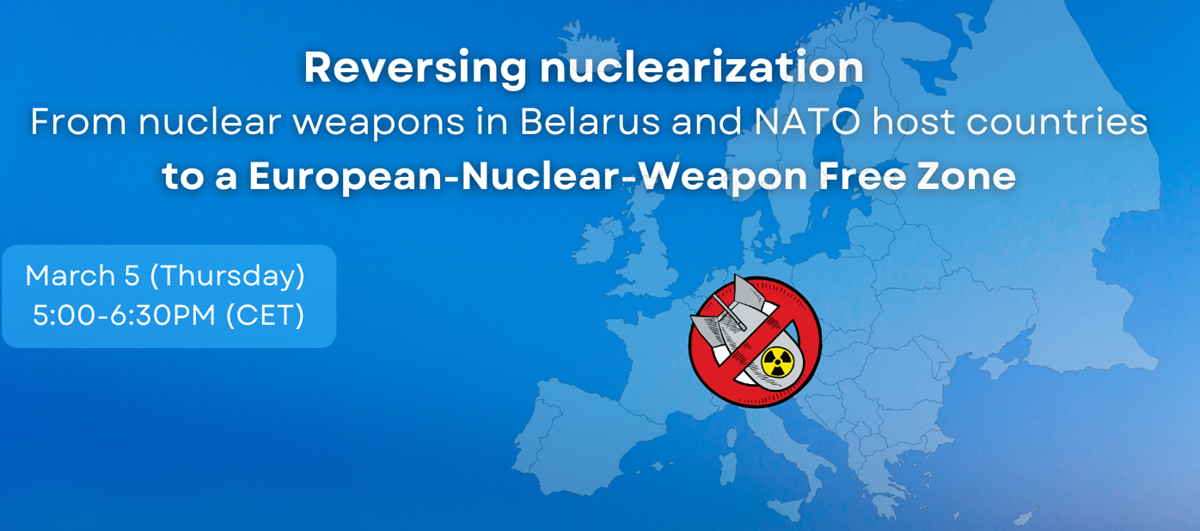
5 March -Online – Reversing nuclearization:
From nuclear weapons in Belarus and NATO host countries to a European-Nuclear-Weapon Free Zone
11am-12:30pm Eastern Time USA / 5pm-6:30pm CET

of the week – Advocating for a
nuclear free beach – https://www.samuellawrencefoundation.org/
The Samuel Lawrence Foundation advocates for a Nuclear Waste Free Beach at San Onofre, join us and take action!

10 March A LIVE WEBINAR THE REAL EFFECTS OF NUCLEAR POWER
What the Industry Isn’t Telling Us
1:00 PM Mountain, 2 pm Central, 3 pm Eastern. Live on the Keepers of the Water Facebook page

18 March Webinar @ 1 PM EST: An Assessment of SMR Projects: The Case of Canada
register for the zoom:
https://us02web.zoom.us/webinar/register/WN_o8BIIOUvQ2ONJR1nta65DQ#/registration

of the week – STOP SMALL MODULAR REACTORS IN CANADA
To see nuclear-related stories in greater depth and intensity – go to https://nuclearinformation.wordpress.com
-
Archives
- March 2026 (37)
- February 2026 (268)
- January 2026 (308)
- December 2025 (358)
- November 2025 (359)
- October 2025 (376)
- September 2025 (258)
- August 2025 (319)
- July 2025 (230)
- June 2025 (348)
- May 2025 (261)
- April 2025 (305)
-
Categories
- 1
- 1 NUCLEAR ISSUES
- business and costs
- climate change
- culture and arts
- ENERGY
- environment
- health
- history
- indigenous issues
- Legal
- marketing of nuclear
- media
- opposition to nuclear
- PERSONAL STORIES
- politics
- politics international
- Religion and ethics
- safety
- secrets,lies and civil liberties
- spinbuster
- technology
- Uranium
- wastes
- weapons and war
- Women
- 2 WORLD
- ACTION
- AFRICA
- Atrocities
- AUSTRALIA
- Christina's notes
- Christina's themes
- culture and arts
- Events
- Fuk 2022
- Fuk 2023
- Fukushima 2017
- Fukushima 2018
- fukushima 2019
- Fukushima 2020
- Fukushima 2021
- general
- global warming
- Humour (God we need it)
- Nuclear
- RARE EARTHS
- Reference
- resources – print
- Resources -audiovicual
- Weekly Newsletter
- World
- World Nuclear
- YouTube
-
RSS
Entries RSS
Comments RSS
 nuclear-news
Leave a comment