South Africa – Kelvin Kemm’s “Pro-Nuke Puff” and the Africans reaction
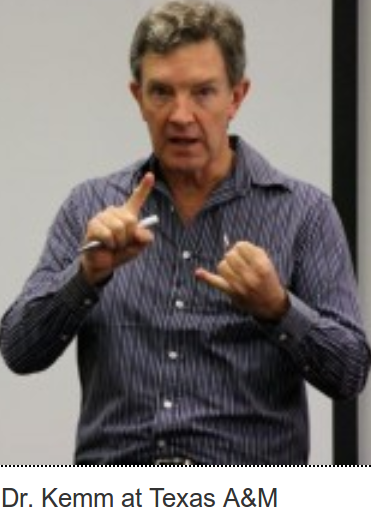
It is difficult to know where to begin to point out the many examples of misinformation, skewed information and pro-nuclear spin in “Nuclear power is a big opportunity for SA business” (Business Report, August 7).
The Energy Intensive User Group, the biggest industrial users of electricity in our country, is not in favour of nuclear power. The industry is clear on the open-ended upside potential of the cost of nuclear power, as Steve Kidd, the director of Strategy and Research from the World Nuclear Association, said in 2008: “What is clear is that it is completely impossible to produce definitive estimates for new nuclear costs at this time.”
Areva, one of the hopeful bidders for our proposed “nuclear fleet”, confirms that a high level of localisation is highly unlikely in South Africa.
On April 18, wind and solar produced a record amount of electricity in Germany, more than that of 30 nuclear plants.
Kelvin Kemm, a nuclear physicist and the chief executive of Nuclear Africa, proceeds to misquote civil society opposed to more nuclear power – our position is that the proposed fleet would run to more than R1 trillion (not billion). Our source is the Department of Trade and Industry’s Industrial Policy Action Plan of February 2010.
Add to this plans to build and license three radioactive waste metal smelters that will release radioactive metal into our markets (leading to product recalls, as happened in the US and the UK this year from contaminated metal) and possible enrichment plants, we are talking a large number.
Failure to mention the releases of radiation from Chernobyl (which Russian scientists confirm will lead to nearly a million deaths) and the ongoing releases from Fukushima is disingenuous.
One would think the final nail in the nuclear coffin would be the peer-reviewed study, The End of Cheap Uranium (Michael Dittmar, Institute of Particle Physics, Switzerland – published in Science of the Total Environment) which confirms that uranium mining and production will not be sufficient to fuel existing and planned nuclear power plants during the next 10 to 20 years.
They state: “We thus suggest that a worldwide nuclear energy phase-out is in order.” We heartily concur.
Muna Lakhani
Earthlife Africa Cape Town
Harmless solar park is a far better option
Kelvin Kemm’s inflated puff for nuclear power states: “Some years ago the government declared its intention was to double its electricity-generating capacity by 2035.”
On September 25, 2007, then director-general of the Department of Public Enterprises, Portia Molefe, stated that a higher gross domestic product (GDP) growth had been “assumed” to provide a projected electricity growth revision from 2.3 percent a year to 4 percent, in order to “align with AsgiSA’s 6 percent GDP growth target”.
This over-optimistic sentiment was echoed by Kannan Lakmeeharan, then Eskom’s managing director of system operations and planning, and a crucial architect of the Integrated Resource Plan 2. Eskom’s chief executive, Brian Dames, stated on August 25, 2011, that electricity demand growth over the preceding period was about 1.4 percent year on year, below Eskom’s 2 percent growth forecast for the full year, while Business Report, reported on July 6, 2012 that peak demand of 34 105 megawatts was forecast, or 256 MW below the stated figure for 2007.
There had been no growth in electricity demand over the period 2007 to 2011 thanks to non-existent economic growth, electricity price hikes, and a natural drive for conservation and energy efficiency.
Kemm claims that “half the electrical power to the Western Cape comes from Koeberg nuclear power station”. If this were true, then the many and frequently lengthy shutdowns from the ageing power station would long ago have crippled the province.
To state “the rest comes from the coalfields over a distance that is the equivalent of Rome to London” is equally disingenuous in that the “nuclear fleet” of 9.6 gigawatts is planned for the southern coastline and will mean massive exports of electricity to the north, where most of the consumption by mining and smelters takes place. Far more sensible would be the construction of a harmless solar park in the Northern Cape, which has some of the highest solar radiation on the planet.
Readers are sufficiently intelligent to see that nuclear power should be ditched in favour of something more affordable in the short and long term, such as solar photovoltaic and concentrating solar power, with zero mining, no uranium enrichment, no nuclear fuel assembly plants, no security problems, and no centuries and centuries of nuclear waste management.
Mike Kantey
Plettenberg Bay
Only faithful can find this vision gripping
Kelvin Kemm typifies his industry’s belief in the self-fulfilling prophecy, but his latest pronouncement is transparent in sharing his “believing is seeing” approach: “One has to view nuclear power as a world growth industry”. Such a view is needed to argue for South Africa investing in a new nuclear power industry, rather than a series of renewable energy technology industries which have lead-in times up to four times shorter for delivering power into the grid.
Do any but the nuclear faithful find Kemm’s heroic vision compelling? In case readers are drawn to his beliefs, herewith highlights of verifiable information on the industry as it stands (on the backs of taxpayers).
The share of nuclear in global power production declined to 10 percent last year, after reaching a high of 17 percent in 1994. Total power output has declined from a peak of 2 660 terawatt-hours in 2007 to 2 346 TWh last year. These and other statistics are referenced in The World Nuclear Industry Status Report 2013 (Mycle Schneider, Antony Froggatt et al.)
A decade ago Kemm was trumpeting the pebble bed modular reactor as: “a proudly South African success story” – yet nearly R10 billion of public money did not deliver a finalised design for the promised “pocket nuke”.
Kemm sees President Jacob Zuma riding to the rescue of the mythical “nuclear power renaissance”, as it is now on his table that the industry must lay its motivation for upwards of R1 trillion (that is one thousand billion rand, Kelvin) to fund the “fleet” of nuclear he prophesies.
And if you believe that, I’ve got a great piece of real estate to sell you, in Japan.
Richard Worthington
member of the Electricity Governance Initiative
http://www.thepost.co.za/kemm-s-pro-nuke-spin-is-disingenuous-dangerous-1.1560498#.Ugh9V7xx0xA
Industry-friendly experts
serve two primary roles in the propaganda and public relations campaigns. In the first category are people who work behind the scenes as advisors, using psychology and other specialized expertise to design PR and advertising campaigns.
In the second category are experts for the public stage who appear to speak as independent, disinterested authorities with regard to a public issue. This kind of expert plays a role in the propagandists use of the third party technique, a marketing strategy employed by PR companies of placing a certain message in the mouth of the media or seemingly independent experts. In some cases, an expert’s opinion is directly related to receiving compensation from the industry or interest whose activities the expert advances.

Extract from “specialist list” from this link ; http://www.powerbase.info/index.php/Industry-friendly_experts
No comments yet.
1 This Month
To see nuclear-related stories in greater depth and intensity – go to https://nuclearinformation.wordpress.com/
Now until to February 10, 2026 Radioactive waste storage in France: the debate is finally open! How to participate?
-
Archives
- February 2026 (20)
- January 2026 (307)
- December 2025 (358)
- November 2025 (359)
- October 2025 (376)
- September 2025 (258)
- August 2025 (319)
- July 2025 (230)
- June 2025 (348)
- May 2025 (261)
- April 2025 (305)
- March 2025 (319)
-
Categories
- 1
- 1 NUCLEAR ISSUES
- business and costs
- climate change
- culture and arts
- ENERGY
- environment
- health
- history
- indigenous issues
- Legal
- marketing of nuclear
- media
- opposition to nuclear
- PERSONAL STORIES
- politics
- politics international
- Religion and ethics
- safety
- secrets,lies and civil liberties
- spinbuster
- technology
- Uranium
- wastes
- weapons and war
- Women
- 2 WORLD
- ACTION
- AFRICA
- Atrocities
- AUSTRALIA
- Christina's notes
- Christina's themes
- culture and arts
- Events
- Fuk 2022
- Fuk 2023
- Fukushima 2017
- Fukushima 2018
- fukushima 2019
- Fukushima 2020
- Fukushima 2021
- general
- global warming
- Humour (God we need it)
- Nuclear
- RARE EARTHS
- Reference
- resources – print
- Resources -audiovicual
- Weekly Newsletter
- World
- World Nuclear
- YouTube
-
RSS
Entries RSS
Comments RSS
 nuclear-news
Leave a comment