Washington suing U.S. over slow cleanup at Hanford – Breaking News From Oregon & Portland – Oregonlive.com
Washington suing U.S. over slow cleanup at Hanfordby Scott Learn, Oregon News November 25, 2008, Washington state has decided to sue the federal government over its slow cleanup of the Hanford Nuclear Reservation, arguing that the window is closing to safely remove Hanford’s 53 million gallons of radioactive waste from storage tanks before they leak.Washington Gov. Chris Gregoire announced today that the state would sue the Department of Energy, breaking an agreement between the state, the federal agency and the U.S. Environmental Protection Agency signed in 1989.The waste stored in 177 tanks at the former weapons production site poses “dire consequences” for the Columbia River, the state’s lawsuit notice said, with at least 67 single-wall tanks already leaking……………………the cost has ballooned from $4.3 billion to $12.2 billion, and the startup date has been pushed from 2011 to 2019, with treatment of wastes due to be completed by 2047. But Washington state says it could take until 2079 to finish the job.
Removal of waste from 149 leak-prone single-wall tanks has also been delayed, the state says. Leaking tanks have already released at least 1 million gallons of waste, some of which has seeped into the river. And the spilled radioactive waste will persist in the environment for tens of thousands of years.
Tags: nuclear, antinuclear, radiation, uranium
BBC NEWS | UK | England | Cumbria | Nuclear clean-up’s £22bn contract
Nuclear clean-up’s £22bn contract
BBC News 24 November 2008 An international consortium is signing a multi-billion pound contract to clean up the Sellafield nuclear plant.
Nuclear Management Partners (NMP) is taking over the shares in Sellafield Ltd formerly held by BNFL.
The £22bn contract, which promises improved performance and efficiency, is expected to last up to 17 years. The deal is being struck on Monday.
It will mean that the 12,000 workers at the Cumbrian plant will transfer from the public to the private sector.
However, the land, buildings and nuclear materials – including waste – will remain under the ownership of the Nuclear Decommissioning Authority, the government agency responsible for the clean-up of the UK’s civil nuclear legacy.
BBC NEWS | UK | England | Cumbria | Nuclear clean-up’s £22bn contract
Tags: nuclear, antinuclear, radiation, uranium
Nuclear option not in NZ’s interests: academic | Otago Daily Times Online
Nuclear option not in NZ’s interests: academic
Otago Daily Times By John Gibb 26 Nov 2008 Opting for nuclear power would massively damage New Zealand’s export and tourism prospects, University of Otago historian Prof Tom Brooking warned yesterday……………….nuclear power would fatally damage the country’s “clean green” image abroad, on which much of the New Zealand’s export trade and tourism depended.He also warned about the danger of adopting merely an “engineering solution” to key national problems, and emphasised the need to include perspectives drawn from the humanities, including a sense of history……………… Prof Rob Lawson, of commerce, said that the use of nuclear power internationally, without sufficient regard to the environmental costs of nuclear fuel disposal and the decommissioning of nuclear power plants, amounted to mortgaging the future of the planet.
Nuclear option not in NZ’s interests: academic | Otago Daily Times Online
Tags: nuclear, antinuclear, radiation, uranium
Daniel Kessler: President Obama and Nuclear Power’s Spin Campaign
President Obama and Nuclear Power’s spin campaign
The Huffington Post Daniel Kessler and Jim Riccio 25 Nov 08 Within hours of President-elect Obama’s victory, the nuclear industry was at it again:spinning nuclear power and attempting to put the best light on the industry’s prospects after the loss of their favorite candidate, Sen. John McCain. The President of the Nuclear Energy Institute (NEI), Skip Bowman, congratulated President-elect Obama andVice President-elect Biden on their victory and then he proceeded to mischaracterize their position on nuclear power…………………..the nuclear industry selectively edited the Obama/Biden campaign message.Here’s the part of the Obama/Biden platform that the nuclear spin-doctors at NEI left out:
However, before an expansion of nuclear power is considered, key issues must be addressed including: security of nuclear fuel and waste, waste storage, and proliferation.
So rather than calling for an expansion of nuclear power, the Obama/Biden campaign actually acknowledged the dirty and dangerous downside of nuclear power and the risk that expanding nuclear power would lead to the spread of nuclear weapons.It is not just the threat of proliferation that makes nuclear power a “non -starter.” Eight years of inaction on global warming by the Bush/Cheney administration have put America and the world well behind the climate curve ball. In order to address climate change we need energy choices that are fast and affordable and nuclear power is neither.
In fact, the price tag for new nuclear power is so prohibitively expensive; $11 to $12 billion per plant, that one U.S. corporation has already rejected building a new nuclear plant. Last December, MidAmerican Energy Holdings, a subsidiary of Warren Buffett’s Berkshire Hathaway Inc., became the first U.S. corporation to reject plans for a new nuclear reactor………………..Similarly, a new report by Greenpeace and European Renewable Energy Council shows that investment in renewable power and energy efficiency worldwide would create a $360 billion a year industry, provide half of the world’s electricity, and slash $18 trillion in future fuel expenditures — all while protecting the climate and phasing out nuclear power.
Nuclear propagandists have and will continue to attempt to spin the climate crisis to the advantage of nuclear corporations. They will continue to claim that we can’t address global warming without more nuclear reactors.
Fortunately for America and the planet….Yes We Can!
Daniel Kessler: President Obama and Nuclear Power’s Spin Campaign
Tags: nuclear, antinuclear, radiation, uranium
The Manila Times Internet Edition | OPINION >Renewable energy vs. nuclear power
Renewable energy vs. nuclear power
The Manila Times By Dan Mariano26 Nov 08 After a two-decade wait, a bill that aims to boost the development of renewable sources of energy is about to become law. All that the proposed Renewable Energy Act needs is the signature of President Arroyo.
In contrast to traditional energy sources like filthy fossil fuels, Renewable Energy sources are more environment friendly, can be tapped in many parts of the Philippines and help save the country billions of dollars, now spent to import petroleum and coal…………………….Environmental groups led by Greenpeace have registered their opposition to the proposal to commission the anomaly-ridden Philippine Nuclear Power Plant (PNPP), which was built at great expense by the Marcos regime. Environmentalists described the proposal as extremely dangerous and unwise.
As if the Three-Mile Island and Chernobyl accidents were not warning enough, a Greenpeace position paper contended that nuclear power has repeatedly failed to deliver on its proponents’ promises and has proven to be a highly expensive and risky investment……………………..“You can’t solve a problem by creating another problem,” said Amalie Obusan, Greenpeace climate and energy campaigner in Southeast Asia. “To propose nuclear expansion in the name of climate change is stacking one potential catastrophe over another.”………………..Renewable Energy resources can provide as much as 57 percent of the country’s energy needs by 2030, and 70 percent by 2050, with “new” renewables, such as wind, biomass, geothermal and solar energy, contributing as much as 58 percent to the energy mix, Greenpeace pointed out.

The Manila Times Internet Edition | OPINION >Renewable energy vs. nuclear power
Tags: nuclear, antinuclear, radiation, uranium, renewables,
Dirty energy will fry the globe: expert – Breaking News – National – Breaking News
Dirty energy will fry the globe: expert
The Age Nov 26 2008 f humankind continues with its dirty energy habits then we will fry the globe, an international energy guru has told a Gold Coast conference.Nobuo Tanaka, the chief of the International Energy Agency (IEA), said major breakthroughs were needed in energy efficiency and renewable energy to stop dangerous global warming.
“Current global trends in energy supply and consumption are patently unsustainable,” Mr Tanaka told the Clean Energy Council’s conference on Tuesday…………………
Mr Tanaka also cited research showing energy efficiency measures could do the most to cut greenhouse gas emissions.
Development of renewable energy sources came second.
“The energy sector will have to play the central role in curbing emissions through major improvements in efficiency and rapid switching to renewables
Dirty energy will fry the globe: expert – Breaking News – National – Breaking News
Tags: globalwarming, climate change
Australia cries foul over climate rules on developing countries | The Australian
Australia cries foul over climate rules on developing countries
THE AUSTRALIAN enore Taylor, National correspondent | November 26, 2008CANBERRA is pushing to change the rules for international climate change talks in Copenhagen next year to prevent rich developed countries, such as Singapore and South Korea, being required to do less because the Kyoto Protocol classifies them as developing.
Australia argues that the next global climate change deal should require binding economy-wide targets of developed countries, with unspecified binding “action” required of developing nations. But, in its submission to the UN ahead of next month’s meeting in Poznan, Poland, to prepare for the Copenhagen talks, the Australian Government says the Kyoto delineation of developed and developing is unfair…………………….
International Energy Agency executive director Nobuo Tanaka told The Australian yesterday countries such as Australia should not delay greenhouse measures due to the global financial crisis.
“It is not the case that the global financial crisis should delay measures to mitigate climate change because the cost will only get higher in the future,” Mr Tanaka said.
He warned oil prices could soar after the financial crisis and urged governments to spend some of their fiscal stimulus on renewable energy and energy efficiency projects.
Australia cries foul over climate rules on developing countries | The Australian
Tags: globalwarming, climate change
Poznan, Poland. Nuclear Energy must not be an option in Climate change talks :: PEJ News :: Stories, Features, Opinion and Analysis :: Peace, Earth & Justice News
Poznan, Poland. Nuclear Energy must not be an option in Climate change talks
PEJ News – Joan Russow -26 Nov From 1-12 December, the United Nations Climate Change Conference, COP 14, will be held in Poznań, Poland . The nuclear industry is lobbying states to include carbon trading credits for nuclear energy. The flawed campaign of the nuclear industry must end, and citizens must call for environmentally safe and sound renewable energy………..
…..…….the nuclear industry is trying again–at the upcoming climate negotiations in Poznan, Poland, the industry is again seeking to become eligible for lucrative carbon trading credits. And again, NIRS, WISE and the world’s environmental and clean energy movements are gearing up to stop them.YOU CAN HELP!…………………………………Nuclear energy’s ‘contribution’ to fighting climate change would come too late (long after 2020), with huge costs (US$ 10 trillion) and would create a myriad of other serious hazards related to accidents, waste and proliferation. These large costs and negative impacts make nuclear energy an obstacle to the necessary development of effective, clean and affordable energy sources – both in developing and industrialised countries.
Activities related to nuclear power must not be allowed to become eligible for the Kyoto Protocol’s flexible mechanisms in order to avoid:Undermining climate protection by wasting time and taking resources away from more effective and clean solutions;Dumping this expensive and unsafe technology on developing countries who would be landed with the associated economic and environmental impacts (accumulation of massive financial debts, increased dependency on foreign fuel and technologies, increased risk from reactor accidents and contamination); andDecreasing global security as volumes of nuclear waste with no safe methods of disposal increase massively and both nuclear materials and technologies are spread. Nuclear power is not only expensive and slow to develop, it would provide only a marginal contribution to carbon mitigation
Tags: nuclear, antinuclear, radiation, uranium
Obama urged to create ‘Green New Deal’ – The Boston Globe
Obama urged to create ‘GreenNew Deal’
Boston Globe By Beth Daley 24 Nov 08 The worldwide economic crisis is prompting a growing number of countries to back away from pledges to cut greenhouse gas emissions and invest in clean energy, just a week before the start of talks in Poland on a new worldwide climate change treaty………………….But a growing chorus of other businesses, environmentalists, and politicians are calling for a green-based economic recovery.
An enormous federal government investment in clean technology would provide low-cost capital to accelerate energy efficiency, build massive renewable energy projects, and jumpstart a sustainable low-carbon economy, these groups say. Such a Green New Deal, woven into the economic stimulus package being crafted for early next year, could create millions of government-subsidized jobs and build a new energy infrastructure.
“It’s a smart thing to do for the economy and a strategically wonderful thing to do for the environment,” said David Foster, executive director of the Blue Green Alliance, a partnership between the Sierra Club and United Steelworkers that works to develop green jobs. His group points to a University of Massachusetts report earlier this fall that said a $100 billion investment in clean technology could create 2 million new jobs in the next two years.
“It leads us down the path for energy independence,” he said. “It’s a historic opportunity.”
On Saturday, Obama gave his strongest comments yet about making the environment a cornerstone of his economic stimulus plan. He outlined a package to create 2.5 million jobs, that included “building wind farms and solar panels, fuel-efficient cars and alternative energy technologies that can free us from our dependence on foreign oil…”
Why won’t our doctors face up to the dangers of radiotherapy? | Mail Online
Why won’t our doctors face up to the dangers of radiotherapy?
MailOnline (UK) By Isla WhitcroftLast updated at 11:06 PM on 24th November 2008 It’s a life-saver for thousands – but the side-effects can be devastating. – “…………….many thousands of cancer survivors … have developed terrible conditions as a result of the radiotherapy treatment that helped save them.…………………It is clear that radiation damage is a significant health care issue. Yet, to date, there has been no national attempt to collate statistics that would enable any significant research work to begin.
Remarkably, it is not even officially classified as a specific medical condition; nor is there any definitive information on how to deal with it.
As a result, when it comes to treating the problems, patients can be offered a mix of options. Some are treated by a urologist, others are referred to a gastroenterologist, or an ear, nose and throat expert, while women often see a gynaecologist. This means many people will go undiagnosed for months and often years……………………….Oncologist Paul Cornes, who runs clinics for patients with radiotherapy damage.
‘It is not a deliberate cover up; but in the past, cancer medicine was all about the treatment and giving patients a chance of life. Now we must address quality of life after cancer.’
Why won’t our doctors face up to the dangers of radiotherapy? | Mail Online
Fed report vindicates ill Gulf War vets | floridatoday.com | FLORIDA TODAY
Fed report vindicates ill Gulf War vetsBY R. NORMAN MOODY • FLORIDA TODAY • November 23, 2008- “…………………….government report acknowledged for the first time that Gulf War syndrome is real.
At least one-fourth of the nearly 700,000 U.S. veterans who served in the 1990-91 war suffer a form of the illness, which has symptoms including chronic headaches and memory problems, the report by the Research Advisory Committee on Gulf War Veterans’ Illnesses found. The committee was created by Congress to look into veterans’ health complaints………………………..According to the study, there also were reports that the military used uranium-tipped munitions. They make rounds harder and more piercing, but they may have exposed some troops to carcinogenic material.
Fed report vindicates ill Gulf War vets | floridatoday.com | FLORIDA TODAY
Effects of Bootheel uranium search costly
Effects of Bootheel uranium search costly
columbiotribune.com By KEN MIDKIFF Friday, November 21, 2008 Something’s going on down in the Bootheel. At this point, it is all still pretty much a mystery, but if all comes together, it is likely to be an environmental disaster.All that is known at this point is that a consulting firm – Gustafson Inc. of Boulder, Colo. – is doing some exploratory work for the U.S. Department of Energy and the Bendix Corp. Apparently, the engineers and geologists at Gustafson think that underneath all that rich topsoil deposited over thousands of years by flooding from the adjacent Mississippi River, is uranium………………………The legacies of uranium mining in the western states are abandoned, unsafe mines and several radioactive dumps that will cost millions of taxpayer dollars to cover or move. The uranium boom quickly went bust, and once-thriving towns ceased to exist or were greatly diminished.The Midwest, not having very many public lands, was not part of the uranium boom. So, what has changed?
That question is essential because the Gustafson group is actively looking on private lands in this state and several surrounding states – Kentucky, Arkansas and Kansas. As usual, those interested in establishing uranium extraction sites are promising landowners that they will become rich, taking vacations in the Bahamas. But, as usual, the money resulting from any uranium that might exist will go to Bendix, and landowners will be left with – well, the shaft.
Note that this does not involve mining but rather “uranium extraction,” and therein lays the problem. Although folks out West will complain of the unsafe holes in the ground left by uranium mining, the method proposed for Mississippi County is “in situ leaching.”…………………..
Immediately, several problems arise with this method. First, the sandstone in the Bootheel is permeable, and it is likely that groundwater – drinking water – in the area will be contaminated with dissolved radioactive metals.
Second, the process, although effective, does not remove all of the uranium – some remains underground; some remains in the wastewater. Third, any discharge of radioactive and heavy metal waste will flow into area creeks and then into the Mississippi River…………………Polluted groundwater, discharge of radioactive waste into local creeks and national rivers – the costs of these issues will be borne by everyone. Just ask folks in Utah dealing with the “Moab pile”, where the uranium boom left a massive radioactive dump that is polluting the nearby Colorado River. Moving the radioactive materials to a site where it will cause much less harm will cost taxpayers millions.
The “external costs” turn out to be very costly.
Ethical Corporation: By Invitation – Resources slump: Why oil and mining must garner social capital
More from the oxymoronic “Ethical Corporati0n”
Resources slump: Why oil and mining must garner social capitalMany oil and mining companies are slashing investments as commodity prices collapse. For their own sake, the socio-political fall out will need to be sensitively managedBy Rob Foulkes and Daniel Litvin Nov 24 08 well-focused sustainable development programmes and other relationship-building activities – which typically cost a small fraction of overall capital expenditure for a project – may be a worthwhile investment. Doing the right stakeholder engagement work is equivalent to buying an option to reopen projects, or at least lower the risk of future backlash.Past turbulenceWhen it comes to their treatment by foreign extractive companies, governments and populations in resource-rich countries tend to have long memories, and in many parts of the world feel that the multinationals have historically paid scant attention to their needs.
The oil and mining nationalisations that swept the developing world in the 1960s and 1970s were in part a response to decades of perceived exploitation, a belief – fair or not – that foreign companies had treated host countries as cash-cows to be milked or discarded as required without sufficient consideration for the human consequences……………………………………….The financial value of trustIn terms of the management of individual projects during investment delays, our research suggests that the way socio-political issues are handled can significantly affect the support a company enjoys from its hosts when conditions improve and it seeks to re-launch.
Allowing relationships with key stakeholders to deteriorate, for example, or failing to pursue valued community projects, can undermine local and national support that may have taken years to build up, and will increase the risk of delays or backlash when prices pick up.
The case of Jabiluka, an Australian uranium project acquired by the mining company North in 1991, illustrates at least an aspect of this. Stalled at that point by a national policy limiting uranium mine development, the project did at least have the formal consent of the local Aboriginal community. Yet by 1996, when a new government revoked the policy, community opposition had intensified. Hundreds of people were arrested during protests over the next two years and the mine became a national controversy.
Perceptions of social and environmental problems around its nearby Ranger mine (whether these were fair or not), and Aboriginal concerns that re-launching Jabiluka would mean more of the same meant that any local support the company had once enjoyed was severely eroded. Rio Tinto, which acquired North in 2000, has since agreed to mothball the project until the local community reaffirms its consent, which some of its leaders insist it will never do………………………….a sensitive but strategically designed approach to stakeholder relations can help extractive companies soften the impact of project delays on the way they are viewed in resource-rich countries. Maintaining sufficient levels of contact with host governments and communities, and responding wherever possible to their needs during periods of project delay (including through continued, even if pared back, sustainability programmes) is a critical element of this……………………companies may do well to pay at least some attention to public and political perceptions of what constitutes a ‘fair deal’ for the host country.
Ethical Corporation: By Invitation – Resources slump: Why oil and mining must garner social capital
Ethical Corporation: By Invitation – Resources slump: Why oil and mining must garner social capital
Resources slump: Why oil and mining must garner social capital (Translation – we’d better get better at conning the public?)
Ethical Corporation (now THERE’s an oxymoron) 24 Nov 08 Many oil and mining companies are slashing investments as commodity prices collapse. For their own sake, the socio-political fall out will need to be sensitively managed
By Rob Foulkes and Daniel Litvin
Companies focused intently on cutting costs may be tempted to treat management of socio-political and sustainability issues as a luxury which they can live without while projects are on hold.Clearly, legal requirements in this area need to be met: complying with environmental regulations for mothballed facilities, for example. But is there any sense in going beyond this – for example investing in community projects or stakeholder engagement programmes – while other investment is frozen?
In fact, while waste should be cut back in this area as elsewhere, strategically protecting key relationships during this period actually may be more important to companies’ long term success than any short term cash savings.
A feeling among host communities and governments that they have been cast aside by multinationals in the past has bred suspicion and resentment of foreign business in resource-rich developing countries. These feelings have underpinned successive waves of resource nationalism at great cost to the companies involved.
Research based on Critical Resource’s LicenseSecure™ methodology, which rates the health of the ‘socio-political license to operate’ of resource projects, suggests that frequently it is a foreign company’s handling of social and political concerns during a delay to a project that shapes the way the business is seen and treated by its hosts in the future.
Ethical Corporation: By Invitation – Resources slump: Why oil and mining must garner social capital
The Nuclear Push: Mining lobby wants uranium ban lifted | The Dominion
The Nuclear PushMining lobby wants uranium ban lifted
The Dominion by David ParkerAsaf RashidAngela Day 24 Nov 08HANTS COUNTY, NOVA SCOTIA–As the global demand for energy increases and resources dwindle, a collusion of provincial government and extractive industry officials are pushing to establish a uranium mining industry in rural Nova Scotia through a “voluntary planning” process.
The Mining Association of Nova Scotia (TMANS), whose board of directors represents a variety of mining companies, has been promoting an end to the 1982 moratorium on uranium mining in the province………………………environmental groups are fighting ….. due to safety concerns about mining radioactive ore.
During uranium exploration, toxins are released, posing serious risks to local ecosystems and communities. According to MiningWatch Canada, uranium is generally mined in open pits or through “in situ” leaching, a process that pumps an acidic or alkaline solution into the ground. These processes’ ramifications include the contamination of groundwater, the dispersal of radioactive dust, and the release of radioactive gas…………………..apella Resources has a special permit from the Nova Scotia government that allows it to explore without releasing the results of their sampling. This enables them to continue to do bulk sampling in West Hants, all around Millet Brook.
Bulk sampling entails the removal of large amounts of overburden – the earth and rock that lie above the uranium. In this case, the mining takes place in an ecosystem that supports endangered species such as the mainland moose and the common nighthawk.
Some citizens see the permit as a breach of the moratorium………………………
Voluntary Planning (VP), an arms-length agency of the Nova Scotia government, was formed to gather public input and influence government decision-making concerning natural resources in the province. However, its website also states that the government is “in no way beholden to act on all or any of Voluntary Planning’s recommendations.”
In turn, VP created the Natural Resources Citizen Engagement Committee. The Committee is made up of eight members, appointed by the Board of Voluntary Planning. Amongst the eight, three have an affiliation with nuclear power or uranium mining………………….Jamie Simpson, who works with Halifax’s Ecology Action Centre, said that at the meeting in Pugwash there was a strong presence of industry representatives among the crowd of 55 people, making it appear that industry’s opinions on mining – as well as forestry – were the opinions of the community. Simpson said that at the break-out session on mining, all the attendees were mining industry representatives, skewing the discussion.
The Nuclear Push: Mining lobby wants uranium ban lifted | The Dominion
1 This Month

Protect Sazan Island from the Trump family! https://secure.avaaz.org/campaign/en/protect_sazan_island_from_the_trump_family_loc/?bqFCVab&v=174511&cl=22707147157&_checksum=5e9dde668860e8231c33699735e16a1fbf22ab2cb01da50c999fe8732b9775ef&utm_source=email&utm_medium=blast_email&utm_campaign=174511
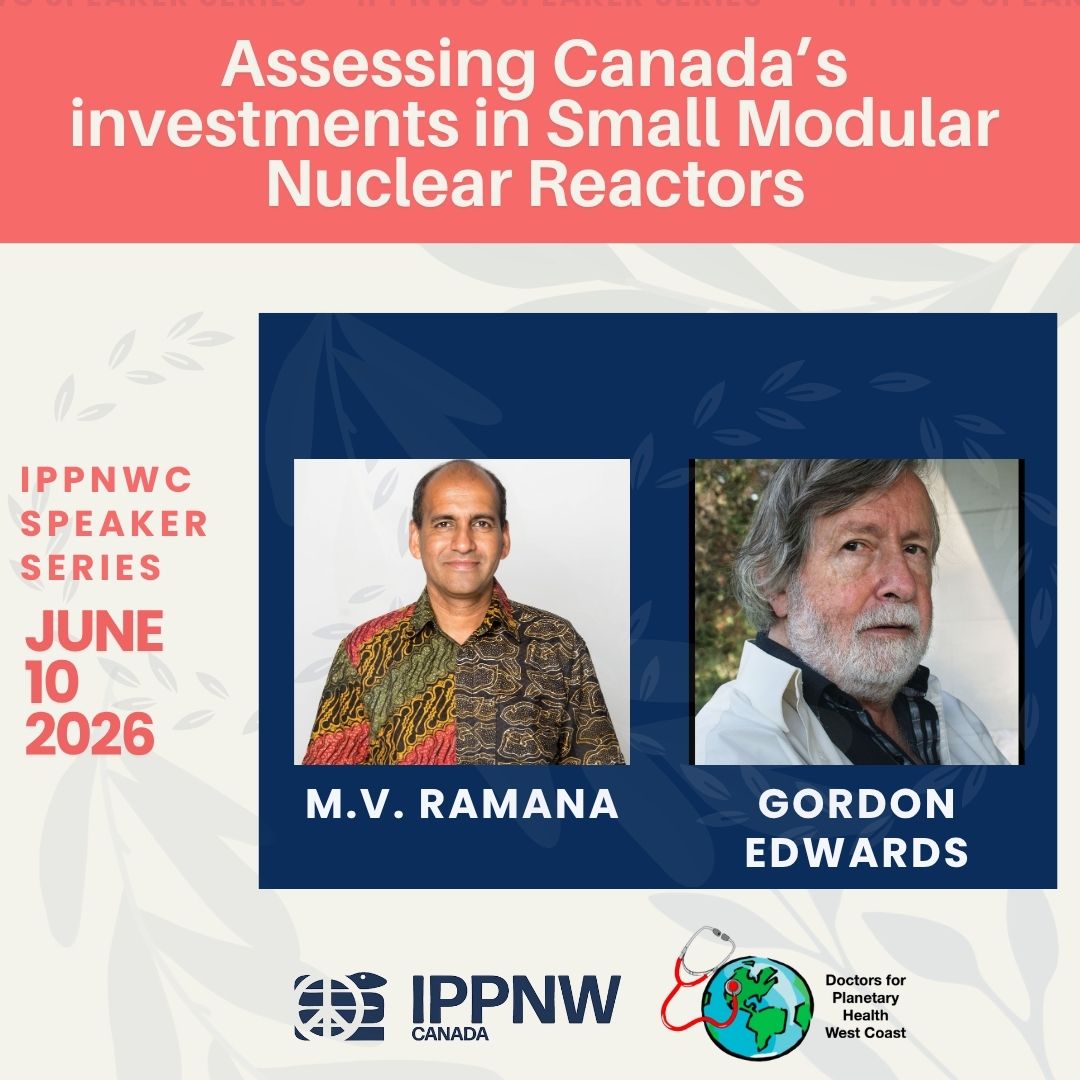
10 June – Assessing Canada’s Investments in Small Modular Nuclear Reactors – https://zoom.us/meeting/register/IiqHA5feRhaEBycOLNTJlA#/registration


Cuba Is Not a Failed State – It Is a Besieged State
PETITION: “Global Appeal to Endorse Palestinian Right of Return of Refugees”
To see nuclear-related stories in greater depth and intensity – go to https://nuclearinformation.wordpress.com
-
Archives
- June 2026 (89)
- May 2026 (306)
- April 2026 (356)
- March 2026 (251)
- February 2026 (268)
- January 2026 (308)
- December 2025 (358)
- November 2025 (359)
- October 2025 (376)
- September 2025 (257)
- August 2025 (319)
- July 2025 (230)
-
Categories
- 1
- 1 NUCLEAR ISSUES
- business and costs
- climate change
- culture and arts
- ENERGY
- environment
- health
- history
- indigenous issues
- Legal
- marketing of nuclear
- media
- opposition to nuclear
- PERSONAL STORIES
- politics
- politics international
- Religion and ethics
- safety
- secrets,lies and civil liberties
- spinbuster
- technology
- Uranium
- wastes
- weapons and war
- Women
- 2 WORLD
- ACTION
- AFRICA
- Atrocities
- AUSTRALIA
- Christina's notes
- Christina's themes
- culture and arts
- Events
- Fuk 2022
- Fuk 2023
- Fukushima 2017
- Fukushima 2018
- fukushima 2019
- Fukushima 2020
- Fukushima 2021
- general
- global warming
- Humour (God we need it)
- Nuclear
- RARE EARTHS
- Reference
- resources – print
- Resources -audiovicual
- Weekly Newsletter
- World
- World Nuclear
- YouTube
-
RSS
Entries RSS
Comments RSS
 nuclear-news