Port expansion permits criticized – Local / Metro – The State
Locked in a government storage room were the records Bob Guild needed to make his case against a leaking nuclear waste landfill. But when the Columbia lawyer asked to see them, he was given only a single folder. “I said, ‘Where is everything else?’ They said, ‘It’s all trade secrets,’” Guild recalled of his visit to state environmental control offices. Letting companies shield certain records from public view is wrong when people’s health and the environment are involved, Guild said.
Port expansion permits criticized – Local / Metro – The State
DHEC keeping secrets – Local / Metro – The State
DHEC keeping secretsBy SAMMY FRETWELLand JOHN MONK – sfretwell@thestate.com. jmonk@thestate.com 25 Nov 08
Locked in a government storage room are files that tell the story of a leaking nuclear waste landfill near Barnwell.
But when environmental lawyer Bob Guild asked to see the documents one day five years ago, state regulators only gave him a thin folder.
Landfill operator Chem-Nuclear had persuaded regulators to withhold many of the files, arguing the information included trade secrets. Without the records, Guild lost a court case that could have forced tougher disposal practices at the 37-year-old landfill.
“To say contamination records are trade secrets is just an outrage,” said Guild, who has appealed the court’s decision.
Guild’s troubles highlight a recurring complaint about the state Department of Health and Environmental Control: that it doesn’t inform the public well enough and, in some cases, deliberately withholds information that’s important to the public. It’s a complaint that spans the agency’s 35-year history………………State lawmakers and Attorney General Henry McMaster are among those critical of DHEC’s public information efforts in recent years.
In 2007, McMaster scolded the agency for failing to produce records related to the nuclear waste landfill. DHEC had withheld the documents not only from Guild, but from The State newspaper as well as from legislators during a public hearing…………………..
Critics say, among other things, DHEC has:
• Failed to warn the public about pollution.Failed to reveal important pollution data on its Web site.Set fines in closed-door meetings with polluters Failed to respond to public records requests…………………….The documents showed high levels of radioactive tritium contamination at dozens of places beneath the site, indicating to Guild that the leaks were more serious than people realized. “Our case would have been strengthened if we had had the information,” he said.
Changes to method of measuring Yankee’s radiation remain a controversial issue with some lawmakers: Times Argus Online
Changes to method of measuring Yankee’s radiation remain a controversial issue with some lawmakers
By Susan Smallheer Rutland Herald – Published: November 24, 2008
BRATTLEBORO — Members of the Vermont State Nuclear Advisory Panel say they feel left in the dark in a controversy over how the state has changed its measure of radiation coming from the Vermont Yankee nuclear plant.
Rep. Sarah Edwards, P-Brattleboro, and Sen. Mark MacDonald, D-Orange, faulted David O’Brien, chairman of the panel and the commissioner of the Department of Public Service, for not discussing the radiation issue back in 2005, when the owner of Vermont Yankee first started disputing the radiation levels with state regulators. Their comments came at a Thursday night hearing last week.
MacDonald, who also sits on the Legislative Committee on Administrative Rules, told the panel that committee had recently determined the Department of Health had violated state law when it changed the way it calculated the radiation coming from Vermont Yankee and didn’t hold the required public hearings about the change, or hold public hearings about Yankee’s potential violation of state law, which was first noted in 2004…………………….The Legislative Committee on Administrative Rules found that the Health Department adopted the changes without following state law on how to do it.
Palo Verde shuts down reactor due to leak
Palo Verde shuts down reactor due to leakby Ryan Randazzo – Nov. 24, 2008 12:08 PMThe Arizona RepublicOne of the three reactors at Palo Verde Nuclear Generating Station shut down Friday to fix a cooling-system leak, reducing output during what was shaping up to be a banner year at the facility.
Is costly nuclear energy too big a risk for San Antonio?
Is costly nuclear energy too big a risk for San Antonio? Jan Jarboe Russell – Express-News 23 Nov 08 – “……….CPS Energy has invested $206 million on preliminary design and engineering to build two new nuclear reactors in Bay City and that money will run out at the end of the year.………Do we bet our future on the old energy drivers — coal, fossilized fuels and nuclear — or do we invest substantially in energy efficiency and renewable sources such as wind and solar?…………..there is nothing economical about the price tag of the two proposed nuclear reactors in Bay City. Indeed, there’s no firm price at all.
Recently CPS estimated that the project would cost $6 billon to $7 billion if we build it tomorrow, while others in the industry place the flip-the-switch cost at a low of $12.1 billion and a high of $17.5 billion. Such numbers stagger the mind and make moving ahead with the nuclear option too reckless a choice.
Panel raises Yankee radiation issue: Rutland Herald Online
Panel raises Yankee radiation issue November 22, 2008 RUTLAND HERALD By Susan Smallheer BRATTLEBORO — Members of the Vermont State Nuclear Advisory Panel said Thursday evening they felt left in the dark over the controversy over how the state has changed how it measures radiation coming from the Vermont Yankee nuclear plant………………….before the Department of Health changed the way it calculated the radiation, Yankee was dangerously close to hitting that limit.
Vermont Yankee is emitting more radiation into the atmosphere for a variety of reasons: It boosted power production by 20 percent 2-1/2 years ago, it is now storing low-level radioactive waste in Vernon, it stored high-level radioactive waste in concrete casks outside the plant, and operational methods aimed at reducing the wear and tear on the plant.
Entergy Nuclear protested the way the radiation was calculated, and the state and Entergy hired a nuclear laboratory, Oak Ridge Universities Laboratory, to review the process. The result was a recommendation that the state re-calculate the radiation dose, as opposed to radiation exposure, which would in effect cut the rate to just over half the current rate, 0.6.
Panel raises Yankee radiation issue: Rutland Herald Online
Tags: nuclear, antinuclear, uranium, radiation
Obama and the Politics of Nuclear Waste | Newsweek Project Green | Newsweek.com
Obama’s Nuclear Reservations Political squabbling over how to store waste could hold back the industry.
Published Nov 22, 2008 – “……………..A bigger problem than the safety of the reactors themselves is what to do with the deadly waste they produce. Nuclear power is praised for its zero carbon emissions, but it comes at a price—radioactive fuel rods that remain toxic for thousands of years. If you’re looking for a reason to feel queasy about building more nuclear reactors, this is it. While politicians bicker over where to put it all—nuclear waste is the ultimate “not in my backyard” dispute—the stuff is piling up. As things are now, a lot of it is simply stockpiled at the plants, submerged in open pools of water for as long as five years and eventually sealed in steel and concrete casks. “You have more than 100 reactors storing waste on-site, under what the Nuclear Regulatory Commission calls a temporary license, in the worst of all possible places,” says Rochelle Becker of the Alliance for Nuclear Responsibility, a nonprofit that monitors the nuclear-power industry. “In California, it’s stored next to earthquake faults. In the rest of the country, you find that most waste is sitting very close to water supplies.”
Obama and the Politics of Nuclear Waste | Newsweek Project Green | Newsweek.com
Tags: nuclear, antinuclear, uranium, radiation
The Sydney Morning Herald: national, world, business, entertainment, sport and technology news from Australia’s leading newspaper.
Get paid for solar power on your roof * * Email * Printer friendly version * Normal font * Large fontMarian Wilkinson Environment EditorNovember 24, 2008
HOUSEHOLDERS who put solar panels on their roofs and generate power that feeds back into the electricity grid will be paid a fee, but how much will not be decided until January.
The move to introduce the “feed-in tariff” will be announced today by the NSW Minister for Environment and Climate Change, Carmel Tebbutt, at a solar power conference in Sydney.
It marks an end to the State Government’s opposition to solar subsidies. The Energy Minister, Ian Macdonald, is backing it despite strong objections from one of the state’s main energy retailers, Energy Australia. NSW is the last state to introduce the solar subsidy or feed-in tariff.
Green Left – Editorial: Editorial: Rudd’s first year: style over substance
Rudd’s first year: style over substance Green Left 23 November 2008 The first 12 months of Kevin Rudd’s federal Labor government have proved to be a continuation of the conservative, pro-war and anti-environmental politics of the Howard years.
The major difference between the two governments has been a difference in style rather than substance.
The previous government of John Howard stands condemned for refusing to recognise the threat of climate change or take any steps to limit Australia’s greenhouse emissions…………………………The racist intervention into the Northern Territory initiated under Howard has continued.,,,,,,,,,,,,,,,,,,,,,,,,,,,,,,,,Aboriginal land rights and Aboriginal control over their own affairs have always been especially opposed by the mining and pastoral industries — two powerful players in Australia’s unsustainable economy.
The NT intervention was conceived under Howard to undermine the past gains of the Aboriginal rights movement in these areas while simultaneously shifting blame for ongoing poverty onto Aboriginal people themselves.
Rudd’s continuation of the intervention, albeit with minor adjustments, signals that the ALP is willing to finish the job that Howard started.
Under Rudd, dealing with climate change is a stated government priority. But Rudd’s actual policies are dangerously inadequate to meet the climate emergency we face…………………………No widespread shift to renewable energy use is underway, or has even been conceived. No moves to rapidly expand public transport have been made. No legislation mandating drastic improvements in energy efficiency for industry or agriculture has been drafted.
The priority has been given to discredited market-driven emissions schemes and non-existent technologies like so-called clean coal. Emission reduction targets have been set at hazardously low levels in accordance with what big business will accept. The latest alarming climate science has been studiously ignored.
Green Left – Editorial: Editorial: Rudd’s first year: style over substance
Tags: globalwarming, climate change, nuclear, antinuclear, uranium, radiation
Aborigines angry over WA port plan – National – smh.com.au
Aborigines angry over WA port plan Stdney Morning Herald Ben Cubby Environment Reporter
November 24, 2008AS AUSTRALIA’S pristine Kimberley region is shown off to the world via Baz Luhrmann’s film Australia, some of the area’s trad-itional owners say it is about to be ruined for good.
The West Australian Government plans to push ahead with building an enormous sea port to funnel the Kimberley’s stocks of liquid natural gas and other minerals offshore, and has indicated it may strip the local Aboriginal community of its previously granted right of veto over the development.
“The industrialisation of the Kimberley is a continuation of government policy of the past,” said Neil McKenzie, chairman of the Jumbarrngunjul Aboriginal corporation, which administers land close to the Government’s preferred port site at North Head, on the Dampier Peninsula.
Mr McKenzie is with a group of indigenous representatives in Sydney to highlight their case against the 1000-hectare development in conjunction with the release of the film. They believe the port would trample cultural heritage and damage the eco-tourism industry, which has flourished in the past decade.
Aborigines angry over WA port plan – National – smh.com.au
Tags: aboriginal.nuclear, antinuclear, uranium, radiation
Green Left – Indigenous activist speaks: Outback communities and the nuclear industryI
Indigenous activist speaks: Outback communities and the nuclear industry Green Left IPeter Robson21 November 2008 Jillian Marsh is a member of the Adnyamathanha community in the Flinders Ranges and active in the Australian Nuclear-Free Alliance. She recently traveled to Germany to receive the 2008 Nuclear-Free Future award, and is writing a thesis entitled A look at the approval of Beverley Mine and the ways that decisions are made when mining takes place in Adnyamathanha country. Marsh spoke to Green Left Weekly’s Peter Robson about the expansion of the nuclear industry in South Australia and the Northern Territory.
What are the main issues with the nuclear industry at the moment?
At a national level and a global level there is a lot of pressure from the nuclear industry to expand. This targets governments, local communities and local councils.Nuclear expansion is made up of the mining component, the transport and processing component, where the product is distributed and what it’s used for — weapons, power plants, reprocessing, enrichment and then what you do with the waste.
The main components we have to deal with in my area are the mining, processing, transport, waste and storage and management of the waste. It’s quite possible that nuclear power will also be a key factor. There is a big push on governments to adopt nuclear power as a progressive step forward.
The details of that don’t stack up, from what I’ve seen. In terms of replacing coal-fired power stations with nuclear power stations, the economics don’t stack up, the environmental issues don’t stack up and [uranium is] still a fossil fuel. There’s the huge issue of waste, and what do you do with the waste. That hasn’t been resolved.
Those are the key issues in Australia but also there’s the legacy of what the nuclear industry has already done in Australia: there’s the detonation of bombs, the contamination of land that has caused, the chronic health issues that people suffer from as a result of radiation sickness. There’s never been any compensation for, or recognition of, the people [in remote communities] that through suffered that. With the detonations at places like Emu Junction and Maralinga the black clouds could be seen all over our country and further over to the east. The winds carried the contamination from the detonation thousands of kilometres to the east.
Again there’s never been any compensation put forward by the government and never been any research or investigation done that could see how widespread or serious the contamination is. What are the specific proposals being debated?
In South Australia, there’s the expansion that’s on the table for the Roxby Down Olympic Dam mine. The expansion of the Olympic Dam process has already excluded Aboriginal people from consultation and decision making.WMC [Western Mining Company] sought an indenture agreement from the government to have exemption from the Aboriginal heritage legislation in South Australia. The state government allowed WMC this exemption. That stands for the lifetime of the mine. Indigenous people have been discriminated against by the SA Aboriginal Heritage Act. Legally that means they have no power to have any say over what happens as a result of the expansion.
Under Native Title legislation, people have the right to negotiate an agreement for compensation, but they still don’t have any decision-making power legally.
Now you have the land rights legislation in the Northen Territory — which allows Indigenous people to veto development for five years — which is still only a temporary arrangement.
But then development or mining companies can come back with a new package with new people, with new strategies or rework the same ones they used previously, and they can pressure people again and they can do that every five years, for eternity. They just wear people down, because communities don’t have the same level of resources that mining companies have access to. This sets up a major inequity between the negotiating parties. At every stage of the game, Indigenous communities are always under-resourced and placed in an impossible situation.
Then you have the mining companies working very closely, very comfortably with governments. Again, governments have a lot more resources than Indigenous communities…………………Has the new federal government improved the situation much?
The new government has actually intensified the problems by opening the doors for the nuclear industry to expand and by saying that they will continue to seek a place in Australia to store nuclear waste. It’s going to be somewhere in remote or rural Australia, it won’t be in Sydney or Adelaide or Canberra.It will be somewhere in the vicinity of Alice Springs or Port Augusta. It’s remote and rural communities getting a kick in the arse all the time and getting the raw end of the deal from the commonwealth government………………….rural and regional Australia is being targeted by the nuclear industry, by the mining companies and by our own government people. It’s got to stop.
Green Left – Indigenous activist speaks: Outback communities and the nuclear industryI
Tags: aboriginal, indigenous, nuclear, antinuclear, uranium, radiation
Nuclear Territory News
Workers ‘caked’ in uranium at Ranger Friday, 21 November, 2008by Ben LangfordNT NewsMORE than a dozen workers were exposed to a “concerning” level of uranium during a clean-up operation at the Ranger mine near Jabiru.The workers were not wearing their TLD monitoring devices at the time but urine tests showed they had been exposed to uranium oxide.The incident is among 210 outstanding matters before the mine’s safety committee, Australian Manufacturing Union state secretary Andrew Dettmer said.Energy Resources of Australia business development manager David Paterson said the workers probably ingested uranium through their mouths after licking their lips while cleaning out the yellowcake.”Absolutely it’s a concern,” he said. “We’ll be reviewing our procedures and taking all steps necessary to make sure it doesn’t happen again.”The incident took place over three days in late October when workers were cleaning yellowcake out of a “hopper” where it was clogged after a rainstorm. Mr Paterson said they were wearing only paper overalls and face masks.AMWU NT organiser Steve Milne said eight workers who were tested “were all over the acceptable limit for uranium”.But Mr Paterson said of the 15 workers on the clean-up job only six wanted to be tested.He said the company’s “most pessimistic credible case” estimate was that they received only a slight level of exposure, a small fraction of the yearly safe levels.Mr Patterson denied union claims the workers were not wearing their TDL monitoring devices at the time.But the company later admitted they were in fact not wearing the monitors.NT WorkSafe director Laurene Hull said the agency visited the mine and was reviewing the work practices and the health monitoring results.The exposure followed an incident about a month earlier when a worker was hit in the face by a lump of yellowcake that fell from a hopper and knocked his face mask off, Mr Dettmer said.Tests were understood to have cleared him of dangerous levels of radiatio
Tags: nuclear, antinuclear, uranium, radioactive
GAO investigating compensation for ill nuclear workers – Mid-Columbia News | Tri-City Herald : Mid-Columbia news
GAO investigating compensation for ill nuclear workers
By Annette Cary, Tri City Herald 20 Nov 08 The Government Accountability Office is investigating a program to compensate ill nuclear workers, including those at Hanford, and should have some preliminary findings to share with congressional leaders this spring………………………..The program’s Part B offers compensation of $150,000 and medical reimbursement for workers who likely developed cancer because of workplace exposure to radiation…………………..If workers have died, survivors may be eligible for compensation.
Tags: nuclear, antinuclear, uranium, radioactive
Storage fears over high-level nuclear waste | Environment | The Guardian
Storage fears over high-level nuclear waste• Second site could be needed at huge extra cost• Experts call for more research on disposal
The Guardian Terry Macalister November 17 2008 Government plans for a new generation of nuclear power plants face growing concerns the industry needs another waste repository involving a massive escalation in cost……………………….Companies such as EDF which are interested in building new atomic facilities have presumed they will be able to store their spent materials in a site largely paid for by the government.
Being forced to build a second site – especially one dedicated to the new stations – could change the delicate economics of the industry. EDF was unavailable for comment.
Storage fears over high-level nuclear waste | Environment | The Guardian
Tags: nuclear, antinuclear, uranium, radioactive
Roswell residents protest GNEP site – Carlsbad Current-Argus
Roswell residents protest GNEP site Current-Argus 20 Nov 08 MSTROSWELL – Chaves County residents say they don’t want radioactive waste dumped in their area.A U.S. Department of Energy hearing Tuesday on the Bush administration’s proposed Global Nuclear Energy Partnership largely drew opponents. The DOE is holding 13 public hearings around the country, and officials say no site decisions have been made.GNEP, part of the president’s Advanced Energy Initiative, seeks to expand global nuclear power and technologies to enable recycling of radioactive waste.However, last month, a panel of the National Academy of Sciences urged President Bush to abandon the ambitious plan to resume nuclear waste reprocessing that is at the heart of his push to expand civilian use of nuclear power.
Roswell residents protest GNEP site – Carlsbad Current-Argus
Tags: nuclear, antinuclear, uranium, radioactive
1 This Month

Protect Sazan Island from the Trump family! https://secure.avaaz.org/campaign/en/protect_sazan_island_from_the_trump_family_loc/?bqFCVab&v=174511&cl=22707147157&_checksum=5e9dde668860e8231c33699735e16a1fbf22ab2cb01da50c999fe8732b9775ef&utm_source=email&utm_medium=blast_email&utm_campaign=174511
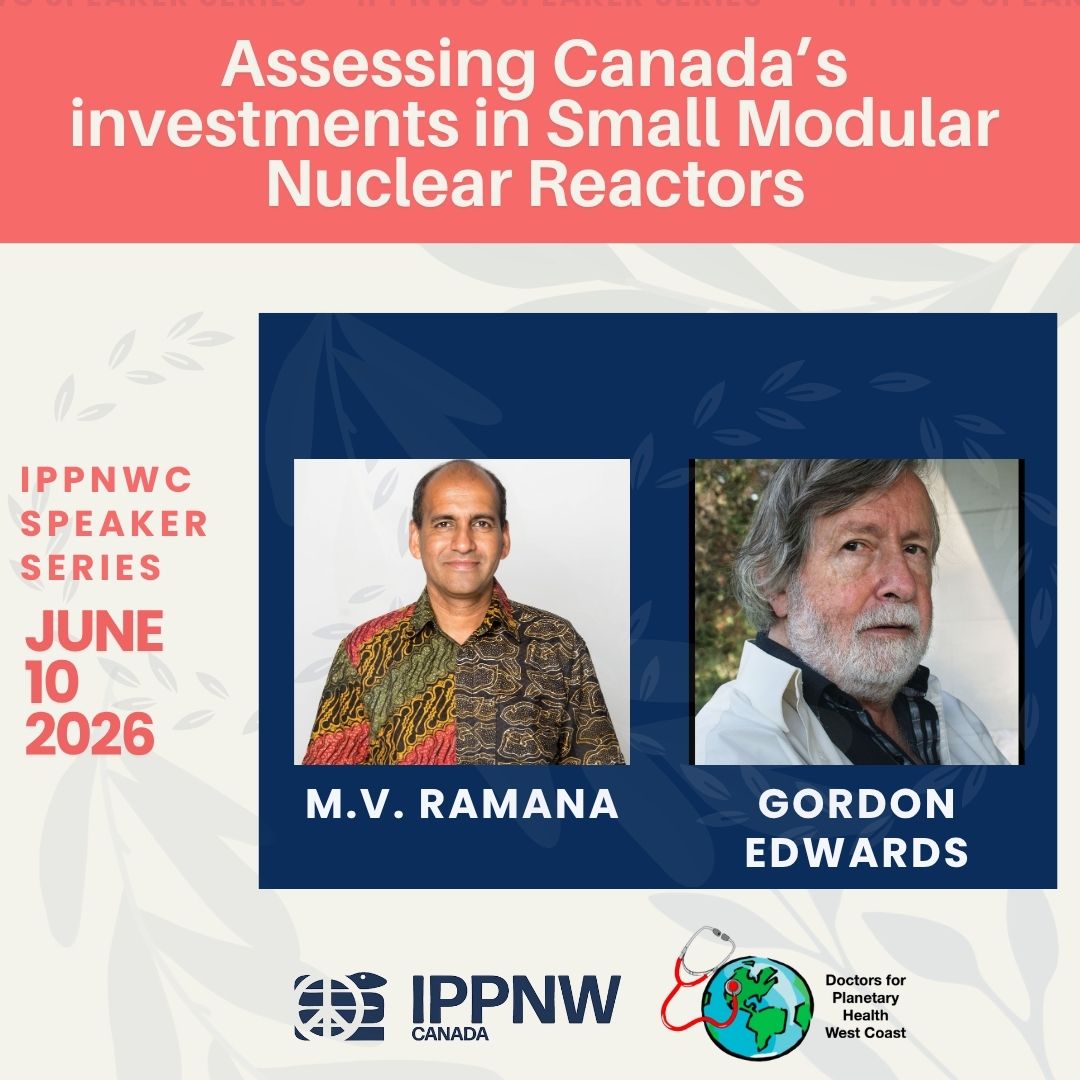
10 June – Assessing Canada’s Investments in Small Modular Nuclear Reactors – https://zoom.us/meeting/register/IiqHA5feRhaEBycOLNTJlA#/registration


Cuba Is Not a Failed State – It Is a Besieged State
PETITION: “Global Appeal to Endorse Palestinian Right of Return of Refugees”
To see nuclear-related stories in greater depth and intensity – go to https://nuclearinformation.wordpress.com
-
Archives
- June 2026 (89)
- May 2026 (306)
- April 2026 (356)
- March 2026 (251)
- February 2026 (268)
- January 2026 (308)
- December 2025 (358)
- November 2025 (359)
- October 2025 (376)
- September 2025 (257)
- August 2025 (319)
- July 2025 (230)
-
Categories
- 1
- 1 NUCLEAR ISSUES
- business and costs
- climate change
- culture and arts
- ENERGY
- environment
- health
- history
- indigenous issues
- Legal
- marketing of nuclear
- media
- opposition to nuclear
- PERSONAL STORIES
- politics
- politics international
- Religion and ethics
- safety
- secrets,lies and civil liberties
- spinbuster
- technology
- Uranium
- wastes
- weapons and war
- Women
- 2 WORLD
- ACTION
- AFRICA
- Atrocities
- AUSTRALIA
- Christina's notes
- Christina's themes
- culture and arts
- Events
- Fuk 2022
- Fuk 2023
- Fukushima 2017
- Fukushima 2018
- fukushima 2019
- Fukushima 2020
- Fukushima 2021
- general
- global warming
- Humour (God we need it)
- Nuclear
- RARE EARTHS
- Reference
- resources – print
- Resources -audiovicual
- Weekly Newsletter
- World
- World Nuclear
- YouTube
-
RSS
Entries RSS
Comments RSS
 nuclear-news