Seven proven policies that will help build a cleaner planet
Seven proven policies that will help build a cleaner planet
THE AUSTRALIAN Tony Blair | July 06, 2009 “……………………….A new report from the Breaking the Climate Deadlock project, a strategic partnership between my office and The Climate Group, shows how major reductions even by 2020 are achievable if we focus action on certain key technologies, deploy policies that have been proven to work, and invest now in developing those future technologies that will take time to mature.
Perhaps the most interesting fact to emerge is that fully 70 per cent of the reductions needed by 2020 can be achieved by investing in three areas: increasing energy efficiency, reducing deforestation, and use of lower-carbon energy sources, including nuclear and renewables. Implementing just seven proven policies – renewable energy standards (say, feed-in tariffs or renewable portfolio standards); industry efficiency measures; building codes; vehicle efficiency standards; fuel carbon content standards; appliance standards, and policies for reduced emissions from deforestation and forest degradation – can deliver these reductions.All seven policies have already been successfully implemented in countries around the world, but they need scaling up.
Seven proven policies that will help build a cleaner planet | The Australian
Exxon still aids denialist lobby
Exxon still aids denialist lobby Sydney Morning Herald David Adam in London July 3, 2009
THE world’s largest oil company is continuing to fund lobby groups that question global warming, despite its public pledge to cut support for climate change denial.Company records show ExxonMobil gave hundreds of thousands of dollars to such lobby groups last year. These include the National Centre for Policy Analysis in Dallas, which received $75,000, and the Heritage Foundation in Washington, which received $50,000……………………….According to Bob Ward, policy and communications director at the Grantham Research Institute on Climate Change and the Environment at the London School of Economics, the NCPA and Heritage Foundation have published “misleading and inaccurate information about climate change”…………………………The Heritage Foundation’s December “web memo” said: “Growing scientific evidence casts doubt on whether global warming constitutes a threat, including the fact that 2008 is about to go into the books as a cooler year than 2007.”……………………….Mr Ward said: “ExxonMobil has been briefing journalists for three years that they were going to stop funding these groups [but] … they are still doing it. If [it] wants to fund climate change denial then it should be upfront about it and not tell people it has stopped.”
Renewable Energy Cheaper Than Nuclear Power
Renewable Energy Cheaper Than Nuclear Power Energy Matters 22 June 09 Nuclear power has been increasingly hailed by lobbyists as a source of clean, cheap and safe power; but cost blowouts in the construction and maintenance of new nuclear plants, along with their need for massive amounts of water and continuing radioactive waste storage issues, is again making renewable energy look to be the only really viable option to power our future.
According to a recent study by economist Dr. Mark Cooper, a senior fellow for economic analysis at the Institute for Energy and the Environment at Vermont Law School, the cost of electricity generated by new nuclear reactors would be (USD) 12-20 cents per kilowatt hour, whereas increased energy efficiency and renewable energy sourced power would cost around 6 cents per kilowatt hour.
This translates to USD $1.9 trillion to $4.1 trillion more over the life of 100 new nuclear reactors.
Projected construction and maintenance costs for nuclear plants have quadrupled since the start of the nuclear renaissance in 2000. The required massive subsidies from taxpayers and ratepayers would not change the real cost of nuclear reactors, they would just shift the risks to the public, according to the report.
Renewable Energy Cheaper Than Nuclear Power : Renewable Energy News
UN urges countries to boost clean development
UN urges countries to boost clean development http://www.chinaview.cn 2009-06-19 UNITED NATIONS, June 18 (Xinhua) — The United Nations on Thursday urged countries to invest more in renewable and clean energy sources which could help world mitigate climate change as well as defy global economic downturn.
At a UN General Assembly interactive thematic dialogue held here in the UN headquarters, UN General Assembly President Miguel D’Escoto Brockmann said that the time for renewable sources of energy has arrived.
“The prospects for renewable energy have never looked better, even in the face of recession,” D’Escoto told the meeting focusing on energy efficiency, energy conservation, and new and renewable sources of energy.
He said all the people, especially those are more vulnerable, hope to recover from the slump before too long. “It would be an enormous step forward if this recovery were coupled with visionary policies, innovative technologies and broad incentives for new and renewable sources of energy.”
UN urges countries to boost clean development_English_Xinhua
Renewable Energy Jobs Boom In Europe
Renewable Energy Jobs boom in Europe Energy Matters 17 June 09 A new study by the WWF has revealed that of the 130 million people employed in the European Union altogether, in excess of 3.4 million European jobs are directly related to renewable energy, sustainable transport and energy efficiency related goods and services – far more than the 2.8 million jobs in polluting industries. Indirect jobs related to the green collar sector are estimated at approximately another 5 million. Close to 400,000 people are employed specifically in renewable energy activities, such as the manufacturing, installation and maintenance of wind turbines and solar panels.
The leading European countries for wind power are Germany, Spain and Denmark. For solar power jobs, Germany and Spain are the front runners. Germany and Spain have or had generous gross feed in tariff programs that were major contributors to the solar power boom in both countries.
Germany, which experiences far less sunlight than countries such as Australia, is light years ahead in solar power uptake. Germany commands close to half the global installations market and is also a leading producer of solar cells.
Renewable Energy Jobs Boom In Europe : Renewable Energy News
Surprising Green Energy Investment Trends Found Worldwide
Surprising Green Energy Investment Trends Found Worldwide ScienceDaily (June 7, 2009) — Some $155 billion was invested in 2008 in clean energy companies and projects worldwide, not including large hydro, a new report says……………….
The 2008 investment is more than a four-fold increase since 2004 according to Global Trends in Sustainable Energy Investment 2009, prepared for the UN Environment Programme’s (UNEP) Sustainable Energy Finance Initiative by global information provider New Energy Finance.
Extremely difficult financial market conditions prevailed during 2008 as a result of the global economic crisis.
Nevertheless investment in clean energy topped 2007’s record investments by 5% in large part as a result of China, Brazil and other emerging economies.
Wind power gets set for huge thrust
Wind power gets set for huge thrust By Wan Zhihong (China Daily)2009-06-03 0″………………..China now has the fourth largest wind power capacity in the world. The sector has seen over 100 percent year-on-year growth in the past few years…………………Industry insiders said, by 2020 wind power will likely surpass nuclear power as China’s third-largest source of electricity, after thermal and hydropower.
“Among all the clean energy sources, wind power is developing the fastest these days. The 30,000 mW target is achievable given the fast pace of growth,” said Shi.
Climate crisis will not be solved by nuclear power
Guest column: Climate crisis will not be solved by nuclear power greenbay pressgazette.com Bill Christofferson • May 27, 2009 Concern about climate change has sparked a campaign by the nuclear power industry to try to sell itself as a “clean” energy solution, with Wisconsin a key target……….the campaign to persuade the Legislature and governor to open the door to more reactors in Wisconsin, which has not built one since 1974……..
……….Nuclear power makes no more sense today than it did when the law was passed in 1983. Wisconsin must address the climate crisis, but renewable energy and energy efficiency technologies are faster, cheaper, safer and cleaner strategies for reducing greenhouse emissions than nuclear power………………
New Coal and Nuclear Plants May Not Be Needed, U.S. Energy Official Says
New Coal and Nuclear PlantsMay Not Be Needed, U.S. Energy Official Says
e360 digest23 Apr 2009:
Renewable energy technologies have come far enough that the U.S. may not need to build any new coal or nuclear plants, the chairman of the Federal Energy Regulatory Commission said. “We may not need any, ever,” Jon Wellinghoff said at a forum of the U.S. Energy Association. The development of smart grid technologies that better store capacity from wind, solar and biomass sources, he said, will eventually meet the nation’s energy demands — and make coal-fired and nuclear plants unnecessary……………………..Wellinghoff insists the existing concept of baseload capacity will be an “anachronism” as the technology develops to store power capacity, such as a system for concentrated solar plants that currently allows 15 hours of storage.
Yale Environment 360: New Coal and Nuclear Plants
May Not Be Needed, U.S. Energy Official Says
No to progress or peril? Revisiting the case for or against nuclear energy
what’s the case against nuclear power? Business Mirror 25 May 09 “……………………It boils down to two things: safety and economics, according to Prof. Roland Simbulan of the University of the Philippines, National Chairman of the Nuclear-Free Philippines Coalition (NFPC). “The major issue is safety considering that we do not have an effective disaster management culture especially to handle nuclear technology,” Simbulan told the BusinessMirror.
“Even industrialized countries have difficulty confronting this problem.” Simbulan adds that the safety issue concerning storage of nuclear waste will hound the country considering the Philippines is an agricultural country dependent on a fishing industry.
He also argued that the BNPP was constructed under a “conspiracy of corruption” as it is an overpriced, unsafe plant and one that has left the Filipinos with $2.2 billion of debt. Simbulan suggests that the best alternative to nuclear power is safe, clean and less expensive renewable energy such as solar, wind, wave, tidal, geothermal energy, among others.
“We have an eternal abundance of these renewables. Also, energy conservation and efficient technologies that require less energy to generate can be considered such as light bulbs that consume less energy for more light. We also have to simplify lifestyles,” he explained. Simbulan adds that renewables are easier to utiilize compared to nuclear energy. “In the long run, they are cheaper…………………..
……………. “It is a known fact that nuclear power is an expensive technology that is risky to operate and creates deadly radioactive waste. Congress must realize that every Filipino citizen aspires for a safe and secure future. This will not be achieved through nuclear power technology,” said Greenpeace Southeast Asia campaigner Francis de la Cruz.
Greenpeace argued that the history of nuclear power in the world shows us that aside from being costly and risky, it discourages energy efficiency and impedes the development of renewable energy sources that are cleaner, sustainable and safe.
No to progress or peril? Revisiting the case for or against nuclear energy
US lawmakers reject nuclear in renewable power goal
US lawmakers reject nuclear in renewable power goal
Wed May 20, 2009 By Ayesha Rascoe
WASHINGTON, May 20 (Reuters) – U.S. lawmakers pushing to include greater recognition for existing nuclear power in a national renewable energy standard failed to win new breaks for the industry when a U.S. congressional panel on Wednesday voted down an amendment to a controversial climate change bill.
The sweeping bill, which seeks to cap greenhouse gas emissions, includes a renewable energy mandate that would require utilities to generate 15 percent of electricity from renewable sources such as wind and solar by 2020………………………………
Under the legislation sponsored by Democratic Representatives Henry Waxman and Edward Markey, utilities’ renewable mandate would be reduced in proportion to the portion of any electricity sales from new nuclear plants, but not existing nuclear plants…………
……..Waxman argued that the bill was not discriminating against nuclear power, but that nuclear was not renewable energy because it requires uranium, a limited resource. Also, he said the renewable standard was aimed at promoting new power sources and technology.
7 Reasons to Support Comprehensive Clean-Energy Legislation
7 Reasons to Support Comprehensive Clean-Energy Legislation
1. Clean-energy legislation will create jobs by spurring investment in renewables and efficiency.
The legislation would place a cap on global warming pollution that would give companies and utilities an incentive to invest in low-carbon and energy-efficient technologies in order to minimize their emissions. These kinds of investments increase demand for renewable electricity and fuels, helping grow entire new businesses, and create jobs in struggling sectors of the economy such as manufacturing and construction.
Clean-energy investments also create more jobs than investments in traditional energy sources.
2. Boosting investments in low-carbon energy will help the United States regain the lead in the manufacture and sale of clean-energy technologies.
3. Action on clean-energy legislation has critical industry support.
4. Global warming is harming our health and the physical environment.
5. Comprehensive clean-energy legislation can provide a host of economic benefits.
6. Clean-energy legislation requires that polluters pay.
7. Opponents of action would continue the status quo of doing nothing, which cost the average family a $1,000 increase in energy bills over past eight years.
http://www.americanprogress.org/issues/2009/05/clean_energy_reasons.html
Biased pro-nuclear report is challenged
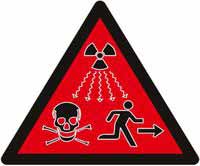 Full of problems or ripe with promise?
Meridian Booster By Graham Mason 14 May 09
With the Uranium Development Partnership report being presented to the public next month there is a question over how much the environment was taken into consideration in its glowing conclusions.
The report, titled Capturing the Full Potential of the Uranium Value Chain in Saskatchewan, was released March 31.
The nuclear and uranium industry were well represented on the 12-person panel with Duncan Hawthorne, president and CEO of Bruce Power, Armand Laferrere, president and CEO of Areva Canada, and Jerry Grandey, president and CEO of Cameco Corporation. ……………
……………Dr. Patrick Moore founding member of Greenpeace, was the only member to identify himself as an environmentalist.
In a statement before a U.S. congressional committee in Apr. 2005, he described his views on nuclear power generation where he described himself as an ‘environmental moderate.’
………………………………The Saskatchewan Environmental Society couldn’t disagree more in a recent nuclear pamphlet.
“The real solutions to climate change lie in the area of energy efficiency and renewable energy,” said the report. “If we were to provide the same level of support for these options as we have done for the nuclear industry, we could move much faster into the sustainable, low-carbon energy economy which is where the future lies.
The report argues nuclear is not an alternative to fossil-fuelled plants, rather they are both part of an environmentally unsustainable approach to the electricity system.
Coxworth questions whether Moore qualifies to be the environmental conscience of the report.
“Patrick Moore … is a paid consultant to the nuclear industry,” said Coxworth. “Labelling him by his past Greenpeace involvement would be somewhat analogous to identifying me solely by the fact that long ago I worked for the U.S. Atomic Energy Commission.”
“Doubtless some of the other partnership members have taken some environmental classes as part of their technical education.”
Local public consultations are at Lakeland College on June 10, the Don Ross Centre in North Battleford on June 11 http://www.meridianbooster.com/ArticleDisplay.aspx?e=1566432
Harvesting the Wind
Harvesting the Wind
Three young French designers hatch an ingenious plan to use existing infrastructure to create clean energy.
METROPOLISMAG.com By Suzanne LaBarre
Posted May 13, 2009 “……………………..Delon, who is 31 and an architect, is the recipient of Metropolis’s 2009 Next Generation prize, along with Julien Choppin, also a 31-year-old architect, and Raphaël Ménard, a 34-year-old engineer. Their project, Wind-it, addresses this year’s theme—which beseeched entrants to “Fix Our Energy Addiction”—with the effortless simplicity of a Pythagorean proof. The team proposes inserting wind turbines into existing electrical towers or, where infrastructure is broken or spare, building new towers that double as wind-power generators, thus introducing a fount of renewable energy into an aspect of civilization that’s as certain as taxes. With three potential sizes, the turbine towers could be integrated nearly anywhere: Lille, France, China’s Sichuan Province, or the streets of New York City. http://www.metropolismag.com/story/20090513/harvesting-the-wind
Oil Giants Say No to Renewable Energy
Oil Giants Say No to Renewable Energy
AllGov May 12, 2009
……………………………….According to Michael Eckhart, president of the American Council on Renewable Energy, an industry trade group, the top five oil companies have spent around $5 billion over the last 15 years to develop sources of renewable energy—a mere 10% of the roughly $50 billion funneled into the clean-energy sector by venture capital funds and corporate investors during this period. “Big Oil does not consider renewable energy to be a mainstream business,” Eckhart told the New York Times. “It’s a side business for them.”
It’s become even less than that for some companies. Royal Dutch Shell has decided to freeze its research and investments in wind, solar and hydrogen power, and focus its alternative energy efforts on biofuels. It also has sold off much of its solar business and pulled out of a project last year to build the largest offshore wind farm, near London.
BP, a company that has spent nine years saying it was moving “beyond petroleum,” has been getting back to petroleum since 2007, paring back its renewable program.
“In my view, nothing has really changed,” Rex W. Tillerson, CEO of Exxon Mobil, said after the election of President Obama. “We don’t oppose alternative energy sources and the development of those. But to hang the future of the country’s energy on those alternatives alone belies reality of their size and scale.”
http://www.allgov.com/ViewNews/Oil_Giants_Say_No_to_Renewable_Energy_90512
1 This Month

of the week – Shut Down Drone Warfare!


Tell the Ukrainian Government to Drop Prosecution of Peace Activist Yurii Sheliazhenko

Petition to revoke the licensing of the Near Surface Nuclear Disposal Facility (NSDF) at Chalk River. https://www.ourcommons.ca/petitions/en/Petition/Details?Petition=e-7247
To see nuclear-related stories in greater depth and intensity – go to https://nuclearinformation.wordpress.com
-
Archives
- April 2026 (34)
- March 2026 (251)
- February 2026 (268)
- January 2026 (308)
- December 2025 (358)
- November 2025 (359)
- October 2025 (376)
- September 2025 (257)
- August 2025 (319)
- July 2025 (230)
- June 2025 (348)
- May 2025 (261)
-
Categories
- 1
- 1 NUCLEAR ISSUES
- business and costs
- climate change
- culture and arts
- ENERGY
- environment
- health
- history
- indigenous issues
- Legal
- marketing of nuclear
- media
- opposition to nuclear
- PERSONAL STORIES
- politics
- politics international
- Religion and ethics
- safety
- secrets,lies and civil liberties
- spinbuster
- technology
- Uranium
- wastes
- weapons and war
- Women
- 2 WORLD
- ACTION
- AFRICA
- Atrocities
- AUSTRALIA
- Christina's notes
- Christina's themes
- culture and arts
- Events
- Fuk 2022
- Fuk 2023
- Fukushima 2017
- Fukushima 2018
- fukushima 2019
- Fukushima 2020
- Fukushima 2021
- general
- global warming
- Humour (God we need it)
- Nuclear
- RARE EARTHS
- Reference
- resources – print
- Resources -audiovicual
- Weekly Newsletter
- World
- World Nuclear
- YouTube
-
RSS
Entries RSS
Comments RSS
 nuclear-news