Nuclear dawn delayed in Finland
Nuclear dawn delayed in Finland By Rob Broomby BBC World Service, 10 July Olkiluoto, Finland
When it is finished, Finland’s Olkiluoto 3 (OL3) nuclear reactor will be the biggest the world has ever seen, the excavation site alone is the size of 55 football fields.
It was to have been a pilot project for bigger, better, cleaner, Generation III reactors, which would lead the charge back to nuclear power in a continent which had gone cold on atomic energy after the accidents at Chernobyl and Thee Mile Island.
But hopes of an early nuclear dawn on the Baltic coast are fading – the May start up date came and went and the OL3 is now not expected to begin pumping out electricity until 2012 – three years later than planned and about $2.4bn dollars (1.7bn euros) over budget.
The soaring cranes tell the tale: this project is far from complete.
There have been a string of problems starting with the concrete, then the welding.
Now, the safety regulator is questioning the designs for the reactor’s nerve centre – the Instrumentation and Control system……………………..
Even Philippe Knoche, Areva’s chief operating officer, admits things have not been going well.
“It’s no secret that Areva is losing money on this project,” he tells me……………………………..the EPR could be struck-off the list of reactor designs approved for use in the UK, a devastating blow to the French company and the British nuclear programme.
Conflict on African continent hampers mining industries
Conflict on continent hampers mining industries Mining Weekly
By:Megan Wait 10 July 09Foreign nations’ and companies’ interests in African resources also lead to negative effects. Many foreign companies on the continent are primarily extractive. This means that the countries are seen as suppliers of raw materials, which are exported for processing to other countries. This prevents the esta- blishment of manufacturing and service industries in these countries, which inhibits job creation. The export taxes also create expenses for the country, which is chroni- cally strapped for revenue.Meanwhile, French nuclear company Areva’s subsidiary, uranium explorer UraMin, reports that the company, although at peace with the government, is concerned about its uranium-excavating project Bakouma, in the Central African Republic (CAR)……………………………….The negative perception of the political, societal and economic situation in Africa, weak leadership and poor governance, and the lack of regional coherence and identity create structural problems that continue the cycle of poverty and insecurity.
Nuke plant blames maintenance problems for leak
Nuke plant blames maintenance problems for leak philly.com Jul. 9, 2009 The Associated PressLACEY TOWNSHIP, N.J. – Officials at a New Jersey nuclear power plant say a maintenance problem is to blame for a tritium leak this year.The federal Nuclear Regulatory Commission released a statement explaining what operators of Lacey Township’s Oyster Creek plant say went wrong.A 1991 report indicated two pipes had been recoated. But a new analysis finds they were not completely recoated and were prone to corrosion.
Nuke plant blames maintenance problems for leak | AP | 07/09/2009
Swedish nuclear watchdog puts plant on probation amid safety concerns |
Swedish nuclear watchdog puts plant on probation amid safety concerns
Detsche Welle 9 July 09 After a series of incidents that could endanger the security at a nuclear plant in Sweden, officials in the Scandinavian country have called for new security measures.
The Swedish Radiation Safety Authority (SSM) has placed the Ringhals nuclear plant, in the southwest of the country, under special supervision after a series of incidents.
“The agency has on several occasions pointed out deficiencies that have been followed by measures from Ringhals, but the problems still remain,” said Swedish Radiation Safety Authority official Leif Karlsson……………
……………Sweden at one time had as many as 12 nuclear reactors in operation, but decommissioned two reactors at the Barseback plant in southern Sweden in an effort to cut back on nuclear energy. The current center-right government has announced that the country will continue relying on nuclear plants, disregarding a 1980 referendum in which Sweden decided to gradually phase them out.
If nuclear power is so great, why aren’t we doing it?
If nuclear power is so great, why aren’t we doing it? Thought Leader By Roger Diamond 7 July 09 “………………………..Somewhere, somehow, investors aren’t keen, and my suspicion is that expense is at the heart of their concerns, and not waste (environmental) or accident (social) issues.
The second issue I’d like to raise is that of externalities. These are the real costs not included in the financial cost of an item or service. In the case of nuclear energy, the externalities are associated with mining of uranium, decommissioning and high-level radioactive waste disposal. These are the costs not being added into the price of electricity from nuclear power plants. Specifically, mining of uranium has, like any other mining, a basket of costs that are being put off for future generations to deal with, namely groundwater and surface-water pollution, land disturbance and rehabilitation costs, dust etc. If these were costed into the life-cycle analysis for nuclear power, it would be even more expensive than it is now…………………….Externalities are where renewables get very competitive. Use of coal and uranium has huge externalities, whilst renewables only have the indirect effects associated with energy and resources used to construct and transport the energy-harvesting devices
Thought Leader » Peak Oil Perspectives » If nuclear power is so great, why aren’t we doing it?
New Capitalism Old Capitalism Except Taxpayer Money Is At Risk
New Capitalism: Old Capitalism except taxpayer money is at risk Sunday Herald Iain Macwhirter 4 July 09 – “………………………..Old Capitalism has long gone and has been replaced by New Capitalism, which is like the previous system, but without the risk of failure………
…………make lots of profit from running it, but then when they stop making profits they hand the keys back to the government and walk off leaving all the losses with the taxpayer. This is a great improvement on boring old capitalism, because it removes all the danger from the investor, and turns public contracts into a licence to print money…………….
…………..Then there’s the nuclear industry. The cost of decommissioning the last generation of nuclear power stations was around £100bn – paid for by us. It was the most expensive way of producing electricity since the Van Der Graaff generator.The next generation is going to be totally different. Private companies will build and operate super-efficient and totally self-financing nuclear power stations earning healthy profits. Except that, under the deal, when something goes wrong they’ll be handed back to the government.
This is because the insurance costs are so high for these power plants that if the government hadn’t taken on the financial liability for nuclear disasters, the private operators wouldn’t have been able to make a decent profit. And, of course, the bulk of the decommissioning costs and the disposal of the nuclear waste, radioactive for a thousand years, will naturally be the taxpayer’s responsibility.
New Capitalism Old Capitalism Except Taxpayer Money Is At Risk (from Sunday Herald)
Why bring back expensive nuclear power when there are cheaper options? |
Diana Hooley: Why bring back expensive nuclear power when there are cheaper options? Idaho Statesman ENERGY BY DIANA HOOLEY 07/05/09 “………………. ……………Wall Street Journal reporter Keith Johnson (WSJ Blog, June 12) says that the capital costs for nuclear are currently prohibitive……………………………current problems in the European nuclear industry suggests that new reactors would be “no easier or cheaper to build than the ones a generation ago.” The Times said that construction of two “new” generation reactors in France and Finland have been riddled with problems and are well over budget with no end in sight for the project’s construction phase.
The Times also said that in Florida and Georgia, state laws have been changed to raise electricity rates in order to pass on the costs of the expensive construction of new nuclear plants to consumers. Some states like Missouri have balked at these preconstruction costs and suspended any nuclear plant projects for their state.
The New York Times quotes MIT economist Paul L. Jaskow in acknowledging the cost of nuclear. Jaskow says a number of U.S. companies are looking in trepidation at the magnitude of investment necessary to build a reactor………………….. renewables are working toward baseload capacities, and with smart grids and other new storage technology, researchers can see the potential for baseload.
Wind power is just one of several renewable resources supported by current federal legislature that produces no greenhouse gasses or toxic waste and is believed to have the long-term technical potential to be five times total current global energy production or 40 times current electricity demand (“Global wind map shows best wind farm locations,” Environment News Service, May 17, 2005).
Additionally, renewables do not have to be built to scale like nuclear, requiring massive investments in large electrical transmission infrastructures. Evidently, investors know the market potential of renewables; wind power alone is growing at the rate of 30 percent annually (Renewables Global Status Report: 2009 update).
The nuclear option [Areva]
The nuclear option – AREVA
appomattox’s posterous 2 July 09 “………………………………”Though Niger is the fourth-largest producer of uranium in the world, it sees almost none of the wealth. Because of a long-standing contract, the French consortium* pays only 5.5 percent of its revenue in taxes, and most of it goes to subsidize elites in the dusty capital of Niamey. Almost three-quarters of the people cannot read, and those who survive to the age of forty-five are living on statistically borrowed time. Niger was recently named the most deprived country on earth by the United Nations, ranked dead last among the world’s sovereign nations on a comprehensive scale called the Human Development Index, which charts life expectancy, education, and standard of living…””Uranium: War, Energy, and the Rock that Shaped the World,” by Tom Zoellne……………..…………..President Nicolas Sarkozy has been active in trumpeting his country’s know-how to win French companies new business abroad…Areva needs between eight and 10 billion euros by 2012 to fund its investment program, notably to develop its third-generation EPR nuclear reactor. It also needs an estimated two billion euros to buy out Siemens’ stake in Areva NP, its reactor subsidiary.” ………………….
…………..Areva needs between eight billion and 10 billion euros (11.2 billion and 14.0 billion dollars) by 2012 to fund its investment program, notably to develop its third-generation EPR nuclear reactor. The company also needs an estimated two billion euros to buy out Siemens’ stake in Areva NP, its reactor subsidiary.
http://www.google.com/hostednews/afp/article/ALeqM5i7L4s3lyWXxYV0rTTNpBou6r7Jeg
In other words, it appears Areva is in deep financial doings, and ownership of the company is being diluted from a state-run operation to privatization – a movement that seems to annoy the French government.While financial doings are deep (albeit perhaps not troublesome, depending on the availability of investors), the climate in Africa poses some problems:
“After a visit in late March from French President Nicholas Sarkozy to Niger, residents in the uranium-exporting desert country continue questioning whether AREVA, a company primarily owned by the French government, will honour its promise to protect communities from mining hazards.” On the other side of that coin, Areva faces problems with water shortages in its mining and milling processes.
The nuclear option [Areva]: Virginia Business – News – appomattox’s posterous
Wheels Coming Off Nuclear Bandwagon
Beyond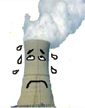 Nuclear 2 July 09 International leaders of the nuclear power “renaissance” have recently announced major delays, or outright cancellations, of new reactors. In the U.S., John Rowe, CEO and Chairman of the largest nuclear utility Exelon, dropped its application to NRC to build two reactors at Victoria County Station, Texas and instead will pursue a more generic Early Site Permit approval without committing to a specific reactor design. This latest stumble is admittedly due to “limited availability of federal loan guarantees.” (See Wall Street Journal coverage with links to more articles). In Ontario, $26 billion in nuclear power plant refurbishment and new reactor construction plans have been suspended, as the Province seeks to bargain down Atomic Energy of Canada Limited’s skyrocketing price tags, especially given the government -owned “Crown Corporation’s” current troubles and uncertain future. (See press coverage). And recent developments in South Africa have likely rung the death knell for the pebble bed modular reactor, once touted as the lead “Generation IV” design for “advanced reactors.” (See The Bulletin of the Atomic Scientists story). ??
France imports UK electricity as plants shut
July 3, 2009 France imports UK electricity as plants shut TIMESONLINE
France is being forced to import electricity from Britain to cope with a summer heatwave that has helped to put a third of its nuclear power stations out of action.
With temperatures across much of France surging above 30C this week, EDF’s reactors are generating the lowest level of electricity in six years, forcing the state-owned utility to turn to Britain for additional capacity.
Fourteen of France’s 19 nuclear power stations are located inland and use river water rather than seawater for cooling. When water temperatures rise, EDF is forced to shut down the reactors to prevent their casings from exceeding 50C.
‘No’ to nuclear power
SOUTHDOWN STAR Marlene Lang 30 June 09 “……………………Twenty-six plants nationwide showed shortfalls in the funds they are required by federal law to set aside for dismantling the reactors someday and cleaning up after themselves.–
Every year the Nuclear Regulatory Commission checks on the state of so-called “decommissioning funds.”
Most years there are only a handful of plants running short of having those estimated costs laid up, usually four or five one official said. Those billions set aside for close-down and clean-up don’t just pile up under a mattress, of course; the money is invested in the stock market. According to an Associated Press report, some $4.4 billion in decommissioning funds was lost in the downturn, even as the actual costs for shutting down plants has risen by $4.6 billion because of (I love this part) rising energy costs – and labor costs.–
Illinois’ Braidwood Station, Byron Station and LaSalle County Station, each with two nuclear reactors, and the Clinton Power Station are all on the NRC’s shortfall list……………………… Plans for fund-challenged nuclear power plants are to let them sit for about six decades, or however long it takes to accumulate the cash to safely dismantle those reactors and remove those nasty, hot and highly radioactive uranium fuel pellets. Sixty years, idle, is the time-frame estimate the NRC gave media earlier this month.–……………………. I didn’t need to be an engineer to wonder what happens when things get, well, rusty? But immediately I doubted my common sense; I asked if maybe we, the non-technical public, are ill-informed? Maybe even stupid? Maybe magical nuclear power plants don’t actually rust; maybe they can rest safely forever on waterfronts near our homes and always safely contain that high-level radioactive fuel.–
I tried to believe, but I lacked what the nuclear industry and U.S. government policy refer to as: Waste Confidence. This is a doctrine – and I chose that word carefully – which says that the nuclear industry can continue to function and grow even though it has the big gaping problem of what to do with the its own leftovers, being confident that a solution will be found. When common sense fails, there is always faith.– …………………………. What to do? The better question may be, what not to do. How about we listen to common sense and NOT build any more of these reactors until we have solved the great mystery of what to do with the waste, and can afford to pay for that solution?
http://www.southtownstar.com/news/lang/1644764,063009-colLANG.article
Nuclear Power has Political Meltdowns
Nuclear Power has Political Meltdowns Greentech Pastures Harry Fuller 1 July 09 There’s the on-going issue of nuclear waste, and in Ontario, at least, there’s the problem of the expense of the next generation technology.
Only Finland is currently building the latest and best in nuclear generation tech, the work being done by European firms, Areva and Siemens. The project is now far over budget and at least three years from completion. The plant construction began in 2005 and was supposed to have been completed this year. Situations like Ontario and Finland are not going to encourage other nations to go further into nuclear generation.
Nuclear power problems remain
News.cincinatti.com Bill Cahalan • July 1, 2009 “……………..about Duke Energy’s plan for a nuclear plant in Piketon, Ohio,……………. many decision-makers appear motivated by fear of shortages (and for the nuclear industry, hunger for big profits) to return to this sleeping dog of nuclear electricity.
Despite some improvements in the technology, the following decades-old problems remain: air, water and human contamination from uranium mining, huge up-front construction (and later, decommissioning) costs, lengthy construction times, higher cancer rates and morbidity from other disorders in nearby residents due to routine radioactive releases, the continuing danger of meltdowns as occurred at Three Mile Island, Chernobyl and almost at Davis-Besse in Toledo (2002), high vulnerability to terrorist attacks and the still unsolved problem of radioactive waste passed to our descendants for thousands of years.
I challenge the assumption that, in a world stressed by many transgressed ecological limits besides CO2 emissions, we must resign ourselves to continually increasing population, consumption and energy demands……………
……………..I for one plan to strive even harder now to unplug from Duke and turn to solar cells and conservation,…….
http://news.cincinnati.com/article/20090701/EDIT02/907010374/Nuclear+power+problems+remain
Heatwaves can crimp nuclear power output across Europe
Heatwaves can crimp power output across Europe LONDON, June 30 (Reuters) – Forecasts for warmer temperatures this week in parts of Europe raise the possibility of summer heat waves that can heavily strain the ability of the energy sector to keep supplies flowing.
— French temperatures have been at above 30 degrees Centigrade in some regions and are expected to remain at those levels until the end of the week. Forecasts show tempertures will dip by around 5 degrees next week.
— France, which relies on atomic power plants for 80 percent of its electricity, is especially vulnerable to heat waves. With 14 of its 19 nuclear plants located by rivers, rising temperatures over a longer period of time can trigger cooling problems due to local laws that prevent plants from discharging water in rivers above certain temperature levels.
— Lower output from reactors located near rivers because of cooling problems usually coincides with surging demand as people crank up air conditioners during the summer………………………
GERMANY
— Temperatures in Germany are running between 26 and 31 degrees Centigrade……………….- Some of the plants are on small rivers, which means the ability to draw cooling water from the rivers is reduced when water levels decline in heatwaves.
Heatwaves can crimp power output across Europe | Markets | Markets News | Reuters
GODZILLA II
GODZILLA II San Francisco Chronicle by Peter Coyote 28 June 09 “………………………………….it is not the production of electricity from nuclear plants which is so carbon intensive, but the building of them. The concrete alone, one of the most carbon-producing products on earth, the heating of water, the heavy equipment……………
……………..the coal and oil industries are buying into power companies. They want to own it all. They know that regulatory difficulties and expense and public fears will do plenty to slow down the nuclear build-up, leaving them plenty of time to sell their product………….
………..Atomic reactors are horrendously expensive. On a level playing field they, cannot possibly compete with even renewables. If they were so safe, why can they not get private liability insurance? The Price-Anderson Act turned their insurance over to the Federal Government (the tax-payer) and limits the sizes of claims that homeowners and citizens can receive. They cannot raise, private funding for new construction or, after a half-century, have they come one iota closer to a solution for their high-level waste problems. No one has figured out how to protect them from terrorist attacks, and in every staged mock raid, the “terrorists” have overwhelmed the nuclear power plant security……………………………..the health impacts of atomic reactors. They emit not only x-rays and gamma rays, but also particulate emissions involving alpha and beta particles. Why is it that after 50 years there is still no systematic monitoring regimen for actually tracking the human beings that live in areas downwind from atomic reactors. San Francisco’s own Dr. John Gofman, the first chief health researcher for the Atomic Energy Commission, concluded in the late 1960s that “normal” emissions from nuclear plants would kill thousands of Americans yearly, with no catastrophe required. “
1 This Month
23-25 October – on Zoom – World BEYOND War’s annual global conferenc


Shut down the radiation-damaged Heysham nuclear reactors now
To see nuclear-related stories in greater depth and intensity – go to https://nuclearinformation.wordpress.com

Say No to NASA’s Reckless Nuclear Reactor on the Moon
Say No to NASA’s Reckless Nuclear Reactor on the Moon
-
Archives
- October 2026 (180)
- September 2026 (339)
- August 2026 (330)
- July 2026 (355)
- June 2026 (287)
- May 2026 (306)
- April 2026 (356)
- March 2026 (251)
- February 2026 (267)
- January 2026 (308)
- December 2025 (358)
- November 2025 (359)
-
Categories
- 1
- 1 NUCLEAR ISSUES
- business and costs
- climate change
- culture and arts
- ENERGY
- environment
- health
- history
- indigenous issues
- Legal
- marketing of nuclear
- media
- opposition to nuclear
- PERSONAL STORIES
- politics
- politics international
- Religion and ethics
- safety
- secrets,lies and civil liberties
- spinbuster
- technology
- Uranium
- wastes
- weapons and war
- Women
- 2 WORLD
- ACTION
- AFRICA
- Atrocities
- AUSTRALIA
- Christina's notes
- Christina's themes
- culture and arts
- Events
- Fuk 2022
- Fuk 2023
- Fukushima 2017
- Fukushima 2018
- fukushima 2019
- Fukushima 2020
- Fukushima 2021
- general
- global warming
- Humour (God we need it)
- Nuclear
- RARE EARTHS
- Reference
- resources – print
- Resources -audiovicual
- Weekly Newsletter
- World
- World Nuclear
- YouTube
-
RSS
Entries RSS
Comments RSS

