Rolls-Royce mini nuke arm posts wider £78mln loss

09 Oct 2024
Rolls-Royce Holdings PLC’s mini nuclear reactor business has posted a £78
million loss for last year as news on government support for the industry
is awaited. The small modular reactor (SMR) business saw losses climb from
£61 million a year earlier, as research and development spending grew from
£78 million to £115 million.
Proactive Investor 9th Oct 2024
Blinken approved Israeli attacks on Gaza aid convoys: Report

Since the start of Israel’s ethnic cleansing campaign in Gaza, the US-backed army has become the leading cause of death for humanitarian workers worldwide
News Desk, OCT 8, 2024, https://thecradle.co/articles/blinken-approved-israeli-attacks-on-gaza-aid-convoys-report
US State Secretary Anthony Blinken gave the green light for Israel to launch attacks against humanitarian aid convoys inside the Gaza Strip in the early days of Israel’s genocide of Palestinians, according to a report by Drop Site News (DSN) citing Israeli journalists and media outlets.
Tel Aviv’s decision was made during a marathon session of the Security Cabinet between 16 and 17 October that Blinken took part in.
“From within the Kirya, the Israeli military’s main headquarters in Tel Aviv, Blinken participated in the frantic discussions of the Israeli War Cabinet … that were occurring in parallel to conversations in the broader Security Cabinet,” DSN reports.
Citing Channel 12 reporter Yaron Avraham, the report states that these sessions saw Israeli officials “[deliberate] for hours over the precise wording of the decision, with each draft being passed between the Cabinet room and Blinken’s room, a distance of a few meters away, inside the Kirya … Eventually, around 3 am, they arrive at an agreed upon text that is read in the Cabinet room in English.”
Channel 13 independently corroborated Avraham’s reporting, detailing: “The discussion with Blinken is conducted as follows: he is sitting in a room in the Kirya with his advisors and security team, while Security Cabinet holds the discussion; [Minister of Strategic Affairs Ron] Dermer goes back and forth and interfaces with him.”
A day later, following additional Cabinet sessions “helmed by both Blinken and [US President Joe] Biden,” Israeli Prime Minister Benjamin Netanyahu’s office publicly announced its final decision.
“In light of President Biden’s demand, Israel will not thwart humanitarian supplies from Egypt as long as it is only food, water, and medicine for the civilian population located in the southern Gaza Strip or moving there, and as long as these supplies do not reach Hamas. Any supplies that reach Hamas will be thwarted,” the statement, issued in Hebrew, reads.
However, DSN highlights that “the Hebrew word לסכל, ‘to thwart,’ is frequently used by Israel to describe targeted killings and assassinations. The previous policy of ‘thwarting’ all humanitarian supplies from entering Gaza was conveyed to Egypt as an explicit threat to ‘bomb’ aid trucks.”
“We in the cabinet were promised at the outset that there would be monitoring, and that aid trucks hijacked by Hamas and its organizations [sic] would be bombed from the air, and the aid would be halted,” Israeli Finance Minister Bezalel Smotrich said a few days after the Security Cabinet’s decision was announced.
When pressed for comment by DSN, State Department spokesperson Vedant Patel called the report “absurd.”
Nevertheless, the State Department did not clarify whether Blinken approved attacks on alleged Hamas fighters “who secure aid convoys or seize their contents.”
Over the past year, intentional Israeli attacks have become the leading cause of death for humanitarian workers across the world, as the Israeli army is now responsible for more than 75 percent of aid workers’ deaths recorded since October 2023.
In the last three months of 2023, following the Security Cabinet session that Blinken took part in, Israeli attacks targeting humanitarian workers across the occupied Palestinian territories were responsible for more deaths “than the deadliest full year ever recorded.”
Last month, ProPublica revealed that two US government offices on humanitarian assistance recommended earlier this year that Washington suspend some or all weapons shipments to Israel because its forces were restricting the delivery of aid inside Gaza. However, their recommendations were sidelined by Blinken, who went on to lie to Congress about the findings.
DoE awards next-gen nuclear fuel contracts backwards
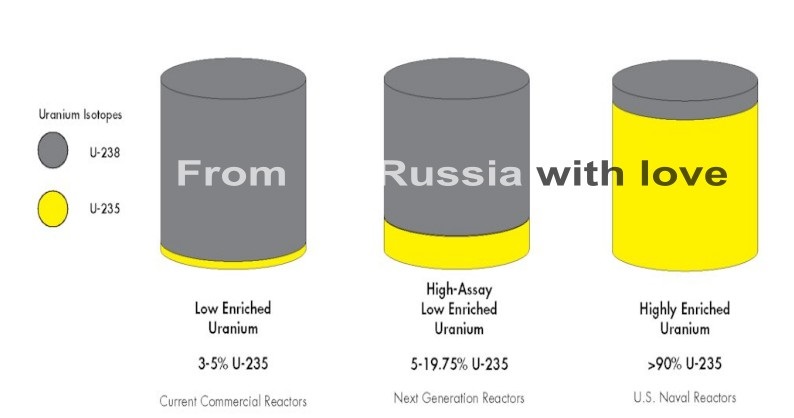
‘Deconversion’ can begin now, but initial enrichment, transportation and storage to processors is still TBD
Brandon Vigliarolo, Tue 8 Oct 2024 /
The US Department of Energy has awarded shares of an $800 million contract for advanced nuclear fuel deconversion to four companies, but it’s unclear who will be in charge of getting refined fuel to those deconversion sites.
High-assay low-enriched uranium, or HALEU, is needed for nuclear reactor designs like small modular reactors (SMRs), molten salt reactors and other new variations that are supposed to be safer and more efficient. Unlike traditional nuclear fuel, which contains up to 5 percent uranium-235 (the isotope that’s used to power nuclear power plants), HALEU includes a large proportion of the fissile isotope (as much as 20 percent).
Unfortunately for American nuclear interests, HALEU production at scale is only really happening in two unfriendly countries: Russia and China. That situation has already caused delays for nuclear power projects like the Bill Gates-backed TerraPower plant in Wyoming.
With the DoE forecasting an annual need for 40 metric tons of the stuff per year by the end of the decade, the US has a serious need for US-made HALEU. The four deals announced Friday between the DoE and Global Nuclear Fuel – Americas, Nuclear Fuel Services, American Centrifuge Operating and Framatome for HALEU deconversion services will hopefully help do just that.
HALEU deconversion, which is conducted after the initial enrichment stage to ensure fuel has reached appropriate levels of U-235, turns enriched uranium hexafluoride gas into oxide, metal and other mineral forms usable as fuel. The DoE initially proposed the deconversion funding in October of last year.
Step 1: ???
Each company is guaranteed $2 million in funding at a minimum to deconvert and store HALEU fuel within the US, but whether they’ll be able to reach scale is another thing altogether.
As we’ve noted previously, American Centrifuge Operating was the only company in the United States creating HALEU fuel, which it only began doing late last year, producing the US’s first HALEU, but only 20 kilograms of it.
Brutal lessons of 1984 nuclear bomb drama Threads
Greg McKevitt, BBC Archive, 9 October 2024
One of the most terrifying programmes ever shown on British television,
Threads is the nuclear apocalypse drama-documentary that continues to haunt
people’s nightmares 40 years on.
Ahead of a rare new showing on the BBC,
here’s a look at how the drama still has the potential to terrify people.
First broadcast on 23 September 1984, anyone who tuned in to BBC Two on
that Sunday evening would experience a bleak and unforgettable depiction of
a massive nuclear bomb attack on a British city and its aftermath.
It was a nightmare scenario that was all too plausible in an era of heightened
tension between the West and the then Soviet Union. Rarely seen on
television since its first broadcast, it’s being shown again on BBC Four
and iPlayer on 9 October. Sheffield was chosen as the fictional nuclear
target because its writer, Kes author Barry Hines, lived there. Ahead of
transmission, about 600 people from the area who volunteered to work as
extras were invited to a private viewing of the film. Some were involved
with amateur dramatics while others just thought it might be a bit of fun.
Maybe they could spot themselves or their friends on television. No one was
expecting anything quite like this.
“Escalation dominance” and the new nuclear threat: We face more than 1,000 Holocausts

Nuclear arsenals are vastly more powerful today than during the Cold War — and the risk of apocalypse keeps growing
By Norman Solomon, 6 Oct 24, https://www.salon.com/2024/10/06/escalation-dominance-and-the-new-nuclear-threat-we-face-more-than-1000-holocausts/?fbclid=IwY2xjawFxjVhleHRuA2FlbQIxMQABHYLvOjzWp_vKRXdaiTZlKovXxdlnIxjKp_6EBAU3dN7rFD8OsR-o1Kd2eQ_aem_pgdCaz3-fGi_NP8MdUsIfw
Everything is at stake. Everything is at stake with nuclear weapons.
While working as a nuclear war planner for the Kennedy administration, Daniel Ellsberg was shown a document calculating that a U.S. nuclear attack on Communist countries would result in 600 million dead. As he put it later: “A hundred Holocausts.”
That was in 1961.
Today, with nuclear arsenals vastly larger and more powerful, scientists know that a nuclear exchange would cause “nuclear winter.” And the nearly complete end of agriculture on the planet. Some estimates put the survival rate of humans on Earth at 1 or 2 percent.
No longer 100 Holocausts.
More than 1,000 Holocausts.
If such a nuclear war happens, of course we won’t be around for any retrospective analysis. Or regrets. So candid introspection is in a category of now or never.
What if we did have the opportunity for hindsight? What if we could somehow hover over this planet? And see what had become a global crematorium and an unspeakable ordeal of human agony? Where, in words attributed to both Nikita Khrushchev and Winston Churchill, “the living would envy the dead.”
What might we Americans say about the actions and inaction of our leaders?
In 2023, the nine nuclear-armed countries spent $91 billion on their nuclear weapons. Most of that amount, $51 billion, was the U.S. share. And our country accounted for 80 percent of the increase in nuclear weapons spending.
The United States is leading the way in the nuclear arms race. And we’re encouraged to see that as a good thing: “escalation dominance.”
But escalation doesn’t remain unipolar. As time goes on, “Do as we say, not as we do” isn’t convincing to other nations.
China is now expanding its nuclear arsenal. That escalation does not exist in a vacuum. Official Washington pretends that Chinese policies are shifting without regard to the U.S. pursuit of “escalation dominance.” But that’s a disingenuous pretense. What the great critic of Vietnam War escalation during the 1960s, Sen. William Fulbright, called “the arrogance of power.”
Of course there’s plenty to deplore about Russia’s approach to nuclear weapons. Irresponsible threats about using “tactical” nukes in Ukraine have come from Moscow. There’s now public discussion — by Russian military and political elites — of putting nuclear weapons in space.
We should face the realities of the U.S. government’s role in fueling such ominous trends, in part by dismantling key arms control agreements. Among crucial steps, it’s long past time to restore three treaties that the United States abrogated — ABM, Intermediate-Range Nuclear Forces and Open Skies.
On the non-proliferation front, opportunities are being spurned by Washington. For instance, as former CIA analyst Melvin Goodman wrote in September: “Iran’s Ayatollah has indicated a readiness to open discussions with the United States on nuclear matters, but the Biden administration has turned a deaf ear to such a possibility.”
That deaf ear greatly pleases Israel, the only nuclear-weapons state in the Middle East. On Sept. 22, former Defense Secretary Leon Panetta said unequivocally that Israel’s pager attack in Lebanon was “a form of terrorism.” The U.S. keeps arming Israel, but won’t negotiate with Iran.
The U.S. government has a responsibility to follow up on every lead, and respond to every overture. Without communication, we vastly increase the risk of devastation.
We can too easily forget what’s truly at stake.
Despite diametrical differences in ideologies, in values, in ideals and systems, programs for extermination are in place at a magnitude dwarfing what occurred during the first half of the 1940s.
Today, Congress and the White House are in the grip of what Martin Luther King Jr. called “the madness of militarism.” In a toxic mix with the arrogance of power. Propelling a new and more dangerous Cold War.
And so, at the State Department, the leadership talks about a “rules-based order,” which all too often actually means: “We make the rules, we break the rules.”
Meanwhile, the Doomsday Clock set by the Bulletin of the Atomic Scientists is now just 90 seconds away from apocalyptic midnight.
Six decades ago, the Doomsday Clock was a full 12 minutes away. And President Lyndon Johnson was willing to approach Moscow with the kind of wisdom that is now absent at both ends of Pennsylvania Avenue.
Here’s what Johnson said at the end of his extensive summit meeting with Soviet Premier Alexei Kosygin in June 1967 in Glassboro, New Jersey: “We have made further progress in an effort to improve our understanding of each other’s thinking on a number of questions.”
Two decades later, President Ronald Reagan — formerly a supreme Cold Warrior — stood next to Soviet leader Mikhail Gorbachev and said: “We decided to talk to each other instead of about each other.”
But such attitudes would be heresy today.
As each day brings escalation toward a global nuclear inferno, standard-issue legislators on both sides of the aisle keep boosting the Pentagon budget. Huge new appropriations for nuclear weapons are voted under the euphemism of “modernization.”
And here’s a sad irony: The few members of Congress willing to issue urgent warnings about the danger of nuclear war often stoke that danger with calls for “victory” in the Ukraine war. Instead, what’s urgently needed is a sober push for actual diplomacy to end it.
The U.S. should not use the Ukraine war as a rationale for pursuing a mutually destructive set of policies toward Russia. It’s an approach that maintains and worsens the daily reality on the knife-edge of nuclear war.
We don’t know how far negotiations with Russia could get on an array of pivotal issues. But refusing to negotiate is a catastrophic path.
Continuation of the war in Ukraine markedly increases the likelihood of spinning out from a regional to a Europe-wide to a nuclear war. Yet calls for vigorously pursuing diplomacy to end the Ukraine war are dismissed out of hand as serving Vladimir Putin’s interests.
That’s a zero-sum view of the world. A one-way ticket to omnicide.
The world has gotten even closer to the precipice of a military clash between the nuclear superpowers, with a push to green-light NATO-backed Ukrainian attacks heading deeper into Russia.
Consider what John F. Kennedy had to say, eight months after the Cuban missile crisis, in his historic speech at American University: “Above all, while defending our own vital interests, nuclear powers must avert those confrontations which bring an adversary to a choice of either a humiliating retreat or a nuclear war. To adopt that kind of course in the nuclear age would be evidence only of the bankruptcy of our policy, or of a collective death wish for the world.”
That crucial insight from Kennedy is currently in the dumpsters at the White House and on Capitol Hill.
And where is this all headed?
Daniel Ellsberg tried to alert members of Congress. Five years ago, in a letter that was hand-delivered to the offices of every senator and House member, he wrote: “I am concerned that the public, most members of Congress, and possibly even high members of the Executive branch have remained in the dark, or in a state of denial, about the implications of rigorous studies by environmental scientists over the last dozen years.” Those studies “confirm that using even a large fraction of the existing U.S. or Russian nuclear weapons that are on high alert would bring about nuclear winter, leading to global famine and near extinction of humanity.”
In the quest for sanity and survival, isn’t it time for reconstruction of the nuclear arms control infrastructure? Yes, the Russian war against Ukraine violates international law and “norms,” as did U.S. wars in Iraq and Afghanistan. But real diplomacy with Russia is in the interests of global security.
And some great options don’t depend on what happens at the negotiation table.
Many experts say that the most important initial step our country could take to reduce the chances of nuclear war would be a shutdown of all ICBMs.
The word “deterrence” is often heard. But the land-based part of the triad is actually the opposite of deterrence — it’s an invitation to be attacked. That’s the reality of the 400 intercontinental ballistic missiles that are on hair-trigger alert in five Western states.
Uniquely, ICBMs invite a counterforce attack. And they allow a president just minutes to determine whether what’s incoming is actually a set of missiles — or, as in the past, a flock of geese or a drill message that’s mistaken for the real thing.
Former Secretary of Defense William Perry wrote that ICBMs are “some of the most dangerous weapons in the world” and “they could even trigger an accidental nuclear war.”
And yet, so far, we can’t get anywhere with Congress in order to shut down ICBMs. “Oh no,” we’re told, “that would be unilateral disarmament.”
Imagine that you’re standing in a pool of gasoline, with your adversary. You’re lighting matches, and your adversary is lighting matches. If you stop lighting matches, that could be condemned as “unilateral disarmament.” It would also be a sane step to reduce the danger — whether or not the other side follows suit.
Mistaking a false alarm for a nuclear-missile attack becomes more likely amid the stresses, fatigue and paranoia that come with the protracted war in Ukraine and extending war into Russia.
The ongoing refusal to shut down the ICBMs is akin to insisting that our side must keep lighting matches while standing in gasoline.
The chances of ICBMs starting a nuclear conflagration have increased with sky-high tensions between the world’s two nuclear superpowers. Mistaking a false alarm for a nuclear-missile attack becomes more likely amid the stresses, fatigue and paranoia that come with the protracted war in Ukraine and extending war into Russia.
Their unique vulnerability as land-based strategic weapons puts ICBMs in the unique category of “use them or lose them.” So, as Secretary Perry explained, “If our sensors indicate that enemy missiles are en route to the United States, the president would have to consider launching ICBMs before the enemy missiles could destroy them. Once they are launched, they cannot be recalled. The president would have less than 30 minutes to make that terrible decision.”
The U.S. should dismantle its entire ICBM force. Former ICBM launch officer Bruce Blair and Gen. James Cartwright, former vice chair of the Joint Chiefs of Staff, wrote: “By scrapping the vulnerable land-based missile force, any need for launching on warning disappears.”
In July, the Union of Concerned Scientists released a letter signed by more than 700 scientists. They not only called for cancellation of the Sentinel program for a new version of ICBMs, they also called for getting rid of the entire land-based leg of the triad.
Meanwhile, the current dispute in Congress about ICBMs has focused on whether it would be cheaper to build the cost-overrunning Sentinel system or upgrade the existing Minuteman III missiles. But either way, the matches keep being lit for a global holocaust.
During his Nobel Peace Prize speech, Martin Luther King Jr. declared: “I refuse to accept the cynical notion that nation after nation must spiral down a militaristic stairway into the hell of thermonuclear destruction.”
I want to close with some words from Daniel Ellsberg’s book “The Doomsday Machine: Confessions of a Nuclear War Planner,” summing up the preparations for nuclear war. He wrote:
No policies in human history have more deserved to be recognized as immoral, or insane. The story of how this calamitous predicament came about, and how and why it has persisted for over half a century is a chronicle of human madness. Whether Americans, Russians and other humans can rise to the challenge of reversing these policies and eliminating the danger of near-term extinction caused by their own inventions and proclivities remains to be seen. I choose to join with others in acting as if that is still possible.
Updated findings provide insights into radiation exposure’s impact on cancer risk
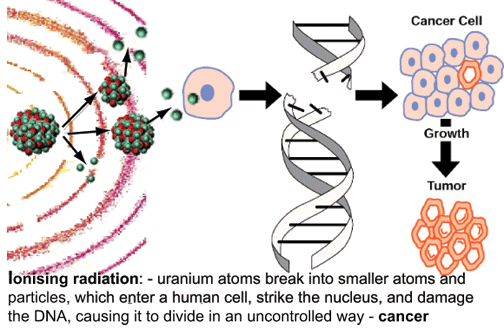
by University of California, Irvine, 7 Oct 24, https://medicalxpress.com/news/2024-10-insights-exposure-impact-cancer.html
A major update was made to the International Nuclear Workers Study (INWORKS), an international epidemiological study of workers in the nuclear sector to assess their risks of cancer and non-cancerous diseases.
David Richardson, Ph.D., professor of environmental and occupational health at UC Irvine Joe C. Wen School of Population & Public Health, was the principal investigator for this study and senior author of a publication in The Lancet Haematology that outlines the new findings.
With the study update, Richardson and colleagues sought to understand the associations between low-dose exposure to penetrating forms of ionizing radiation and its effect on risk of leukemia, lymphoma and multiple myeloma.
The researchers assembled a cohort of more than 300,000 radiation-monitored workers from France, the United Kingdom and the United States, employed at nuclear facilities between 1944 and 2016. Using Poisson regression methods, researchers measured the amount of radiation that got absorbed into bone marrow.
Since radiation exposure is a known risk factor for leukemia, excluding chronic lymphocytic leukemia, the study primarily focused on measuring incidence of leukemia and other cancer subtypes such as myelodysplastic syndromes, Hodgkin and non-Hodgkin lymphomas, and multiple myeloma.
The study revealed a positive association between prolonged low-dose exposure to ionizing radiation and mortality from these hematological cancers. The study concluded that health risk remains low at low exposure levels. Nevertheless, the evidence of associations between total radiation exposure and multiple myeloma and myelodysplastic syndromes signals the necessity for future radiation studies to expand the discussion on radiation protection and occupational safety measures on a global scale.
“Our studies of people exposed to low doses of radiation add to our understanding of radiation risks at the exposure levels encountered in many contemporary settings,” said Richardson who is the associate dean for research at Wen Public Health. “Our results can inform radiation protection standards and will provide input for discussions on protections from radiation.”
More information: Klervi Leuraud et al, Leukaemia, lymphoma, and multiple myeloma mortality after low-level exposure to ionising radiation in nuclear workers (INWORKS): updated findings from an international cohort study, The Lancet Haematology (2024). DOI: 10.1016/S2352-3026(24)00240-0
Journal information: The Lancet Haematology
Israel Planning Major Attack on Iran
The US is coordinating with Israel on its plans.
by Dave DeCamp, October 2, 2024, https://news.antiwar.com/2024/10/02/israel-planning-major-attack-on-iran/#gsc.tab=0
Israel is planning to launch a “significant retaliation” attack against Iran over the Iranian missile barrage that targeted Israel on Tuesday, which was a response to several Israeli escalations in the region. Israeli officials acknowledged to Axios that the situation could lead to a full-blown regional war, which would involve the US.
According to the Axios report, Israel could target oil production facilities inside Iran or other strategic sites. Israeli officials say that if Iran hits back, then all options will be on the table, including strikes on Iran’s civilian nuclear facilities.
“We have a big question mark about how the Iranians are going to respond to an attack, but we take into consideration the possibility that they would go all in, which will be a whole different ball game,” an Israeli official told Axios.
Other options being considered are attacks on Iran’s air defenses or targeted assassinations. Israel has a history of killing people inside Iran, including the July 31 assassination of Hamas’s political chief, Ismail Haniyeh.
Israel would likely need US military support to launch significant strikes on Iranian territory, and the Israeli officials speaking to Axios say they are coordinating with the Biden administration. Israel wants more US support if it provokes another Iranian attack.
National Security Advisor Jake Sullivan said Tuesday that the US would work with Israel to ensure Iran faces “severe consequences.” President Biden has also said he is working with Israel on a response but said Wednesday that he wouldn’t support strikes on Iran’s nuclear facility.
“All seven of us agree that they have a right to respond, but they have to respond proportionally,” he said, referring to the Group of Seven nations. He said G7 leaders agreed to impose new sanctions on Iran, which will have little impact since Iran is already under so many.
Israel acknowledged on Wednesday that Iranian missiles made an impact on several military bases but claimed there was no significant damage. Israel is also claiming there were no major casualties, with only two Israelis suffering minor injuries. One Palestinian was killed in the Israeli-occupied West Bank when shrapnel from an intercepted missile hit him.
Iran fired about 180 ballistic missiles at Israel in response to the Israeli assassination of Haniyeh in Tehran and the Israeli killing of Hezbollah Secretary-General Hassan Nasrallah and Abbas Nilforoushan, an IRGC commander who was killed alongside Nasrallah.
Global Network Space Issues Webinar: Sunday, Oct 13

Bruce Gagnon, GN Coordinator 6 Oct 24
Global Network Space Issues Webinar
Sunday, Oct 13 @ 3:00 pm EDT
Control the Earth, control the increasingly crowded Lower Earth Orbits (LEO), and control the eventual pathway off the Earth to mine the sky for precious and seemingly lucrative resources.
Mr. Big hopes to control everything – Full Spectrum Dominance.
The webinar will be held on Sunday, October 13 on Zoom @ 3:00 pm in New York, 8:00 pm in London, and Oct 14 @ 4:00 am in Seoul
Here is the Zoom link:https://us02web.zoom.us/j/86374719555?pwd=65MRXwbramOaDBMvSOsUaH2ev0Bumy.1
Meeting ID: 863 7471 9555
Passcode: 489061
Speakers:
- Dave Webb (GN board convener, England): Space as an aid to War and Genocide
- Tamara Lorincz (Canadian Voice of Women for Peace): Canada’s Role in NATO
- Sung-Hee Choi (Activist, Jeju Island, South Korea): NATO expansion and space industry in South Korea
- Peter Burt (Space Watch UK): UK’s expanding space programmes in the spotlight
Our latest monthly space video updates on the current situation as the US-NATO work globally to use space tech to suppress opposition to western control.
The video shows how costly space tech is now a domination tool used by US-NATO in their wars in Palestine/Lebanon, Ukraine, and next, China.
We’ve long been indoctrinated to ‘support the space program – to search for the origins of life’. But NASA was under the Pentagon’s control from the start. Today the US strategy is to get the western allies to contribute to build a space warfare superstructure so powerful that it would ensure hegemony.
Russia and China have long gone to the United Nations introducing resolutions to the General Assembly calling for a new treaty to ban all weapons in space. Close the door to the barn before the horse gets out.
For more than 25 years the US and Israel have blocked the development of a new space weapons ban treaty at the UN. Those two imperial nations always knew that if they worked together, as well as pulling NATO into the space war gambit, then they could possibly take on Russia and China and remain as the rulers of Earth.
It’s madness and the sickness of corporate fascism – Mussolini called it the ‘wedding of corporations and government’.
All of our various struggles against imperial terrorism are connected in so many ways. We all are fighting for liberation from corporate colonial banksters and militarists who are destroying life on Mother Earth.
Is This The Last October 7 Where We’ll Be Able To Speak The Truth?
Lisa Savage, Oct 07, 2024
Many things changed one year ago today when resistance fighters burst through the fence around the world’s largest concentration camp, seized hostages, and hid them in Gaza planning to swap them for the thousands of political prisoners held captive by Israel.
Truth was the first casualty on October 7, 2023. Immediately bogus claims of women who were raped and babies who were beheaded by Hamas were circulated and continue to circulate to this day. These are lies. They have been exposed as such long since, yet the Vice President of the U.S. continued spreading them as recently as this week (because that is what a $5 million contribution from AIPAC buys).
That Hamas’ stated intention was a prisoner exchange has long since been obscured by the official lies of the Zionist regime and its media servants.
Around 1,200 people are said to have been killed by Hamas on that fateful day. This is also a lie. Many of those who died on October 7 were killed, some deliberately, by the Israeli military. Eyewitnesses report that Israeli soldiers shot at anyone near the breached fence, and fired a tank missile into a kibbutz house known to have Israelis sheltering inside. One baby is known to have died on October 7, the victim of a stray bullet.
Since then many more Israeli hostages have been killed by Israel. But let’s stick to October 7 for now.
Immediately narratives claiming October 7 as “Israel’s 9/11” were circulated by corporate media around the world. This was meant to signify that an act of terrorism by Muslim Arabs had killed thousands in a sneak attack. What it signified to those paying attention was that the event would quickly be put to use justifying a “war on terror” against civilians in Gaza.
Within a matter of days Israel had used U.S. bombs to kill tens of thousands in Gaza, and within a matter of weeks it had begun the forced displacements that strongly resemble the agony of Jewish refugees on forced marches in Europe at the hands of the Nazis.
Ironic? Yes. Useful? Undoubtedly. Caitlin Johnstone has written today:
Sympathy for Israel has been used over this past year to manufacture consent for the slaughter of mountains of human beings in advancement of land grabs and military agendas that were planned long before the seventh of October 2023.
What is she talking about?
Maps like this one shared by Netanyahu at the United Nations show Israel swallowing up lands granted to Palestinians by the UN.
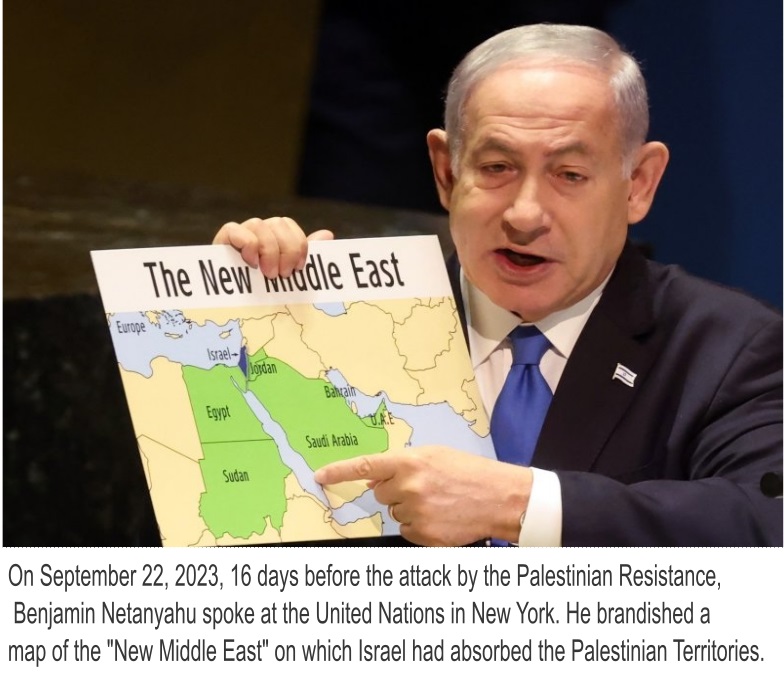
Military agendas like aerial bombardment of Lebanon, Syria, Yemen, and the occupied West Bank.
Weaponization of communication devices used by Hezbollah resistance fighters along with doctors, EMTs, and other civilians in attacks that were years in the planning.
Deliberate destruction of the hospitals, ambulances, and health care infrastructure of Gaza.
Deliberate starvation of Gaza’s children and their families through blocking aid and bombing UNRWA and other food distributors.
And last but certainly not least, dramatic increases in censorship and deliberate distortion of the meaning of key words.
Did you wave a Palestinian flag or chant “Free, free Palestine” this year? Your actions are portrayed as an attack on Jewish people everywhere. Even if you, yourself, are Jewish!
Did you point out that Israel’s vicious ethnic cleansing campaign did not begin on October 7? You must hate Jews!
Did you attempt to distinguish between Zionism, a religious supremacist ideology that justifies land theft, and Judaism, an actual religion? Your thought crimes are a threat to narratives that October 7 was meant to advance………. more https://went2thebridge.substack.com/p/is-this-the-last-october-7-where?utm_source=post-email-title&publication_id=1580975&post_id=149917823&utm_campaign=email-post-title&isFreemail=true&r=ln98x&triedRedirect=true&utm_medium=email
Blinken Approved Policy to Bomb Aid Trucks, Israeli Cabinet Members Suggest

Drop Site News Yaniv Cogan, Oct 06, 2024
From the very beginning of Israel’s assault on the Gaza Strip, U.S. Secretary of State Antony Blinken had his hands on the steering wheel. After October 7, Blinken was the first senior U.S. official to arrive in Israel, on October 11. “I’m going with a very simple and clear message… that the United States has Israel’s back,” Blinken reportedly said before boarding the plane.
He returned again days later. This time, Blinken was there to demand that Israel rethink its decision to bomb any humanitarian aid entering Gaza and impose a “total siege” on the Strip. In exchange, U.S. President Joe Biden offered to visit Israel himself. Reportedly, Israeli Prime Minister Benjamin Netanyahu explained to Blinken upon his arrival on October 16, 2023: “I have got people in the cabinet who don’t want an aspirin to get into Gaza because of what’s happened.”
From within the Kirya, the Israeli military’s main headquarters in Tel Aviv, Blinken participated in the frantic discussions of the Israeli War Cabinet—the decision-making forum guiding the genocidal campaign—that were occuring in parallel to conversations in the broader Security Cabinet.
According to Channel 12 reporter Yaron Avraham, on October 16 and 17, “the [Security] Cabinet deliberated for hours over the precise wording of the decision, with each draft being passed between the Cabinet room and Blinken’s room, a distance of a few meters away, inside the Kirya…. Eventually, around 3 a.m., they arrive at an agreed upon text that is read in the Cabinet room in English.”
Avraham’s account of the process was independently corroborated by a reporter for the competing Channel 13, who wrote: “The discussion with Blinken is conducted as follows: he is sitting in a room in the Kirya with his advisors and security team, while Security Cabinet holds the discussion; [Minister of Strategic Affairs Ron] Dermer goes back and forth and interfaces with him.”
Blinken, for his part, concluded the day with a triumphant speech taking responsibility for the restarting of humanitarian aid to Gaza:
To that end, today, and at our request, the United States and Israel have agreed to develop a plan that will enable humanitarian aid from donor nations and multilateral organizations to reach civilians in Gaza – and them alone – including the possibility of creating areas to help keep civilians our of harm’s way. It is critical that aid begin flowing into Gaza as soon as possible.
We share Israel’s concern that Hamas may seize or destroy aid entering Gaza or otherwise preventing it from reaching the people who need it. If Hamas in any way blocks humanitarian assistance from reaching civilians, including by seizing the aid itself, we’ll be the first to condemn it and we will work to prevent it from happening again.
The following day, after an additional round of Cabinet meetings, this time helmed by both Blinken and Biden, an outline of the decision was publicly announced by Prime Minster’s Netanyahu’s office: “We will not allow humanitarian assistance in the form of food and medicines from our territory to the Gaza Strip” and, in a separate Hebrew version, “In light of President Biden’s demand, Israel will not thwart humanitarian supplies from Egypt as long as it is only food, water and medicine for the civilian population located in the southern Gaza Strip or moving there, and as long as these supplies do not reach Hamas. Any supplies that reach Hamas will be thwarted.” The Hebrew word לסכל, “to thwart,” is frequently used by Israel to describe targeted killings and assassinations. The previous policy of “thwarting” all humanitarian supplies from entering Gaza was conveyed to Egypt as an explicit threat to “bomb” aid trucks.
The substance of the Blinken-approved policy was starkly conveyed by Security Cabinet member Bezalel Smotrich, who later told the Israeli media: “We in the cabinet were promised at the outset that there would be monitoring, and that aid trucks hijacked by Hamas and its organizations [sic] would be bombed from the air, and the aid would be halted.”
“Minimal Aid Should Be Allowed”
For Smotrich and other Israeli policymakers, the U.S.’s approval of the policy presented an opportunity to realize aspirations they had harbored long before October 7th. Already in 2018, as Palestinians in Gaza resisted the Israeli blockade—jokingly referred to by the Israeli government as “an appointment with a dietician”—through mass protests, Smotrich stated: “As far as I’m concerned, Gaza should be hermetically sealed. We shouldn’t provide them anything. Let them die of hunger, thirst, and malaria. I don’t care, they are not my citizens, I owe them nothing”.
The first part of the humanitarian aid policy approved by Blinken—the barring of entry of aid from within Israeli territory—was short-lived. By December 2023, aid had begun entering directly through Israel, and from the very first moment Israel’s monitoring mechanism, implemented shortly after the meetings on October 16 and 17, required all aid, regardless of origin, to go through checks within Israel before reaching Gaza, resulting in major delays. But the second policy—the “thwarting” of aid shipments within Gaza if they “reach Hamas”—also proved to be an effective tool in Israel’s arsenal when it came to starving the Gazan population.
The Hebrew word לסכל, “to thwart,” is frequently used by Israel to describe targeted killings and assassinations.
As 2023 came to an end, the UN Security Council voted on a resolution to facilitate the entry of aid into Gaza, which had been significantly watered down under U.S. pressure. UN Secretary General António Guterres explained: “Many people are measuring the effectiveness of the humanitarian operation in Gaza based on the number of trucks from the Egyptian Red Crescent, the UN, and our partners that are allowed to unload aid across the border. This is a mistake. The real problem is that the way Israel is conducting this offensive is creating massive obstacles to the distribution of humanitarian aid inside Gaza.”
Aid that had made it through into Gaza without rotting, despite delays caused by the military and by Israeli protesters egged on by the government to block aid trucks, had to then be distributed within Gaza using a handful of trucks Israel allowed to operate in The Strip, running on barely available fuel, driven under fire over destroyed roads filled with unexploded munitions, and delivered without real time communications due to blackouts imposed by the Israeli government. For over a million refugees confined to the south of The Strip, whatever food they had received had to then be stored in tents, using increasingly scarce containers. Meanwhile, the domestic food production capacity of Gaza has been decimated through the deliberate and gleeful destruction of agriculture by the IDF and bakeries.
Guterres’s remarks were quoted in the application made by the South African government to the International Court of Justice one week later, alongside comments from a senior official from UNRWA, which has coordinated most of the humanitarian efforts in Gaza, characterizing the resolution as “a greenlight for continued genocide.”
On January 26, a panel of 17 judges found “a real and imminent risk” to the rights of Palestinians under the Genocide Convention. On the very same day, the U.S. cut funding for UNRWA after a narrative aggressively promoted by Israel Knesset members that the agency—which employed tens of thousands in the Gaza Strip—was also employing an untold number of members of Hamas and that “terrorists” had been students in UNRWA-run schools. ………………………………………………………………………………………………………………………………………………………………………….
……………….. Netanyahu repeatedly emphasized in public speeches that the amount of aid Israel is allowing into Gaza is “minimal.” Former Brigadier General Effi Eitam, who reportedly became one of Netanyahu’s close confidants and advisors in the wake of October 7th, shed light on the meaning of the phrase: “Regarding the humanitarian aid, minimal aid should be allowed, and when I say minimal this means—not to shy away from a humanitarian crisis in Gaza. There are no innocents in Gaza.”
………………………………………………………………………………………………………………………………………… By February 9th, UNRWA’s director, Philippe Lazzarini, told the press that the Israeli military had assassinated eight Palestinian police officers who were providing escorts to humanitarian aid convoys………………………………………
On March 28, the International Court of Justice noted “unprecedented levels of food insecurity experienced by Palestinians in the Gaza Strip over recent weeks,” and ordered Israel to “take all necessary and effective measures to ensure, without delay… the unhindered provision… of urgently needed basic services and humanitarian assistance, including food, water, electricity, fuel, shelter, clothing, hygiene and sanitation requirements, as well as medical supplies and medical care.”
Less than 24 hours later, Israel reportedly targeted and killed several local policemen who were securing aid deliveries in two separate attacks, along with some of their family members and unrelated bystander. And on the next day, the Israeli military killed 12 people, among them officials representing tribal committees, who were coordinating aid distribution efforts.
Two days later, Israel’s favored aid provider, World Central Kitchen, fell victim to the same policy: over the course of several minutes an IDF drone pursued a 7-member WCK team driving along a designated route, and, in three different airstrikes several kilometers apart, targeted and killed every single one of them. The vehicles, marked with a WCK logo which the IDF claimed was not visible through the drone’s thermal camera, were driving along a preapproved route, escorting an aid convoy on a mission coordinated with the Israeli military.
World Central Kitchen subsequently decided to halt their aid operations in Gaza, though they later resumed it.
The Israeli military ended up putting the blame on Colonel Nochi Mendel, who ordered the strike, and has previously expressed support for halting aid provision to Gaza. Mendel’s punishment amounted to being let go from his military service, and going back to his prestigious day job as director of the Settlement Department at the Israeli Ministry of Defense.
But the right wing Makor Rishon newspaper concluded, on the basis of conversations with drone operators involved in the assassination of the aid workers, that Mendel was only implementing the official policy jointly set by Blinken and the Israeli cabinet back in October: “The mission order made it clear that the IDF is instructed to thwart an attempt by Hamas terrorists to take over the aid trucks that entered Gaza. The IDF received this instruction from the Security Cabinet at the beginning of the war, sometime around October 18, 2023, following heavy pressure from the United States.”
Concerns raised by the drone operators about hitting aid workers were dismissed by their commanders, who insisted on strict adherence to the order, “no matter what.”
U.S. Secretary of State Antony Blinken reacted to the killing of the WCK aid workers by stating: “Humanitarian workers are heroes. They show the best of what humanity has to offer. I extend my deepest condolences to those who lost their lives in the strike on WCK in Gaza. There must be a swift, thorough, and impartial investigation into this incident.”
But follow-ups by U.S. press in the next few months revealed the State Department was happy to have the investigation conducted by the president and CEO of one of Israel’s largest arms manufacturers. The ultimate culprit for the killings—the policy that Blinken had brokered—was not amended………………………………………………….
On August 29th, the Israeli military assassinated four Palestinian aid delivery workers who accompanied a convoy organized by the U.S.-based NGO Anera. Again, the Israeli government cited the operational policy of targeting armed forces who assume control of the aid as justification for the strike.
Devastating Effects
The results of the starvation policies in Gaza are no longer a matter of speculation…………………………………………………………………………………………………………………………………………………………….
As the U.S. was busy formulating the policies that brought about this outcome, it has simultaneously sought to help Israel construct a narrative that would help it carry on starving the population of Gaza unimpeded. “The images [seen] in America are brutal. There are enemies of Israel that are actively telling the story in a very negative way, and there are a lot of things that can be pointed to if that’s the view you’re taking,” U.S. ambassador to Israel, Jack Lew, told a crowd of Israeli academics in July. “Israel needs to tell the story that it is making sure that people are getting what they need for there not to be a famine.”
The State Department, meanwhile, continuously offered lip service to the suffering of Palestinians. When asked about the U.S.’s responsibility for the spread of starvation in Gaza, State Department spokesperson Matthew Miller responded: “It is the United States that has secured all of the major agreements to get more humanitarian assistance into Gaza going back to the very early days, the first week after October 7th, when the Secretary traveled to the region and the President traveled to Israel, and together convinced Israel to open Rafah crossing to allow humanitarian assistance in.”
In fact, Blinken and Biden’s visit resulted in the formulation of the Israeli policy of starvation as it stands today. “The United States, including Blinken and others, have legitimized this tactic,” said Asi. “Starvation as a weapon of war is okay as long as we agree with your aims.” That U.S.-approved policy was then implemented using U.S.-manufactured weapons, with the backing of U.S.-imposed sanctions, under the veil of a U.S.-constructed narrative. https://www.dropsitenews.com/p/blinken-approved-policy-bomb-aid-trucks
‘Russia doesn’t want to use nuclear weapons’: The view from wartime Moscow
Putin is revising Russia’s nuclear doctrine at a critical juncture in Moscow’s full-scale invasion of Ukraine.
Aljazeera, By Niko Vorobyov, 7 Oct 2024
Russia, which holds the world’s largest stockpile of nuclear warheads, has unveiled its new nuclear doctrine, lowering its threshold for nuclear engagement while continuing its invasion of Ukraine.
The revised rules, outlined by President Vladimir Putin, say that an attack on Russia with “participation or support of a nuclear power” will be seen as their “joint attack on the Russian Federation”, seemingly responding to the possibility that Ukraine could strike targets deep within Russian territory using long-range weapons supplied by Western allies.
The United States, Ukraine’s most important ally, is the world’s second-largest nuclear power, with 5,224 warheads compared to Russia’s 5,889.
Alexey Malinin, the Moscow-based founder of the Center for International Interaction and Cooperation, told Al Jazeera that from the Russian perspective, a reassessment of nuclear capabilities was necessary in the face of encirclement by hostile powers.
But as panic sets in across some Western nations, Russian experts say Moscow does not want to tap into its arsenal.
“Russia does not want to use nuclear weapons, understanding the seriousness of the consequences of a conflict with the use of such weapons,” he said.
“However, at present, our country is forced to respond to the growing threats directed against us. The West continues to pump Ukraine with weapons, including F-16 fighters and long-range missiles like [US-made] ATACMS. Moreover, NATO is developing its infrastructure around the borders of Russia: new units are being created in Finland.”
He claimed that although Russia is trying to avoid the use of nuclear weapons, Moscow is “forced to demonstrate” that it is ready to defend “integrity and sovereignty” by any possible means”.
However, Kremlin critics worry that Putin is pushing closer towards, if not a nuclear apocalypse, then at least a regional humanitarian disaster.
“The USSR said that it would never strike first … Now Putin says that he will strike whenever he wants,” exiled politician Leonid Gozman wrote in the Novaya Gazeta newspaper…………………………..
During the Cold War, both Washington and Moscow operated on the principle of mutually assured destruction, the understanding that a nuclear strike from one side would prompt a response in kind, leading to an all-out atomic altercation and mass devastation on a global scale.
However, Putin is warning that Russia would use nuclear weapons in response to a “critical threat to our sovereignty” – referring to not necessarily a nuclear assault, but also a conventional one.
Alexandra, an everyday Russian in Moscow who works as an architect, told Al Jazeera: “I’m scared, but I don’t understand much of what’s going on.”
The Russian government and its supporters believe they are sending a strong signal to Ukraine’s Western allies, warning against interfering in the conflict.
Russian Foreign Minister Sergey Lavrov has warned the UN that should the West allow Ukraine to strike further into Russia, it will be dragging itself into a “suicidal escapade”.
“Whether or not they will provide the permission for Ukraine for long-range weapons, then we will see what their understanding was of what they heard,” he said recently.
Washington has recently greenlit additional aid for Ukraine, but permission to use US-supplied weapons does not yet go beyond what was previously agreed.
Writing on Telegram, the hawkish former President Dmitry Medvedev stated the new doctrine “could cool the passions of those opponents who have not yet lost their sense of self-preservation.”…………
https://www.aljazeera.com/news/2024/10/7/russia-doesnt-want-to-use-nuclear-weapons-the-view-from-wartime-moscow
Let’s remember the 365 days of genocide as well as October 7 attack.

Walt Zlotow, West Suburban Peace Coaliton, Glen Ellyn IL, 7 Oct 24
The Chicago Tribune editorial ‘Remember October 7, 2023’ was right to mourn the Israeli dead, injured and those taken hostage from the Hamas attack a year earlier.
But it’s unfortunate there was no mention of the of Israel’s genocidal ethnic cleansing that followed which has inflicted near total destruction on Gaza’s 139 square miles in the following 365 days. The Tribune ignores the over 40,000 officially dead (likely upwards of 100,000), nearly all schools universities, hospitals, homes destroyed and most food, water and medicine kept from reaching the most devastated people on earth.
It’s unfortunate that there is no mention that the year long genocide in Gaza could not be occurring without tens of billions in US weaponry flowing into Israel for their ‘defense.’ Genocide is not defense…it is genocide.
It is unfortunate there was no mention of the people Israeli genocide is designed to remove from Gaza and eventually the West Bank. Say the word Chicago Tribune Editorial Board…they are Palestinians.
For the Tribune to state that the horrors unleased over the past year “can no longer be contained” is an abrogation of the media’s role to provide a solution to the most grotesque destruction of a people in this century. To state “we suspect it (the anniversary) will not be seen as a day to discuss politics or even the ongoing conflict now raging on another front” is being blind to evil that must be confronted relentlessly.
This is precisely the day for the Chicago Tribune to engage its readership, regardless of ethnicity or religion, over the ongoing conflict. Had the Trib, along with the rest of mainstream media been doing just that for the past 365 days, this genocide might be over and negotiations for a Palestinian state underway.
At last – one corporate newsmedia admits there is no “cloud” – only dirty great steel structures

Stopping the great AI energy squeeze will need more than data centres
Amazon Web Services is currently rolling out €30bn of investments in
Europe amid a boom in artificial intelligence, according to Neil Morris,
its Irish head. But none of that bonanza is going to Ireland, because
Amazon officials worry about future energy constraints.
Indeed, there are reports that the company has already been rerouting some cloud activity
because of this. And while the Irish government has pledged to expand the
grid, mostly via wind farms, this is not happening fast enough to meet
demand. The water infrastructure is creaking too. Yes, you read that right:
an (in)famously wet and windy country is struggling to sustain tech with
water and wind power. There are at least four sobering lessons here. First,
this saga shows that our popular discourse around tech innovation is, at
best, limited and, at worst, delusional.
More specifically, in modern
culture we tend to talk about the internet and AI as if it they were a
purely disembodied thing (like a “cloud”). As a consequence,
politicians and voters often overlook the unglamorous physical
infrastructure that makes this “thing” work, such as data centres,
power lines and undersea cables.
But this oft-ignored hardware is essential
to the operation of our modern digital economy, and we urgently need to pay
it more respect and attention. Second, we need to realise this
infrastructure is also increasingly under strain. In recent years the
energy consumption of data centres has been fairly stable, because rising
levels of internet usage were offset by rising energy efficiency.
However, this is now changing fast: AI queries use around 10 times more energy than
existing search engines. Thus the electricity consumption of data centres
will at least double by 2026, according to the International Energy Agency
— and in the US they are expected to consume nine per cent of all
electricity by 2030. In Ireland the usage has already exploded to over a
fifth of the grid — more than households.
FT 4th Oct 2024,
https://www-ft-com.ezphost.dur.ac.uk/content/4fd66b27-f51b-4029-af3a-f5521368046f
Greenpeace warns of flooding risks at France’s biggest nuclear plant

Greenpeace is urging French energy giant EDF to abandon its plans to build two new reactors at its Gravelines nuclear plant, citing the risk of flooding due to rising sea levels. The environmental group accuses the French nuclear industry of underestimating the threat to the coastal site.
04/10/2024 By:RFI
With six 900MW reactors, the Gravelines nuclear power plant on the Channel coast is already the most powerful in Western Europe.
EDF’s proposal to build two additional new generation pressurised water reactors (EPR2) of 1600 MW each is part of President Emmanuel Macron’s nuclear revival programme.
The new reactors are currently the subject of public debate. If they pass safety criteria laid down by France’s nuclear safety authority (ASN), construction would begin in 2031 and they could be on stream by 2040.
While they would be built on a 11-metre-high platform, Greenpeace claims there is a significant safety risk.
“The entire power plant site could find itself – during high tides and when there is a 100-year surge – below sea level” by 2100, it warned in a report published Thursday.
EDF refutes their calculations.
“The height of the platform chosen for the EPR2 reactors at Gravelines provides protection against “extreme” flooding, taking into account the effects of IPCC [Intergovernmental Panel on Climate Change] scenarios, which are among the most penalising with regard to sea-level rise”, EDF said in a statement to RFI.
Protective measures
Greenpeace argues that EDF’s calculations are outdated and do not fully account for the realities of global warming.
“We can’t think as if the current situation were going to remain stable and that sea levels were just going to rise a little”, says Pauline Boyer, Greenpeace’s energy transition campaigner.
The NGO has therefore based its projection on the IPCC’s most pessimistic scenario, which assumes that no action will be taken to reduce greenhouse gas emissions by 2100……………………….
Boyer believes a comprehensive risk study, factoring in climate change, “should govern the choice of site”, and be carried out before the public debate ends on 17 January.
While Greenpeace’s report centres on Gravelines, Boyer warned that climate change threatens other nuclear plants, with risks tied to rising temperatures and extreme weather events like storms.
She also pointed to potential conflicts over access to river water needed to cool reactors. https://www.rfi.fr/en/france/20241004-greenpeace-warns-of-flooding-risks-at-france-s-biggest-nuclear-plant
1 This Month
15 October. Joint Appeal for Nuclear Abolition Day -presentation to the UN on October 15 will be live on UNWebTV
Endorse the Nuclear Abolition Day Appeal
23-25 October – on Zoom – World BEYOND War’s annual global conference

To see nuclear-related stories in greater depth and intensity – go to https://nuclearinformation.wordpress.com
-
Archives
- October 2026 (149)
- September 2026 (339)
- August 2026 (330)
- July 2026 (355)
- June 2026 (287)
- May 2026 (306)
- April 2026 (356)
- March 2026 (251)
- February 2026 (267)
- January 2026 (308)
- December 2025 (358)
- November 2025 (359)
-
Categories
- 1
- 1 NUCLEAR ISSUES
- business and costs
- climate change
- culture and arts
- ENERGY
- environment
- health
- history
- indigenous issues
- Legal
- marketing of nuclear
- media
- opposition to nuclear
- PERSONAL STORIES
- politics
- politics international
- Religion and ethics
- safety
- secrets,lies and civil liberties
- spinbuster
- technology
- Uranium
- wastes
- weapons and war
- Women
- 2 WORLD
- ACTION
- AFRICA
- Atrocities
- AUSTRALIA
- Christina's notes
- Christina's themes
- culture and arts
- Events
- Fuk 2022
- Fuk 2023
- Fukushima 2017
- Fukushima 2018
- fukushima 2019
- Fukushima 2020
- Fukushima 2021
- general
- global warming
- Humour (God we need it)
- Nuclear
- RARE EARTHS
- Reference
- resources – print
- Resources -audiovicual
- Weekly Newsletter
- World
- World Nuclear
- YouTube
-
RSS
Entries RSS
Comments RSS

