Tribes and Environmentalists Press Arizona and Federal Officials to Stop Uranium Mining Near the Grand Canyon

Activists hope to shut down an existing mine within a new national monument and to prevent the transportation of uranium on state and federal roads across Navajo Nation lands.
Inside Climate News, By Noel Lyn Smith, July 17, 2024
PHOENIX—Members of environmental groups stood together in the lobby of the Arizona State Capitol Executive Tower late last month to deliver a petition to Arizona Gov. Katie Hobbs, requesting that she stop uranium mining activities near the Grand Canyon National Park.
The Sierra Club, Center for Biological Diversity, National Parks Conservation Association, Wild Arizona, Chispa Arizona and Haul No!, a group formed to fight the mining and transport of uranium, delivered a petition with more than 17,500 signatures to the governor.
They are seeking closure of the Pinyon Plain Mine, located less than 10 miles from the Grand Canyon. It is inside the Baaj Nwaavjo I’tah Kukveni—Ancestral Footprints of the Grand Canyon National Monument, which President Joe Biden established in August 2023. The removal of uranium ore from the mine started in late December.
Although the designation prohibits new mining claims and development, it allows prior claims with valid existing rights like Pinyon Plain to continue their operations. Energy Fuels Resources owns the mine, which is approximately 17 acres, and operates it on land managed by the U.S. Forest Service.
“This mine threatens to pollute the groundwater that feeds the seeps and springs in Grand Canyon, supporting plants, animals and people,” the petition states.
People can develop respiratory disease and toxicity in the kidneys due to uranium exposure, according to the federal Agency for Toxic Substances and Disease Registry. There are more than 500 abandoned uranium mines on the Navajo Nation, and the tribe continues to confront the ramifications of mining activities on tribal members and the environment. This includes advocating for federal money to clean up abandoned mines and compensation for former mine workers.
No one from Hobbs’ office met the group or accepted the written requests in person. Instead, the activists left the petition, the groups’ latest action attempting to get the Democratic governor’s attention, with the executive receptionist on the first floor. In January, the groups sent a letter to Hobbs urging her to revisit permits issued for Pinyon Plain Mine and seeking her help closing it. They said she has not responded to the letter.
A spokesperson with the governor’s office confirmed on July 11 that the petition was received…………………………………………………………………………..
Vania Guevara is the advocacy and political director with Chispa Arizona, a program under the League of Conservation Voters that is dedicated to increasing Latinx voices in policies that address climate change and the environment. Guevara said it is urgent for Hobbs to address uranium mining because it threatens the health and safety of Indigenous communities.
A dozen tribes have ancestral, ceremonial and traditional connections to the region, including the Havasupai Tribe, Hopi Tribe, Hualapai Tribe, Kaibab Band of Paiute Indians, Las Vegas Paiute Tribe, Moapa Band of Paiutes, Paiute Indian Tribe of Utah, Navajo Nation, San Juan Southern Paiute Tribe, Yavapai-Apache Nation, Pueblo of Zuni and the Colorado River Indian Tribes…………………………………. https://insideclimatenews.org/news/17072024/arizona-activists-press-officials-to-stop-uranium-mining-near-grand-canyon/
Cold War Scotland – Exhibition National Museum of Scotland
National Museums Scotland
13 Jul 2024 – 26 Jan 2025
10:00 – 17:00
Special Exhibition Gallery 2, Level 3 – Free
Exploring Scotland’s critical position on the frontline of the Cold War, a new exhibition will tell the stories of the Scots at the centre of this global conflict.
…………………..Atomic power brought jobs and investment to some of the country’s most remote areas, as global tensions mounted the threat of attack or nuclear disaster became part of everyday life. Cold War Scotland will explore both the visible and invisible legacies of the war in Scotland.
Protest and activism
The impact of the war still lingers in Scottish politics, culture and memory. Scots played an active role in the global conflict as soldiers, for example, within intelligence services and as part of voluntary civil defences. The exhibition will draw on Scotland’s rich history of Cold War-era protest and activism.
Firsthand accounts from this time include a young mother who decorated her daughter’s pram with Campaign for Nuclear Disarmament (CND) badges. A rattle made from an old laundry detergent bottle, stickered with the CND logo, was given to her baby during the Peace Marches of the early 1980s. The rattle will go on display in the exhibition.
Cold War legacy in Scotland
The exhibition will also reveal the physical remains of the Cold War; the ruined bases, forgotten bunkers and decommissioned nuclear power stations still evident across the Scottish landscape. ……………. more https://www.nms.ac.uk/ColdWarScotland
New Book. The Scientists Who Alerted us to Radiation’s Dangers
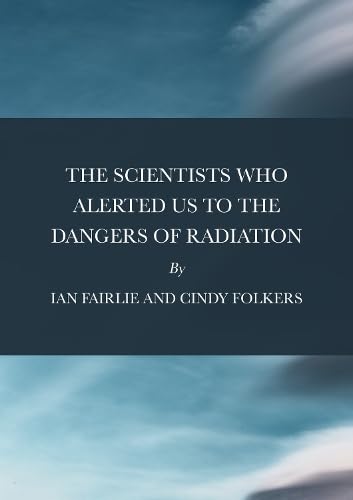
March 29, 2024, https://www.ianfairlie.org/news/new-book-on-radiation-whistleblowers/
“The Scientists Who Alerted us to Radiation’s Dangers”, now published, contains the biographies of 23 radiation scientists who blew the whistle on radiation risks but were victimised by their governments and their nuclear establishments for doing so. Most of these scientists are no longer with us.
Recent epidemiology evidence clearly shows that the denials and obfuscations on radiation risks by successive governments and their nuclear establishment in the past on both sides of the Atlantic were and are wrong and the maligned scientists were right. Radiation is considerably more dangerous than official reports indicate, both in terms of the numerical magnitudes of cancer risks, but also in terms of the new types of diseases, apart from cancer, now shown to be radiogenic.
Written by a former UK government scientist Dr Ian Fairlie and a US anti-nuclear campaigner, Cindy Folkers, the book preserves the memories of the radiation scientists over the previous half-century or so, mostly from the US and UK.
They portray another 15 more recent radiation scientists who have followed in their footsteps but have managed to avoid being victimised. The book also lists over 150 activists in North America, Japan and Europe who have raised their voices against radiation risks and exposures over the past 30 to 40 years.
Radiation and radioactivity and their current risks are explained in easy-to-understand terms. All scientific statements are backed by evidence via hundreds of references, 14 Appendices, 6 Annexes, a glossary and an extensive bibliography.
This is an up-to-date reference book for all academics on the dangers and risks of radiation and radioactivity. The book also serves to help journalists and students counter the misrepresentations, incorrect assertions, wrong assumptions, and untruths about radiation risks often disseminated by the nuclear (power and weapons) establishments on both sides of the Atlantic.
With Media Enamored by US Presidential Race, Israeli Massacres in Gaza Get Even Deadlier

“We must not lose sight of what is happening in Gaza, where an unprecedented humanitarian crisis continues to get even worse,” said U.S. Sen. Bernie Sanders.
By Jake Johnson / Common Dreams, https://www.commondreams.org/news/israel-gaza-massacres, 16 July 24
Israeli forces have massacred nearly 60 people in the Gaza Strip over just the past 24 hours, and the past week has been one of the deadliest since the war began more than nine months ago.
But you’d hardly know it by looking at the front pages of major newspapers in the United States, despite U.S. President Joe Biden fueling Israeli Prime Minister Benjamin Netanyahu’s assault with diplomatic support and billions of dollars worth of weaponry.
While outlets such as Al Jazeera and Reuters have kept Israel’s onslaught at or near the top of their pages, coverage of the relentless war on the Palestinian enclave has largely been supplanted in the U.S. by presidential politics, particularly in the wake of the attempted assassination of former President Donald Trump on Saturday—the same day Israeli forces killed around 100 people in an attack on a southern Gaza town that was previously designated a “safe zone,” as Common Dreamsreported.
Fresh Israeli airstrikes across Gaza on Tuesday killed dozens of people—including children—but the massacres didn’t receive mention on the front pages of the web versions of The New York Times, The Washington Post, The Wall Street Journal, or USA Today, each of which heavily featured coverage of the high-stakes U.S. presidential contest between two candidates who have backed Israel’s war on Gaza.
As of Tuesday morning, Gaza was entirely absent from the website landing pages of the Journal and USA Today. The Post‘s home page buried a story about the potential for an all-out war between Israel and Hezbollah, while the Times‘ home page contained a piece about surging settler violence in the West Bank amid Israel’s ongoing atrocities in Gaza.
In recent weeks, U.S. corporate media coverage of developments in Gaza has not reflected the extent to which Israel has intensified its aerial and ground attacks, even as recent cease-fire talks have sparked some hope of a pause.
After a 20-year-old gunman attempted to assassinate Trump at a campaign rally in Pennsylvania on Saturday, pictures of the former president’s bloodied ear and raised fist were plastered across the front pages of major newspapers in the U.S. and around the world while the far more numerous images of child victims of Israeli bombs—many of them supplied by the United States—faded from view.
Israel does not allow journalists with major U.S.-based media outlets to enter the Gaza Strip unless they are embedded with Israeli forces and agree to let the military vet their coverage.
Al Jazeera, a Qatari-funded outlet that Israel’s far-right government has repeatedly targeted, reported Monday that “Israeli forces have attacked five separate schools in Gaza in just eight days, killing dozens of people sheltering in them.”
One attack on Sunday, the outlet noted, “struck the United Nations-run Abu Oreiban school in the Nuseirat refugee camp, killing at least 17 people and injuring about 80. Most of the victims were women and children, said Palestinian Civil Defense.”
Reporting from the Al-Aqsa Martyrs Hospital in Deir al-Balah, Al Jazeera‘s Hani Mahmoud said he witnessed children “crying out in pain and agony” at the facility, which—like all of Gaza’s remaining hospitals—is under-resourced and only partially functioning.
“This is the result of incinerating bombs,” Mahmoud added.
The death toll from Israel’s war on Gaza is nearing 40,000—likely a dramatic undercount, given how many bodies are missing under the rubble that now dominates the landscape of the enclave and could take 15 years to clear.
Those who have survived Israel’s onslaught are now living amid sewage, decomposing bodies, and the ruins of their homes, shops, schools, and hospitals, with nowhere safe to flee. Famine and disease are spreading rapidly across the territory as the Israeli government continues to restrict the flow of humanitarian aid.
U.S. Sen. Bernie Sanders (I-Vt.), who has urged the Biden administration to cut off all offensive weapons assistance to Israel, said in a statement late last week that “while much of the media is focused on the drama of the U.S. presidential election, we must not lose sight of what is happening in Gaza, where an unprecedented humanitarian crisis continues to get even worse.”
“We must end our support for Netanyahu’s war,” said Sanders. “Not another nickel to make this horrific situation even worse. I intend to do everything I can to block further arms transfers to Israel, including through joint resolutions of disapproval of any arms sales. The United States must not help a right-wing extremist and war criminal continue this atrocity.”
EDF’s plans to create new saltmarsh
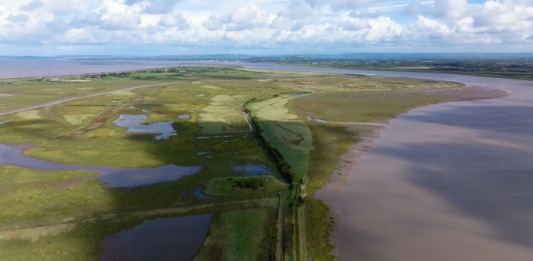
ByBurnham-On-Sea.com, July 16, 2024
Meet the Regulator’ event on Tuesday 16th July drop-in session overseen by the EA.
It came as locals have spoken out over EDF’s plans to create a huge new saltmarsh on the Pawlett Hams instead of introducing measures to prevent fish being killed at Hinkley Point C.
Hinkley Point C says the new saltmarsh on the Pawlett Hams would be a ‘natural alternative’ to installing an acoustic fish deterrent at the new power station.
As Burnham-On-Sea.com reported here, EDF is planning to create a saltmarsh at Pawlett Hams to create a new habitat for fish and animals instead of creating an acoustic fish deterrent system at Hinkley Point C which would stop millions of fish from swimming into the plant’s cooling system and being killed.
Local environmental campaign group Protect Pawlett Hams Action Group claims the EDF plans are an “ecological disaster in the making.”
And Fish Guidance Systems (FGS) is calling for urgent support from the Environment Agency (EA) on how a Acoustic Fish Deterrent (AFD) system will be included in EDF Energy’s plans at Hinkley Point C.
FGS says: “One of these conditions includes the application of an AFD which uses low-frequency signals to deter fish from the cooling intakes for the nuclear power plant, located two miles offshore.”
“This would save the lives of local and protected fish species in the Severn Estuary, which would otherwise be pulled through the cooling water systems and released back into the Estuary. Fish under threat include shad, while migratory species such as Atlantic salmon and shad will have a 50% and 100% respective death rate if pulled into the processing as reported in a Welsh Government Commission.”
…………………………………….EDF has suggested the creation of wetland habitat for birds and other species, combined with enhancements to fish passage on a small number of existing weirs however, several environmental groups state that this will not compensate for the millions of fish pulled in by the intakes every year, which some estimate to be 128 million. FGS urges that an AFD system is the only warranted option.
Dr David Lambert, Managing Director of Fish Guidance Systems, adds: “Acoustic Fish Deterrent systems have been successfully used at coastal power plants for nearly thirty years and EDF’s repeated appeal to the government to revoke the use of one does not take into account the important fish species and wider ecosystem. We want to use our expertise to help EDF make informed, scientifically-backed decisions………………………… https://www.burnham-on-sea.com/news/edfs-plans-to-create-huge-new-saltmarsh-to-be-aired-at-meet-the-regulator-event-today/
Nuclear-weapon states are disregarding political commitments accepted under the nuclear Non-Proliferation Treaty (NPT)
Nuclear-weapon states (NWS) are disregarding political commitments accepted
under the nuclear Non-Proliferation Treaty (NPT) to “further diminish the
role and significance of nuclear weapons in all military and security
concepts, doctrines and policies” and increasing nuclear risks by
boosting the salience of nuclear weapons.
The NPT is inclusive, nearly
universal, and connects the disarmament and non-proliferation dimensions of
the global nuclear order. These factors make it a good place to address
nuclear weapons salience. In a polarised international environment, the NPT
can also link up other contexts where nuclear weapons are discussed. The
ambition of efforts to reduce the salience of nuclear weapons will depend
on the overall trajectory of international politics. But the growing role
and significance of nuclear weapons is both the result and a driver of
rivalry between the NWS.
European Leadership Network 16th July 2024
TODAY. More American media madness

Once again, I’m at risk of sounding callous about that shooting of Donald Trump. Of course it was nasty, frightening and wrong. And deserves media coverage.
Yes, it was big stuff, and doesn’t the media love it! Especially in the USA. Was it a lone attacker? Was he sent by Joe Biden? Was it the CIA? Was it organised by elite satanic paedophiles? Was it an elaborate “friendly fire” organised by the Republicans?
America being the crazy place that it is, the gun lobby will no doubt use it as an argument for having more people with guns around at such a function – as they argued for teachers armed in the classroom. (I always thought that was a dangerous one – teachers can get so cross with some kids!)
But meanwhile, other important stuff is not getting noticed in the “mainstream” media.
Like for example, the continued atrocities in Gaza. Bombing of tent communities. Bombing of schools.
Like for example – that the Democratic party has no plans to alter its policy of unconditional arms support for Israel. Meanwhile Biden mouths pious motherhood statements regretting the suffering of the Gazan people.
Like for example – the belligerent Washington Summit Declaration containing, among other things -“Investing in our Chemical, Biological, Radiological and Nuclear defence capabilities”. But the USA and European both support the United Nations Biological Weapons Convention. What happened to that?
Like for example – Unconditional support for Ukraine’s victory over Russia at a time and on terms set by Ukraine and its allies, not by Russia (no negotiation) And approval for F-16s to attack inside Russian territory. And Ukraine’s “irreversible path” to NATO Membership.
Sadly, the corporate media is becoming irrelevant to the important things going on in the world.
It really matters little whether the Republicans or the Democrats get in at the next USA election. Both are controlled by wealthy corporations, especially weapons makers. The Biden administration will torpedoe us to World War 3. Trump will destroy all demoncratic institutions, and create a global zeitgeist of fear and distrust, also leading to World War 3.
Do Americans have the brains to vote for somebody other than those two useless parties?
Testimonies from the Mawasi massacre: 90 people buried in the sand
“I saw before my eyes one missile after another descending next to the tents. Missiles I have never seen in my life in all of Gaza’s wars. Isn’t this internationally forbidden? Shouldn’t the civilian population be protected and not face genocide and mass killing? Isn’t this forbidden?”
The Israeli army committed another massacre against displaced Palestinians in tent encampments, this time in the coastal Mawasi area, which Israel had designated as a “safe zone.”
BY TAREQ S. HAJJAJ , https://mondoweiss.net/2024/07/testimonies-from-the-mawasi-massacre-90-people-buried-in-the-sand/
In a crater in the ground almost larger than a schoolyard, a group of young men dig through the sand and pull out the bodies.
“His head is there! His head is there!” someone yells. A man emerges from the hole, carrying a child.
“Who knows who this child is? Who knows his family? Where are his parents?” he calls out.
Behind him are dead bodies and severed limbs scattered across the ground. Some poke out from beneath the sand, half-buried.
When the Israeli army struck the coastal displacement camp in al-Mawasi, west of Khan Younis, there was no rubble. The Israeli-designated “safe zone” was little more than a sea of tents on the beach, so people were buried in the sand instead.
At 10 a.m. on Saturday, while people were starting their day, the Israeli military targeted the area with successive airstrikes, leading to a massacre that, according to the Ministry of Health in Gaza, has, as of the time of writing, killed 90 people and injured over 300 others. Half of them are women and children, the health ministry says.
Shaima Farwaneh, 16, was near the site of the massacre when it happened. She was preparing to make breakfast for her family when the bombs fell.
People and sand scattered everywhere, limbs that were once attached to bodies flying over their heads.
“A leg hit me, and I saw dismembered bodies a few meters away,” Shaima told Mondoweiss. “I saw a young child screaming. He lost his lower limbs and was crawling on his hands and screaming. The bombs didn’t stop, and suddenly the boy disappeared. I saw how he vanished before me while we ran and lowered our eyes to the ground, unable to do anything but run.”
Shaima describes hearing seven explosions in short succession before it was over. “What a life we live in these tents that we have to see the dismembered bodies of our siblings and families fly over our heads.”
When the ambulance and Civil Defense crews arrived near a well-known crowded market for residents of the area, their vehicles were targeted as well, according to the director of the Civil Defense in Khan Younis, Yamen Abu Suleiman. Two Civil Defense workers were killed in the strike.
Abu Suleiman said that the occupation targeted Al-Mawasi with a large barrage of missiles, which led to many casualties. “The occupation targeted the area more than once to prevent us from any rescue operation,” he tells Mondoweiss, denouncing the silence of the International Committee of the Red Cross over Israel’s prevention of rescue teams from doing their work.
Israel claims that the airstrikes were an attempt to assassinate Muhammad al-Deif, the head of the armed wing of Hamas, the al-Qassam Brigades, as well as the commander of al-Qassam’s Khan Younis District Brigade, Rafi Salama. The Gaza government media office denies the Israeli claims, emphasizing that they are nothing but a way of diverting the world’s attention from the reality of the massacre the Israeli army committed as part of the genocide of Gaza’s people.
According to local sources, over 80,000 displaced people currently reside in tents in that area.
‘No state does this’
Fawzia Sheikh Youssef, 82, was buried in the sand from the bombing but survived. She describes what she experienced during the massacre as something she had never seen in her entire life. She tells Mondoweiss that she was already displaced during the Nakba of 1948 when she was only 6 years old, coming to the Khan Younis area and staying with her family for two years in a tent. 76 years later, she found herself back where she started, but this time witnessing massacres the likes of which she had never seen even during the Nakba.
“There is no country in all the world that does this to children, women, and civilians,” she says. “This isn’t how wars are.”
Fawzia was eating her breakfast when the bomb ripped through her encampment, demolishing her tent and trapping her underneath it. She found herself covered in sand and trapped inside but was not critically injured. She began crawling on the ground and extricated herself from beneath the tent, eventually escaping to a place far away from the shrapnel and missiles, closer to the main road.
“I saw before my eyes one missile after another descending next to the tents. Missiles I have never seen in my life in all of Gaza’s wars. Isn’t this internationally forbidden? Shouldn’t the civilian population be protected and not face genocide and mass killing? Isn’t this forbidden?”
“They killed young people and old women. They do not respect humans. Aren’t we human?” she continues. “There is nothing to protect us from these missiles. The tents fell on our heads, and I was hit with two pieces of shrapnel in my leg. I may get poisoned, and I did not harm anyone.”
“These are not humanitarian actions,” Fawzia says. “A normal state would know that children have value, and women have value. Their lives are respected. Killing them is forbidden. There are wars. Some countries fight in the world, but not like this. Not like what happens with us.”
‘I left my son and fled from the horror of the bombing’
Samah al-Farra, a survivor of the massacre, says she fled from the horror of the missiles, leaving her son behind without knowing what she was doing. She describes what she saw after the incident as witnessing the horrors of the Day of Resurrection. The sound of the explosions, the panic of the people around her, the stampede in the attempt to escape, women leaving their tents without even wearing their clothes — Samah has to live with witnessing all these brutal scenes.
“People were running. There was sand in our eyes and fire over our heads. I left my son behind me and started running. I found the world turned upside down. The bodies of the martyrs were next to us, cut into pieces. It was a massacre. The fragments, sand, and bodies flew over our heads as we ran,” Samah describes.
She says that if this density of missiles had fallen on fortified buildings, it would have destroyed them. “But what about when they fall on tents whose owners are protected only by a piece of cloth?”
She describes the scene as a shower of missiles falling four times in a row, with more than one explosion occurring during each shower. “We saved ourselves. If we had stayed where we were, we would have been cut up and buried under the sand.”
Media reports have said that the bombs used in the al-Mawasi attack were JDAMs made in the U.S., which turn highly destructive unguided bombs into more precise missiles.
‘The entire area was overturned‘
Aziza Abu Tahir sits in front of the devastation after the bombing. Scattered bags of flour, gallons of water, vegetables, pillowcases, and utensils litter the area. She owns an oven and sits beside it every day. The women of the camp send their dough to her to bake for a small fee.
“When they dropped the bombs above our heads, all the people were running and screaming and saying that these were incendiary bombs, and this is the first time we have heard a sound like this,” Aziza tells Mondoweiss. “We ran away, and no one knew where to run. Some people went from one direction and were bombed, and some of them went from another direction and survived. But no one knew where they were going.”
As she speaks, a small child is hugging her, the son of her neighbor. Aziza says his mother takes care of orphans, and explains that when the attack started, his mother was bringing some dough for Aziza to bake in order to then resell to get an income for her family. “She was just here, and I baked what she wanted, and she went to sell it. As soon as she walked away, the bombing started. I don’t know where she is now, and I don’t know if she will return. The entire area she was walking in was overturned, and everything was buried.”
Hassan Suleih conducted interviews and provided photography for this report.
Yongbyon Nuclear Complex: New evidence of increased activity
Night-time lights visible at the Yongbyon radiochemical laboratory suggest that North Korea is covertly importing spent fuel rods for plutonium extraction reprocessing
DAILY NK By Bruce Songhak Chung, 16 July 24
Evidence suggests that North Korea is ramping up production of plutonium and uranium nuclear materials at the radiochemical laboratory and uranium enrichment facility in the Yongbyon nuclear complex, as it has begun full-scale operation of the experimental light water reactor this summer. Recently, major foreign media outlets covering North Korea have debated and verified the reliability of the thermal infrared analysis of the Yongbyon facility presented in a Daily NK column I published in May. This article summarizes thoughts and opinions on this matter, and also examines what is behind the intermittent night lights observed in Yongbyon through night-time luminosity images.
Recent conditions at the Yongbyon reactor and light water reactor area were examined using Maxar’s GeoEye-1 satellite imagery (40 centimeter resolution). In the June 19 satellite photo, heated cooling water from the reactor and light water reactor operation is clearly identified being discharged into the Kuryong River through two pump stations, accompanied by white foam. This marks the 16th cooling water discharge detected this year. As it continues to appear in satellite images since late April, the experimental light water reactor appears to have entered full-scale operation. The South Korean Ministry of National Defense had previously predicted that the Yongbyon light water reactor would enter normal operation in or around the summer months.
Below the second pump station, a yellow substance spread out in a rectangular shape can be seen on the ground. This could be wheat or barley being dried after harvest. In North Korea, mid-June is the peak harvest time for wheat and barley in the fields, followed typically by planting corn as the year’s second crop. Soldiers and workers guarding the Yongbyon nuclear facility appear to be engaging in farming activities in empty spaces within the complex as food rations are insufficient.
Analysis of Yongbyon thermal infrared satellite imagery………………………………………………………………………………………..
Repairs of the boiler room in the Yongbyon thermal power plant ………………………………………………………
Mysterious late night lights at the radiochemical laboratory………………………………………………………….
influential foreign media outlets recently released an assessment about thermal infrared analysis, which is used to determine the operational status of the Yongbyon nuclear facilities. The prominent U.S. North Korea-focused website Beyond Parallel has provided an in-depth analysis of the reliability of thermal infrared data. I read the three articles with great interest. The conclusion of the series of articles evaluated the results of the thermal infrared analysis of North Korea’s Yongbyon nuclear facilities as generally reliable. The outlet explained that after obtaining and comparing Yongbyon facility operation records for over two years held by the U.N., the results largely matched those of the thermal infrared analysis. When high heat was detected in the thermal infrared data, it corresponded with the operation of the Yongbyon facilities. However, the caveat was that facilities operating at low intensity might not be detected due to weak heat emissions. They also recommended drawing comprehensive conclusions by combining thermal infrared analysis with various other data, as there are still imperfections in the analysis. This is valuable advice worth noting.
Please send any comments or questions about this article to dailynkenglish@uni-media.net. https://www.dailynk.com/english/yongbyon-nuclear-complex-new-evidence-of-increased-activity/
–
July 16, 2024
Saudi Arabia wants to fully recognize Israel in exchange for arms, nuclear facility — Biden
By JACOB MAGID, https://www.timesofisrael.com/liveblog_entry/saudi-arabia-wants-to-fully-recognize-israel-in-exchange-for-arms-nuclear-facility-biden/ 16 July 24
US President Joe Biden says Saudi Arabia wants to normalize relations with Israel in exchange for security guarantees from the United States.
“I got a call from the Saudis — they want to fully recognize Israel,” Biden says in an interview on “360 with Speedy.”
Riyadh has not publicly gone this far, and its officials have reiterated that their country will not normalize relations with Israel unless Jerusalem agrees to establish a pathway to a future Palestinian state — a condition Prime Minister Benjamin Netanyahu has flatly rejected.
Biden doesn’t mention the Palestinian condition, and instead asserts that what Saudi Arabia wants in exchange for normalizing relations with Israel is a guarantee that the US will provide them weapons “if they’re attacked by other Arab nations — one just around the corner.” He appears to be referring to Riyadh’s Mideast rival Iran, which is not an Arab country.
The US president says Washington would also establish a civilian nuclear facility in Saudi Arabia, which the US army would operate “so they can move away from fossil fuels.”
This appears to be the most detail any US official has publicly given regarding the terms of the defense guarantees sought by Saudi Arabia, particularly the nuclear component.
“That’s a big game changer in the whole region,” Biden says.
A Democratic lawmaker and a senior Republican Senate aide told The Times of Israel last week, though, that the window has closed for the Biden administration to broker a normalization deal before the November presidential election, because there is not enough time left for the Senate to hold the hearings necessary to approve the defense guarantees for Saudi Arabia.
US Ally South Korea Threatens Nuclear-Armed North Korea With Regime Destruction
https://www.newsweek.com/south-north-korea-nuclear-weapons-regime-destruction-1925096, Jul 15, 2024
South Korea said Kim Jong Un‘s regime in the North faces a certain end if it uses nuclear weapons, a strongly worded statement that came after Pyongyang blasted Seoul and Washington for opening the door to further nuclear force deployments to the peninsula.
“If North Korea attempts to use nuclear weapons, the overwhelming response of the South Korea-U.S. alliance will bring about the end of the North Korean regime,” the Defense Ministry in Seoul said on Sunday.
“There is no scenario in which the North Korean regime will survive after using nuclear weapons,” the ministry added.
Kim’s government has stepped up its ballistic missile tests despite existing prohibitions backed by the U.N. Security Council. Amid spiraling tensions on the Korean Peninsula, Pyongyang has threatened to launch a preemptive nuclear strike to defend its territory from what it claims is an impending invasion.
In Washington, D.C., last week, President Joe Biden met South Korean counterpart Yoon Suk Yeol and recommitted “the full range of U.S. capabilities, including nuclear,” to the defense of the longtime U.S. treaty ally.
In a joint statement issued later the same day, the U.S. Defense Department and South Korean Defense Ministry announced the signing of “Guidelines for Nuclear Deterrence and Nuclear Operations on the Korean Peninsula.” This is a move to further integrate U.S. nuclear assets with South Korea’s conventional forces in defense of the alliance.
On Saturday, the North Korean Defense Ministry warned the United States and the South—”hostile states“—that they would “pay an unimaginably harsh price” for increased nuclear cooperation.
The allies were “betraying their sinister intention to step up their preparations for a nuclear war against the DPRK,” read the statement carried by the official Korean Central News Agency. DPRK stands for the Democratic People’s Republic of Korea, North Korea’s official name.
“We come to the conclusion that there is only one option for us to take against such confrontational fanatics,” the ministry said, noting the urgent requirement “to further improve its nuclear deterrent readiness and add important elements to the composition of the deterrent.”
South Korea’s Defense Ministry described the new guidelines as “a legitimate measure,” justified by North Korea’s continued development of nuclear-capable missiles.
The forceful language against Kim was first used by Biden last year during a state visit by Yoon.
“A nuclear attack by North Korea against the United States or its allies or partners is unacceptable and will result in the end of whatever regime, were it to take such an action,” Biden said.
North Korea’s embassy in Beijing did not immediately respond to a written request for comment.
The new guidelines governing when and how American nuclear forces might be deployed and used on the Korean Peninsula were crafted by the U.S.-ROK Nuclear Consultative Group, established after Yoon’s visit to the White House. ROK stands for the Republic of Korea, South Korea’s official name.
South Korea, which has no nuclear weapons, says the contents of the guidelines are confidential.
Analysts say Washington aims to boost the credibility of what it calls “extended deterrence,” the ability of the U.S. military to deter adversaries and reassure allies, particularly with its nuclear arms.
North Korea conducted its first nuclear test in 2006 and is estimated to have around 50 nuclear warheads in its stockpile, according to the Stockholm International Peace Research Institute.
In SIPRI’s annual yearbook released last month, the think tank’s experts described North Korea’s nuclear weapons program as “active but highly opaque.”
“Based on statements by the North Korean leader, Kim Jong Un, and North Korea’s expanding force posture, it seems likely that North Korea intends to increase its nuclear warhead inventory significantly,” the experts said.
North Korean nuclear weapons, 2024
Bulletin By Hans M. Kristensen, Matt Korda, Eliana Johns, Mackenzie Knight | July 15, 2024
North Korea continues to modernize and grow its nuclear weapons arsenal. In this Nuclear Notebook, the authors cautiously estimate that North Korea may have produced enough fissile material to hypothetically build up to 90 nuclear warheads, but has likely assembled fewer than that—potentially around 50. To deliver the warheads, North Korea is enhancing and diversifying its missile force, most recently with new solid-fuel long-range strategic missiles, short-range tactical missiles, and sea-based missiles. The Nuclear Notebook is researched and written by the staff of the Federation of American Scientists’ Nuclear Information Project: director Hans M. Kristensen, associate director Matt Korda, research associate Eliana Johns, and program associate Mackenzie Knight.
This article is freely available in PDF format in the Bulletin of the Atomic Scientists’ digital magazine (published by Taylor & Francis) at this link.
North Korea—also known as the Democratic People’s Republic of Korea, or DPRK—has made significant advances over the past two decades in developing its nuclear weapons arsenal. Since 2006, North Korea has detonated six nuclear devices, updated its nuclear doctrine to reflect the irreversible role of nuclear weapons for its national security, and continued to introduce a variety of new missiles test-flown from new launch platforms.
It is widely assumed that North Korea has operational nuclear warheads for its short- and medium-range missiles as well as possibly for its longer-range missiles, although the latter capability has not yet been publicly demonstrated. There is considerable uncertainty about which of North Korea’s missiles have been fielded with an active operational nuclear capability. However, it seems clearer from North Korea’s public statements and systems-testing that the country intends to field an operational nuclear arsenal capable of holding targets at risk in East Asia, the United States, and Europe.
In 2021, Kim Jong-un announced several key strategic goals for North Korea’s nuclear weapons program, proposed as a five-year plan. According to Kim’s statement, these goals included: 1) producing “super-sized nuclear warheads,” 2) producing smaller and lighter nuclear weapons for tactical uses, 3) improving precision strike and range capabilities, 4) introducing “hypersonic gliding flight warheads,” 5) developing “solid-fuel engine propelled intercontinental, underwater, and ground ballistic rockets,” and 6) introducing a “nuclear-powered submarine and underwater-launch nuclear strategic weapon” (KCNA 2021). North Korea appears to have made significant progress on these goals, and has since introduced more demands including the dramatic increase of missile production and “cutting edge strategic weapon engines” (Kim 2023).
Due to the lack of clarity surrounding North Korea’s nuclear program, agencies and officials of the US intelligence community, as well as military commanders and independent experts, struggle to assess the program’s characteristics and capabilities………………………………………………………………………………………………………………………….
North Korea’s nuclear policy
For decades, North Korea has made numerous statements and signals about its nuclear weapons policy, laying out its nuclear doctrine if deterrence fails. Such statements have more recently been codified in official declaratory policy. In 2013, for example, North Korea’s “Law on Consolidating the Position of Nuclear Weapons State” suggested a no-first-use policy, noting that North Korea’s nuclear arsenal would only be used “to repel invasion or attack from a hostile nuclear weapons state and make retaliatory strikes” (KCNA 2013). Kim Jong-un officially declared a no-first-use policy in 2016 following North Korea’s fourth nuclear test.
Since 2016, however, North Korean statements and force posture changes have indicated a shift away from this no-first-use policy. Just two months after the policy was declared, the North Korean government issued a statement that North Korea would not be the first to use nuclear weapons “as long as the hostile forces for aggression do not encroach upon its sovereignty” (KCNA 2016b). In 2020, Kim Jong-un stated that North Korea’s nuclear deterrent “will never be used preemptively. But if […] any forces infringe upon the security of our state and attempt to have recourse to military force against us, I will enlist all our most powerful offensive strength in advance to punish them” (38 North 2020). Such caveats culminated in September 2022 when North Korea’s parliament codified in law North Korea’s right to launch nuclear weapons preemptively (Kim 2022). One year later, the North Korean government codified under the country’s constitution its right to “deter war and protect regional and global peace by rapidly developing nuclear weapons to a higher level” (Soo-Yeon 2023).
The abandonment of North Korea’s no-first-use policy coincides with the country’s recent efforts to develop tactical nuclear weapons. Following development and demonstration of new long-range strategic nuclear-capable missiles, the pursuit of tactical nuclear weapons appears intended to provide options for nuclear use below the strategic level and strengthen its regional deterrence posture (KCNA 2022; National Committee on North Korea 2021). According to two analysts, Pyongyang now sees its nuclear weapons as useful not only for retaliation against an attack but also for potentially winning a limited conflict………………
………………….. Occasionally, North Korea has explicitly mentioned or signaled which targets it would hit with its nuclear weapons. These include US military bases in South Korea, the Asia-Pacific region, Guam, Hawaii, and the continental United States.
………………………………………………………………….. despite occasional inflammatory statements, it appears highly likely that North Korea—as with other nuclear-armed states—would use its nuclear weapons only under extreme circumstances, particularly if the continued existence of the North Korean state and its political leadership were threatened.
North Korea’s nuclear weapons program
Plutonium production operations
The Yongbyon Nuclear Scientific Research Center, located in North Pyongan province, has been called the “beating heart” of North Korea’s nuclear weapons program. At Yongbyon, North Korea produces plutonium at its five megawatt-electric (MWe) graphite-moderated nuclear reactor, which has been operating intermittently since 1986………………………………………………………………………………………………………
Uranium enrichment operations
Assessing the state of North Korea’s uranium enrichment operations is more difficult because the operational history and locations of several associated uranium enrichment facilities are unknown………………………………………………………………
Fissile material and warhead inventory estimates
Because of the prior access to the facilities at Yongbyon, analysts have a reasonable understanding of North Korea’s plutonium production capabilities. However, given the uncertainties about the operations at Yongbyon’s uranium enrichment facility and the possible existence of a second centrifuge facility, it is unclear how much highly-enriched uranium (HEU) North Korea has produced and how much uranium it might divert to military purposes, including for plutonium production. Still, this amount is known to be growing and it is clear North Korea is investing in the improvement of its fissile material production capabilities………………………………………………………………………………………………………………………………………………………….
The size of North Korea’s nuclear stockpile also depends on the weapon design and the number and types of launchers that can deliver them. Many experts also estimate that North Korea may have built a smaller number of nuclear weapons than what its stockpile of fissile material may suggest………………………………………………………………………………………………………………….
Nuclear testing and weaponization
After six nuclear tests—including two with moderate yields and one with a high yield—there is no longer any doubt that North Korea can build powerful nuclear explosive devices designed for different yields. North Korea’s latest nuclear test, conducted on September 3, 2017, had a yield of well over 100 kilotons and demonstrated that North Korea had managed to design a thermonuclear device or at least one that used a mixed-fuel (composite) design………………………………………………………………………………………………………………………………………
Potential land-based nuclear-capable missiles
Over the past decade, North Korea has developed a highly diverse ballistic missile force, including missiles in all major range categories…………………………………………………………………………………………
Short-range missiles…………………………………………………………………………………
Medium- and intermediate-range missiles North Korea is developing a new generation of medium- and intermediate-range missiles with improved accuracy, readiness, and maneuverability…………………………………………………………………
Intercontinental ballistic missiles
The most dramatic of North Korea’s recent developments has been the display and test launch of large intercontinental ballistic missiles (ICBMs),…………………………………………………
Sea-based nuclear-capable missiles
Over the past decade, North Korea has worked to develop an increasingly sophisticated sea-based nuclear deterrent. ……………………………………………………………………..
Submarine-launched ballistic missiles……………………………………………
Submarine-launched cruise missiles North Korea is developing a new submarine-launched cruise missile, known as Pulhwasal-3-31. The system has been labeled a “strategic cruise missile”—implying a nuclear-capable status……………………………………………………
Other sea-based weapons North Korea appears to be developing an underwater weapon system………………………………………..
Land-attack cruise missiles North Korea appears to be developing a series of land-attack cruise missiles (LACMs)—………………………………………………… more https://thebulletin.org/premium/2024-07/north-korean-nuclear-weapons-2024/
China is installing the wind and solar equivalent of five large nuclear power stations per week

Instead of nuclear, solar is now intended to be the foundation of China’s new electricity generation system.
ABC Science / By technology reporter James Purtill, 16 July 24, https://www.abc.net.au/news/science/2024-07-16/chinas-renewable-energy-boom-breaks-records/104086640
In short:
China is installing record amounts of solar and wind, while scaling back once-ambitious plans for nuclear.
While Australia is falling behind its renewables installation targets, China may meet its end-of-2030 target by the end of this month, according to a report.
What’s next?
Energy experts are looking to China, the world’s largest emitter and once a climate villain, for lessons on how to rapidly decarbonise.
While Australia debates the merits of going nuclear and frustration grows over the slower-than-needed rollout of solar and wind power, China is going all in on renewables.
New figures show the pace of its clean energy transition is roughly the equivalent of installing five large-scale nuclear power plants worth of renewables every week.
A report by Sydney-based think tank Climate Energy Finance (CEF) said China was installing renewables so rapidly it would meet its end-of-2030 target by the end of this month — or 6.5 years early.
It’s installing at least 10 gigawatts of wind and solar generation capacity every fortnight.
By comparison, experts have said the Coalition’s plan to build seven nuclear power plants would add fewer than 10GW of generation capacity to the grid some time after 2035.
Energy experts are looking to China, the world’s largest emitter, once seen as a climate villain, for lessons on how to go green, fast.
“We’ve seen America under President Biden throw a trillion dollars on the table [for clean energy],” CEF director Tim Buckley said.
“China’s response to that has been to double down and go twice as fast.”
Smart Energy Council CEO John Grimes, who recently returned from a Shanghai energy conference, said China has decarbonised its grid almost as quickly as Australia, despite having a much harder task due to the scale of its energy demand.
“They have clear targets and every part of their government is harnessed to deliver the plan,” he said.
China accounts for about a third of the world’s greenhouse gas emissions. A recent drop in emissions (the first since relaxing COVID-19 restrictions), combined with the decarbonisation of the power grid, may mean the country’s emissions have peaked.
“With the power sector going green, emissions are set to plateau and then progressively fall towards 2030 and beyond,” CEF China energy policy analyst Xuyang Dong said.
So how is China building and connecting panels so fast, and what’s the role of nuclear in its transition?
Like building solar farms near Perth to power Sydney
Because its large cities of the eastern seaboard are dominated by apartment buildings, China hasn’t seen an uptake of rooftop solar like in Australia.
To find space for all the solar panels and wind turbines required for the nation’s energy needs, the planners of China’s energy transition have looked west, to areas like the Gobi Desert.
The world’s largest solar and wind farms are being built on the western edge of the country and connected to the east via the world’s longest high-voltage transmission lines.
These lines are so long they could span the length of our continent.
In Australian terms, it’s the equivalent of using solar panels near Perth to power homes in Sydney.
Mr Buckley said China’s approach was similar to the Australian one of developing regional “renewable energy zones” for large-scale electricity generation.
“They’re doing what Australia is doing with renewable energy zones but they’re doing it on steroids,” he said.
What about ‘firming’ the grid?
One of the issues with switching a grid to intermittent renewables is ensuring a steady supply of power.
In technical terms, this is the difference between generation capacity (measured in gigawatts) and actual energy output (measured in gigawatt-hours, or generation over time).
Renewables have a “capacity factor” (the ratio of actual output to maximum potential generation) of about 25 per cent, whereas nuclear’s is as high as 90 per cent.
So although China is installing solar and wind generation equivalent to five large nuclear power plants per week, their output is closer to one nuclear plant per week.
Renewables account for more than half of installed capacity in China, but only amount to about one-fifth of actual energy output over a year, the CEF’s Tim Buckley said.
To “firm” or stabilise the supply of power from its renewable energy zones, China is using a mix of pumped hydro and battery storage, similar to Australia.
“They’re installing 1GW per month of pumped hydro storage,” Mr Buckley said.
“We’re struggling to build the 2GW Snowy 2.0 in 10 years.”
There are some major differences between Australia and China’s approaches, though. Somewhat counterintuitively, China has built dozens of coal-fired power stations alongside its renewable energy zones, to maintain the pace of its clean energy transition.
China was responsible for 95 per cent of the world’s new coal power construction activity last year.
The new plants are partly needed to meet demand for electricity, which has gone up as more energy-hungry sectors of the economy, like transport, are electrified.
The coal-fired plants are also being used, like the batteries and pumped hydro, to provide a stable supply of power down the transmission lines from renewable energy zones, balancing out the intermittent solar and wind.
Despite these new coal plants, coal’s share of total electricity generation in the country is falling.
The China Energy Council estimated renewables generation would overtake coal by the end of this year.
The CEF’s Xuyang Dong said despite the country’s reliance on coal, “having China go green at this speed and scale provides the world with a textbook to do the same”.
“China is installing every week the equivalent of what we’re doing every year.”
Despite this speed, China wasn’t installing renewables fast enough to meet its 2060 carbon neutrality target, she added.
“According to our analysis, [the current rate of installation] is not ambitious enough for China.”
What about nuclear?
China is building new nuclear plants, although nowhere near as fast as it once intended.
In 2011, Chinese authorities announced fission reactors would become the foundation of the country’s electricity generation system in the next “10 to 20 years”.
But Japan’s 2011 Fukushima disaster prompted a moratorium on inland nuclear plants, which have to use river water for cooling and are more vulnerable to frequent flooding.
Meanwhile, over the following decade, solar became the cheapest electricity in the world.
From 2010 to 2020, the installed cost of utility-scale solar PV declined by 81 per cent on a global average basis.
As well as cheap, it was safe, which made solar farms quicker to build than nuclear reactors.
Instead of nuclear, solar is now intended to be the foundation of China’s new electricity generation system.
Authorities have steadily downgraded plans for nuclear to dominate China’s energy generation. At present, the goal is 18 per cent of generation by 2060.
China installed 1GW of nuclear last year, compared to 300GW of solar and wind, Mr Buckley said.
“That says they’re all in on renewables.
“They had grand plans for nuclear to be massive but they’re behind on nuclear by a decade and five years ahead of schedule on solar and wind.”
How is China transitioning so fast?
In June of this year, on the eve of the Coalition’s nuclear policy announcement, former Queensland Premier Annastacia Palaszczuk, who’s now a Smart Energy Council “international ambassador”, led a delegation of Australians to the world’s largest clean energy conference in Shanghai.
The annual Smart Energy Conference hosts more than 600,000 delegates across three days.
Its scale underlines China’s increasing dominance of the global clean energy economy and, for some attendees, prompted unenviable comparisons with Australia’s progress.
Mr Buckley, who was part of the delegation, said he was “blown away”.
“China is winning this race.”
John Grimes, the Smart Energy Council CEO who also attended, said Australia could learn from the Chinese government’s ability to execute a long-term, difficult and costly transition plan, rather than relying on market forces to find a solution.
“Australia’s transition is going too slow, there was a lost decade of action,” he said.
“The world today spends about $7 trillion a year on coal, gas and oil and that money is going to find a new home.
Who is going to be the economic winner in that global economic transition? It’s going to be China.”
He and other energy experts are frustrated with the progress of Australia’s transition, including the discussion of nuclear power and the “weaponisation of dissent” from community groups over new wind farms and transmission lines.
Stephanie Bashir, CEO of the Nexa energy advisory, said Australia’s transition was tangled in red tape.
“The key hold-up for a lot of projects is the slow planning approvals,” Ms Bashir, who also attended the conference, said.
“In China they decide they’re going to do something and then they go and do it.”
The Australian Energy Market Operator’s (AEMO) plan to decarbonise the grid and ensure the lights stay on when the coal-fired power stations close requires thousands of kilometres of new transmission lines and large-scale solar and wind farms.
Australia is installing about half the amount of renewables per year required under the plan.
Due to this shortfall, many experts say its unlikely to meet its 2030 target of 82 per cent renewables in the grid and 43 per cent emissions reduction.
“We need to build 6GW each year from now until each power station closes, and so far we’re only bringing online 3GW,” Ms Bashir said.
“If we identify some projects are nation-building … and we need them for transition, we just have to get on with it.”
Mr Buckley predicted China would accelerate its deployment of renewables.
“My forecast is it will lift 20 per cent per annum on current levels.”
Democrats to Keep Unconditional Military Aid to Israel in Party Platform
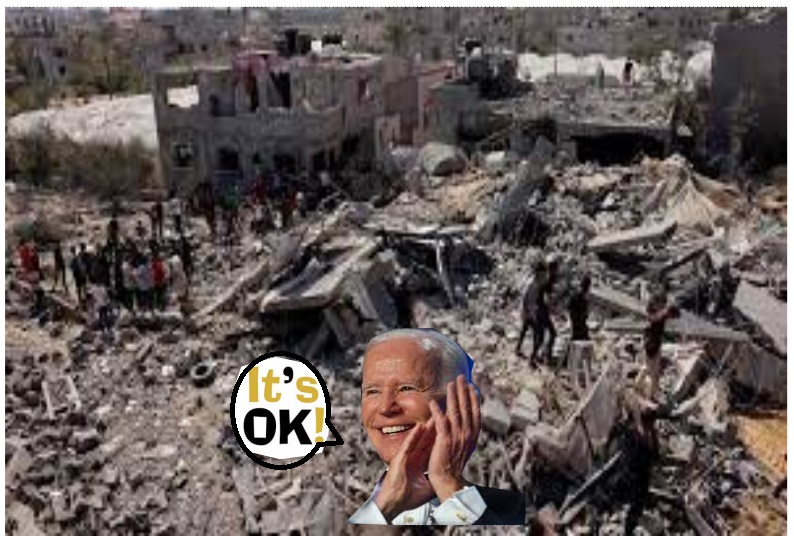
by Kyle Anzalone | Jul 10, 2024, https://libertarianinstitute.org/news/dems-to-keep-unconditional-military-aid-to-israel-in-party-platform/
A senior Joe Biden administration official explained that the Democratic party has no plans to alter its policy of unconditional arms support for Israel. President Biden has provided Israel with billions of dollars in weapons since October 7, including over ten thousand heavy bombs.
After an internal DNC debate over the party’s plank on arms shipments to Israel, an official explained that President Biden has no plans to change the policy that allows weapons to flow to Tel Aviv with no conditions on how they are used. “The platform will reflect the views of the president of the United States, and cutting aid to Israel is not President Biden’s policy,” the official said.
Over the past nine months, the White House has sent Israel over $6.5 billion in arms, including tens of thousands of bombs. Fourteen thousand of those munitions are massive one-tonne bombs. American-made bombs have contributed to the enormous death toll that has surpassed 38,000.
While American weapons have been documented to have been used in Israeli attacks on civilian targets in Gaza, the White House has maintained that Tel Aviv has not violated US laws. President Biden has no plans to curtail arms shipments except for one shipment of heavy bombs.
A growing number of Democratic voters have broken with the president over his unfettered support for the Israeli onslaught in Gaza. An April poll found about 40% of Democrats believe Biden has given Israel too much support.
Biden is a self-proclaimed Zionist and has been a vocal supporter of Israel for decades. Over his career, the president has frequently claimed that Israel is so vital to American security that if it did not exist, the US would have to create Israel.
However, the argument that Israel contributes to American security is rebuked by the head of the State Department Intelligence agency, Brett Holmgren. The Assistant Secretary of State explained that the Israeli war on Gaza is driving recruitment into jihadist organizations and inspiring lone-wolf terrorists.
North Korea tests new nuclear-capable underwater drone
Canberra Times, By Soo-Hyang Choi and Ju-Min Park, March 24 2023
North Korea has tested a new nuclear-capable underwater attack drone, as leader Kim Jong-un warned joint military drills by South Korea and the United States should stop.
The drone cruised underwater at a depth of 80 to 150 metres for more than 59 hours and detonated a non-nuclear payload in waters off its east coast on Thursday, North Korean state news agency KCNA said on Friday.
Analysts say North Korea is showing off its increasingly diverse nuclear threats to Washington and Seoul, though they are sceptical whether the underwater vehicle is ready for deployment.
North Korea intends to signal “to the United States and South Korea that in a war, the potential vectors of nuclear weapons delivery that the allies would have to worry about and target would be vast,” said Ankit Panda, senior fellow at the US-based Carnegie Endowment for International Peace.
“There would be silos, railcars, submarines and road mobile missile launchers and now they’re adding this underwater torpedo to the mix,” he said………………………………………………………… more https://www.canberratimes.com.au/story/8134654/north-korea-tests-new-nuclear-capable-underwater-drone/—
1 This Month

of the week– Nuclear Reactor Information Task Force

14 May – online event From Bombs to Data Centres: the Face of Nuclear Colonialism
To see nuclear-related stories in greater depth and intensity – go to https://nuclearinformation.wordpress.com
-
Archives
- May 2026 (81)
- April 2026 (356)
- March 2026 (251)
- February 2026 (268)
- January 2026 (308)
- December 2025 (358)
- November 2025 (359)
- October 2025 (376)
- September 2025 (257)
- August 2025 (319)
- July 2025 (230)
- June 2025 (348)
-
Categories
- 1
- 1 NUCLEAR ISSUES
- business and costs
- climate change
- culture and arts
- ENERGY
- environment
- health
- history
- indigenous issues
- Legal
- marketing of nuclear
- media
- opposition to nuclear
- PERSONAL STORIES
- politics
- politics international
- Religion and ethics
- safety
- secrets,lies and civil liberties
- spinbuster
- technology
- Uranium
- wastes
- weapons and war
- Women
- 2 WORLD
- ACTION
- AFRICA
- Atrocities
- AUSTRALIA
- Christina's notes
- Christina's themes
- culture and arts
- Events
- Fuk 2022
- Fuk 2023
- Fukushima 2017
- Fukushima 2018
- fukushima 2019
- Fukushima 2020
- Fukushima 2021
- general
- global warming
- Humour (God we need it)
- Nuclear
- RARE EARTHS
- Reference
- resources – print
- Resources -audiovicual
- Weekly Newsletter
- World
- World Nuclear
- YouTube
-
RSS
Entries RSS
Comments RSS
 nuclear-news