Look – the world authorities have got everything in hand. There should be no need to worry about that global heating nonsense. We learned at Climate Summits Cop 28 and Cop 29 that our shares in oil, gas, coal are going to continue OK. And now, the world’s leader, the USA is going to again withdraw from the landmark Paris climate agreement, so we can forget all that silly reductions emissions nonsense. And no more of our money to be grabbed by the United Nations Framework Convention on Climate Change.
Gee, America has just been saved from a “national energy emergency,” by President Trump’s foresight, with an executive order with its promise to “drill, baby, drill.” Saved in several other ways, such as removing incentives for electric cars.
Phew ! What a relief – as things can now go back to normal. We’ve really had the wool pulled over our eyes, by silly organisations like the UK Met Office, NASA. Copernicus in Europe, Berkeley Earth, U.S. Greenhouse Gas Center, the World Meteorological Organization, and The China Meteorological Administration.
All of these smartaleck bodies have very recently reported on climate change and its effects. The latest nonsense is in the January 15th Report from The World Economic Forum. Listing the top global risks, No.2 is Extreme weather events.
Now what would those elitists know – compared to the common-sense wisdom of a Donald Trump, a J.D. Vance, or a Peter Dutton? We don’t need to worry about all that complicated doom and gloom from academic old fogeys.
But one thing that bothers me is treachery. I’m talking about highly respected companies – in this case Lloyd’s of London, which apparently, in 2019 refused to reinsure some Canadian insurance companies. It is hard to find detail on this, but it was due to Canada’s succession of climate disasters – hurricanes, floods, wildfires, and extreme heat. Lloyds is the biggest global reinsurer, so could be said to have started, or at least accelerated a trend. In California from 2015-2019, insurers refused 350,000 policy renewals, because of the devastating wildfires. This trend is spreading to the reinsurance of insurance companies in other countries, including Australia.
Reinsurance companies nowadays adopt what is quaintly called “robust”underwriting decisions . In the most recent years, they’re assessing not only huge climate disasters, but also recognising smaller climate perils, like wind, hail or water damage. For areas at risk, they’re requiring preventative measures, insurance companies must charge more for homes in flood plains, wildfire-prone zones, or coastal areas at risk of hurricanes. So, insurance companies must comply, as they themselves need to be insured. Up go the premiums – for everybody – and especially those in the climate danger zones. . The current Los Angeles fires just add to the developing crisis in insurance. Insurance for many becomes unaffordable, – “It’s called the hardening of the market.”, and this flows on to mortgage costs. banks and stranded assets- threatening the overall financial sector.”
All this trauma is the result of Lloyds and others foolishly using the figures from The World Economic Forum, and those other bodies, and not paying proper attention to those who know the truth – of the non-existence or non-importance of global heating, top people – Donald Trump, JD Vance and Peter Dutton.
The World Economic Forum report preceding the Davos conference looks at global risks – with input from business leaders CEOs, scientists, and a wide range of academics- planetary risks over the next year or 2 and 5 years out. and 10 years out. The top risks by far are climate change risks, abrupt tipping points, extreme weather events – In 5 years more prevalent in 10 years they”ll dominate.
banks are in trouble too. In that chain of events, the stock bubble could blow up. Should we expect the unexpected: 2025 as the year of climate blow-back into the economy?
Climate scientists in America are thinking twice about whether to talk publicly about climate change. The Trump team has already demanded control over the next U.S. National climate assessment, due out in 2026 or 27. It is possible that the same concern about losing their jobs could affect Australian scientists, if Peter Dutton should win Australia’s federal election , due in a few months.
In a surprise mid-January announcement, the U.S. Department of Energy’s National Nuclear Security Administration (NNSA) revealed it proposes to significantly increase the quantities of nuclear-grade plutonium to be stored at its Lawrence Livermore National Laboratory in Livermore, Calif., and to be trucked in and out of the lab on area roads and freeways such as nearby I-580. NNSA’s proposal would also allow riskier activities with plutonium than those currently authorized, and could allow increases of other nuclear materials at the Lab.
Livermore Lab is one of two locations designing and developing every nuclear weapon in the U.S. arsenal.
The proposal announced on Jan. 14 also projects an abbreviated 30-day public comment period on the new Supplemental Environmental Impact Statement which must be prepared. Just a week later, NNSA announced that a virtual public hearing will take place on Wednesday, Jan. 29, from 6 – 8 p.m. PST.
NNSA’s announcement came just a year after a lengthy public process had been completed to disclose and analyze the environmental impact of the Lab’s activities during at least the next decade. In that process, some increases in plutonium-related activities and plutonium at the Lab were indicated, but far less than the “bomb-usable” quantities envisioned in the new plan.
Scott Yundt, executive director of Tri-Valley Communities Against a Radioactive Environment (Tri-Valley CAREs), which monitors nuclear weapons and environmental cleanup activities with a special focus on Livermore Lab and surrounding communities, says the new proposal “increases both the likelihood and potential severity of an accident, or intentional destructive act, at the Livermore Lab.” He said some 90,000 people live within five miles of the Lab, which is closely surrounded by houses, apartment buildings, sports fields and schools. Over 7 million live within a 50-mile radius, identified in Lab environmental documents as the “potentially affected population.”
Yundt said the new proposal “skirts the intended purpose of the National Environmental Policy Act. The Lab was repeatedly asked in public comment sessions during the year-long Site Wide Environmental Impact Statement (SWEIS) process if it was contemplated that the Security Category limits at Livermore Lab would change over the next decade to allow for increased quantities of plutonium and a return to the riskier kinds of nuclear weapons activities that used to occur there during the height of the Cold War. And the answer given to Tri-Valley CAREs and the public was a flat ‘no.’”
Yundt called it “unfortunate” that the new plan wasn’t included in the SWEIS process but is now being presented as a new, stand-alone environmental document: “This is exhausting for members of the public who are concerned about the Lab’s activities, forcing them to again engage and grapple with the cumulative environmental impacts of the Lab’s actions so soon. This feels like a deliberately induced whiplash.”
Livermore Lab has a dubious record both on maintaining security of nuclear-weapons-usable amounts of plutonium it has stored in its most heavily guarded facility, and on avoiding pollution of surrounding communities.
Tri-Valley CAREs Senior Adviser Marylia Kelley says the Lab “has already proven that it cannot keep weapons-usable quantities of plutonium safe.” Kelley recalled the scheduled force-on-force security drill the Department of Energy conducted there in 2008, to test the security of nuclear-weapons-usable amounts of plutonium stored in the Lab’s most heavily-guarded area, the “Superblock.”
While the attack wasn’t a surprise, the mock-terrorists were able to enter the Superblock, get the material they wanted, and hold their ground long enough to detonate a simulated nuclear “dirty bomb.” Additionally, a DOE team was able to take away some of the plutonium material.
Lab lost its Category II security
“This is how Livermore Lab lost its Category II security,” Kelley said, adding that removal of the Lab’s large stock of plutonium was completed in 2012, and the Lab currently holds a lower Category III security classification which limits the amount of nuclear material it can hold on-site.
Kelley called it “shocking and dangerous that Livermore Lab management and its overseeing agency plan to bring large quantities of deadly plutonium back to Livermore” because developments since 2012 have made it even less safe to have large quantities of plutonium there. The City of Livermore has a larger population now and has extended its boundaries so the plutonium would now be within Livermore City limits, and the Lab has recently ramped up its workforce.
“The bottom line is that more Lab employees and local residents could die due to a terror attack or serious accident,” she said. “We must ensure this does not happen.”
Adding to environmental concerns, both the Lab and its Site 300 high explosives testing range near the city of Tracy are federal Super-Fund sites, undergoing cleanup the government expects will not be complete until about 2060.
Though the U.S. hasn’t built new plutonium pits on an industrial scale since 1989, Congress and recent federal administrations have mandated that U.S. nuclear weapons must be modernized, and the NNSA has started plutonium production for newly designed nuclear weapons including the W87-1 warhead, designed by Livermore Lab to top the new Sentinel Intercontinental Ballistic Missile. New pits are being built at Los Alamos National Laboratory in New Mexico, and to provide a second site, a major retrofit is proposed for an existing facility at Savannah River Site in South Carolina.
At the end of September, a South Carolina District Court ruled in favor of a lawsuit by plaintiffs Tri-Valley CAREs, Savannah River Site Watch and Nuclear Watch New Mexico against DOE and NNSA. U.S. Judge Mary Geiger Lewis ruled in favor of the monitoring organizations’ contention that the government agencies had failed to “programmatically” evaluate the environmental aspects of proposed enhanced production of plutonium bomb pits.
Judge Geiger’s ruling requires NNSA to issue a Programmatic Environmental Impact Statement (PEIS) analyzing the full impacts of its plutonium pit production plans across the nuclear weapons complex. Yundt said this should include the role of Livermore Lab, where this year’s funding for plutonium pit production has escalated by 50% over last year.
“The enhanced plutonium activities suddenly being proposed at Livermore’s Plutonium Facility should be included as part of the nationwide PEIS on plutonium pit production because it is a ‘connected action’ to producing new cores for new nuclear weapons,” Yundt said.
“That PEIS is the appropriate document for a thorough analysis of alternatives in conjunction with the pit production plans, in order to evaluate if this Livermore proposal is truly necessary, rather than producing a stand-alone Supplemental EIS focused solely on the Livermore site that may not include any analysis of the pit production mission, even though that is a driver for the decision.”
Iranian Foreign Minister Abbas Araghchi has told Al Jazeera that any attack by Israel or the United States on Iran’s nuclear facilities would plunge the region into an “all-out war”.
In an interview with Al Jazeera Arabic during a visit to Qatar, Araghchi warned that launching a military attack on Iranian nuclear facilities would be “one of the biggest historical mistakes the US could make”.
He said Iran would respond “immediately and decisively” to any attack and that it would lead to an “all-out war in the region”.
Concerns have grown in Iran that US President Donald Trump might empower Israeli Prime Minister Benjamin Netanyahu to attack Iran’s nuclear sites while further tightening US sanctions during his second term in office.
Araghchi said he met Qatar’s Prime Minister and Foreign Minister Sheikh Mohammed bin Abdulrahman bin Jassim Al Thani in Doha to discuss key regional issues.
Russia had warned against the transfer of Patriot interceptors
About 90 interceptor missiles for Patriot air defense systems have been sent from Israel to Poland, from where they will be forwarded to Ukraine, Axios has reported, citing three anonymous sources.
After Israel Defense Forces (IDF) retired their US-supplied Patriots in April 2024, Kiev asked for the missiles. Moscow warned West Jerusalem of potential consequences at the time, and the idea seemed to have gone nowhere.
“In recent days,” Axios reported this week, several US Air Force C-17 transport planes ferried the missiles from an airbase in southern Israel to the Polish city of Rzeszow, NATO’s logistics hub for supplying Ukraine.
West Jerusalem informed Moscow of the move and said it was “only returning the Patriot system to the US” rather than supplying weapons to Ukraine, Axios reported, citing an anonymous senior Israeli official. The same official claimed this was the same thing as the US transfer of artillery shells from “emergency storage” in Israel to Ukraine two years ago.
Both the Pentagon and the US European Command declined to give Axios a comment for the story. Russia has not officially addressed the matter as of yet.
According to Axios, Israeli Prime Minister Benjamin Netanyahu refused to take calls from Ukraine’s Vladimir Zelensky “for weeks.” The situation changed in late September when Netanyahu needed Zelensky’s permission for Hasidic pilgrims to visit Uman, a town south of Kiev where their movement’s founder, Reb Nachman of Bratslav, is buried. Zelensky refused until Netanyahu approved the Patriot transfer, a Ukrainian official told Axios.
A spokesperson for Netanyahu acknowledged to Axios that a Patriot system has been “returned to the US,” adding that “it is not known to us whether it was delivered to Ukraine.” The spokesperson also denied any connection between the Patriots and the Uman pilgrimage.
The missile delivery is the “most significant” Israeli contribution to Kiev since the Russia-Ukraine conflict escalated in February 2022. West Jerusalem has long insisted on providing only humanitarian aid to Kiev, out of concern about retaliation from Moscow in Syria, or through supplying Iran with sophisticated weapons, according to media.
Russia’s envoy to the UN, Vassily Nebenzia, warned Israel in July that arming Kiev would “have certain political consequences,” noting that any weapons sent to Ukraine “will eventually be destroyed,” just like the others.
Moscow has reduced its military presence in Syria after President Bashar Assad’s government in Damascus collapsed under an offensive by Hayat Tahrir al-Sham militants in December. Israel used the upheaval to destroy much of Syria’s military infrastructure and occupy additional territory in the Golan Heights. Earlier this month, Russia concluded a “strategic partnership” agreement with Iran.
A rebirth of nuclear power is threatened in the United States. It stems from a combination of factors, including the U.S. government’s refusal to seriously address actually clean energy, the political and propaganda power of the nuclear weapons and nuclear energy industries, the poor quality of U.S. education, the sad state of corporate media, and the rise of a tech-firm oligarchy.
In the absence of actual intelligence, Amazon, Microsoft, and Google are making grand plans to use nuclear energy to power their Artificial Intelligence installations. Even the site of the most famous (even if never properly understood) U.S. nuclear disaster, Three Mile Island, is making plans for courting new disasters, despite strong local opposition.
Why is nuclear power a bad idea?
The top six reasons might be these:
1. There is no solution whatsoever to the indisputable problem of nuclear waste disposal. 2. There is no solution to the risk of more Three Mile Island- , Chernobyl- , Fukushima-like disasters — or, if there is, it has not persuaded any private insurance companies to take the risk of insuring nuclear power plants. The people of the United States will foot the bill (not to mention the cancer deaths) from the next catastrophe — whether accidental or caused by an attack (nuclear plants being prime targets for terrorism/war).
3. Nuclear energy is not “green,” but slow, dangerous, expensive, and inefficient. 4.Solar, wind, and tide energy solutions have been progressing even faster in reality than has nuclear energy in propaganda. While the solution of lower energy use has always been staring us in the face, the solution of energy that is cleaner, safer, faster, and cheaper is now well established. 5. Drone warfare has predictably spread far and wide, turning every nuclear power plant into a self-imposed nuclear weapon. 6. The nuclear energy and weapons industries rise or fall together. The energy technology is used as a stepping stone to the weapons. The energy waste is used as material for Depleted Uranium weapons. Nuclear energy powers the submarines that carry the weapons. And military contractors are working to give the world the marvelous gift of portable nuclear reactors that can be brought into war zones — in an apparent effort to win a prize for the worst idea ever.
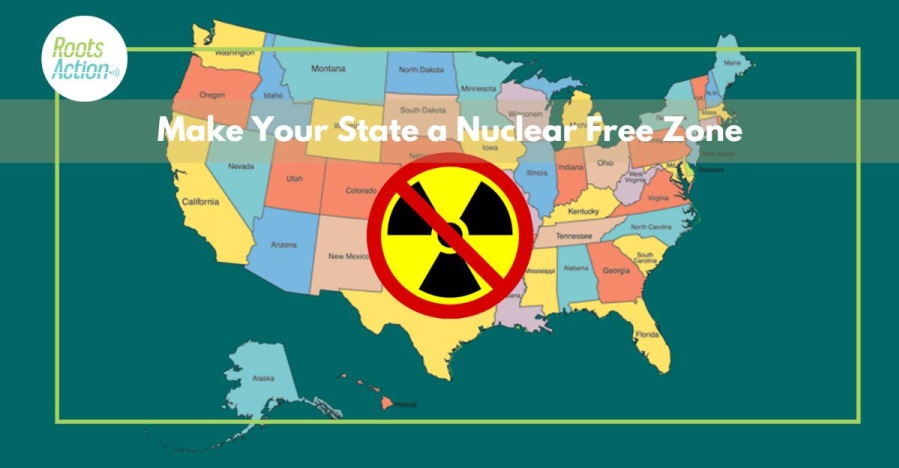
But dozens of U.S. cities and counties are nuclear-free zones.
No nuclear weapons or energy allowed. There is no reason that U.S. states cannot take the same step.Click here to tell your state legislators and governors, that now is a time for independence and wisdom: Tell them to make NY a nuclear-free zone.
The nuclear tests of the Cold War continue to haunt the world.
Tom Hale, IFL Science 1 Feb 25
Every now and again, the Sahara Desert in North Africa will kick up a storm and spread dust clouds across Europe and other parts of the world. Remarkably, the sand still carries traces of radioactive isotopes from the atomic bomb tests of the Cold War.
In a new study, scientists have investigated whether substantial amounts of radioactive isotopes generated by these tests were transported to Western Europe amid a powerful Saharan dust event in March 2022. They discovered that radiation still lingers in the dust that reached Europe – but not from the source they expected.
Between 1960 and 1966, France detonated 17 bombs in the Algerian Sahara, which was under their colonial control until they gained independence in 1962. With its vast, sparsely populated landscape, it was considered an ideal location for nuclear weapons testing.
Despite claims the bombs would be dropped in an unpopulated region, thousands of locals and French soldiers were exposed to radiation. The most severe estimates suggest that up to 60,000 Algerians were impacted by the blasts, while the French Ministry of Defense argues it’s closer to 27,000 people.
Oddly, though, the new study found that the radioactive isotopes present in the Sahara dust that reached Europe in March 2022 originated from nuclear tests conducted by the USA and the USSR, not France.
Although the USA and USSR did not conduct tests in the Sahara, the prolific nature of their nuclear tests during the Cold War left a widespread radioactive imprint detectable even in Saharan dust.
“This is because the power of detonation of French tests is only 0.02 percent of the total power of detonation of USSR and USA between 1950 to 1970. Much of the USSR and USA nuclear weapon tests were realized at the same latitude of South Algeria, and the debris of these tests can reach 8,000 meters [26,000 feet] high and be dispersed by wind very quickly at a global level,” Yangjunjie Xu-Yang, lead study author from the Climate and Environment Sciences Laboratory in France, told IFLScience
The team reached these conclusions by studying 53 samples from the March 2022 Saharan dust event and looking for the presence of specific radioactive isotopes.
The results suggest that the radioactive dust originated in Algeria’s Reggane region, but its plutonium levels didn’t match the low isotopic ratios (below 0.07) from France’s nuclear tests. Instead, with a median ratio of 0.187, the samples aligned with US and Soviet test signatures – a conclusion further supported by cesium isotopic analysis……………………………………………………………………………………………………… The new study is published in the journal Science Advances. https://www.iflscience.com/radioactive-plutonium-in-sahara-dust-came-from-an-unexpected-source-77866
Holloman Drone Training Base, Southern NM The largest drone training base in the U.S., where 700+ drone pilots and operators graduate annually! 16 years ago the American public started to become aware of the secret and very illegal assassin drone program. Soon afterwards the peace community mobilized against it, while the US Air Force top brass were bragging about what a tremendous advancement drones were, enabling our forces to destroy “enemy terrorists” without putting our troops at risk. As drone whistleblower Daniel Hale stated, drones “embolden commanders” making it easier for them to orchestrate more horrendous crimes against humanity.
16 years later Americans are forced to ask ourselves: Who are the real terrorists? Israeli and U.S. drones have been a primary weapon in the 16 month long genocidal seige on Gaza that has nearly completely obliterated Palestinian communities, killing tens of thousands of civilians, including over 700 infants, and leaving the survivors without adequate food, water, shelter or medical care. Homicide, Hospitalcide, Scholasticide, Ecocide, Urbicide, Medicide, Truthicide, Climatocide…the list is endless. This obscene aggression has expanded across borders into the West Bank, Lebanon, Yemen, Syria, Iran and elsewhere. What will we do as Americans to halt this insanity?
The settler-colonial genocidal campaign in Gaza and elsewhere, using AI and remotely controlled drones to dominate the world has destabilized our world, as the first drone whistleblowers warned us 10 years ago. What will we do? “Silence is complicity,” warned the late, great Martin Luther King Jr. Let’s enter the belly of the beast:
Be Fearless Angelic Troublemakers determined to demilitarize our country and our planet together. Mother earth needs us now more than ever before. Join us at Holloman in April for all or part of the week: A week of persistent peaceful action to nonviolently resist, educate and promote GI resistance. Palestine will take front stage: NO WEAPONS or TAX $$ for GENOCIDE!
WE MUST DEMILITARIZE OUR SOCIETY. Time is running out. Join Our Organizing Team…help it grow! Check out our website for more info. Camping and Hotel Options available.
Seeking Alpha, Jan. 27, 2025, By: Carl Surran, SA News Editor
Nuclear plays tied to the AI revolution are among the biggest losers in Monday’s early trading, as investors weighed the implications of Chinese startup DeepSeek’s launch of a free open-source artificial intelligence model to rival ChatGPT, which appears to use lower-cost chips and less data.
Tech stocks are hammered as the news seemingly challenges the widespread bet in markets that AI will drive demand along a supply chain from chipmakers to data centers, which has powered a huge inflow of capital into the equity markets and racked up record highs.
The DeepSeek model has caused a jolt of uncertainty about the growth of AI’s energy consumption, raising sudden doubts about nuclear power’s role as an answer to data centers’ appetite for power.
As a result, data centers rank among the day’s biggest decliners on the S&P 500, with Vistra (NYSE:VST), Constellation Energy (NASDAQ:CEG) and NRG Energy -23.5%, -18% and -12.4% respectively; Talen Energy (TLN) recently traded -21.6%.
The links to infrastructure companies also are clear: Vertiv Holdings (VRT), which says it offers cooling solutions that “solve the complex challenges arising from the AI revolution,” GE Vernova (GEV) says its gas turbines provide “sustainable solutions for uninterrupted data center operations,” and Quanta Services (PWR), infrastructure services provider for the electric power and pipeline industries – their shares are -24.3%, -17.4% and -16.6% respectively.
Trump’s executive order regarding the Inflation Reduction Act of 2022, and similar action against the Infrastructure Investment and Jobs Act (IIJA, or Bipartisan Infrastructure Law) of 2021, could starve the Palisades zombie reactor of massive taxpayer funding requested by Holtec International for its unprecedented restart. Holtec is looking to various troughs of funding from both laws, totaling a shocking $8+ billion (with a B!) in mostly federal, but also State of Michigan, bailouts.
Palisades is located in Covert Township, just south of the City of South Haven, in Van Buren County, s.w. Michigan. It is immediately upon the beach of Lake Michigan, drinking water supply for 16 million people along its shores, including the City of Chicago.
Palisades was permanently shut down by its previous owner, Entergy, on May 20, 2022, supposedly for good. But Palisades took over the site, supposedly to decommission it, only to instead secretively apply to the U.S. Department of Energy and State of Michigan for many billions of dollars in taxpayer funds, to restart the more than half-century old, extremely problem-plagued reactor.
NIRS’s analysis of the IRA revealed that more than $380 billion (with a B!) in nuclear power subsidies had been authorized therein. The analysis also addressed additional billions of dollars in nuclear power subsidies contained in the IIJA.
Another $7.4 billion in federal funds, in the form of loan guarantees, for so-called “Small Modular Reactor” (SMR) design certification, construction, and operation, would come from the Energy Policy Act of 2005, and the follow on December 23, 2007 appropriations. Holtec has targeted Palisades for two SMR-300s (300 Megawatts-electric each), which would nearly double the tiny 432-acre site’s nuclear Mega-wattage. Holtec has also targeted Palisades’ sibling nuclear site, the closed and decommissioned Big Rock Point hundreds of miles north, in Hayes Township, between Charlevoix and Petoskey, likewise on the Lake Michigan shore. Whether Trump will order a freeze on these funds as well, remains to be seen.
Self-inflicted steam tube degradation, due to two years of neglect by the inexperienced and incompetent company, also puts in doubt Holtec’s late 2025 restart plans at Palisades.
The article quotes Beyond Nuclear’s radioactive waste specialist, Kevin Kamps:
Kevin Kamps, an activist with Maryland-based Beyond Nuclear who grew up near the plant, said that safety assurances are “very dubious, as [the] NRC is completely captured by the industry it is supposed to regulate.”
To learn more about Beyond Nuclear’s and our allies’ resistance to the Palisades zombification, see our one-stop-shop for related website posts, dating back to 2002:
Innovative computer modelling with AI doesn’t need the most expensive and dangerous energy from nukes
The much touted second-coming of a “nuclear renaissance” in the United States fueled by the projected soaring global demand to power artificial intelligence (AI) just got a major setback with the surprise January 20, 2025 overnight emergence of an apparently more competitive and efficient Chinese AI startup company, DeepSeek. The US stock market plummeted for the S&P 500 nuclear power companies that have been financially scaling up as the most reliable 24/7 electricity supply for a massive expansion of energy intensive data centers. China’s surprise rollout of DeepSeek and sudden rise to international acclaim at the start of 2025 has seriously disrupted the US claim to global dominance in cloud computing, networking and data storage services powered by extravagantly expensive atomic energy.
US-based AI technology firms, including Nvidia, which lost nearly $600 billion in the January 27th record breaking single day’s largest stock selloff, have led the way in rebranding nuclear power as the preferred choice as the 24/7 power supplier for a massive AI surge. The sudden emergence of DeepSeek, only two months in the making, is being compared to a “sputnik moment” for the US AI market, referencing the former Soviet Union’s launch of the first artificial satellite into orbit in 1959 that triggered a US technological panic and launched America into a “space race” with Russia. DeepSeek has just as suddenly now laid claim to competitively take the technological lead to advance mere computer modelling to an innovative era of computer reasoning.
Starting in 2023 and swelling in 2024, there was sort of a “gold rush” of fast money that sprang up to finance AI deals with new reactor licensing and construction of still unproven Small Modular Reactor (SMR) designs as well as repowering uneconomical, permanently closed reactors like Three Mile Island Unit 1. The Big Tech corporate promotion was primarily driven by the leading hyperscalers including Google, Amazon, MicroSoft, Meta Platforms (aka Facebook) and Oracle. A series of deals have since been cut with the established S&P 500 nuclear corporations led by Constellation Energy, Vistra, and the usual suspects of nuclear start-ups including Oklo Power, NuScale, Talen Energy Corp and TerraPower.
However, like a bolt from the blue, the US nuclear industry has been rattled on the stock market. The S&P 500 nuclear power giants Constellation Energy (CEG) and Vistra (VST) are under scrutiny as international energy analysts reevaluate the energy needs of AI data centers along with that same host of nuclear power start-ups.
NNSA has yet to satisfy Government Accounting Office best practice guidelines for the SRS pit project.
LANL itself has experienced numerous and serious safety accidents, including a plutonium fire, flooding, glove box contamination and a plutonium “criticality” accident, in recent years.
Why does the production of new plutonium pits take priority over cleaning up the hazardous legacy of previous pit production?
Last week U.S. District Judge Mary Lewis Geiger, South Carolina, faulted the Department of Energy and the National Nuclear Security Agency for ignoring the National Environmental Protection Act and rushing plans to fabricate plutonium pit bombs at Savannah River Site, near Aiken, South Carolina.
Newly designed plutonium pits will serve as “triggers” for the next generation of nuclear warheads mounted atop Sentinel, the next generation of intercontinental ballistic missile, and for new submarine-launched nuclear weapons. Combined, these projects comprise major components in the trillion-dollar “modernization” of the U.S. strategic deterrence force.
Plaintiffs including Savannah River Site Watch, South Carolina Environmental Law Project Gullah/Geechee Sea Island Coalition, Nuclear Watch New Mexico and Tri-Valley CAREs forced NNSA to halt construction on many phases of its plutonium pit facility near Aiken, SC, to hold public scoping meetings, solicit public comments, and produce a Programmatic Environmental Impact Statement within thirty months.
Plaintiffs successfully argued that the plutonium pit modernization project was complex, involving diverse entities, was spread over wide geographical regions and therefore, by definition, required a “programmatic environmental impact statement, PEIS.
The proposed plutonium pit facility at Savannah River Site will reconstruct a massive 500-room partially completely abandoned building designed for the Mixed Oxide Plant. The spectacularly failed MOX plant would have processed old plutonium pits from de-commissioned US nuclear weapons per a nuclear weapons agreement with the Russians in 2000. Poor management and engineering revisions multiplied costs exceeding $7 billion when DOE finally terminated the MOX project in 2019. DOE recently paid the State of South Carolina an extra $600 million fine for failure to remove 10 tons of plutonium delivered to the MOX plant and stored at SRS. Ironically SRS is importing a different 10 tons of plutonium pits from the PANTEX pit storage site in Texas to manufacture new pits.
NNSA’s plan for plutonium pit production at Savannah River Site involves complex coordination between Los Alamos, the Waste Isolation Pilot Plant in Carlsbad NM, the Lawrence Livermore National Laboratory in CA and the Kansas City National Security Campus, and therefor requires a NEPA “programmatic environmental impact statement”. NNSA refused repeated calls to perform the PEIS, which resulted in the successful lawsuit agreed last week.
NNSA has yet to satisfy Government Accounting Office best practice guidelines for the SRS pit project. GAO’s repeated calls for NNSA to create quality Integrated Master Schedules and Life Cycle Cost Estimates for its plutonium pit modernization program remain unfulfilled. These plans and guidelines establish best practices for building an efficient cost-effective project, something MOX consistently ignored, leading to its disastrous failure. Congress subsequently ordered NNSA meet these GAO parameters by July 2025.
Congress had mandated in 2019 that Los Alamos National Laboratory in New Mexico manufacture 80 plutonium pits per year by 2030. Because LANL is a research facility, it has not produced any plutonium pits since 2011, and never at scale. It was unprepared to fulfill this Congressional mandate, authored by Senator John McCain. In response, NNSA then divided the plutonium pit project in two: Savannah River Site would produce 50 pits per year by 2030, and LANL 30 pits. SRS has never manufactured plutonium pits, though it did produce 10 tons of plutonium for pit fabrication at Rocky Flats, CO beginning in 1957. Thirty million gallons of highly radioactive wastes from that project, more than 200 million curies* of radiation, remain stored on- site at SRS, making it one of the most radioactive Superfund sites in the U.S.
Rocky Flats had produced one to two thousand plutonium pits per year for decades until it was closed in 1989. After whistleblower leaks, (see Jon Lipsky, James Stone) the FBI and EPA raided Rocky Flats discovering gross fraud and egregious violations of environmental regulations by contractor, Rockwell International. Rocky Flats was closed and will remain a superfund site into the far distant future.
Parts of Los Alamos National Lab, wedged on a tabletop mesa, comprises a superfund site with residual plutonium still found around the site and in surrounding canyons from operations and waste dumping begun in the 1940’s “Oppenheimer years”.DOE recently signed a consent decree with the State of New Mexico to assume greater responsibility for the clean-up of waste deposit wells and trenches that threaten nearby towns like White Rock, the San Ildefonso Pueblo and the Rio Grande River with radiological contamination. DOE paid New Mexico a $420,000 fine for mishandling hazardous wastes is 2024.
LANL itself has experienced numerous and serious safety accidents, including a plutonium fire, flooding, glove box contamination and a plutonium “criticality” accident, in recent years. The most recent 2023 safety report for LANL, operated by Triad LLC, showed improvement in its safety operations, though in that same year LANL was fined $420,000 by New Mexico for improper handling of hazardous materials.
Plutonium, Pu, is a man-made metallic element. It is highly toxic, highly radioactive, pyrophoric, (spontaneously ignites on contact with air) and fissionable. It is extremely challenging to produce, purify, mill, melt, mold, weld, control and store. All these processes have taken place at sites across the U.S. since the 1940’s and are now catalogued by DOE as “legacy hazardous waste sites”.
Because plutonium ignites on contact with air, it must be handled in “glove boxes”, self-contained hermetically sealed boxed filled with inert gases. Impervious rubber sleeves extend into the box, and workers slip their arms into these sleeves, then manipulate the plutonium through different phases of pit production. Any nicks or cracks in the rubber gloves can and have resulted in plutonium leaks, and serious illnesses.
Glove boxes and gloves for the plutonium pit project, in example, are already is short supply, demonstrating how integral and integrated every aspect of the plutonium pits program is, and how poor planning could disrupt the program; the basic tenant of the lawsuit against NNSA.
Training a skilled glove box worker at LANL can take four years. A shortage of skilled workers at LANL poses a regular challenge, one that will intensify as LANL workers will also train unskilled SRS workers. A shortage of workers at WIPP in Carlsbad NM has been a chronic problem despite significant wage increases from DOE.
Historically, sites involved with the production, refining, milling or fabrication of plutonium or plutonium pits for nuclear weapons have left a voluminous legacy of radionuclide pollution. Radioactive wastes generated in weapons production beginning with the 1940’s Manhattan Project, by statute, are destined for the Waste Isolation Pilot Plant, WIPP, in Carlsbad, New Mexico. Because plutonium has a half life of 24,000 years and remains lethal for much longer, plutonium waste products trucked over millions of highway miles to WIPP are stored in vaults excavated into salt domes 2000 feet underground. While WIPP is the sole repository for defense department transuranic wastes, the Government Accounting Office cautioned that WIPP may not have the capacity to accept all the plutonium pit wastes generated at LALN and SRS. Timely removal of plutonium waste from SRS and LANL is crucial for uninterrupted pit production.
A fire in WIPP’s salt dome closed the facility for 3 years in 2014. A fire at LANL closed its operation for 3 years in 2013.
Both SRS and LANL will recycle surplus plutonium pits from the strategic reserve at PANTEX near Amarillo, TX. Currently 4000 reserve pits and 10,000 surplus pits waiting disposal are stored at PANTEX. Re-engineered pits from SRS and LANL will be returned to PANTEX for final assembly into W87-1 and W 88 nuclear warheads.
The rate of deterioration of plutonium pits, 30 or more years old, has concerned and motivated lawmakers to legislate a complete replacement of all 3,600 deployed and reserve nuclear warheads. Independent scientific groups like JASON and the Livermore National Lab have estimated that plutonium pits maintain their viability for 100 or even 150 years. Hardware within the nuclear warhead corrodes much more quickly than the pits themselves, focusing doubt on the race to replace the pits themselves.
The programmatic environmental statement ordered by federal Judge Geiger may resolve many questions posed by the rush to produce new plutonium pits. The pits produced at SRS and LANL will trigger new W87-1 nuclear warheads. What need is there for a new warhead when the old W87-0 has the same safety features? Why are SRS and LANL adopting an aggressive production schedule when the new Sentinel ICBM deliver systems is way over budget and at least a decade away from deployment? Why does the production of new plutonium pits take priority over cleaning up the hazardous legacy of previous pit production? Has any plutonium production site ever not become a hazardous waste site? Will NNSA slow pit production to engineer safety improvements instead of placing workers in risky dangerous situations? Do we really want to spend a trillion dollars and start a new nuclear arms race?
Note.
* A curie, Ci, is a measure of radiation per second, named after Marie and Pierre Curie. Exposure to even a few curies can be fatal.
Yet, in recent months highly placed government officials have expressed their concerns over the possibility that drones flying near or over conventional and nuclear electric generating facilities could cause damage to the facilities, leading to power blackouts or worse.
drones operated with malicious intent present two distinct threats to critical infrastructure sites such as power-generating facilities.
drones can be equipped with weapons or explosives to devastating effect.
Are nuclear power plants, other electric facilities at risk from drones?
By DRONELIFE Features Editor Jim Magill
This is the third in a series of articles, examining the problems posed to critical infrastructure sites and other significant potential targets of drone incursions by hostile actors. Part one described current federal laws pertaining to the use of counter-drone technology. Part two looked at the threats from UAVs faced by jails and prisons.
This article will explore whether drones operated with malicious intent present a danger to nuclear power plants and other facets of the U.S. electric grid.
Counter-drone series – Part 3
Earlier this month the Nuclear Regulatory Commission put out a statement in an effort to reassure the public that nuclear power plants are safe from potential attacks from the sky in the form of drones flown by bad actors.
“While nuclear power plant security forces do not have the authority to interdict or shoot down aircraft, including drones, flying over their facilities, commercial nuclear power plants are inherently secure and robust, hardened structures,” the statement reads.
They are built to withstand hurricanes, tornadoes and earthquakes. Nuclear plants maintain high levels of security measures, which ensure they can defend against threats,” up to and including threats to the plant’s basic structure.
The statement notes that last year, the NRC updated its regulations to require its nuclear power plant licensees, which are largely private companies, to report sightings of drones over their facilities. These reports are sent to the NRC, the FAA, the FBI and local law enforcemen
Yet, in recent months highly placed government officials have expressed their concerns over the possibility that drones flying near or over conventional and nuclear electric generating facilities could cause damage to the facilities, leading to power blackouts or worse. In early January, Louisiana Gov. Jeff Landry brought the question up to then President-elect Donald Trump at a dinner meeting of Republican governors at Trump’s Mar-a-Lago resort in Palm Beach. Landry reported that suspicious drone activity had been spotted over or near Entergy’s River Bend nuclear power plant in West Feliciana Parish.
Scott Parker, chief of unmanned aircraft systems at the U.S. Department of Homeland Security’s Cybersecurity and Infrastructure Security Agency (CISA), said drones operated with malicious intent present two distinct threats to critical infrastructure sites such as power-generating facilities.
A drone “can be used to either compromise the site’s secret protocols, or it can also be used to capture information that that organization may want to protect, like intellectual property,” Parker said. “There’s also the added capability of cyber-attack tools.” Drones can easily be equipped with a number of capabilities that could identify and exploit wireless communications to gain access into sensitive systems or networks.
Earlier this month the Nuclear Regulatory Commission put out a statement in an effort to reassure the public that nuclear power plants are safe from potential attacks from the sky in the form of drones flown by bad actors.
“While nuclear power plant security forces do not have the authority to interdict or shoot down aircraft, including drones, flying over their facilities, commercial nuclear power plants are inherently secure and robust, hardened structures,” the statement reads.
“They are built to withstand hurricanes, tornadoes and earthquakes. Nuclear plants maintain high levels of security measures, which ensure they can defend against threats,” up to and including threats to the plant’s basic structure.
The statement notes that last year, the NRC updated its regulations to require its nuclear power plant licensees, which are largely private companies, to report sightings of drones over their facilities. These reports are sent to the NRC, the FAA, the FBI and local law enforcement.
“Additionally, in late 2019, the nuclear industry began coordinating with the Department of Energy (DOE) and the FAA to restrict drone overflights over certain nuclear power plants,” the statement says.
Yet, in recent months highly placed government officials have expressed their concerns over the possibility that drones flying near or over conventional and nuclear electric generating facilities could cause damage to the facilities, leading to power blackouts or worse. In early January, Louisiana Gov. Jeff Landry brought the question up to then President-elect Donald Trump at a dinner meeting of Republican governors at Trump’s Mar-a-Lago resort in Palm Beach. Landry reported that suspicious drone activity had been spotted over or near Entergy’s River Bend nuclear power plant in West Feliciana Parish.
Scott Parker, chief of unmanned aircraft systems at the U.S. Department of Homeland Security’s Cybersecurity and Infrastructure Security Agency (CISA), said drones operated with malicious intent present two distinct threats to critical infrastructure sites such as power-generating facilities.
A drone “can be used to either compromise the site’s secret protocols, or it can also be used to capture information that that organization may want to protect, like intellectual property,” Parker said. “There’s also the added capability of cyber-attack tools.” Drones can easily be equipped with a number of capabilities that could identify and exploit wireless communications to gain access into sensitive systems or networks.
In addition, as demonstrated in overseas conflicts in recent months, drones can be equipped with weapons or explosives to devastating effect. “It could also be used to some degree in order to attack critical infrastructure, especially when you think about a close-in blast capability of a drone targeting a specific asset,” Parker said……………
Are Drones a Threat to Nuclear Power Plants? Examining Risks to the U.S. Electric Grid
Are nuclear power plants, other electric facilities at risk from drones?
By DRONELIFE Features Editor Jim Magill
This is the third in a series of articles, examining the problems posed to critical infrastructure sites and other significant potential targets of drone incursions by hostile actors. Part one described current federal laws pertaining to the use of counter-drone technology. Part two looked at the threats from UAVs faced by jails and prisons.
This article will explore whether drones operated with malicious intent present a danger to nuclear power plants and other facets of the U.S. electric grid.
Counter-drone series – Part 3
Earlier this month the Nuclear Regulatory Commission put out a statement in an effort to reassure the public that nuclear power plants are safe from potential attacks from the sky in the form of drones flown by bad actors.
“While nuclear power plant security forces do not have the authority to interdict or shoot down aircraft, including drones, flying over their facilities, commercial nuclear power plants are inherently secure and robust, hardened structures,” the statement reads.
“They are built to withstand hurricanes, tornadoes and earthquakes. Nuclear plants maintain high levels of security measures, which ensure they can defend against threats,” up to and including threats to the plant’s basic structure.
The statement notes that last year, the NRC updated its regulations to require its nuclear power plant licensees, which are largely private companies, to report sightings of drones over their facilities. These reports are sent to the NRC, the FAA, the FBI and local law enforcement.
“Additionally, in late 2019, the nuclear industry began coordinating with the Department of Energy (DOE) and the FAA to restrict drone overflights over certain nuclear power plants,” the statement says.
Yet, in recent months highly placed government officials have expressed their concerns over the possibility that drones flying near or over conventional and nuclear electric generating facilities could cause damage to the facilities, leading to power blackouts or worse. In early January, Louisiana Gov. Jeff Landry brought the question up to then President-elect Donald Trump at a dinner meeting of Republican governors at Trump’s Mar-a-Lago resort in Palm Beach. Landry reported that suspicious drone activity had been spotted over or near Entergy’s River Bend nuclear power plant in West Feliciana Parish.
Scott Parker, chief of unmanned aircraft systems at the U.S. Department of Homeland Security’s Cybersecurity and Infrastructure Security Agency (CISA), said drones operated with malicious intent present two distinct threats to critical infrastructure sites such as power-generating facilities.
A drone “can be used to either compromise the site’s secret protocols, or it can also be used to capture information that that organization may want to protect, like intellectual property,” Parker said. “There’s also the added capability of cyber-attack tools.” Drones can easily be equipped with a number of capabilities that could identify and exploit wireless communications to gain access into sensitive systems or networks.
In addition, as demonstrated in overseas conflicts in recent months, drones can be equipped with weapons or explosives to devastating effect. “It could also be used to some degree in order to attack critical infrastructure, especially when you think about a close-in blast capability of a drone targeting a specific asset,” Parker said.
The Nuclear Energy Institute (NEI), the trade association for nuclear power industry, downplays the potential hazards associated with UAV flights over its facilities. ……………………………
Evie Lake, BBC News, North East and Cumbria, 30th Jan 2025
Three areas have been shortlisted to host a nuclear waste disposal site.
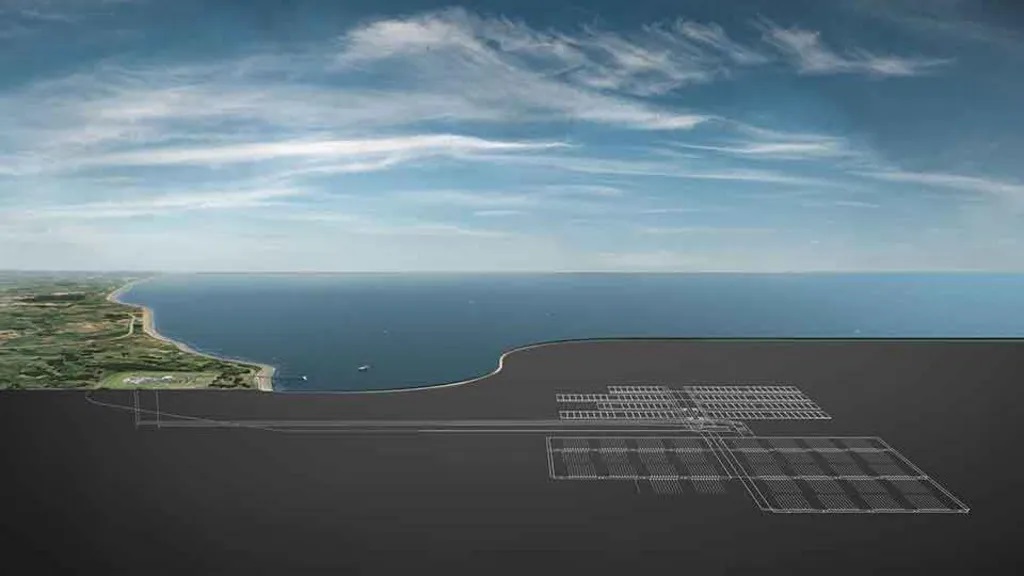
Communities in Mid Copeland and South Copeland in Cumbria and Lincolnshire have become “Areas of Focus” for Nuclear Waste Services (NWS) to help consider their potential to host a Geological Disposal Facility (GDF).
NWS said construction would only start when a suitable site was identified and a potential community had confirmed its “willingness” to host the facility.
Community events will be held to talk about “what this means for each area”, it added.
The locations have been identified using geological data, areas of environmental protection and consideration of built-up areas.
Each needed the right sub-surface geological environment deep underground, a suitable surface location and the ability to connect the two with accessways.
‘Willing community’
Two surface Areas of Focus have been identified in Mid Copeland, east of Sellafield and east of Seascale.
In South Copeland, land west of Haverigg has been chosen.
The sub-surface level in the sea off the coast of Cumbria would be the same for both.
In Lincolnshire, land between Gayton Le Marsh and Great Carlton, near Louth, is being considered.
This could see existing proposals to bury the nuclear waste at the old gas terminal in Theddlethorpe scrapped.
The United States is estimated to have spent more than $400 billion on the kinds of antimissile goals that the president now says will provide “for the common defense.”
Star Wars is back, with an executive order from President Trump that the White House said “directs the building of the Iron Dome missile defense shield for America.”
The order, issued on Monday night, didn’t quite do that. It was more a vaguely worded set of instructions to accelerate current programs or explore new approaches to defending the continental United States than a blueprint for arming the heavens with thousands of antimissile weapons, sensors and tracking devices.
But two blocks away, on the same evening, the Office of Management and Budget issued a 56-page spreadsheet that detailed the suspension of funding for thousands of programs. They included most of the major U.S. efforts to reduce the amount of nuclear fuel that terrorists might seize, to guard against biological weapon attacks and to manage initiatives around the globe to curb the spread of nuclear arms.
The two announcements seemed to encapsulate the administration’s conflicting instincts in its opening weeks. Mr. Trump wants to build big and take the Space Force he created to new heights, even at the risk of new arms races. That effort has been underway since Ronald Reagan’s day, with only mixed results.
But in its drive to shut down programs it believes could be creations of the so-called deep state, the administration wants to cut off funding for many programs that seek to reduce the chances of an attack on the United States — an attack that could very well come in forms other than a missile launched from North Korea, China or Russia.
A judge paused Mr. Trump’s spending freeze on Tuesday, but the president’s intentions are clear.
Though Mr. Trump calls his plan the Iron Dome, it has little if any resemblance to the Israeli system of the same name that has succeeded in destroying small missiles that move at a snail’s pace compared with the blinding speeds of intercontinental warheads………………………………………………………..
Missile defense has long been a favorite topic for Mr. Trump, who has envisioned the project as the next step for the Space Force, which he created in his first term.
But it could also trigger a new arms race, some experts fear. And unaddressed in Mr. Trump’s new initiative is the threat of nuclear terrorism and blackmail with an atomic bomb, which might be smuggled into the United States on a truck or a boat. Many experts see the terrorism threat as far bigger than an enemy firing a single missile or a swarm.
In 2001, after Sept. 11 attacks, the federal government scrambled to get wide-ranging advice on how outwit terrorists and better protect Americans from the threats of germ, computer, chemical and nuclear attacks.
“The combination of simultaneously deploying a missile defense system of questionable effectiveness against any real threat” while “suspending operative programs against nuclear or bioterrorists, sophisticated cyberattackers or others” is a “terrible trade-off,” said Ernest Moniz, the energy secretary under President Barack Obama who now heads the Nuclear Threat Initiative.
“The Iron Dome reference conjures up the success of the Israeli missile defense, but that’s misleading given the relatively short-range missiles that Israel defends against and the small territory it needs to defend,” said Mr. Moniz, a former professor at the Massachusetts Institute of Technology with long experience in nuclear weapons ………………
Critics of the executive order say it is more a list than a program, and includes systems that have never panned out. In an interview, Theodore A. Postol, an emeritus professor of science and national security at M.I.T., called Mr. Trump’s missile plan “a compendium of flawed weapons systems that have been shown to be unworkable.”…………………………………………