Study for Miliband finds Scotland suitable for new nuclear

Scotland could be “ripe” for new nuclear power, according to a
“discrete study” sitting on Ed Miliband’s desk. Simon Bowen, chair of
GB Energy Nuclear, told MPs that the government-owned company has completed
research for the Energy Secretary on “the suitability of Scotland for new
nuclear development” but that the report has yet to be published.
Bowen said whilst publication of the report is a matter for Ministers it
doesn’t take an awful lot to work out what it will say.
Torness Hunterston and Dounreay are natural sites for development. SNP candidate
for Banffshire and Buchan Coast, Karen Adam, said: “GB Energy has utterly
failed to create the jobs promised by the Labour Party and now we know it
is being used as a vehicle to plot unwanted nuclear developments in
Scotland that would undermine our energy sector.
“Another energy
superpower Norway has just ruled out nuclear power so there are serious
questions to answer as to what on earth is going on here — Anas Sarwar
must come clean on these underhand reports and explain why he supports
these extortionate, toxic, nuclear plants being imposed upon Scotland
Herald 24th April 2026, https://www.heraldscotland.com/news/26048810.study-miliband-finds-scotland-suitable-new-nuclear/
Three dead as California faces invasion of killer snakes.
After an unusually warm and wet start to the year, rattlesnake season has started
early in parts of the Golden State,
Times 22nd April 2026, https://www.thetimes.com/us/american-politics/article/california-invasion-venomous-snakes-three-dead-k78jxt3hv
Nuclear War at Ukraine-Russia border could trigger years of global climate disruption and radioactive fallout, research suggests.
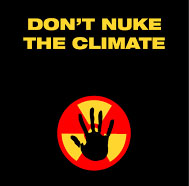
Duncan Sandes, 23 April 26, https://news.exeter.ac.uk/faculty-of-environment-science-and-economy/nuclear-war-at-ukraine-russia-border-could-trigger-years-of-global-climate-disruption-and-radioactive-fallout-research-suggests/
Geopolitical tensions in Eastern Europe underscore the urgency of addressing the climate and radiological consequences of a regional nuclear conflict.
Even a small-scale nuclear conflict at the Ukraine–Russia border could cause years of severe global climate disruption and radioactive fallout across much of the world, new research suggests.
In the study, published in npj Clean Air, researchers at the University of Exeter used the UK Earth System Model to simulate a hypothetical regional nuclear conflict at the Ukraine-Russia border. The results shows that the soot emitted after nuclear detonation would rapidly spread through the atmosphere, block sunlight and disrupt climate across the Northern Hemisphere.
In the first year after the conflict, the Northern Hemisphere cools by about 1°C on average, with much larger regional drops of around 5°C in Russia and 4°C in the United States. Surface sunlight declines sharply, and precipitation falls substantially across key mid-latitude agricultural regions.
The researchers also found that the climate effects would not be short-lived, lasting for approximately 6 years. Stratospheric warming caused by the soot alters major atmospheric circulation patterns, including the jet streams and the Intertropical Convergence Zone.
Alongside the climate impacts, the study examined the long-term dispersion of radioactive material attached to the black carbon particles. The results suggest that long-lived radionuclides could be transported globally, with around 40% eventually depositing in the Southern Hemisphere. This means the consequences of a regional nuclear conflict would not remain confined to the war zone but would instead become a global humanitarian and environmental issue.
Lead author Dr Ananth Ranjithkumar, Post-Doctoral Research Fellow at the University of Exeter, said: “Even a small-scale regional nuclear conflict would not remain a regional catastrophe for long. Our simulations show that its effects could reverberate across the planet for years, disrupting climate systems and spreading radioactive fallout far beyond the detonation zone, turning a regional war into a global crisis.”
Co-Author Professor Jim Haywood, also of the University of Exeter added: “This study confirms the global impact of regional nuclear conflicts upon climate, and emphasises that the New Strategic Arms Reduction Treaty that ended February 5, 2026 urgently needs to be extended.”
Co-Author Professor Nathan Mayne, also from the University of Exeter said “This is an excellent example of how our studies of other planets can contribute to understanding Earth’s climate.
“From planet wide dust storms on Mars, to kilometre per second winds in the atmospheres of extremely hot gas giant planets, our adaptations lead to improvements in how we capture climate and weather phenomena for Earth itself both in `normal’ and, in this case, extreme situations.”
The study, Nuclear Conflict in Eastern Europe: Climate disruption and Radiological fallout, is available to read here .
Defiling Statues of Jesus: Israel’s Counterfeit Outrage at Cultural Vandalism

24 April 2026 Dr Binoy Kampmark, https://theaimn.net/defiling-statues-of-jesus-israels-counterfeit-outrage-at-cultural-vandalism/
They have kept their strategy of cultural and institutional vandalism generously broad in recent campaigns against their adversaries. It therefore came as something of a surprise that much febrile fuss was made about this month’s antics of an IDF soldier photographed attacking a statue of Jesus in southern Lebanon on the edge of Debel with a sledgehammer. Instead of its usual qualifications, haughty denials and coarse justifications, the Israel military accepted the veracity of the image and viewed the act “with great severity and emphasises that the soldier’s conduct is wholly inconsistent with the values expected of its troops.”
The act even exercised Israeli Prime Minister Benjamin Netanyahu. He felt wounded at the deviancy of it all, claiming that “Israel cherishes and upholds the Jewish values of tolerance and mutual respect between Jews and worshippers of all faiths.” Along with “the overwhelming majority of Israelis, I was stunned and saddened to learn that an IDF soldier damaged a Catholic religious icon in southern Lebanon.” Such conduct was condemned “in the strongest terms” and military authorities had commenced “a criminal probe of the matter,” with the intention of taking “appropriately harsh disciplinary action against the offender.”
The statement then veers sharply, if revealingly: this act of vandalism had to be condemned since an Israeli soldier had attacked a Christian relic. The same could hardly be said about conduct against the artefacts or symbols sacred to the followers of Islam, though the Israeli PM was careful not to be so explicit. “While Christians are being slaughtered in Syria and Lebanon by Muslims, the Christian population in Israel thrives unlike elsewhere in the Middle East.” Israel was the only state in the region where the Christian population was not only thriving with a rising living standard. Feeling obligated to claim some form of ecumenical tolerance, Netanyahu then recapitulated the strained notion that Israel was unique in permitting “freedom of worship for all.”
Israeli Foreign Minister Gideon Sa’ar also blustered on the social media platforms to express stern disapproval. “The damaging of a Christian religious symbol by an IDF soldier in southern Lebanon is grave and disgraceful.” He commended the IDF on its statement condemning the incident and seeking to take “the necessary strict measures” against the alleged perpetrator. “This shameful action is completely contrary to our values. Israel is a country that respects the different religions and their sacred symbols, and upholds tolerance and respect among faiths.”
Such views also received the firm approbation of one of Washington’s most ardent Christian Zionists, US ambassador to Israel, Mike Huckabee. The same figure has been an outed enthusiast of the Greater Israel idea, one that does not necessarily bode well for the spirit of tolerance. For the former Governor of Arkansas, it was entirely appropriate that “a strong stand” be taken in condemning “this outrageous act by an IDF soldier.” Such conduct did not “properly represent the IDF, Israel, or the Israeli [government].”
On April 22, the IDF revealed that an inquiry had “determined [how unusually swift that was] that the soldiers’ conduct completely deviated from IDF orders and values,” expressing “deep regret over the incident.” It also announced that the statue had been replaced “in full coordination with the local community.” Both the soldier responsible for smashing the statue of Jesus, and his colluding photographer, were dismissed from combat duty and sentenced to 30 days in military prison by order of Brig. Gen. Sagiv Dahan of the 162nd Division. Six other soldiers present at the scene “have been summoned for clarification discussions that will be held later, after which further command-level measures will be determined.”
Given the biblical destruction meted out by the IDF on sites in Gaza and, more recently, Lebanon, the jailing of two offenders for cultural vandalism was meretricious, an act of kitschy public relations and counterfeit moral outrage. These figures have every reason to be aggrieved by their selective treatment, given the latitude afforded their peers in carrying out tasks of latitudinous destruction, notably after the Hamas attacks of October 7, 2023. In January 2024, the BBC claimed that among 117 religious sites in Gaza reportedly damaged or destroyed between October 7, 2023 and December 31, 2023, 74 cases could be verified. Mosques featured prominently, and two Churches. The ancient religious sanctuary of St Porphyrius, bearing the name of the bishop whose tomb lies beneath the church, was bombed on October 19 that year, leaving 18 dead.
Israeli soldiers, in gloating about their gory exploits, have been indiscrete in posting images featuring their feats of annihilation. On July 31, 2024, soldiers from the Givati brigade uploaded a video to YouTube entitled, in Hebrew, “Israeli army forces detonate a mosque with 11 tons of explosives.” The videographer lets the audience know that the detonation took place a day prior in Khuza’a, east of Khan Younis to the southern part of the Gaza Strip. One voice exults: “Long live the State of Israel!”
In June 2025, the UN International Commission of Inquiry on the Occupied Palestinian Territory, including East Jerusalem and Israel, published a report finding that “Israeli security forces knew or should have known the locations and significance of prominent cultural sites in Gaza and should have planned their military operations with the aim of avoiding harm.” There had been a conspicuous failure of care in avoiding damage to cultural sites and their contents. In a majority of cases, the Commission concluded that Israeli forces, in using demolishing explosives and bulldozers, had committed war crimes pertaining to the unjustified destruction of “civilian objects” and property, including “intentionally directing attacks against buildings dedicated to religion and historic monuments.”
Among the religious sites damaged, three also provided sanctuary for prayer and refuge for internally displaced individuals: the Church of Porphyrius, the Ihya al-Sunna Mosque and the Saad al-Ghafari Mosque. “Together these attacks resulted in more than 200 fatalities, including many women and children.” No jail sentences have been reported for the perpetrators of these offences.
The smashed statue of Jesus has received a worthy replacement, though not in the form of the IDF offering, which proved smaller and less proximate in appearance to the original. A donation from the Italian contingent from the United Nations Interim Force in Lebanon (UNIFIL) was deemed superior. As reported in the Times of Israel, “Lebanese media published photos showing that the statue donated by UN peacekeepers more closely resembles the original statue.” On this occasion, the UN proved most constructive.
Iran Survives Terrorist War and Emerges a Major Power Broker
From reports and observations we saw that many people, regardless of their political views, and including many who had returned home from other countries, were keen to defend their country from this foreign aggression. Not surprising, really.
Tim Anderson, Black Agenda Report, 22 Apr 2026 GOOD PHOTOS
Tim Anderson tours Iran during the US-Israeli war, showing different scenes from the terrorist targeting of civilians. He contends Iran has emerged with greater regional leverage, especially through its control over the Strait of Hormuz.
Originally published in Al Mayadeen English.
The unprovoked war against Iran by the USA and “Israel” has failed in spectacular fashion, with the Israeli colony in tatters, Washington looking for a way out while Iran holds the upper hand in peace “negotiations” proposed by Pakistan. Further, Tehran’s newly asserted control over shipping traffic passing into and out of the Persian Gulf (which neither the USA nor anyone else can shake) has given it tremendous new economic leverage.
Furthermore, the Iranian population has held together strongly under an extensive series of strikes on mainly civilian targets, which began with the assassination of the former Leader Sayyed Ali Khamenei and the murder of 168 people, mainly schoolgirls, at the primary school in Minab, in southern Iran. This coherence underwrites the stability and future of the Islamic Republic.
It is a strange war, as I was able to observe in its third and fourth weeks, with everyday life going on in most major cities, while terrorist atrocities take place in the background. As a bakery owner at Niloufar Square in Tehran told me, this is not a conventional war, like the US-backed Iran-Iraq war of the 1980s, where militaries face each other across a frontline.
The bakery owner’s building had been demolished by an enemy missile which targeted the police station next door. The USraeli attack on the police station at Niloufar Square in Tehran also killed and wounded dozens at an adjacent café (see photo on original) and in surrounding residential apartments.
I was one of a group of four observers (a Turkish journalist, a Greek Lawyer and journalist and a North American videographer) hosted by the Iranian media, between 19 and 31 March. Our tour began in the northern city of Tabriz and wound its way down through Tehran, Isfahan, Shiraz, Bushehr, Bandar Abbas and Minab, the site of the schoolgirl atrocity. Mostly, we were observing the aftermath of USraeli attacks and the patriotic mobilisation of people virtually every evening in the major cities.
In every Iranian city we visited, tens of thousands poured out each evening in support of their country. That included a huge gathering for Eid prayers after Ramadan, at the Imam Khomeini Mosalla Mosque of Tehran (see photos), the first such gathering in 35 years that had not been addressed by the murdered Iranian leader Sayyed Ali Khamenei
From reports and observations we saw that many people, regardless of their political views, and including many who had returned home from other countries, were keen to defend their country from this foreign aggression. Not surprising, really.
It seems that Trump’s attack on Iran was encouraged by the Israeli propaganda against the Islamic Republic: the repeated claims that “the regime” was highly unpopular and isolated, often making use of heavily biased surveys. Israeli propaganda suggested that the Iranian people would rise up again this “regime” if it were decapitated. That, of course, did not happen, even after many leaders were assassinated.
This is the problem with “believing one’s own nonsense”, most of it generated by Israeli ‘Hasbara’ campaigns, which suggested that the Islamic Republic was hated and insubstantial.
That campaign made use of a wave of violence instigated by Mossad and the CIA in January 2026, as Israeli media and former CIA boss Mike Pompeo admitted, which infiltrated economic protests (after a currency collapse) and killed over 3,000 people (officially 3,117), including hundreds of police and volunteers (Basij).
In Iran, our group saw people of all sorts, but mainly women, coming out to defend their nation and their military. The aim of the Trump-Israeli war was never clearly spelt out, though it is plain that the Israelis wanted to destroy or dismember Iran. The lack of any clear pretext for war led to many of the US allies distancing themselves, while less discriminate ‘allies’ instinctively went along with whatever the US said or did.
As it happened, Iran’s formidable deterrent force of missile and drones punished the Israelis for more than a month, while partially or totally destroying all 13 US bases in the Arab Monarchies of the Persian Gulf. US ships could not approach the Persian Gulf for fear of Iranian missile strikes. For similar reasons, there was no US ground invasion.
Yet we saw traumatised family after traumatised family as we passed through the cities………………………………………………………………………………………………………………………………………………………………….
Though our observations were anecdotal, the Iranian Red Crescent informed us in Tehran that there had been 81,000 strikes on civilian sites. By the time we reached Shiraz, this had risen to 85,000. By early April, the Red Crescent said over 2,100 people had been killed and 115,000 civilian facilities damaged.
We did see reports of USraeli attacks on military sites (such as the large but futile attacks on the missile mountain at Yazd), but a senior security official in Shiraz told me that, for that province and by late March, there had been 53 military and 72 civilians killed.
Neither the US nor the Israelis respect Iranian cultural heritage. We saw serious damage to the historic Golestan palace and the Pahlavi palace-museum complex in Tehran, from bunker buster bombs. There was similar shockwave damage to the Chehel Sotoun palace in Isfahan. The latter had been damaged by attacks on the nearby provincial governor’s offices. In each case sheets of plastic with UNESCO blue shield insignia had been laid out, to designate cultural property to be protected in the event of armed conflict; to no avail. Colonial aggressors have little regard for indigenous heritage.
Traveling down the Persian Gulf coast from Bushehr – where we saw destruction of the Meteorology station and the main hospital – we eventually arrived at Bandar Abbas and then Minab, site of the schoolgirl massacre. After visiting one bereaved family, we went to the graveyard, where mothers and fathers were still encamped, mourning their lost children. Some graves were being reinforced after the flooding rain of previous days.
Many held clothing and the shattered backpacks of children, which have become symbols of the massacre. Moving to the school, we examined the site to satisfy ourselves that there were no military facilities in the vicinity. In fact, the site had been a military compound, many years ago. It was handed over to the Health and then to the Education Ministry, and the primary school was constructed 13 years ago.
Amidst the obfuscation over this massacre (Trump at first tried to falsely blame the Iranians) a blunt assessment fell to former U.S. Army Counterterrorism Intelligence Officer Josephine Guilbeau. She said the attack, involving multiple Tomahawk missiles, was a clear case of deliberate terrorism and that US intel would have known very well that the site was a school and, at that time of day, full of children. She named USS Spruance Commander Leigh R. Tate and Executive Officer Jeffrey E. York as the officers to be held accountable for this terrorist atrocity.
Returning to the port city of Bandar Abbas, our visit to Hormuz Island – facilitated by the governor of Hormuzgan Province – was interrupted by the drone bombing of the port at the island. As a result, we went out into the straits in a boat and observed the many ships sitting offshore.
From Iranian reports and interviews (of the Governor of Hormuzgan and s specialist energy sector journalist at Bandar Abbas) I gathered the following: the Straits of Hormuz were not “closed” but shipping linked to the enemy had been blocked by the IRGC, while shipping from some of the other Persian Gulf states was being taxed (with a toll), and ships from friendly states (e.g. Iraq and China) were passing freely. This was clarified repeatedly over the following weeks. At an early stage, the main shipping insurance companies recognised IRGC security clearance as a factor in reducing risk premiums and therefore the financial viability of passage.
While the Straits had been open to all before the US-Israeli war, there was now security regulation, enforced by Iran. Washington has not even come close to seizing control of the Straits.
Overall, many years of Iranian “strategic patience” came to an end with the direct attacks on Iran by Washington, and that, in turn, delivered a powerful new weapon to Tehran, control of the gateway to 20% of the world energy supplies.
The Western media reacted with chagrin. Australian state media, the ABC, seeing that there was a fellow Australian at Hormuz, contacted me, but not to ask any details of what I had seen. Rather, reporter Henry Zwartz asked me if I had been paid to appear in an “Iranian propaganda video”. That shows how little interest the Australian state media had in the details of any new war; they would prefer to smear anyone appearing to contradict their official story.
As it happened, the USraeli war against Iran was failing badly and desperately trying to cover its tracks. The US military could neither invade Iran nor enter the Persian Gulf, for fear of Iranian missiles and drones. Trump ranted and raved about how he was winning and how Iran had been “crushed” and the Western media reported this credulously. Washington claimed virtually no casualties, after they had lost at least a dozen warplanes and a dozen military bases across the Persian Gulf. Those hidden casualties will emerge under some cover, down the track.
Importantly, Iran asserted sovereign control over passage through the Straits of Hormuz (regulating what is called “innocent passage” under the customary law of territorial seas – neither Iran nor the USA are parties to UNCLOS) and Washington was unable to undo this, resorting eventually to a secondary blockade of the Straits. Peace talks in Pakistan failed due to intransigence on the US side.
The better Anglo-American commentators have recognised not just the failure of this war but the fact that its failure signals an end to the era of US unilateralism. Professor John Mearsheimer said that Iran, had gained the lever of Hormuz, unregulated before the war, and oversaw the Israelis “poison[ing] their relations with the United States”. British analyst David Hearst said that Trump’s bile and stupidity had effectively enhanced Iran’s power in the Persian Gulf.
Researcher Ali Mamouri wrote “No matter how the blockade plays out, Iran will be in a far better position in the long term when it comes to maintaining control over the strait – not the US.”
The likely larger cost of US defeat will be withdrawal of all US bases from the Persian Gulf – now a key Iranian demand – and strategic retreat along the lines of that set out by Nixon after defeat of the US in Vietnam. In 1969, President Richard Nixon announced his ‘Guam Doctrine” from a Pacific island base. The claim will be – now as then – that Washington is “rebalancing” its commitments and leaving greater responsibility for its “allies”.
Some embedded journalists have already argued this was Trump’s approach in his first term, when he sought to make allies pay more for their own security. It might better be seen as a cover for a humiliating defeat and yet another step in the decline of the US global hegemony. Remember that China is also committed to Iranian (i.e. independent) control of Hormuz and thus of its key source of energy. That is, of course, why Beijing continues to support Iran in logistics, defence technology and intelligence. In any case, Trump will be looking for some face saving consolation prize to cover up this monumental failure.
Tim Anderson is the Director of the Sydney-based Centre for Counter Hegemonic Studies. https://blackagendareport.com/iran-survives-terrorist-war-and-emerges-major-power-broker
Nothing About This Dystopia Feels Natural
Caitlin Johnstone Substack, 20 April 26, https://caitlinjohnstone.com.au/2026/04/20/nothing-about-this-dystopia-feels-natural/
Nothing about this dystopia feels natural. We all sense it deep in our marrow. We all know something has gone terribly wrong.
If you lived in an alternate reality without wars or poverty, where everyone had enough and governments did what’s in the interests of the people and the ecosystem, it would never occur to you that there was anything odd about it. It would feel completely normal. Things would be more or less how you’d expect them to be.
You can’t say the same about the present status quo. The whole thing instinctively scans as weird and counterintuitive. The more you learn about the way the world works, the more insane it all looks to you.
Have you ever had to explain war to a young child? It’s terrible. If you’re actually honest with them about what war is and why it is waged, it completely shatters their understanding of the world. They look at you like they’ve suddenly been transported into a strange alien universe where everything is backward.
Their reaction is correct. That is the sane and normal way to look at war. All the freakish mental contortions we do to try and normalize it is what’s crazy.
Everything about this dystopia is like this. If you could see it all with fresh eyes, you would scream in horror. The only reason anyone finds any of this tolerable is because we have become desensitized and accustomed to the madness.
Seeing somebody sleeping on the sidewalk should feel like a punch in the stomach. Seeing children killed by bombs on your social media feed should stop your whole world.
The fact that there are plutocrats profiting from war and militarism.
The fact that billionaire corporations are integrating surveillance technology into every facet of our society.
The fact that we’re destroying our biosphere and driving families into poverty to maximize shareholder value.
The fact that oligarchy has turned democracy into a sham where our votes don’t make any real difference.
The fact that there are people in the global south who are living like slaves so that those of us in the imperial core can have cheap bread and circuses to keep us docile and distracted.
We all know deep down inside that these are intolerable abuses, but they’ve been so normalized and compartmentalized in our psychology that it all just fades into this kind of eerie dissonance in the background of our attention.
The more conscious you become of what’s going on in the world, the more that dissonance moves into the foreground, and the less tolerable this dystopia becomes for you. As Terence McKenna said, “The cost of sanity in this society is a certain level of alienation.”
And that’s a good thing. Injustice and abuse should not feel tolerable. We should allow our discomfort with this intolerable situation to drive us to action and resistance.
And as uncomfortable as it can feel to stare into the unmasked face of the empire in all its beastly fury, this clarity also brings with it a degree of relief, because when it comes online you finally understand why nothing has ever felt right about this civilization you were born into. You understand that your intuitive discomfort and revulsion you felt as a child at the madness you were being indoctrinated into accepting was one hundred percent accurate, and that everyone who taught you to accept the unacceptable was wrong.
Trust that childhood intuition. You’ve always had the truth inside you. Let it guide you as you read and inform yourself to help your mind catch up with what you already know in your heart. Let your heart inform your mind, let your mind inform your actions, and let your actions help awaken humanity to the truth we’ve been hiding from ourselves all these years.
West Suburban Peace Coalition to discuss Iran war at May Educational Forum

Title: : How Trump’s Narrative Tries to Shape the Reality of the War on Iran.
Speaker: Ted Snider, contributing editor for The American Conservative and frequent contributor to Responsible Statecraft, The Libertarian Institute and other outlets.
When: Monday, May 4, 7:00 – 8:00 PM Central Standard Time
Contact Walt Zlotow, zlotow@hotmail.com 630 442 3045 for further information
Zoom Link: https://us02web.zoom.us/j/89173975246?pwd=FSW07c8zzJWcfOLZWsAth5J90mEKsQ.1
14 May – online event From Bombs to Data Centres: the Face of Nuclear Colonialism
By@GRNHM_NVDA, https://www.eventbrite.co.uk/e/from-bombs-to-data-centres-the-face-of-nuclear-colonialism-tickets-1987783314403?aff=oddtdtcreator
Overview
Dive into hidden stories connecting the UK’s nuclear history and the tech powering our digital world
The Western Shoshone are the indigenous population of the territory in Nevada occupied in the1950s by the US without Shoshone consent for a Nuclear Test Site. This site is where the UK tested (exploded) its Trident missile systems until as recently as 1991. To date, no formal monitoring of human health has been conducted, nor any tracking of impacts on local ecosystems. PM Zabarte has new information to share with the international community on the lingering presence of plutonium on Shoshone land, and evidence of an historic cover-up of radioactive contamination from the test site. Moreover, there are multinational consortia today proposing a vast nuclear waste dump, lithium mines, and nuclear-powered AI data centres on Shoshone and adjoining Native American territories.
The historic and contemporary exploitation of indigenous communities, cultures, and territories by imperial nations and extractive industries is increasingly a part of public discourse; however, the story of modern-day nuclear colonialism by the UK upon the Western Shoshone Nation is almost unknown.
How do Britons feel about nuclear energy?
40 years on from the Chernobyl nuclear disaster, Britons are divided on
whether nuclear energy is safe: Key takeaways:
Britons support the use of
nuclear power by 51% to 29%, with opposition declining in recent years:
Green voters are divided 46% to 39% on whether or not they support the use
of nuclear power: 37% of Britons want more of the UK’s electricity to come
from nuclear energy, compared to 23% who want less: Britons are divided 45%
to 39% on whether or not nuclear energy is generally safe: Men are
consistently far more supportive of nuclear power than women.
You Gov 24th April 2026, https://yougov.com/en-gb/articles/54612-how-do-britons-feel-about-nuclear-energy
‘Territorial Theft With Better Branding’: Israel Keeps Advancing Its ‘Yellow Line’ in Gaza
One Palestinian American researcher warned that Israel is seeking “annexation without legal burden.”
Stephen Prager, Common Dreams, Apr 22, 2026
Israel’s gradual advancement of its “yellow line” to occupy more territory in the Gaza Strip is fueling concerns that it is seeking to effectively annex and colonize the majority of the territory without any formal agreement.
The Guardian reported on Wednesday that Israel has been steadily pushing the truce line to take control of more Palestinian territory in the six months since a “ceasefire” was reached in October.
The yellow line drawn on the ceasefire maps had Israeli troops in control of about 53% of Gaza’s territory, cramming nearly 2 million displaced Palestinians into a territory less than half the size of the one they inhabited before.
But an analysis by Forensic Architecture shows Israel has unilaterally shifted the line westward over the past six months to the point where it controlled about 58% of the strip by December in an occupation zone that continues to grow.
Palestinians living in Gaza reportedly woke up to learn that large yellow concrete blocks denoting the ceasefire line had suddenly moved and that they were now living in a free-fire area, where the Israeli military considers any Palestinian person or vehicle a legitimate target.
The Associated Press found in January that at least 77 Palestinians have been shot on sight when they’ve found themselves on the wrong side of the yellow line or even just near it, even though the line’s boundaries are ill-defined and fluid.
They are among more than 730 Palestinians who have been killed since the “ceasefire” began in October, according to the Gaza Health Ministry, which has accused Israel of thousands of violations.
According to The Guardian, some displaced people, such as those who lived near the Salah al-Din road, which spans the length of Gaza from north to south, suddenly found themselves targeted by Israeli forces, who also began demolishing homes and other buildings and constructing new ones.
Though the yellow line was supposed to be set up as a temporary measure under US President Donald Trump’s “peace plan” for Gaza before control of the strip is transferred back to Palestinians, Israel Defense Forces (IDF) chief of staff Eyal Zamir described it as a “new border” with Gaza back in December, around the time it reportedly began to move…………………………………………………………………………………………………………………
Like in Gaza, the Israeli military has forbidden the more than 600,000 Lebanese inhabitants of villages below the line or within a newly established “buffer zone” from returning indefinitely. Katz has said they’ll be allowed to return once the “safety and security of the residents of the north [of Israel] is ensured.”
Given that Israeli settler groups have already begun mapping out new settlements and advertising plots of land for sale in southern Lebanon, Weizman said Katz was making what is by design “an impossible demand” meant to entrench the land grab.
“This exemplifies the circular logic of Zionist settler-colonialism: settlements are built to mark and protect the state’s border, but that makes them vulnerable to attack, and so a buffer zone is established to protect them,” he said. “Afterward, this buffer zone is itself settled to mark and protect the newly expanded borders, at which point another buffer zone becomes necessary.” https://www.commondreams.org/news/israel-moving-gaza-yellow-line
Chernobyl, 40 Years Since Disaster: Five Things to Know
Ukraine on Sunday marks the 40th anniversary of the explosion at the
Chernobyl nuclear power plant – the worst civilian nuclear disaster in
history. It comes four years into the Russian invasion that has put the
plant once again under threat and raised risks of another radioactive
catastrophe.
Here are five things to know about the disaster and the plant
today: Thousands are estimated to have died as a result of exposure to the
radiation, though assessments of the precise human toll vary. A 2005 UN
report put the number of confirmed and projected deaths at 4,000 in the
three worst-affected countries. Greenpeace in 2006 estimated that the
disaster had caused close to 100,000 deaths. According to the United
Nations, some 600,000 people involved in the clean-up operation — known as
“liquidators” — were exposed to high levels of radiation. The disaster
raised public fears of nuclear energy, fuelling a surge in anti-nuclear
movements across Europe.
Kyiv Post 24th April 2026, https://www.kyivpost.com/post/74633
Protest Targets Capital One to Demand Bank Ends Loans to Israeli Weapons Company
Activists are urging the bank to not extend additional credit to Elbit Systems, Israel’s largest weapons manufacturer.
By Joseph Mogul , Truthout, April 23, 2026
On the morning of April 21, a dozen community members with the anti-imperialist campaign Demilitarize Brooklyn Navy Yard (DBNY) entered the Capital One corporate offices in Midtown, Manhattan, unfurling two banners that read: “Capital One Pays For Genocide” and “Eject Elbit Systems.” The group quickly installed a “soft blockade” with the banners, partially obstructing two hallways to bring attention to workers. One protester walked across the building lobby, showering the floor in faux cash stained with red paint.
A New York City Police Department (NYPD) officer and two private security guards stationed inside grabbed the banner, shoving protesters and reporters toward the exit. Before forcing DBNY outside — where the protest continued — an NYPD officer shouted at this author: “No freedom of press on private property!”
This action comes days before the expiration of a $545 million loan from a consortium of six banks — including $90 million from Capital One — to Elbit Systems, Israel’s largest weapons manufacturer. As part of a global week of action called by the Boycott, Divestment, Sanctions (BDS) movement to “intensify the BDS campaign against Elbit,” organizers planned actions in New York City, Boston, and the Washington, D.C. area targeting Capital One under the moniker “Eject Elbit.”
“This week, Capital One’s $90 million loan to Elbit Systems is set to either renew or expire, and we came out in multiple cities to let them know that we’re not giving up,” said one Eject Elbit organizer in D.C. who chose to remain anonymous for security reasons. “They’ve heard from us for months, and they will continue to hear until they drop this violent funding.”
According to a Bloomberg financial markets database, the $545 million loan was signed on May 21, 2021, and is set to mature on April 24, 2026. The BDS Global Week of Action overlaps with a pivotal moment of escalation — pressuring Capital One to not extend additional credit to Elbit Systems.
Elbit Systems is one of most complicit actors in Israel’s genocide in Gaza, supplying the Israeli military with weapons such as MPR 500 bombs, which are specifically designed for “densely populated urban warfare.” Elbit also developed border surveillance systems crucial to the maintenance of Israeli apartheid, and repressive immigration enforcement at the U.S.-Mexico border, where the Department of Homeland Security (DHS) awarded Elbit with $23.9 million to install surveillance towers in 2023.
In addition to organizing against two companies operating on city-owned property at the Brooklyn Navy Yard — Easy Aerial and Crye Precision, both with ties to the Israeli military and DHS — DBNY joined the national Eject Elbit campaign last fall.
“Easy Aerial supplies Elbit Systems; they’re collaborators,” said Iman Bowman, a DBNY spokesperson, referencing contracts to retrofit Elbit Systems ground vehicles with Easy Aerial autonomous drones.
DBNY recently celebrated its first victory after successfully pressuring the Brooklyn Navy Yard not to renew Easy Aerial’s lease in February. Now the campaign continues fighting local nodes of the global weapons supply chain to Israel, including Elbit’s financiers…………………………………………………………………………………………………………………………………….. https://truthout.org/articles/protest-targets-capital-one-to-demand-bank-ends-loans-to-israeli-weapons-company/?utm_source=Truthout&utm_campaign=01f7de4f88-EMAIL_CAMPAIGN_2026_04_23_09_18&utm_medium=email&utm_term=0_bbb541a1db-01f7de4f88-650192793
‘Worst investment ever’: Expert fumes as first $4.2billion taxpayer-funded payment for nuclear subs paid to US

We keep forking out money for submarines I’m definitely not going to live to see, and I don’t know if young people will live to see them ever arrive,’ he told the Daily Mail.
‘It is doubling down on something that was a bad idea to start with.
If and when submarines ever did arrive, they would be undoubtedly redundant, overtaken by cheap and cheerful anti-submarine drone technology.
‘If we build this base, it will undoubtedly be a prime nuclear target, because who wouldn’t want to take out a couple of nuclear-armed submarines from America.’
- US announces the first AUKUS contract
- But experts raise the alarm about the deal
By CAITLIN POWELL – NEWS REPORTER and TESS IKONOMOU FOR AUSTRALIAN ASSOCIATED PRESS, 24 April 2026 https://www.dailymail.com/news/article-15761031/AUKUS-contract-Mark-Beeson.html
The Trump administration has signed off on the first AUKUS submarine contract, funded by a hefty taxpayer-funded payment from the Albanese government.
The Pentagon confirmed on Friday that nuclear-powered submarine capabilities would be transferred from the United States to Australia.
The contract, worth $276million ($US197million), will be covered by the Labor government’s first down payment of $4.2billion ($US3billion), the ABC reports.
The US Navy has set targets to almost double construction to 2.33 boats per year to build up its fleet, the ABC reports.
But, during a series of congressional hearings this week, data revealed the pace of production has dropped to 1.1 boats per year due to construction delays.
An Australian Submarine Agency spokesperson told the Daily Mail they welcomed the announcement of the new contract.
‘(It) strengthens the United States’ ability to deliver Foreign Military Sales commitments to partners, including Australia,’ they said.
‘This represents further momentum and commitment by AUKUS partners to deliver on the Optimal Pathway.’
Professor Beeson has made no secret of his concerns about the trilateral deal between Australia, the US and the United Kingdom.
‘I think it’s possibly the worst investment Australia’s ever made in anything, but particularly in defence material,’ he said.
‘It is doubling down on something that was a bad idea to start with
The 2021 AUKUS pact is designed to counter China’s growing influence in the Indo-Pacific and involves Australia acquiring Virginia-class nuclear-powered submarines from the US by 2032.
However, the alliance relies on the US building enough defence vessels itself before some are sent to Australia.
International politics expert and AUKUS critic, Professor Mark Beeson, said the contract epitomised Australia’s dependence on American productivity.
‘We keep forking out money for submarines I’m definitely not going to live to see, and I don’t know if young people will live to see them ever arrive,’ he told the Daily Mail.
‘It’s because, famously, the Americans can’t build as many as they would like, or consider they need. There’s going to be no spare capacity for these submarines.’
‘The only way to get a more credible-looking outcome for AUKUS is by continuing to supply the Americans and eventually the British with lots of loot to rebuild shipyards and increase the production line for these submarines.
‘If and when submarines ever did arrive, they would be undoubtedly redundant, overtaken by cheap and cheerful anti-submarine drone technology.
‘If we build this base, it will undoubtedly be a prime nuclear target, because who wouldn’t want to take out a couple of nuclear-armed submarines from America.’
The Australian-funded contract has been awarded to US Navy contractor General Dynamics Electric Boat, which will see construction take place on American soil at a Connecticut shipyard.
As such it is between the US Government and industry to support Foreign Military Sales requirements and activities.
While that policy includes AUKUS, Australia is not party to the contract itself and this investment does not relate to Australia’s contribution to the construction of the US Submarine Industrial Base.
The announcement comes just hours after opposition industry spokesman Andrew Hastie said Australia incurred ‘strategic trade-offs’ in doubling down on its alliance with Washington.
‘We forgot the hard lessons of war, and outsourced our security to the United States,’ he said at the Robert Menzies Institute in Melbourne on Thursday.
‘It has cost us sovereign capabilities like a robust defence industry, and our strategic freedom of action in ways that we are now discovering.’
A former special forces officer, Hastie pointed to the fuel crisis triggered by the Middle East conflict and Australia’s de-industrialisation as examples of the nation betting too much on the dominance of the US.

COMMENT. Andrew Hastie conveniently forgetting that it was his own party, theLiberal-National Coalition, that signed up tp AUKUS in the first placde
He warned that, if the security alliance with the US was to endure for another 75 years, Australia needed to urgently invest in its industrial base and defence force.
‘We must grow our industrial might and hard power,’ he said.
War Chokes the Food Chain: Hormuz Crisis Threatens Global Hunger Shock
April 23, 2026, SCHEERPOST,
UN officials warn that the U.S.–Iran conflict and the shutdown of the Strait of Hormuz are triggering a fertilizer collapse that could ripple into food shortages, soaring prices, and mass hardship worldwide.
A farmer stands in a field outside Amritsar, India, scattering fertilizer across green crops—an ordinary act that now sits at the edge of a global emergency. What should be routine agricultural labor has become a symbol of a system under strain, where the most basic input to grow food is increasingly uncertain.
That uncertainty is not accidental. It is the direct consequence of war.
A top United Nations official has issued a stark warning: if the Strait of Hormuz remains disrupted, the world could face a “significant and severe” food crisis. Roughly one-third of global fertilizer shipments pass through this narrow maritime chokepoint. Now, amid escalating conflict between the United States and Iran, that flow is breaking down.
This is how modern war works. It doesn’t just destroy cities—it strangles systems.
With tanker traffic through the Strait of Hormuz frozen by the widening Persian Gulf crisis, the UN is warning that the world is sleepwalking into a preventable famine. One‑third of global fertilizer trade has been choked off, and Jorge Moreira da Silva — tapped by Secretary‑General António Guterres to lead an emergency task force — says the world’s poorest farmers are now racing against a biological clock that diplomacy can’t match. “The planting season has already started…So if we don’t get some solution immediately the crisis will be very significant and severe, particularly for the poorest countries and for the poorest citizens,” he told UN News. Countries already battered by conflict and climate shocks — Sudan, Somalia, Mozambique, Kenya, Sri Lanka — face catastrophic yield collapses if fertilizers don’t move within days, not weeks. The UN’s proposed workaround is a seven‑day “one‑stop platform” to shepherd fertilizer shipments through the blocked corridor, a stopgap da Silva insists is not a challenge to freedom of navigation but a last‑ditch effort to prevent what the World Food Programme warns could push 45 million more people into hunger and starvation. In a region where political will is scarcer than ammonia, the UN says the real commodity running out is time.
From Oil Shock to Food Shock
The Strait of Hormuz is not just about النفط and geopolitics—it is the artery through which the global agricultural system breathes. Fertilizers, particularly nitrogen-based ones tied to natural gas, are essential to maintaining crop yields. When those inputs stall, the consequences cascade:
- Farmers reduce planting or cut fertilizer use
- Crop yields decline
- Food supplies tighten
- Prices surge
UN officials are clear: the timeline is brutally short.
As negotiations drag on with no guarantee of reopening the Strait of Hormuz, UN officials are warning that the world is running out of buffer time. Fertilizer isn’t just another commodity stuck behind a geopolitical choke point — it’s the backbone of global food production, and its absence hits fragile states first and hardest. UNOPS chief Jorge Moreira da Silva says the organization is prepared to deploy monitors, verification teams and a fast‑track approval system within a week, but only if the parties blocking the corridor agree to let humanitarian shipments through. Until then, farmers from East Africa to South Asia are being forced into a planting season without the basic inputs needed to keep yields from collapsing. Agencies like the World Food Programme have already warned that the disruption could push tens of millions toward hunger, a cascading crisis born not of drought or disaster but of political paralysis at one of the world’s most vital maritime arteries.
“We can’t wait… the planting season has already started… if we don’t get some solution immediately, the crisis will be very significant and severe.”
The clock isn’t theoretical—it’s agricultural………………………………………………………………………………………………………………………………………………………………………………………………………………
The Politics of Consequence
This crisis is not an abstract market fluctuation. It is a political outcome.
The decision to escalate war with Iran—and the resulting instability in the Strait of Hormuz—has triggered a chain reaction that now threatens global food security.
And like most global crises, the burden will not be shared equally.
Vulnerable populations face hunge
Wealthy nations absorb higher prices
Poor nations face scarcity
What begins as a geopolitical strategy ends as a humanitarian emergency.
As “Food prices will definitely rise in the coming months, making it more difficult for many people around the world to afford adequate and healthy diets,” Matin Qaim, executive director of the Center for Development Research at the University of Bonn in Germany, told Al Jazeera.
“Poor people in Africa and Asia will be hurt the most because they have to spend a high share of their income on food anyway,” Qaim said.
“Hunger and undernutrition will very likely rise.”
A Narrow Window
The UN is blunt: the situation is not yet irreversible—but the window is closing.
Avoid trade restrictions. Stabilize supply chains. Restore flow through Hormuz. Support farmers before planting decisions are locked in.
Or don’t—and watch a preventable crisis unfold.
Because by the time empty shelves appear, it will already be too late. https://scheerpost.com/2026/04/23/war-chokes-the-food-chain-hormuz-crisis-threatens-global-hunger-shock/
Staggering amount for guns, bullets, bombs, space superiority
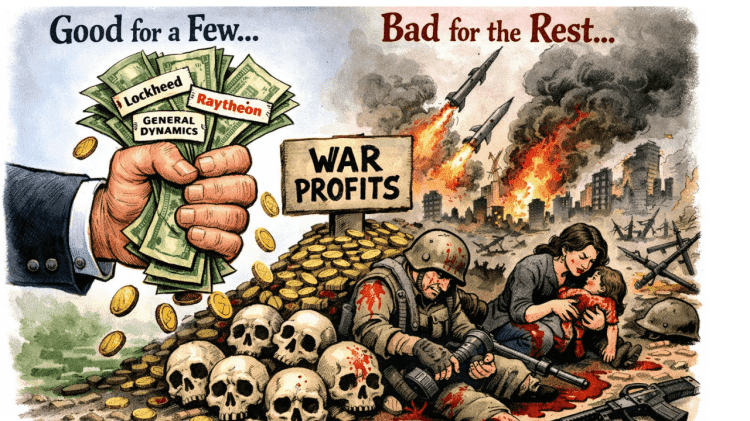
$1.5 Trillion Budget Request Prioritizes Service Members, Modernization
U.S. Department of War, April 21, 2026
“We are delivering on President [Donald J.] Trump’s commitment to expand American military dominance for decades to come,” said Secretary of War Pete Hegseth. “Previous administrations underinvested in our military while our enemies grew stronger and more dangerous, so we are now changing the game. This budget builds this arsenal without compromising readiness that will ensure we remain the world’s premier fighting force, we protect the homeland, and we create peace through strength now and into the future.”
The FY27 budget request represents a sizable increase over last year’s budget, said Jules W. Hurst III, performing the duties of the War Department comptroller.
“This is a generational investment in the United States military— the arsenal of freedom,” Hurst said. “This 42% increase will supercharge our defense industrial base by expanding production of major weapon systems, while strengthening supply chains and supporting tens of thousands of small and medium-sized businesses. It secures our homeland and military advantage through investments in the Golden Dome missile defense system, drone dominance and space superiority.”
This year’s budget request puts a huge focus on buying and investing in actual hardware, Hurst said. About 52% of the total budget request is aimed at buying munitions, planes, tanks and ships.
“The FY27 defense budget will be the largest investment in military capabilities in over a generation,” Hurst said. “This budget allocates over $750 billion … just in capability development and procuring weapons systems.”……………………………………………………………………………………………………………………………………………………………………………………………….. https://www.war.gov/News/News-Stories/Article/Article/4465551/15-trillion-budget-request-prioritizes-service-members-modernization/
1 This Month

of the week – THE ONENESS of HUMANITY
26 June – Radiation Trainwreck at the NRC / Join the Protect Better Campaign – https://us02web.zoom.us/meeting/register/4ZlZ5_qLSHGiLSCg8FF6Bg#/registration
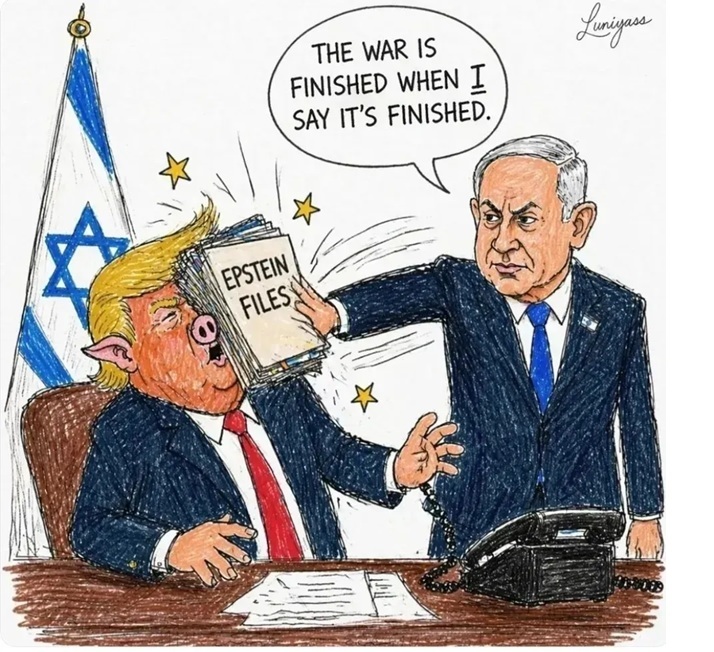
1st July – Webinar Waste of Space: The Environmental Harm of Military and Civil Space Activity st July, 7 pm

Report Launch Online: We are seeing an increasing exploitation of space for military and commercial purposes. This must change.

Protect Sazan Island from the Trump family! https://secure.avaaz.org/campaign/en/protect_sazan_island_from_the_trump_family_loc/?bqFCVab&v=174511&cl=22707147157&_checksum=5e9dde668860e8231c33699735e16a1fbf22ab2cb01da50c999fe8732b9775ef&utm_source=email&utm_medium=blast_email&utm_campaign=174511


Cuba Is Not a Failed State – It Is a Besieged State
PETITION: “Global Appeal to Endorse Palestinian Right of Return of Refugees”
To see nuclear-related stories in greater depth and intensity – go to https://nuclearinformation.wordpress.com
-
Archives
- June 2026 (251)
- May 2026 (306)
- April 2026 (356)
- March 2026 (251)
- February 2026 (268)
- January 2026 (308)
- December 2025 (358)
- November 2025 (359)
- October 2025 (376)
- September 2025 (257)
- August 2025 (319)
- July 2025 (230)
-
Categories
- 1
- 1 NUCLEAR ISSUES
- business and costs
- climate change
- culture and arts
- ENERGY
- environment
- health
- history
- indigenous issues
- Legal
- marketing of nuclear
- media
- opposition to nuclear
- PERSONAL STORIES
- politics
- politics international
- Religion and ethics
- safety
- secrets,lies and civil liberties
- spinbuster
- technology
- Uranium
- wastes
- weapons and war
- Women
- 2 WORLD
- ACTION
- AFRICA
- Atrocities
- AUSTRALIA
- Christina's notes
- Christina's themes
- culture and arts
- Events
- Fuk 2022
- Fuk 2023
- Fukushima 2017
- Fukushima 2018
- fukushima 2019
- Fukushima 2020
- Fukushima 2021
- general
- global warming
- Humour (God we need it)
- Nuclear
- RARE EARTHS
- Reference
- resources – print
- Resources -audiovicual
- Weekly Newsletter
- World
- World Nuclear
- YouTube
-
RSS
Entries RSS
Comments RSS
 nuclear-news