US Bombers Arrive in Middle East as Part of New Deployment for Israel

The US has reportedly warned Iran not to respond to Israel’s attack
by Dave DeCamp November 3, 2024, https://news.antiwar.com/2024/11/03/us-bombers-arrive-in-middle-east-as-part-of-new-deployment-to-protect-israel/
US B-52 bombers arrived in the Middle East on Saturday as part of a new deployment to “defend” Israel amid speculation over whether or not Iran will respond to Israel’s October 26 attack.
“B-52 Stratofortress strategic bombers from Minot Air Force Base’s 5th Bomb Wing arrived in the US Central Command area of responsibility,” US Central Command wrote on X.
The Pentagon announced it was beefing up its military presence in the region on Friday, saying Secretary of Defense Lloyd Austin ordered the “deployment of additional ballistic missile defense destroyers, fighter squadron and tanker aircraft, and several US Air Force B-52 long-range strike bombers to the region.”
The Pentagon said the purpose of the deployment is the “protection of US citizens and forces in the Middle East, the defense of Israel, and de-escalation.” The US also recently deployed a THAAD missile defense system and about 100 troops to Israel.
Iranian officials have been vowing there will be a response to Israel’s attack, which killed four Iranian soldiers and one civilian. Israel launched the airstrikes on Iran in retaliation for the October 1 Iranian missile barrage that was fired into Israel in response to a string of Israeli escalations and assassinations in the region.
Axios has reported that Israeli intelligence suggests Iran is planning to launch a major attack from Iraqi territory and that it could happen before the US presidential election on November 5. However, a report published by The Wall Journal on Sunday said that Iran didn’t want to influence the US election and would likely wait until after.
The Journal report, which cited unnamed Arab and Iranian officials, said Iran has told Arab diplomats it’s planning a complex response against Israel that would involve more powerful warheads and other weapons not used in its previous attacks on Israeli territory. One source said Iran would likely target military facilities again “but much more aggressively than last time.”
Another Axios report said the US warned Iran that if it attacked, the US wouldn’t be able to restrain Israel. “We told the Iranians: We won’t be able to hold Israel back, and we won’t be able to make sure that the next attack will be calibrated and targeted as the previous one,” a US official told Axios.
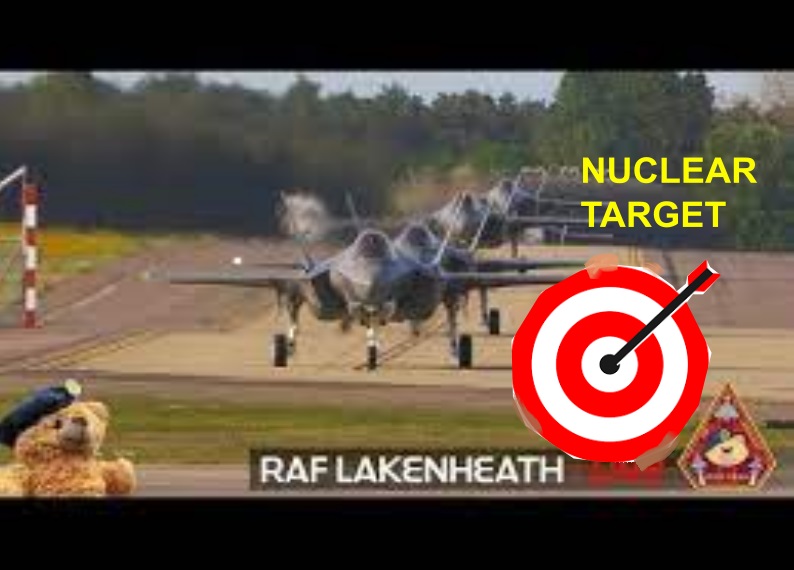
US nuclear weapons could be sited in RAF Lakenheath in spring, CND protest hears
“We are standing on the edge of the nuclear abyss. And our governments have the responsibility to keep us safe; and what are they doing? They are pushing us over the edge.”
US nuclear weapons could be sited at RAF Lakenheath as early as spring, the Campaign for Nuclear Disarmament (CND) has warned.
The CND’s new general secretary Sophie Bolt told dozens of protesters outside the Suffolk airbase on Saturday: “We are very very concerned about the threat of a nuclear escalation between nuclear-armed Nato and nuclear-armed Russia.
“What’s happening here at this base is absolutely central to this growing nuclear threat in eastern Europe.
“It’s also the horrific genocidal war we are seeing in the Middle East because again it’s F35-A jets here and fighter pilots based here that are involved in that war.
“This base completely ties the UK to the complicity of genocide that is being carried out against Palestinian people.”
Green Party peer Jenny Jones said it is “obviously incredibly dangerous” to site nuclear bombs in Britain due to its size and international importance.
She added: “If Russia decide to get really heavy not just with Ukraine but other countries, then we could be a target even if they just think we have nuclear weapons here.
“Secondly, it’s really undemocratic. We need a public debate about the common sense or the lack of it in siting nuclear weapons in Britain.
“We should have a debate in Parliament about this and it should be a free vote as well so we can see exactly what all MPs say about this issue.”
Former Australian minister Melissa Parke, executive director of the International Campaign to Abolish Nuclear Weapons, noted last month’s serious fire at BAE Systems nuclear submarine shipyard in Cumbria; Sellafield nuclear processing plant’s fines for cyber security failings; and maintenance issues on Britain’s nuclear fleet.
She said: “So fires, cyber security failings, maintenance problems on nuclear subs, I mean what could possibly go wrong?
“We are standing on the edge of the nuclear abyss. And our governments have the responsibility to keep us safe; and what are they doing? They are pushing us over the edge.”
Nuke Watch’s Peter Burt described detailed analysis of official documents by scientists, plane spotters and campaigners.
He said: “It’s very clear that we need to keep a close eye on what’s happening here.
“What there is no substitute for is eyes on the ground … in the same way we had in the 1980s we had the Cruise Watch Network, who kept tabs on what’s happening at Greenham Common.”
New Paper: Nuclear Weapons and Our Climate

Today, we are launching a new briefing paper: ‘Nuclear Weapons and Our Climate’ written by ICAN co-founder, A/Prof Tilman Ruff AO.
In the lead up to the climate COP29, this timely paper sharply lays out how the “two paramount human-made existential threats we confront—nuclear weapons and climate change—exacerbate each other and need to be addressed together—with utmost urgency,” writes A/Prof Ruff. “One harms us and our biosphere every day, the other could deplete it irrevocably and end human civilisation and many species in less than a day.”
The paper’s key findings are:
- Smoke from burning cities ignited by a nuclear war involving 2% of the global arsenal would suddenly plummet temperatures worldwide to ice age levels, decimate agriculture, disrupt ocean food chains and starve to death over two billion people.
- Militaries are large and mostly unconstrained greenhouse gas emitters. Growing conflicts and nuclear threats undermine international cooperation needed to address the climate crisis. Rising military spending and nuclear arsenals have huge opportunity costs and make conflicts more dangerous. An increased risk of war leading to nuclear escalation is the greatest danger of the climate crisis.
- Nuclear power inseparably creates the capacity to build nuclear weapons. In most nuclear-armed states, the infrastructure, personnel, expertise, industrial capacity and government investments in nuclear power are also key to their nuclear weapons programs.
- Nuclear reactors, spent fuel storage ponds and reprocessing plants are effectively pre-positioned large radiological weapons, vulnerable to direct attack or disruption of power and water for essential cooling. Russia’s invasion of Ukraine has seen, for the first time, multiple nuclear power plants attacked and weaponised in war, risking a radiological disaster.
| The paper is a call to action, as “everyone everywhere, everything we treasure and our living planet is threatened by nuclear weapons, this is everyone’s business.” Please share the report with your friends and networks and discuss how you can help prevent climate disruption and nuclear war in your work and daily lives. |
UK lobbyists accused of ‘greenwashing’ oil-rich Azerbaijan before Baku COP summit

Azerbaijan’s authoritarian regime has been accused of human rights abuses, including jailing climate activists on ‘bogus’ charges
By Ben Gartside, November 3, 2024
A lobbying firm with close links to a former Cabinet minister and the fossil fuels industry is being paid $4.7m to help oil-rich Azerbaijan enhance its image ahead of the crucial UN COP climate summit next month, the i Paper can reveal.
The lobbying giant Teneo, which employs Labour’s former Culture Secretary Ben Bradshaw as well as Boris Johnson’s former business chief Alex Hickman, has been awarded a seven-month contract which campaigners claim will help the state “greenwash” its reputation.
On 11 November, the UN will host its COP 29 climate change summit in Baku, the Azerbaijan capital. It will be the first major global climate meeting after the US presidential election and will set the tone for discussions for tackling global warming. The talks will involve world leaders, ministers and negotiators and have a particular focus on how to make finance available to developing countries for climate action.
The choice of Azerbaijan as a host for the summit has been controversial. Its economy is highly dependent on fossil fuels and campaigners have criticised the regime’s human rights record, including the imprisonment of climate activists
An investigation by the i, in conjunction with the newsletter Democracy for Sale and SourceMaterial, reveals that as part of the Teneo contract, one of its British consultants will be paid “a monthly fee of $25,000, plus bonuses totalling $50,000” while only working on a “part-time basis”.
According to US documents Teneo will provide “media training” and advise on “narrative development” for the hosts of the COP summit.
The lobbying firm’s work will be led by its Global Strategy President Geoff Morrell who is a former executive at oil giant BP, which is Azerbaijan’s biggest foreign investor.
While working for BP, Morrell chided “opportunistic” environmentalists for exaggerating the impact of the company’s Deepwater Horizon explosion, an oil rig explosion in the Gulf of Mexico that killed 11 people and discharged four million barrels of oil into the ocean.
Despite hosting the environmental summit, Azerbaijan is planning to ramp up oil and gas production over the next decade, according to a report from a German NGO.
The country, which earns 60% of its entire revenue from oil and gas, has also massively increased its gas exports to Europe since the Russian invasion of Ukraine.
Climate campaign groups have accused Teneo of helping Azerbaijan to “greenwash” its image.
Lela Stanley, senior investigator at Global Witness said: “Firms helping petrostates like Azerbaijan … are complicit in greenwashing.
“Instead of focusing on glossing up their image, Azerbaijan and its partners should be making fossil fuel companies pay in to the UN’s Loss and Damage Fund. Planet-wrecking polluters should pay for the devastation they’ve caused.”
In addition to its work for the Azerbajian regime, Teneo has also signed lucrative deals to work with major fossil fuel producers Saudi Arabia and the UAE on other contracts, according to i‘s analysis of US government filings. It also works for some of the world’s leading fossil fuel firms including British Gas owner Centrica and mining giant BHP.
Kathy Mulvey, campaigner at the Union of Concerned Scientists, said: “It’s a clear conflict of interest for a PR firm to be paid to serve both oil and gas company clients that are driving the climate crisis and the host country government charged with shepherding the upcoming international climate talks.”
According to the US documents, Teneo’s lobbying teamworking on the Azerbajian contract includes Boris Johnson’s former chief business adviser Alex Hickman.
Shortly after the general election, the firm sought to bolster their links to the Labour government by appointing former Labour Cabinet minister Ben Bradshaw as a senior advisor.
Although the US documents do not list Bradshaw as one of the individuals working on the Azerbajian COP contract, when he was hired by Teneo, the firm’s UK chief executive Nick Claydon said: “Ben’s deep insights and experience in helping to understand the priorities and approach of the new Labour administration will be of tremendous benefit to Teneo’s clients around the world.”
Teneo’s senior managing director is Patrick Loughlan, one of Tony’s Blair’s former Downing Street special advisors and Labour’s former director of policy and head of research.
The firm’s managing director Robert Fuller also spent six weeks volunteering to help Labour during the recent election campaign.
Azerbaijan’s fossil fuel expansion plans
Azerbaijan’s state-owned oil and gas company, Socar, and its partners are set to raise the country’s annual gas production by 2033, according to a report produced by Urgewald and CEE Bankwatch last month………………………………………………………………………
https://inews.co.uk/news/politics/uk-lobbyists-greenwashing-cop-3354835
Call for Peacekeeping Forces to Stop Israel’s Genocide

Target: The United Nations
Israel’s war in Gaza, following deadly attacks by armed Palestinian groups on 7 October 2023, is the latest and most horrific outbreak of genocidal war and violence in the decades of prolonged Israeli occupation of Palestinian territories. After more than a year of the ongoing massive killings and destruction, which cost the lives of much more than 45,000 Palestinians of which one third were children, the Israeli Defense Forces are spreading attacks from Gaza to Lebanon, Iraq, Iran, Syria and Yemen. We are on the brink of the greatest devastation across the region since World War II.
Failing to act now will result in failure to prevent future atrocities.
UN recent reports concluded that Israel´s relentless siege and deliberate attacks in the Gaza Strip constitute a concerted effort to destroy Gaza´s healthcare system that the Israeli army is responsible for torture, sexual abuse, gender-based violence, and it has deliberately killed, detained and tortured medical personnel. Because of these war crimes and crimes against humanity the UN has called on Member States to cease all aid or support to Israel.
In the last 12 months, the UN Security Council has passed four resolutions related to the war in Gaza, including several calls for a ceasefire. Furthermore, the International Court of Justice (ICJ) has ordered Israel to take all measures to stop the bloodshed in the Gaza strip determining the illegality of Israel’s occupation and annexation of Palestinian territory. And finally, the UN General Assembly has passed a resolution calling on Israel to end its illegal presence in the occupied Palestinian territory within 12 months.
Yet none of these resolutions based on the Palestinian Right for Self-determination have led to the implementation of measures to put them into practice. Many of these resolutions have been blocked by the United States in the Security Council, in spite of the fact that more than 140 governments have clamored for an immediate ceasefire and the recognition of an independent Palestinian State.
We therefore call all peace-loving nations represented in the General Assembly of the United Nations to vote for
· An immediate ceasefire in the Occupied Palestinian Territory and its neighboring States.
· Support the access of humanitarian aid and life essentials including medical supplies, food, shelter, fuel and water.
· The introduction of a large-scale, well trained and experienced alliance of unarmed peacekeepers in the Occupied Palestinian Territory in application of Chapter VII of the Charter of the United Nations, and
· Establishing a weapons embargo on Israel until it ends its illegal occupation of the Occupied Palestinian Territory as per the United Nations Resolution issued on September 17, 2024.
We, the undersigned, conscious of the genocide which affects millions of Palestinians, are launching an international campaign to promote these actions. In particular, we call on the governments represented in the General Assembly of the United Nations to take decisions in accordance with Chapter VII of the UN Charter which gives to the General Assembly the right to mandate peacekeeping forces in conflicts representing a severe danger to world peace and international law, in case the Security Council remains paralyzed.
‘Two sides of the same coin’: governments stress links between climate and nature collapse

Representatives at the Cop16 summit in Colombia negotiated against a backdrop of extreme weather and ecosystem collapse
Patrick Greenfield and Phoebe Weston in Cali, Guardian 4th Nov 2024
As world leaders gathered in Colombia this week, they also watched for news from home, where many of the headlines carried the catastrophic consequences of ecological breakdown. Across the Amazon rainforest and Brazil’s enormous wetlands, relentless fires had burned more than 22m hectares (55m acres). In Spain, the death toll in communities devastated by flooding passed 200. In the boreal forests that span Siberia, Scandinavia, Alaska and Canada, countries were recording alarming signs that their carbon sinks were collapsing under a combined weight of drought, tree death and logging. As Canada’s wildfire season crept to a close, scientists calculated it was the second worst in two decades – behind only last year’s burn, which released more carbon than some of the world’s largest emitting countries.
In global negotiations, climate and nature move along two independent tracks, and for years were broadly treated as distinct challenges. But as negotiations closed at the Cop16 biodiversity summit in Cali on Saturday, ministers from around the world underscored the crucial importance of nature to limiting damage from global heating, and vice versa – emphasising that climate and biodiversity could no longer be treated as independent issues if either crisis was to be resolved. Countries agreed a text on links between the climate and nature, but failed to include language on a phase out of fossil fuels.
The UK environment secretary, Steve Reed, said that attending the summit in Colombia had brought home the links between climate and biodiversity. “One of the other things that’s really struck me coming here and speaking to the Colombians in particular is how for them the nature crisis and the climate crisis are exactly the same thing. In the UK, perhaps more widely in the global north, we tend to talk a lot about climate and particularly net zero, and much less about nature – perhaps because we’re already more nature-depleted. But those two things connect entirely,” he said.
The Cop16 president, Susana Muhamad, Colombia’s environment minister, has sought to put nature on a level with global efforts to decarbonise the world economy during the summit, warning that slashes to greenhouse gas emissions must be accompanied by the protection and restoration of the natural world if they are to be effective. Her presidency has repeatedly described nature and climate as “two sides of the same coin”.
“There is a double movement humanity must make. The first one is to decarbonise and have a just energy transition. The other side of the coin is to restore nature and allow nature to take again its power over planet Earth so that we can really stabilise the climate,” she has said throughout Cop16 and during the buildup……………………………………………………………………………. https://www.theguardian.com/environment/2024/nov/04/two-sides-of-the-same-coin-governments-stress-links-between-climate-and-nature-collapse
Japanese nuclear reactor that restarted 13 years after Fukushima disaster is shut down again
A Japanese nuclear reactor that restarted last week for the first time in more than 13 years after it survived a massive earthquake and tsunami that badly damaged the nearby Fukushima nuclear plant has been shut down again due to an equipment problem
Mari Yamaguchi, 4 Nov 24, https://www.independent.co.uk/news/ap-japanese-tokyo-fukushima-b2640761.html
A Japanese nuclear reactor that restarted last week for the first time in more than 13 years after it had survived a massive 2011 earthquake and tsunami that badly damaged the nearby Fukushima nuclear plant was shut down again Monday due to an equipment problem, its operator said.
The No. 2 reactor at the Onagawa nuclear power plant on Japan’s northern coast was put back online on Oct. 29 and had been expected to start generating power in early November.
But it had to be shut down again five days after its restart due to a glitch that occurred Sunday in a device related to neutron data inside the reactor, plant operator Tohoku Electric Power Co. said.
The reactor was operating normally and there was no release of radiation into the environment, Tohoku Electric said. The utility said it decided to shut it down to re-examine equipment to address residents’ safety concerns. No new date for a restart was given.
The reactor is one of three at the Onagawa plant, which is 100 kilometers (62 miles) north of the Fukushima Daiichi plant where three reactors melted following a magnitude 9.0 earthquake and tsunami in March 2011, releasing large amounts of radiation.
F-35 components sent to Israel from Royal Air Force base
Parts for Israel’s most advanced fighter jet have been secretly shipped from a British military base during the assault on Gaza.
Declassified UK JOHN McEVOY, 31 October 2024
- The shipments have continued under Keir Starmer’s Labour government
Reported in partnership with Irish news site The Ditch
F-35 fighter jet parts have been secretly transported to Israel from a British air force base in Norfolk, it can be revealed.
At least seven arms shipments have been sent from RAF Marham to Israel’s F-35 airbase at Nevatim since the Gaza bombing began.
Two of the deliveries took place this summer shortly after Keir Starmer became UK prime minister.
The information is contained within cargo documents reviewed by The Ditch and Declassified.
The documents show that the UK government has not only been approving F-35 export licences to Israel, but actively facilitating their transportation through British military sites.
F-35 supplies have become particularly controversial after it emerged that Israel used one of the planes to bomb a designated safe zone in Gaza, Al-Mawasi, killing 90 people.
Campaign Against Arms Trade’s Sam Perlo-Freeman told Declassified: “The F-35 plays a major part in Israel’s ongoing genocide in Gaza and brutal bombardment and invasion of Lebanon”.
He added that “the UK is not only licensing the supply of spare parts, but actively using UK military assets to facilitate their delivery. This makes UK ministers and potentially even military personnel complicit in war crimes”.
The International Criminal Court is currently considering arrest warrants for Israel’s prime minister Benjamin Netanyahu and defence minister Yoav Gallant. Human Rights Watch has warned that countries supplying Israel with arms could be complicit.
F-35 shipments
The seven shipments of F-35 parts from RAF Marham took place on 11 November 2023, 13 January, 21 January, 7 February, 28 April, 28 July, and 6 August 2024.
In six of those cases, the registered sender was the Lockheed Martin UK Integrated Systems office which is based in Havant, a town near Portsmouth.
Lockheed Martin is a major US arms corporation and the lead player in the international consortium that produces the F-35 fighter jets.
The Havant site is Lockheed Martin’s main headquarters in Britain, employing over 500 staff and working on the F-35 programme.
The components were transferred from RAF Marham to Heathrow Airport, and then transported to Tel Aviv on cargo flights operated by Israeli airline El Al……………………………………………………………………………………………………………………………………………
Munitions for Israel
Labour suspended some arms export licences to Israel last month but will continue to allow shipments of F-35 components to Israel through “global hubs”.
The UK Ministry of Defence did not dispute that F-35 parts had been supplied directly to Israel from RAF Marham on the dates found by The Ditch and Declassified………………………………………………………………..more https://www.declassifieduk.org/f-35-components-sent-to-israel-from-royal-air-force-base/?utm_source=drip&utm_medium=email&utm_campaign=ICYMI+-+Weekly+Roundup
South has raised risk of nuclear war, North Korea says
Canberra Times, By Josh Smith, 3 Nov 24
A white paper released by North Korean state media has accused South Korean President Yoon Suk-yeol of exposing his country to the danger of nuclear war through his policies toward the North.
The document, compiled by North Korea’s Institute of Enemy State Studies and released on Sunday by state news agency KCNA, criticised Yoon’s “reckless remarks” about war, abandoning elements of an inter-Korean agreement, engaging in nuclear war planning with the United States, and seeking closer ties with Japan and NATO.November 3 2024
“Its ever-worsening military moves resulted only in the paradoxical consequences of pushing (North Korea) to stockpile its nuclear weapons at an exponential rate and further develop its nuclear attack capability,” the paper said……………………………………………
The two Koreas have also clashed over balloons of trash floated since May from North Korea.
Pyongyang has said the launches are a response to balloons sent by anti-regime activists in the South…………………………..
Meanwhile, the US on Sunday deployed B-1B bombers for joint aerial drills with South Korea and Japan, in response to North Korea’s recent launch of an intercontinental ballistic missile, according to South Korea’s Joint Chiefs of Staff.
The military exercise showed the three countries’ strong commitment to responding to the North’s nuclear and missile threats through co-operation, the Joint Chiefs of Staff said in a statement.
This is the second time this year that the three countries conducted joint air drills and the fourth time in 2024 that the US deployed its strategic bombers on the Korean peninsula, the Joint Chiefs of Staff said. https://www.canberratimes.com.au/story/8809775/south-has-raised-risk-of-nuclear-war-north-korea-says/
Why Nimbys are wrong about solar farms
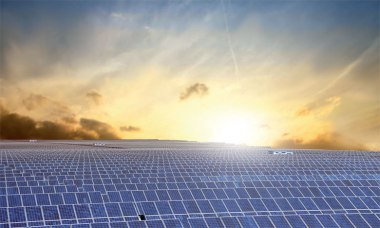
Opponents of solar farms often say that solar panels should be put on roofs and that fields should be left for agriculture so i asked the experts on whether they agreed
By Tom Bawden, Science & Environment , November 3, 2024 ,
https://inews.co.uk/news/environment/why-nimbys-are-wrong-about-solar-farms-3355702
Tory leadership loser Robert Jenrick said that solar panels are “for roofs not fields” when asked byi last month if he supported a proposed giant solar farm in his Nottinghamshire constituency.
He is by no means alone in that view, which is a common argument given by opponents of solar farms.
Those who protest against solar farm developments argue fields would be better used for growing food, while solar panels could and should be concentrated on roofs, of which there are quite literally millions in the UK.
“I’ve said that we must ban solar farms from prime agricultural land and I mean it. These facilities are despoiling our beautiful countryside and jeopardising our food security. We must end it,” Mr Jenrick added.
But since Labour came to power Energy Secretary Ed Miliband has approved four of the five biggest solar farms to be given planning permission in the UK.
Mr Miliband has vowed to take on “the blockers, the delayers, the obstructionists” who oppose large solar and onshore wind development to help the UK meet its ambitious targets to make the country’s energy supply virtually carbon neutral in just six years.
As the Government steps up its campaign to drive through new solar and wind projects, it is likely we will be seeing more projects of a similar scale too that opposed by Mr Jenrick in the coming years.
i asked experts whether it was feasible for the UK to do without new solar farms and instead confine new solar panel installations to the rooftops of households, offices and other business properties, and what effect this could have on food security.
The sale of the solar challenge
Experts were clear that there needs to be a huge and rapid increase in renewable energy generation if the UK is to have any chance of meeting its highly ambitious climate targets.
And, as the cheapest source of renewable energy – now costing less than onshore and offshore wind, according to government figures – solar will inevitably play a key role in the transformation of the UK’s energy supply.
The Conservative’s British Energy Strategy in April 2022 outlines the need for 70 gigawatts (GW) of solar power to be installed by 2035 – enough to power 20 million homes, according to National Grid.
As of June 2024, the UK only had about 17GW installed capacity (powering around 4.5million homes), meaning the country needs to quadruple its solar power generation in the next 11 years.
Two thirds of the current solar power is generated by solar farms with panels on the ground – known as “ground mount” – with the remaining third coming from the rooftops of businesses and over 1.5 million homes.
Meanwhile, government advisor the Climate Change Committee estimates that we will need 90GW of solar by 2050 (5.3 times current capacity) if we are to hit our legally binding target of becoming Net Zero.
Dr Simon Harrison, a member of the Government’s new advisory commission to help make the UK’s power generation virtually carbon neutral by 2030, told i the task is so great that it’s “going to require vastly more renewable energy generation” – meaning that “in practice both solar farms and roof top solar will be needed at scale to meet our needs”.
“There’s a significant role for both,” added Professor Rob Gross, who also sits on the commission.
What are the advantages of solar farms?
The first major advantage of solar farms is the sheer amount of energy they produce.
The 600 MW Cottam Solar farm that was granted planning permission in September would be the UK’s largest – supplying 180,000 homes, or 1,500 homes for every 5MW of energy generated.
By contrast, large solar rooftop installs, say over an airport or large of space, typically generate hundreds of kilowatts (kW) potentially up to a few megawatts (MW).
While the average solar rooftop installation size on someone’s home for their own use is typically 4kW.
So the Cottam Solar project would generate at least 200 times the electricity of the very largest commercial roof top installations and around 150,000 times as much as a typical household solar panel setup.
Tony Slade, technical director of Beaverbrook Energy, which designs, finances and builds low-carbon energy generators, told i: “Ground mounted solar farms also suffer from less ‘shading’ (blocking of direct sunlight through obstacles and obstructions) and ‘directional losses’ by being angled in the wrong direction.
“About 50 per cent of roofs face the wrong way and of those that face the right way about 25 per cent suffer from shading issues,” he said.
Are solar farms cheaper than roof panels?
Yes, in part because they benefit from economies of scale. In other words, the bigger the solar farm, the cheaper each unit of electricity will be, as more panels can benefit from the infrastructure.
Professor Gross, who is also director of the UK Energy Research Centre coalition of researchers, told i “the principal advantages are economic”.
“It is far cheaper to install each solar panel in a large array of thousands of panels than it is to install a handful of panels on a roof.
“Ground mounted is cheapest, followed by larger arrays on commercial units, followed by new build, followed by residential retrofit. All categories are getting cheaper but it is impossible to get away from the fundamentals – the cheapest solar will always be the simplest to install, in the largest arrays,” he said.
“And ground mounted developers building large schemes may also be able to negotiate the best deals for panels and equipment,” he added.
Mr Slade explains that greenfield ground mount solar panels on fields typically cost two thirds as much, per unit of energy, as large scale solar panel arrays on commercial buildings such as warehouses, shopping centres and factories – as well as new build domestic and commercial buildings, where the solar panels are fitted as part of the original construction.
Meanwhile, installing solar panels above car parks is typically twice as expensive as wind farms and retrofitting homes is about three times as expensive, he said.
What about food security?
Opponents of large solar farms often argue that the land would be better used for agriculture and that too many of them could impact food security.
But the Department for Energy Security and Net Zero firmly rebuts those suggestions, arguing the amount of agricultural land involved would make very little difference to the UK’s food production.
“Our plans to boost solar power do not risk the UK’s food security. The total area of agricultural land used for solar is very small and is often the lowest grade quality for food production.
“Even in the most ambitious scenarios, solar would still occupy less than 1 per cent of the UK’s agricultural land, while bringing huge benefits for the British public and our energy security,” the spokesperson added.
Meanwhile, in July, National Farmers’ Union boss Tom Bradshaw warned MPs against making “sensationalist” claims about food security.
“It’s a small amount of land which is being taken out of production,” he told the Politico Europe website.
The role of rooftop solar panels
“They can potentially play a very important role, accounting for perhaps 40 per cent of new installation of solar. But it’s important to be clear that rooftop and ground based are additive not competitive,” Professor Gross said.
Dr Harrison says “there are serious considerations to make on where solar is placed”, meaning that sometimes roof top solar power can be far more suitable than those in fields.
“In the simplest terms, there is more space in rural areas for solar panel installations and it is often easier to optimise their positioning for greater energy capture. But they are generally further from existing grid connections and with sometimes competing requirements for land use,” he said.
“On the other hand, rooftop solar, most commonly in urban settings, often avoids use of congested electricity networks, especially when combined with local batteries, and when used in homes tends to drive greater awareness and action by residents in other areas such as energy efficiency improvements, as well as reducing bills. In practice both will be needed at scale to meet our needs.”
The Government estimates there are 250,000 hectares of south-facing, industrial roof space across the country. That’s an area bigger than London and Manchester combined, with the potential for a vast amount of solar panels.
Even a very conservative estimate suggests that this commercial roof space could provide an area big enough to generate approximately 25GW of energy.
This amounts to nearly half the total amount recommended by the Climate Change Committee (CCC), according research by University College London for the Campaign to Protect Rural England (CPRE).
Mr Ramandani agrees that fields and rooftops can play different, complementary, roles in UK energy generation.
“We need about 18GW more of rooftop solar to hit 70GW by 2035 to keep us on the right path to Net Zero. So it will play a massive role,” he said.
“Rooftop solar can power people’s homes and business onsite without needing to pull from the grid, and excess generation can be stored or exported back to the grid, which supports the flexibility and security of the grid. And they operate at a smaller scale with some export to the overall grid system.
“Solar farms, meanwhile, are not onsite generation – they operate at a much bigger scale and power the grid with greater quantities of energy, which is used by the whole system and not specific to a home or business (before they export the excess generation that they don’t use or store).”
Is there a big role for household solar panels?
UK households are already waking up to solar panels, receiving record sums last year for the amount of excess energy they generated that they sold back to the grid, Ofgem said last week.
Homeowners received more than £30m for the energy they didn’t need in the year to March 2024, four times the £7.2m they made the previous year.
Although this amounted to a relatively small amount of energy – enough to power 88,000 homes – experts say there is considerable scope to increase this and they expect this to happen in the coming years.
“There is definite major role for rooftop solar in the UKs future energy mix,” said Mr Slade. “As installations become cheaper and the market for excess generation becomes fairer to the home owner rooftop domestic solar will continue to grow,” he said.
Mr Ramandani says: “Onsite solar rooftop generation takes money off consumer’s bills as they purchase less from the grid, and excess generation can be exported to the grid for income. This in turn creates a stable grid system with less demand side pressure, as well as supplementary energy generation from homes and businesses.
For a typical house, installing a PV system could lower bills by the equivalent of nearly 330 every year over the 30-year lifespan of the system, according to a study by Cambridge University and the Think Three property development company for Solar Energy UK.
Iran says it rejects nuclear weapons but will defend itself by all means
Iran International, 4 Nov 24
Iran’s Foreign Ministry said on Monday it remains committed to a peaceful nuclear program but asserted Tehran would prepare whatever it takes to defend itself against Israel.
“The official stance of Iran in rejecting weapons of mass destruction and regarding the peaceful nature of the Islamic Republic of Iran’s nuclear program is clear,” said Foreign Ministry spokesperson Esmail Baghaei.
“As emphasized in the recent speech by the Supreme Leader of the Islamic Revolution, we will equip ourselves to the extent necessary for the defense of Iran,” he added.
For weeks, Iranian officials have ramped up their narrative that Tehran possesses the capability to produce nuclear weapons, asserting that only Khamenei’s religious fatwa prevents it from doing so.
Baghaei also claimed that the country will use all its “material and spiritual resources to respond to the recent aggressions by the Zionist regime.”
This statement comes as Iran’s leadership intensifies its stance amid escalating tensions with the United States and Israel.
Khamenei has called on officials to make every necessary preparation to defend the country against the US and Israel…………………………………………………………………………… more https://www.iranintl.com/en/202411041034
To 4 November – nuclear news, and more

Some bits of good news – Public health wins in Kenya, Uganda, Bangladesh, and Tanzania. Peace on the horizon between China and India.
A decline in carbon emissions in China is still in play.
People power – 30 years of renewable energy: one company’s success story
**********************************
TOP STORIES.
The Rise and Fall of NuScale: a nuclear cautionary tale.
“Ford Watch: The Largest Nuclear Expansion in Canada’s History”.
New Nuclear – Unaffordable, Undesirable and Unachievable
***********************
Climate. UK lobbyists accused of ‘greenwashing’ oil-rich Azerbaijan before Baku COP summit
Record levels of heat-related deaths in 2023 due to climate crisis, report finds. Half of world’s biggest cities to face severe climate risks by 2050, LSEG finds. Why were the floods in Spain so bad? A visual guide. Climate Researchers Warn: Warmer Climate Could Lead To “Cold Waves Across Northern Europe”!
Noel’s notes. Canadians are waking up to the nuclear scam– Why are the media and other nations pretending that nuclear is just dandy?
******************************************************
AUSTRALIA.
Australian Civil Society Statement for COP29Baku, Azerbaijan. Australia votes at the UN General Assembly. More Australian news at https://antinuclear.net/2024/10/24/australian-nuclear-news-21-28-october/
NUCLEAR ITEMS
| ATROCITIES. Banning United Nations Relief and Works Agency (UNRWA) is a new way to kill children, aid groups warn. Oxfam reaction to Knesset decision. Israeli Knesset Passes Bill To Ban UN Palestinian Relief Agency. |
| CLIMATE. New Paper: Nuclear Weapons and Our Climate. |
| CIVIL LIBERTIES. Witnesses say the Israeli army is using facial recognition technology in its assault on north Gaza. |
| CULTURE. The Mainstream Western Worldview Pretends The Global South Does Not Exist. Israel will eventually pay price for Gaza genocide going on for a year: Turkish President Erdogana- https://www.youtube.com/watch?v=dtoWptrhPOM |
ECONOMICS.
- Next ERA No Longer Bullish on Nuclear SMRs.
- Lepreau nuclear headaches could add up to an extra $150M.
- Ontario’s huge nuclear debt and other things Dutton doesn’t understand about cost of electricity.
- Race to build Britain’s first mini-nukes delayed again in Budget.
- Ultra Safe” Nuclear Corp.-Major Microreactor Developer Enters Bankruptcy
- Sizewell C nuclear project proceeds by stealth – vast sums of public money spent, with no public disclosure about its true cost.
- Czech watchdog prohibits nuclear power contract signing amid appeals.
- IEA: Global clean tech market set to be worth $2tr a year by 2035.
EVENTS. CND to protest return of US nuclear weapons to Britain ahead of US presidential election. PETITION. Call for Peacekeeping Forces to Stop Israel’s Genocide
| INDIGENOUS ISSUES. Saugeen Ojibway Nation stands firm on nuclear waste decision despite South Bruce vote |
| LEGAL. South Africa Files 750 Pages of ‘Overwhelming’ Evidence in ICJ Genocide Case Against Israel. |
| MEDIA. Israel Kills Five Journalists in Sunday Gaza Attacks. Israel kills the journalists-Western media kills the truth of genocide in Gaza . Despite History of Fabrication, Press Uncritically Covers IDF-Provided Documents on Hamas. 101 BBC journalists say it is biased against Palestine. Atomic Reaction – a highly recommended feature-length documentary film. |
| OPPOSITION to NUCLEAR .South Bruce Deep Geological Repositary (DGR) opposition promises to keep fighting. Gravelines nuclear power plant: EDF refuses to respond on flood risks and tries to silence whistleblowers. Campaigners slam chancellor Rachel Reeves for £2.7 billion pledge to nuclear power station. After two months, Nuclear Free Local Authorities receive vague response on Advanced’ Gas-Cooled Reactors (AGRs). |
POLITICS.
- Settlers prepare for ’resettlement in Gaza’.
- Labour just railroaded a secretive US-UK nuclear treaty renewal deal. Nuclear Free Local Authorities (NFLAs) believe UK budget is opportunity to lobby Ministers to ditch Sizewell C. Will Susan Holt’s new government continue New Brunswick’s nuclear fantasies ?
- Launch of papers on UK’s unachievable nuclear programme.
- New Brunswick’s nuclear plant’s ongoing troubles an early threat to Holt government finances. South Bruce Municipality narrowly votes to host underground nuclear waste disposal site.
POLITICS INTERNATIONAL and DIPLOMACY.
- Ukraine and Russia in talks about halting strikes on energy plants.
- UK urged to break with France, North Korea and Russia on UN nuclear war resolution.
- WILL THE 2024 U.S. PRESIDENTIAL ELECTION BRING AN END TO THE WAR IN UKRAINE?.
| SAFETY. Reeves urged not to cut Sellafield funds amid concern at rise in ‘near misses’. The non-proliferation considerations of nuclear-powered submarines. Onagawa nuclear plant’s restart sparks concerns over evacuation routes. |
| SECRETS and LIES. Yeah, Yeah, United Nations Relief and Works Agency (UNRWA) Is Hamas. Everyone Israel Hates Is Hamas. Lest we forget – Nuclear Power Runs on Dirty Money: The Corporate Scandal of the Proposed National Nuclear Subsidy. Congress Must Investigate Corruption in Nuclear Energy Industry. |
SPACE. EXPLORATION, WEAPONS.
ExoAnalytic observes 500 pieces of debris from Intelsat 33e breakup
WASTES.
- The global nuclear industry has no idea how to decommission Fukushima nuclear plant, but hopes that a tiny robot might help. Nuclear fuel debris retrieved at Tepco Fukushima plant.
- France wrestles with the idea that nuclear wastes might be useful, “retrievable” for future generations.
- South Bruce voters narrowly approve being host to nuclear waste.
- Technical troubles delay new tests at huge Eastern WA radioactive waste melter.
- The Wylfa nuclear power station site needs “better storage facilities for waste” .
- NGOs call for more secure interim storage facilities for Germany’s nuclear waste.
- Safety analysis is not yet approved for Sweden’s nuclear waste dump plan, despite the hype.
| WAR and CONFLICT. South has raised risk of nuclear war, North Korea says. |
| WEAPONS and WEAPONS SALES. Report: US Sitting on Nearly 500 Reports of US Weapons Killing Civilians in Gaza. Department of Defense Releases Fiscal Year 2024 Military Intelligence Program Budget – just the bare $29.8 billion. Why ‘British’ nuclear weapons are really very American. |
New Nuclear – Unaffordable, Undesirable and Unachievable

Nuclear Consulting Group, Andrew Blowers and Stephen Thomas, 3 Nov 24
In 2022 Boris Johnson set a target of 24GW (eight more Hinkley Point Cs) of new nuclear capacity to be running by 2050. To achieve this, he announced the creation of Great British Nuclear with a mission of ‘helping projects through every stage of the development process and developing a resilient pipeline of new builds.’ More than two years after its announcement Great British Nuclear has no permanent executive, no permanent staff and no premises. While not explicitly endorsing the 24GW, the new Labour Government proclaimed that a scale expansion of nuclear ‘will play an important role in helping the UK achieve energy security and clean power’. But, neither government has recognised the near impossibility of achieving the Great British Nuclear expansion. It is a project bound to fail.
No amount of political commitment can overcome the lack of investors, the absence of credible builders or reliable technologies let alone secure regulatory approval. In an era of climate change there will be few suitable sites to host new nuclear power stations and radioactive waste stores for indefinite timescales on vulnerable sites will be scattered across the country. There are the new fears that nuclear foments, the danger of accidents, cyber-attacks, terrorism and war vividly brought into present focus by threatened nuclear plants in Ukraine (Zaporizhzhia) and Russia (Kursk).
New nuclear is unaffordable especially at a time of severe fiscal constraint required by the £22bn ‘black hole’ in the country’s finances. Nuclear energy has consistently proved to be a bottomless pit with ever rising costs and lengthening delays. Hinkley Point C has doubled in cost and will be at least 12 years late when it begins operating. Its successor, Sizewell C has already cost the Treasury £2.5b.with a further subsidy of £5.5bn announced just to get the project to a Final Investment Decision (FID) forecast for this year, although a FID has been said to be imminent for three years. To prevent the project collapsing, the UK Government has chosen to contribute about 95% of the cost of getting Sizewell C to FID. Government began to order components for Sizewell C more than a year ago, which, if it does not go ahead, would be taxpayer money lost. Under the financing model proposed, Regulated Asset Base (RAB), consumers will start paying for the plant from the day of FID, long before they receive any power from the plant. The risk of cost escalation during construction will fall on them. For Hinkley Point C, EDF took this risk and has, as a result, had to write off €12.9bn of its investment. This subsidy to Sizewell C would place an immediate extra burden on citizens facing higher energy prices and loss of winter fuel payments – the subsidies for Sizewell C would have paid for six years of winter fuel payments.
Lack of investors means that large nuclear reactors beyond Sizewell C are unlikely, so attention has turned to Small Modular Reactors (SMRs) as the latest episode in the Great British Nuclear Fantasy. Portrayed as cheaper, quicker to build and safer they are simply old wine in newish bottles. None has been ordered, built, operated or completed comprehensive safety evaluation anywhere in the world so the claims are just pious hopes. Great British Nuclear’s first task was to run a competition to identify the two best SMR designs for deployment by the mid-2030s. So, even if they were economic and reliable, follow-on plants would only come on-line well after 2040 far too late to make a significant contribution to achieving net zero. Meanwhile, money is being sunk into the competition and around £20bn of taxpayer money will be needed to bring them to development and pay for a handful of reactors. Investment on such a scale in designs that are untried, untested and will materialise too late is foolish. The next stage should have taken six months and been completed in Spring 2024, but it is running about nine months late.
We consider it reasonable to conclude that any major expansion of civil nuclear power in the UK beyond that already committed is neither desirable nor achievable.
The nuclear industry would have us believe that new nuclear is essential if climate change is to be combated effectively. This highly suspect assertion is meant to divert attention away from the long-standing concerns about nuclear power: how to ensure severe accidents cannot happen; what to do with the waste; how to avoid proliferation of weapons material.
Announcements of large programmes of nuclear reactors are often made not just in Britain. They either fail completely or result in a few white elephant reactors. This will happen with the Johnson programme. The cost will be the wasted decade or more finding out the project is not feasible or desirable and the financial and human resources wasted on nuclear when they could be better deployed on alternatives that will be cheaper, quicker and more reliable.
Witnesses say the Israeli army is using facial recognition technology in its assault on north Gaza
Witnesses told Mondoweiss that after the army scans people’s faces, most people are detained for field interrogations. During these encounters, soldiers use what Ishaaq al-Daour describe as “psychological tactics” to unsettle the people being questioned, claiming that they know everything about their lives and that if they lie in their answers, “they will be killed.”
Witness testimony from northern Gaza shows that Israel is using facial recognition technology to organize how it conducts mass arrests and forcible displacement. Some Palestinians say the technology is also being used to carry out field executions.
By Tareq S. Hajjaj October 31, 2024
Ishaaq al-Daour, 32, was sheltering with his family at the UN-run Abu Hussein School in Jabalia refugee camp when the Israeli army stormed the shelter on October 20, forcing over 700 hundred people out of the school and leading them into a large ditch that had been dug in advance by the military.
“They made all of the men go down into the ditch first,” al-Daour told Mondoweiss from the Remal neighborhood in Gaza City. “Then they ordered us to climb out of the ditch one by one and stood each of us in front of a camera that had been installed nearby.”
The army made the men stand in front of the “camera” for at least three minutes per person, al-Daour said, long enough for the cameras to scan their faces and reveal personal data seemingly already stored in the Israeli military’s system. After the scans, al-Daour said the soldiers would reveal information about each individual, including their “name, age, work, family members and names, place of residence, and even their personal activities.”
“When they suspected someone, they took him away [to an unknown location” al-Daour said. As for those who had relatives who belonged to Palestinian resistance movements or who personally belonged to resistance factions, al-Daour speculated that “their fate was immediate death,” citing stories he had heard from others in Gaza, whose friends and relatives were taken at checkpoints and had not been seen again, or who returned to Gaza in body bags.
Al-Daour is one of the thousands of people who were expelled from the Jabalia refugee camp in northern Gaza and ordered to move south at gunpoint by the Israeli army. The forced exodus of thousands out of Jabalia is part of an Israeli offensive on northern Gaza that started on October 5. Its objective is to implement a proposal put forward by a group of senior Israeli generals that aims to empty northern Gaza of its inhabitants through starvation and bombardment, the so-called “Generals’ Plan.”
Survivors from Jabalia like al-Daour report that the Israeli army is using facial recognition technology to screen residents in the ongoing assault, often identifying people from long distances and picking them out from a crowd.
Witnesses say that the Israeli army has set up security checkpoints throughout northern Gaza where the facial recognition technology is being deployed. The military is also reportedly using this technology when it storms shelters for the displaced. Witnesses report that in these cases Israeli forces will corral people in enclosed places, usually ditches dug by military bulldozers, and process them individually.
Mondoweiss spoke to several survivors from Jabalia, who said that the Israeli army is using quadcopter drones to “identify people immediately from a distance,” and that soldiers are stopping people at checkpoints to conduct “camera scans” that lasts for several minutes. Witnesses say these were particularly unnerving as they stood awaiting an uncertain fate. Witnesses also report that the army picked people out of a crowd at checkpoints using what they described as a “red laser pointer” that was either mounted on a tank or on a soldier’s rifle.
Witnesses told Mondoweiss that after the army scans people’s faces, most people are detained for field interrogations. During these encounters, soldiers use what Ishaaq al-Daour describe as “psychological tactics” to unsettle the people being questioned, claiming that they know everything about their lives and that if they lie in their answers, “they will be killed.”
The questions are typically wide-ranging, al-Daour said. “They ask us about our relatives, our neighbors, the movements of the resistance fighters on the ground, who we know from them, and who they are. They convince us that they already know everything about us by mentioning intimate details about our lives, and then they threaten us with killing if we lie.”
Israel’s use of facial recognition throughout the war
While Mondoweiss could not independently verify the nature of the “cameras” being described by witnesses, the use of facial scanning and facial recognition technology by the Israeli army has been well documented.
Facial recognition technology used by Israel pulls from a database of information about Palestinians that has been built up over the years, including on Palestinians in the West Bank. One of those databases is called Wolf Pack, which according to Amnesty International, contains extensive information on Palestinians in the West Bank and Gaza, “including where they live, who their family members are, and whether they are wanted for questioning by Israeli authorities.”
In the old city of Hebron in the southern West Bank, Israeli surveillance cameras use a facial recognition system called Red Wolf on Palestinians who pass through checkpoints in the city. “Their face is scanned, without their knowledge or consent, and compared with biometric entries in databases which exclusively contain information about Palestinians,” Amnesty described in a May 2023 report.
It is unclear whether the facial recognition technology used throughout the ongoing assault on northern Gaza is the Red Wolf system or the other systems that the Israeli army has been reported to have used throughout the war on Gaza. In March, the New York Times reported that Israel’s cyber-intelligence division Unit 8200 used facial recognition technology developed by Corsight, an Israeli company, in combination with Google Photos. Together, these technologies enabled “Israel to pick faces out of crowds and grainy drone footage,” the Times said.
Likewise, it’s unclear whether these facial recognition systems are drawing upon data from Wolf Pack or another Israeli database, but media attention has recently focused on how that data is being processed and generated through a number of controversial AI programs to identify potential targets. Programs like “Lavender,” “The Gospel,” and “Where’s Daddy” have pushed Human Rights Watch to warn against their use of “faulty data and inexact approximations to inform military actions.” Several media exposés have also shown how some of these AI systems loosely identify civilians as targets for assassination or alert the Israeli army to target members of Hamas when they are with their families.
Testimonies gathered by Mondoweiss for this report and in previous reporting confirm that the brutal Israeli invasion in northern Gaza is utilizing these technologies as a means of organizing how it conducts mass arrests, field executions, and ethnic cleansing.
‘It was the most terrifying moment in my life’
Hiba al-Fram is one of the displaced people who passed through the army’s checkpoints during the Jabalia invasion. She says she was subjected to a facial and retinal scan, an experience she described as terrifying.
“Everyone was standing in the line, men and women, and everyone held up their IDs in their hands. Soldiers were using lasers to check our ID cards from a distance before we reached them,” she told Mondoweiss. Mondoweiss could not confirm what lasers the military was using.
Al-Fram said that the army picked people out of the queue using a “laser” pointer affixed to a tank. She described the army shining the laser on the ID cards and calling on people to advance towards the checkpoint, where the soldiers set up a camera.
“The soldiers arrested over 100 men in front of my eyes; they arrested them in front of their wives, and they were beating them, cursing them, and threatening to kill them and their families. Many wives saw their husbands in this situation.”
“The soldiers were telling the women: ‘We will kill you by a sniper bullet, we will run over your skulls with tanks, we will stone you to death, we will make you bleed to death,’” al-Fram continued. “The women were terrified and thought they would be killed.”
Then, the soldiers would gather five women at a time and walk them to a security check or a scan of the face or eye. “They arrested two women in front of me from the crowd based on their face scans. People later said they were relatives of people known to be members of armed factions, but they were women. They were carrying children.”
“The soldiers ordered them to give their children to other women. The mothers started to panic like crazy. They looked around frantically for any woman they knew to give their children to,” al-Fram continued.
“We would walk towards the face-scanning point in utter terror in our hearts, walking between dozens of tanks and soldiers pointing their weapons at us. And we would stand there for 3 or 5 minutes. They were the worst minutes of my life. A person’s fate was decided based on that scan: either arrest, beating and humiliation, or release them and force them to leave towards the south.”
After the soldiers take the face scan, the questions about neighbors and relatives begin. “They asked us where they are, where we can find them, when we last saw them. We did not know anything about these details, so we did not lie when we said we did not know. They would threaten us that if we lied, they would uncover the lie and shoot us immediately.”
Of all the terrifying moments experienced by residents of northern Gaza, many say that they experienced their most terrifying moments when they were stopped at an Israeli checkpoint.
“The most terrifying and frightening moments were the moments when you stand in front of the camera to get your face scanned,” Abdul Karim al-Zuwaidi, a journalist in northern Gaza, told Mondoweiss.
Before al-Zuwaidi reached the facial recognition point on his way toward Gaza City, he saw many young men being arrested by the army. As a Palestinian journalist working in the Gaza Strip, he like many of his colleagues is at particular risk of being targeted.
“The minutes we stand in front of the camera feel like years,” al-Zuwaidi said. “As a journalist conveying our message to the world, I was terrified.”
Al-Zuwaidi said that during their march south, many Jabalia residents would attempt to avoid upcoming checkpoints, often to no avail. “We had heard the stories about the checkpoints and how they were arresting people, so we tried in whatever way possible to avoid passing through them, but there was no way of escaping.”
“When we are examined, and the scan shows that one of us will be arrested, the soldiers start beating and cursing them before they take them away and they disappear. We saw this scene play out in front of us for dozens of young men.” Al-Zuwaidi did not see himself what information was revealed to the soldiers by the scans, but he said the soldiers would repeat aloud what details they were seeing on their screens, including peoples’ personal information, names, relatives, and more.
While people were waiting for the scan, al-Zuwaidi said that soldiers would curse at and beat the young men. The army severely beat al-Zuwaidi while he was standing and waiting for his turn. “They were dirty in their treatment of us,” he said. “But what can we say in response to a military armed with all these weapons and ready to kill?”
“They used every humiliating method against ordinary people,” he added.
101 BBC journalists say it is biased against Palestine

Sat 2 Nov 2024, https://www.jewishvoiceforlabour.org.uk/article/101-bbc-journalists-say-it-is-biased-against-palestine/
JVL Introduction
The BBC has been accused of bias against Israel but here over 230 people, including 101 BBC journalists have argued that there is a strong bias towards Israel and certainly the Israeli narrative. The letter was sent to the Independent arguing that Broadcaster bias is failing to hold Israel to account.
It is noteworthy that only 72 of the 230 signatories felt able to sign openly and this included none of the BBC journalists. Distrust of mainstream media is growing but there is a real need for unbiased reporting. The BBC has previously claimed that the fact it receives complaints from those in support of Israel as well as those in support of Palestine shows its impartiality. This letter, and many other articles and letters before, show this to be nonsense.
LL
This article was originally published by Digi on Fri 1 Nov 2024. Read the original here.
Hundreds of journalists and personalities accuse BBC of bias in favor of Israel and call for a return to “fairness and impartiality”
More than 230 members of the media industry and personalities, including 101 BBC employees, accuse the British media outlet of providing favourable coverage of Israel and call on the public broadcaster to “recommit to fairness, accuracy and impartiality” in its reporting on the Gaza Strip.
Digi
In a letter sent to Tim Davie, signed by more than 230 members of the media industry, including 101 anonymous BBC employees, the corporation is criticized for failing to enforce its own editorial standards by lacking “fair evidence-based journalism in its coverage of Gaza.”
Seen exclusively by The Independent, the letter, which was also signed by Baroness Sayeeda Warsi and actress Juliet Stevenson, calls on the BBC to report “without fear or favour” and “to recommit to the highest editorial standards – with an emphasis on fairness, accuracy and due impartiality.”
The letter also calls on the broadcaster to implement a number of editorial commitments, including “reiterating that Israel does not offer foreign journalists access to Gaza; clarifying when there is insufficient evidence to support Israeli claims; clarifying where Israel is the perpetrator in article titles; including the usual historical context before October 2023; and firmly challenging the Israeli military and government in all interviews.”
The BBC denied these claims, insisting that it “strives to live up to our responsibility to provide the most reliable and impartial news”.
“When we make mistakes or have made changes in the way we report, we are transparent. We are also very clear with our audience about the limitations imposed on our reporting – including the lack of access to Gaza and restricted access to certain parts of Lebanon, as well as our continued efforts to attract reporters to those areas,” a spokesperson said.
Other signatories on the list include historian William Dalrymple, Dr. Catherine Happer, lecturer in sociology and director of media at the University of Glasgow, Rizwana Hamid, director of the Centre for Media Monitoring, and broadcaster John Nicolson.
This is not the first time the BBC has been criticised for bias during the Gaza war. In September, the BBC rejected claims that it had violated its own guidelines more than 1,500 times following a controversial report that claimed some BBC correspondents had excused or downplayed Hamas’ activities. A BBC spokesperson said at the time that it would “carefully consider” the complaint, but denied the allegations of bias.
However, the signatories of the letter insist that the BBC favors Israel. A current staff member who signed the letter told The Independent that some of their colleagues had left the institution because of its cover-up. “I have never witnessed, in my entire career, such low levels of confidence,” they said. “I have colleagues who have left the BBC in recent months because I simply don’t think our reporting on Israel and Palestine is sincere. Many of us feel paralyzed by fear.”
Another said they were “losing faith in the organisation they work for” after seeing a “huge difference” in the BBC’s approach to Israel. They added: “I really care about the future of the BBC and every day I see that we are losing the trust of audiences around the world. People change the channel to find the reality of what’s going on because we just don’t give it to them.”
Examples provided by staff include “dehumanizing and misleading headlines,” including the one given to an article about a six-year-old girl who was shot by the Israeli army in Gaza in January 2024. Speaking about the headline “Hind Rajab, 6, found dead in Gaza days after phone calls for help,” a signatory of the letter said: “This was not an act of God. The perpetrator, Israel, should have been on the front page and it should have been clear that she was killed.”
“Palestinians are always treated as an unreliable source and we consistently prioritise Israel’s version of events, despite the IDF’s well-documented history of lying,” says another BBC employee, speaking on condition of anonymity.
“It seems that we often prefer to drop Israel from the title, if possible, or question who might be to blame for the airstrikes. The level of verification expected for anything related to Gaza far exceeds what is the norm for other countries,” he said.
Other concerns raised by staff include coverage omissions, such as the failure to livestream the plea of South Africa’s genocide case against Israel to the International Court of Justice on January 11, but the choice to livestream Israel’s defense the next day.
Of the 237 signatories, 72 signed publicly, including former British Foreign Secretary and Baroness Warsi and actress Juliet Stevenson, as well as dozens of academics. The letter, while focusing on the BBC, also highlights the shortcomings of other media outlets, including ITV and Sky.
“This conflict is one of the most polarizing stories that people are reporting on, and we know that people feel very much about how it is presented, not only on the BBC, but in all media. The BBC holds itself to very high standards and we strive to fulfil our responsibility to provide the most reliable and unbiased news – weighing and measuring the words we use, fact-checking and seeking a wide range of interviews and expert opinions,” the BBC said.
While acknowledging that “the BBC does not and cannot reflect any worldview”, a spokesperson insisted that it receives an almost equal measure of complaints alleging bias against Israel. “This does not mean that we assume that we are doing something right and continue to listen to all criticism – from inside and outside the BBC and reflect on what we can do better,” the institution also said.
1 This Month

22 June – Virtual Event –Climate Change: New Data, New Debate
Monday, June 22, 2026 2:30 p.m. – 3:15 p.m. CT
YouTube. Register here

25 June- THE PUKE ON NUKES
Thursday, June 25, 2026
7pm Central Time (8pm ET, 6pm MT, 5pm PT) UTC – 5
From NRC & DOE Deregulation to Techno-Fascist Billionaires Going Nuclear, Plus a Few Songs from Atomic Cabaret REGISTER
26 June – Radiation Trainwreck at the NRC / Join the Protect Better Campaign – https://us02web.zoom.us/meeting/register/4ZlZ5_qLSHGiLSCg8FF6Bg#/registration
1st July – Webinar Waste of Space: The Environmental Harm of Military and Civil Space Activity st July, 7 pm

Report Launch Online: We are seeing an increasing exploitation of space for military and commercial purposes. This must change.

Protect Sazan Island from the Trump family! https://secure.avaaz.org/campaign/en/protect_sazan_island_from_the_trump_family_loc/?bqFCVab&v=174511&cl=22707147157&_checksum=5e9dde668860e8231c33699735e16a1fbf22ab2cb01da50c999fe8732b9775ef&utm_source=email&utm_medium=blast_email&utm_campaign=174511


Cuba Is Not a Failed State – It Is a Besieged State
PETITION: “Global Appeal to Endorse Palestinian Right of Return of Refugees”
To see nuclear-related stories in greater depth and intensity – go to https://nuclearinformation.wordpress.com
-
Archives
- June 2026 (221)
- May 2026 (306)
- April 2026 (356)
- March 2026 (251)
- February 2026 (268)
- January 2026 (308)
- December 2025 (358)
- November 2025 (359)
- October 2025 (376)
- September 2025 (257)
- August 2025 (319)
- July 2025 (230)
-
Categories
- 1
- 1 NUCLEAR ISSUES
- business and costs
- climate change
- culture and arts
- ENERGY
- environment
- health
- history
- indigenous issues
- Legal
- marketing of nuclear
- media
- opposition to nuclear
- PERSONAL STORIES
- politics
- politics international
- Religion and ethics
- safety
- secrets,lies and civil liberties
- spinbuster
- technology
- Uranium
- wastes
- weapons and war
- Women
- 2 WORLD
- ACTION
- AFRICA
- Atrocities
- AUSTRALIA
- Christina's notes
- Christina's themes
- culture and arts
- Events
- Fuk 2022
- Fuk 2023
- Fukushima 2017
- Fukushima 2018
- fukushima 2019
- Fukushima 2020
- Fukushima 2021
- general
- global warming
- Humour (God we need it)
- Nuclear
- RARE EARTHS
- Reference
- resources – print
- Resources -audiovicual
- Weekly Newsletter
- World
- World Nuclear
- YouTube
-
RSS
Entries RSS
Comments RSS
 nuclear-news