Risk of Radiation Carcinogenesis

There is not currently thought to be a notable risk of a crewmember developing clinically detectable cancer during a mission due to spaceflight exposure.
Robert E. Lewis, NASA, 11 Mar 25, https://www.nasa.gov/directorates/esdmd/hhp/risk-of-radiation-carcinogenesis/
Increased radiation exposure in the spaceflight environment outside of low-Earth orbit may contribute to an increased risk of developing cancer later in an astronaut’s life. Shielding is effective against some radiation exposure, such as solar particle events (SPE) but does not mitigate Galactic Cosmic Radiation (GCR) exposure. Primary contributors to development of cancer later in life are dependent on mission parameters and duration, solar conditions, body structures present, individual radiosensitivity, and age at exposure. The effects of other sources of uncertainty that may modify radiation risk (e.g., secondary spaceflight hazards) are being characterized but cannot be estimated or integrated currently. Terrestrial cancer therapies continue to progress and may be able to mitigate cancer outcomes. There is not currently thought to be a notable risk of a crewmember developing clinically detectable cancer during a mission due to spaceflight exposure.
Canada to review the purchase of US-made F-35 fighter jets in light of Trump’s trade war
By ROB GILLIES, March 16, 2025
TORONTO (AP) — Canada’s new Prime Minister Mark Carney has asked Defense Minister Bill Blair to review the purchase of America’s F-35 fighter jet to see if there are other options “given the changing environment,” a spokesman for Blair said Saturday.
Defense ministry press secretary Laurent de Casanove said the contract to purchase U.S. military contractor Lockheed Martin’s F-35 currently remains in place and Canada has made a legal commitment of funds for the first 16 aircraft. Canada agreed to buy 88 F-35’s two years ago.
Carney, who was sworn in on Friday, has asked Blair to work with the military “to determine if the F-35 contract, as it stands, is the best investment for Canada, and if there are other options that could better meet Canada’s needs,” de Casanove said……………………………………………………………………………………………………..more https://apnews.com/article/f35-canada-trump-0d3bf192d3490d87570d48475ff2c3a6
Towards a Eurobomb: The Costs of Nuclear Sovereignty
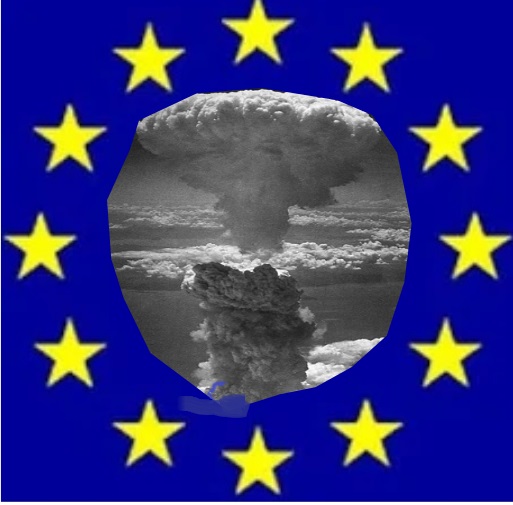
it would be much better if the leaders of the EU spend as much time on diplomacy with Russia than in building up European defense.
Instead of investing in weapons of mass destruction, making EU defense more efficient should be the priority as well as integrating Russia into a larger collective security organization
Tom Sauer |11.03.2025 , https://www.aa.com.tr/en/opinion/opinion-towards-a-eurobomb-the-costs-of-nuclear-sovereignty/3505915
The author is a professor in International Politics at the University of Antwerp in Belgium.
- If American soldiers or the tactical nuclear weapons are withdrawn, the odds are that the Europeanization of the French (and maybe British) nuclear weapons in one way or another may indeed become reality
ISTANBUL
The Trump administration’s recent isolationist statements, amid the talks of war in Europe, have revived discussions on Europeanizing French (and possibly British) nuclear weapons. After 75 years of NATO, concerns over US abandonment are increasingly shaping European foreign policy discussions. In the past, the French idea of a “dissuasion concertée (concerted deterrence) was mostly met with silence, especially in Germany. This time around the conservative leader Friedrich Merz seems in favor despite the fact that NATO is still alive and the US still has 100,000 soldiers and 100 tactical nuclear weapons in Europe. These weapons are stationed in Türkiye, Germany, Italy, the Netherlands, and Belgium. If the soldiers or the tactical nuclear weapons are withdrawn, the odds are that the Europeanization of the French (and maybe British) nuclear weapons in one way or another may indeed become reality.
There are different scenarios imaginable. The first step is for European nuclear states to declare that their “national interests” align with “European interests,” a principle already reflected in the Lisbon Treaty. The latter, by the way, also contains a collective defense clause similar to NATO’s Article 5. Further steps could be imagined to make these statements more credible: information exchange, consultation, joint planning, joint exercises, and co-financing. Another step could involve deploying French dual-capable aircraft in Germany or Poland. A final step would be the creation of an EU nuclear bomb in a European Defense Union (EDU). It remains, however, still to be seen how the Ukraine war will accelerate the pace towards such an EDU.
What are the costs of Europeanization of nuclear weapons?
First of all, the assumption that nuclear deterrence works is uncertain. Advocates of nuclear weapons believe that it works. They forget that in history many nuclear weapon states (including Israel, India, the UK) have been attacked by non-nuclear weapon states. In theory, it is very hard to make it work as it assumes for instance a rational enemy. It also assumes that the possessor is really prepared to use them. However, if used on a massive scale, it means the annihilation of the planet. In the war in Ukraine, French President Emmanuel Macron for that reason stated that even if Russia uses a tactical nuclear weapon in Ukraine, France would not retaliate with nuclear weapons.
Secondly, emerging and disruptive technologies (like AI) and weapon systems (like hypersonic missiles) will further undermine the so-called nuclear stability. Ideally, conventional deterrence (using hypersonic missiles) could and should replace nuclear deterrence on the condition that all nuclear states agree.
Thirdly, extended nuclear deterrence, read the atomic umbrella, is even more incredible. As early as the 1970s, Henry Kissinger cautioned Europeans against assuming that the US would employ nuclear weapons for their defense. That is also the reason why France did not want to shelter under the US umbrella, and why it built its own nuclear arsenal in the 1950s. Ironically, France now offers its umbrella to its European partners.
Fourthly, as long as there is no EDU, the question will be whose finger will be on the button. Macron is very clear: it will be his finger. The question then becomes whether German taxpayers would be interested in co-financing a strategic weapon system that they cannot control in times of war.
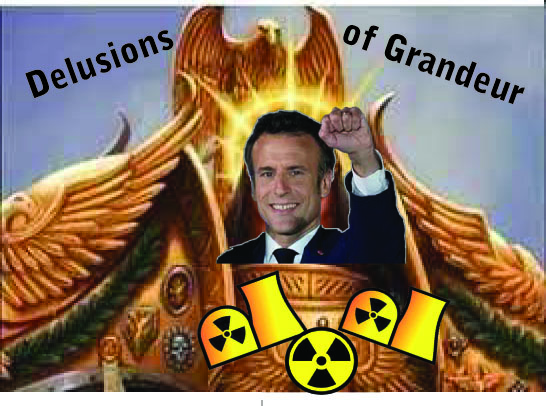
Fifthly, by Europeanizing the French nuclear weapons, the EU legitimizes nuclear weapons. This complicates the fight against proliferation. How sustainable is it to ask Iran not to produce nuclear weapons when the EU itself is setting up a nuclear arsenal?
There are also concerns about whether Europeanization aligns with the Nuclear Non-Proliferation Treaty, particularly if Germany and Poland were to develop their own nuclear capabilities. Both ideas also go against the spirit and the letter of the Treaty on the Prohibition of Nuclear Weapons (2017) that in the meantime has been signed by more or less 100 states.
Sixthly and lastly, it would be much better if the leaders of the EU spend as much time on diplomacy with Russia than in building up European defense. It is high time that the war in Ukraine ends, not only for humanitarian but also economic reasons. A peace agreement ideally includes a beginning of a restructuring of the European collective security architecture that includes both Russia and Ukraine, either in a transformed NATO or an upgraded Organization for Security and Cooperation in Europe (OSCE). If such an agreement is reached, there would be little justification for further fragmenting European defense into over 25 separate, small-scale military forces. Nowadays already the European NATO member states spend $485 billion on defense, much more than Russia ($120 billion). The primary challenge for EU defense today is not the absence of a Eurobomb but the lack of coordination in pooling, sharing, and specialization. Instead of investing in weapons of mass destruction, making EU defense more efficient should be the priority as well as integrating Russia into a larger collective security organization.
Delusional, ruinous and obsolete -the ITER nuclear fusion project
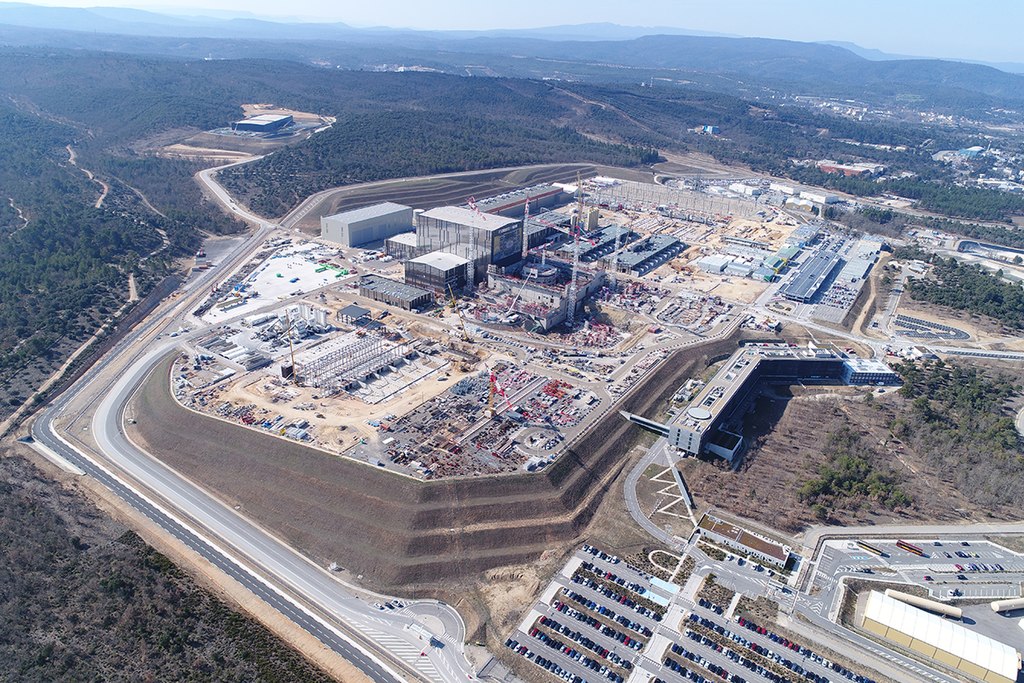
The ITER fusion project is 18 years late and can do nothing about climate change, writes Antoine Calandra
https://beyondnuclearinternational.org/2025/03/16/delirante-ruineuse-et-obsolete/
ITER (International Thermonuclear Experimental Reactor) is an international tokamak nuclear fusion research and engineering project, which has been significantly over budget and schedule, and is currently under construction next to the Cadarache nuclear facility in southern France.
India is one of the seven partner countries in the ITER project, along with the European Union, Russia, Japan, the United States, China, and South Korea. Macron may boast as much as he likes, but ITER is a complete fiasco, a delusional, ruinous, and obsolete project.
On November 14, 2024, the annual public meeting entitled: ITER, 15 years: what assessment? was held in Peyrolles.
I was expecting a big event and to get some recent information on the ITER construction site…But surprise, none of that!
A nondescript multipurpose room, no decor, no documents available, unpleasant white light, around forty people present, only interns (CEA ITER* employees, CLI members, local elected officials, a few union members)
For the event, the tables and chairs were arranged differently, “for a more convivial, cabaret-like atmosphere,” I heard. Oh!?
Pietro Barabaschi, Director General of ITER, was not there.
No agenda to announce the evening’s schedule with the names of the speakers, as in previous occasions. A very meager presentation of the ITER project (5 or 6 images) and that was it. And “time for questions from the audience.” Ah!
In short, the most pathetic ITER public meeting I have ever attended. A public meeting that reflects the ITER assessment.
ITER, what is the outcome?….a disaster!
We already wrote in 2005 with the MEDIANE association: “ITER, a dangerous, ruinous and doomed nuclear project”
The latest important news regarding ITER came on July 3, 2024, during the press conference of Pietro Barabaschi, the current ITER Director General, news that had been expected for a year.
A new calendar: 9 more years late!
The first plasma was originally scheduled for 2016, then postponed to 2025. It has been postponed to 2034. We are 18 years behind schedule.
And with the new calendar, an additional cost of €5 billion!
That’s at least €25 billion of public money to date, a cost multiplied by five. And in reality, more than €40 billion, including the in-kind contributions from the project’s partner countries.
The ITER Director acknowledged that “Fusion cannot come in time to solve the problems our planet faces today, and investments in other technologies, both known and unknown, are absolutely necessary.”
However, the speeches and commitments to get this nuclear fusion project accepted were completely different in 2006 at the time of this charade of public debate.
It was even possible to read that after ITER, DEMO, a pre-industrial demonstrator, was planned to “prove the industrial feasibility of this technology around 2040 and demonstrate that fusion can, by 2050, produce electricity on an industrial scale.”
Once again, the seven partner countries (the European Union, Russia, Japan, the United States, China, India, and South Korea) have agreed to pay more. But the ITER Director is now considering finding private actors to try to fill this financial gap.
Several private companies no longer expect anything from ITER, but they firmly believe in nuclear fusion and promise electricity production in a shorter timeframe.
Some even claim that ITER will be obsolete by the time it is commissioned.
I would add that ITER will probably not work and that there will never be industrial production of electricity through nuclear fusion.
Nuclear fusion will be neither “a revolution for humanity” nor “the energy of the future.”
It is not clean energy, nor even abundant energy. It is dangerous to human health and produces radioactive waste.
Its interest is above all military and to try to save the nuclear industry which has been in a bad state for several years.
ITER will probably never work and will end in total fiasco, worse than SuperPhénix*, which was supposed to be the flagship of the French nuclear industry.
But by squandering all these billions, the ITER monster will have succeeded in blocking any progress towards another energy model and imposing the continuation of the nuclear industry for years to come.
This myth of free and inexhaustible energy that allows for indefinite consumption and waste must be eradicated from people’s minds once and for all. It is also time to put an end to this gigantism and centralization of production in the hands of powerful, commanding states that serve the richest.
The solutions for the future have been known for a long time:
save energy, put an end to waste, develop and improve renewable energies (solar, wind, hydraulic) the only truly clean and future energies.
And not to develop them in an industrial and centralized manner, which is obviously and unfortunately the case.
The industrialization of the world must be fought. A new social project is a prerequisite for any energy project.
The future lies in small production units, local or regional, with technology accessible to the greatest number, low energy consumption, avoiding the cost of distribution.
Nuclear fusion, like fission, is a dangerous, dirty, and expensive energy source. It’s a complex, centralized technology reserved for wealthy countries, leading to proliferation, dependency, injustice, and war.
* CEA: Atomic Energy Commission
* CLI: Local information commission
* SuperPhénix, a former nuclear reactor, commissioned in 1986 and definitively shut down in 1997, is a prototype of a sodium-cooled fast neutron reactor. A dangerous machine that consumed more than 60 billion francs while operating for only thirty months in its twelve years of existence.
Antoine Calandra is a former administrator of the “Sortir du nucléaire” network and a member of the Médiane association. This article was first published in French on Mediapart.
Australia’s Trump cards
by Rex Patrick | Mar 16, 2025, https://michaelwest.com.au/tariffs-australias-trump-cards/

Australia does have Trump cards; North West Cape, Pine Gap, US Marine Rotational forces in Darwin, AUKUS and/or critical minerals that the US needs. Perhaps it’s also time to cancel the traitorous quantum computing development contract given to a US company over Australian companies.
These are things that we can put on the table. But doing that requires a measure of boldness. Our problem is our Prime Minister doesn’t have the ticker. Neither does the opposition leader. They are with Trump internationally as they are with the gas cartel domestically; owned and weak.
Anthony Albanese has it all wrong, writes former senator and submariner Rex Patrick. He’s trying to bribe Trump with sweeteners in response to trade tariffs. Instead, he needs to tell Trump he’s prepared to take things away.
US nuclear deterrent
Deep beneath the Indian Ocean, USS Kentucky, a nuclear-powered Ohio Class Ballistic Missile Submarine (SSBN) ploughs its way through the water. Contained within its 18,750 tonne pressure hull structure are 24 Trident ballistic missiles, each capable of carrying eight nuclear warheads to targets up to 12,000 km away.
The launch of all of USS Kentucky’s missiles would, quite literally, change the world by exacting severe destruction on whole societies.
This ability to inflict damage on an exceptionally large scale is the basis of the SSBN’s deterrent capability. Unlike silo based missiles, which are vulnerable to a first strike, or aircraft delivered nuclear weapons, which can be pre-emptively hit or shot down, SSBNs are essentially invisible. They provide certainty of response.
SSBNs serve as the ultimate nuclear deterrent. They’re extremely important to the US, whose navy possesses 14 of them. At any one time six to eight will be at sea, with four of them always on deterrent patrol. They are spread about the globe giving the US President the ability to quickly deliver return-fire with nuclear warheads at any adversary.
24/7 Operation
The primary performance metric for an SSBN is to be able to deliver its nuclear weapons with reliability, timeliness and accuracy.
The Commanding Officer of USS Kentucky must be able to loiter undetected in a place suited for the launching of weapons, be able to receive an order to launch, have an understanding of the submarine’s exact navigational position to a high degree of accuracy and have the ability to launch the weapons quickly and reliably once that order arrives.
Loitering undetected and being able to receive an order to launch is challenging. When a submarine is near the surface, their hulls can be seen by aircraft, and raised periscopes and communications masts can be seen visually and on radar. Operating a submarine at shallow depth can also result in acoustic counter-detection.
The Commanding Officer of USS Kentucky knows that deep is the place to be.
But being deep frustrates a submarine’s ability to receive communications, particularly an ‘emergency action message’.
And that’s were Very Low Frequency (VLF) communications stations come into play. In conjunction with a submarine’s buoyant wire antenna – a long wire that sits just below the sea surface – they can receive a launch command from the President.
The US has a network of these VLF communication stations around the world including in Maine, Washington state and North West Cape, Australia.
North West Cape
The VLF Communication Facility at North West Cape (NAVCOMMSTA Harold E Holt) has been in operation since 1967. Born of secrecy, it was at first exclusively US operated until 1974 when the facility became joint and started communicating with Australian submarines. In 1991 it was agreed that Australia would take full command in 1992 and US Naval personnel subsequently left in 1993.
The facility’s deterrence support role now rests on a 2008 treaty which, ratified in 2011, is formally titled the “Agreement between the Government of Australia and the Government of the United States of America relating to the Operation of and Access to an Australian Naval Communication Station at North West Cape in Western Australia”.
The station’s antenna is 360 meters high, with a number of supporting towers in a hexagon shape connected to it by wires. Considered to be the most powerful transmitter in the southern hemisphere, it transmits on 19.8 kHz at about 1 megawatt.
The station enables emergency action messages to be relayed to submerged SSBNs, like USS Kentucky, when operating in the Indian and Western Pacific oceans.
If the facility was taken out by a first strike nuclear attack, the US Air Force can temporarily deploy Hercules ‘TACAMO’ aircraft, with a long VLF wire they deploy while airborne. It’s a back-up measure with much lower transmission power capabilities.
A bedrock of certainty
After US steel and aluminium tariffs were put into play, the Australian Financial Review ran with a headline “How Australia was blindsided on the US tariffs”. The article opened with, “Australia pulled out all stops to avoid Donald Trump’s duties on steel and aluminium, but it’s impossible to negotiate with someone who doesn’t want anything”.
But the US does want something.
A fact not so well appreciated with respect to nuclear deterrence is it must be seen to be a robust and continuous capability. Onlookers must see a 24/7 capability including deployable submarines manned by well-trained crews, proven and reliable missile systems, an organised strategic command, a continuous communication system that reliably links that strategic command to the submarines with appropriate redundant communication pathways, training facilities and maintenance support.
Potential adversaries must know that they could be struck by an SSBN that could be lurking anywhere in the world’s major oceans.
Effective nuclear deterrence must be built on a bedrock of operational certainty.
Remove the transmitter keys
North West Cape forms part of that certainty.
Australia has the keys to take some certainty away. Without our cooperation the US can’t operate a certain global deterrent capability. Turning off transmissions at North West Cape reduces the effectiveness of the US nuclear deterrence while eliminating one Australian nuclear target
The North West Cape Treaty provides leverage. While the agreement has another decade to run, Article 12 provides that “either Government may terminate this Agreement upon one year’s written notice to the other Government.”
It’s open to Australia to signal or give actual notice of termination. That would focus up policy makers in Washington.
Would we do that to a mate? No, but the US is showing they are not a mate. They are not showing us the loyalty we have shown them. Other actions; abandoning Ukraine, threatening Greenland and Panama and a not so subtle push to annex Canada have also shown they are an unreliable ally who doesn’t share our values.
Trump cards
In negotiating with President Zelensky over the war in Ukraine, President Trump told him in no uncertain terms. “We’re going to feel very good and very strong. You’re, right now, not in a very good position. You’ve allowed yourself to be in a very bad position. You don’t have the cards right now with us.”
But Australia does have Trump cards; North West Cape, Pine Gap, US Marine Rotational forces in Darwin, AUKUS and/or critical minerals that the US needs. Perhaps it’s also time to cancel the traitorous quantum computing development contract given to a US company over Australian companies.
These are things that we can put on the table. But doing that requires a measure of boldness. Our problem is our Prime Minister doesn’t have the ticker. Neither does the opposition leader. They are with Trump internationally as they are with the gas cartel domestically; owned and weak.
Things have changed
Alliances are means to ends, not an end in themselves; and, as pointed out above, things have changed. We can pretend everything is okay, but that doesn’t make it so.
But the bureaucracy is unlikely to advise the Government of alternatives.
Our uniformed leaders are locked into AUKUS, a program that gives them relevance at the big table; something they wouldn’t otherwise have with the depleted Navy they’ve built out of their procurement incompetence. They’re clinging to that relevance, despite all signs showing the program is running aground.
Our spooks are in the same place. In response to calls to put Pine Gap on the table, former Home Affairs Secretary Mike Pezzullo (sacked for failing to safeguard sensitive government information) spoke out, putting the facility ahead of trade interests and Aussie jobs.
The bulk of the intelligence from Pine Gap is very usable for the US and rather less so for Australia. Senior spooks just want to maintain their own relevance in the Five Eyes club; but it’s a mistake to conflate their interest with our national interest.
We should be prepared to play our Trump cards and we should be prepared to face the national security consequences.
If that means an Australia that‘s more independent and more self-reliant, that would be a very good thing. If there’s a shock to the system, then all well and good, because in the changing world we find ourselves in, it might be the only thing that wakes the Canberra bubble from its stupor and pushes us to actually be prepared.
In these uncertain times, there are no hands more trustworthy than our own.
Rex Patrick is a former Senator for South Australia and earlier a submariner in the armed forces. Best known as an anti-corruption and transparency crusader, Rex is running for the Senate on the Lambie Network ticket next year – www.transparencywarrior.com.au.
Putin Signals He’s Open to Ceasefire as Witkoff Arrives for Talks.
An aide to Putin said the proposal would only help Ukraine regroup and that it would need to be adjusted to meet Moscow’s position
by Dave DeCamp March 13, 2025, https://news.antiwar.com/2025/03/13/us-envoy-arrives-in-russia-to-discuss-30-day-ceasefire-proposal-with-putin/
Russian President Vladimir Putin has signaled that he’s open to a ceasefire in Ukraine but that he has “questions” about the 30-day US-Ukraine proposal that need to be discussed.
“The idea itself is the right one, and we definitely support it,” Putin said, according to The New York Times. “But there are questions that we need to discuss, and I think that we need to talk them through with our American colleagues and partners.”
The Russian leader listed potential conditions for a 30-day truce, including a guarantee that Ukraine wouldn’t be supplied with more weapons. “We also want guarantees that during the 30-day ceasefire, Ukraine will not conduct mobilization, will not train soldiers, and will not receive weapons,” he said, according to RT.
Putin also questioned who would monitor the ceasefire. “Who will determine where and who has violated a potential ceasefire agreement along a 2,000-kilometer line? Who will attribute blame for any violations? These are all questions that require thorough examination from both sides,” he said.
The Russian leader said any long-term peace deal needs to address the “root causes” of the war. He made the comments as US envoy Steve Witkoff arrived in Russia to discuss the proposal. Yuri Ushakov, a Kremlin official, said Witkoff would be holding a closed-door meeting with Putin.
Ushakov also said the US-Ukraine proposal would only give Ukraine a chance to regroup, and it would need to be adjusted to meet Moscow’s interests.
“As for the 30-day temporary ceasefire, what is it about? There is nothing in it for us. It will only provide the Ukrainians with the opportunity to regroup and gain strength to continue doing what they are doing,” he said, according to Russia’s TASS news agency.
“These are some hasty actions that do not benefit a long-term settlement … We will need to work on it, to think it over so that it reflects our position, too. It reflects only Ukraine’s stance at this point,” he added.
Ushakov said that Russia wanted a long-term peace deal and that the “official” Russian position on the US-Ukraine proposal would be formulated by Putin.
Russian Foreign Minister Sergey Lavrov made similar comments opposing the idea of a temporary ceasefire, pointing to the Minsk Accords, which were first reached in 2014 for a truce in Ukraine’s eastern Donbas region. Lavrov also mentioned the “Istanbul agreement,” referring to a peace deal that was on the table in March and April 2022, which was discouraged by the US and its allies.
“I’m talking about the Minsk Accords, the deal that was discarded after the 2014 coup, and the Istanbul agreements. All of those included a ceasefire. And every time, it turned out that they had lied to us. The Ukrainians lied with the support of their European partners,” Lavrov said.
A joint statement between the US and Ukraine that was released after talks in Saudi Arabia on Tuesday said that Ukraine had “expressed readiness to accept the US proposal to enact an immediate, interim 30-day ceasefire, which can be extended by mutual agreement of the parties, and which is subject to acceptance and concurrent implementation by the Russian Federation.”
The statement also said that the US had resumed military aid and intelligence sharing for Ukraine, which was briefly paused. US Secretary of State Marco Rubio has said that if Russia doesn’t accept the 30-day proposal, the US would then know who the “impediment” to peace is, signaling he wants the proxy war will continue as usual if a deal isn’t reached.
China, Russia back Iran as Trump presses Tehran for nuclear talks

By Ryan Woo, Xiuhao Chen and Laurie Chen, March 14, 2025,
- Summary
- China, Russia, Iran say talks should be based on mutual respect
- They say ‘unlawful’ unilateral sanctions should be lifted
- China, Russia urge respect for Iran’s right to peaceful uses of nuclear energy
BEIJING, March 14 (Reuters) – China and Russia stood by Iran on Friday after the United States demanded nuclear talks with Tehran, with senior Chinese and Russian diplomats saying dialogue should only resume based on “mutual respect” and all sanctions ought to be lifted.
In a joint statement issued after talks with Iran in Beijing, China and Russia also said they welcomed Iran’s reiteration that its nuclear programme was exclusively for peaceful purposes, and that Tehran’s right to peaceful uses of nuclear energy should be “fully” respected………………………………………………… https://www.reuters.com/world/asia-pacific/china-iran-russia-kick-off-talks-beijing-over-irans-nuclear-issues-2025-03-14/
Royal Navy: Powerful new nuclear submarines being built costing £41bn – when will they enter the fleet?

Ben Obese-Jecty MP, Conservative MP for
Huntingdon, enquired about the construction in a parliamentary written
question to the Ministry of Defence (MoD). Minister of defence procurement,
Maria Eagle, said: “The programme remains on track to manufacture four
Dreadnought Class submarines within the original cost estimate of £41bn,
consisting of £31bn and a contingency of £10bn. The First of Class, HMS
Dreadnought, will enter service in the early 2030s.”
Portsmouth News 14th March 2025.
https://www.portsmouth.co.uk/news/defence/royal-navy-new-nuclear-submarines-when-5033798
An Unreliable America Means More Countries Want the Bomb
By Debak Das, an assistant professor at the Josef Korbel School of International Studies at the University of Denver, and Rachel A. Epstein, a professor of international relations at the Josef Korbel School of International Studies at the University of Denver.
Without credible U.S. security guarantees, nuclear proliferation is likely to increase
rapidly across Europe and Asia. U.S. President Donald Trump’s recent
foreign-policy moves have alienated the country’s traditional allies in
Europe while stirring glee in Moscow. While it’s a catastrophic
development for Ukrainian security and democracy, this paradigmatic shift
portends much larger risks for global security.
The most pressing is the
threat of rampant nuclear proliferation that the Trump administration’s
actions will elicit. While on the surface it might seem as though a warmer
relationship between two of the world’s largest nuclear powers could
reduce the risk of nuclear war, the opposite is true.
We are on the precipice of a global turn toward nuclear instability, in which many
countries will be newly incentivized to build their own arsenals,
increasing the risk of nuclear use, terrorist subversion, and accidental
launch. Countries like South Korea, Japan, Iran, and Saudi Arabia are all
so-called nuclear latent states that could potentially build nuclear
weapons quickly—as are Germany, Belgium, Italy,
Foreign Policy 14th March 2025, https://foreignpolicy.com/2025/03/14/trump-nuclear-weapons-proliferation-nato-security-guarantees-korea-poland-germany-japan/
The Volunteer “Data Hoarders” Resisting Trump’s Purge
Can librarians and guerrilla archivists save the country’s files from DOGE?
New Yorker, By Julian Lucas, 15 Mar 25
The deletions began shortly after Donald Trump took office. C.D.C. web pages on vaccines, H.I.V. prevention, and reproductive health went missing. Findings on bird-flu transmission vanished minutes after they appeared. The Census Bureau’s public repository went offline, then returned without certain directories of geographic information. The Department of Justice expunged the January 6th insurrection from its website, and whitehouse.gov took down an explainer page about the Constitution. On February 7th, Trump sacked the head of the National Archives and Records Administration, the agency that maintains the official texts of the nation’s laws, and whose motto is “the written word endures.”
More than a hundred and ten thousand government pages have gone dark in a purge that one scientist likened to a “digital book burning,” and which has proved as frightening in its imprecision as in its malice……………………………………………………………………………………. (Subscribers only)
https://www.newyorker.com/news/the-lede/the-data-hoarders-resisting-trumps-purge?utm_source=nl&utm_brand=tny&utm_mailing=TNY_Science_031525&utm_campaign=aud-dev&utm_medium=email&bxid=5be9d23d24c17c6adf3bf435&cndid=30183386&hasha=432fc0d0ad6543e820e2dfcd39f76c35&hashb=e1c24f6a6459c7d1d625eb2ea55d9dfbbb4633bf&hashc=ac5a1f5526e7292c73f49dfa8fb6d5d0cb87d8773cec3b9b03d38a4ce482d7c8&esrc=subscribe-page&mbid=CRMNYR012019&utm_term=TNY_Science_Tech
How multi-billion nuclear weapons facility aims to overcome challenge of limited supply chain
New Civil Engineer 14th March 2025, By Tom Pashby
The UK’s nuclear warhead manufacturing organisation is facing recruitment challenges as it attempts to attract civil engineering firms to work on its multi-billion pound Future Materials Campus (FMC) project.
What is AWE’s FMC?
AWE (the Atomic Weapons Establishment) is seeking construction and engineering partners to build a new manufacturing facility at its AWE Aldermaston site in Berkshire for its next generation ‘Astraea’ nuclear warhead.
AWE said: “[The FMC] is part of a wider, multi-year multi-billion-pound portfolio of infrastructure investment that will support us in our overall purpose to protect the UK through nuclear science and technology and enable nuclear science for generations to come.”
AWE recognises supply chain capacity is ‘one of the biggest challenges’
NCE spoke with AWE to learn about what the organisation is doing to address supply chain constraints as the civil nuclear sector – and infrastructure more broadly – gears up for expected increase in investment and demand.
“One of the biggest challenges we anticipate is ensuring sufficient supply chain capacity and capability to deliver a programme of this scale and complexity,” AWE said.
……………………………………….NCE recently spoke with University of Sussex principal research fellow Phil Johnstone, who said that the demand for more skills capacity in the wider UK nuclear sector is push factor for the demand for the FMC, in addition to its role in providing warheads. This aligns with AWE’s assertion that its FMC will “enable nuclear science for generations to come”……………………………………………………………………………………..
Civil engineering trade representative says all projects facing skills challenges………………………………………………………………………………. https://www.newcivilengineer.com/latest/how-multi-billion-nuclear-weapons-facility-aims-to-overcome-challenge-of-limited-supply-chain-14-03-2025/
The forever wars may be over, but Trump is no peacemaker
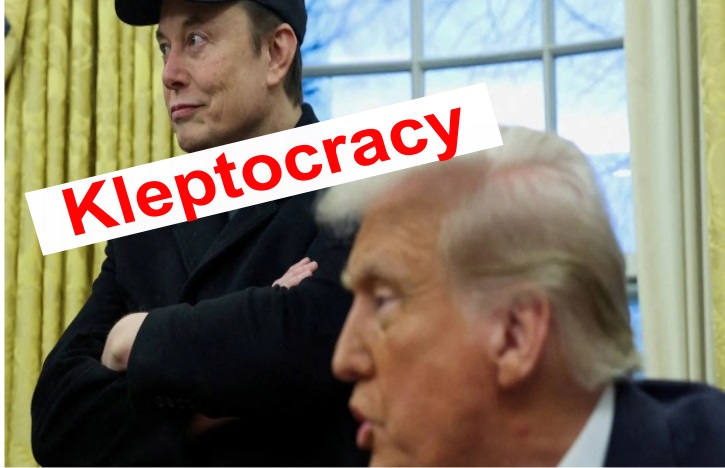
The reassuring, knee-jerk response is to take one side or another. Either Trump is a mould-breaker, remaking a dysfunctional world order. Or he is a fascist-in-the-making, who will hasten the collapse of the established world order, bringing it crashing down on our heads.
The truth is he is both.
The far-right, most especially Trump, is riding that wave of disillusionment. And its success stems precisely from this rule-breaking, by presenting itself as a new broom sweeping away the old guard of corporate war-makers.
MIDDLE EAST EYE, Jonathan Cook, 14 March 2025
The new guard of kleptocrats are seeking quick deals on Gaza and Ukraine not because they want peace but because they have found a better way to make themselves even richer.
nyone trying to make sense of the Trump administration’s policy towards Gaza should have a thumping headache by now.
Initially, US President Donald Trump called for the mass expulsion of Palestinians from the tiny territory wrecked by Israel over the past year and a half, so that he could build the “Riviera of the Middle East” on the crushed bodies of Gaza’s children.
He followed up last week with an explicitly genocidal threat addressed to “the people of Gaza” – all two million-plus of them. They will be “DEAD” if the Israeli hostages held by Hamas are not quickly released – a decision over which Gaza’s population has precisely no control.
To make this extermination threat more credible, his administration has expedited the transfer of an extra $4bn worth of US weapons to Israel, bypassing Congressional approval.
Those arms include more of the 2,000lb bombs sent by the Biden administration, which turned Gaza into a “demolition site“, as Trump himself called it.
The White House also nodded through Israel’s reimposition of a blockade that has once again choked off food, water and fuel to the enclave – further evidence of Israel’s genocidal intent.
But while all this was going on, Trump also dispatched to the region a special envoy, Adam Boehler, to negotiate the release of the few dozen Israeli hostages still held in Gaza.
He was given permission to break with 30 years of US foreign policy and meet directly with Hamas, long designated a terrorist organisation by Washington.
‘Pretty nice guys’
The meeting reportedly took place without Israel’s knowledge.
One Israeli official observed: “You can’t announce that this organisation [Hamas] needs to be eliminated and destroyed, and give Israel full backing to do it, and at the same time conduct secret and intimate contacts with the group.”……………………………………………………………………
…………………..the White House hoped to “jump-start” talks and the US was not “an agent of Israel” – implicitly acknowledging that, for many decades, it has very much looked like one.
Trump indicated a change of heart himself on Wednesday, telling reporters at the White House: “Nobody will expel the Palestinians.”
Sword of retribution
Meanwhile, apparently confounding Boehler’s claim that the US is able to make its own decisions about the Middle East, Trump was reported on Thursday to have removed him from dealing with the hostages issue following Israeli objections. Meanwhile, Trump noisily shredded First Amendment protections on political speech, specifically in relation to Israel.
He signed an executive order empowering US authorities to arrest and deport visa holders protesting Israel’s year-and-a-half-long slaughter in Gaza – or what the world’s highest court is investigating as a “plausible” genocide.
That quickly resulted in the arrest of Mahmoud Khalil, a leader of last spring’s student protests at New York’s Columbia University – one of the most high-profile of dozens of protracted demonstrations on US campuses last year, which were often met with police violence.
The Department of Homeland Security accused Khalil of “activities” – namely, campus protests – supposedly “aligned to Hamas”. These demonstrations, it alleged, threatened “US national security”.
“This is the first arrest of many to come,” Trump wrote on social media, declaring that his administration would be coming after anyone “engaged in pro-terrorist, anti-Semitic, anti-American activity”. Axios reported last week that Secretary of State Marco Rubio planned to use AI to search through foreign students’ social media accounts for signs of “terrorist” sympathies.
These developments formalise Washington’s working assumption that any opposition to Israel’s killing and maiming of tens of thousands of Palestinian children should be equated with terrorism – a view increasingly shared, it seems, by UK and European authorities.
In concert, the White House announced that it was cancelling some $400m in federal grants and contracts to Columbia University over its “continued inaction in the face of persistent harassment of Jewish students”.
Confusingly, the university administration was among the most hardline in calling in police to crush the protests against the genocide. But the financial cuts had the intended effect, with Columbia announcing on Thursday it would inflict stringent punishments, including expulsions and degree revocations, on students and graduates who had taken part in a campus sit-in last year.
Some 60 other institutions have reportedly received letters warning that they are in danger of funding cuts if they do not “protect Jewish students” – a reference to those who cheerlead Israel’s war crimes.
That will come at a heavy price for other students, including many Jewish students, who have been exercising their constitutional right to criticise Israel’s crimes.
A sword of retribution now hangs over every single publicly funded centre of higher learning in the US: crush any sign of opposition to Israel’s destruction of Gaza, or face dire financial consequences.
‘Baffling rhetoric’
Does any of this amount to a clear strategy? Does it make any sense?
These mixed messages fit a pattern with the Trump administration. Its wider strategy is, as Francesca Albanese, the United Nations special rapporteur on the occupied territories, calls it: psychological overwhelming.
“Hitting us every day with XXL [extra-extra large] doses of baffling rhetoric and erratic policies serves to ‘control the script’, distracting and disorienting us, normalising the absurd, all while disrupting global stability (and consolidating US control).”
The White House is doing something similar over Ukraine……………….
The Trump administration’s goal is to normalise its inconsistencies, hypocrisies, lies and misdirections so they become entirely unremarkable.
Opposition to its will – a will that can change from day to day, or week to week – will be treated as treasonous. The only safe response in such circumstances is acquiescence, passivity and silence.
In the tumultuous political landscape Trump has created, the one constant – our North Star – is the western media’s uncritical cheerleading of the West’s war industries.
Consider the Biden administration. The media’s harshest condemnation came not over the destruction Washington wrought on Afghanistan during its 20-year occupation, but for ending the war – a war that had left the country in ruins and the official enemy, the Taliban, stronger than ever.
Contrast that with the media’s resolutely muted response to Biden’s 15 months of arming Israel’s genocide in Gaza. In doing so, they eagerly cast aside their supposed humanitarian concerns, including their ritualistic nods to the post-Second World War global order and international law.
Similarly, the media have been openly critical of Trump’s overtures to Russia over Ukraine, siding with European leaders who insist the war must continue to the bitter end – regardless of how much higher the death toll of Ukrainians and Russians climbs as a result.
And predictably, the media have gone out of their way to accommodate Trump’s Israel-supporting, openly genocidal rhetoric and actions towards Gaza.
It was astonishing to watch outlets that regularly portray Trump as a threat to democracy contort themselves to whitewash his explicit call to exterminate “the people of Gaza” should the hostages not be immediately released. Instead, they mendaciously suggested he was referring only to Hamas leadership.
It is not just Trump and his team who are well practised in the dark arts of deception.
Illegitimacy trap
While the Trump administration may be playing fast and loose with Washington’s political culture, it is largely adhering to the West’s traditional script on Israel and Palestine.
Witkoff and Boehler are deploying a well-worn strategy, binding the Palestinians into what could be called an illegitimacy trap. Damned if you do; damned if you don’t.
Whatever Palestinians choose – however much they are dispossessed and brutalised – it is they, and anyone who supports them, who are cast as the villains. The criminals. The oppressors. The Jew-haters. The terrorists……………………………………..
until now, Hamas has always been excluded from negotiations. The talks that have taken place – over its head – have operated on the assumption that Hamas must be disarmed before Israel is expected to make any concessions.
Hamas must relinquish its weapons voluntarily – against an opponent armed to the teeth, whose bad faith in negotiations is legendary – or it will be forcibly disarmed by Israel or its rival, Fatah.
In other words, peace with Israel is premised on civil war for Palestinians.
That appears to be the course the Trump administration will pursue. For now, it is demanding that Hamas “demilitarise” voluntarily. When that fails, Hamas will find itself back at square one.
Endless accommodation
Faced with Trump’s plan to ethnically cleanse the Palestinians from Gaza, Hamas has precisely no incentive to disarm.
In fact, it has a further disincentive. Fatah is all too visibly caught in its own, even more fatal, illegitimacy trap.
………………………………………………Now Israel is gearing up to formally annex most of the West Bank, backed by the Trump administration. Behind the scenes, the White House is finagling support from the Gulf states.
Fatah cannot extricate itself any more than Hamas from the illegitimacy trap set for it by Washington and Europe.
Clinging to the old order
Paradoxically, critics in Washington – backed by the media and European elites – dismiss Trump’s moves on Ukraine as appeasement of a supposedly resurgent Russian imperialism, rather than as peacemaking.
These same critics are equally discomfited by the Trump administration’s meetings with Hamas.
All of this breaks with the decades-old Washington consensus, which dictates who are the good guys and who are the bad guys, who are the law enforcers and who are the terrorists.
In typical fashion, Trump is disrupting these former certainties.
The reassuring, knee-jerk response is to take one side or another. Either Trump is a mould-breaker, remaking a dysfunctional world order. Or he is a fascist-in-the-making, who will hasten the collapse of the established world order, bringing it crashing down on our heads.
The truth is he is both.
……………………………………………………This new consistency replaces an older one, in which Washington’s elite perpetuated forever wars against painted devils that justified the siphoning of national wealth into the coffers of the war industries on which that elite’s wealth depended.
The pretexts for those forever wars had become so threadbare, and so destabilising in a world of ever-depleting resources, that the elites behind those wars were utterly discredited.
The far-right, most especially Trump, is riding that wave of disillusionment. And its success stems precisely from this rule-breaking, by presenting itself as a new broom sweeping away the old guard of corporate war-makers.
As the Bidens, Starmers, Macrons, and Von der Leyens sink deeper into the mire, the more desperately they cling to a crumbling system. Trump’s disruption works against them.
Feathering their nests
But the new guard is no more invested in peace than the old, as Gaza makes clear. It is simply looking for new ways to do business – new deals that still siphon national wealth away from ordinary people and into the pockets of billionaires. ………………………………………………………………..
The new guard of kleptocrats is less interested in forever wars – not because they have any love for peace, but because they believe they’ve found a better way to make themselves even richer.
This newfound openness to “doing things differently” has an appeal, especially after decades of the same cynical elites waging the same cynical wars.
But make no mistake: the fundamentals remain unchanged. The rich are still looking out for themselves. They are still feathering their own nests, not yours. They still see the world as their plaything, where lesser humans – you and me – are expendable.
If he can, Trump will end the war in Ukraine by cutting a money-making deal, over Kyiv’s head, with Russia.
If he can, Trump will end the slaughter in Gaza by striking a deal with Israel and the Gulf states, over the heads of Hamas and Fatah, to ethnically cleanse the Palestinians from their homeland.
And if he can get away with it, Trump is ready for something else, too. He’s prepared to break heads at home to ensure his critics can’t stop him and his billionaire pals from getting their way. https://www.middleeasteye.net/opinion/us-forever-wars-may-be-over-trump-no-peacemaker
Dialogue only viable option to solve Iranian nuclear issue

Diplomacy must remain the primary tool for resolving disputes and crises, and not be used only as a last resort after aggressive policies have failed
Xinhua, Editor: huaxia, 2025-03-15 more https://english.news.cn/20250315/0e246e2703d64d58a08113de887e3932/c.html
The Iranian nuclear issue is not just about Iran — it is a test of whether global governance will be defined by cooperation or coercion.
BEIJING, March 15 (Xinhua) — In a world fraught with geopolitical tensions, the Iranian nuclear issue is a critical test of the international community’s commitment to peace, diplomacy and multilateralism.
Whether diplomacy prevails or “maximum pressure” tactics take center stage will shape the region’s stability and set a precedent for global non-proliferation efforts.
The joint statement issued by China, Russia and Iran on Friday after a trilateral meeting in Beijing reaffirms a shared conviction: political and diplomatic engagement and dialogue are not merely preferable but the only viable and practical option to address this complex challenge.
At the heart of the discussions was a shared commitment to rejecting unilateral sanctions and coercive measures. Diplomacy must remain the primary tool for resolving disputes and crises, and not be used only as a last resort after aggressive policies have failed.
In an increasingly complex and fragile international environment, relying on sanctions and military posturing is not only counterproductive but also dangerously short-sighted, promoting instability rather than fostering meaningful engagement.
A sustainable resolution requires a holistic approach, one that balances nuclear non-proliferation with the legitimate right to peaceful nuclear energy. While Iran must continue to uphold its commitment not to develop nuclear weapons, all parties must also fully respect its right to civilian nuclear programs, as recognized under international law.
The 2015 Joint Comprehensive Plan of Action (JCPOA) once demonstrated the power of dialogue, proving that even the most entrenched disputes can yield to diplomacy when all parties engage in good faith.
However, the unilateral withdrawal of the United States from the agreement and its subsequent “maximum pressure” campaign have left the JCPOA in jeopardy.
Xinhua Commentary: Dialogue only viable option to solve Iranian nuclear issue
Source: Xinhua
Editor: huaxia
2025-03-15 09:43:15

The Iranian nuclear issue is not just about Iran — it is a test of whether global governance will be defined by cooperation or coercion.
BEIJING, March 15 (Xinhua) — In a world fraught with geopolitical tensions, the Iranian nuclear issue is a critical test of the international community’s commitment to peace, diplomacy and multilateralism.
Whether diplomacy prevails or “maximum pressure” tactics take center stage will shape the region’s stability and set a precedent for global non-proliferation efforts.
The joint statement issued by China, Russia and Iran on Friday after a trilateral meeting in Beijing reaffirms a shared conviction: political and diplomatic engagement and dialogue are not merely preferable but the only viable and practical option to address this complex challenge.
At the heart of the discussions was a shared commitment to rejecting unilateral sanctions and coercive measures. Diplomacy must remain the primary tool for resolving disputes and crises, and not be used only as a last resort after aggressive policies have failed.
In an increasingly complex and fragile international environment, relying on sanctions and military posturing is not only counterproductive but also dangerously short-sighted, promoting instability rather than fostering meaningful engagement.
A sustainable resolution requires a holistic approach, one that balances nuclear non-proliferation with the legitimate right to peaceful nuclear energy. While Iran must continue to uphold its commitment not to develop nuclear weapons, all parties must also fully respect its right to civilian nuclear programs, as recognized under international law.
The 2015 Joint Comprehensive Plan of Action (JCPOA) once demonstrated the power of dialogue, proving that even the most entrenched disputes can yield to diplomacy when all parties engage in good faith.
However, the unilateral withdrawal of the United States from the agreement and its subsequent “maximum pressure” campaign have left the JCPOA in jeopardy.
Against this backdrop, China’s call to uphold the JCPOA as the foundation for renewed consensus is both practical and visionary. The agreement remains a rare diplomatic achievement that balances Iran’s right to peaceful nuclear energy with non-proliferation imperatives — a balance that must guide future diplomatic efforts.
By advocating for a process rooted in respect rather than ultimatums, China seeks to bridge divides and restore the JCPOA’s original spirit.
The trilateral meeting came after six of the United Nations (UN) Security Council’s 15 members — the United States, France, Greece, Panama, South Korea and Britain — met behind closed doors on the Iranian nuclear issue.
This exclusive gathering raises concerns about the politicization of the issue. What is needed now is dialogue and cooperation, rather than an imposed intervention by the Security Council.
Under the current circumstances, a hasty intervention by the Security Council will not help build trust or bridge differences. Meanwhile, triggering a snap-back of sanctions would undo years of diplomatic efforts.
A step-by-step and reciprocal approach is urgently needed. Instead of escalating tensions through unilateral measures, major countries should focus on restoring trust and ensuring compliance through engagement.
The Iranian nuclear issue is not just about Iran — it is a test of whether global governance will be defined by cooperation or coercion.
Europe going nuclear would be a catastrophic mistake
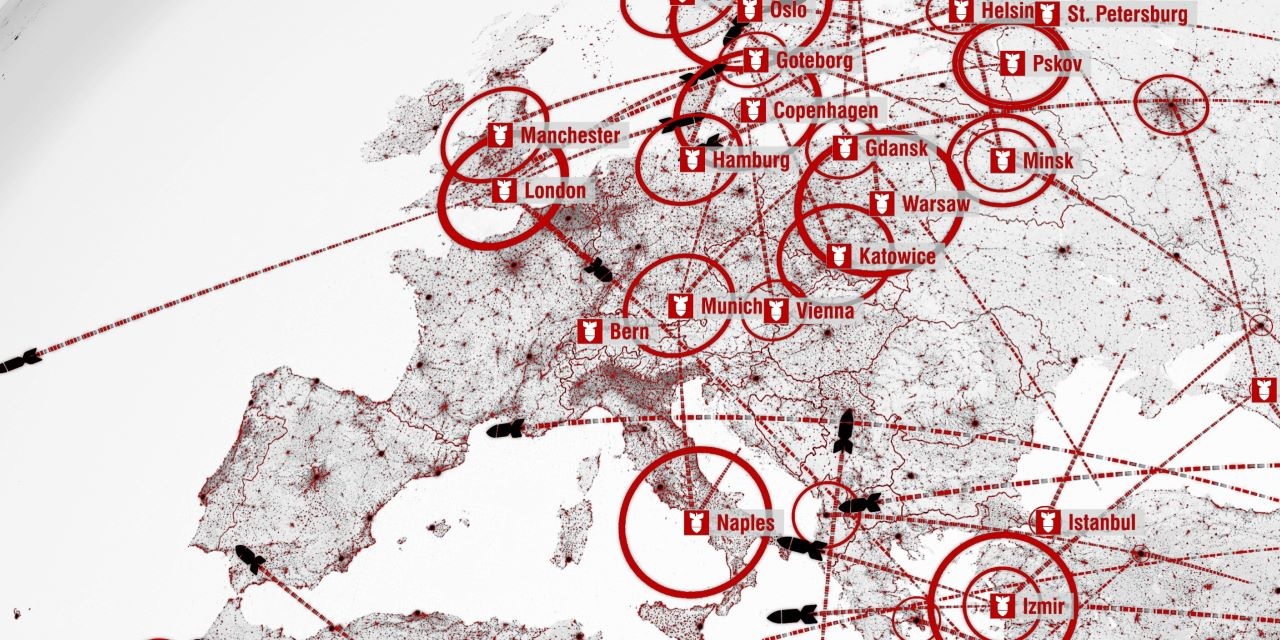
Proposals for nuclear sharing as a form of deterrence risk bringing more insecurity to Europe.
Olamide Samuel, International security expert, 11 Mar 25 https://www.aljazeera.com/opinions/2025/3/11/europe-going-nuclear-would-be-a-catastrophic-mistake
The second administration of US President Donald Trump has brought about tectonic shifts in the European security calculus. Growing anxieties about American retrenchment and the collapse of post-World War II security arrangements have sent European leaders scrambling to put forward alternatives.
Ahead of the German elections last month, Friedrich Merz, the head of the Christian Democratic Union, who was already expected to become the next German chancellor, opined: “We need to have discussions with both the British and the French – the two European nuclear powers – about whether nuclear sharing, or at least nuclear security from the UK and France, could also apply to us”.
Last week, French President Emmanuel Macron said that in response to Merz, he has decided to “open the strategic debate on the protection of our allies on the European continent through our [nuclear] deterrence”.
The proposal for some form of European nuclear sharing arrangement with France and the United Kingdom to protect against threats from Moscow is not new. Versions of it have been floated around for decades.
But today, resurfacing this proposal is not just a geopolitical miscalculation; it is a strategic dead end. It reflects a misreading of both the nuclear balance of power and the existential risks of fragmenting Europe’s security architecture further. Rather than bolstering deterrence, this gambit risks accelerating the very instability it seeks to avert.
Amid the growing unpredictability of United States-Russia relations under the second Trump administration, Europe must pivot from nuclear escapism to a bold agenda of diplomatic engagement on nuclear disarmament.
The fantasy of European nuclear sharing
The proposal for European nuclear sharing founders on arithmetic and strategic reality. Russia’s nuclear arsenal boasts 5,580 warheads, including hypersonic Avangard glide vehicles and Sarmat intercontinental ballistic missiles (ICBMs). This dwarfs the combined Anglo-French stockpile of 515 warheads.
This asymmetry isn’t merely quantitative; it is also doctrinal. Moscow’s “escalate to de-escalate” strategy represents a calculated approach to conflict escalation designed to coerce adversaries into concessions. It is a strategy the British and French nuclear arsenals, optimised for minimal deterrence, cannot counter.
Data on defence spending reveals a deeper flaw: Europeans do not have the funds or the technological capabilities to carry it out while executing their ambitious rearmament plans.
Germany’s 90.6-billion euro ($98bn) military budget remains crippled by inefficiencies, with only 50 percent of army equipment meeting NATO readiness standards. Meanwhile, France and the UK lack the conventional force multipliers – global surveillance networks, intelligence capabilities, or even complete nuclear triads – that underpin US extended deterrence. Even if every euro cent of the European Union’s recently announced 800 billion-euro ($867 billion) defence boost were spent on nuclear weapons programmes, cold-starting the sort of production complexes required for a credible deterrent would still take decades.
Attempting to replicate NATO’s nuclear-coalition model at a European level ignores six decades of integrated command structures and fails to address hybrid threats now defining modern conflict.
What is more, replacing one dependency with another solves nothing. Proponents claim nuclear sharing offers protection, but the reality is that it can lead to strategic subjugation.
Neither France nor the UK is likely to give up control over its nuclear arsenals and transfer it to the EU. That means that a nuclear-sharing agreement would reduce Germany and other European countries participating in the arrangement to Franco-British warhead warehouses with no real agency. This Potemkin deterrence—all ceremony, no substance—would only further irritate Washington.
Trump has already shown that he has no qualms about abandoning allies if he sees no benefit for the US strategic interest. His recent moves to stop intelligence sharing and military aid for Ukraine and his conditioning mutual defence on military spending have exposed NATO’s fraying norms – the alliance is witnessing a collapse of shared purpose.
As experts note, Trump’s “MAGA Carta” foreign policy explicitly rejects strategic altruism. A European nuclear caucus would signal panic, validating Trump’s transactional world view while undermining NATO’s cohesion.
A European nuclear club would deepen fragmentation, emboldening revisionist actors like Russia and China while diverting resources from critical gaps in AI advancement, sustainable economic output, and energy resilience that define 21st-century power.
The economic argument compounds the folly. Pouring billions of euros from Europe’s finite resources into redundant warheads while neglecting practical gaps in conventional capability isn’t statecraft—it’s generational malpractice.
Disarmament and fiscal realpolitik
The EU’s opportunity lies not in nuclear posturing, but in revitalising arms control and mediation. The collapse of the US-Russia strategic dialogue since the invasion of Ukraine has left critical arms control frameworks in disarray.
The New START treaty, which limits deployed strategic nuclear warheads to 1,550 each for Russia and the US, remains the last pillar of bilateral arms control. Its expiration in 2026 without a successor would mark the first time since 1972 that the world’s nuclear superpowers operate without mutually verified limits—a scenario that could trigger a new nuclear arms race.
Herein lies Europe’s opportunity. Rather than pursuing a European nuclear umbrella, it could lead efforts to revive nuclear disarmament dialogue.
Austria, an EU member, has already played a key role in nuclear talks between the West and Iran as well as the 2020 US-Russia-China trilateral arms control discussions. This positions it as an ideal venue for restarting negotiations on nuclear risk reduction issues, especially at a time when Washington is open to renewed dialogue with Moscow.
Taking a lead on nuclear disarmament would be the sort of leadership that would reflect a more mature interpretation of security policy, as opposed to seeking an impossible nuclear deterrence.
Some critics maintain that negotiating with Russia rewards aggression. Yet history shows even bitter adversaries can cooperate on arms control when interests align. The 1987 Intermediate-Range Nuclear Forces Treaty, which eliminated 2,692 missiles, was finalised after years of heightened tensions between the USSR and the US in the early 1980s.
The treaty succeeded not because US President Ronald Reagan and Soviet leader Mikhail Gorbachev trusted each other, but because dismantling missiles saved both sides a significant amount of funds that would have gone into continuing the arms race and maintaining the destroyed ordinance.
Today, with Russia’s economy faltering amid the war in Ukraine and Trump’s fixation with cost-cutting, there is an opportunity to pursue another deal if disarmament is framed not as idealism, but as fiscal pragmatism. Europe can help broker a deal that serves all parties’ wallets—and humanity’s survival.
The unintended consequences of Trump’s first-term nuclear gambits – escalated arms racing, eroded alliances, and emboldened adversaries – offer cautionary lessons. His second term, however, can offer an opportunity to shift the Doomsday Clock back from its position of 89 seconds to midnight.
Europe now faces a choice: to cling to Cold War relics while the planet burns, or to pioneer a security paradigm prioritising planetary survival over great-power vanity. The decision it makes will define not just Europe’s future—but all of humanity’s.

Olamide Samuel. International security expert
Dr Olamide Samuel is a renowned international security expert and Network Specialist at the Open Nuclear Network. Previously, he served as Special Envoy of the African Commission on Nuclear Energy (AFCONE), established by the African Nuclear-Weapon-Free Zone Treaty, also known as the Treaty of Pelindaba.
Court upholds two legal challenges to the Chalk River Radioactive Megadump.

Gordon Edwards, 14 Mar 25
The radioactive megadump planned for Chalk River (an “engineered mound” intended to contain about one million tonnes of so-called “Low-level” radioactive waste in a permanent landfill-like toxic waste dump just one kilometre from the Ottawa River) was planned by Canadian Nuclear Laboratories (CNL) and approved by CNSC.
Three legal challenges against this decision were launched in the Federal Appeals Court. The first had to do with the inadequacy of the safety case and the lack of adequate monitoring of the contents of the megadump. The second had to do with the failure to consult the Indigenous Algonquin peoples as required by the “Duty to Consult” and the UN Declaration on the Rights of Indigenous Peoples (UNDRIP). The third challenge had to do with the failure to consider alternative sites for such a toxic waste facility to provide adequate protection for endangered species.
Although the first challenge was not successful, the good news is that the second and third challenges were upheld by the court and CNSC and CNL will have to re-open the regulatory process to correct the inadequacies that have been noted. This does not mean that the existing megadumo has been forbidden but that more work must be done by both the proponent and the regulator to satisfactorily address these inadequacies.
The success of the third challenge was only announced yesterday.
The Federal Court overturned the Species at Risk permit for the nuclear waste facility planned for Chalk River, just 180 km up the Ottawa River from Ottawa.
The project proponent, CNL, said that the construction would harm, harass, or kill the endangered Blanding’s Turtle and 2 endangered bat species.
The Court found that CNL did not consider all reasonable alternative locations, and CNL admitted that it picked Chalk River even though it was less favourable for protecting species at risk than two other viable sites.
This violated s. 73(3)(a) of the Species at Risk Act, which says that “all” reasonable alternatives that would reduce the impact on species at risk must be considered and the best solution must be adopted.
There’s a lot to parse, but essentially, Justice Zinn agreed about the first 2 issues (not all reasonable locations were considered, and the best option was not chosen), but disagreed about the others (bat boxes, wildlife corridors, bird nests, the Monarch).
The win on the location issue is huge, of course. If they have to pick a new location, they have to start over from scratch and none of the other issues matter. See para 48 (of the decision) for some good reasoning by Zinn J:
“During both the hearing and public consultation with the Canadian Nuclear Safety Commission, CNL conceded that it would only consider non-AECL properties if no suitable AECL-owned site was identified. This admission confirms that CNL’s default approach was to confine its search to AECL lands unless compelled to broaden it. This methodology is directly at odds with the statutory mandate under paragraph 73(3)(a). The Minister failed to reconcile this self-imposed limitation with the statutory requirement for a comparative assessment of ecological impacts on protected species. I am of the view that, even if a non-AECL site posed greater logistical challenges, such as increased transportation distances, the Act would still require CNL to consider it if it offered reduced harm to at-risk species. Administrative or logistical difficulties do not absolve the project’s proponent of its duty to evaluate such alternatives under paragraph 73(3)(a), even if those factors later justify rejecting them.”
Unfortunately, this does not mean that ECCC will not approve the permit for Chalk River. The decision is being sent back for redetermination, as is normal in admin law cases. From Zinn’s interpretation of the statutory language, it’s hard to see how it could be approved for Chalk River, given CNL’s deficient siting process, but Zinn seemed to be aware of these massive implications and tried to avoid these repercussions. He goes out of his way to say that it could be possible for ECCC to approve the permit for Chalk River if 1) they give appropriate justification for only looking at AECL sites (para 50) and 2) interpreted “best option” differently than ECCC has in the past, to include non-species-at-risk factors, and justified this different interpretation (paras 57-61).
-
Archives
- October 2026 (104)
- September 2026 (339)
- August 2026 (330)
- July 2026 (355)
- June 2026 (287)
- May 2026 (306)
- April 2026 (356)
- March 2026 (251)
- February 2026 (267)
- January 2026 (308)
- December 2025 (358)
- November 2025 (359)
-
Categories
- 1
- 1 NUCLEAR ISSUES
- business and costs
- climate change
- culture and arts
- ENERGY
- environment
- health
- history
- indigenous issues
- Legal
- marketing of nuclear
- media
- opposition to nuclear
- PERSONAL STORIES
- politics
- politics international
- Religion and ethics
- safety
- secrets,lies and civil liberties
- spinbuster
- technology
- Uranium
- wastes
- weapons and war
- Women
- 2 WORLD
- ACTION
- AFRICA
- Atrocities
- AUSTRALIA
- Christina's notes
- Christina's themes
- culture and arts
- Events
- Fuk 2022
- Fuk 2023
- Fukushima 2017
- Fukushima 2018
- fukushima 2019
- Fukushima 2020
- Fukushima 2021
- general
- global warming
- Humour (God we need it)
- Nuclear
- RARE EARTHS
- Reference
- resources – print
- Resources -audiovicual
- Weekly Newsletter
- World
- World Nuclear
- YouTube
-
RSS
Entries RSS
Comments RSS

