Lincolnshire council pulls out of nuclear waste disposal siting process
Lincolnshire County Council has decided to withdraw from the geological
disposal facility (GDF) siting process – ending plans to potentially
store nuclear waste in the county. The council’s new executive voted to
withdraw from the Nuclear Waste Services’ (NWS’s) Community Partnership
on 3 June.
A Community Partnership in Theddlethorpe had been established by
the NWS as part of its search to find a GDF site with suitable geology for
storing higher activity radioactive waste underground. The council’s vote
means that it will no longer be a member of Theddlethorpe GDF Community
Partnership. The GDF siting process cannot continue without the support of
the council as the relevant principal local authority, and the Community
Partnership closed with immediate effect.
Ground Engineering 09 June, 2025 By Thames Menteth, https://www.geplus.co.uk/news/lincolnshire-council-pulls-out-of-nuclear-waste-disposal-siting-process-09-06-2025/
NFLAs welcome new group opposed to nuke waste dump in South Copeland

Hot on the heels of the victory in Lincolnshire, the UK/Ireland Nuclear
Free Local Authorities have welcomed the formation of a new ‘Anti GDF
Community Group’ in opposition to a Geological Disposal Facility (GDF) on
land near Millom and Haverigg in West Cumbria.
The GDF would be the final
repository for Britain’s inventory of legacy and future high-level
radioactive waste. Nuclear Waste Services has declared its interest in land
surrounding His Majesty’s Prison Haverigg and Bank Head Estate West of
Haverigg as the potential location for a future surface site for this
facility. This site is designated the Area of Focus in the South Copeland
GDF Search Area.
Following a meeting held by Whicham Parish Council on
Wednesday, at which a resolution was carried unanimously calling on NWS to
withdraw this area from consideration, a statement was issued by the new
group. There is also now a new private Facebook group for impacted
residents to join and a group logo.
The ‘Anti GDF Community Group’ will
aim to support and seek support from both Whicham and Millom Council in
their respective rejections of the area of focus and try to ensure that NWS
and Cumberland Council abide by the NWS statement “that express consent
must be given by those living alongside a GDF” Presently the group is
formed by a small committee and is seeking members to support the group
objective of removal from the process of the Kirksanton/Haverigg site. The
group will aim to support those who have and are being severely impacted
now and seek to demonstrate the flawed process and the contempt our
communities have been shown within that process.
NFLA 9th June 2025, https://www.nuclearpolicy.info/news/nflas-welcome-new-group-opposed-to-nuke-waste-dump-in-south-copeland/
Cumbrians receive postal call to back nuke dump democracy petition
NFLA 9th June 2025, https://www.change.org/p/massive-mine-shafts-and-nuclear-dump-for-cumbria-coast-tell-cumberland-council-vote-now
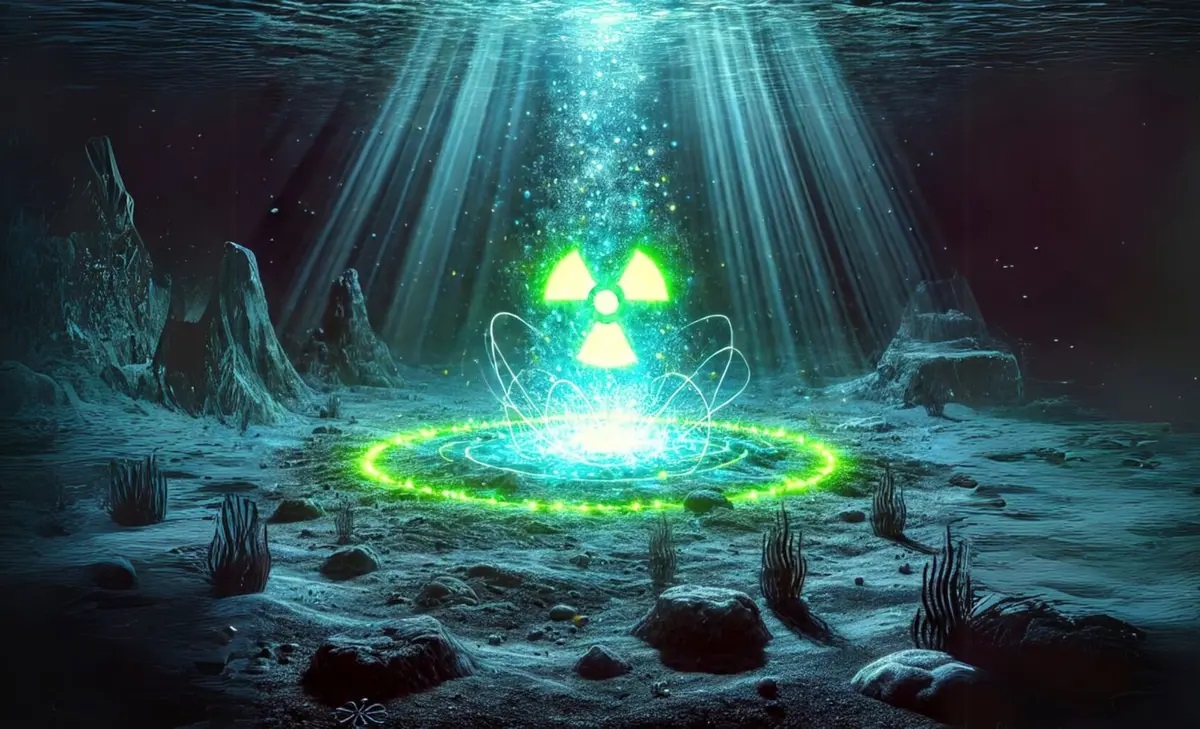
Residents of Millom, Seascale and Gosforth have just received a flyer from campaign group Radiation Free Lakeland calling on them to back a petition which asks Cumberland Councillors to host a debate followed by a vote about their engagement with the siting process for a Geological Disposal Facility in West Cumbria.
The GDF would be the eventual repository for Britain’s high-level radioactive waste which would be placed in tunnels beneath the seabed. A site in East Lincolnshire was also under consideration as a possible site. With the withdrawal of Lincolnshire County Council from the process last week, only sites in Mid and South Copeland in West Cumbria remain in contention and then only because Cumberland Council remains engaged in the process.
Bizarrely Cumberland Council only became involved in the process by default. The new authority on replacing Copeland District Council chose to accept unquestionably that Council’s decision to participate in the GDF process, even though the decision to participate had been taken by only four Copeland Councillors. There has never been any debate or vote amongst Cumberland Councillors about whether they should have accepted this obligation or still wish to continue with the process.
The petition calls on Cumberland Council to convene a belated special meeting of the Full Council where Councillors can debate and then vote on whether to continue to remain engaged or remain represented on the Mid and South Copeland GDF Community Partnerships. If Councillors say no, then the process would end, and NWS would withdraw. The NFLAs is happy to support Radiation Free Lakeland in urging all Cumbrians to sign it.
Here are links to the petition:
www.change.org/CumbriaNuclearDump https://www.change.org/p/massive-mine-shafts-and-nuclear-dump-for-cumbria-coast-tell-cumberland-council-vote-now
Today is World Ocean Day – Protect the Lake District Coast and Irish Sea from an Unprecedented Atomic Experiment
On By mariannewildart,
https://mariannewildart.wordpress.com/2025/06/08/today-is-world-ocean-day-protect-the-lake-district-coast-and-irish-sea-from-an-unprecedented-atomic-experiment/
This World Ocean Day Do Something Amazing and Sign and Share the Petition to Protect The Lake District Coast from a Giant Atomic Heat Sink. There are 1,753 signatures – lets make it tens of thousands! This plan is going forward on the say so of just four councillors in Cumberland (the West of Cumbria, UK). The Petition is calling for a FULL debate and FULL vote by the whole Cumberland Council on whether to continue in partnership with the developer Nuclear Waste Services to deliver a “geological disposal facility” aka an up to 50km square, wholly experimental, sub-sea nuclear dump for HOT nuclear wastes. Note the developer NWS is a Government owned limited liability company.
Here is why you should support the Global Network’s Golden Dome statement.

Golden Dome is financially reckless and unsustainable. Early cost estimates range from $550 billion to several trillion dollars over two decades. This dwarfs even the Pentagon’s annual budget and adds to the US’s $37 trillion national debt—a price tag that makes the project fiscally indefensible.
- Experts overwhelmingly agree that 100% effective missile interception is a fantasy, especially against complex attacks involving decoys, hypersonic missiles, and maneuverable warheads. Even Israel’s Iron Dome has been bypassed by more rudimentary drone and missile attacks.
- Golden Dome includes space-based interceptors—effectively weaponizing the Earth’s orbit and triggering an arms race. This violates the spirit of the Outer Space Treaty and pushes nations like China and Russia to accelerate space weapons development.
- By giving the illusion of first-strike survivability, it runs counter to the Mutually Assured Destruction (MAD) doctrine that has prevented so far a nuclear holocaust and incentivizes other powers to retain or expand their nuclear arsenals, blocking disarmament efforts permanently.
- Thousands of rocket launches for satellite interceptors would further damage the ozone layer, could generate dangerous orbital debris (Kessler Syndrome), and will harm our already fragile space environment.
The only guaranteed winners of Golden Dome are weapons giants like Lockheed Martin, Raytheon, and Palantir, which stand to profit enormously regardless of the system’s effectiveness or risks.
The trillions funneled into Golden Dome could be used for urgent domestic priorities—such as healthcare, infrastructure, climate action, and education, directly benefiting millions of Americans.
In short, Golden Dome is a massive, dangerous, and futile vanity project, cloaked in patriotism but driven by profit, politics, and illusion.
You may view the full Global Network statement of opposition to the Golden Dome and see the growing list of endorsers here
If you wish you add your group/individual name (along with your location) please send us an email at globalnet@mindspring.com
‘Thank God men cannot fly, and lay waste the sky as well as the earth.’
~ Henry David Thoreau
Paris wants to manufacture drones in Ukraine

9 June 25 https://www.rt.com/news/618818-paris-renault-produce-drones-ukraine/
The French Defense Ministry has asked Renault to set up military production for Kiev.
Paris is pushing France’s largest automaker, Renault, to establish a military drone production operation in Ukraine, the company has confirmed. Kiev has been significantly intensifying drone attacks on Russian infrastructure.
During the final week of May, 2,300 Ukrainian UAVs were shot down after being sent across the border to target Moscow and other regions, according to the Russian Defense Ministry.
“We have been contacted by the [French] Defense Ministry about the possibility of producing drones,” Renault said in a statement to several media outlets, including Reuters, on Sunday. Although “discussions” on the issue have taken place, the company insisted that “no decision has been taken at this stage,” and that it is awaiting further details from the ministry.
French Defense Minister Sebastien Lecornu first revealed the plan on Friday, describing it as an “unprecedented partnership” in an interview with broadcaster LCI.
“We are going to embark on a completely unprecedented partnership… to equip production lines in Ukraine to… produce drones,” Lecornu said, noting that the project would involve both a major carmaker and a smaller defense contractor.
Renault could be tasked with setting up drone assembly lines “a few dozen or hundreds of kilometers from the front line” in Ukraine, France Info reported on Sunday.
According to the newspaper Ouest-France, the project could also involve Delair – a Toulouse-based drone manufacturer that supplies UAVs for border surveillance, reconnaissance, intelligence, and special operations forces. The company has previously delivered kamikaze drones to the French Defense Ministry, which were later sent to Ukraine.
Lecornu described the initiative as a “win-win” for Paris and Kiev, claiming no French personnel would be deployed to Ukraine.
The production lines would be operated by Ukrainian workers, and the drones built for the country’s military would also be used by the French Armed Forces for “tactical and operational training that reflects the reality” of modern warfare, he said.
Russian Foreign Minister Sergey Lavrov condemned the strikes as deliberate attempts to sabotage peace talks. Moscow has repeatedly warned that any weapons production facilities in Ukraine are considered legitimate military targets and subject to “unequivocal destruction.”
Firm fined £26k after worker exposed to radiation at Teesside site

Mistras Group Limited was fined £26,000 after a radiographer was overexposed to ionising radiation while working at a site in Hartlepool.
By Nicole Goodwin, City Centre Reporter, Jade McElwee, Content Editor,
Teesside Gazette 7th June 2025, https://www.gazettelive.co.uk/news/teesside-news/mistras-group-limited-radiation-hartlepool-31808465
A global firm has been slapped with a £26,000 fine after a radiographer was exposed to ionising radiation at a North East site.
The 69-year-old man was working for Mistras Group Limited in December 2020 when the company was alerted by their approved dosimetry service that he had received a dose exceeding legal limits. The Health and Safety Executive (HSE) was also informed, leading to the prosecution of the company following an investigation.
Ionising radiation is widely used in various industries including energy production, manufacturing, medicine and research. While it offers numerous benefits to society, it’s crucial that its risks are sensibly managed to safeguard workers and the public.
The incident occurred at Mistras Group Limited’s former Hartlepool site when a gamma emitting radioactive source used for radiography failed to return to its shielded container. Due to lax adherence to the company’s own radiation safety protocols, this wasn’t promptly identified, resulting in the radiographer being overexposed to radiation.
Although no symptoms were reported, excessive exposure to ionising radiation can heighten the risk of developing certain cancers. The HSE investigation discovered that pre-use safety checks hadn’t been completed and recorded by the radiographer, reports Chronicle Live. These checks are vital stages in verifying that radiography systems are functioning properly and ensuring the safe use of equipment.
The firm Mistras Group Limited was hit with a £26,000 fine and must pay £11,353 in costs after admitting to breaches of radiation safety regulations at Newton Aycliffe Magistrates’ Court on May 22. The company, based in Norman Way, Cambridge, had provided alarming Electronic Personal Dosemeters (EPDs) and radiation monitors to employees, yet it emerged that a radiographer failed to use the equipment; this could have alerted them to dangerous radiation levels allowing for a safe retreat.
Radiation incidents had not been reported correctly. Additional failings by the company to ensure adherence to radiation protection rules and procedures included not following local rule instructions and insufficient supervision leading to a lack of compliance. Moreover, the firm previously faced enforcement actions from HSE for similar shortcomings.
Commenting on the case, HSE’s radiation specialist inspector Elizabeth Reeves stated: “Industrial radiography is a hazardous practice if not managed properly. Radiation protection is an area where employers and employees must not become complacent with.
“Safety checks and the use of monitoring equipment such as EPD’s and radiation monitors are essential elements to ensuring the safe operation of equipment and protection to personnel. This prosecution demonstrates that the courts, and HSE, take failure to comply with the regulations extremely seriously.”
The HSE’s enforcement lawyer, Jonathan Bambro, and paralegal officer, Rebecca Forman, led the prosecution in this case.
A Mar-a-Lago in the sky?
Meanwhile, as Trump is due to parade his military hardware through the streets and skies of Washington, DC this week, at a cost of $45 million to US taxpayers, we are told there is too much wasteful spending, so Medicaid, Medicare and food stamps must be slashed.
by beyondnuclearinternational, https://beyondnuclearinternational.org/2025/06/08/a-mar-a-lago-in-the-sky/
US taxpayers are about to get golden fleeced, again, writes Linda Pentz Gunter
Last week we reported on the White House executive orders that would lay waste to the US Nuclear Regulatory Commission and put an end to any meaningful safety oversight of the US commercial nuclear sector.
Not that there was a whole lot to begin with. None of us will be standing outside the agency’s Rockville Maryland headquarters any time soon holding “Save the NRC” signs.
I mentioned last week that there were five orders affecting the nuclear sector. Technically, the fifth – Restoring Gold Standard Science — didn’t mention nuclear, but its overarching mission— to do the opposite of what its title says — will most certainly negatively affect the integrity of any evaluation of new reactor designs, with the stamp of approval given to the Department of Energy and even the Department of Defense, rather than the NRC.
The Gold Standard order served to remind us of Trump’s perennial obsession with everything gold and golden, also reflected, as it were, in his cheap bordello-style aesthetic on display at Trump Tower and Mar-a-Lago.
The wannabe king boasted during his January 20 inaugural address that “The Golden Age of America begins right now,” then reminded us six weeks later, during his March 4 Joint Address to Congress, that his Golden Age truly was coming. “Get ready for an incredible future,” he said. “The Golden Age of America has only just begun. It will be like nothing that has ever been seen before.”
That last part was certainly true.
As if all this golden fleecing of American taxpayers wasn’t enough, cue the next fanfare — but without any actual golden trumpeters — the Golden Dome for America!
“Golden Dome for America is a revolutionary concept to further the goals of peace through strength,” asserts its manufacturer, Lockheed Martin, our first clue that the Golden Dome has nothing whatever to do with peace, as Lockheed Martin is a major player in the US nuclear weapons complex.
The Golden Dome is effectively a reboot of Ronald Reagan’s ill-fated Strategic Defense Initiative, mockingly nicknamed Star Wars, which was supposed to shoot down incoming nuclear missiles. That was just the latest failed iteration of a US missile defense concept that has been in the works since the 1950s.
Reagan’s SDI arguably cost us a chance to rid the world of nuclear weapons altogether when in 1986, he and then Russian premier Mikhail Gorbachev were poised to do just that. Gorbachev wanted Star Wars consigned to the laboratory. Reagan refused. The arms race continued.
Trump brags he has already picked out the architecture he likes for his Golden Dome, which makes you wonder whether he thinks it’s some sort of floating palace, a Mar-a-Lago in the sky?
The price tag for the Golden Dome is a whopping $175 billion (there’s austerity for you!) and apparently it will all be up and running before Trump’s term is out in January 2029, (assuming Trump willingly leaves office and we still have a democratic election process by then.)
That’s a timeline longtime national security and nuclear policy expert, Joe Cirincione, called “insane” in an interview with The Bulletin of the Atomic Scientists. “You probably won’t even get the architecture of the system settled by the end of his administration,” Cirincione said.
Even more insane is that, far from enhancing the safety of the US, the Golden Dome is entirely provocative and, as a nervous China has already warned, will only increase the risks of militarizing space and could even relaunch a global arms race (arguably something that is already underway).
In any case, there’s not much use in a Golden Dome unless it’s one hundred percent effective, which it has a one hundred percent probability of not being. Its predecessor certainly didn’t achieve that and was what Cirincione described as “the longest-running scam in the history of the Department of Defense.”
If just one missile does get through, the level of destruction would be devastating, and the US would then likely retaliate after which all bets are off.
So far, US missile defense interception attempts (fortunately all tests), have had a success rate that spans a range of 41% to 88% depending on whether you accept an independent analysis, which generates the lower number, or “official” tallies, which produce the higher one. Either way, it’s not 100%.
The whole sorry saga, which began with the deployment of the earliest iterations of US missile defense in 1962, has cost at least $531 billion to date, according to Stephen Schwartz, a longtime analyst on nuclear weapons costs.
On BlueSky, Schwartz called the Golden Dome project “delusional and reckless. There’s no way to design, test, construct, and deploy a comprehensive system to reliably stop any missiles launched from land, sea, or space, and do it in ‘two-and-a-half to three years’ for $175 billion.”
The White House counters that none of this matters as the Golden Dome is meant as a deterrent to frighten off aggressors. It’s the same flawed argument that says spending billions to have our own nuclear weapons is worth it because then our adversaries will never use theirs, either. This, of course, exposes the ludicrousness of the whole deterrence myth, since clearly we could achieve the same end if we all abolished our nuclear weapons, and save a whole lot of money to boot.
But if we proceed on the basis of the White House assertion, then it means we are about to spend $175 billion on something the US would never actually use.
The Golden Dome, it turns out, is no golden ticket to survival.
Linda Pentz Gunter is the international specialist at Beyond Nuclear and writes for and edits Beyond Nuclear International. Any opinions are her own.
Britain has escalated the global nuclear arms race – and is bringing us closer to armageddon

Simon Tisdall, 8 June 2025, https://www.theguardian.com/commentisfree/2025/jun/08/uk-strategic-defence-review-nuclear-arms-race-armageddon
The UK’s strategic defence review risks normalising nuclear warfare. Don’t believe the PR hype: these weapons are immoral, irrational and catastrophic.
Britain has escalated the global nuclear arms race – and is bringing us closer to armageddon

The UK’s strategic defence review risks normalising nuclear warfare. Don’t believe the PR hype: these weapons are immoral, irrational and catastrophicSun 8 Jun 2025 15.00 AESTShare1,163
Plans by Keir Starmer’s government to modernise and potentially expand Britain’s nuclear weapons arsenal, unveiled in the 2025 strategic defence review (SDR), seriously undermine international non-proliferation efforts. They will fuel a global nuclear arms race led by the US, China and Russia. And they increase the chances that lower-yield, so-called tactical nukes will be deployed and detonated in conflict zones.
This dangerous path leads in one direction only: towards the normalisation of nuclear warfare.
These unconscionable proposals are a far cry from the days when Robin Cook, Labour’s foreign secretary from 1997 to 2001, championed unilateral nuclear disarmament and helped scrap the UK’s airdropped gravity bombs. They are a continuation of a redundant, inhuman, immoral, potentially international law-breaking deterrence policy that cash-strapped Britain can ill afford, will struggle to implement at cost and on time, and which perpetuates illusions about its global power status.
Starmer’s justification for spending an additional £15bn on nuclear warheads for four as yet un-built Dreadnought-class submarines, whose price tag is £41bn and rising, is that the world – and the threat – has changed. But in terms of nuclear arms, it really hasn’t. Even as cold war tensions receded, the eight other known nuclear-weapons states – the US, Russia, China, France, India, Pakistan, North Korea and Israel – clung on to their arsenals. Some expanded them.
Today, as the global security environment deteriorates again, governments that ignored an obligation to pursue nuclear disarmament “in good faith” under article six of the 1970 non-proliferation treaty (NPT) are finding new reasons to keep on doing so. Britain must not compound its decades-long failure to honour the spirit of the treaty. The SDR’s assertion that “continued UK leadership within the NPT is imperative” seems disingenuous, given government intentions.
The SDR concedes the NPT, up for review next year, is close to failing. “Historical structures for maintaining strategic stability and reducing nuclear risks have not kept pace with the evolving security picture,” it says. “With New Start [the 2010 US-Russia strategic arms reduction treaty] set to expire in February 2026, the future of strategic arms control – at least in the medium term – does not look promising.”
This is a Trident missile-sized understatement. Nuclear proliferation is once again a huge problem. The US will spend an estimated $2tn over 30 years on weapons development. Donald Trump said in February he wants to “denuclearise”. Guess what! He’s doing the opposite. The White House is seeking to raise the National Nuclear Security Administration’s annual weapons budget by 29%, to $25bn, while slashing funding for the arts, sciences and foreign aid. That’s on top of several multibillion-dollar Pentagon weapons programmes.
China’s nuclear strike force has more than doubled in size since 2020, with some pointed at Taiwan. Russia’s expanding capabilities include a nuclear-capable hypersonic missile, recently fired into Ukraine. And Trump’s Golden Dome plan upends prior undertakings on anti-missile defence. By joining the proliferators, hypocritical Britain sends a cynical signal to Iran, Saudi Arabia and others whose supposed nuclear ambitions it opposes.
One future scenario is especially chilling: the possible reintroduction by Britain of air-launched nuclear weapons for the first time since Cook scrapped them. This could involve buying US F-35A fighters and arming them with US-designed B61-12 bombs. These bombs have variable yields and could be used tactically, against a battlefield target, a command HQ or a city. They could be launched remotely, using unmanned drones. They bring the prospect of nuclear warfare measurably closer.
Starmer is leaning heavily on the review’s claim that Russian “nuclear coercion” is the biggest menace facing the UK. Even if true, no amount of nuclear missiles and bombs may suffice if political will is lacking to directly confront Vladimir Putin by, for example, deploying Nato conventional forces to defend Ukraine and responding forcefully to hybrid attacks on Britain. Like the former US president Joe Biden, Starmer gives too much credence to Moscow’s crude threats. Putin knows that if he presses the nuclear button, it will explode in his face. He’s many things – but not suicidal.
This is the conundrum at the heart of nuclear deterrence theory. Nuking a nuclear-armed adversary guarantees self-destruction (which is why India and Pakistan jibbed at all-out war last month). And hurling nuclear threats at states and foes that lack nuclear weapons is ineffective. As Ukraine shows, they grow more defiant. As a weapon, nuclear blackmail is overrated. Fear of British nukes did not deter Argentina’s 1982 Falklands invasion. Nukes did not stop al-Qaida in 2001 or Hamas in 2023. So why have nukes at all?
Retaining nuclear weapons at current or increased levels does not make Britain safer. Their use would be immoral, irrational and catastrophic. They are grossly expensive, consuming resources that the UK, facing painful Treasury cuts again this week, could more sensibly use to build hospitals and schools and properly equip its armed forces.
It’s uncertain how independent of the US the British deterrent really is in practice. Does Starmer or Trump have the final word on use? Official secrecy prevents adequate democratic scrutiny. And the idea that nuclear warfare, once the taboo is broken, might somehow be contained or limited is a fast-track ticket to oblivion. Gradual disarmament, not rearmament, is the only way to escape this nightmare.
The SDR urges a government PR campaign to convince the British people of the “necessity” of a nuclear arsenal. No thanks. As Russia again raises nuclear war fears, what’s needed is public education about the dangers of weapons proliferation. People worry about everything from an existential global climate emergency to the cost of living. But what we’re discussing here is the universal cost of dying.
Nuclear warfare is the most immediate threat to life on earth. Worry about that first. It’s a shortcut to apocalypse – now.
From Media Darling to Persona Non Grata: Greta Thunberg’s Journey

Alan Macleod, 7 June 25, https://www.mintpressnews.com/greta-thunberg-canceled-capitalism-israel/289936/
Once the favored child of the establishment, Greta Thunberg has been dropped by the global elite. A MintPress News study finds that coverage of Thunberg in The New York Times and Washington Post has dwindled from hundreds of articles per year to barely a handful, precisely as she widens her focus from the environment to the capitalist system that is causing climate breakdown, and the Israeli attack on Gaza, which the Swedish activist has labeled a “genocide.”
Her message of the urgent need to address the impending climate crisis was one that was palatable to authorities, who attempted to co-opt her with access and accolades. In 2019, despite being only 16 years old, she won the Swedish Woman of the Year award and was named by Forbes magazine as one of the world’s 100 most powerful women. Time magazine even awarded her its prestigious Person of the Year, for, in their words, “sounding the alarm about humanity’s predatory relationship with the only home we have,” “bringing to a fragmented world a voice that transcends backgrounds and borders,” and for “showing us all what it might look like when a new generation leads.”
While conservatives were hostile to her from the start, more liberal institutions showered her with attention and praise. The New York Times, for example, described her as “a modern-day Cassandra for the age of climate change,” and noted that her work had “inspired huge children’s demonstrations” across the planet.
Yet Thunberg refused to be turned into a mascot for the elites, and the co-optation failed. As a result, coverage of her in elite media outlets has plummeted to almost nothing, even as she continues to fight for global causes and risks her life trying to break the illegal blockade of Gaza.
This phenomenon can be seen by studying the coverage of Thunberg in The New York Times and The Washington Post. Shooting to public attention in 2018, Thunberg and her activities were, at first, given copious coverage in both newspapers, amounting to hundreds of articles per year in each outlet. Yet this has dwindled to virtually nothing by 2025, with only three Times and two Post articles even mentioning Thunberg, and only one in each covering her in any detail beyond a passing reference.
The data was compiled by searching for the term “Greta Thunberg” in the New York Times archive and Dow Jones Factiva news database, a tool that records the content from more than 32,000 U.S. and international media outlets.
Dr. Jill Stein, a three-time presidential candidate for the United States Green Party, was not surprised by the findings. “It comes with the territory when you go from inside the box to outside the box, and it is a real sign of integrity when the media stops covering you,” she told MintPress; “Greta has been canceled, like many of the best activists I know of.”
The precipitous drop in corporate media interest closely correlates with Thunberg’s increasingly radical stances. In 2022, she identified capitalism as a prime cause of climate collapse and explained the need for a comprehensive global revolution, stating that:
What we refer to as ‘normal’ is an extreme system built on the exploitation of people and the planet. It is a system defined by colonialism, imperialism, oppression, and genocide by the so-called global North to accumulate wealth that still shapes our current world order.”
At the same public event, she dismissed the United Nations Climate Change Conferences as a waste of time, and merely an opportunity for “people in power… to [use] greenwashing, lying and cheating.”
She has also gone out of her way to support workers’ struggles against their bosses. Last year, she visited the GKN auto parts factory in Florence, Italy, a site that striking workers have occupied. “Climate justice = workers’ rights,” she explained, noting that,
[E]very necessity to choose between the struggle for labour and the struggle for climate justice is abolished. The territory defends the factory, the factory defends the territory. The fight to get to the end of the month is the same fight against the end of the world.”
She has spoken out against the Moroccan occupation of Western Sahara, in support of striking Indian farmers, and against the Russian invasion of Ukraine. Undoubtedly, however, it is her solidarity with the Palestinian people and their cause that has earned her the most flak. In 2021, she shared a social media post accusing Israel of carrying out war crimes, adding that it was “Devastating to follow the developments in Jerusalem and Gaza,” adding the hashtag #SaveSheikhJarrah to her post. In the wake of the October 7 attack and the Israeli bombardment that followed it, she called for an immediate ceasefire and for freedom and justice for Palestine. And last year, she was arrested while protesting Israel’s inclusion in the Eurovision Song Contest.
For these actions, she has been vocally condemned by many of the same outlets that, only a few years previously, had celebrated and promoted her. Just days after her calls for a ceasefire, Forbes magazine ran a story headlined “Greta Thunberg’s stand with Gaza is a problem for the climate change movement,” which claimed that sharing “controversial opinions that only serve to alienate entire demographics” does not “advance an environmental cause,” and “only weakens her ability to advocate and harms the overall climate change movement.” Another Forbes article described her career arc as a “tragedy” and claimed that she was driven by an all-encompassing “hatred of Israel” and a determination to “destroy the Jewish state.” Meanwhile, influential German publication Der Spiegel, which had awarded her its “Person of the Year” in 2019, branded her an “antisemite.”
For Stein, Thunberg’s media excommunication cannot simply be explained by the notion that the exploits of a 22-year-old organizer are less newsworthy than those of a precocious teenager. Rather, it was her public stances against capitalism, imperialism, and Israel’s actions in Gaza that angered them.
“Each of those [stances] were a step-down in the eyes of mainstream media and the oligarchy they defend,” she said. “You could see the pushback against her starting when she began to speak about climate, social and economic justice. But when she began to take a stand on Gaza, that was the last straw, and you didn’t see her getting mainstream media coverage after that,” she added.
Thunberg sees the fight for a greener world as inseparable from the struggle for political and economic freedom. “For me, there is no way of distinguishing the two,” she said, adding:
We cannot have climate justice without social justice. The reason why I am a climate activist is not because I want to protect trees. I’m a climate activist because I care about human and planetary well-being, and those are extremely interlinked.”
Dimitri Lascaris, a lawyer and former Green Party of Canada leadership candidate who has sailed on multiple “freedom flotillas” attempting to break the Gaza blockade, said that the shunning of Thunberg also represents “an indictment of the environmental movement.” As Lascaris told MintPress:
Before Greta took an incredibly courageous stand for the victims of Israel’s genocidal regime, she was the darling of the movement, but many of those same ‘environmentalists’ who lionized her have fallen silent as she risks her life to draw attention to the suffering of Palestinians. Environmental justice and human rights are inextricably linked. If you will not stand with Greta now, then you have no right to call yourself an ‘environmental activist.’”
Dangerous Waters
In addition to her political trajectory, Thunberg is currently on a physical journey, sailing on an aid ship to Gaza in an attempt to break the Israeli blockade. She is one of 12 public figures to board the Madleen at the Sicilian port of Catania, which is scheduled to reach the densely populated strip on June 7. Others include “Game of Thrones” actor Liam Cunningham and French politician Rima Hassan.
The ship is carrying urgently-needed supplies, including flour, rice, and other staples, as well as baby formula, feminine hygiene products, medical supplies, crutches, prosthetic limbs, and water desalination kits. The Madleen is a small vessel, and the aid is but a drop in the ocean of what authorities say is needed. Organizers, however, emphasize the symbolic importance of breaking the blockade from the outside. “We are doing this because no matter what odds we are against, we have to keep trying, because the moment we stop trying is when we lose our humanity,” Thunberg explained. The volunteers and crew are sailing unarmed and have been trained in non-violence.
Corporate media have largely ignored the Madleen’s voyage. The New York Times, for example, has not covered it at all, while the Washington Post has dedicated a single article to it. Other outlets, however, have bitterly denounced the operation. “Greta Thunberg’s narcissism has escalated to terrifying levels,” ran the headline in Britain’s daily, The Telegraph, which labeled it a “self-serving stunt masquerading as a daring act of charity.”
Some commentators have displayed even more hostility to the mission. U.S. Senator Lindsey Graham, for instance, stated that the hopes “Greta and her friends can swim,” openly suggesting the aid ship should be attacked.
Israel has stated it will block the Madleen from entering Gazan waters, and its drones are already circling the ship. In May, the Israeli military attacked another boat attempting to deliver lifesaving aid to Palestine, firing missiles at the vessel just outside Maltese waters. The incident was largely ignored in the Western press.
Stein was impressed by Thunberg’s bravery, telling MintPress:
It is heroic, it is inspirational, and it is galvanizing to have this example of her and the others on the Freedom Flotilla. Their incredibly courageous, compassionate humanitarian example is the polar opposite of this horrific genocide. They are risking their lives and they know it… But they refuse to accept a genocide, or to be powerless in the face of it.”
The lack of press attention likely does not surprise Thunberg, who identified Western corporate media as active participants in the slaughter. “Our governments, our institutions, our companies are supporting this genocide… It is our tax money. It is our media who are continuing to dehumanize Palestinians,” she said. “On behalf of the international community, the so-called Western world, I am so sorry that we have betrayed you by not supporting you enough,” she added.
The manner in which the ruling class has collectively dumped Thunberg is far from an isolated incident. Elite liberal forces have historically attempted to defang and dilute radical challenges to the status quo, such as Black Lives Matter, the LGBT liberation movement, and the Occupy Wall Street protests, offering their leaders access and privileges. If this strategy fails, figures and movements are shunned, rebuked, or attacked. While Martin Luther King focused his attention on racist Southern sheriffs, he was treated with respect. But after his anti-war “Beyond Vietnam” speech, where he trained his guns on the “triple evils of racism, extreme materialism and militarism,” he became public enemy number one, and was ignored, denounced, and, ultimately, assassinated.
Thunberg shows no sign of backing down. “We are standing up for justice, sustainability, liberation for everyone. There can be no climate justice without social justice,” she said. That is precisely the kind of talk that got her ejected from elite polite society in the first place.
Nuclear Watchdog Meeting Sparks Tensions With Iran
By RFE/RL staff – Jun 07, 2025,
https://oilprice.com/Energy/Energy-General/Nuclear-Watchdog-Meeting-Sparks-Tensions-With-Iran.html
- Iran has vowed to react strongly to potential IAEA findings of noncompliance pushed by Western nations, citing past actions as precedent.
- The IAEA’s latest report indicates a sharp increase in Iran’s production of highly enriched uranium, exceeding limits set by the 2015 nuclear deal.
- US-Iran nuclear talks have stalled, leading to heightened risk of escalation, and Israel has reportedly assured the US it will not strike Iran’s nuclear sites without explicit authorization.
Iran has vowed to take strong action against Western nations pushing a resolution at a quarterly meeting of the UN nuclear watchdog that would find the Islamic republic in noncompliance with its safeguards obligations for the first time in 20 years.
In a June 6 post on X, Iranian Foreign Minister Abbas Araqchi slammed Britain, France, and Germany — collectively known as the E3 — for “falsely accusing Iran” of violating its obligations and claimed the move was “designed to produce a crisis.”
“Mark my words as Europe ponders another major strategic mistake: Iran will react strongly against any violation of its rights. Blame lies solely and fully with irresponsible actors who stop at nothing to gain relevance,” Araqchi warned.
A draft resolution prepared by the E3 and backed by the United States was shared on June 5 with the 35 members of the International Atomic Energy Agency’s (IAEA) Board of Governors, which will hold its quarterly meeting on June 9-13.
Araqchi pointed to a similar episode in 2005 when Iran resumed uranium conversion activities after suspending them during earlier negotiations with the E3.
In response, the European trio pushed for Iran to be declared in noncompliance and referred to the UN Security Council. Iran retaliated by ending voluntary transparency measures and significantly expanding its uranium enrichment program — a turning point Araqchi described as “in many ways the true birth of uranium enrichment in Iran.”
In its latest quarterly report, the IAEA said Iran has sharply increased its production of highly enriched uranium, stockpiling 408.6 kilograms enriched to 60 percent — up from just under 275 kilograms in February.
The agency also criticized Iran for poor cooperation, particularly its failure to explain nuclear traces detected at undeclared sites.
While 60 percent enrichment is below the 90 percent threshold required for weapons-grade material, it far exceeds the 3.67 percent limit set by the 2015 nuclear deal, which US President Donald Trump exited in 2018 during his first term in office. Trump returned to the presidency in January.
The Trump administration has held five rounds of talks with Iran since April to reach a new agreement on Tehran’s nuclear program. But this week, Iran’s Supreme Leader Ayatollah Ali Khamenei rejected a US proposal after Trump stated that Iran would not be allowed to continue enriching uranium under any future deal.
Axios says the White House’s “interpretation” of Trump’s two-month deadline for a deal is that it expires next week. Israel, which has long been planning to strike Iranian nuclear sites, is said to have assured Washington it will not launch a military strike on Iran unless diplomatic negotiations fail and it receives explicit clearance from Trump.
French dock workers block arms shipment to Israel
Amnesty International has warned that France is ‘fueling genocide’ in Gaza by allowing the shipments to continue
News Desk, The Cradle, JUN 6, 2025
French dock workers in Fos-sur-Mer, near Marseille, are blocking the shipment of military equipment bound for Israel, protesting the Israeli military’s ongoing genocide of Palestinians in Gaza, France 24 reported on 6 June.
The action, led by members of the CGT trade union, halted the loading of 19 pallets of bullet links—metal components used to enable rapid machine gun fire—onto a cargo vessel on Thursday.
Christophe Claret, a union representative, confirmed that the shipment was identified and set aside after workers were notified of its contents.
“Once dockers refuse to load a shipment, no one else can do it for them,” Claret told AFP. The remaining cargo for the vessel was loaded as scheduled.
The CGT issued a statement denouncing the delivery and declaring it would not be complicit in what it called “the ongoing genocide orchestrated by the Israeli government.” Eurolinks, a Marseille-based defense supplier, manufactured the metal links. The company declined to comment on the incident, and the Port of Marseille-Fos also issued no statement……………………………………………………………………………………………………………………………………………..
The Genoa Port Workers’ Collective (CALP) in Italy plans to follow suit, announcing on Thursday it would block the ZIM Contship Era from docking when it arrives in Genoa while in transit to Israel’s Haifa port.
“We oppose all wars and refuse to be complicit in the genocide in Gaza,” CALP said in a statement.
The Italian dock workers are calling for a general strike on 20 June under the slogan “Disarm them.”
Israeli forces have killed an estimated 109,000 Palestinians since the start of the war in October 2023. Israeli leaders have said they intend to destroy Gaza and ethnically cleanse the strip of its over 2 million residents in preparation for establishing Jewish settlements. https://thecradle.co/articles/french-dock-workers-block-arms-shipment-to-israel-in-protest-over-gaza-genocide
What to expect in Rachel Reeves’s spend, spend, spending review
Labour is going big on infrastructure, the NHS and AI. Can the chancellor convince some voters we’re not back in austerity — and others that taxes won’t rise to pay for it?……………………………………………………………………………………………………………………………………………………
Long-planned transport and infrastructure projects, including the Sizewell C nuclear power plant and a new generation of mini-reactors, and a new railway line between Liverpool and Manchester, will also be approved to fend off Reform UK.
Times 7th June 2025, https://www.thetimes.com/uk/politics/article/labour-rachel-reeves-spending-review-uk-budgets-9tmk9xmfh
Group protest against Sizewell C ahead of Spending Review
Campaigners gathered to further protest against Sizewell C just days
before the conclusion of the Spending Review. Supporters of Stop Sizewell C
and Together Against Sizewell C (TASC) met for an ‘Outrage’ rally at
Sizewell Beach on Saturday, June 7. The weekend rally also paid tribute to
former TASC chair and campaigner Pete Wilkinson who died in January of this
year. His daughters Emily and Amy spoke at the protest and tied yellow
ribbons onto the fence. The protest came ahead of the conclusion of the
Spending Review on Wednesday, June 11 where it is believed the government
will set out its plans for future investment in Sizewell C.
East Anglian Daily Times 8th June 2025,
https://www.eadt.co.uk/news/25222586.group-protest-sizewell-c-ahead-spending-review/
This week’s Not the Corporate Nuclear News
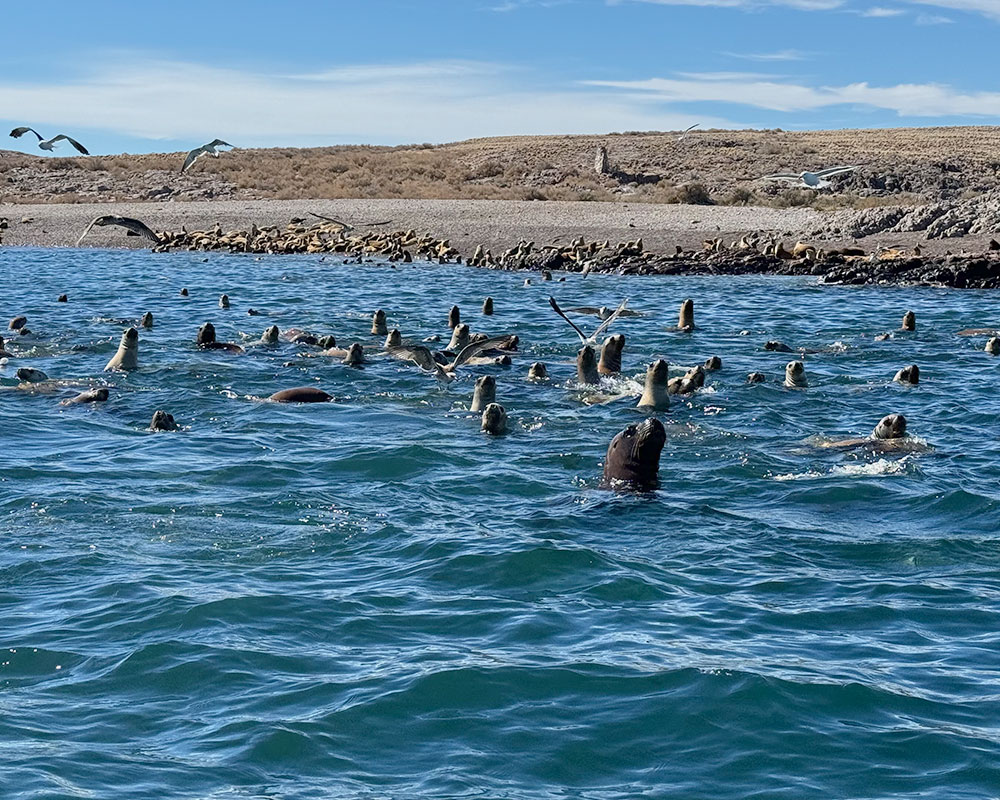
Some bits of good news –Patagonia Azul: Argentina’s largest coastal marine reserve unveiled. Scientists in Japan Develop Non-Toxic Plastic That Dissolves in Seawater Within Hours
Praised for Rescues and Life Lessons, DADS are Seen by Most as a Top Life Mentor, Says New Poll.
Some bits of good news –Patagonia Azul: Argentina’s largest coastal marine reserve unveiled. Scientists in Japan Develop Non-Toxic Plastic That Dissolves in Seawater Within Hours
Praised for Rescues and Life Lessons, DADS are Seen by Most as a Top Life Mentor, Says New Poll.
TOP STORIES. Trump’s Nuclear Power Obsession.
US Vice President JD Vance announces new strategy of blatant imperialism, aimed at China.
Playing with Fire- Ukraine’s Operation Spiderweb. A peace deal in Istanbul won’t happen until NATO is off the table.
Let’s not pretend nuclear works.
Climate. The World Isn’t Ready for the Mental Health Toll of Extreme Heat.
Noel’s notes. Priming us up for war – “it’s not so bad, after all” – Britain’s Labour government leads the way Jubilation at Ukraine’s Operation Spiderweb – but is this joy justified?
AUSTRALIA. Nuclear policy was at odds with Liberal philosophy AUKUS has serious problems, Australia probably won’t receive any submarines: Malcolm Turnbull. US military waste contractor with flawed safety record backing Australian N-waste dump.
NUCLEAR ITEMS.
| ART and CULTURE. Zelensky Offers to Broker Peace Between Musk and Trump |
| ATROCITIES. When Will Western Support for Israeli Genocide Finally Crack? https://www.youtube.com/watch?v=Yg_6e77Squg What’s Really Happening in Palestine. |
ECONOMICS. UK government has already allocated £6.4bn to the Sizewell C nuclear project!
This is what Britain really needs to defend itself – and it doesn’t include spending billions on arms.
Trump’s embrace of dystopian Palantir spying tool sends stock soaring.
| ENERGY. Vatican City Is Now Powered By Solar. |
| ETHICS and RELIGION. This Is Israel.Greta Thunberg Speaks from Aid Ship Heading to Gaza Despite Israeli Threats: It’s My Moral Obligation. |
| EVENTS 13 June How can European countries break out of the downward spiral of militarisation, increasing their exports of war weapons, and unaccountability for war crimes? 17 June – WEBINAR : STATE of the NUCLEAR REVIVAL. |
| HISTORY. The United States and Greenland, Part I: Episodes in Nuclear History 1947-1968. |
| HUMAN RIGHTS.Madleen Gaza flotilla live tracker: Greta Thunberg, crew taken to Israel. Greta Thunberg on Gaza: Why we joined the Freedom Flotilla | Talk to Al Jazeera – https://www.youtube.com/watch?v=OY38HjfrNGQ |
| LEGAL. Opposition to Sizewell C Nuclear Power Station sea defence plans lodged. TASC’s new legal challenge against Sizewell C’s secret flood defences. |
| MEDIA. Nuclear Power will ruin France -ALSO AT https://nuclear-news.net/2025/06/07/1-a-nuclear-power-will-ruin-france/ The Hidden Story: Israeli ‘Aid’ Is Part of Genocide Plan. From Media Darling to Persona Non Grata: Greta Thunberg’s Journey. |
OPPOSITION to NUCLEAR . Scots aren’t having our voices heard – nuclear is one such case study. Protesters raise environmental fears as wait continues for Sizewell C funding announcement.
Stop Sizewell C carries out bold projection on Sizewell B dome a week before the Spending Review, highlighting alternatives for Sizewell C’s £40 billion cost.
It’s over! Anti-nuke dump campaigners in East Lincolnshire celebrate victory.
POLITICS. Nuclear power: a dream not worth having.
during Anglo-French summit -ALSO AT https://nuclear-news.net/2025/06/05/1-b1-sizewell-c-nuclear-project-to-get-go-ahead-during-anglo-french-summit/ Sizewell C nuclear power plant ‘could get go-ahead within weeks’. Sellafield nuclear clean-up too slow and too costly, say MPs.
Ukraine “Stinks Of Authoritarianism” – Kiev Mayor Klitschko Hits Out At Zelensky.
POLITICS INTERNATIONAL and DIPLOMACY.
- US vetoes Gaza ceasefire again, due to concerns it could save Palestinian lives. US Vetoes UN Resolution Calling for a Ceasefire in Gaza.
- Nuclear Watchdog Meeting Sparks Tensions With Iran. Tehran releases explanatory note defending 60% enrichment. Trump Says New Iran Deal Must Allow US To ‘Blow Up Whatever We Want’. Ayatollah Rejects US Nuclear Proposal, Vows Iran To Keep Enriching Uranium.
- Iran says IAEA new report on nuclear activities politically motivated, based on Israel’s fake documents. Truce or trap?
- RAY McGOVERN: Putin Would Not Rise to the Bait. Ukraine makes sure peace talks go nowhere.
| PUBLIC OPINION. Revulsion for Israel surges worldwide, new survey finds. |
| SAFETY. A superhighway to nuclear hell.The Nuclear Gambit: Trump just handed the atom to the highest bidder.The NRC’s new Mission Impossible: Making Atoms Great Again. Zaporizhzhia ‘extremely fragile’ relying on single off-site power line, IAEA warns. Sellafield failing to address ‘intolerable risks’, damning parliamentary report warns. |
| SECRETS and LIES. Epstein, Israel, ISIS, Palantir.Defence review dodges Britain’s nuclear blind spot – ALSO AT https://nuclear-news.net/2025/06/09/1-b1-defence-review-dodges-britains-nuclear-blind-spot/ |
| WASTES. £127M wasted on failed UK nuclear cleanup plan . Sellafield’s race against time: nuclear waste clean-up not going quickly enough, Public Accounts Committee (PAC) warns. They Dumped 200,000 Radioactive Barrels Into the Atlantic: 35 Years Later, French Scientists Are Going After Them. |
1 This Month





PLEASE OPPOSE HR 8255 AND S.3639 – bills would accelerate satellite deployment, with no environmental review or safeguards – https://ncstd5li.quorum.us/campaign/169331/
To see nuclear-related stories in greater depth and intensity – go to https://nuclearinformation.wordpress.com
-
Archives
- October 2026 (74)
- September 2026 (339)
- August 2026 (330)
- July 2026 (355)
- June 2026 (287)
- May 2026 (306)
- April 2026 (356)
- March 2026 (251)
- February 2026 (267)
- January 2026 (308)
- December 2025 (358)
- November 2025 (359)
-
Categories
- 1
- 1 NUCLEAR ISSUES
- business and costs
- climate change
- culture and arts
- ENERGY
- environment
- health
- history
- indigenous issues
- Legal
- marketing of nuclear
- media
- opposition to nuclear
- PERSONAL STORIES
- politics
- politics international
- Religion and ethics
- safety
- secrets,lies and civil liberties
- spinbuster
- technology
- Uranium
- wastes
- weapons and war
- Women
- 2 WORLD
- ACTION
- AFRICA
- Atrocities
- AUSTRALIA
- Christina's notes
- Christina's themes
- culture and arts
- Events
- Fuk 2022
- Fuk 2023
- Fukushima 2017
- Fukushima 2018
- fukushima 2019
- Fukushima 2020
- Fukushima 2021
- general
- global warming
- Humour (God we need it)
- Nuclear
- RARE EARTHS
- Reference
- resources – print
- Resources -audiovicual
- Weekly Newsletter
- World
- World Nuclear
- YouTube
-
RSS
Entries RSS
Comments RSS

