China lifts a nearly 2-year ban on seafood from Japan over Fukushima wastewater
China has reopened its market to seafood from Japan after a nearly
two-year ban over the discharge of slightly radioactive wastewater from the
tsunami-destroyed Fukushima nuclear power plant. A notice from the customs
agency said the ban had been lifted Sunday and that imports from most of
Japan would be resumed. The ban, imposed in August 2023, was a major blow
to Japan’s fisheries industry. China was the biggest overseas market for
Japanese seafood, accounting for more than one-fifth of its exports.
Daily Mail 30th June 2025, https://www.dailymail.co.uk/wires/ap/article-14859601/China-lifts-nearly-2-year-ban-seafood-Japan-Fukushima-wastewater.html
How Trump dumped the Ukraine war into Europe’s lap

it appears clear that any future Ukrainian purchases of American military materiel, if they happen, will in any case be made with European money…………… , Rutte appears single handedly trying to keep the European gravy train chugging forward.
President Zelensky has not given up on his aspiration for Ukraine to join NATO which renders any peace deal, and possibly any durable ceasefire with Russia, impossible.
One thing is clear, U.S. defense contractors will arguably benefit the most from The Hague Summit.
Daddy says, ‘spend more on defence, pay for the war yourselves, but buy American kit’
Ian Proud, Jun 28, 2025, https://thepeacemonger.substack.com/p/how-trump-dumped-the-ukraine-war?utm_source=post-email-title&publication_id=3221990&post_id=166996238&utm_campaign=email-post-title&isFreemail=true&r=1ise1&triedRedirect=true&utm_medium=email
The NATO Summit was a coup for Trump. Cajoling the Europeans into upping defence spend to 5%, something most countries, Britain included, can’t afford. I was pleased therefore to see that Lord McDonald, the former Head of the Diplomatic Service, coming out today to suggest that the 5% target might wreck the UK economy.
Either way, it would take most countries time to ramp up their spending and military industrial capacity to even near this level. But it does raise questions about whether, as Mark Rutte suggested in his meeting with Zelensky, that NATO can fund the war in Ukraine for another decade.
That statement was far more concerning that his calling Donald Trump ‘daddy’, given the continued losses Ukraine is facing on the battlefield. And its ongoing quest to force unwilling Ukrainian men into fighting. More videos continue to emerge of recruitment officers fighting off mothers and wives in the street, as they force more recruits into minibuses headed for the front. How many men would Ukraine have left if NATO kept the fight going for another decade?
Really not clear that Rutte has considered that, which is disgraceful.
The aerial war between Israel and Iran over the past two weeks sucked most of the world’s attention away from the war in Ukraine.
The Hague NATO Summit confirms that President Donald Trump now sees paying for the war as Europe’s problem. It’s less clear that he will have the patience to keep pushing for peace.
One of the biggest diplomatic casualties of Israel and Iran’s aerial war was U.S. focus on and media coverage of the war in Ukraine. Despite continued exchanges of dead bodies and prisoners of war, there has been no further progress in peace talks between both sides that commenced in Istanbul in early June.
However, there has been talk of a third round of talks as early as next week. Before then, The Hague NATO Summit offered an opportunity to keep Ukraine on the U.S. radar. It didn’t quite happen that way.
Instead, if the NATO Summit showed any real purpose, it was to lock in European allies’ commitment to spend 5% of GDP on defense, a key priority for President Trump since he assumed office.
Mission accomplished. With the exception of Spain, NATO allies have now made that commitment.
Chipper as ever, NATO Secretary General, Mark Rutte, sent a message to President Trump, so eye-wateringly obsequious that it might even make some pro-war neocons cringe and reach for a sick bag. “Mr President, dear Donald… you have driven us to a really, really important moment for America and Europe, and the world. You will achieve something NO American president in decades could get done.” He was then chided for making remarks like he was calling Trump “daddy” at the summit.
But there was nevertheless no escaping the feeling that Ukraine has fallen some way down Trump’s priority list, and therefore NATO’s.
While the 2024 Washington Summit Communique ran to over 5300 words rich in normative intent and bureaucratic babble, the 2025 Hague Summit Declaration ran to a pithy 425 words focused almost exclusively on the NATO spending goal.
Whereas, the Washington Communique said, “we will continue to support it [Ukraine] on its irreversible path to full Euro-Atlantic integration, including NATO membership,” The Hague Declaration did not, which has already been seized upon as a softening of NATO’s stance by some mainstream commentators.
European ire was further provoked by Secretary of State Marco Rubio’s indication that the U.S. would not support further Russia sanctions at this time.
The declaration simply said, “Allies reaffirm their enduring sovereign commitments to provide support to Ukraine, whose security contributes to ours, and, to this end, will include direct contributions towards Ukraine’s defence and its defence industry when calculating Allies’ defence spending.”
For those not familiar with interpreting the subtleties of communique language, this language said two things. First, including the word “sovereign” means that while some allies may make sovereign choices to fund Ukraine, others may choose not to.
This is a clear indication of what we have observed for some time, that President Trump sees paying for the Ukraine war as Europe’s problem, not America’s. Second, and more obviously, that funding for Ukraine can contribute to Allies’ 5% target although, at least for the UK, this is already the case.
During their meeting, it is understood that Ukrainian President Volodymyr Zelensky asked President Trump about the possibility of purchasing additional Patriot missiles. While Trump was non-committal on this point, it appears clear that any future Ukrainian purchases of American military materiel, if they happen, will in any case be made with European money.
For his part, Rutte appears single handedly trying to keep the European gravy train chugging forward. Speaking ahead of the Summit, he referred to pledges of $35 billion in additional support to Ukraine so far this year without providing specifics.
However, we do know that over half of the earlier April pledge of $24 billion included funds from Germany to be paid over 4 years. In reality, therefore, NATO has only, so far, secured a maximum total of $22 billion for 2025, adding further pressure to Ukraine’s huge war financing needs.
What we haven’t seen in The Hague is any impetus behind efforts to bring the war in Ukraine to a close. Instead, and on the back of a Hague Declaration that rowed back any condemnation of Russia, Sir Keir Starmer continues to insist that allies remain resolved to “push again to get Putin to the table for the unconditional ceasefire.”
Like the proverbial scratched record, the British Prime Minister still believes that with U.S. offering no new money, with Ukraine continuing to lose ground on the battlefield, and with Europe struggling to make up the difference, that Russia will make unconditional concessions from a position of strength.
For his part, President Zelensky has not given up on his aspiration for Ukraine to join NATO which renders any peace deal, and possibly any durable ceasefire with Russia, impossible.
If the Hague Summit proved one thing, it may have been that getting European allies to spend more on defense is a bigger priority to President Trump than bringing peace to Ukraine. More focussed on the conflict in the Middle East, President Trump has once again conceded the difficulty of bringing the war in Ukraine to an end.
“It’s more difficult than people would have any idea,” he said. “Vladimir Putin has been more difficult, and frankly, I had some problems with Zelensky, you might have read about them. It’s been more difficult than other wars.”
One thing is clear, U.S. defense contractors will arguably benefit the most from The Hague Summit. To hit 5% of GDP, Britain would need to increase its spending by around $114 billion per year by 2035 and Germany has already pledged to hit the 5% target six years early, in 2029, hiking spending by $128 billion per year.
To kick off the spending spree, the UK has agreed to purchase twelve of the most modern F35A aircraft at a cost of $700 million. The F-35A is capable of delivering U.S. provided B61 nuclear bombs that were first designed in 1963. Keeping us safer, in this regard, relies on aircraft being able to fly far enough into Russia through its sophisticated air defences, to deliver a gravity nuclear bomb to target.
The most recent upgrade to the B61, during the Obama Administration, involved addition of a tail assembly to provide limited stand-off capability; it was so over-priced that every Sixties-era nuke is now worth more than its weight in gold, perhaps, the perfect allegory for Western defence spending.
With the fanfare of The NATO Summit starting to subside, the big question now is how much patience President Trump will have to push a peace agenda in Ukraine now that European allies have stepped up to spend more and buy American kit? My worry is, not much.
A Vassal’s Impulse: Australia Backs US Strike on Iran

The Australian position, along a number of European states, also failed to acknowledge the General Conference Resolutions of the International Atomic Energy Agency (in particular GC(XIXI)/RES/444 and GC(XXIV)/RES/533) declaring that “any armed attack on and threat against nuclear facilities devoted to peaceful purposes constitutes a violation of the United Nations Charter, international law and the Statute of the Agency.”
29 June 2025 Dr Binoy Kampmark, https://theaimn.net/a-vassals-impulse-australia-backs-us-strike-on-iran/
The initial statement from Australian government sources was one of constipated caution and clenching wariness. Senator Penny Wong’s time as head of the Department of Trade and Foreign Affairs has always been about how things come out, a process unsatisfyingly uncertain and unyielding in detail. Stick to the safe middle ground and sod the rest. These were the cautionary words of an Australian government spokesperson on June 22: “We have been clear that Iran’s nuclear and ballistic missile program has been a threat to international peace and security.”
That insipid statement was in response to Operation Midnight Hammer, a strike on three nuclear facilities in Iran by the US Air Force, authorised by US President Donald Trump on June 22. With such spectacular violence came the hollow call for diplomatic prudence and restraint. There was an importantdifference: Tehran, not Israel or Washington, would be the subject of scolding. Iran would not be permitted nuclear weapons but jaw jaw was better than war war. “We note the US president’s statement that now is the time for peace,” stated the spokesperson. “The security situation in the region is highly volatile. We continue to call for de-escalation, dialogue and diplomacy.”
Within twenty-four hours, that anodyne position had morphed into one of unconditional approval for what was a breach of the United Nations Charter, notably its injunction against the threatened or actual use of force against sovereign states in the absence of authorisation by the UN Security Council or the necessity of self-defence. “The world has long agreed Iran cannot be allowed to get a nuclear weapon, and we support action to prevent this. That is what this is,” accepted Wong.
This assessment was not only silly but colossally misguided.It would have been an absurd proposition for the US to make the claim that they were under imminent threat of attack, a condition seen as necessary for a pre-emptive strike. This was a naked submission to the wishes of a small, destabilising and sole (undeclared) nuclear power in the Middle East, a modern territorial plunderer celebratory of ethnonational supremacy.
The Australian position, along a number of European states, also failed to acknowledge the General Conference Resolutions of the International Atomic Energy Agency (in particular GC(XIXI)/RES/444 and GC(XXIV)/RES/533) declaring that “any armed attack on and threat against nuclear facilities devoted to peaceful purposes constitutes a violation of the United Nations Charter, international law and the Statute of the Agency.”
Wong also misrepresented the circumstances under which Iran was told they could negotiate over their nuclear program, erroneously accepting the line from the Trump administration that Tehran had “an opportunity to comply”. Neither the US diplomatic channel, which only permitted a narrow, fleeting corridor for actual negotiations, nor Israel’s wilful distortion of the IAEA’s assessment of Iran’s uranium enrichment plans and prevarication, ever gave chance for a credible resolution.Much like the calamitous, unlawful invasion of Iraq in 2003 by a crew of brigand nations – the merry trio of US, UK and Australia stood out – the autopilot to war was set, scornful of international law.
Wong’s shift from constipated caution to free flow approval for the US attack, with its absent merits and weighty illegalities, was also a craven capitulation to the warmonger class permanently mesmerised by the villain school of foreign relations. This cerebrally challenged view sees few problems with attacking nuclear facilities, the radioactive dangers of doing so, and the merits of a state having them in the first place.
The US attack on Iran found hearty approval among the remnants of the conservative opposition, who tend tospecialise in the view that pursuing a pro-Israeli line, right,wrong, or murderous, is the way to go. Liberal Senator and former Australian ambassador to Israel, David Sharma, thought the Albanese government’s initial response “underwhelming and perplexing,” claiming that support for this shredding of international law “a straightforward position for Australia to adopt.” Sharma is clearly getting rusty on hislaw of nations.
His side of politics is also of the view that the attacked party here – Iran – must forgo any silly notion of self-defence and retaliation and repair to the table of diplomacy in head bowedhumiliation. “We want to see Iran come to the negotiating table to verify where that 400 kilos of enriched uranium is,” stated a very stern opposition home affairs minister, Andrew Hastie. “I’m very glad to see that Penny Wong has essentially endorsed our position and I’m glad we have bipartisanship on this.”
Australia’s response has been that of the weary poltroon. Little has been asked about Canberra’s standout complicity in assisting the US imperium fulfil its global reach when it comes to striking targets. The role of the intelligence signals facility in Pine Gap, cutely and inaccurately called a joint venture, always lends its critical role to directing the US war machine through its heavy reliance on satellite technology. Wong, when asked about the role played by the facility in facilitating the attacks on Iran, had little to say. Australian Prime Minister Anthony Albanese was also cold towards disclosing any details. “We are upfront, but we don’t talk about intelligence, obviously. But we’ve made very clear this was unilateral action taken by the United States.”
At least on this occasion, Australia did not add its forces to anillegal adventure, as it all too wilfully did in 2003. Then, Iraq was invaded on the spurious grounds that weapons of mass destruction not only existed but would somehow be used either by the regime of Saddam Hussein or fictional proxies he might eventually supply. History forever shows that no such weapons were found, nor proxies equipped. But the Albanese government has shown not only historical illiteracy but an amnesia on the matter. Unfortunately, it’s the sort of amnesia that has become contagious, afflicting a goodly number of Washington’s satellites, vassals and friendly states.
Nuclear- a viable UK option? There are alternatives..

June 28, 2025, https://renewextraweekly.blogspot.com/2025/06/nuclear-viable-uk-option-there-are.html
ll of the expert advice says nuclear has a really important role to play in the energy system. So said UK Energy Secretary Ed Milliband, announcing an extra £14.2bn allocation for the proposed new Sizewell C reactor. Putting it charitably, he seems to have been poorly informed.
As I noted in an earlier post, there are many expert studies suggesting that there is no need for nuclear and that, in fact, it is a poor choice compared with renewables – which are cheaper as a way to respond to climate change. At least one of the submissions that I have seen to the ongoing Nuclear Roadmap Inquiry, run by the energy security and net zero Select Committee, takes a similar line- nuclear is too costly, slow and unreliable, with offshore wind being a better option.
However, it seems that the Select Committee will not start work on its report until later in the year, so it may be a while before we can see the results of its deliberations and all the submissions. And, meanwhile, the ground has certainly shifted. For good or ill, the UK is now heading for nuclear expansion, with Carbon Brief laying out a timeline chart showing what is expected. Of course, renewables are also expanding, and more rapidly. And the nuclear plans may come unstuck. For example the Times noted that ‘the government has commissioned just three SMR reactors, none expected before 2035. Rolls Royce said in 2015 that to make building a modular factory worthwhile, you would need an order book of 50 to 70’. So the £2.5bn diverted from Great British Energy’s renewable funding to SMRs, may not be enough, although it may still damage confidence in the progress of green power.
It also didn’t help that there was very little said about renewables in the spending review. That may have been understandable in terms of investment, since it was about major new capital/infrastructure projects like Sizewell, although the tidal energy lobby have complained about the Spending Review’s omission of tidal range energy commitments, warning that the government’s energy strategy dangerously over-relies on high-risk technologies. In a new report, the Tidal Range Alliance points to the quite large (~500MW) successful tidal barrages in France and S Korea, and says ‘Tidal Range is a proven, low-risk, high-reward technology’ adding that ‘it is time to mobilise it proactively as a resilient cornerstone of the clean energy system – not as a fall-back when other technologies falter.’ It claims that the UK’s tidal range potential, including tidal lagoons, could yield up to 30TW/h annually, and also offered additional benefits like coastal protection and local regeneration, with a levelised costs of energy put at £90–123/MWh. Hinkley Point C may end up with an inflation index linked CfD strike price well over that, maybe £130/MWh or more, by the time it finally gets to work, and who knows what Sizewell will really cost.
There are some CfD backed tidal stream projects already running in Scotland and more planned elsewhere, but the most advanced UK tidal range proposal is the 700MW Mersey barrage, although there is also a proposal for a huge 2.5GW tidal lagoon off Somerset, not far from Hinkley… There can be environmental problems with large tidal range systems, which is one reason why the 7GW Severn Barrage met with opposition, but smaller barrages and lagoons may have fewer impact issues. That’s also true tidal stream turbines, which can also be deployed in a modular way in large numbers, distributed around the coast, so that their peak outputs occur at different times of day, rather than just in two large bursts each day, as with individual tidal range systems.
While the Tidal Range Alliance is trying to move barrages and lagoons on, a Marine Energy Taskforce, has been launched aimed at developing a roadmap to realise the UK’s wave and tidal stream energy potential, which has been put at 25 GW for wave and 11 GW for tidal stream. Energy Minister, Michael Shanks said ‘With a coastline that stretches among the longest in Europe, it’s time we finally deliver on our marine energy potential and put our waves and tides to work. We will work closely with industry in breaking down barriers, unlocking investment, and kickstarting growth in our coastal communities, as we deliver clean homegrown power that we control.’
For the moment though, new areas like this await serious attention, and as far as renewables go, the focus is on PV solar and wind, on and offshore. They have been very successfully developed, in fact massively so since the early days. In 1986, with an election pending in 1987, Labours than leader Neil Kinnock gave an ‘unequivocal guarantee that the next Labour government will not sanction the ordering of another nuclear power station’, and added that ‘I am sure the advocates of alternative energy will not shirk the test the next Labour government will offer them’. But Labour lost…
Things have certainly changed since then, with the Tories, under Margaret Thatcher, backing nuclear. David Cameron too, later on. But renewables have nevertheless continued to live up to their promise – and are now supplying over 50% of UK power. Though we seem to keep going round the same cycle. Last time Labour was in power, in the 2000’s, it initially came up with a ‘no nuclear’ policy, but then changed its mind, with Tony Blair famously saying ‘nuclear is back with a vengeance.’ There was even talk of a 35-40% nuclear contribution ‘after 2030’. That came to nothing. But, now we are facing a big new Labour nuclear programme again….
However, at least this time around, although, if it goes ahead as planned, some resources will be diverted to nuclear, there is still over £6bn allocated to Great British Energy’s green power programme and renewable expansion, based on wind and solar, seems pretty unstoppable, with hydrogen also being part of that – now given £500m more. In addition, the Spending Review confirmed that the Warm Homes Plan would go ahead, with £13.2 billion helping to accelerate the uptake insulation and other domestic energy efficiency measures, as well as heat pumps and other low-carbon technologies, such as solar panels and batteries. So, one or two nuclear steps backwards maybe, but a lot of green steps forward, with a very welcome £1.2bn per year also earmarked for training and apprenticeships.
Why Israel caved quickly without achieving any of its war goals

28 June 2025 AIMN Editorial, By Walt Zlotow, West Suburban Peace Coalition, Glen Elly, https://theaimn.net/why-israel-caved-quickly-without-achieving-any-of-its-war-goals/
While Israel inflicted significant death and destruction on Iran in its two-week bombing campaign, it achieved nary a war objective.
Tho likely severely damaged, It didn’t eliminate Iran’s nuclear enrichment program. It didn’t topple the apparently-hated Iranian regime. It didn’t demolish Iran as a powerful hegemonic rival to Israel in the Middle East.
Then why did Israel fold its missile launchers, ground its planes and agree to a ceasefire without a whimper?
Simple. Israel took an unprecedented pounding from Iranian missiles it could not shoot down. Indeed, it was running out of defensive interceptors because it took multiple such missiles to shoot down a single incoming missile. Israel’s modern air defenses still ‘allowed’ 10 to 15% of incoming missiles to strike.
While little info of substantial Israeli damage emerges from heavily censored Israeli media, the impact on was significant.
The war comes with a price. Israeli Finance Minister Smotrich estimates the war has cost $12 billion. The economy has virtually stalled and non-essential schools and businesses have been shuttered. The Weizmann Institute of science, a main Israeli research facility and its largest refinery in Haifa were both badly damaged.
Israel may have more offensive and defensive firepower than Iran, but it quickly realized it had no ability to stop the bleeding which could have become catastrophic if its interceptors become depleted.
The one-off US attack did not achieve any of the three Israeli goals. Only all out US war to obliterate Iran can do the job which Trump appears unwilling to initiate even for his Israeli puppet masters.
We can hope that the quickly agreed upon ceasefire will hold. It could of course collapse, especially if Israel becomes self-destructive from its humiliation of not achieving a single war objective. Israel has a history of breaking ceasefires, most notably their blowing up the March ceasefire in Gaza so they could continue their genocidal ethnic cleansing of Palestinians there.
But breaking the Iran war ceasefire is likely a bridge too far compared to the defenseless Palestinians Israel slaughters daily at their pleasure.
Hopefully, the missiles that rained down on Israel in their failed two-week war may motivate Israel to pivot to peace instead of resuming an unwinnable and pointless war to destroy Iran.
The Unspoken Aspects of Iran’s Nuclear Program
by Thierry Meyssan, Voltaire Network | Paris (France) | 27 June 2025
The implications of Iran’s nuclear program are not what we think. Tehran renounced the atomic bomb in 1988, but is attempting, with Russia’s cooperation, to discover the secrets of nuclear fusion. If it succeeds, it would help the Southern states decolonize by freeing themselves from oil.
As for the implications of the bombing of certain Iranian nuclear sites by the United States, they may also not be what we think.
This affair is all the more opaque because it is not possible today to establish a clear distinction between research on civilian nuclear fusion and military fusion.
ince the fall of Iraq, under the blows of the British and the United States, London and Washington have popularized the myth of Iran’s military nuclear program, following on from the myth of Iraq’s weapons of mass destruction. This myth has been taken up by Israeli “revisionist Zionists” (not to be confused with “Zionists” per se) and their leader, Benjamin Netanyahu. For twenty years, Westerners have been inundated with this propaganda and have come to believe it, although announcing for such a long period that Tehran will have “the” bomb “next year” makes no sense.—
However, even if Russia, China, and the United States all agree that there is currently no Iranian military program, everyone clearly sees that Iran is doing something at its nuclear power plants. But what?
In 2005, Mahmoud Ahmadinejad was elected President of the Islamic Republic, replacing Sayyed Mohammad Khatami. He is a scientist whose vision is to liberate colonized peoples. He therefore believes that by mastering the atom, he will enable all peoples to free themselves from Western oil transnationals.
Iran then develops training programs for nuclear scientists in numerous universities. It’s not about creating a small elite of a few hundred specialists, but about training battalions of engineers. There are now tens of thousands of them.
Iran intends to discover how to achieve nuclear fusion, whereas Westerners are content with fission. Fission is the splitting of an atom; while fusion is the joining of atoms, which releases immeasurable energy. Fission is used for our power plants, while, for the time being, fusion is only used for thermonuclear bombs. Mahmoud Ahmadinejad’s project is to use it to generate electricity and share it with developing countries.
This knowledge is revolutionary, in the Khomeinist sense of the term, that is, it allows for an end to the dependence of the Southern states and their economic development. It clashes head-on with the British vision of colonialism, according to which His Majesty had to divide and rule and prevent the development of the colonized. We recall, for example, that London forbade Indians from spinning the cotton they grew themselves so that it could be spun by its factories in Manchester. In response, Mahatma Gandhi set an example for his people and spun his own cotton, defying the British monarchy. Similarly, Mahmoud Ahmadinejad’s project challenges the power of the West and the Anglo-Saxon oil transnationals. It is perfectly understandable to be concerned about Iranian investment in nuclear power because these technologies are, by definition, dual-use, both civilian and military. It is clear that this is not the usual civilian use, and that the detailed discovery of fusion processes could also be used for military purposes. In any case, Iran is seeking an inexhaustible source of energy.
………………………….It should also be remembered that Iran is a signatory to the Treaty on the Non-Proliferation of Nuclear Weapons (NPT). It is for this reason that it is subject to inspections by the International Atomic Energy Agency (IAEA). Since 1988, the IAEA has never found any evidence suggesting that Iran still has a military nuclear program. However, the Agency has asked numerous questions to clarify certain aspects of its civilian program and has received no answers, which is perfectly understandable given the investment in Iranian-Russian fusion research. In practice, documents released by the Iranian press two days before the Israeli attack attest that the IAEA Director, the Argentinian Rafael Grossi, behaves like a spy in the service of Israel, to which he transmits all information from its inspectors; this is despite the fact that Israel is not a signatory to the NPT and therefore not a member of the IAEA.
Tehran submitted a proposal for the “Establishment of a Nuclear Weapon-Free Zone in the Middle East” to the United Nations Conference of the Parties to the NPT on May 4, 2010 [1]. This proposal was well received by all states in the region, with the exception of Israel. Indeed, Tel Aviv, which benefited from transfers of French technology from senior officials of the Fourth Republic, possesses the atomic bomb [2]…………………………………………………………………………………………https://www.voltairenet.org/article222538.html
Zelensky clings to NATO hopes as Trump meeting looms
The Ukrainian president on Tuesday insisted the alliance would benefit from Kyiv’s joining, even as Washington has so far ruled out its bid.

By Victor Jack, Politico, 24 June,25
THE HAGUE — Ukrainian President Volodymyr Zelenskyy is forcefully pushing Kyiv’s NATO bid as he gears up for a high-stakes meeting with Donald Trump in The Hague on Wednesday.
The U.S. president will join his fellow leaders from the military alliance for a state dinner on Tuesday evening as the organization hosts its annual summit — where countries will agree to ramp up their defense spending to 5 percent of economic output by 2035.
Last year’s summit in Washington ended with a pledge to back Ukraine’s “irreversible path” to NATO. But this year’s declaration will focus instead on a broader vow of continued support for Kyiv, alliance officials said.
Zelenskyy on Tuesday insisted that his country is still looking to join the alliance. While flanked by NATO Secretary-General Mark Rutte, he said: “This direction is not changing.”
The alliance chief emphasized the organization was also working on “building that bridge” for Ukraine, while highlighting that European and Canadian members have pledged €35 billion in aid for Kyiv so far this year.
The U.S. under Trump has not requested any new military aid for Ukraine.
Zalenskyy also underlined that Ukraine’s accession was a “mutual opportunity” for the alliance, arguing his country now has the capacity to produce 8 million drones each year.
“It is an advantageous proposal for NATO today to have an ally like Ukraine, with NATO weapons, with new technology,” he told Sky News. “We have no secrets, and experienced people with 10 years of different types of fighting.”
Still, Trump and his administration have ruled out allowing Ukraine to join NATO. That’s a topic that could arise when the two leaders meet at The Hague………https://www.politico.eu/article/zelenskyy-trump-nato-hague-rutte-ukraine-russia-war/
Canadian Coalition for Nuclear Responsibility’s recommendations opposing the proposed30-year operating licence extension for the Darlington Nuclear Generating Station (DNGS)

27June 25, Gordon Edwards
Recommendation 1: CCNR urges the Commission to grant Darlington no more than a five-year licence, to incentivize the public to remain engaged on matters of radiological safety, and to pressure the staff of OPG and CNSC to improve their practices related to public heath and safety. In our opinion, under no circumstance should a licence of more than ten years be countenanced.
Comments: The CNSC is expected to review the financial guarantee for decommissioning the Darlington plant every five years. The plant’s safety analysis is expected to be reviewed every 10 years. Why should public input be so underappreciated that it only has to be considered once in three decades?
Suspicions of regulatory capture can only be intensified when regulatory staff meets with industry representatives behind closed doors, decade after decade, without any meaningful public involvement. After all, the CNSC’s primary legal obligations are to the Canadian public, the Canadian environment, and the international community – not to the licencee. Without reasonably frequent public hearings, without listening to the concerns of the public directly, staff may come to regard those legislated responsibilities as more abstract than real. The staff of the licensee and the staff of the regulator become of one mind; the public is seen as an unwelcome intruder.
Ultimately, this is not good for the CNSC or for OPG. CCNR believes it is also not good for the public, or for the trust that CNSC wishes to enjoy from the public.
Recommendation 2: CNSC staff should be required to report to the Commissioners and to the public on a regular basis what efforts are being made to drastically reduce the routine releases of radioactive materials into the environment from Darlington.
Comments: On an annual basis, Darlington releases several hundred trillions of becquerels of radioactive hydrogen (tritium). Tritium is readily incorporated into all living things in the form of radioactive water molecules, as a result of ingestion, inhalation, or absorption through the skin. Tritium emissions from Darlington are far greater than corresponding tritium emissions from any other power reactors in the world, except for other CANDU reactors. Although CNSC and OPG staff are both quick to point out that these tritium emissions are “within regulatory limits”, that does not exonerate CNSC from the responsibility of requiring that such emissions be kept “As Low As Reasonably Achievable”, in accordance with the ALARA principle. All radioactive emissions are ionizing. Ionizing radiation is acknowledged to be a Class 1 carcinogen. No genotoxic carcinogenic material should be disseminated freely into the environment without the strictest possible controls, regardless of whatever regulatory limits may have been established arbitrarily by fiat. There is no science-based rationale for Canada’s tritium standards. It is not honourable to allow such very large releases of radioactive hydrogen to continue unabated for another three decades without any discernible effort to drastically reduce those emissions. Indeed, what efforts have been made in the last 30 years or will be made in the next 30 years to cut these emissions by orders of magnitude? Is that even a goal of the Commission? Or is the operating licence for a nuclear power reactor also a licence to freely pollute ad infinitum?
Similar considerations apply to routine emissions of radioactive carbon-14 from Darlington, which are reported to be at least a trillion becquerels per year or more. Since carbon-14 has a radioactive half-life of 5,700 years, carbon-14 emissions accumulate in the environment year after year as each year’s emissions are simply added to the previous year’s emissions. Carbon-14 from DNGS has been accumulating already for over 30 years, and it will continue to accumulate for the next 30 years if the licence is granted as requested. Thus 1 trillion becquerels per year turns into 60 trillion becquerels overall. What, if anything, is CNSC or OPG doing to prevent this from continuing?
As long ago as 1980, the Select Committee on Ontario Hydro Affairs reported that trium and carbon-14 “are easily incorporated into human tissue. Carbon-14 is incorporated into the carbon that comprises about 18 percent of total body weight, including the fatty tissue, proteins and DNA [molecules]. Tritium is incorporated into all parts of the body…. Thus the radiological significance of both elements is not related to their inherent toxicity, as each is a very low energy form of radiation, but to their easy incorporation in the body.”
Recommendation 3: All radioactive releases from Darlington should be posted on-line in real time so the public can be properly notified of those releases as they happen.
Comments: Testimony before the Select Committee on Ontario Hydro Affairs in 1979 by Dr. Edward Radford (Professor of Environmental Epidemiology at the Graduate School of Public Health, University of Pittsburgh) indicated that sudden large pulses of tritium absorbed by a pregnant woman can have a life-long effect on her unborn daughter by causing genetic damage to the baby girl’s eggs – damage that will persist throughout her life and could affect her eventual offspring. In 2023, in just one week, 6,469 curies = 239 trillion becquerels of tritium were released from Darlington. That’s comparable to an entire year’s release of tritium from just one unit happening in just one week. Yet the public has no way of knowing about this sudden massive leak of tritium in order to do what they can to protect themselves and their unborn babies. For these reasons, OPG should be required by CNSC to publicly report all radioactive emissions on-line in real time, so that vulnerable citizens such as pregnant women and parents of young children can choose to vacate the area when sudden large releases of triium or other radionuclides occur.
Recommendation 4: In accordance with its mandate to disseminate objective scientific information, CNSC should publicly declare that it is not correct for anyone to say that nuclear energy is “clean” (or non-polluting).
Comments: In addition to the radioactive hydrogen and radioactive carbon released routinely in large amounts from Darlington, as well as the radioactive iodine, other routine emissions occur. Over 100 million becquerels of radioactive iodine vapour is released annually from Darlington, along with more than 10 million becquerels of radioactive particulates. In addition, millions of becquerels of alpha emitters are released every year from Darlington. Bear in mind that alpha-emitters are hundreds to thousands of times more biologically damaging, per becquerel, than beta-emitters or gamma-emitters. For example, elementary arithmetic shows that one becquerel of plutonium inside the body is about 18,000 times more biologically damaging than one becquerel of tritium at the same location. Tens of trillions of Bq-MeVs of radioactive noble gases are released, that are heavier than air and so stay close to the ground, delivering radioactuve exposures from abve by what is called “skyshine”. Does the Commission ever concern itself with drastically reducing these large routine radioactive emissions? Does the Commission ever feel uneasy when nuclear power is called a “clean” or “non-emitting” energy source in defiance of scientific fact?
Recommendation 5: Darlington Nuclear Generating Station should not be given an operating licence for more than five years. At all future licencing hearings for Darlington, OPG’s detailed plans for dismantling the Darlington reactors should be spelled out in very specific terms and the public should be invited to weigh in on those plans from a community health and safety perspective.
Comments: During a retubing operation at Pickering many years ago, workers were contaminated with carbon-14 dust and carried that contamination into their homes for a period of several weeks. More recently, over 500 workers were contaminated with airborne plutonium dust for a period of several weeks during the refurbishment of Bruce unit 1. In both cases, the contamination was not detected by the standard radiation monitors in place at every nuclear power plant. In both cases, the radioactive contamination was only detected when air samples were analyzed and the offending materials were identified.
Dust that can contaminate the clothing or the lungs of workers, undetected, can equally well blow in the wind and contaminate people and property far from the reactor site. The public should be fully informed of the precise details of OPG’s plans for radioactive demolition, and given a chance to have their own input into those plans. It is possible, indeed likely, that a detailed examination of those plans will lead to the need for a greatly enhanced financial guarantee on the part of OPG to ensure that those plans can be carried out safely and to the complete satisfaction of local residents. It is also important that ratepayers learn the true cost of nuclear decommissioning, which will give a more realistic assessment of the total cost of nuclear-generated electricity.
Recommendation 6: CNSC staff be instructed by the Commission members to commission experts not affiliated with CANDU reactor design, operation, or regulation, to conduct an independent peer review of the calculations that led CNSC staff to conclude that 100 trillion becquerels of cesium-137 is a realistic and acceptable estimate of the “source term” following a severe nuclear accident at Darlington Nuclear Generating Station.
Comments: CCNR has obtained documentary evidence that this number was arbitrarily chosen by CNSC staff without any credible accident scenario to support that number. CCNR analysts have also examined the 2015 CNSC document Study of Consequences of a Hypothetical Severe Nuclear Accident and Effectiveness of Mitigation Measures. In paragraph one of section 3.1, the authors of the report state that a “large release” of radioactivity is, by definition, any release of more than 100 terabecquerels of cesium-137. Anything less than 100 TBq does not even qualify as a large release. Then, in the second paragraph of section 3.1, the authors arbitrarily select that very number, the lowest possible number, namely 100 terabecquerels, as their assumed large release from Darlington. In doing so staff ignores its own definition, that all large releases must be greater than that amount. Please note that the authors of the CNSC report have simply chosen the lowest possible number that can be used to describe a large radioactive release, and they have used that number as an estimate of what a large release at Darlington might actually be. Despite promising to do so, the authors fail to describe or refer to any realistic accident scenario that would in fact result in such a small radioactive release of cesium-137.
Using straightforward calculations, CCNR estimates that a typical Darlington core contains a total of at least 55,000 trillion becquerels of cesium-137. Since there are 480 fuel channels in each Darlington reactor, each channel contains about 114.6 trillion becquerels of cesium-137. At a temperature of 1500 degrees C (well below the melting point of the fuel) the exposed fuel will release about 25% of the cesium inventory in one hour. In the event of severe core damage, all of the cesium released from the overheated fuel will escape from the calandria because the rupture disks on top will have exploded, providing an unfiltered pathway for the cesium vapour to escape into the containment. Given the fact that each of the 480 fuel channels can release 57 trillion becquerels of cesium-137 in one hour, it is impossible to believe that only 100 trillion becquerels of cesium-137 will find its way out into the environment, given the relatively leaky containment system that exists at Darlington.
Recommendation 7: OPG should not be given an operating licence for a period of more than five years, and all future licencing hearings for Darlington should include a detailed re-evaluation of Emergency Measures in accordance with a more realistic estimated source term.
Comments: In the event of a severe accident in a CANDU reactor, leading to a truly large release of radioactivity, emergency measures that are currently predicated on a maximum release of 100 trillion becquerels of cesium-137 will be woefully inadequate. Radioactive cesium contamination of homes and properties will be far greater, more extensive, and persistent, than currently considered possible. Residential and commercial areas closest to the Darlington plant may well remain uninhabitable for decades, as we learned from bitter experiuence at Chernobyl and Fukushima Daiichi. Considering the enormous volume of radioactively contaminated water that was flushed into the Pacific Ocean following the Fukushima accident, including the 1.2 million tons of radioactive water that is currently being dumped into the Pacific, one can only wonder about the deleterious effects on Lake Ontario and the millions of people that draw their drinking water from the Lake. Canadians deserve an honest, science-based, realistic assessment of what the consequences of a severe nuclear accident might be in Canada. The CNSC has an obligation to provide them with objective scientifically based information, not self-serving efforts to low-ball the risk estimates for public relations purposes. The public will have to be consuilted more frequently rather than less frequently. Their right to a healthy body and a healthy environment cannot be taken for granted for thirty yeards at a time. Shame on OPG for even suggesting such a thing.
One final word. CCNR fully supports the position of Dr. Frank Greening against wasting valuable hearing time by allowing private profit-making parties or other project-supporting groups to have equal time with public or indigenous intervenors who are addressing legitimate matters of public health and safety or environmental integrity that are fundamental to the core mission of CNSC as a regulator. The time saved by eliminating such promotional testimony can be used to extend the time available for other presenters to make their interventions, or to provide closing argumants near the end of the proceedings as would be permitted in a judicial setting.
Netanyahu Says It’s Antisemitic For Israeli Soldiers To Describe Their Own Atrocities
Caitlin Johnstone, Jun 28, 2025, https://www.caitlinjohnst.one/p/netanyahu-says-its-antisemitic-for?utm_source=post-email-title&publication_id=82124&post_id=167017991&utm_campaign=email-post-title&isFreemail=true&r=1ise1&triedRedirect=true&utm_medium=email
Sometimes I’ll write a headline that looks odd on its face, but then I’ll lay out facts and arguments which allow the reader to understand the validity of the claim by the end of the essay. This is not one of those times.
This headline is just me saying the thing that happened. Israeli Prime Minister Benjamin Netanyahu and Defense Minister Israel Katz are publicly denouncing a report from an Israeli newspaper quoting Israeli soldiers who describe atrocities they were ordered to commit in the Israeli military, accusing the report of “blood libels”.
The Israeli newspaper Haaretz has published an article titled “‘It’s a Killing Field’: IDF Soldiers Ordered to Shoot Deliberately at Unarmed Gazans Waiting for Humanitarian Aid”, subtitled “IDF officers and soldiers told Haaretz they were ordered to fire at unarmed crowds near food distribution sites in Gaza, even when no threat was present. Hundreds of Palestinians have been killed, prompting the military prosecution to call for a review into possible war crimes.”
One Israeli soldier attests that civilians seeking aid are “treated like a hostile force — no crowd-control measures, no tear gas — just live fire with everything imaginable: heavy machine guns, grenade launchers, mortars.”
“We open fire early in the morning if someone tries to get in line from a few hundred meters away, and sometimes we just charge at them from close range. But there’s no danger to the forces,” the soldier says, adding, “I’m not aware of a single instance of return fire. There’s no enemy, no weapons.”
IDF sources tell Haaretz that Gaza has become “a place with its own set of rules” where they are interacting with civilians with whom “your only means of interaction is opening fire”. Deadly military weapons are used as crowd control to steer the starving populace wherever it’s determined they’re supposed to be, routinely killing desperate aid seekers.
Another soldier describes being instructed to fire artillery shells at a crowd to keep them at a distance, saying, “Every time we fire, there are casualties and deaths, and when someone asks why a shell is necessary, there’s never a good answer. Sometimes, merely asking the question annoys the commanders.”
In quote after quote after quote we read Israeli soldiers describing atrocities they were ordered to commit which they knew were wrong. I guess Israel’s PR machine never counted on some of the soldiers they sent in to perpetrate the Gaza holocaust having an actual conscience.
A joint statement from Netanyahu and Katz denounced the report, accusing Haaretz of publishing “blood libels”.
“The State of Israel absolutely rejects the contemptible blood libels that have been published in the Ha’aretz newspaper, according to which ‘IDF Soldiers Ordered to Shoot Deliberately at Unarmed Gazans Waiting for Humanitarian Aid.’ These are malicious falsehoods designed to defame the IDF, the most moral military in the world,” the statement reads.
“Blood libel” refers to the way medieval Europeans used to falsely accuse Jews of murdering Christian children in blood sacrifices — an early form of atrocity propaganda used to justify the persecution of Jews.
So again, just to be absolutely clear, the leader of the Israeli government is claiming that an Israeli newspaper quoting Israeli soldiers describing their own atrocities is antisemitic. And that mountains of testimony from inside the IDF is “designed to defame the IDF, the most moral military in the world.”
What can I even say about that here? It speaks for itself. I have nothing to add.
The more exposed Israel’s criminality becomes, the more absurd the arguments made in its defense are getting.
How Iran could build a bomb in secret – despite Trump’s $30bn offer

Iran enters ‘era of nuclear ambiguity’ with its capabilities ‘hidden and unverifiable’
Radina Gigova, 27 June 25, https://inews.co.uk/news/world/how-iran-build-bomb-secret-despite-trumps-30bn-offer-3775501
Despite US strikes on Iranian nuclear sites, the Trump administration is reportedly prepared to offer Tehran financial incentives to strike a deal over its nuclear programme.
Sources familiar with current plans told CNN that Washington could offer investment in a civilian energy worth up to $30bn (£21.9bn) if the regime is willing to abandon uranium enrichment and adopt transparency measures, as well as sanctions relief.
But Iran has signaled that it intends to rebuild the programme after acknowledging heavy damage by US strikes, and it could do so in secret after passing a law to suspend co-operation with the International Atomic Energy Agency (IAEA), which would block inspections on its nuclear sites and pave the way to withdrawal from the Nuclear Non-Proliferation Treaty.
How far Iran has progressed towards nuclear weapons, and what steps it could take next, could now be hidden from view, experts say.
“The truth is, no one really knows – and that’s exactly the problem,” said Sina Toossi, an Iran specialist and senior fellow at the Centre for International Policy, a Washington DC think-tank.
“Iran is entering an era of nuclear ambiguity, where its capabilities are deliberately hidden and unverifiable,” he said.
The ambiguity has been heightened after President Donald Trump said he would consider bombing Iran again.
Trump said he had spared Khamanei’s life during the original raids. US officials told the Reuters news agency on June 15 that Trump had vetoed an Israeli plan to kill the supreme leader.
“His Country was decimated, his three evil Nuclear Sites were OBLITERATED, and I knew EXACTLY where he was sheltered, and would not let Israel, or the U.S. Armed Forces, by far the Greatest and Most Powerful in the World, terminate his life,” Trump said in a social media post.
“I SAVED HIM FROM A VERY UGLY AND IGNOMINIOUS DEATH,” he said.
Iran’s decision to suspend IAEA co-operation just two days after a ceasefire “marks a turning point in the decades-long nuclear dispute”, and is “a strategic setback for both the United States and Israel”, Toossi added.
Iran retains nuclear capabilities
Donald Trump claimed last Saturday that US “bunker-buster” bombs had thoroughly destroyed Iran’s nuclear enrichment facilities, including sites at Natanz and Fordo – the latter located deep underground – and a storage site in Isfahan.
“The strikes were a spectacular military success,” the US President declared, adding that Iran’s core enrichment infrastructure had been “completely and totally obliterated”.
Iranian officials, for their part, continue to deny any intention of developing a nuclear bomb.
But experts caution that Iran retains the potential to weaponise.
“Yes, Iran retains the technical capability and infrastructure to eventually build a nuclear bomb behind the scenes, despite the recent Israeli and US strikes,” said Dr Andreas Krieg, senior lecturer at the School of Security Studies at King’s College London, Royal College of Defence Studies and fellow at the Institute of Middle Eastern Studies.
The strikes caused substantial damage to critical nuclear facilities, including the enrichment and conversion sites at Natanz, Fordo, and Esfahan, according to US officials. However, intelligence reports and satellite imagery indicate that Iran likely relocated a large portion of its enriched uranium stockpile – and possibly even advanced centrifuges – to secret locations ahead of the attacks.
“This preserved the most critical elements of its breakout capability. Moreover, Iran’s knowledge base – its cadre of nuclear scientists and engineers – is intact. Human capital, unlike physical infrastructure, is difficult to eliminate and can reconstitute programmes even after significant setbacks,” said Dr Krieg.
Krieg noted that the IAEA has acknowledged that although inspections at declared sites have been hindered, there is only limited visibility into any potential undisclosed or secret facilities.
“This opens the possibility of a clandestine parallel programme – especially given that Iran has previously experimented with such pathways during the AMAD programme in the early 2000s,” he said, referring to an alleged secret Iranian nuclear weapons development project believed to have been active at the start of the century.
“Therefore, while recent military operations may have delayed Iran’s ability to assemble a bomb, they have not eliminated the potential,” he said.
“If Iran were to exit the Nuclear Non-Proliferation Treaty or reduce co-operation with the IAEA, concerns about a hidden weapons programme would intensify. In the absence of a durable diplomatic solution, Iran’s latent capability remains a central strategic risk in the region.”
Dr Pavel Podvig, a senior researcher and nuclear specialist at the UN Institute for Disarmament Research, said the US and Israel could struggle to keep track of a hidden programme.
“It would be very difficult without IAEA access,” he said. “Look at North Korea – and North Korea wasn’t really making a special effort to hide facilities underground.”
A clandestine “breakout” would prioritise storage of any remaining highly enriched uranium, he added, which could potentially be further enriched to weapons-grade at an unknown facility.
Basis of a deal may already exist
Krieg believes “it is imperative that the Trump administration, through mediators like Qatar, is transforming this current momentum of the ceasefire into a sustainable and mutually acceptable nuclear deal, including enrichment constraints and effective oversight mechanisms”.
Uranium is the central element in question, and according to the UN’s nuclear watchdog, no other country has as much enriched uranium at this level as Iran does without also engaging in a nuclear weapons programme.
John Erath, senior policy director at the Centre for Arms Control and Non-Proliferation, agrees that Iran may have the capability to build a nuclear weapon and that negotiating a new agreement, similar to the Joint Comprehensive Plan of Action (JCPOA) nuclear deal reached in 2015 and abandoned by Trump in 2018 – could be the basis of a new deal.
“We have an example of an arrangement that provided confidence that closed off the path to nuclear weapons for Iran,” he said, referring to the JCPOA, “and so, if I were negotiating a new arrangement, I would use that as a starting point but I would have something that would not have an expiration date.”
“If you want to demonstrate that you do not have nuclear weapons, be completely transparent, be completely open, and they were not that,” Erath claimed, referring to the Iranian government. “They were doing things that they wanted to keep hidden, that they wanted to keep in secret, that were only things that you could do if you were considering a nuclear weapons programme.”
Iranian officials have indicated reluctance to re-enter talks after the US and Israeli attacks, citing a lack of trust, although Tehran’s ambassador to the UN left the door open to a regional nuclear consortium involving Gulf states – a previous proposal floated by the US.
The 12-day war has “certainly put the possibility of further negotiations under serious threat”, Erath said. “[But that’s] what happened, and we have to live with the consequences.”
“Midnight Hammer” – a Fordow’s Bunker Buster or just Busted [i]
The reality is that the location of Iran’s 60% enriched uranium, along with key components of the program, is known only to a select few within Iran. Moreover, there are underground facilities believed to be even deeper than those at Natanz or Fordow — capable of continuing enrichment activities beyond the reach of current conventional weapons.
In short, the nuclear game is far from over.
The USA bombing the Iranian Nuclear facilities – Aftermath
– EXCELLENT ILLUSTRATIONS on original
Mike Mihajlovic, Jun 28, 2025, Black Mountain Analysis
The United States has conducted a series of airstrikes targeting key Iranian nuclear facilities – specifically, three high-value sites, with at least three B-2 Spirit bombers as well as a salvo of Tomahawk cruise missiles launched from submarines. In total, 14 GBU-57A/B Massive Ordnance Penetrators (MOPs) ( 12 for Fordow and 2 for Natanz) were deployed, along with 30 cruise missiles.
According to President Trump, who often portrays himself as a strongman unafraid to use force, the operation was extremely successful and all goals achieved, meaning the Iranian nuclear program went up in ashes. However, beneath the rhetoric and posturing, serious doubts remain about whether such strikes could meaningfully degrade Iran’s nuclear capabilities, especially when it comes to deeply embedded sites like Fordow. cspsbilities
At best, this could amount to little more than strategic theater, a carefully orchestrated display of power aimed at sending a political message rather than achieving lasting military results. In effect, the U.S. may have executed a strike based on an Israeli wish list: using bombs to project strength while avoiding actions that could trigger broader conflict.
For neoconservatives and proponents of an aggressive foreign policy, such a scenario would be hailed as a success—proof that decisive military action can shape geopolitical outcomes. Yet, Iran, a nation known for its strategic patience and resilience, chose to respond publicly in a controlled manner, targeting the US bases in Qatar. What will happen next is that they quietly assess the damage, reinforce their underground infrastructure, and continue their nuclear work beyond the reach of even the most powerful conventional weapons.
The world may be led to believe that the “threat” has been neutralized, for now. But history suggests that such illusions rarely last. Eventually, the same concerns will resurface, bringing the crisis back into the global spotlight.
“The roaring mountain just gave birth to a mouse.”
In the case of a high-profile strike, such as the one on Fordow, the symbolic value often overshadows the physical outcome. A site as hardened and deeply buried as Fordow—originally constructed within a mountain to withstand conventional attacks. It can’t be easily neutralized even with specialized munitions like the MOP or a direct hit from a hypersonic ballistic missile.
Yet, even then, the effectiveness depends on:
- Intelligence accuracy: Was the target still active?
- Timing: Was the infrastructure recently evacuated or relocated?
- Munition capability: Did the weapon used have sufficient penetration depth and explosive yield?
If the facility was decommissioned, emptied, or redundant, then the operation becomes more about message than material damage, a geopolitical performance aimed at deterring adversaries and reassuring allies.
Optical Effect Over Outcome
Such events often produce more theater than transformation. The media cycle amplifies the action, leaders issue statements of resolve, flags are waved, and bombs and missiles are launched – but the real question remains: What was actually destroyed?
This is where the gap between perception and reality widens. If core infrastructure remains intact or the targeted regime adapts quickly, the long-term strategic balance may not shift significantly. In this light, the operation resembles a symbolic punctuation mark in an ongoing diplomatic struggle rather than a decisive blow.
While political rhetoric and military parades dominate headlines, financial markets often act as the first honest arbiter of whether a crisis has real economic consequences, including:
A spike in oil prices could signal concerns over regional stability.- Currency fluctuations could reflect investor confidence (or lack thereof) in involved nations.
- Defense stocks may rise on expectations of increased military spending.
Markets don’t care about slogans or intercepted missiles shown in shaky phone videos; rather, they react to risk, uncertainty, and real shifts in power dynamics. So far, as the punches were exchanged, the market is not reacting “violently”.
The Depth
How deep is Fordow?
Open sources provide at least three distinct estimates for the depth of the Fordow facility: approximately 60–90 meters, 80–100 meters, and even up to 500–800 meters. These discrepancies arise from differences in measurement methodologies, limitations of satellite imagery, and deliberate information obfuscation by the Iranian government. Until engineering plans are leaked or the IAEA gains direct access to the site for inspection, the precise depth of Fordow remains uncertain.
Still, it is worth examining why Iran might engineer such a deeply buried facility, possibly extending toward the half-kilometer mark, and why that possibility alarms the Pentagon more than it does Israel.
The 60–90 Meter Estimate:
Outlets such as Deutsche Welle, Economic Times, and the Foundation for Defense of Democracies (FDD) estimate Fordow’s depth based on the thickness of the mountain rock layer above the main halls. In practical terms, this reflects the vertical cover, like measuring the height of “floor-1” from the surface. Their estimates place the depth at 60–90 meters.
The 80–100 Meter Estimate:
Moneycontrol cites a slightly deeper figure, likely accounting for a broader interpretation of structural depth rather than just the overhead rock.
The ~100 Meter Estimate via Satellite DEM:
Bloomberg reportedly used digital elevation models (DEMs) from commercial satellite imagery (Planet Labs and Maxar) to measure the distance from the entrance tunnel’s opening to the presumed facility roof. This method places Fordow around 100 meters deep. However, it should be noted that small angular errors, such as a ±3° deviation in tunnel slope, can introduce measurement discrepancies of dozens of meters. Additionally, some sources introduce further variance when rounding feet to meters.
Given these limitations, depth estimates are best treated as approximations unless corroborated by direct data……………………………………………………………………………………………………………………..
……………………………………………………………………………………………………………………………..Conclusion
Israel, acting without direct U.S. involvement, does not possess the necessary means to guarantee the destruction of the Fordow facility, even if its depth is “only” around 90 meters. While Israel has advanced airpower and precision munitions, it lacks the deep-penetration capability required to reach and neutralize such hardened underground infrastructure.
By contrast, the United States is undoubtedly capable of achieving a “mission kill”—disabling the site by targeting entrances, ventilation systems, and power nodes. However, a “layout kill” (the complete structural destruction of the underground halls) can only be reliably achieved if the facility is no deeper than approximately 35-40 m. Beyond that depth, even the GBU-57 MOP’s effectiveness is significantly reduced by the geological protection offered by dense rock formations.
So, how does the MOP manufacturer claim penetration of 60 m of concrete?
The U.S. spent considerable time and resources developing the MOP. Testing was conducted not far from the site where the first nuclear bomb test was previously carried out.
I am not aware of the Pentagon publicly sharing extensive results of these tests, but it is reasonable to believe that the intention was to demonstrate the MOP’s ability to penetrate to a depth comparable to the estimated depths of key Iranian nuclear sites, as well as underground facilities in North Korea and China.
It is reasonable to assume that U.S. assessments of destruction are based not only on classified intelligence but also on rudimentary analysis of test results shown in publicly released videos. However, the question remains: who should we believe?
The media landscape offers little clarity, with both pro-Trump and anti-Trump outlets presenting conflicting narratives. Analysts continue to assess the situation from multiple angles, and it may take time before a more definitive picture emerges.
Iranian sources contribute to the confusion, often contradicting themselves, with reports ranging from minimal damage to claims of major destruction. This inconsistency raises questions about intent: Is Iran attempting to downplay the impact of any strikes, or is it deliberately obscuring the true status of its nuclear infrastructure?
From a strategic perspective, there are clear incentives for each side to shape the narrative in their favor. By asserting total destruction, the U.S. can project military dominance and suggest the permanent end of Iran’s nuclear ambitions, at least for public consumption.
Meanwhile, Iranian claims of localized damage could serve as a deliberate distraction, shifting attention away from deeper, more resilient parts of its program. In this context, everyone has a stake in letting the dust settle, allowing ambiguity to work in their favor.
The reality is that the location of Iran’s 60% enriched uranium, along with key components of the program, is known only to a select few within Iran. Moreover, there are underground facilities believed to be even deeper than those at Natanz or Fordow — capable of continuing enrichment activities beyond the reach of current conventional weapons.
In short, the nuclear game is far from over. If anything, it has merely entered a new phase—one marked by strategic misdirection, information warfare, and long-term resilience planning.
The bottom line, summed up in one sentence about the current equation between the U.S., Israel, and Iran: “the wolves are fed, and all the cattle are accounted for”.
Edited by Piquet (EditPiquet@gmail.com)
References…. https://bmanalysis.substack.com/p/midnight-hammer-a-fordows-bunker?utm_source=post-email-title&publication_id=1105422&post_id=166540747&utm_campaign=email-post-title&isFreemail=true&r=1ise1&triedRedirect=true&utm_medium=email
What if Iran withdraws from the NPT?
Bulletin. By Mark Goodman, Mark Fitzpatrick | June 25, 2025
As the Iranian nuclear program saga plays out, one diplomatic action has been widely expected: Iran may declare its withdrawal from the Nuclear Non-Proliferation Treaty (NPT).[1] Such a withdrawal would eliminate the legal prohibition on Iran’s acquisition of nuclear weapons and the requirement that Iran accept international safeguards monitoring. Over the past decade, Iran has threatened many times to play this card in retaliation for far less serious assaults.
NPT withdrawal is one of the few actions available to Iran that would have a significant effect. It would facilitate reconstitution of Iran’s bombed nuclear capabilities and enable Tehran to use them to develop nuclear weapons without international oversight.[2] Even with the loss of the 14 nuclear scientists and engineers assassinated by Israel this month, Iran surely retains the knowledge on how to build centrifuges and assemble them into cascades, plus the expertise acquired during the secret work to date on weapons development. Iran may also have taken steps to remove equipment and material from its enrichment facilities before the US attacks against three Iranian nuclear facilities over the weekend.
Given these realities, Iran likely will be able to build and operate a secret underground enrichment plant capable of producing significant quantities of weapons-grade highly enriched uranium (HEU). This process will be sped if Iran was able to protect from Israeli bombing the over 400 kilograms of uranium enriched to 60 percent uranium 235 content the International Atomic Energy Agency (IAEA) says Iran had as of May[3] and, until recently at least, stored in easily transportable cylinders. At a time when much of the world sees Iran as the victim of Israeli aggression, NPT withdrawal could be accomplished with less political blowback than if it were employed in response to economic sanctions.
Iran’s adversaries would see NPT withdrawal as tantamount to a declaration of nuclear weapons intent. There is no such legal connection, however, and the logical case is not airtight. It is conceivable that Iran could withdraw from the treaty and maintain a policy of nuclear hedging, even as it reconstituted its enrichment program in secret. A decision to actually build a nuclear weapon could be made down the road when the capabilities are again in place. Invoking the NPT’s withdrawal clause in the near term would risk military escalation with few immediate benefits, though ending IAEA inspections would reduce the transparency and vulnerability of a reconstituted nuclear program.
Iran’s NPT status. Iran signed the NPT in 1968 and became one of its original parties when the treaty entered into force in 1970. As a non-nuclear-weapon state, Iran is prohibited from acquiring nuclear weapons and from seeking or receiving assistance in the manufacture of nuclear weapons. As an NPT party, Iran is also required to accept IAEA safeguards—international monitoring and inspections—on all its peaceful nuclear activities. To that end, Iran concluded a comprehensive safeguards agreement with the IAEA in 1974…………………………………………………………………………………….
Implications of withdrawal. Article X of the NPT allows withdrawal from the treaty if a party “decides that extraordinary events, related to the subject matter of this Treaty, have jeopardized the supreme interests of its country.” To do so, it must give three months’ advance notice to all other NPT Parties and to the UN Security Council, including a statement of those “extraordinary events.” After those three months, the obligations not to acquire nuclear weapons and to accept safeguards would cease.
…………………………………………………………………Some NPT parties have never accepted North Korea’s withdrawal as valid in meeting the requirements of Article X, questioning whether its notification cited “extraordinary events” that were “related to the subject matter of the [NPT].”[13]
In Iran’s case, such questions are unlikely to be raised, since the “extraordinary events” are obvious.
…………………………………………………………… There is little prospect of effective multilateral responses to an Iranian withdrawal notification, aside from toothless requests for Iran to reconsider its decisions. Such responses would require consensus at least among the five permanent members of the UN Security Council.
……………………………………………….There is little prospect of effective multilateral responses to an Iranian withdrawal notification, aside from toothless requests for Iran to reconsider its decisions. Such responses would require consensus at least among the five permanent members of the UN Security Council.
……………………………….. The NPT-based nonproliferation regime has often worked best by slowing developments and giving countries time and incentives to reconsider fateful decisions. In Iran’s case, Israel’s war of choice is likely to have the opposite effect of speeding up a step off the cliff. If Iran announces formal withdrawal from the NPT, other members should do whatever they can during the three months’ notification period to persuade it not to follow through.
https://thebulletin.org/2025/06/what-if-iran-withdraws-from-the-npt/
British billpayers saved £300m through energy flexibility in 2024, figures show
Savings were driven by lower contributions to infrastructure costs, reduced connection charges and the increased use of low-carbon energy sources.

Rebecca Speare-Cole, Independent 26th June 2025
.Many customers reduced their bills by changing the time or
day that they used electricity. British billpayers saved more than £300
million by switching the time at which they turned on their washing
machines or ovens, according to figures released by the industry body for
network operators.
The data shows households and businesses reduced their
bills by changing the time or day they used electricity – such as by
cooking or washing earlier or later in the day, or setting electric cars to
charge at specific times. In the past when most of the UK’s electricity
generators were fossil-fuel power plants, supply of electricity adapted to
demand.
Today as the wind and the sun influence when renewables are being
produced, incentivising users to adapt their demand to when there is a lot
of supply can help take pressure off the grid. Flexibility can also be a
valuable tool to optimise capacity while longer-term infrastructure
upgrades are planned and delivered.
https://www.independent.co.uk/news/business/british-ofgem-mps-b2777498.html
Independent 26th June 2025
‘Shut it down’ demands as Torness nuclear plant breaches a safety limit
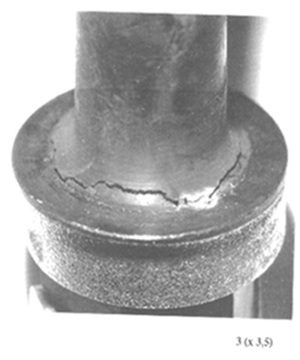
Demands have been made to shut Scotland’s one remaining active nuclear
power plant as it emerged a third of the central part of one reactor core
is cracked, sparking deep safety concerns. The Herald can reveal an
inspection from March estimates that in Torness’s Reactor 1 central core
area, there are 585 cracks in the bricks, which are key components for
cooling and keeping it safe and could increase the risk of a radioactive
accident.
The Herald has seen evidence of an agreed safety case for the
37-year-old Torness nuclear power plant as of June 2022, which supported
operation with up to 300 cracked bricks in a core reactor, similar to that
which led to the shutting down of sister power station Hunterston B. The
plant owners’ French energy firm EDF said that the safety case had been
superseded by an agreed new one in May 2024, which increased the allowance
to an unspecified new level in a move that echoed what happened at
Hunterston B.
Some have said it is “changing the goalposts”. The plant was
scheduled to close in 2023, but had its life extended to 2030 in 2016.
However, the planned shut down was brought forward to 2028 in 2022 as
predictions over the onset of cracks were seen as more imminent. But at the
start of December, last year four power stations run by EDF had their lives
extended with Torness put back to 2030 alongside and received the backing
of UK energy secretary Ed Miliband who described it as a “strong
endorsement of our clean power mission”.
It was just three months before
the extent of the cracking of Torness’s Reactor 1 core was uncovered.
Cracking can destabilise the bricks leading to crucial coolants not flowing
properly, which can lead to overheating, fuel damage and the risk of
radiation release – the early steps of a meltdown.
At the now closed sister
Hunterston B advanced gas-cooled plant also owned by French firm EDF, more
than 350 cracks were found in a reactor’s graphite bricks when it was
forced to shut down in 2018 because it was decided it could not safely
operate. A second reactor was also shut down later the same year under
similar circumstances. According to ONR documentation, seen by The Herald,
an “essentially intact” core is defined as one with fewer than 10% cracked
bricks. In Torness’s 3,000 brick reactor cores that would equate to around
300 – similar to that of now shut Hunterston.
The cracking issues that
caused the Hunterston shutdown affected one in every nine bricks in what
was its Reactor 3 core. At the Torness nuclear plant, near Dunbar in East
Lothian, it equates to one in five of the bricks of the entire core.
It has further emerged that cracks have begun to be discovered in the second of
the two Torness reactor cores. In a May inspection of 13 of the estimated
330 fuel channels in the core, one brick was found to have a crack. The
ONR, the watchdog which is primarily funded through fees charged to the
nuclear industry, say the number of cracks does not challenge the “safety
margins” in the agreed safety case. They say that the reactor could still
be safely shut down in an emergency.
But radioactivity expert Dr Ian
Fairlie, who was the former head of the secretariat of the UK Government’s
Committee Examining Radiation Risks of Internal Emitters insisted that the
levels of cracking should lead to it being closed down. He said: “Wow. They
should shut it imminently. This is a repeat of what happened at Hunterston
and they had to shut that down.
“Once the integrity of the core is
unreliable then really you have to close it sooner rather than later. That
is what they did at Hunterston and they should do the same with Torness. It
is not being anti-progress, it is about safety.” Dr Fairlie, who acts as a
consultant and is a vice-president of the Campaign for Nuclear Disarmament
(CND) added: “There will be lots of assurances given but to be honest with
you, I don’t trust it. Safety is more important than money. I would argue
and other environmentalists would argue that you have to adopt the
precautionary principle … If in doubt you err on the side of caution.
Protecting the public is more important than profits.
Energy consultant
Pete Roche, who has been policy adviser to the Scottish Nuclear Free Local
Authorities echoed the call for Torness to close. He said of the latest
crack numbers: “Goodness. It needs to shut. Absolutely.” He said of the
expanding of the cracks tolerance level that it was changing the goalposts:
“It seems to me they are stretching what is feasible with these reactors,
and if they go too far we could be in trouble.”
Friends of the Earth
Scotland head of campaigns Caroline Rance said: “The enormous costs of
nuclear power are due in part because so much time and money has to be
spent trying to reduce the immense danger it poses. But the only real
guarantee is that we’ll end up with literal toxic waste that must be
guarded for thousands of years.
“Scotland’s nuclear power plants have a
chequered safety history with serious safety lapses reported and
investigations revealing hundreds of cracks in the reactor cores. “Nuclear
projects are always billions over budget and desperately late. Politicians
are willing to write blank cheques for the nuclear industry while people
are crying out for support to insulate their homes and public transport
needs upgrading. “Climate breakdown demands an urgent move to reliable,
affordable renewable energy and a real transition that supports oil workers
into industries that don’t harm the planet.”
Herald 27th June 2025 https://www.heraldscotland.com/news/25260633.shut-down-demands-scotlands-last-nuclear-plant-breaches/
‘It looks more likely with each day we burn fossil fuels’: polar scientist on Antarctic tipping points

Despite working on polar science for the British Antarctic Survey for 20 years, Louise Sime finds the magnitude of potential sea-level rise hard to comprehend. Up until 2016, the sea ice
in Antarctica seemed relatively stable. Then everything started to change.
At first, the decline was mostly in line with climate models.
But suddenly, in 2023, there was an enormous drop. About 2.5 million sq km of Antarctic
sea ice went missing relative to the average before 2023. The anomaly was
of such a magnitude that it’s quite hard for scientists to know what to
make of it. It has been described as a five sigma event.
The potential for Antarctica to increase global sea levels is scarier than for Greenland.
Right now, they’re both contributing similar amounts to sea-level rise,
but in future, it could be Greenland goes up a bit and then Antarctica goes
up catastrophically. Greenland has the potential to raise sea levels by
five or six metres, but we don’t expect this will come in the form of an
absolutely catastrophic, abrupt loss. Most of the ice in Greenland is not
below sea level so we can see what is happening and we expect it will melt
in a linear fashion.
By contrast, Antarctica has 80 metres of potential
sea-level rise. We don’t expect all of that, but it is harder to know
exactly what is happening.
Guardian 27th June 2025, https://www.theguardian.com/environment/ng-interactive/2025/jun/27/tipping-points-antarctica-arctic-sea-ice-polar-scientist
1 This Month





PLEASE OPPOSE HR 8255 AND S.3639 – bills would accelerate satellite deployment, with no environmental review or safeguards – https://ncstd5li.quorum.us/campaign/169331/
To see nuclear-related stories in greater depth and intensity – go to https://nuclearinformation.wordpress.com
-
Archives
- October 2026 (74)
- September 2026 (339)
- August 2026 (330)
- July 2026 (355)
- June 2026 (287)
- May 2026 (306)
- April 2026 (356)
- March 2026 (251)
- February 2026 (267)
- January 2026 (308)
- December 2025 (358)
- November 2025 (359)
-
Categories
- 1
- 1 NUCLEAR ISSUES
- business and costs
- climate change
- culture and arts
- ENERGY
- environment
- health
- history
- indigenous issues
- Legal
- marketing of nuclear
- media
- opposition to nuclear
- PERSONAL STORIES
- politics
- politics international
- Religion and ethics
- safety
- secrets,lies and civil liberties
- spinbuster
- technology
- Uranium
- wastes
- weapons and war
- Women
- 2 WORLD
- ACTION
- AFRICA
- Atrocities
- AUSTRALIA
- Christina's notes
- Christina's themes
- culture and arts
- Events
- Fuk 2022
- Fuk 2023
- Fukushima 2017
- Fukushima 2018
- fukushima 2019
- Fukushima 2020
- Fukushima 2021
- general
- global warming
- Humour (God we need it)
- Nuclear
- RARE EARTHS
- Reference
- resources – print
- Resources -audiovicual
- Weekly Newsletter
- World
- World Nuclear
- YouTube
-
RSS
Entries RSS
Comments RSS

