Ukrainian bots want the BBC to endorse war crimes
Social media trolling takes a new and sinister turn
Ian Proud, Jul 23, 2025, https://thepeacemonger.substack.com/p/ukrainian-bots-want-the-bbc-to-endorse?utm_source=post-email-title&publication_id=3221990&post_id=168976248&utm_campaign=email-post-title&isFreemail=true&r=1ise1&triedRedirect=true&utm_medium=email
On 18 July I made a post on social media platform X in response to a BBC report entitled ‘Kill Russians, win points: is Ukraine’s new drone scheme gamifying war?’ It produced a spectacularly dark backlash from the Ukrainian bot community.
The BBC report explored a Ukrainian military scheme in which its soldiers could claim points for kills by First Person View (FPV) drones and use those points to buy the most preferred military technology in an ‘Amazon for war’.
While Paul Adams, the BBC diplomatic correspondent, touches briefly on the moral challenges that this scheme presents, he was clearly impressed.
‘The e-points scheme is typical of the way Ukraine has fought this war: creative, out-of-the-box thinking designed to make the most of the country’s innovative skills and minimise the effect of its numerical disadvantage.’
‘Points for kills. Amazon for war. To some ears, it might all sound brutal, even callous. But this is war and Ukraine is determined to hold on. By fighting as effectively, and efficiently as it can.’
Every day, military personnel on both sides of the conflict are killed by drones and other military technologies. That is why I have consistently called for the war in Ukraine to be ended through diplomatic means and is why I continue to do so.
The problem I had with the article was its heading – about killing Russian soldiers using drones – was accompanied by a photograph of a soldier (one might presume, Russian) with his back turned to the First Person View on screen with his hands in the air, suggesting surrender. I found this juxtaposition, on UK state-owned media, deeply troubling.
One might easily gain the impression by the headline and the photograph combined that the soldier’s fate was death. And if that was so, then that would constitute a war crime.
Under the Statute of the International Criminal Court, “killing or wounding a combatant who, having laid down his arms or having no longer means of defence, has surrendered at discretion” is a war crime in international armed conflicts
One cannot know the fate of the soldier and whether he is killed or taken prisoner. And the article goes on to point out that Ukrainian soldiers can claim higher points for encouraging a Russian soldier to surrender, though does not point out how this would be possible with an armed drone.
It is certainly the habit of the western media to churn out clickbait headlines in a bid to maintain waning public appetite for a war that Ukraine is losing and which Europe is funding at enormous expense.
However, it sets a dangerous precedent if the UK state-owned broadcaster is producing articles that infer war crimes are taking place and implicitly endorse the means of that happening.
I therefore included in my post a poll which asked people to vote on:
Do you want the BBC through its reporting implicitly to endorse war crimes and show images purporting to or giving the impression of the circumstances leading up to a war crime taking place?
I don’t have a huge X following, but my post garnered 20,000 votes over three days with over 90% of those who voted responding ‘no’, specifically that appearing to endorse war crimes in media reporting was wrong.
As I didn’t mention a specific country, some people argued that the allegation might also be levelled at BBC reporting of IDF atrocities in Gaza.
However, on 21 July my post was seized on by very-obviously-Ukrainian bots flinging all sorts of insults in my direction, such that I spent several hours blocking and reporting offensive content on my feed.
In a very short space of time, my account was swarmed by a blizzard of insults and false accusations, including of being an asset of the KGB (sic!).. being a Putin apologist, sucking Russian dicks and being a paedophile who uses teenage Russian prostitutes.
I was added to hate ‘Lists’ that x members keep, such as ‘nazi whore cowards’ and ‘vatniks’ (Russian propagandists).
All very annoying and intended to discredit me en-masse. But as Glenn Diesen joked when we spent some time together in Tblisi, in early June, ‘if you wanted to be popular, you should have sold ice creams’.
When one expresses a personal view on such an emotive topic as this pointless war in Ukraine, you are likely to get attacked from one direction or the other, or even both. However, some made more disturbing comments that can only be interpreted as threats of causing me physical harm.
Many made generalised comments about how any Russian solider in Ukraine should deserve such a fate (to die while surrendering) and so on. However, this was not the most sinister aspect of the response to my post.
In addition to voting that the BBC should not implicitly endorse war crimes, the other option was to vote for: ‘Please endorse war crimes’.
353 people voted in the poll before I closed my post to public comments. 213 people voted in favour of the BBC endorsing war crimes through its reporting of Ukraine. That’s right, just over 60% of, one assumes, mostly Ukrainian or Ukraine-supporting voters, endorses the BBC endorsing war crimes, in this context committed by Ukraine.
Herein the central truth of this and all wars; that they generate intense hatred of the other. That hatred fires the bloodlust that drives war crimes in any theatre of conflict. No war is free of war crimes. British, French, American, Russian and, yes, Ukrainian, service personnel have been documented as having committed war crimes, together with those of many other countries.
War reduces humanity to the darkest depths of depravity in which the most unconscionable acts are justified on the basis of defeating the hated other. Forgive me for believing that the BBC should not be glorifying that, even if implicitly, or encouraging others to do so.
I would far sooner they were pushing for a negotiated settlement to this terrible war.
Ministers prepare to reduce UK stake in Sizewell C nuclear project.

Under changes to investors, Brookfield dropped in favour of Canadian pension fund
and London-based investment manager. Ministers are preparing to reduce the
UK government’s stake in Sizewell C by more than expected, after a
last-minute move to change the roster of private investors in the
multibillion-pound nuclear project.
Canadian investment manager Brookfield
had been expected to take a 25 per cent stake in the Suffolk development as
recently as Friday, according to people familiar with the matter. The
proposed deal would have made the firm the biggest single investor in the
project — part of a push by ministers to use nuclear power to ease
Britain’s transition away from fossil fuels — with British Gas owner
Centrica taking 15 per cent and French energy giant EDF holding 12.5 per
cent.
But the government in recent days moved to drop Brookfield in favour
of selling a larger stake to a combination of Canadian pension fund La
Caisse and London-based investment manager Amber Infrastructure, the people
said. Two of the people said Brookfield had been angered by the decision,
which was first reported by Les Echos. La Caisse will now take a 20 per
cent stake in Sizewell and Amber will take a 10 per cent stake, according
to the people, while the stakes of Centrica and EDF are unchanged.
The increased private investor stake means the UK government will own 42.5 per
cent of the project, which is set to cost £38bn, down from 47.5 per cent
under previous plans. The government currently owns about 84 per cent of
the project. Ministers are set to announce the final investment decision on
Tuesday in a rush to seal the long-awaited deal before parliament’s
summer recess.
Energy bill payers will pay back the investors via a
surcharge on bills under the structure used to develop the scheme, known as
the “Regulated Asset Base” model.
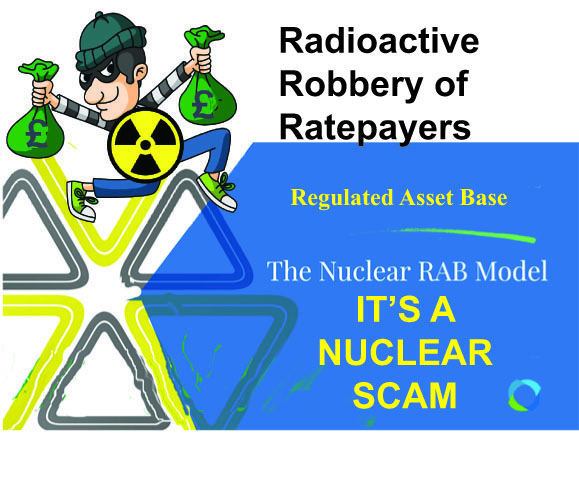
Energy bill payers will pay back the investors via a surcharge on bills under the structure used to develop the scheme, known as
the “Regulated Asset Base” model.
FT 21st July 2025, https://www.ft.com/content/4ae7842c-df91-41c3-a7a0-5b626f6cb6d9
Grave Nation: Ukrainian Cemetery Mega-Project Reveals Dimming Military Hopes

a shroud of occlusion wears heavy over the outcome of the war is because the West has done their utmost in hiding Ukrainian losses.
“The right question is not whether Ukraine has lost the war – that seems all too obvious to me – but how far it will lose it.“
the Ukrainian deputies who still have some brain left understand that with the current state of affairs in Ukraine, the country will soon cease to exist. All the Ukrainian “partners” who were verbally ready to fight for Zelensky’s regime have now completely “frozen” and don’t even want to contribute money.
Simplicius, Jul 22, 2025, https://simplicius76.substack.com/p/grave-nation-ukrainian-cemetery-mega?utm_source=post-email-title&publication_id=1351274&post_id=168791044&utm_campaign=email-post-title&isFreemail=true&r=ln98x&triedRedirect=true&utm_medium=email
A new Le Monde article sends spider cracks through the facade of Ukrainian losses:
Right off the bat, they reveal that cemeteries throughout Ukraine are full, requiring a national project of building a large-scale network of new military burial sites:
The squares reserved for the soldiers are full. Everywhere, teams of architects are working on memorials that tell us as much about the scale of the slaughter as they do about the ongoing reflection on the idea of nationhood.
They visit one of the first under construction, which already has a main square of plots for 10,000, eventually to be expanded to 160,000 graves:
In the village, only a brand-new brown sign, the color reserved for national sites, currently marks the road leading the trucks to the construction site. It reads: “National Military Memorial Cemetery”. A first square of 10,000 graves, already partially dotted with wide, light-colored granite paths lined with benches and lime trees, will welcome the first “heroes” this summer. Eventually, however, “130,000 or even 160,000” deceased will be laid to rest on this future mortuary site, explains architect Serhi Derbin, wearing khaki linen pants and a straw panama, in the bright Saturday sunshine of July.
Rightly, the Le Monde staff turn to the issue of “official” Ukrainian casualty statistics. In a growing Western trend, they admit that the number of dead is likely “much higher” than Zelensky gives credit for. Of course, pro-UA zealots will ignore the fact that there is no such project in Russia, no inordinately exceptional outgrowth of military cemeteries anywhere. They’ll make excuses, pointing to the cliche of “Russia’s size” as somehow ‘concealing’ such markers of losses, ignoring that Ukraine itself is the largest country in Europe and remains oddly unable to ‘conceal losses’ in the same way.
In the same circles, there are increased talks of Ukrainian collapse by end of year. Le Figaro’s new article making the rounds offers such a prediction. The writers spoke to French military officers who believe the situation is turning dire:
A French military source:
Moscow’s “thousand cuts” strategy is intensifying. The front is not set in stone. Offensives are localized in a multitude of small battles fought over a few kilometers. The cuts are getting deeper, even though the Ukrainian army is already weakened. It is stretched over a front of more than 1,000 km. Lacking sufficiently frequent replacements and human resources, the units are becoming exhausted.
“The Russians are multiplying offensive sectors to disperse enemy reserves,” explains a French military source. Russia has deployed nearly 700,000 soldiers in Ukraine, more than the Ukrainian army. Patiently, it continues to nibble away at territory, at the cost of colossal human losses: up to a hundred dead a day; some 40,000 casualties (dead and wounded) a month. The Russian army has adapted its tactics, preferring to launch assaults with small infantry units or units mounted on motorcycles, in order to advance faster and more lightly.
They slip in the usual sop about the “costs” Russia is incurring, but then critically add:
But the army, the Ukrainian, it also lost some of the material she had received from Western for the past three years. Time plays against it with the risk of a break in a part of the front. “Forces of Ukraine are in [dire straits]… Can they last six months? A year? In reality, the war is already lost“, continued in the military source. In this war of attrition, the time changes everything.
And in another even more erudite offering, Figaro interviews French historian Stéphane Audoin-Rouzeau, who is particularly a leading expert on the First World War.
Utilizing his expertise on the Great War, he makes some fascinating parallels to the current Ukrainian conflict that are worth a deeper look.
First, he notes that in his opinion the Ukrainian war is only the third war of its particular type in recent history—the type being ‘siege warfare, but in the open country’:
You note another similarity between the First World War and the Ukraine, as both were wars of position…
There are few historical examples of this very recent form of warfare, as it requires armaments that only became available at the end of the 19th century. Structurally, it is siege warfare, but fought in open country over hundreds of kilometers. There have only been three conflicts of this type: the Great War (from late 1914 to spring 1918, not beyond); the Iran-Iraq war (from 1980 to 1988); the Ukraine war (from April 2022, not before).
He goes on to draw further parallels:
What are the invariants of such a war?
The main point is the superiority of the defensive over the offensive. Had this not been the case, Ukraine would have been beaten long ago. Already during the First World War, it was necessary to cross a “no man’s land” saturated with barbed wire, one of the most effective weapons of the early 20th century. Then there were the minefields we saw in Iran-Iraq and now in Ukraine. They are an extraordinarily compact barrier. The Ukrainians came up against it in the summer of 2023 during their failed counter-offensive, and the Russians since 2024. As a result, it’s impossible to break through dozens of kilometers wide and break the enemy’s front line.
He notes that due to these peculiarities, there is a kind of obligatory “regression” in each conflict, where previous means are no longer workable:
There is a kind of regression in all three conflicts. In Ukraine, helicopters and airplanes fly very little above and beyond the front line. Nor are there any major armored offensives. We’ve never seen anything like the Battle of Kursk in 1943. As a result, the battle is heavily infantry-based.
And at the same time, firepower…
Yes, that’s another invariant of this type of warfare. Initially, this firepower was linked to artillery, with the cannon dominating the battlefield during the First World War. This overwhelming dominance of the cannon can be seen again in Ukraine, until 2024. Unfortunately, Russia has always had very good artillery and, unlike the Ukrainians, has had the means to supply it, where the latter ran out of ammunition well into 2024.
But the point in setting the stage above, is that by analyzing these parallels, this preeminent historian has reached a final decisive conclusion: that Ukraine has already lost the war:
It was by considering these invariants that you came to a radical conclusion, set out at a Senate hearing in April: in your view, Ukraine has already lost the war…
Indeed, as we speak, Ukraine unfortunately seems to have lost the war, probably as early as the summer of 2023, when it became clear that its long-awaited counter-offensive had failed. One could imagine a spectacular turnaround, but it’s not clear how. Of course, when you say this, people are shocked because it’s unbearable to think that Ukraine has lost the war. It’s unbearable for me too.
He adds to the list of peculiarities of the war the fact that even Ukraine’s now-certain loss is not overtly visible:
But here’s the thing: there’s no point in remaining incantatory, we have to get out of a new denial, that of defeat, after that of the possibility of war itself. For I would add another characteristic of the war of position: defeat is not immediately discernible when it looms. It takes a long time to appear. It’s not like Stalingrad, where the vanquished leave the battlefield and the victor occupies it. It’s not like the blitzkrieg of May-June 1940. In a war of position, it’s two bodies in battle, slowly wearing each other down. Only in the end does it become clear that one has worn out faster than the other.
He hits the nail on the head, but likely in a way even he doesn’t fully understand—or at least not in a way he’s ready to admit. You see, the reason such a shroud of occlusion wears heavy over the outcome of the war is because the West has done their utmost in hiding Ukrainian losses. His final pithy admonition that only in the end does it become clear who lost the war of attrition inadvertently bears testament to this: only those of us who truly care about facts and uncovering the truth—not dogmatic reasoning and propaganda—are able to demystify the more-than-obvious signals that Ukraine is taking ungodly and unsustainable losses comparative to Russia.
He goes on to demonstrate his cause with an example:
Let’s do a little thought experiment. Let’s imagine that in early October 1918, a group of military experts, journalists and historians were gathered in a neutral country to ask their opinion on the situation. And now suppose someone had then suggested that Germany had already lost the war. Well, everyone would have cried out! At that time, the Reich was still occupying immense territories in the east at the expense of Russia, since the Treaty of Brest-Litovsk. It occupied the whole of Belgium and large parts of France. It’s true that the German army has been retreating since the summer, but nowhere has the front given way. The Germans are inflicting heavy losses on the Allies, since it is the Allies who are on the offensive and therefore taking the greatest risks. So where is the German defeat?
In reality, German defeat has been certain since July-August 1918. It has happened, but it is not yet apparent. Since the summer, the German General Staff has been well aware of this, and has called for negotiations to be launched. Except that the political powers don’t understand it, nor does German public opinion, and never will. This failure to understand the defeat of 1918 was one of the reasons for the rise of Nazism.
The interviewer lightly pushes back, stating that the Ukrainians are not yet visibly collapsing despite Russia’s slow-moving gains:
Here again, let’s think back to the First World War. When the Allies launched their counter-offensive in July 1918, it was a general one, but apart from the Americans, the soldiers were no longer capable of attacking. They were so used to throwing themselves on the ground at the first danger that everyone was extremely cautious. But we could have imagined that part of the front would be breached, in which case… Germany had no more reserves to plug the holes. That’s why I’m worried about the risk of a Russian offensive in Ukraine this summer: given the disproportion of forces, could it break through the front? We would then be entering a different configuration, as any break in the front would risk producing a powerful moral effect on the Ukrainian armed forces, on political power and on public opinion.
He concludes by stating that the right question is no longer whether Ukraine has lost—which is rhetorical at this point—but how far Ukraine will lose:
The right question is not whether Ukraine has lost the war – that seems all too obvious to me – but how far it will lose it. On the basis of the current balance of power, or on that of an even more unfavorable balance of power? This will determine whether or not the Ukrainian defeat represents a strategic victory for Russia.
On that note, Russia again launched one of the largest attacks of the war last night—at least according to frenetic Ukrainian commentators who, admittedly, could be playing things up for dramatic effect to curry sympathy:
There has been a surge of such attacks the last few weeks, particularly ones targeting Ukrainian recruitment centers operated by the notorious TCK (Territorial Recruitment Center). Farsighted Ukrainian officials have ‘brilliantly’ concluded this is a Russian effort to cripple Ukraine’s ability to round up meat for Zelensky’s conveyor belt of horror.
Likewise, Russian strikes have been completely erasing Ukrainian weapons industries. Many people watch the endless parade of explosions in a detached manner—at this point it has become passé to the point that people assume these strikes do little, or are just carrying out some vague ‘background work’. In reality, they have been neutering Ukrainian industries, halting many of the farfetched Ukrainian weapons ambitions which were at one point widely talked about.
For instance, a recent hit was said to have destroyed the Grom-2 production line, a big Ukrainian ballistic missile that was meant to be their answer to Russia’s Iskander. There’s a reason you don’t see much of the weaponry constantly talked about and billed as the next “wunderwaffen”: it’s because these ongoing, systematic Russian strikes are wiping out their industries, leaving Ukraine with no ability to produce anything other than small quadcopter drones in tiny boutique workshops which can be hidden anywhere. The larger facilities which were meant to produce more prestige-level systems, from mobile artillery, to various analogues of Russian air-to-ground and ballistic missiles, to artillery shell production lines, etc., have all been extirpated by these relentless systematic strikes.
More and more, top Ukrainian figures are panicking over this and concluding that if it continues on this way, Ukraine will have nothing left. Listen to the Ukrainian officer below, who states that “at this rate, Ukraine will be returned to the stone age”:
🇺🇦The chair under Zelensky is starting to shake more and more. After all, allowing such statements on the air of pro-Kyiv media was previously unimaginable👍
➖Apparently, the recent report about the production of Geran-2 drones and their quantity, along with massive attacks on Ukrainian military infrastructure, really forced the top officials of Zelensky’s office to activate the “brown” alert.
➖Because the Ukrainian deputies who still have some brain left understand that with the current state of affairs in Ukraine, the country will soon cease to exist. All the Ukrainian “partners” who were verbally ready to fight for Zelensky’s regime have now completely “frozen” and don’t even want to contribute money. Support is dwindling, and stealing is becoming difficult. The people fully realize that Zelensky will shout about VICTORY from his bunker or Europe until he is hoarse, while Ukrainians rejoice at the Geran-2 strikes on the TCC.
He’s referring in particular to the new videos showcasing Russia’s Geran (Shahed) drone production at the Alabuga factory in Tatarstan where hundreds of the drones are produced each day around the clock:
The full episode where the above excerpt is from, which deals with many other drone types being used in the Russian Army, can be viewed here.
One of the reasons, by the way, that the French historian, Stéphane Audoin-Rouzeau, saw Russia winning the war despite parallels to ‘stalemated’ conflicts like the Iran-Iraq war, is because in previous examples he believes the industrial capacities and general capabilities of the combatants were likewise roughly static. But in the case of the Russo-Ukrainian war, he admits that Russian capabilities are growing each year, far out-pacing Ukrainian ones. This goes toward things like the previously-talked-about manpower gains of 100k per year—while Ukraine’s manpower shrinks—as well as the industrial growth of the arms industry.
That being said, there’s one last important point to be made. Many point to Russia’s “growing economic problems” as a counter-argument for why Russia could begin “losing” in the future, despite its seeming present dominance. I even saw one Western publication spin Putin’s announcement that Russia would be reducing its military budget next year as an “act of desperation” which means Russian military capability is finally “weakening”.
On the contrary, the signals here are the complete opposite: Putin’s plan to begin slowly reining in Russia’s military spending is the acknowledgement that Russia has finally reached a total equilibrium in the war, where current production levels are stable and sustainable indefinitely in relation to the losses. That means further inordinate military expansion is unnecessary, and Russia sees a successful path in defeating Ukraine at current levels.
This is obviously in conjunction with the fact that Russia has now attritioned the AFU to such an extent that it no longer requires the same disparity levels in military spending—as Ukrainian capabilities shrink, Russia likewise settles its war-making into a manageable level by taking things from overdrive to simply ‘autopilot’—if the analogy makes sense. Once again, dogmatic Western analysts incapable of impartial reasoning fail to pick up on this obvious cue, which totally spoils their analyses.
To leave off, here’s a typically comical new “threat” issued by beltway bugger Lindsey Graham against Putin. He boasts that Trump will “put a whoopin’ on your ass”, but then veers to say Trump will “punish” not Russia, but countries buying Russian oil:
This again proves the US has no cards against Russia, and must desperately punch Russia’s friends on the arm as a substitute threat. The problem is, this hurts the US and its relations with key foreign powers more than it does anything to Russia.
More and more Ukrainian commentators and political figures are cottoning on to the fact that “sanctions” were always nothing more than a desperate and hollow performative act:
The West, with its illusory economies, fraudulent GDPs based on hyper-financialized and leveraged debt, and miserably deteriorated industrial capacities has worn out its ‘sanctions’ cudgel—at least for anything more than performative ‘punishments’.
MAGA Going to Israel for Propaganda Training

The Israeli government is paying to have 16 MAGA social media influencers, with millions of followers, brought to Israel to learn how to stop American youth from turning against Tel Aviv over Gaza, writes Joe Lauria.
By Joe Lauria, Consortium News, https://consortiumnews.com/2025/07/20/maga-going-to-israel-for-propaganda-training/
The Israel foreign ministry will spend $86,000 to finance a tour of Israel for 16 Americans to get them to use their vast online influence to craft more positive images of a nation openly engaged in genocide.
The effort is being made as Israel reacts to a significant turn in public opinion against it, especially by Western youth. Tel Aviv realizes its usual methods of propaganda — and apparently its own inhouse troll army — are no longer working as they once did.
The daily Haaretz reported:
“Foreign Ministry officials say the tour delivers significant media, advocacy, and diplomatic benefits – and represents a strategic shift, as traditional outreach is no longer sufficient to shape public opinion. They aim to leverage the massive followings of young social media influencers to bolster Israel’s standing in the U.S.”
The Americans, whose names have not been divulged, belong to the MAGA and America First movements, the newspaper said. They are all younger than 30 and each have hundreds of thousands or millions of followers, a vast, target-rich environment for propaganda. Israel intends to bring more than 500 “influencer delegations” to Israel this year, the ministry said.
It is paying an organization called Israel365 to organize the first American tour because it is in a “unique position to convey a pro-Israel stance that aligns entirely with the MAGA and America First agenda.”
Israel365’s website says the group “stands unapologetically for the Jewish people’s God-given right to the entire Land of Israel,” calls the two-state solution a “delusion,” and says it’s defending “Western civilization against threats from both Progressive Left extremism and global jihad.”
Israeli officials justified the no-bid contract with the organization because of its “experience and know-how in creating awareness, engagement, and mobilization of Christian audiences regarding their support for the Jewish people and the State of Israel,” Haaretz reported.
Ministry officials told the newspaper that “while older Republicans and American conservatives still hold pro-Israel views, positive perspectives towards Israel are falling across all younger age groups.”
News of the tour comes after the U.S. national teachers union voted to ditch the Zionist curriculum of the Ant-Defamation League, which was influencing young American minds.
Western youth, including conservatives, have become increasingly aware of the history of Israel’s expulsion of Palestinian people from their land and of Israel’s stated genocidal intent and actions in Gaza today. It is a wave of understanding Israel needs to contain.
A ministry source said: “We’re working with influencers, sometimes with delegations of influencers. Their networks have huge followings, and their messages are more effective than if they came directly from the ministry.”
Haaretz reported:
“The strategy appears to be paying off. During the 12-day conflict last month with Iran, Israeli digital messaging garnered roughly 1.8 billion online views, boosted in part by social media influencers with millions of followers. The Foreign Ministry has set a goal of bringing 550 influencer delegations to Israel by the end of 2025 to continue this outreach.”
The Foreign Ministry chose Israel365 because “with the rise of the America First movement and MAGA in American politics, it’s essential for Israel that the movement adopt a pro-Israel position.” A Foreign Ministry document said Israel365 “has the ability to smoothly link the spiritual/biblical and geopolitical aspects of support for Israel.”
Joe Lauria is editor-in-chief of Consortium News and a former U.N. correspondent for The Wall Street Journal, Boston Globe, and other newspapers, including The Montreal Gazette, the London Daily Mail and The Star of Johannesburg. He was an investigative reporter for the Sunday Times of London, a financial reporter for Bloomberg News and began his professional work as a 19-year old stringer for The New York Times. He is the author of two books, A Political Odyssey, with Sen. Mike Gravel, foreword by Daniel Ellsberg; and How I Lost By Hillary Clinton, foreword by Julian Assange.
Sizewell’s Exploding Budget Exposes Europe’s Nuclear Blindspot
Michael Barnard, 20 July 25,
https://cleantechnica.com/2025/07/20/sizewells-exploding-budget-exposes-europes-nuclear-blindspot/
The recent announcement that the UK’s Sizewell C nuclear generation construction’s projected cost has doubled from £20 billion in 2020 to nearly £38 billion today is shocking but predictable. For anyone following Europe’s nuclear power saga, such an escalation is not an anomaly but rather a continuation of a deeply entrenched pattern. This project, part of Europe’s broader push for nuclear power to meet climate goals, is again raising fundamental questions about whether European governments and utilities have truly laid the groundwork for successful nuclear power scaling, or if they continue to underestimate the scale of the task.
To assess what has gone wrong, we can turn to a clear set of criteria for successful nuclear programs that history provides. These criteria are based on the best available evidence from nuclear build-outs globally, and importantly, are grounded in repeated successes and failures documented by energy historians and experts. Seven specific factors emerge as crucial: first, nuclear power programs require a strategic national priority with consistent government oversight and support. Second, successful nuclear programs historically have close alignment with military nuclear objectives, benefiting from established skill sets, infrastructure, and strategic imperatives. Third, reactor programs thrive only when standardized around a single, fully proven reactor design. Fourth, large-scale reactors in the gigawatt range provide significant economies of scale. Fifth, there must be a comprehensive, government-supported training and human resources program. Sixth, deployment should be rapid, continuous, and sustained over two to three decades to leverage learning effects. Finally, successful nuclear deployments involve constructing dozens of reactors, not just a few isolated units, to benefit from economies of scale and accumulated knowledge.
Evaluating Europe’s EPR (European Pressurized Reactor) program against these criteria provides a sobering picture. The strategic national priority criterion has only partially been met. European governments have indeed supported nuclear in principle, yet actual oversight has varied considerably, often shifting responsibilities between private entities, state regulators, and multinational utilities, diluting accountability. There has been no consistent, comprehensive governmental stewardship. Each reactor site faces a new web of bureaucratic complexity rather than benefiting from streamlined regulatory oversight.
The second criterion, integration with military objectives, is entirely absent in the European context. Historically, successful nuclear programs like those in France, the United States, or Russia have been intertwined with military nuclear efforts. The absence of military nuclear integration in contemporary European programs removes a critical element of strategic urgency, funding, and workforce stability. Europe’s nuclear effort remains civilian-only, losing these historical advantages.
Standardization of reactor design has also fallen short. Although the EPR was intended to be Europe’s standardized reactor, actual implementations have seen multiple design modifications, extensive site-specific customizations, and evolving regulatory requirements. Each new European EPR has effectively become another first-of-a-kind construction project, losing almost all potential learning curve benefits. The changes between Flamanville in France, Olkiluoto in Finland, and Hinkley Point C in the United Kingdom illustrate starkly how the promise of standardization has not materialized.
While the fourth criterion of large-scale reactors in the gigawatt class is technically met, this alone has not guaranteed success. Indeed, the EPR’s massive scale of around 1.6 GW per reactor, designed specifically to capture economies of vertical scaling, has perversely contributed to complexity and cost overruns due to an insufficiently mature supply chain, workforce, and management capability. Size alone cannot substitute for weaknesses elsewhere in the development ecosystem.
A major factor missing from Europe’s nuclear plans has been a centralized, government-led workforce training and human resource strategy. Nuclear construction is complex and requires extremely well-trained, specialized and security-cleared personnel who work effectively in teams. Europe’s nuclear workforce remains fragmented, project-based, and heavily reliant on temporary contractors. This workforce structure prevents accumulation of essential expertise and institutional memory. By contrast, successful nuclear builds historically, such as France’s 1970s and 1980s fleet or South Korea’s more recent nuclear expansions, relied explicitly on stable, state-backed workforces built over decades.
The sixth factor, rapid and sustained deployment over a defined two- or three-decade timeframe, has been consistently unmet in Europe. Instead, construction schedules stretch over a decade or longer for individual projects, with significant gaps between reactor starts. Olkiluoto took nearly 18 years from groundbreaking to full commercial operation, while Flamanville has similarly ballooned from a five-year schedule to more than 17 years. Such prolonged and intermittent build-outs destroy continuity, erase institutional memory, and eliminate any hope of learning-based improvements.
Finally, the criterion of dozens of reactors to benefit from learning economies and consistent improvements has not even been approached. The small number of participating European nations have each built just one or two reactors each, without sustained replication. Instead of dozens, Europe’s EPR build-out has delivered exactly two completed reactors outside of China, one each in Finland and France, both massively over budget and delayed. The United Kingdom’s ongoing struggles with Hinkley Point C and now Sizewell underscore the near-complete failure to leverage scale and experience across multiple similar projects.
Bent Flyvbjerg’s extensive research on megaprojects offers important context here. His data demonstrate consistently that nuclear projects routinely underestimate complexity, overestimate potential cost savings, and ignore historical evidence of prior overruns. Flyvbjerg’s findings indicate average overruns for nuclear reactors often range from 120 to 200% above initial estimates. Europe’s EPR experiences align closely with his analysis, underscoring that the fundamental issue is systemic rather than isolated mismanagement or technical miscalculations. The repeated pattern of underestimated costs and schedules aligns precisely with Flyvbjerg’s warnings.
Taking Sizewell C specifically, the now nearly doubled budget and uncertainty about its schedule mirror previous European EPR outcomes. Although the UK government adopted the regulated asset base model to theoretically reduce investor risk, the reality is consumers bear the brunt of these overruns, undermining the economic and political rationale for nuclear. This situation further confirms that without fundamental changes in approach, future EPR projects across Europe will likely replicate these troubling patterns.
The essential takeaway is clear. Unless European governments and industry stakeholders directly address and fulfill the criteria outlined above, nuclear power development in Europe will continue to repeat these costly cycles. Establishing clear national priorities, enforcing rigid reactor standardization, implementing centralized workforce training, committing to sustained rapid deployment, and genuinely standardizing the regulatory environment are non-negotiable if nuclear is to play a significant, reliable, and economically sensible role in Europe’s energy future.
In stark contrast to Europe’s nuclear struggles, renewable energy growth on the continent has significantly exceeded expectations during the same period. Between the mid-2000s, when the first EPR reactors entered construction, and today, Europe’s wind and solar capacity has expanded rapidly, consistently outperforming deployment targets and experiencing steady cost declines. Wind power, both onshore and offshore, has grown by more than tenfold, with major projects routinely delivered within budget and schedule.
Solar power installations have seen even more impressive expansion, driven by sharp decreases in module prices and efficient scaling of supply chains. Unlike nuclear, renewable projects benefit from short construction cycles, standardized designs, and continuous incremental improvements, underscoring Europe’s missed opportunity with nuclear and emphasizing the practical effectiveness of the renewables approach. These advantages show clearly in Flyvbjerg’s data, with wind and solar projects, along with transmission, being the three megaproject categories most likely to come in within initial budgets and schedules.
The stark doubling of Sizewell’s budget is not just a financial shock, it should be a wake-up call. The EPR reactor story in Europe does not have to remain one of perpetual disappointment, but without a realistic recognition of what successful nuclear scale requires, these overruns and delays will continue indefinitely, destroying the business cases that led to their approval in the first place. Europe must either meet these demanding but historically validated conditions for nuclear success or shift decisively toward alternatives capable of meeting its climate and energy goals without the drama and expense that have defined the European nuclear experience to date.
Trump threatens to bomb Iran again if it builds new nuclear plants.

US president claims it would take ‘years’ to bring sites at Fordow, Natanz
and Isfahan back into service. In a post on his Truth Social site sent from
his golf club near Washington, he claimed all three of Tehran’s nuclear
sites had been destroyed after the US dropped 14 30,000lb GBU-57 “bunker
buster” bombs on them. “It would take years to bring them back into
service and, if Iran wanted to do so, they would be much better off
starting anew, in three different locations, prior to those sites being
obliterated, should they decide to do so,” he said before ending with his
trademark signoff. “Thank you for your attention to this matter!”
Telegraph 19th July 2025. https://www.telegraph.co.uk/world-news/2025/07/19/trump-threatens-to-bomb-iran-again-if-it-builds-new-nuclear/
The Militarization and Weaponization of Media Literacy-NATO Invades the Classroom

July 10, 2025, Nolan Higdon and Sydney Sullivan, https://www.projectcensored.org/military-weaponization-media-literacy/
This Dispatch is informed by our forthcoming 2025 article, “Media Literacy in the Crosshairs: NATO’s Strategic Goals and the Revival of Protectionist Pedagogy,” from the Journal of Media Literacy Education, Volume 17, Issue 2.
During President Donald Trump’s second term, education has remained a central battleground in American politics. Republicans claim that classrooms have become hotbeds of “woke” indoctrination, accusing educators of promoting progressive agendas and tolerating antisemitism. In contrast, Democrats argue that conservatives are systematically defunding and dismantling public and higher education precisely because it teaches values like diversity, equity, and inclusion. While these partisan skirmishes dominate headlines, they obscure a much deeper and more enduring issue that encompasses all of these issues and more: the influence of corporate and military power on public education.
For decades, scholars have warned that corporations have steadily infiltrated the classroom—not to promote critical thinking or democratic values, but to cultivate ideologies that reinforce capitalism, nationalism, and militarism. Critical media literacy educators, in particular, have called attention to the convergence of tech firms and military entities in education, offering so-called “free” digital tools that double as Trojan horses for data collection and ideological control.
One striking example is the rise of programs like NewsGuard, which uses public fears over fake news to justify increased surveillance of students’ online activity. Relatedly, in 2018, the Atlantic Council partnered with Meta to perform “fact-checking” on platforms such as Facebook. In 2022, the US Marine Corps discussed developing media literacy trainings. It remains to be seen what training, if any, they will develop. However, what is known is that a large global player has entered the media literacy arena: the North Atlantic Treaty Organization (NATO). While NATO presents its initiatives as supportive of media literacy and democratic education, these efforts appear to be oriented more toward reinforcing alignment with its strategic and political priorities than to fostering critical civic engagement.
NATO was created in 1949, during the Cold War, as a military alliance to contain communism. Although the war officially ended in 1991, NATO has expanded both its mission and membership. Today, it encompasses more than thirty member nations and continues to frame itself as a global force for peace, democracy, and security. But this self-image masks real conflicts of interest.
NATO is deeply intertwined with powerful nation-states and corporate actors. It routinely partners with defense contractors, tech firms, think tanks, and Western governments—all of which have a vested interest in maintaining specific political and economic systems. These relationships raise concerns when NATO extends its reach into education. Can a military alliance—closely linked to the defense industry and state propaganda—credibly serve as a neutral force in media education?
In 2022, NATO associates collaborated with the US-based Center for Media Literacy (CML) to launch a media literacy initiative framed as a strategic defense against misinformation. The initiative included a report titled Building Resiliency: Media Literacy as a Strategic Defense Strategy for the Transatlantic, authored by CML’s Tessa Jolls. It was accompanied by a series of webinars featuring military personnel, policy experts, and academics.
On the surface, the initiative appeared to promote digital literacy and civic engagement. But a closer look reveals a clear ideological agenda. Funded and organized by NATO, the initiative positioned media literacy not as a means of empowering students to think critically about how power shapes media, but as a defense strategy to protect NATO member states from so-called “hostile actors.” The curriculum emphasized surveillance, resilience, and behavior modification over reflection, analysis, and democratic dialogue.
Throughout their webinars, NATO representatives described the media environment as a battlefield, frequently using other war metaphors such as “hostile information activities” and “cognitive warfare.” Panelists argued that citizens in NATO countries were targets of foreign disinformation campaigns—and that media literacy could serve as a tool to inoculate them against ideological threats.
A critical review of NATO’s media literacy initiative reveals several troubling themes. First, it frames media literacy as a protectionist project rather than an educational one. Students are portrayed less as thinkers to be empowered and more as civilians to be monitored, molded, and managed. In this model, education becomes a form of top-down, preemptive defense, relying on expert guidance and military oversight rather than democratic participation.
Second, the initiative advances a distinctly neoliberal worldview. It emphasizes individual responsibility over structural analysis. In other words, misinformation is treated as a user error, rather than the result of flawed systems, corporate algorithms, or media consolidation. This framing conveniently absolves powerful actors, including NATO and Big Tech, , of their role in producing or amplifying disinformation.
Third, the initiative promotes a contradictory definition of empowerment. While the report and webinars often use the language of “citizen empowerment,” they ultimately advocate for surveillance, censorship, and ideological conformity. Panelists call for NATO to “dominate” the information space, and some even propose systems to monitor students’ attitudes and online behaviors. Rather than encouraging students to question power—including NATO itself—this approach rewards obedience and penalizes dissent.
Finally, the initiative erases the influence of corporate power. Although it criticizes authoritarian regimes and “hostile actors,” it fails to examine the role that Western corporations, particularly tech companies, play in shaping media environments. This oversight is especially problematic given that many of these corporations are NATO’s partners. By ignoring the political economy of media, the initiative offers an incomplete and ideologically skewed version of media literacy.
NATO’s foray into media literacy education represents a new frontier in militarized pedagogy. While claiming to promote democracy and resilience, its initiative advances a narrow, protectionist, and neoliberal approach that prioritizes NATO’s geopolitical goals over student empowerment.
This should raise red flags for educators, policymakers, and advocates. Media literacy is not a neutral practice. The organizations that design and fund media literacy programs inevitably shape those programs’ goals and methods. When a military alliance like NATO promotes media education, it brings with it a strategic interest in ideological control.
Educators must ask: What kind of media literacy are we teaching—and whose interests does it serve? If the goal is to produce informed, critically thinking citizens capable of questioning power in all its forms, then NATO’s approach falls short. Instead of inviting students to explore complex media systems, it simplifies them into a binary struggle between “us” and “them,” encouraging loyalty over literacy.
True media literacy must begin with transparency about who and what is behind the curriculum. It must empower students to question all forms of influence—governmental, corporate, and military alike. And it must resist the creeping presence of militarism in our classrooms. As educators, we must defend the right to question, not just the messages we see, but the institutions that shape them.
Nolan Higdon is a political analyst, author, host of The Disinfo Detox Podcast, lecturer at Merrill College and the Education Department at the University of California, Santa Cruz, and Project Censored Judge. Higdon’s popular Substack includes the bi-weekly Gaslight Gazette, which chronicles important and well-researched examples of disinformation, character assassination, and censorship in the United States.
Sydney Sullivan is an educator, author, and researcher specializing in critical media literacy, student well-being, and digital culture. She is a lecturer in the Rhetoric and Writing Studies department at San Diego State University and a co-host of Disinfo Detox. Her popular Substack series @sydneysullivanphd explores how digital habits shape student mental health, media literacy, and classroom culture.
Iran to hold nuclear talks with European powers on Friday

Iran, Britain, France and Germany will hold nuclear talks in Istanbul on
Friday, an Iranian Foreign Ministry spokesperson said early on Monday,
following warnings by the three European countries that failure to resume
negotiations would lead to international sanctions being reimposed on Iran.
“The meeting between Iran, Britain, France and Germany will take place at
the deputy foreign minister level,” Esmaeil Baghaei was quoted by Iranian
state media as saying.
Reuters 20th July 2025, https://www.reuters.com/world/middle-east/iran-hold-nuclear-talks-with-european-powers-friday-2025-07-20/
Nuclear news this week (not the corporate spin)

Some bits of good news – 4.6 Billion Years On, the Sun Is Having a Moment – In the past two years, without much notice, solar power has begun to truly transform the world’s energy system.
Sweden becomes the first country in the world to ensure all egg-laying chickens are cage-free — without any laws requiring it.
Two more nations defeated a debilitating disease
TOP STORIES.
Israeli Minister: ‘Gaza must be in Ruins for Decades,’ as Airstrike Kills Children seeking Water.
Trump’s Weapons Magic Show is Smoke & Mirrors Masterclass. Trump Asked Zelensky If He Could Strike Moscow If the US Provided Longer-Range Weapons.
Nuclear waste exposure in childhood associated with higher cancer incidence. New Study on Cancers near NPPs: additional comments.
Poisone.d water and scarred hills
From the archives. Toxic radioactive legacy of rare earths processing plan.
Climate. Wildfires: Could this be the worst year ever? – ALSO AT https://nuclear-news.net/2025/07/15/2-b1-wildfires-could-this-be-the-worst-year-ever/
‘Keeping us hooked on fossil fuels’: how can we negotiate with autocracies on the climate crisis?
AUSTRALIA. Australia must rethink AUKUS and assert its sovereignty. Australia Unveils Plan To Fight “Antisemitism” By Crushing Free Speech.
NUCLEAR ITEMS
ECONOMICS.
- Ministers set to admit Sizewell C nuclear plant price-tag has soared to£38bn – ALSO AT https://nuclear-news.net/2025/07/21/1-a-ministers-set-to-admit-sizewell-c-nuclear-plant-price-tag-has-soared-to38bn/ Sizewell C | Investor withdraws from consortium set for 25% stake. UK’s nuclear push may hand investors a cushy deal. Oxford fusion pioneer risks running out of cash within months.
- Small Nuclear Reactor company’s focus turns to raising $500+ million– ALSO AT https://nuclear-news.net/2025/07/18/2-b1-small-nuclear-reactor-companys-focus-turns-to-raising-500-million/
- Peace River nuclear power project: The hidden cost.
- EU opens door to funding nuclear energy in next budget
EDUCATION. Local website reveals city’s secret nuclear weapons programme. The Militarization and Weaponization of Media Literacy-NATO Invades the Classroom. |
| EMPLOYMENT. Workers at Hinkley Point C nuclear plant stage wildcat strike over alleged bullying. Construction workers walk out at Hinkley Point C |
| ENERGY. Nuclear power is a parasite on AI’s credibility. |
| ETHICS and RELIGION. 80 Years After Trinity |
| HEALTH. Ian Fairlea critiques New Study on Cancers near UK nuclear facilities. Mental health.Cognitive collapse and the nuclear codes: When leaders lose control |
| HISTORY. 80 Years Ago: The First Atomic Explosion, 16 July 1945. |
| HUMAN RIGHTS. Francesca Albanese: “A revolutionary shift is underway”. |
| MEDIA. Remembering the radical anti-nuclear Greenham Women’s Peace Camp.The New York Times Finally Stops Avoiding The G-Word. |
| OPPOSITION to NUCLEAR . “They want to impose a whole nuclear world on us without asking our opinion”: activists fight against the Orano nuclear fuel pools project. – ALSO AT https://nuclear-news.net/2025/07/21/1-b-they-want-to-impose-a-whole-nuclear-world-on-us-without-asking-our-opinion-activists-fight-against-the-orano-nuclear-fuel-pools-project/ Northern Ontario residents oppose plan to dump radioactive material near drinking water source. |
| PERSONAL STORIES. Ex-UN Special Rapporteur Says Francesca Albanese Deserves Nobel Prize, Not US Sanctions. |
| POLITICS. We’ll stop Nimbys from blocking nuclear power stations, say Tories- ALSO AT https://nuclear-news.net/2025/07/20/2-b1-well-stop-nimbys-from-blocking-nuclear-power-stations-say-tories/Call for evidence on building nuclear for a new UK “golden age of clean energy abundance”. THE END FOR ZELENSKY? |
| POLITICS INTERNATIONAL and DIPLOMACY.In a historic gathering, 12 countries announce Israel sanctions and renewed legal action to end Gaza genocide. Trump sprang Ukraine surprise on NATO states – Reuters. Iran to hold nuclear talks with European powers on Friday. Trump threatens to bomb Iran again if it builds new nuclear plants. Iran says nuclear site attack proved military option is futile. Iran pushes back on EU pressure as clock ticks on nuclear talks. |
SAFETY.
- Trump’s nuclear power push weakens regulator and poses safety risks, former officials warn. US DOGE (Department of Government Efficiency) told regulator to ‘rubber stamp’ nuclear.
- Improvements required at Sellafield after lead oxide release. Office for Nuclear Regulation says its ‘insufficient organisational capability’ is increasing strategic risk – ALSO AT https://nuclear-news.net/2025/07/21/1-b1-office-for-nuclear-regulation-says-its-insufficient-organisational-capability-is-increasing-strategic-risk/
- Pay danger money to communities impacted by nuclear projects, say NFLAs.
- Incidents. IAEA Director General Statement on Situation in Ukraine.
WAR and CONFLICT. U.S. and Israeli strikes on Iran could fuel a new wave of nuclear proliferation. New reports cast doubt on impact of US strikes on Iran’s nuclear sites.
Japanese Doctor Picked for U.N. Panel on Nuclear War Impact.
Hiroshima to Today: Confronting the Nuclear Threat.
WEAPONS and WEAPONS SALES.
- U.S. Military Launches MASSIVE Drills to Prepare for WAR with China | KJ Noh – https://www.youtube.com/watch?v=UfHiRlHD3ZY
- Hungary Refuses To Finance US Weapons for Ukraine.
- Trump Announces Weapons Plan for Ukraine, Gives Russia 50-Day Deadline for Tariffs.
- Here is why you should support the Global Network’s Golden Dome statement:
Gaza Isn’t Starving, It Is Being Starved
Caitlin Johnstone Jul 21, 2025 https://www.caitlinjohnst.one/p/gaza-isnt-starving-it-is-being-starved?utm_source=post-email-title&publication_id=82124&post_id=168826710&utm_campaign=email-post-title&isFreemail=true&r=1ise1&triedRedirect=true&utm_medium=email
Malnutrition-related deaths in Gaza are beginning to climb, with the health ministry reporting 18 in a single 24-hour period. Doctors report that people are “collapsing” in the street, and Gaza journalist Nahed Hajjaj is warning the world not to be surprised if the remaining reporters in the enclave are soon silenced by starvation.
Unless something drastically changes, things can be expected to get much worse very rapidly.
Meanwhile Israeli forces are setting new records with their massacres of starving civilians seeking aid, with 85 killed in a single day on Sunday.
If this isn’t evil, then nothing is evil. If Israel isn’t evil, then nothing is.
So what’s the plan here? Do we just sit and watch Israel starve Gaza to death with the support of our own governments?
And then what? We just go along with our lives, knowing that that happened? That this is what we are as a society? That our civilization is comfortable allowing something like that to happen? And that our rulers could do the same thing to another inconvenient population at any time?
We’re just meant to be cool with that? And go on living like it’s normal?
I’m genuinely curious. How exactly is everyone planning to go about living their lives after that point? How does that work, exactly?
I’m asking because I don’t know. I mean, I know what my own government and its allies should do, but I don’t know what we as ordinary members of the public are supposed to do.
You’ll see western pundits and politicians asking “How do we get a ceasefire in Gaza?” or “How do we end hunger in Gaza?” as though it’s some kind of ineffable mystery, which is kind of like a man strangling a child to death while saying “The child is being strangled, but HOW do we stop the child strangulation from occurring?”
It’s not some mystery how to get a ceasefire in Gaza; the empire is the fire. It simply needs to cease firing. Israel’s holocaust in Gaza is made possible only by the support of its western backers, primarily the United States. Numerous Israeli military insiders have acknowledged that none of this would be possible without US support. If the United States and its western allies ceased backing Israel’s onslaught in Gaza, a ceasefire would have to occur.
Likewise, it is not a mystery how to get food into Gaza. You just drive the food on in and give it to people. They’ve got roads and gates right there. The only reason people in Gaza are starving is because western governments (including my own Australia) conspired to pretend to believe that UNRWA is a terrorist organization to justify cutting off critical aid, while doing nothing to pressure Israel into allowing aid to flow freely.
And now Israel and the US empire are monopolizing the delivery of “aid” through the so-called Gaza Humanitarian Foundation, whose facilities now see civilians massacred every day for the crime of attempting to obtain food.
The organizations, funding and delivery systems to feed Gaza are all 100 percent fully available (at no cost to Israel, by the way). They’re just not being allowed to provide aid because the goal is to remove all Palestinians from Gaza via death or displacement. The people of Gaza are starving because the west is helping Israel starve Gaza. It really is that simple.
This isn’t some kind of unfortunate famine caused by a drought or natural disaster. It is a deliberately manufactured starvation campaign, implemented with genocidal intent.
To paraphrase Utah Phillips, Gaza isn’t starving, it is being starved. And the people who are starving it have names and addresses.
Rotten Apple: Dozens of Former Israeli Spies Hired by Silicon Valley Giant

July 18th, 2025, Alan Macleod
Apple has made headlines in recent weeks for touting its commitment to privacy and human rights, rolling out tools to limit surveillance and spyware. But behind the corporate messaging lies a much darker reality.
The company has quietly brought in dozens of veterans from Unit 8200, Israel’s shadowy military intelligence unit known for blackmail, mass surveillance, and targeted killings.
Many of these hires took place as Israel escalated its war on Gaza, and as CEO Tim Cook publicly expressed support for Israel while disciplining employees for pro-Palestinian expressions. Apple’s deepening ties to Israel’s most controversial intelligence raise uncomfortable questions, not only about the company’s political loyalties, but also about how it handles vast troves of personal user data.
A MintPress News investigation has identified dozens of Unit 8200 operatives now working at Apple. The company’s hiring spree coincides with growing scrutiny of its ties to the Israeli government, including its policy of matching employee donations to groups such as Friends of the IDF and the Jewish National Fund, both of which play a role in the displacement of the Palestinian people. The intense pro-Israel bias at the corporation has led many former and current employees to speak out.
This investigation is part of a series examining the close collaboration between Unit 8200 and Western tech and media companies. Previous investigations examined the links between Unit 8200 and social media giants like TikTok, Facebook and Google, and how former Unit 8200 spies are now responsible for writing much of America’s news about Israel/Palestine, holding top jobs at outlets like CNN and Axios.
A Few (Dozen) Bad Apples
Israel’s international reputation has taken a severe hit amid multiple spying scandals and ongoing attacks against its neighbors. During this same period, Apple has ramped up its recruitment of former Israeli intelligence personnel.
The Silicon Valley giant has hired dozens of former agents from the controversial Israeli intelligence outfit, Unit 8200, raising questions about the corporation’s political direction.
Nir Shkedi is among the most prominent examples. From 2008 to 2015, he served as a commander and Chief of Learning at Unit 8200, leading a team of approximately 120 operatives who developed new artificial intelligence tools to perform rapid data analysis.
Unit 8200 is at the forefront of this technology, and is known to have used AI to auto-generate kill lists of tens of thousands of Gazans, including children. These tools helped the Israeli Defense Forces (IDF) bypass what it called human targeting, “bottlenecks,” and strike huge numbers of Palestinians.
Shkedi has been a physical design engineer at Apple’s Bay Area campus since 2022.
Noa Goor is another senior Unit 8200 figure turned Apple employee. From 2015 to 2020, Goor rose to become a project manager and head of cybersecurity and big data development team at Unit 8200, where she, in her own words, “invent[ed] creative technological solutions for high priority intelligence goals” and “manag[ed] two strategically important cyber projects” for the IDF.
One of the most important cyber projects Unit 8200 has launched in recent times is the September pager attack on Lebanon, an act that injured thousands of civilians and was widely condemned as an act of international terrorism, including by former CIA Director Leon Panetta. While Goor was not personally involved in that operation, Unit 8200 has spearheaded similarly nefarious actions for decades.
In 2022, Goor was hired by Apple as a system-on-chip design engineer.
Eli Yazovitsky, meanwhile, was directly recruited from Unit 8200. In 2015, he left a high-powered nine-year career as a manager in the military unit to join Apple, where he rose to become an engineering manager. He has since moved on to tech giant Qualcomm.
Unit 8200 is Israel’s most elite—and most controversial—military intelligence unit. It serves as the backbone of both Israel’s burgeoning tech sector and its repressive surveillance apparatus. The unit has developed cutting-edge technology like facial recognition and voice-to-text software to surveil, repress, and target Palestinians.
The vast amounts of data gathered on the Palestinian population, including their medical history, sex lives, and search histories, have been used for coercion and extortion. If a certain individual needed to travel across checkpoints for crucial medical treatment, permission could be suspended until they complied. Information about extramarital affairs or sexual orientation, especially homosexuality, is exploited as blackmail material. One former Unit 8200 agent recalled that he was instructed during his training to memorize different Arabic words for “gay” so that he could listen out for them in intercepted conversations.
Internationally, Unit 8200 may be best known for its “former” agents who created the notorious Pegasus software, used by repressive governments around the world to spy on tens of thousands of prominent figures, including royals, heads of state, activists, and journalists.
Among them was Washington Post columnist Jamal Khashoggi, who was assassinated by Saudi operatives in Türkiye in 2018.
While military service is mandatory for Jewish Israelis, few end up in Unit 8200 by accident. Described as “Israel’s Harvard,” parents spend fortunes on STEM-based extracurricular lessons for their children in the hopes that they will be selected to join the IDF’s most elite and selective unit. Those chosen are rewarded with lucrative careers in the tech industry upon completion of their service.
Given Unit 8200’s documented history of violence, espionage, and surveillance, both domestically and internationally, it is worth asking whether tech giants should be hiring its alumni in such large numbers.
Shkedi, Goor, and Yazovitsky are the most high-profile examples, but they are from alone. A closer look reveals that dozens of other Unit 8200 veterans have also secured key roles at Apple.
Engineering and Hardware Design:
Natanel Nissan, formerly head of data analysis at Unit 8200, joined Apple’s Tel Aviv office in 2022. Ofek Har-Even, a longtime officer and manager in the unit, has been a design verification engineer at Apple since 2022. Gal Sharon, a former intelligence systems operator and data analyst, has also worked as a physical design engineer since that same year.
Mayan Hochler and Shai Buzgalo, both former Unit 8200 analysts and instructors, hold roles in physical design and validation engineering, respectively.
Software and Cybersecurity:
Ofer Tlusty, who served nearly six years in Unit 8200 as a security and intelligence analyst, has worked as a software engineer at Apple since 2021. Ofek Rafaeli, who served between 2012 and 2016 and rose to project manager during Israel’s 2016 assault on Gaza, became a software engineer at Apple in 2023.
Guy Levy, a former intelligence analyst, now also works as a software engineer.
AI, Machine Learning, and Validation:
Avital Kleiman, a six-year veteran of Unit 8200, is now a machine learning algorithm engineer at Apple. Niv Lev Ari, currently a validation engineer, notes in his LinkedIn profile that he received a letter of commendation from Unit 8200 commander Aviv Kochavi for his work in the unit.
Other Technical Roles:
Shahar Moshe, who worked as an intelligence specialist at Unit 8200 from 2012 to 2015, is now a design verification engineer. Gil Avniel, who spent over five years in the unit, currently serves as a network engineer.
An Apple Rots From the Core
The growing number of former Israeli intelligence operatives working at Apple does not seem to concern the company’s senior management. CEO Tim Cook is known to hold strongly pro-Israel views and has spearheaded the Silicon Valley giant’s collaboration with the Israeli state.
Apple has acquired several Israeli tech firms and now operates three centers in the country, employing around 2,000 people. In 2014, Cook invited Israeli Prime Minister Benjamin Netanyahu to the company headquarters in Cupertino, CA, where, in front of the cameras, the two openly embraced. The following year, Cook accepted an invitation from President Reuven Rivlin to visit Israel. “It is a great privilege to host you and your team here,” Rivlin said, “Even for me, as one who prefers to write with a pen and paper, it is clear what a great miracle you have created when I look at my staff, and my grandchildren.”
Effusive praise for the Apple CEO has also come in the form of honors from pro-Israel organizations. In 2018, the Anti-Defamation League presented Cook with its inaugural Courage Against Hate Award at its Never Is Now Summit on anti-Semitism and Hate, where the organization described him as a “visionary leader in the business community.”
In the wake of the October 7, 2023, attacks, Cook sent out a company-wide email expressing his solidarity with Israel. “Like so many of you, I am devastated by the horrific attacks in Israel and the tragic reports coming out of the region,” he wrote, My heart goes out to the victims, those who have lost loved ones, and all of the innocent people who are suffering as a result of this violence.”
Yet, according to Apples4Ceasefire—a group of former and current employees opposing Israeli actions in Gaza—he has yet to say anything publicly about the mass devastation caused by the Israeli response to October 7.
Indeed, the Silicon Valley corporation has a policy of matching employee donations to groups such as Friends of the IDF, which raises money to buy equipment for IDF soldiers, and the Jewish National Fund, an organization that participates in the theft and destruction of Palestinian land.
Under Cook’s leadership, Apple employees have been disciplined or even fired for wearing pins, bracelets, or keffiyehs in support of the Palestinian people. Nevertheless, groups such as Apples4Ceasefire continue to speak out about what they describe as Apple’s complicity in genocide.
The Unit 8200 Tech Takeover
To be fair, Apple is far from the only tech or media company to hire large numbers of former Unit 8200 operatives. A 2022 MintPress exposé revealed hundreds of Israeli intelligence veterans working at Google, Facebook, Microsoft, and Amazon.
Perhaps the most notable of these is Emi Palmor, a former Israeli justice ministry official who sits on Facebook’s 21-person Oversight Board. Described by Mark Zuckerberg as his platform’s “supreme court,” the board ultimately decides what content is allowed or removed from the world’s largest social network. Facebook has worked closely with the Israeli government to censor or deplatform Palestinian content and accounts.
Even TikTok, often seen as a more open platform, has been hiring former Israeli spies to help manage its operations, according to a November investigation by MintPress. Reut Medalion, for example, served as a Unit 8200 intelligence commander and led its cybersecurity operations team.
In December 2023, during the peak of Israel’s attack on Gaza, Medalion moved to New York City to accept a job as global incident manager for TikTok’s trust and safety division. Considering the events going on in the world at the time, it’s worth asking what sorts of “global incidents” she was brought in to manage.
After MintPress exposed Medalion’s past to a worldwide audience, she deleted her entire digital footprint from the internet.
Former Israeli intelligence operatives have also found their way into American newsrooms, shaping coverage of the Middle East. A recent MintPress investigation uncovered a network of former Unit 8200 operatives working in some of the most influential newsrooms in the United States.
Among them is Axios correspondent Barak Ravid, whose Middle Eastern coverage won him the prestigious White House Press Correspondents’ Award. Until at least 2023, Ravid was a member of Unit 8200. CNN has also hired at least two former agents to produce their news coverage, one of whom, Tal Heinrich, now serves as the official spokesperson for Prime Minister Netanyahu.
Given this pattern, Silicon Valley’s partiality towards Israel should not come as no surprise. From tech giants like Google and Amazon to social media powerhouses like TikTok and Facebook, the field is filled with former Israeli spies. Apple is no exception, having hired dozens, if not more, Unit 8200 operatives to run its platforms and shape the company.
This investigation does not claim that the Israeli state is deliberately infiltrating Silicon Valley. However, what it does unquestionably suggest is that the outlook and general biases of these entities are strongly pro-Israel. What does it say about Silicon Valley’s culture that individuals with well-documented ties to a controversial foreign spy agency are considered ideal hires?
It is unthinkable that former intelligence agents of Hezbollah, Iran’s Ministry of Intelligence, or Russia’s FSB or GRU would be hired en masse, and trusted with our most sensitive data. Yet, when it comes to Israel (or U.S. surveillance agencies), the answer is different. Many of these employees are not even “former” agents, and are directly recruited from Unit 8200 while still in active service, despite Israeli law explicitly prohibiting the group’s members from identifying themselves or divulging their alliances.
Thus, in this light, it appears that those like Apples4Ceasefire struggling to end the company’s double standards are fighting an uphill battle.
EU opens door to funding nuclear energy in next budget

By Kate Abnett, July 18, 2025, https://www.reuters.com/sustainability/climate-energy/eu-opens-door-funding-nuclear-energy-next-budget-2025-07-17/
BRUSSELS, July 17 (Reuters) – The European Commission wants to open up part of its proposed 2 trillion euro EU budget for 2028-2034 to nuclear energy, a move likely to divide the bloc’s member states, which Germany immediately rejected.
In an annex to its mammoth budget proposal published on Wednesday, the Commission listed nuclear power as an activity countries can fund through their national share of the budget – specifically, “new or additional fission energy capacity installed in GW”.
Around 865 billion euros of EU funding will be available under these national spending plans.
The move would be a sea change for the EU, whose current budget does not fund conventional nuclear power plants – reflecting a long-running conflict between pro-nuclear EU members like France and Sweden and traditionally anti-nuclear countries like Germany and Austria.
“Germany rejects any subsidization of nuclear power from the EU budget,” its environment minister Carsten Schneider said on Thursday, adding that Berlin respected the choice of other countries to build reactors.
“However, respect for national sovereignty in energy matters also means not claiming EU funds for this expensive path, a quarter of which comes from German taxpayers’ money,” Schneider said.
France’s energy ministry did not immediately respond to a request for comment. Swedish energy minister Ebba Busch declined to comment.
The Commission’s budget proposal marks the start of years of intense negotiations among EU nations, which must all approve the final budget.
EU countries have long been at loggerheads over whether to promote atomic power to reduce CO2 emissions, a dispute which has delayed policymaking on climate change and energy in the bloc.
That dynamic had appeared on the cusp of a shift earlier this year, when German Chancellor Friedrich Merz signalled Berlin would no longer object to treating nuclear power on a par with renewable energy in EU policies.
Countries including Denmark and Italy had also signalled a shift in their past opposition to nuclear power.
However, some EU diplomats said that this softening of positions had not extended into support for EU funding.
“There is no chance EU money goes to new nuclear,” one EU country diplomat said.
The EU’s current budget explicitly bans member states from building nuclear power plants using their share of hundreds of billions of euros in regional development funds – although the budget offers some limited funds for nuclear research and decommissioning of old reactors.
Reporting by Kate Abnett; additional reporting by Simon Johnson, Holger Hansen, America Hernandez, Riham Alkousaa; Editing by Hugh Lawson
Oxford fusion pioneer risks running out of cash within months
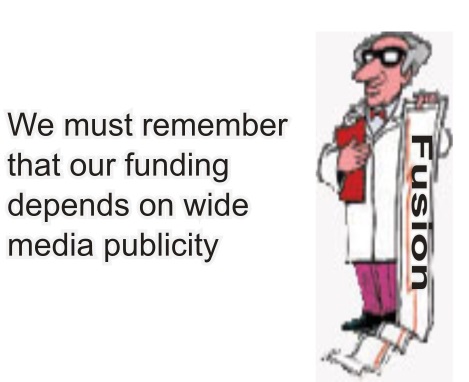
First Light scrambles for funding despite Labour promise to invest £2.5bn in nuclear
research. A British nuclear fusion pioneer has warned it risks running out
of cash within six months as it races to raise millions of pounds in
funding to secure its future. First Light Fusion, which is based in Oxford,
is in talks with investors to raise £20m after burning through tens of
millions of pounds to develop its novel fusion technology. The start-up,
founded in 2011, had sought to develop what it called “projectile
fusion”, developing a giant gas-powered gun that would fire a 5p-sized
projectile at extreme speeds into a fuel source, sparking a fusion
reaction. However, the company abandoned plans to build a prototype reactor
earlier this year as it struggled to raise funds.
Telegraph 20th July 2025, https://www.telegraph.co.uk/business/2025/07/20/oxford-fusion-pioneer-running-out-of-cash/
Pay danger money to communities impacted by nuclear projects, say NFLAs

The Nuclear Free Local Authorities have called on government ministers to
make the operators of nuclear plants pay their neighbouring communities
‘danger money’ to properly compensate them for living with the risk.
The Department of Energy Security and Net Zero has just concluded a
consultation on plans to introduce a mandatory scheme obliging energy
generators to pay community benefits. The amount of money payable annually
would be based on one of two models, the potential generating capacity of
the plant or the actual amount of electricity generated.
Ministers would make the scheme applicable to nuclear plants, as well as larger renewable
energy projects, but the NFLAs want them to factor in a premium on payments
made by nuclear operators to reflect the potential for accidents, the
environmental contamination caused during their operations, and their
legacy of deadly radioactive waste. We also want nuclear plants to make
payments through their lifecycle, including during the period of
decommissioning and waste management after closure.
NFLA 18th July 2025, https://www.nuclearpolicy.info/news/pay-danger-money-to-communities-impacted-by-nuclear-projects-say-nflas/
Nuclear: more than 3,000 radioactive drums discovered off the coast of Brest!

More than 3,000 radioactive drums have been discovered in the waters off Brest. Very old nuclear fuel.
Jean-Baptiste Giraud, July 17, 2025,
https://lenergeek.com/2025/07/17/nucleaire-3-000-futs-radioactifs-brest/
In the nuclear sector, the issue of radioactive waste storage is posing increasing problems. During a mission off the coast of Brest, Ifremer and the CNRS counted more than 3,000 drums deposited on the seabed. They could pose a threat to France.
Nuclear waste is accumulating at the bottom of the Atlantic Ocean
The return of a scientific mission off the coast of Brest has shaken the scientific community. After a month of intensive research, a team of experts revealed they had located more than 3,000 radioactive drums submerged in the Atlantic Ocean , a discovery that inevitably raises the question: should we be worried?
Behind this large-scale mission, a specific objective: to understand the fate of nuclear waste dumped between 1946 and 1993 by several European countries . During this period, more than 200,000 drums containing radioactive waste were dumped in international waters, at depths reaching 4,700 meters in the abyssal plain of the northeast Atlantic. The NODSSUM (Nuclear Ocean Dump Site Survey Monitoring) project has mapped an area of 163 km² where these drums are concentrated, some of which are in an advanced state of degradation.
The mission, led by the CNRS and Ifremer with the support of several national and international partners, used cutting-edge technologies to study the abyss. Aboard the ship L’Atalante, scientists deployed an autonomous submarine, UlyX, equipped with a sophisticated sonar system, allowing them to probe the seabed and obtain precise images of the condition of the 3,350 barrels.
No worrying radioactivity… for now
After several weeks of research, the good news is that the mission did not observe any “anomalous radioactivity” in the areas analyzed. For the researchers, there is therefore, as of yet, no reason to panic. However, not everything is that simple. Although the radioactivity does not appear to have crossed any worrying thresholds, some drums have shown signs of advanced corrosion, suggesting that material leaks may be occurring. The mission reveals that these leaks, although still difficult to identify precisely, could be due to the presence of bitumen, a material often used to seal waste in drums.
However, this is only a hypothesis. Future sampling will be necessary to better understand the exact nature of these substances and their impact on the marine environment.
This discovery raises many questions about nuclear waste management. Why were these drums submerged at a time when radioactive waste management was not as strictly regulated? While the practice of dumping waste has been banned since 1993, the question of the environmental impact of these repositories remains open. The results of this mission, still preliminary, underline that special attention will need to be paid in the future.
The next stage of the research will be to analyze the sediment, water and marine organisms in the area to detect possible contamination . In addition, a new mission is already planned for the coming years to study the barrels more closely and take additional samples , particularly of marine fauna that could be affected by this waste.
1 This Month





PLEASE OPPOSE HR 8255 AND S.3639 – bills would accelerate satellite deployment, with no environmental review or safeguards – https://ncstd5li.quorum.us/campaign/169331/
To see nuclear-related stories in greater depth and intensity – go to https://nuclearinformation.wordpress.com
-
Archives
- October 2026 (67)
- September 2026 (339)
- August 2026 (330)
- July 2026 (355)
- June 2026 (287)
- May 2026 (306)
- April 2026 (356)
- March 2026 (251)
- February 2026 (267)
- January 2026 (308)
- December 2025 (358)
- November 2025 (359)
-
Categories
- 1
- 1 NUCLEAR ISSUES
- business and costs
- climate change
- culture and arts
- ENERGY
- environment
- health
- history
- indigenous issues
- Legal
- marketing of nuclear
- media
- opposition to nuclear
- PERSONAL STORIES
- politics
- politics international
- Religion and ethics
- safety
- secrets,lies and civil liberties
- spinbuster
- technology
- Uranium
- wastes
- weapons and war
- Women
- 2 WORLD
- ACTION
- AFRICA
- Atrocities
- AUSTRALIA
- Christina's notes
- Christina's themes
- culture and arts
- Events
- Fuk 2022
- Fuk 2023
- Fukushima 2017
- Fukushima 2018
- fukushima 2019
- Fukushima 2020
- Fukushima 2021
- general
- global warming
- Humour (God we need it)
- Nuclear
- RARE EARTHS
- Reference
- resources – print
- Resources -audiovicual
- Weekly Newsletter
- World
- World Nuclear
- YouTube
-
RSS
Entries RSS
Comments RSS